
14 New York Locations That Prove The State Is More Exciting Than Ever In 2026
Ready or not, New York just leveled up. Forget the same old tourist checklist.
In 2026, New York is serving surprises like a magician with a never-ending deck of tricks. Why settle for “been there, done that” when you can stumble into something that makes you stop mid-step and say, “Wait… what just happened?”
If you think New York is predictable, think again. From the coastlines to the city lights, this state is packed with unexpected thrills, playful detours, and moments that make your inner explorer do a happy dance.
These are New York locations that prove excitement isn’t just alive, it’s practically contagious.
1. Letchworth State Park
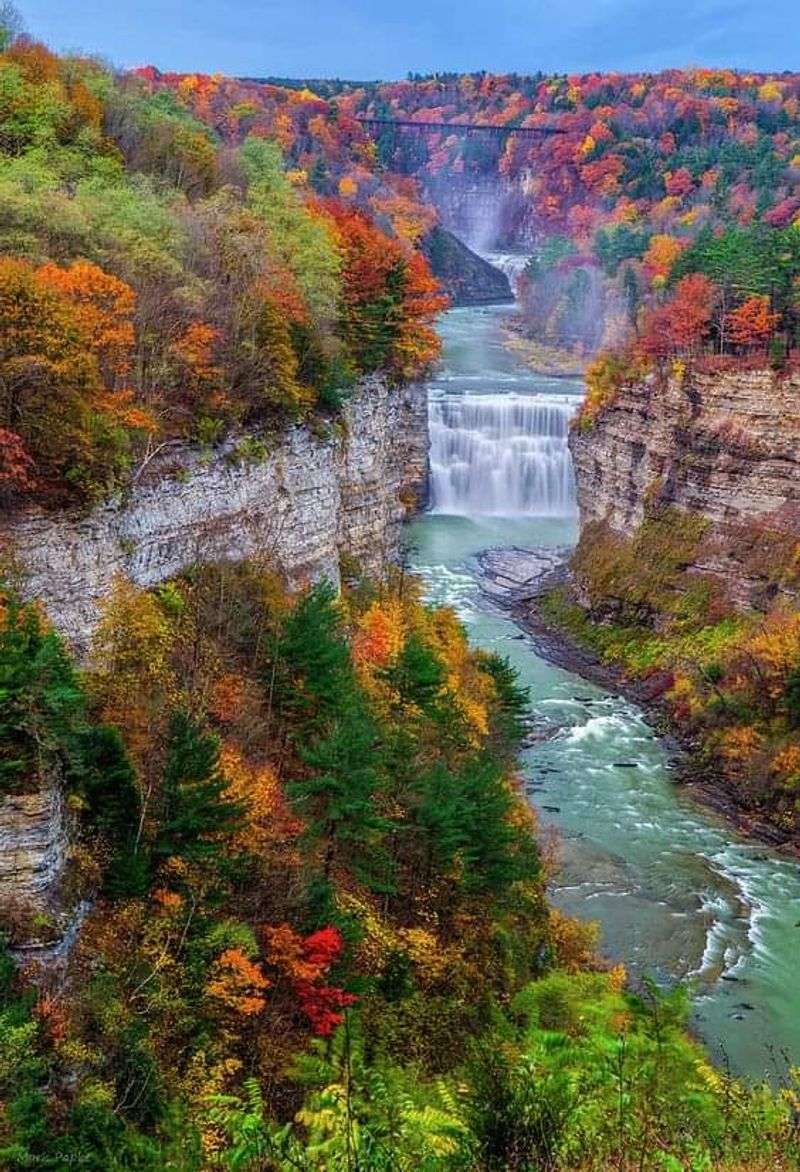
People throw around the phrase “Grand Canyon of the East” a lot, but standing at the rim of Letchworth State Park, you finally understand why. Located on 1 Letchworth State Park, Castile, NY 14427, this park stretches across 14,350 acres and features three major waterfalls tumbling through a gorge that drops nearly 600 feet at its deepest point.
The sheer scale of it is almost hard to process until you are actually there, gripping a guardrail and staring down at the Genesee River far below.
The Middle Falls alone stands at 107 feet, and on a clear day with the mist rising off the water, it feels genuinely cinematic. There are over 66 miles of hiking trails weaving through the park, ranging from easy riverside walks to more challenging ridge routes with sweeping panoramic views.
Spring is arguably the best time to visit, when snowmelt pushes the waterfalls to their most dramatic volume and the surrounding forest bursts into that impossibly vibrant shade of green.
Fall is equally stunning, with the gorge walls painted in deep amber and red. Picnic areas, cabins, and a restored 1800s inn called the Glen Iris add a layer of comfort to the wild surroundings.
2. Watkins Glen State Park
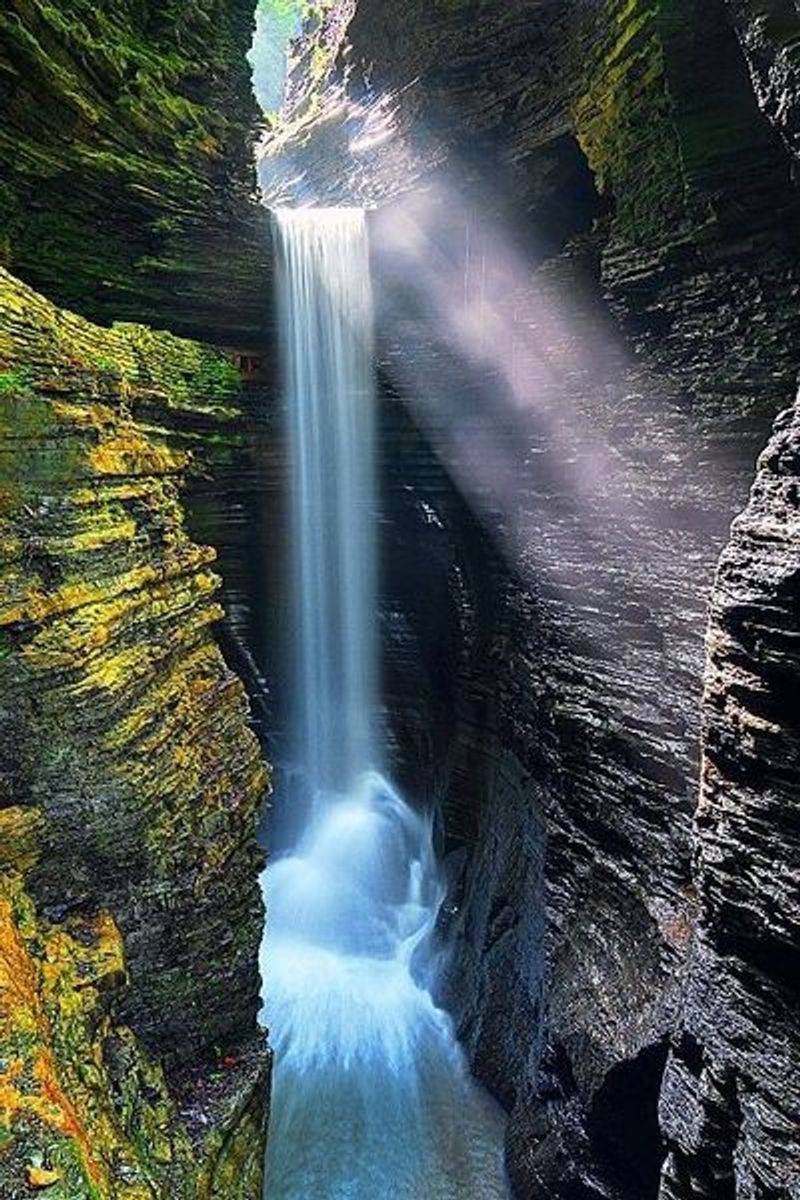
There is something almost mythical about walking through Watkins Glen. The gorge trail winds through a narrow canyon carved from ancient shale and sandstone, passing by 19 waterfalls in the span of about 1.5 miles.
Located in the heart of the Finger Lakes region, on 1009 N Franklin St, Watkins Glen, NY 14891, this park has been drawing visitors since the 1800s, and it is not hard to see why the place became famous so quickly.
The stone pathways and tunnels that weave through the gorge were built by the Civilian Conservation Corps in the 1930s, and they have aged beautifully into the landscape.
Walking through them feels like stepping into another world entirely, one where the air is cooler, the light filters through in golden streaks, and the sound of rushing water fills every corner of your awareness.
Sentinels Falls and Rainbow Falls are two of the most photographed spots in the park, and for good reason. The way the water catches the light at certain hours of the day is genuinely breathtaking.
Above the gorge, the Indian Trail offers a quieter, more elevated perspective of the canyon below.
Watkins Glen is one of those places that looks incredible in photos but somehow manages to be even more impressive in person.
3. Chimney Bluffs State Park
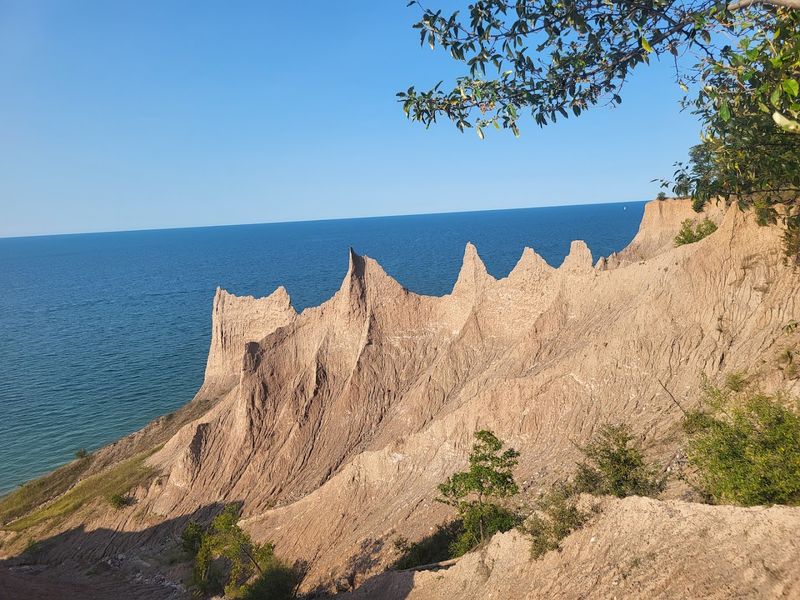
Nothing quite prepares you for the first time you see Chimney Bluffs. These towering, jagged spires of clay and silt rise dramatically from the southern shore of Lake Ontario, looking less like a New York state park and more like a landscape borrowed from another planet.
On 7700 Garner Rd, Wolcott, NY 14590, the bluffs were sculpted over thousands of years by glacial activity, wind, rain, and wave erosion, and the result is genuinely one of the most visually striking natural formations in the entire state.
The spires can reach heights of up to 150 feet, and they shift and change shape gradually over time as erosion continues to work its quiet magic. Sunrise and late-afternoon light hit the clay formations at angles that make the colors absolutely glow, shifting from pale gold to deep amber depending on the hour.
The trail system is relatively accessible, with a ridge walk that offers elevated views of the bluffs and the lake beyond.
The park is less crowded than some of New York’s more famous natural destinations, which means you often get those views almost entirely to yourself. Chimney Bluffs is the kind of place that makes you stop mid-step, look around, and genuinely wonder how this has been here all along without more people talking about it.
4. Green Lakes State Park
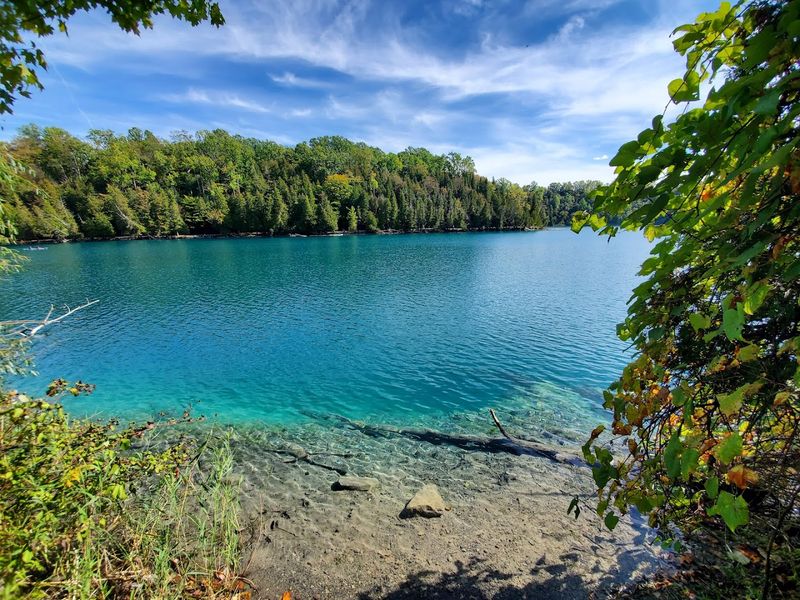
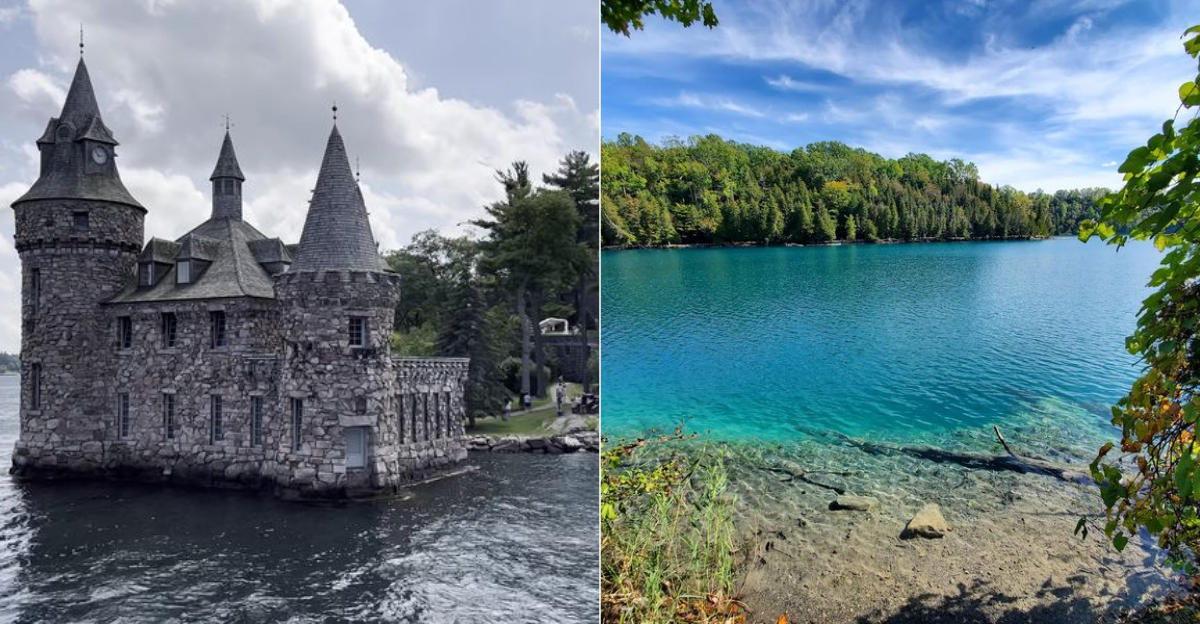
The color of the water at Green Lakes is the kind of thing that makes people stop scrolling and actually look at a photo. Situated on 7900 Green Lakes Rd, Fayetteville, NY 13066, Green Lakes State Park is home to two meromictic lakes, Round Lake and Green Lake, whose waters are so still and so intensely colored that they almost look artificially enhanced.
They are not.
The unusual teal-green hue comes from the way light interacts with the unique chemistry of the water, which does not mix between its upper and lower layers the way most lakes do.
Meromictic lakes are incredibly rare in North America, which makes this park a genuinely special destination beyond just its visual appeal. The loop trail around both lakes is easy and well-maintained, making it a great option for a relaxed morning or afternoon walk.
Beyond the lakes themselves, the park includes a golf course, sandy beach areas, and picnic spots that make it a comfortable full-day outing. Swimming is permitted in designated areas during the summer months, and floating on that impossibly clear water with the forest reflected around you is an experience that is hard to match.
Green Lakes has a way of feeling peaceful even when it is busy, which is a rare quality in any public park.
5. Ausable Chasm
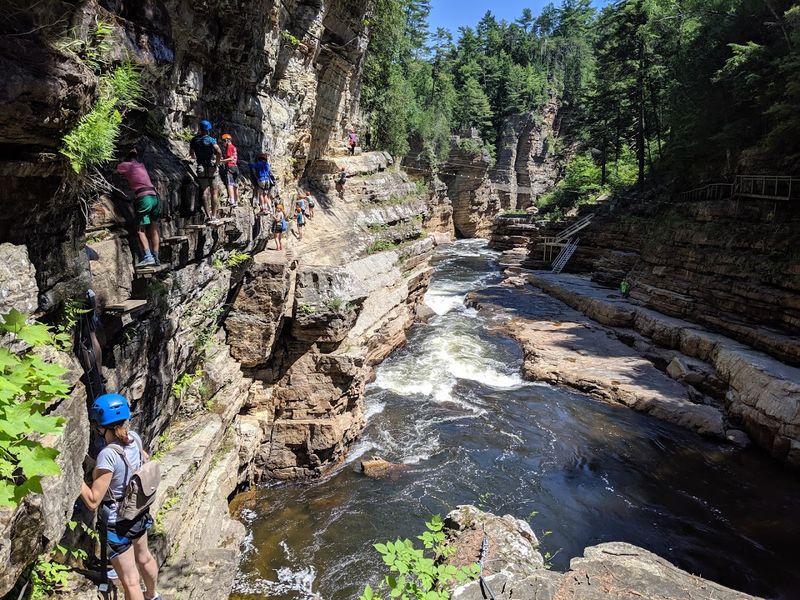
Ausable Chasm has been called the Grand Canyon of the Adirondacks, and while every region seems to have its own Grand Canyon comparison, this one actually earns the nickname.
Located on 2144 State Route 9, Ausable Chasm, NY 12911, this ancient sandstone gorge stretches for about two miles and features walls that rise up to 200 feet in some sections.
The rock itself is Potsdam sandstone, formed roughly 500 million years ago, and the AuSable River has been slowly carving through it ever since.
The trail system here allows you to walk along the rim and descend into the gorge itself, getting up close with the sculpted rock walls, rushing rapids, and carved stone formations that have names like Elephant Head and Table Rock.
For those who want a more adventurous experience, tubing and guided raft trips through sections of the chasm are available during the warmer months, putting you right in the middle of the canyon with the water rushing around you.
The combination of walking trails and river-based exploration makes Ausable Chasm one of the more versatile natural attractions in the Adirondack region. It hits differently than a typical state park because it layers geology, history, and outdoor adventure into one compact, high-impact destination.
6. The Wild Center
Most nature museums give you information about a place. The Wild Center in Tupper Lake actually makes you feel like you understand it.
Sitting on 31 acres of Adirondack wetland and forest, on 45 Museum Dr, Tupper Lake, NY 12986, this modern natural history museum manages to be genuinely smart and deeply engaging without ever feeling like a lecture.
The exhibits cover Adirondack ecology, wildlife, and climate in ways that are visually compelling and surprisingly easy to absorb, even for people who do not normally gravitate toward science-heavy content.
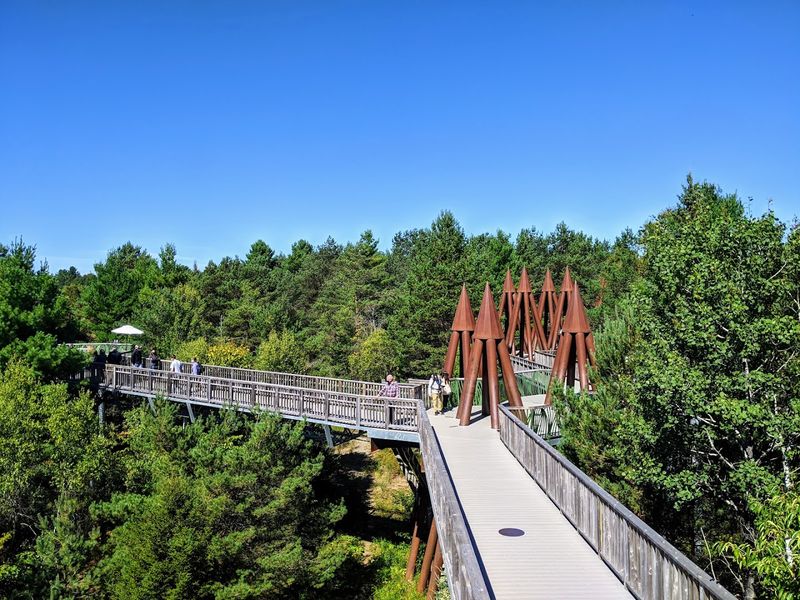
The outdoor Wild Walk is the crown jewel of the experience, a series of elevated boardwalks and bridges that rise up through the forest canopy and culminate in a giant spider-web-like platform suspended in the treetops.
Inside, live animal exhibits feature otters, turtles, and fish native to the Adirondack region, and the interactive displays have enough depth to keep curious adults engaged long after the initial wow factor wears off.
The Wild Center has a way of reframing the Adirondacks not just as a place to hike through but as a living, interconnected system worth understanding. After spending a few hours here, the mountains and lakes around Tupper Lake look noticeably different, because now you actually know what you are looking at.
7. Boldt Castle
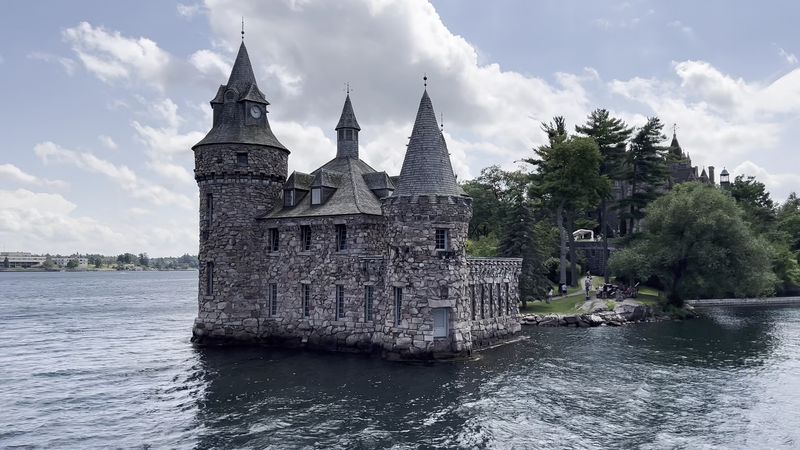
A real castle on a real island in the middle of a real river in New York State. That sentence should not be true, but here we are.
Boldt Castle sits on 1 Heart Island, Alexandria Bay, NY 13607, and it is one of the most romantic and melancholy landmarks in the entire state.
George Boldt, the millionaire hotelier behind the original Waldorf-Astoria in New York City, began construction on this six-story Rhineland-style castle in 1900 as a gift for his wife, Louise.
In 1904, construction stopped. The unfinished castle sat abandoned for 73 years before the Thousand Islands Bridge Authority took it over and began a restoration effort that has been ongoing ever since.
Today, the castle is open to visitors via ferry from late spring through fall, with the 2026 season opening dates posted well in advance on the official website so you can plan accordingly.
Walking through the rooms and grounds gives you this layered feeling of grandeur and sadness that is hard to shake. The craftsmanship is extraordinary, the setting on the river is breathtaking, and the story behind it all adds a weight to the experience that makes it linger long after you leave.
8. Corning Museum Of Glass
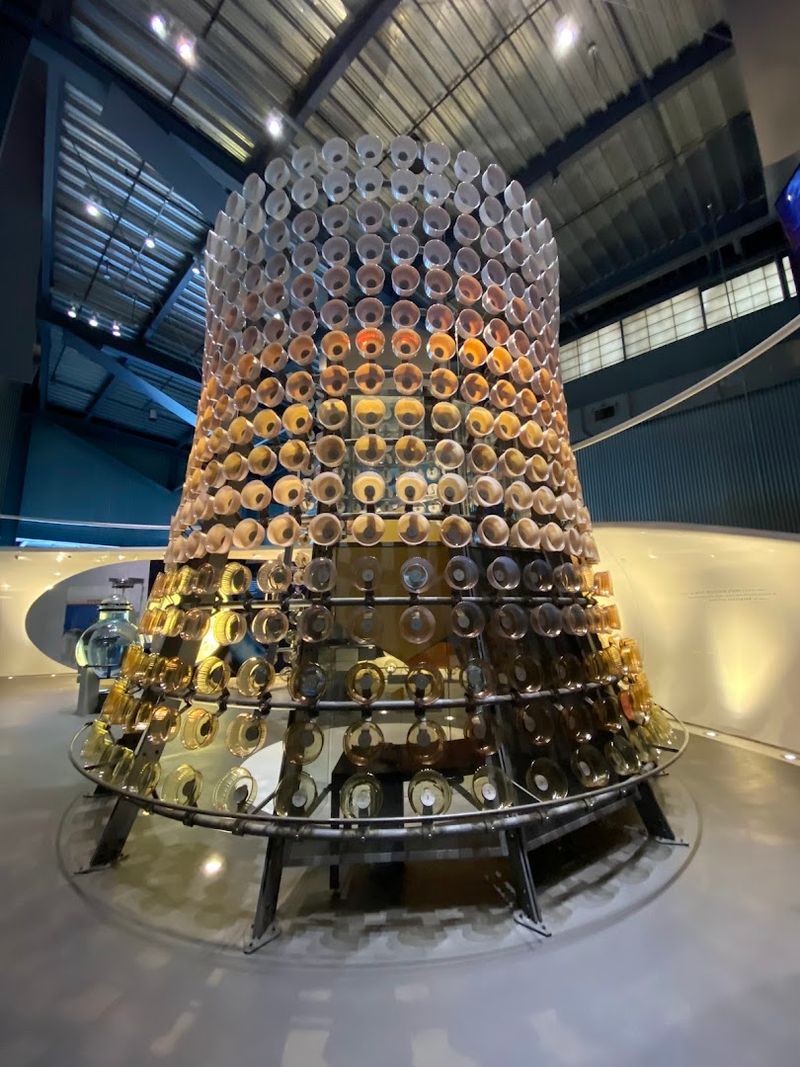
Before visiting the Corning Museum of Glass, most people think of glass as a background material, something windows and drinking vessels are made of. After visiting, that perception is completely gone.
Located in 1 Museum Way, Corning, NY 14830, this museum is one of the most impressive dedicated art and science institutions in the country, covering 35 centuries of glass history across a sprawling, beautifully designed complex.
The collection includes over 45,000 objects ranging from ancient Roman glass vessels to massive contemporary sculptures by artists like Dale Chihuly, whose work transforms the material into something that looks alive.
The galleries flow naturally from historical artifacts into modern artistic expression, making the whole thing feel like a continuous story rather than a series of disconnected exhibits. It is the kind of museum that rewards slow, curious visitors who are willing to look closely at things.
The glassmaking demonstrations are a genuine highlight. Watching skilled artists shape molten glass at temperatures exceeding 2,000 degrees Fahrenheit is mesmerizing in a way that is hard to describe until you have seen it live.
9. Walkway Over The Hudson State Historic Park
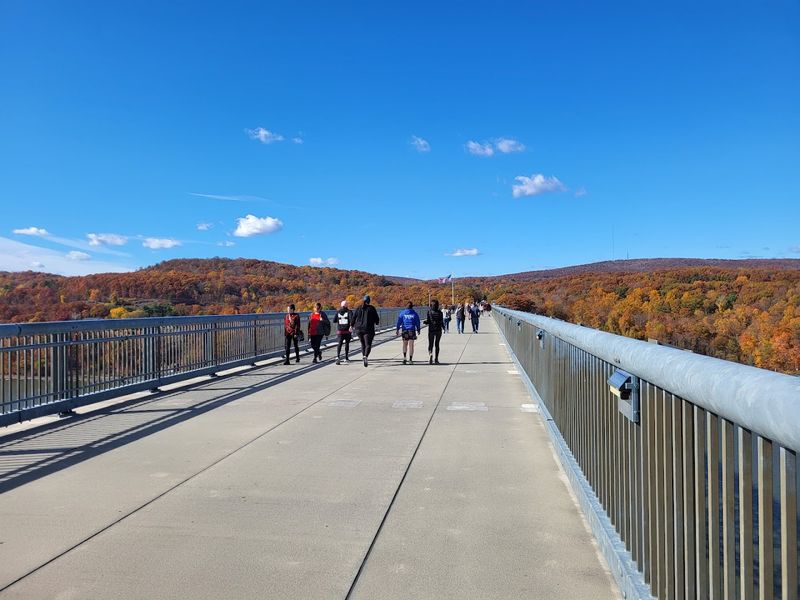
Walking across the Walkway Over the Hudson is one of those experiences that sounds simple on paper and then completely takes your breath away in practice.
Stretching 1.28 miles across the Hudson River on 61 Parker Ave, Poughkeepsie, NY 12601, this elevated pedestrian bridge is the longest elevated pedestrian bridge in the world, and it sits 212 feet above the water.
From up there, the Hudson River looks enormous, the valley stretches out in both directions, and the scale of the landscape becomes suddenly, almost overwhelmingly clear.
The bridge was originally a railroad span built in 1889, which operated for nearly a century before a fire in 1974 put it out of service. After decades of sitting dormant, a remarkable community effort transformed it into a public park that opened in 2009.
The history is woven into the structure itself, with the old steel framework and wooden planking giving the walk a distinctly industrial character that contrasts beautifully with the natural scenery surrounding it.
Sunrise and sunset walks are especially popular, and for good reason. The light on the river at those hours is genuinely cinematic, painting everything in warm gold and pink tones that make the Hudson Valley feel like it belongs in a painting rather than real life.
10. Storm King Art Center
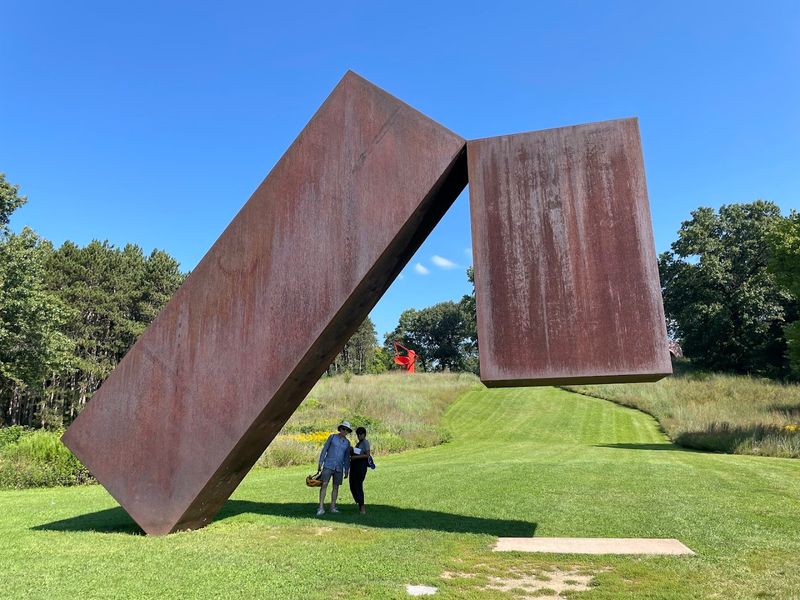
Imagine a sculpture museum where the galleries are 500 acres of rolling Hudson Valley hills, and the art is big enough to compete with the landscape around it. That is Storm King Art Center, located in 20 Old Pleasant Hill Rd, New Windsor, NY 12553, and it is one of the most singular cultural experiences anywhere in New York State.
Founded in 1960, Storm King has grown into a world-renowned institution with a permanent collection that includes monumental works by artists like Alexander Calder, Mark di Suvero, Richard Serra, and Maya Lin.
The scale of everything here is part of the point. Serra’s massive weathered steel walls curve through the meadows in ways that interact with the surrounding hills and sky, creating compositions that change completely depending on where you are standing and what time of day you visit.
Di Suvero’s towering steel beams reach into the open air with an energy that feels almost kinetic even when perfectly still.
Storm King posts its 2026 reopening information well in advance, so checking ahead before planning your visit is always a smart move. The season typically runs from spring through late fall, and weekday visits tend to offer more space and quiet for really taking in the work.
11. Dia Beacon
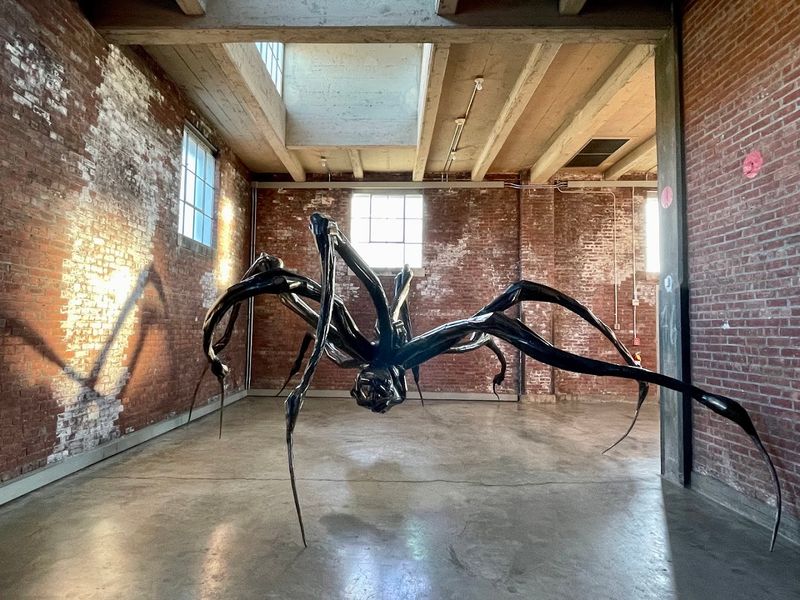
Dia Beacon occupies a former Nabisco box-printing factory on 3 Beekman St, Beacon, NY 12508, and the building itself is half the experience before you even look at a single piece of art.
The massive industrial space, with its sawtooth skylights flooding the interior with natural light, was transformed into one of the most respected contemporary art museums in the world when it opened in 2003.
The collection focuses on art from the 1960s through the present, with an emphasis on large-scale, site-specific works that demand the kind of space most museums simply cannot offer.
Artists like Donald Judd, Dan Flavin, Richard Serra, and Louise Bourgeois are represented here with works that fill entire rooms and corridors.
Flavin’s fluorescent light installations transform the architecture itself into the medium, bathing entire spaces in colored light that shifts your perception of depth and space in genuinely disorienting ways.
After working through the galleries, the short walk down to the Hudson River waterfront is a natural decompression.
Beacon itself has developed into a genuinely charming small city with independent shops, cafes, and galleries lining its main street, making a full day here entirely easy to fill.
12. Mohonk Preserve
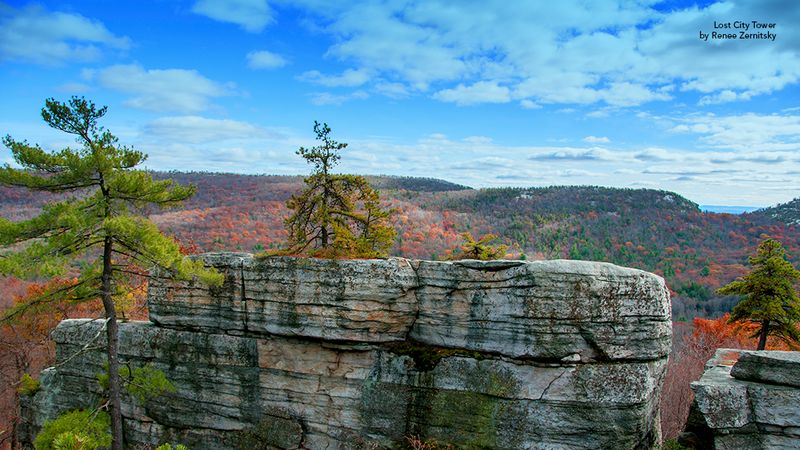
The Shawangunk Mountains do not get nearly enough credit for how spectacular they are. Mohonk Preserve, which protects over 8,000 acres of the Shawangunks in Ulster County, 3197 State Rte 44/55, Gardiner, NY 12525, feels like a completely different state from the moment you step onto the ridge.
The white quartz conglomerate cliffs that define the landscape here are unlike anything else in New York, rising sharply above the surrounding valley and offering views that stretch clear to the Catskills on a good day.
The preserve is a rock climber’s paradise, with the Gunks, as they are known among the climbing community, widely considered some of the best trad climbing in the country. But you absolutely do not need to be a climber to fall hard for this place.
The carriage roads and footpaths that wind through the preserve offer some of the most rewarding hiking in the Hudson Valley region, with consistent elevation changes and dramatic cliff-edge views that keep the scenery interesting for miles.
Sky Top Tower, perched at the edge of the ridge near the adjacent Mohonk Mountain House property, provides a 360-degree panorama that is worth every step of the climb to reach it. The preserve is open year-round, and each season brings a genuinely different character to the landscape.
13. Saratoga Spa State Park
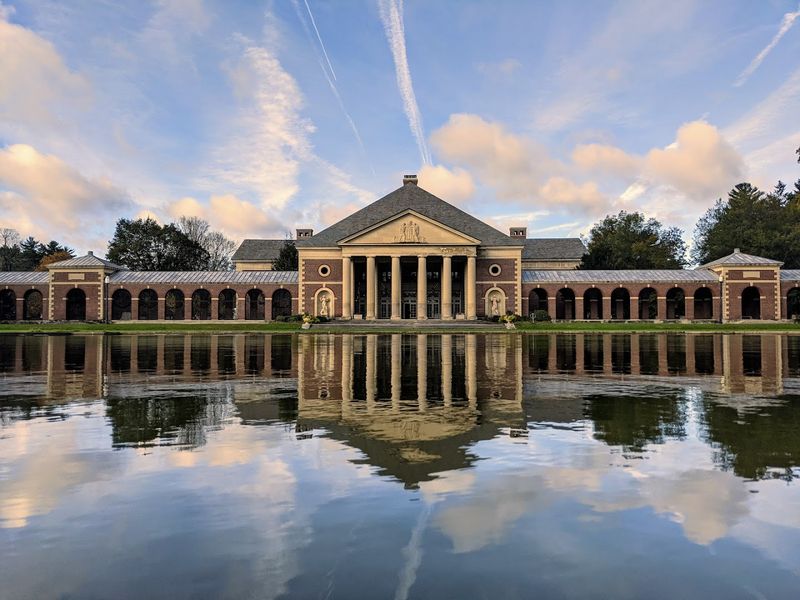
Saratoga Spa State Park is one of those places that defies easy categorization, and that is exactly what makes it so interesting.
Located in 19 Roosevelt Dr, Saratoga Springs, NY 12866., this National Historic Landmark covers over 2,000 acres and combines the grandeur of 1930s New Deal architecture with a genuinely unusual natural phenomenon: naturally carbonated mineral springs that bubble up from the ground throughout the park.
The bathhouses here are architectural showpieces, built in a classical style that feels both grand and oddly intimate. The Roosevelt Baths and Spa, housed in one of the original bathhouse buildings, still offers mineral baths to this day, letting visitors soak in the same naturally carbonated waters that made Saratoga famous in the 19th century.
Beyond the springs and bathhouses, the park includes miles of walking and cycling paths, the Peerless Pool complex for summer swimming, and the Saratoga Performing Arts Center, which hosts major concerts and performances throughout the warmer months.
Tall pines line the roads and paths, filtering the light and keeping the atmosphere cool and quiet even on busy summer days.
Saratoga Spa State Park is proof that New York’s park system contains multitudes, and this particular multitude is well worth your time.
14. Governors Island
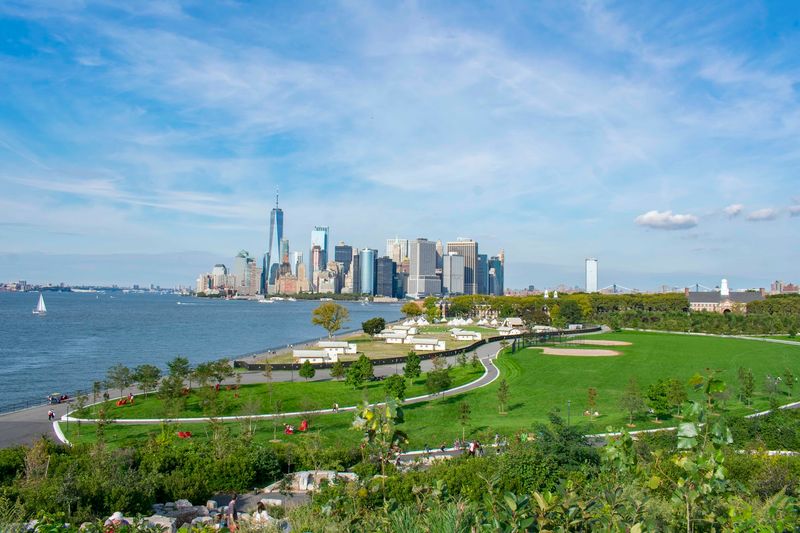
Most people think of New York City as a place of constant noise and motion, which is exactly why Governors Island feels like such a revelation.
Sitting just 800 yards off the southern tip of Manhattan in New York Harbor, this 172-acre island is accessible by a short ferry ride from Lower Manhattan or Brooklyn, and the moment you step off the boat, the city feels remarkably far away.
The island has a layered history that spans centuries, serving as a military post from the Revolutionary War era through the late 20th century. The historic district in the northern section preserves two 19th-century forts, Fort Jay and Castle Williams, along with rows of Federal-style houses and officer’s quarters that give the area a quietly time-capsule quality.
Governors Island is open daily year-round, though the ferry schedule varies by season. Summer brings food vendors, art installations, and programming that fills the island with activity, while the quieter months offer a more contemplative version of the same beautiful place.
Either way, this is New York at its most unexpectedly generous, offering open sky and breathing room in a city that usually charges a premium for both.