
13 North Carolina Spots That Are Quietly Spectacular And Underrated
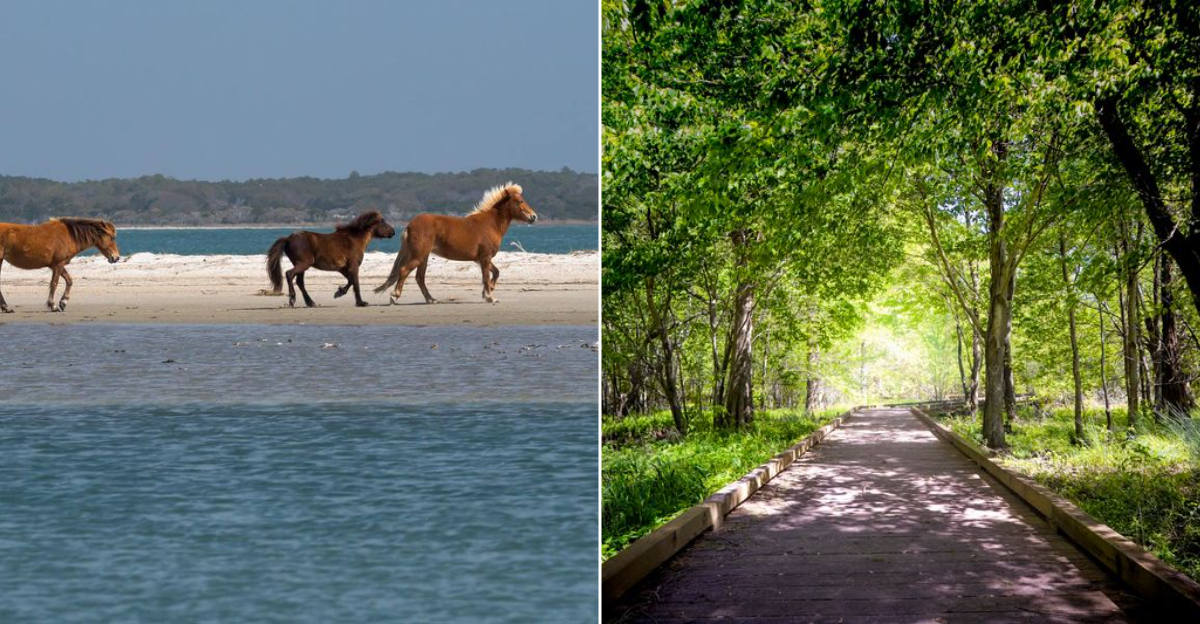
Not every great place comes with a billboard. Some just sit there, minding their business, being outrageously beautiful, wildly charming, or surprisingly delicious, while the spotlight shines somewhere else.
And in North Carolina, that feels almost intentional. This is a state that doesn’t need to oversell itself.
It just casually delivers. Mountain views that make you pull over without warning. Small towns with main streets straight out of a movie set. Quiet coastal stretches that feel like they were reserved just for you.
Ever stumbled on a place so good you almost didn’t want to tell anyone? Exactly that energy.
These aren’t the obvious heavy-hitters. They’re the under-the-radar, blink-and-you’ll-miss-them gems that somehow end up stealing the whole trip.
So consider this your insider list. These are North Carolina spots that prove the best discoveries don’t beg for attention… they earn it.
1. Ocracoke Island
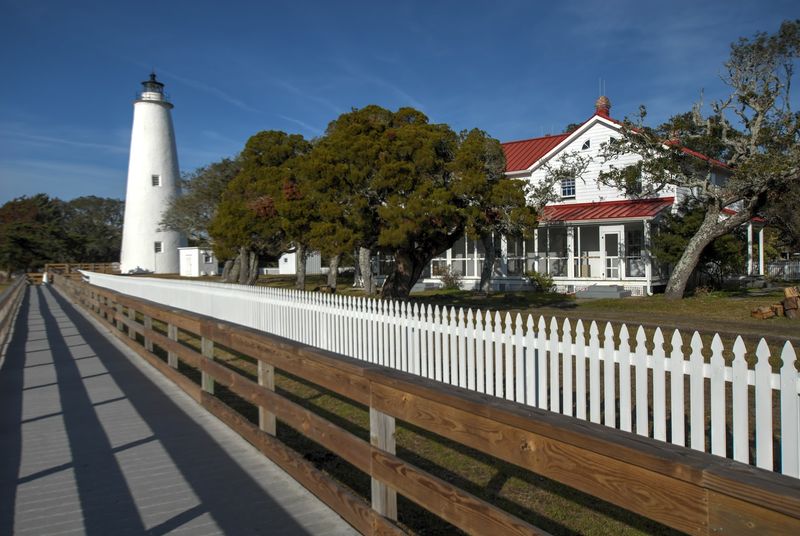
Getting to Ocracoke Island requires a ferry ride, and honestly, that is the whole point. The moment the mainland disappears behind you, the pace of everything slows down in the best possible way.
Sitting at the southern end of Hatteras Island in Hyde County, North Carolina, Ocracoke is reachable only by water, which has kept it from becoming the kind of place that loses itself to overdevelopment.
The village itself is tiny and walkable, with weathered cottages, independent shops, and a harbor that looks like it belongs on a postcard from 1975.
The Ocracoke Lighthouse, built in 1823, is the second oldest operating lighthouse in the United States and still guides boats through Ocracoke Inlet. You can walk right up to it and feel the weight of all that history without a single velvet rope in your way.
The beach on the National Seashore side of the island is some of the most pristine shoreline on the entire East Coast. Wide, clean, and frequently empty on weekdays, it is the kind of beach that reminds you why people fell in love with the ocean in the first place.
The village also has a genuinely good food scene for its size, with local spots serving fresh seafood that tastes like it was caught that morning, because it probably was.
Ocracoke rewards the people who make the effort to get there, and it quietly holds onto the kind of authentic coastal character that most beach towns traded away decades ago.
2. Merchants Millpond State Park
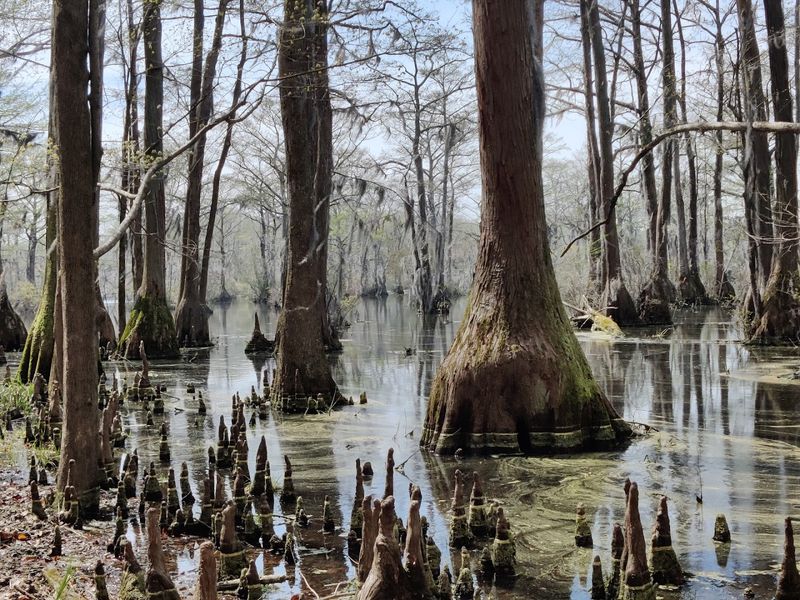
Paddling through Merchants Millpond feels like someone pressed pause on the modern world and swapped it for a Grimm fairy tale. Merchants Millpond State Park, 176 Millpond Rd, Gatesville, North Carolina 27938, protects one of the most hauntingly beautiful cypress gum swamps on the East Coast, and somehow it still stays off most people’s radar.
The millpond was created in the early 1800s after a dam went up on Bennetts Creek, flooding the forest into a maze of standing tupelo gum and bald cypress.
Once you slip into those narrow water corridors, everything changes. The water is tea-dark with tannins, reflections look unreal, and the quiet feels busy in its own way, frogs calling, herons lifting off, wood ducks skimming past like they own the place.
You can rent a canoe or kayak at the park, so you do not need to bring gear to get the full experience. There is also a campground if you want to stay into evening, when the swamp turns even moodier and more otherworldly.
Birding is excellent, and the best part is how uncrowded it still feels, like you found a secret that has not gone mainstream yet.
3. Shackleford Banks
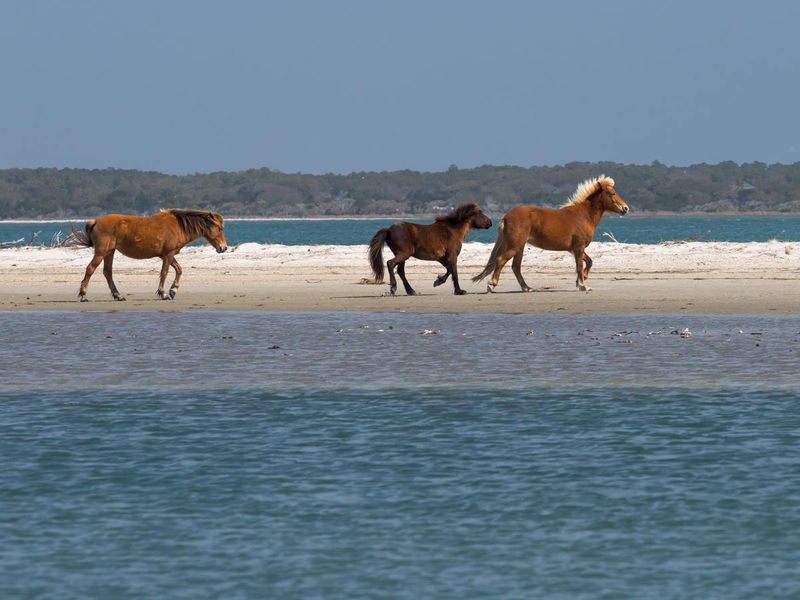
Some beaches come with umbrellas, vendors, and parking chaos. Shackleford Banks comes with wild horses, wind-sculpted dunes, and zero crowds competing for your attention.
Shackleford Banks, Cape Lookout National Seashore, off Beaufort, North Carolina 28516, is only reachable by ferry or private boat, which instantly filters out anyone who was not serious about being there.
The island stretches for miles of undeveloped coastline that feels almost cinematic in its emptiness. No roads.
No buildings. No snack stand waiting to rescue you. Just wide beach, maritime thickets, salt air, and the occasional herd of feral horses wandering through like they have an appointment with the horizon.
These horses are often described as descendants of Spanish mustangs, and seeing them graze with the Atlantic behind them is one of the strangest, coolest nature moments the North Carolina coast can deliver.
Shelling here is legendary if you know what to look for. Because visitation is limited compared to nearby developed beaches, shells pile up along the tide line in ridiculous abundance.
Bring a bag, sunscreen, and more water than you think you will need, because there are no facilities.
Ferry schedules run seasonally, so checking ahead matters. Shackleford does not try to impress you.
It just exists, raw and unhurried, and that is exactly why it sticks with you.
4. Pettigrew State Park
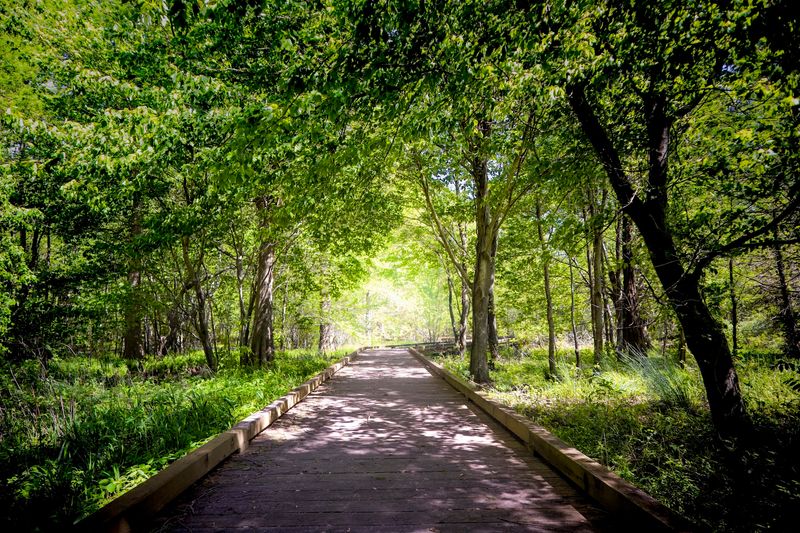
There is something deeply satisfying about finding a lake this big in a state where everyone seems to be looking elsewhere. Pettigrew State Park, 2252 Lake Shore Rd, Creswell, North Carolina 27928, sits along the shores of Lake Phelps in Washington and Tyrrell counties, and it offers a quiet, expansive natural experience that feels genuinely rare in eastern North Carolina.
Lake Phelps is the second largest natural lake in North Carolina, stretching over 16,000 acres and reaching depths of about nine feet.
What makes it feel special is how intact the surrounding landscape remains. The lake is ringed by old-growth Atlantic white cedar forest, and the water is unusually clear for this part of the state.
Archaeologists have recovered hundreds of ancient dugout canoes from the lake, some dating back more than 4,000 years, which adds a sense of time and weight to every paddle stroke.
The park connects to Pocosin Lakes National Wildlife Refuge, so wildlife viewing can be impressive. Tundra swans winter here in large numbers, and black bears are regularly spotted in the surrounding forest.
Trails are flat and easy, making it ideal for anyone who wants real wilderness without technical hiking.
Pettigrew rarely shows up on North Carolina bucket lists, and that oversight is baffling.
5. Wilson Creek Wild And Scenic River Area
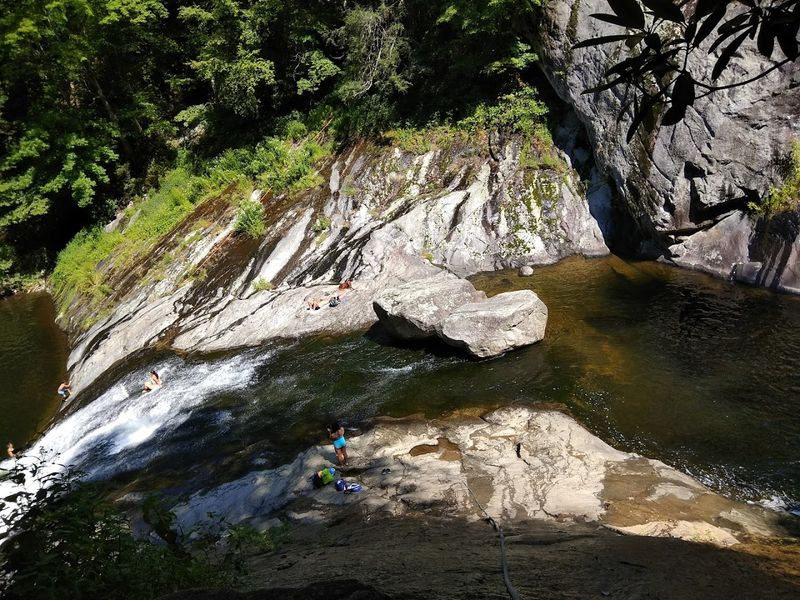
If Wilson Creek were in any other state, it would have a gift shop, a paved overlook, and a wait time. In North Carolina, it mostly just has locals who would prefer you did not find out about it.
Wilson Creek Wild and Scenic River Corridor, Pisgah National Forest, Brown Mountain Beach Road, Lenoir, North Carolina 28645, is packed with waterfalls, gorge scenery, and swimming holes that feel discovered rather than curated.
The creek drops through cascades and clear pools across some of the most dramatic foothill terrain in the state. Babel Tower Trail delivers big ridge views, while the lower creek access points lead straight to cold swimming holes that are absolutely worth the scramble down the bank.
Waterfall hunters can chase Gragg Prong, Hunt Fish Falls, and a handful of unnamed cascades tucked through the watershed, each one with its own payoff.
The road network is a mix of paved and gravel, so a vehicle with decent clearance makes exploring easier. Camping ranges from designated sites to dispersed national forest spots, which makes it easy to settle in for a few days.
Fishing is a major draw too, with wild trout that pull anglers from across the region. Even on a clear summer weekend, Wilson Creek still carries that backroad-secret energy that makes it feel special.
6. Joyce Kilmer Memorial Forest
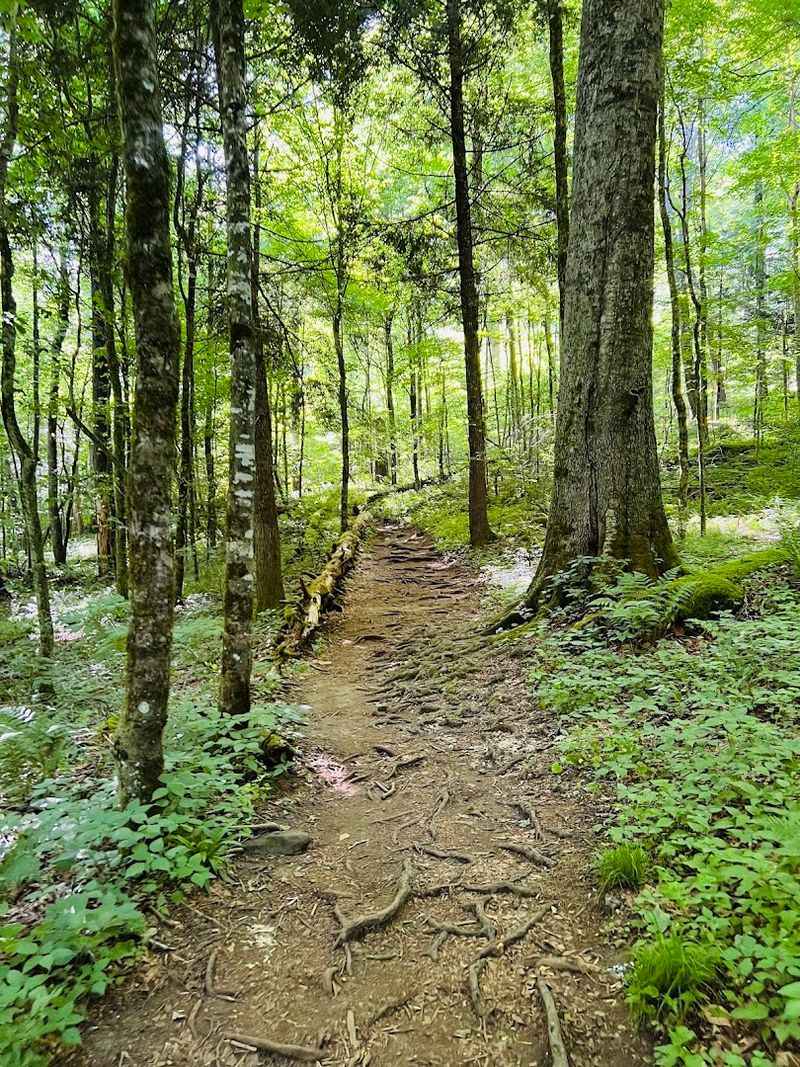
Standing next to a tulip poplar that was already old when the American Revolution happened puts your whole week into perspective.
Joyce Kilmer Memorial Forest, 5410 Joyce Kilmer Road, Robbinsville, North Carolina 28771, sits inside Nantahala National Forest and protects one of the largest remaining tracts of old-growth forest in the eastern United States. Walking through it feels genuinely humbling.
The trees here are enormous, especially for the East Coast, where most old growth was logged out by the early 20th century. Tulip poplars reaching around 100 feet tall and up to 20 feet in circumference are not unusual.
Eastern hemlocks, yellow birch, and basswood fill in the canopy layers, creating a multi-story interior that feels cathedral-quiet and cathedral-tall.
The memorial loop trail is only about two miles and relatively easy, which makes the scale of what you are moving through even more disorienting in the best way.
The forest was dedicated in 1936 to poet Joyce Kilmer, who wrote “Trees”. Spring wildflowers light up April and May, and fall color is spectacular thanks to the variety of species.
For a short, low-effort walk, this place delivers a full-body sense of awe.
7. South Mountains State Park
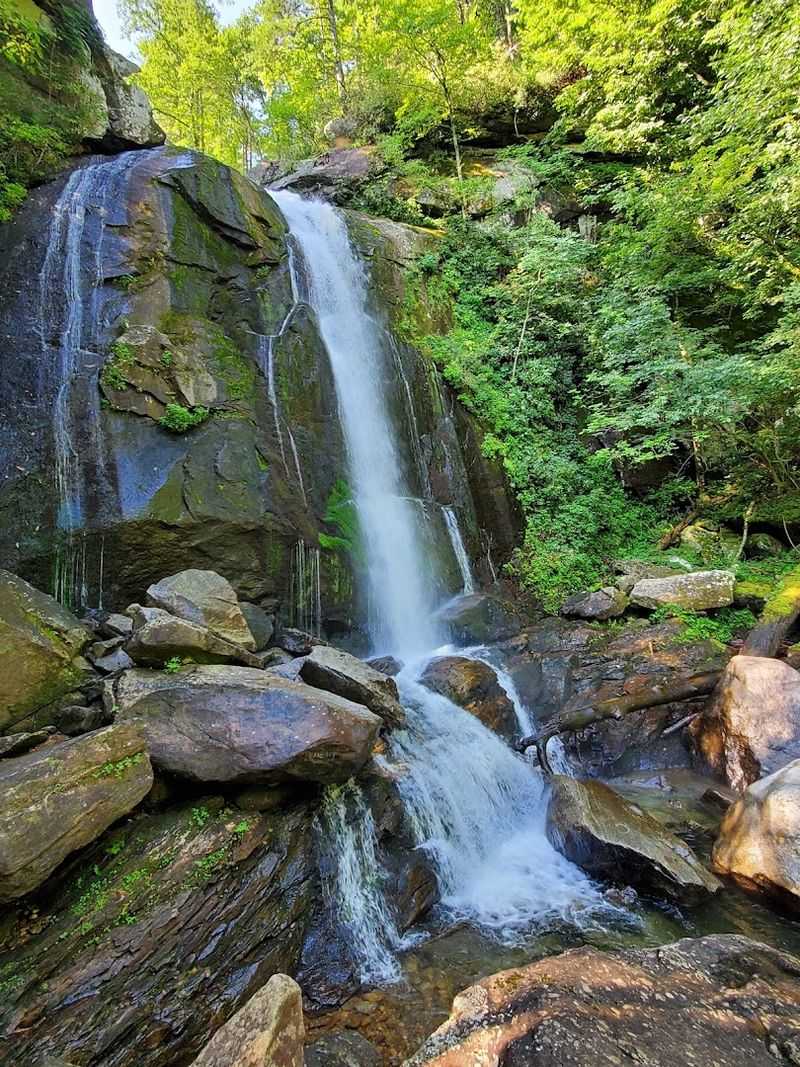
South Mountains State Park has a reputation problem, and that problem is that not enough people know it exists.
South Mountains State Park, 3001 South Mountains Park Ave, Connelly Springs, North Carolina 28612, sits in Burke County in the South Mountains range, a compact cluster of peaks that rises fast from the Piedmont foothills and delivers a backcountry feel that rivals parks with triple the fame.
The trail system here is no joke. With more than 40 miles of routes, you can choose easy riverside walks or commit to steep ridge climbs that actually earn their views.
High Shoals Falls is the signature payoff, dropping about 80 feet over a rock face, reached by a moderate 2.7 mile round trip through creekside forest that stays pretty even on warm days.
Backcountry campsites make overnights feel properly remote, especially on weeknights when the park quiets down.
A practical note: certain trails can close temporarily for maintenance or storm damage, so it helps to check current conditions before you go. Mountain biking is also a major draw, and wildlife sightings like deer, wild turkey, and occasional black bears are part of the experience.
The best part is how uncrowded it still feels.
8. Stone Mountain State Park
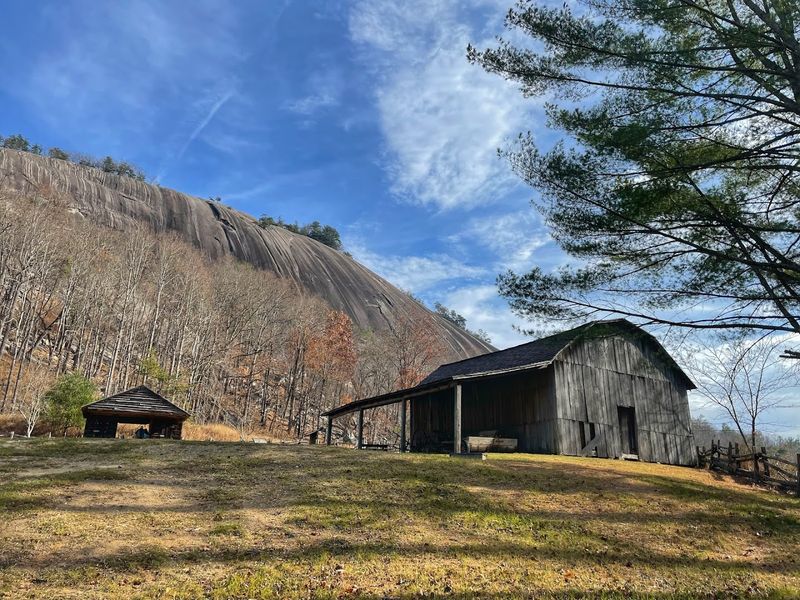
A bare granite dome rising 600 feet above the forest, a waterfall sliding down its face, and a restored 19th-century homestead resting in the meadow below. Stone Mountain State Park, 3042 Frank Pkwy, Roaring Gap, North Carolina 28668, is the kind of place that makes you wonder why it is not in every conversation about North Carolina’s best destinations.
The dome is a plutonic rock formation revealed by millions of years of erosion, and the hike up it includes some genuinely fun scrambling across open granite slabs. Stone Mountain Falls drops about 200 feet in a narrow, elegant cascade, easy to spot from the meadow and even better up close.
The park has more than 18 miles of trails through creek bottoms, ridgelines, and rock outcrops, with long views on clear days.
Near the trailhead, the historic homestead adds a rare cultural layer, with a restored cabin, barn, and gristmill dating to the mid-1800s. Spring brings strong wildflower displays along the creek trails, and the dome’s climbing routes draw technical climbers from across the Southeast who know this as premier granite crack climbing east of the Mississippi.
If you show up early on a weekend, you can usually snag parking and enjoy the dome before the crowds and heat settle in.
9. Occoneechee Mountain State Natural Area
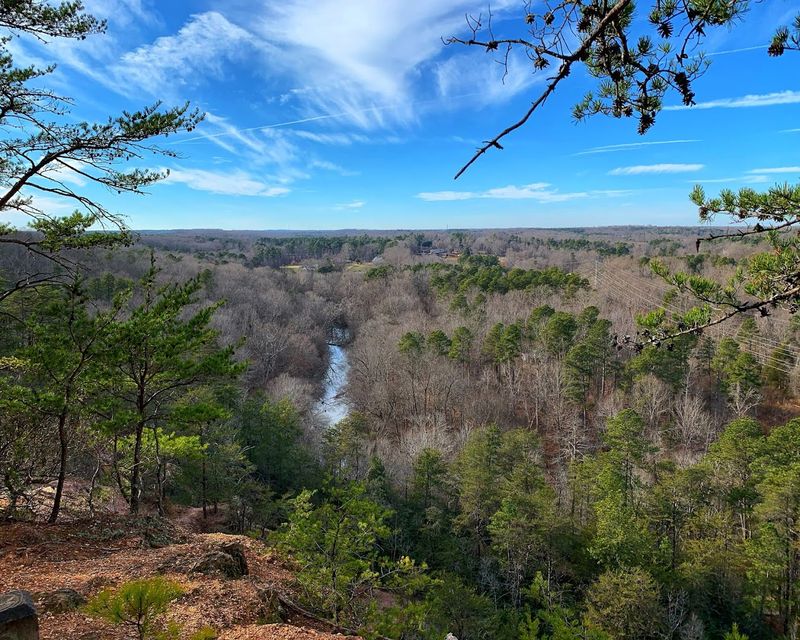
Not every great outdoor experience needs a full day and a packed lunch. Occoneechee Mountain State Natural Area, 625 Virginia Cates Rd, Hillsborough, North Carolina 27278, proves a real payoff can happen within easy reach of town.
At just 124 acres, it is one of the smallest state natural areas in North Carolina, but it squeezes a lot of character into a compact footprint.
Occoneechee is a monadnock, an isolated rock mass that resisted erosion while the surrounding landscape wore down. The summit rises to about 867 feet, making it the highest point in the North Carolina Piedmont, and the overlook at the top opens up wide views of the Eno River valley and the countryside beyond.
The climb is modest, but the view still feels earned, especially near sunset when the light turns soft and the whole scene looks quietly dramatic without any help from a filter.
You get around three miles of trails through oak and hickory forest, past rocky outcrops, and along the edge of a former quarry that has been reclaimed by vegetation in a surprisingly pretty way.
There is cultural depth here too, with the area sitting beside the site of an ancient Occaneechi village that served as a major trading hub in the 1600s. For Piedmont locals who want an overlook without driving hours west, this is the answer.
10. Mayo River State Park
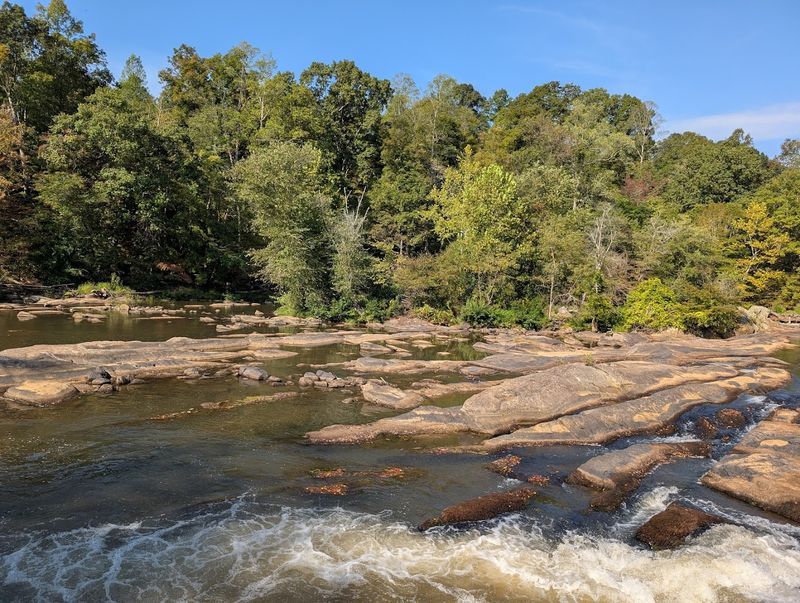
Mayo River State Park is the kind of place outdoor people quietly bookmark while everyone else scrolls past. With several access points along the Mayo River near Mayodan, it still has that newer-park energy that makes a visit feel like you found something early.
Mayo River State Park, 500 Old Mayo Park Rd, Mayodan, North Carolina 27027, delivers the main attraction right away: water.
The river runs clear and cold through forested bluffs and rocky shoals, with easy spots for fishing, paddling, and the occasional swim when the weather cooperates. What I love is the variety.
Some stretches stay calm and friendly for beginners, while other sections pick up speed and give experienced kayakers something to work with.
If you move quietly, wildlife tends to show itself, river otters, great blue herons, and mink are all part of the corridor’s regular cast.
Away from the water, upland trails cut through Piedmont hardwoods that glow in October when fall color hits its peak. Because the park is still building out and has not turned into a social media magnet, crowds stay refreshingly light.
Good river access, solid wildlife, and real quiet are getting harder to find, and Mayo River hands you all three.
11. Medoc Mountain State Park
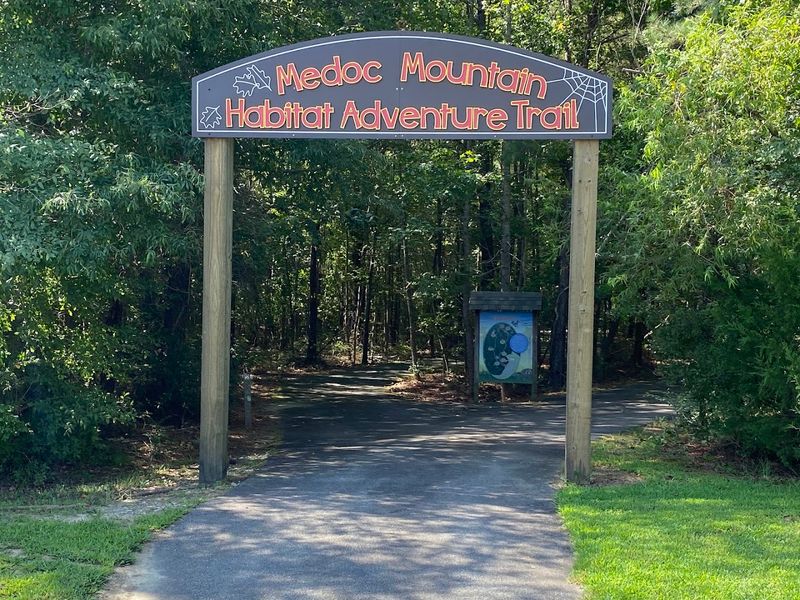
Eastern North Carolina does not get nearly enough credit for its outdoor spaces, and Medoc Mountain State Park is the clearest proof of that. Near Hollister in Halifax County, Medoc Mountain State Park, 1541 Medoc State Park Rd, Hollister, North Carolina 27844, takes its name from a modest granite ridge that rises about 325 feet above the coastal plain.
It sounds underwhelming until you are on top of it, surrounded by forest that feels genuinely removed from everything.
Little Fishing Creek cuts through the park and gives the trails their best moments. Creek crossings, small swimming holes, and rocky outcroppings add variety you do not expect in such flat country.
The Bluff Loop Trail and Stream Trail are go-to picks that string together the highlights without demanding more than a few comfortable hours on your feet.
In fall, the creek corridor puts on a real show, with beech, red maple, and tulip poplar bringing the color.
Birding is a major draw, especially during spring migration when warblers and other neotropical species move through. The campground is well kept and rarely crowded, making it an easy base for exploring Halifax County, which also carries deep American Revolution history.
Medoc will not overwhelm you with famous viewpoints, but it delivers steady, unforced beauty that makes a day feel well spent.
12. Bath

Bath moves at a pace the rest of the country seems to have forgotten was ever possible. Bath, North Carolina 27808, established in 1705, is the state’s oldest incorporated town, and wandering its historic district along the Pamlico River in Beaufort County feels less like a museum visit and more like the 21st century simply forgot to arrive.
With a population of around 200, the streets stay quiet and the history feels intimate, not staged. The Historic Bath State Historic Site preserves some of the oldest surviving structures in North Carolina, including the Palmer-Marsh House from around 1751 and St. Thomas Episcopal Church, dating to 1734 and still active today.
These are not replicas. They are the real buildings, still standing, still carrying their story in the wood, brick, and worn thresholds.
Bath also carries a legendary connection to Blackbeard, who reportedly used the town as a home base along the Carolina coast. That pirate shadow adds a little swashbuckling energy to the calm colonial architecture and soft river views.
The Pamlico River frontage is peaceful, with boat access and picnic areas that make it easy to linger. Bath rewards slow travel and genuine curiosity.
It does not compete for attention, and that quiet restraint is exactly what makes it feel real.
13. Seagrove
Seagrove proves a town does not need to be flashy to be completely worth your time. Seagrove, North Carolina 27341, in Randolph County about an hour south of Greensboro, has been producing handmade pottery for more than 250 years, making it one of the oldest and most concentrated pottery traditions in the United States.
Rich local clay deposits helped spark it, and generations of families turned that natural advantage into a living craft.
Today, the Seagrove area is home to more than 100 working pottery studios spread across roughly a 20-mile corridor, from small roadside workshops run by solo artists to larger family operations with multiple generations on the shelves.
The North Carolina Pottery Center adds helpful history, but the real magic is taking the backroads and stopping wherever something in the window makes you pull over. Many potters welcome visitors into their working spaces, and that access makes the whole experience feel warm, human, and unpolished in the best way.
You will see everything from traditional stoneware and salt-glazed pieces to contemporary sculptural ceramics. Prices stay reasonable because you are buying directly from the maker, and quality stays high because reputation matters here.
Leaving with a handmade mug or bowl feels different than a souvenir. It comes home with a story.