
Colorado’s Haunted Canyon Drive Is Full Of History And Ghostly Tales
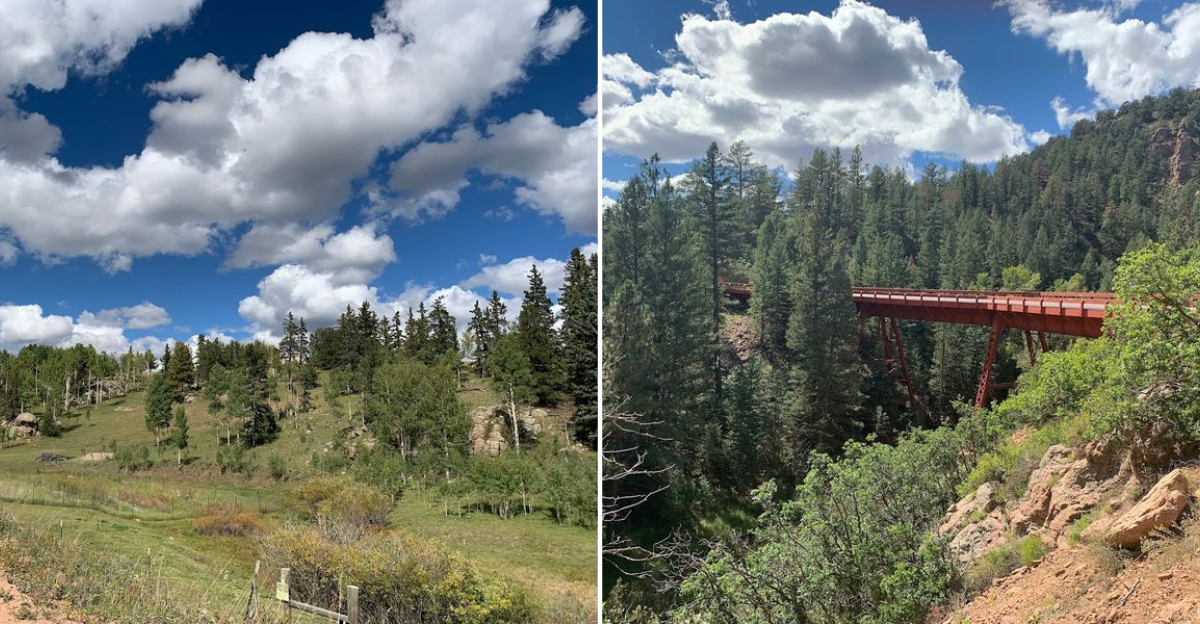
Tucked into Colorado’s Pikes Peak region, this rugged back road is the kind of place that makes you feel like you have stepped onto a film set, except the history surrounding it is entirely real. The thirty mile dirt stretch winds through a dramatic canyon once carved alongside a bustling gold rush railroad, and traces of that era still linger in weathered stone walls and abandoned structures.
In Colorado, landscapes like this blend beauty with legend, inviting travelers to slow down and take it all in. Stories of restless spirits and unexplained sightings have circulated for generations, adding an extra thrill to every bend in the road.
Towering cliffs rise on either side while narrow passages keep drivers alert and engaged. Colorado’s high country rewards those willing to venture beyond paved highways.
Pack snacks, download your maps ahead of time, and prepare for a drive that feels both cinematic and deeply authentic.
Why This Haunted Canyon Drive Is Worth The Detour
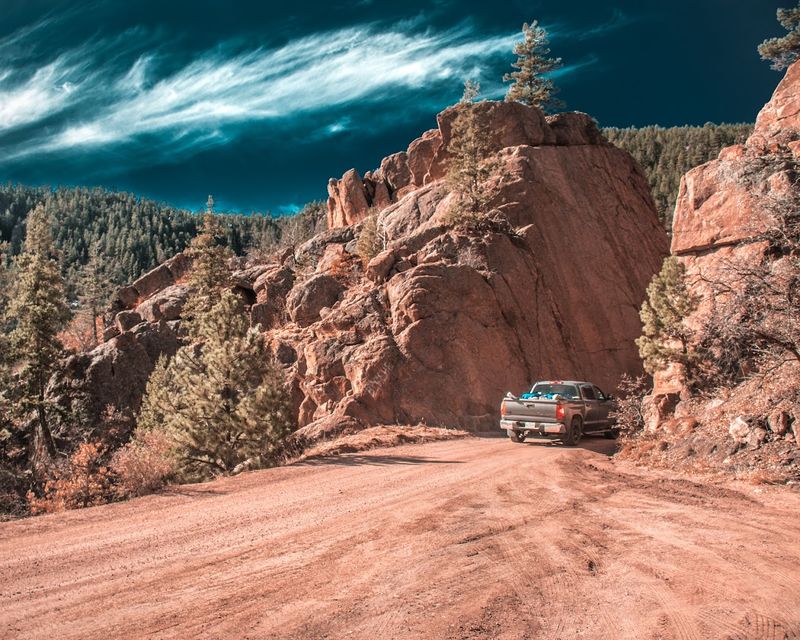
There’s a certain category of road trip destination that earns its reputation not through marketing but through word of mouth — the kind where someone grabs your arm at a dinner party and says, “You have to go.” This spot in Colorado belongs firmly in that category. Rated 4.8 stars by the people who’ve actually driven it, this isn’t a place that overpromises.
The road follows the original path of the Florence and Cripple Creek Railroad, a line built during Colorado’s 1890s Gold Rush to haul ore out of the mountains. When the railroad was eventually abandoned and the tracks pulled up in 1918, the corridor was repurposed into the road travelers use today.
That layered history — gold rush ambition, railroad engineering, and eventual abandonment — gives the drive a texture that most scenic byways simply don’t have.
Why It Matters: You’re not just looking at pretty rocks. You’re driving through a corridor that shaped Colorado’s economic history, complete with tunnels carved into canyon walls and a surviving bridge from the original railway era.
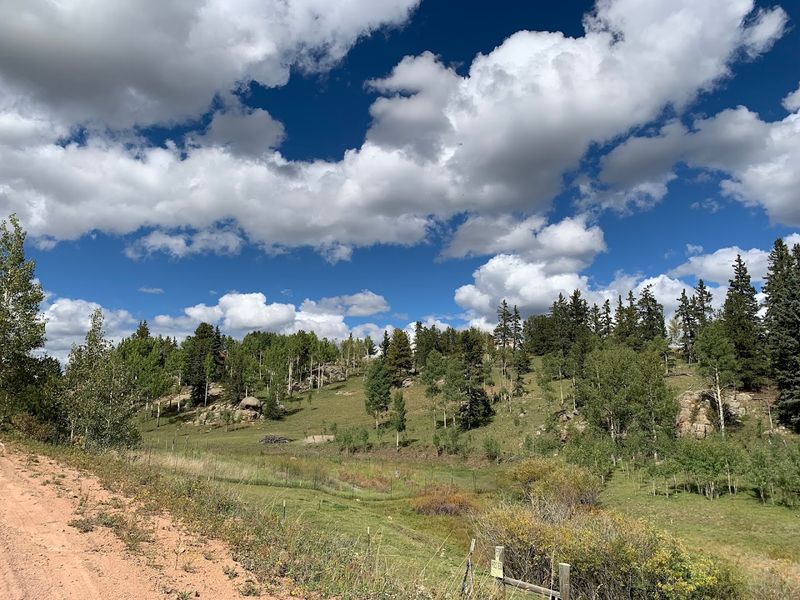
The scenery shifts noticeably as you gain elevation. The southern end opens through high desert terrain, while the northern stretch transitions into open alpine meadows near Victor, Colorado.
Aspen groves line stretches of the road, and in fall, the color change is the kind of thing cameras struggle to do justice.
Insider Tip: Visitors consistently note that the road is far less crowded than comparable Colorado scenic routes. That low-traffic reality makes it easier to stop, linger, and actually absorb what you’re looking at — a rarer experience than it should be on a drive this beautiful.
The Gold Rush Railroad That Built This Road
Before Phantom Canyon Road existed as a drive, it existed as a lifeline. The Florence and Cripple Creek Railroad was constructed in the 1890s to serve one of the most productive gold mining regions in American history.
The Cripple Creek district was producing staggering amounts of ore, and getting that ore down to processing mills in Florence required a rail route through some genuinely unforgiving terrain.
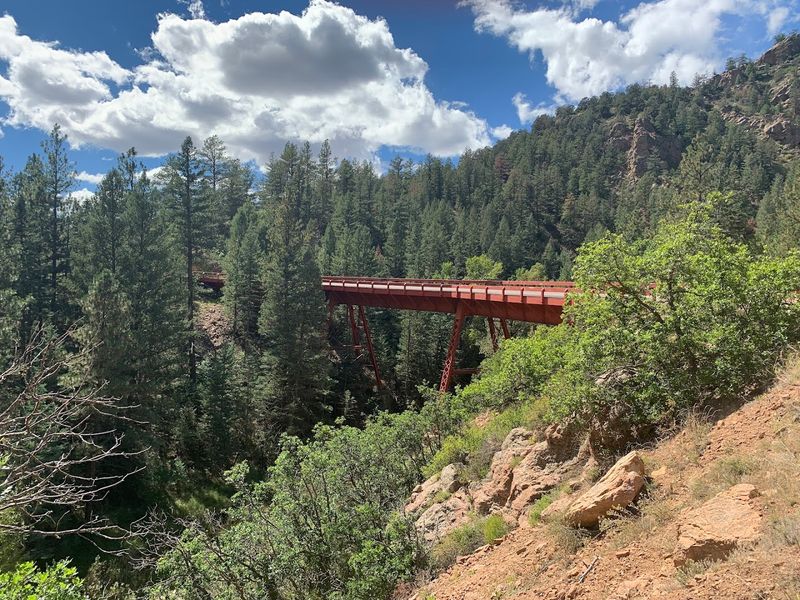
Engineers threaded the line through Phantom Canyon, carving two tunnels directly into the canyon walls and constructing bridges across Eight Mile Creek. The Adelaide Bridge, which spans Eight Mile Creek, is the only remaining bridge from the original Florence to Cripple Creek Railway that is still in active use today.
Driving across it feels less like a scenic detour and more like a quiet handshake with the 19th century.
The railroad faced constant challenges. Washouts, rockfalls, and the sheer difficulty of maintaining a line through a narrow canyon meant the route required ongoing repairs throughout its operating life.
When mining activity declined and the economics no longer supported the line, the railroad was abandoned and the tracks removed in 1918.
Fun Fact: The transformation from railroad corridor to public road preserved much of the original route’s alignment, which is why the road feels so dramatically narrow in places — it was literally built for a train, not a car.
Planning Advice: If railroad history is a key reason you’re making the trip, start your drive from the Penrose or Canon City end. The southern entrance passes near remnants of old mining towns, giving you visual context for the industrial scale of what once operated through this canyon before you’ve driven a single mile of it.
The Ghostly Legends That Give The Road Its Name
A road called Phantom Canyon probably wasn’t going to escape ghost stories, and it hasn’t. The legends attached to this stretch of Colorado are the kind that feel too specific to be entirely made up — which, of course, is exactly how the best ghost stories work.
The most well-known tale involves a man executed at the Colorado State Penitentiary during the 1890s. According to local folklore, shortly after his execution, passengers aboard trains passing through the canyon reported seeing his apparition walking alongside the tracks.
Whether or not you believe in that sort of thing, the story adds an undeniable layer of atmosphere to a road that already feels like it belongs in a different century.
Then there are the miners. The Gold Rush era in this region was not a peaceful chapter of history.
Labor disputes were intense, working conditions were dangerous, and deaths were not uncommon. Local stories speak of miners’ spirits still present along the road, said to be seeking acknowledgment of their difficult fates.
These aren’t polished tourist-board ghost stories — they come from a real history of hardship and conflict.
Who This Is For: Ghost story fans, history lovers, and anyone who appreciates the fact that a place’s darker chapters are just as worth knowing as its scenic highlights. The legends here aren’t manufactured for effect — they grew organically from actual events in the canyon’s past.
Common Mistakes to Avoid: Don’t dismiss the folklore as filler. Understanding the human cost behind the Gold Rush gives the drive emotional weight that pure scenery alone can’t provide.
The ghost stories are the canyon’s way of making sure those stories don’t get forgotten entirely.
What The Drive Actually Looks And Feels Like
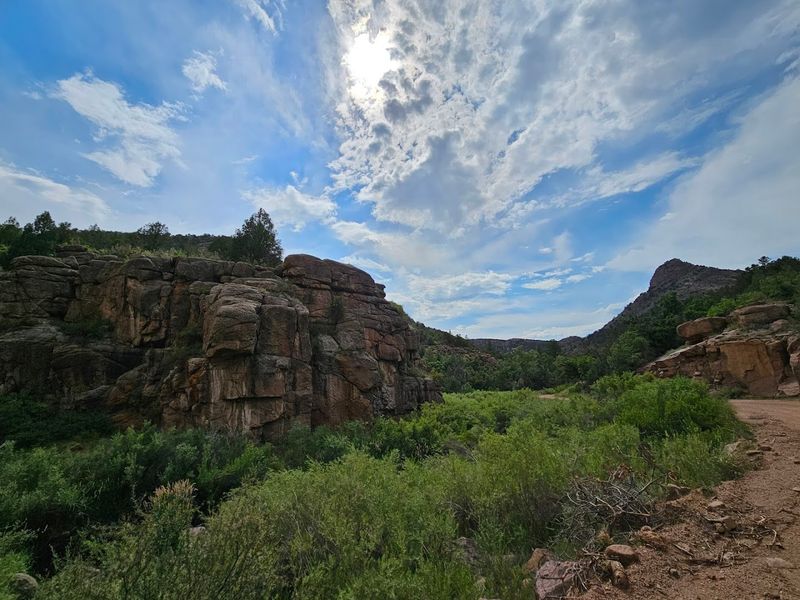
Reading about a scenic road and actually driving it are two entirely different experiences, and Phantom Canyon Road makes that gap wider than most. The southern entrance near Penrose eases you in gently enough — gravel road, open views, manageable curves.
Then the canyon closes in and the whole mood shifts.
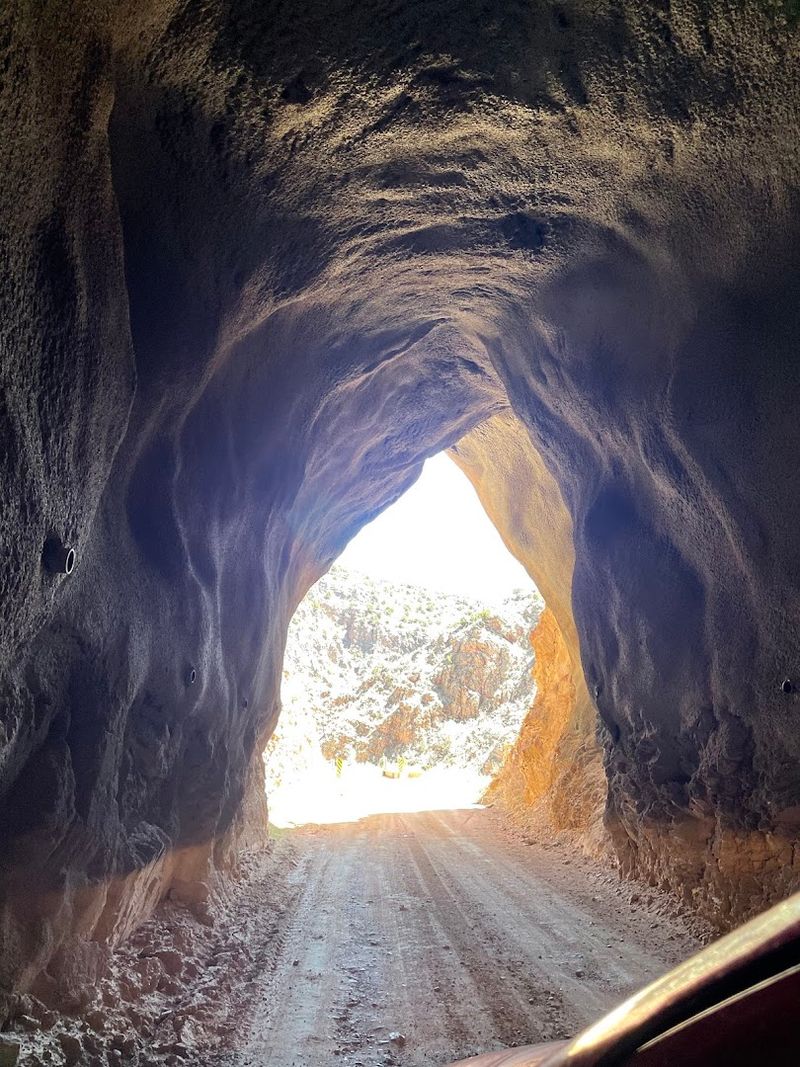
Two tunnels are carved directly into the canyon walls. They are narrow.
Genuinely narrow. The kind of narrow where you slow down not because a sign tells you to but because your instincts firmly suggest it.
Driving through them with canyon rock inches from your mirrors is the sort of moment that makes passengers go quiet mid-sentence.
The road surface itself earns mixed reviews depending on conditions and which section you’re covering. Some stretches are well-maintained gravel, smooth enough to move at a reasonable pace.
Others are washboarded and potholed, demanding a slower, more deliberate approach. Visitors consistently note that the bumpy sections are manageable in standard SUVs and even careful sedan drivers, though high-clearance vehicles are more comfortable overall.
Quick Verdict: The drive takes one to two hours end to end without extended stops, but most visitors spend considerably longer. Pull-offs are frequent enough that stopping for photos never feels like an inconvenience to traffic behind you — largely because traffic behind you is rarely a concern on this road.
Aspen groves, dramatic rock formations, creek crossings, and the occasional wildlife sighting (yes, at least one visitor spotted a black bear) fill out the experience between the tunnels and bridges. The northern end near Victor opens into high alpine meadow terrain, offering a completely different visual register from the tight canyon miles behind you.
Planning Your Visit: Practical Tips For The Road Ahead
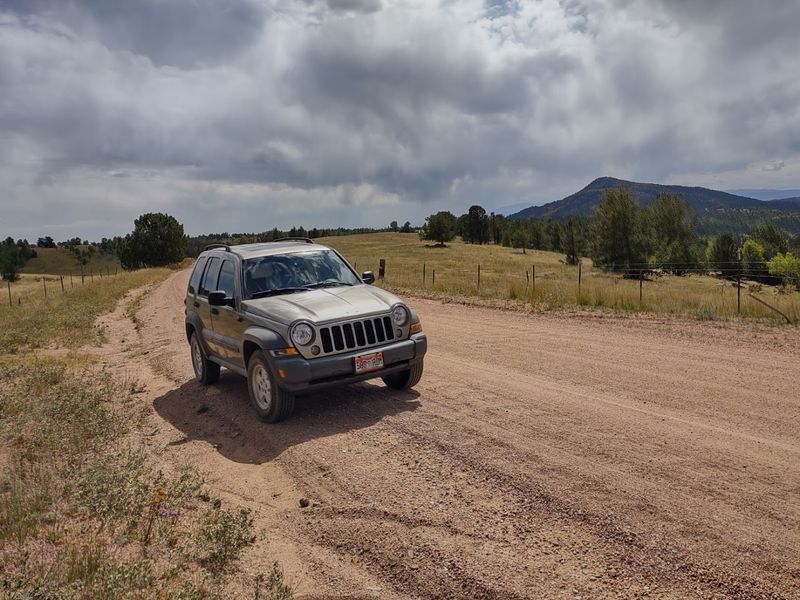
Phantom Canyon Road rewards preparation in a way that few drives do. There is no cell service once you’re in the canyon, which means the time to download offline maps is before you leave the house — not in the parking lot at the trailhead while your signal fades.
Apps like Google Maps and Maps.me both allow offline downloads, and either one will serve you well on a road this straightforward to navigate.
The road is accessible from three entry points: Penrose, Canon City, and Cripple Creek. Each offers a different starting perspective, and several visitors recommend planning your route to incorporate a stop in at least one of the surrounding towns, which carry their own regional history and character worth a short Main Street wander.
Best Strategy: Drive the full 30 miles rather than turning back halfway. The landscape changes significantly from south to north, and stopping at the midpoint means missing the alpine meadow transition near Victor that multiple visitors call the most unexpectedly beautiful section of the route.
Water and snacks are non-negotiable. Two restroom stops exist along the road — basic pit toilet style, no running water — but no food or fuel options exist between entry points.
Treat this like a backcountry outing even though it’s technically a public road open to licensed vehicles.
Pro Tip: Weekday mornings are the sweet spot. One visitor arrived at 5:30 a.m. on a Monday and had the entire road to themselves for the duration of the drive.
Sunset timing is equally rewarding — the canyon walls catch light differently at every elevation change, and the effect is, by multiple accounts, genuinely difficult to photograph adequately.
Final Verdict: A Colorado Drive That Earns Every Mile
Some drives are beautiful. Some drives are historically interesting.
A much smaller number manage to be both simultaneously while also carrying genuine ghost stories and a near-perfect visitor rating. Phantom Canyon Road sits in that rare third category, and it does so without any apparent effort to impress you — which is somehow the most impressive thing about it.
The road is part of the Gold Belt Tour Scenic and Historic Byway, which means it connects to a broader regional story worth exploring before or after your drive. Canon City and Cripple Creek both offer historical context that makes the canyon itself more legible once you’re in it.
Knowing what the railroad meant to this region changes how you look at those tunnels and that old bridge.
Key Takeaways:
Phantom Canyon Road is a 30-mile dirt scenic byway in Colorado’s Pikes Peak region, rated 4.8 stars by visitors. Originally the Florence and Cripple Creek Railroad route from the 1890s Gold Rush era, converted to a road in 1918Features two tunnels carved into canyon walls and the Adelaide Bridge, the only surviving railway bridge still in use.
Ghost legends include a reported apparition of an executed prisoner and the spirits of miners from the labor-conflict era. Accessible from Penrose, Canon City, and Cripple Creek; no cell service, so map downloads are essential.
Most passenger cars and SUVs manage the road in dry conditions; high-clearance vehicles recommended for off-road side trails. Best experienced on a weekday morning or at sunset for minimal traffic and optimal light.
If a friend texted you right now asking for a Colorado drive that’s equal parts scenic, historic, and genuinely eerie, Phantom Canyon Road is the only honest answer you could send back.