
Walk Into The Shadows Of A Georgia Tunnel With An Eerie, Timeless Vibe
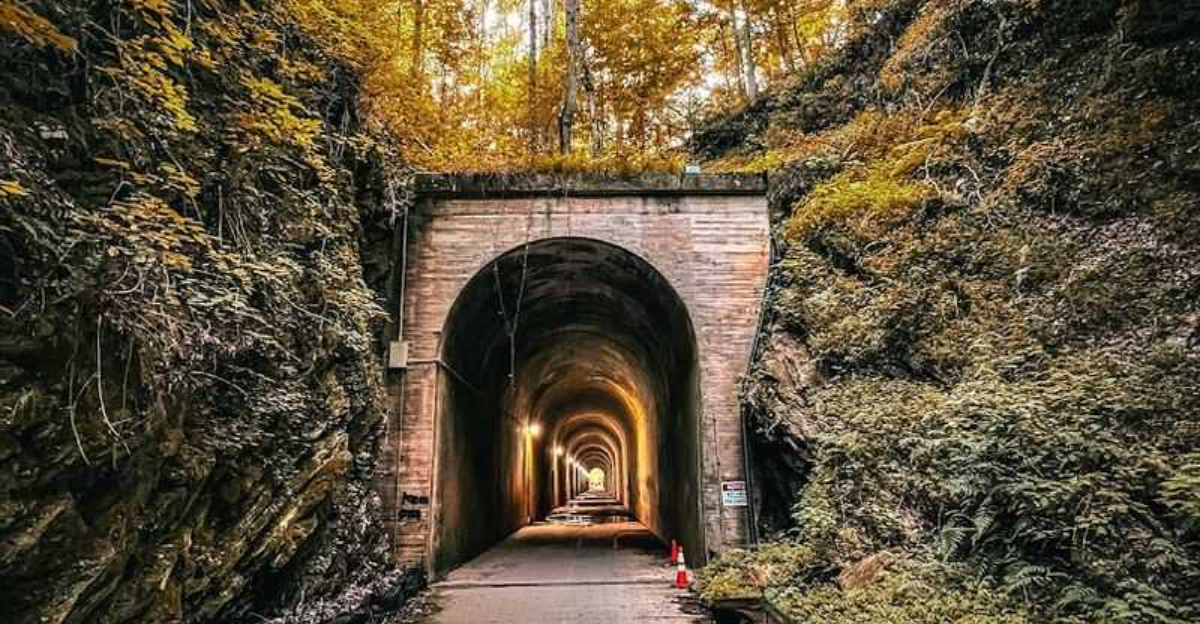
A chill ran through me the moment I stepped into the tunnel, like the shadows themselves were watching.
Georgia hides places like this, where time slows and walls keep secrets too heavy to speak. Every echo of my footsteps seemed alive, daring me to go deeper.
It felt like something out of The Goonies, only darker, quieter, and completely untamed. Goosebumps prickled my arms, through me it passed, and I can’t promise it won’t pass through you too. This wasn’t just a tunnel.
It was a small, eerie invitation to lose yourself in the stories that linger in the dark.
The First Glimpse That Stopped Me Cold
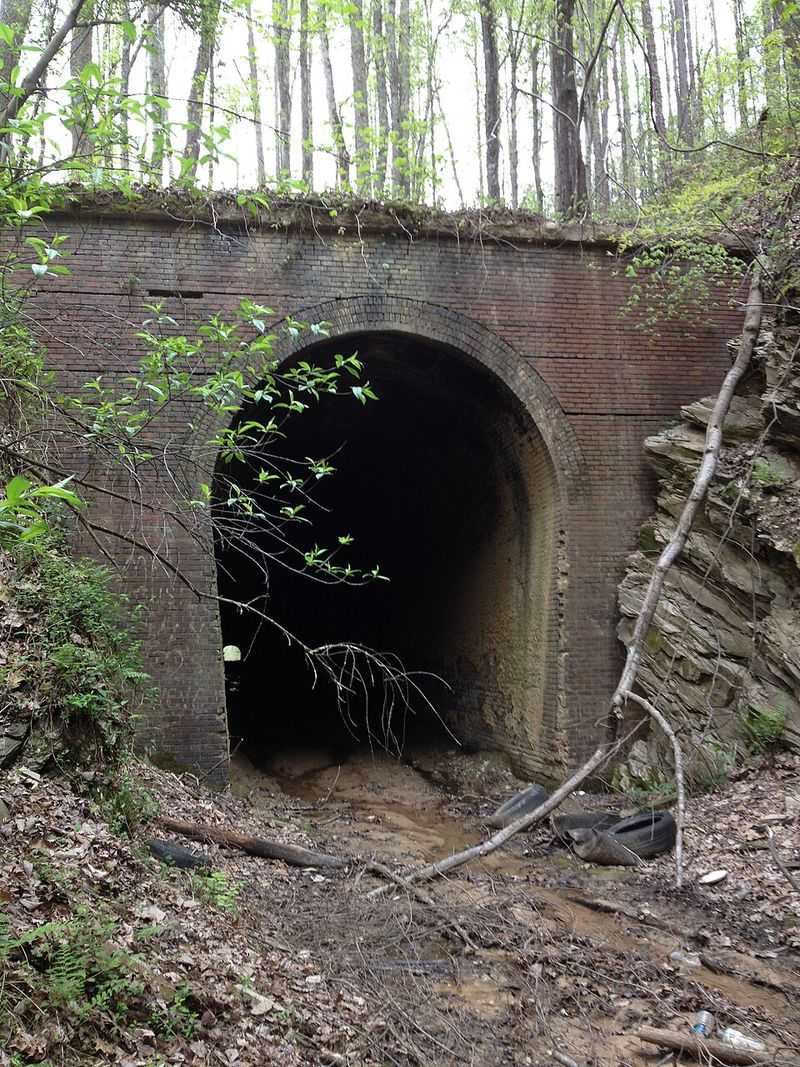
Nothing in my hikes had prepared me for the moment I rounded the bend and saw the tunnel entrance. Framed in old stone and brick, the arch rises with quiet authority, instantly conveying age, weight, and history.
My first reaction was a mix of awe and mild alarm.
The entrance sits at the end of a wooded trail, where trees form a natural green tunnel before the stone one even appears. The effect is almost theatrical, the forest sets the stage, and by the time the arch is fully in view, you naturally slow to take it all in.
Braswell Mountain Rail Tunnel was built in the late 1800s as part of a rail line cutting through rugged terrain. The mountain posed serious engineering challenges, and the tunnel was the solution.
Standing there, you can sense the ambition behind creating such a massive structure by hand, with limited tools, in a time when construction was truly dangerous work.
The brickwork is deliberate and detailed, moss creeping along edges and water staining the stone in pale streaks. It looks like something out of a period film about forgotten American infrastructure, which is the highest compliment I can give.
I stood for several minutes before stepping inside. Cool air drifted from the tunnel like a quiet warning, reminding me that some places earn their reputation simply by existing.
You don’t need frills or fanfare. The tunnel’s presence alone is enough to impress.
Getting There Is Half The Adventure
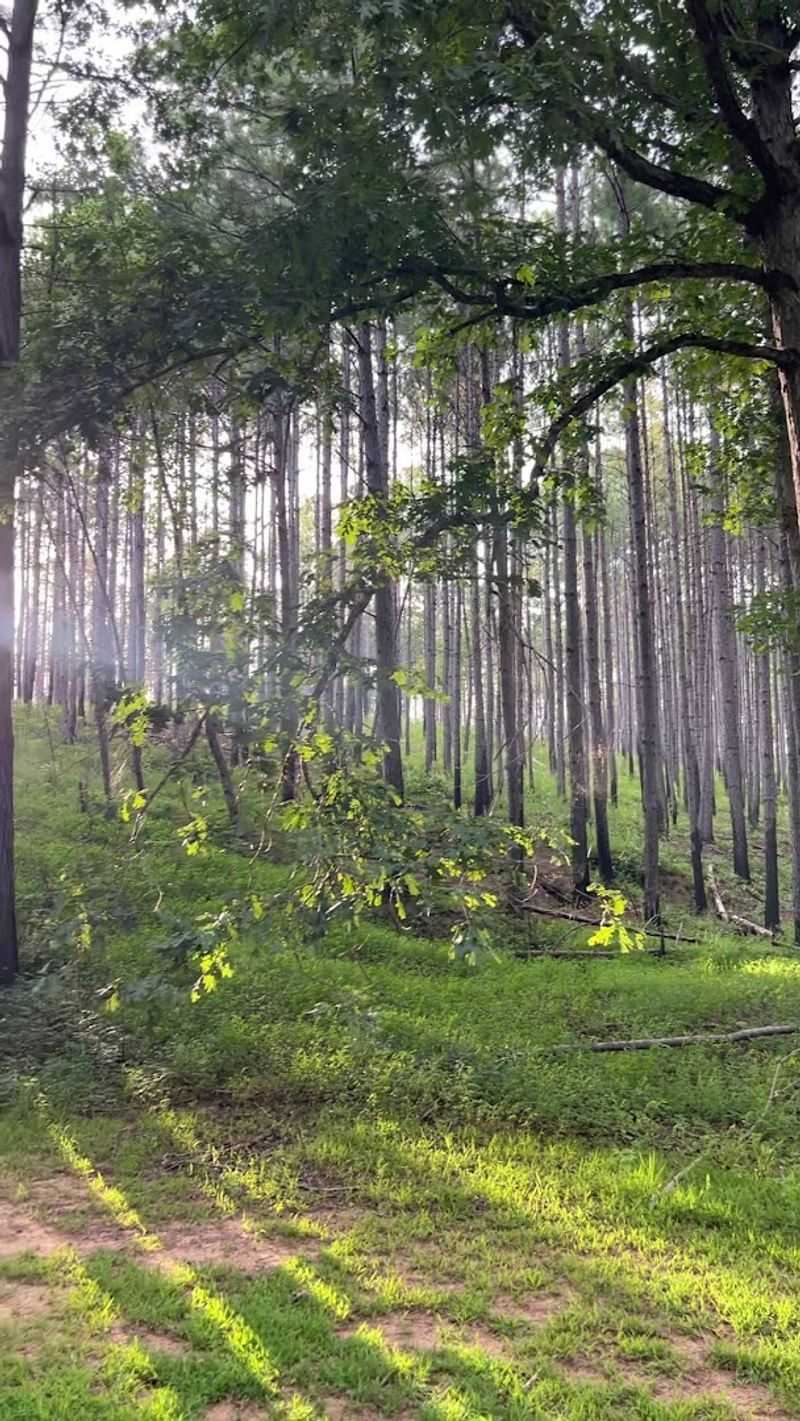
Reaching the Braswell Mountain Rail Tunnel isn’t a simple GPS plug-and-play. Located off Brushy Mountain Road in Rockmart, Georgia, nearest address 3372 Brushy Mountain Rd, the tunnel requires a short forest hike, which adds to the sense of discovery.
I drove out on a quiet weekday morning. Rural Georgia roads closed in with trees, pavement turned to gravel, and it felt like leaving the modern world behind.
The hike itself isn’t long or technically hard, but the trail is uneven in places and gets muddy after rain. Proper hiking boots are strongly recommended, casual shoes or sandals make the final stretch much trickier due to moisture seeping from the hillside.
Cell service is spotty, so offline maps are useful. Even with preparation, I took a wrong turn before regaining the trail.
The remoteness is part of the charm but does require some planning.
The drive through Polk County is rewarding in itself. Rolling hills, farmland, small-town energy, and roadside curiosities make the approach feel intentional rather than purely functional.
By the time I parked and started hiking, I was ready to appreciate what awaited at the trail’s end. The sense of earning your arrival amplifies the experience.
This combination of scenic drive, quiet forest hike, and the dramatic reveal of the tunnel makes visiting Braswell Mountain Rail Tunnel more than a destination. It’s a small adventure that feels earned, immersive, and entirely worth the effort.
Where Daylight Becomes Optional
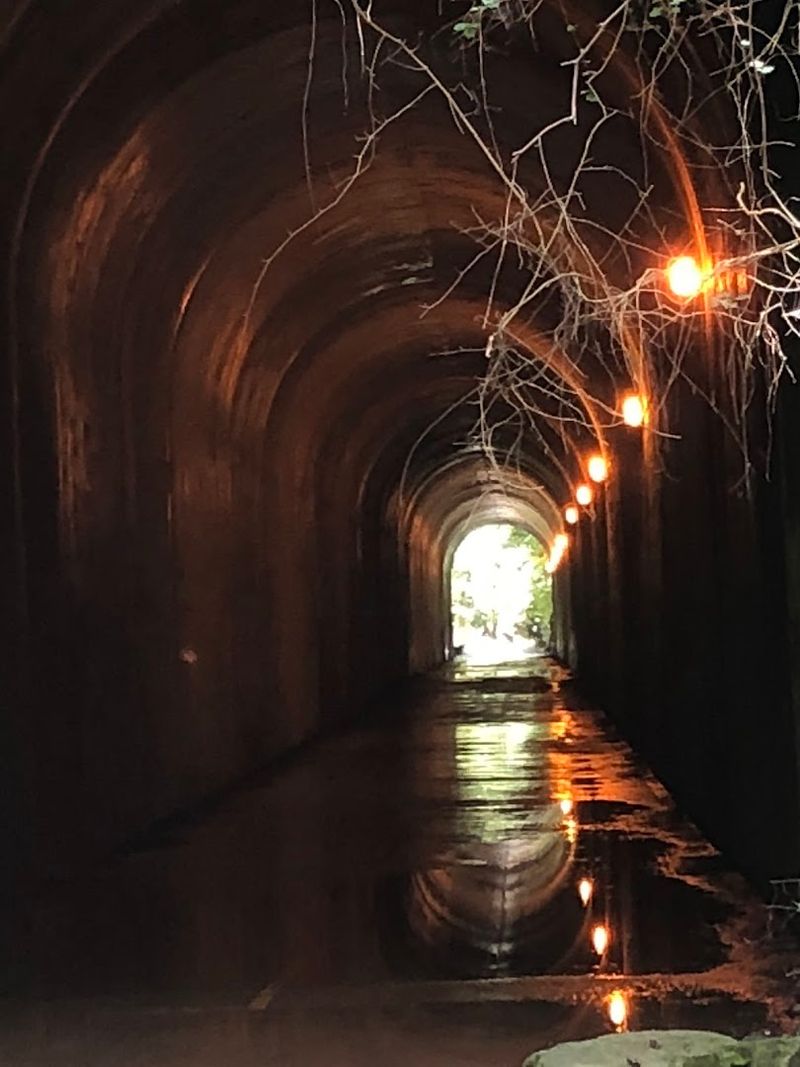
The moment I stepped into the Braswell Mountain Rail Tunnel, the temperature dropped and the outside world softened into distant muffled sounds.
The tunnel felt like it had its own climate, acoustics, and sense of time. Cool, damp air carried the unmistakable scent of old stone and earth, signaling the age and history of the place.
From the entrance, the far end appears as a small oval of light that shrinks as you walk deeper. A flashlight is essential.
The beam reveals mineral streaks and water seepage that have formed abstract patterns over decades.
In the middle section, where darkness surrounds completely and neither end is visible, the experience is almost otherworldly. It’s not frightening, but it feels like being suspended between two worlds, accompanied only by your footsteps and heartbeat.
The acoustics amplify every sound, creating a layered, almost musical echo.
The walls are wet in places, with thin streams trickling from the ceiling, and the floor is uneven and rocky, requiring careful steps. I moved slowly, pausing often; rushing would have felt like skipping pages in a great book.
What struck me most was the profound stillness beneath all the ambient noise. The tunnel holds a quiet, deliberate silence, as if it has kept its secrets for over a century and sees no reason to speak now.
Walking through it is more than a hike. It’s a sensory journey that makes the weight of history tangible, immersive, and unforgettable.
The History Carved Into Every Brick
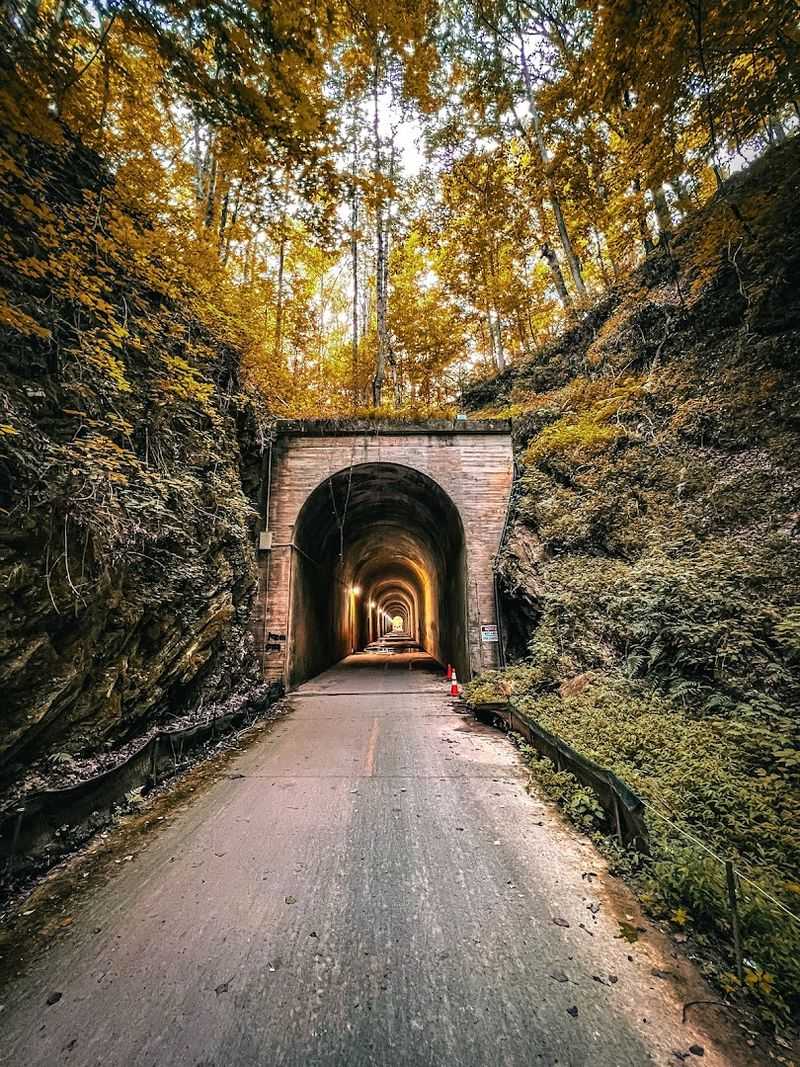
The Braswell Mountain Rail Tunnel is more than a hiking novelty. It’s a tangible piece of American industrial history.
Up close, the hand-laid brickwork reveals the precision and engineering skill required to construct the arch in the late 1800s.
Built as part of a post-Civil War railroad expansion through northwest Georgia, the tunnel was carved through rugged terrain under hard conditions. Workers relied on hand tools and sheer labor, creating a structure that has lasted more than a century.
Even the ceiling tells a story: variations in brick color and texture mark repairs and reinforcements over time, forming a layered record of human effort akin to a geological timeline.
The railroad line that once used the tunnel eventually fell out of service, as many rural Southern lines did, but the tunnel itself survived intact. A rare relic of Georgia’s industrial past.
Walking inside, running my hand along the aged mortar, I felt an unexpected, direct connection to the people who built it, their labor, and the world they lived in.
There’s no museum display or explanatory plaque required. History is immediate and physical here.
Standing in the tunnel, surrounded by brick and darkness, you experience the scale, ambition, and endurance of 19th-century engineering firsthand.
History hits differently when you can touch it, walk through it, and feel the weight of generations in every step.
The Light At The Other End Is Worth Every Step
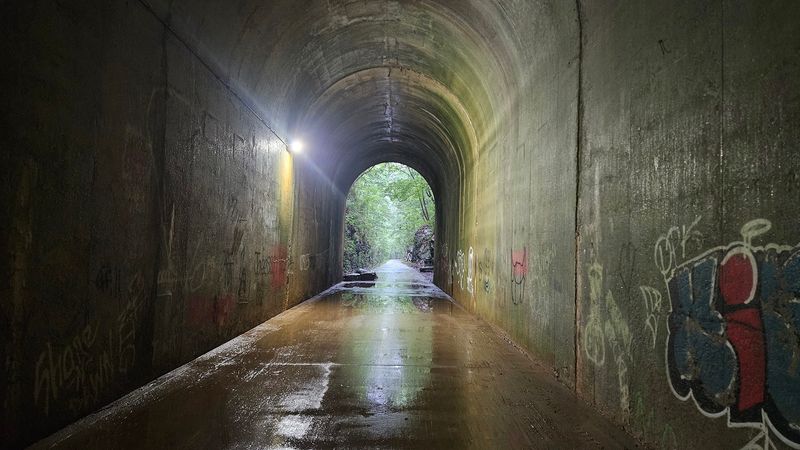
One moment inside stands out: when the far exit finally comes into view. Walking through darkness with only a flashlight, the oval of green light at the end gradually expands, revealing pieces of the forest beyond.
It’s one of the most visually satisfying moments I’ve ever experienced on a hike.
The contrast between the dark stone interior and the bright Georgia greenery framed by the arch is striking.
Photographers chase light like this deliberately. I took dozens of photos, but none captured the full impact of standing there in person.
The light feels almost staged, like it was positioned for maximum drama.
Emerging on the far side is a small revelation. Temperature and sound shift immediately; the forest returns in full force.
The vegetation, light, and terrain feel subtly different, reinforcing the sense of passage.
Sitting on a rock near the exit, looking back through the tunnel toward the entrance, I felt the rare thrill of seeing both ovals of light simultaneously. A moment that makes you appreciate being exactly there at exactly that time.
The exit arch’s stonework is beautiful, and the surrounding hillside is wild and overgrown, evoking an explorer’s journal from another century.
What The Tunnel Sounds Like When You Stop Moving
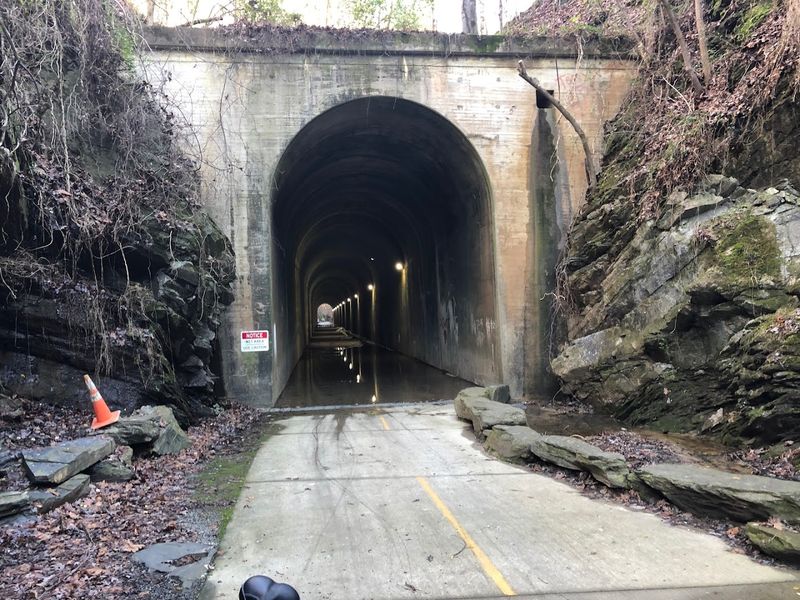
At one point, I did something I rarely do on hikes: I stopped, turned off my flashlight, and just listened. The darkness was complete, unlike anything daylight offers, and the tunnel’s soundscape was unlike anything I had experienced.
It felt slightly reckless and entirely worth it.
Water dripped from the ceiling, irregular yet rhythmic, while a faint whisper of air moved through the tunnel, carrying temperature and moisture.
Beneath it all was a low hum of stone settling, felt more in the chest than heard. Sounds bounced off the curved brick walls, making it nearly impossible to locate their source.
A single drop echoed multiple times, layering into an eerie, natural music that seemed generated entirely by the tunnel itself.
Standing in complete darkness for a couple of minutes was meditative. The deprivation sharpened every other sense:
I felt the cool air on my skin, the uneven texture of the floor under my boots, and the subtle shifts of temperature. Visual distractions vanished, replaced by the quiet, ancient presence of the stone.
Turning the flashlight back on felt almost intrusive, like waking someone from slumber. For those minutes, the tunnel had its own life, and I had been a guest inside it.
The experience was a rare reminder that some places are best understood in stillness, darkness, and silence.
Why This Place Deserves More Attention Than It Gets
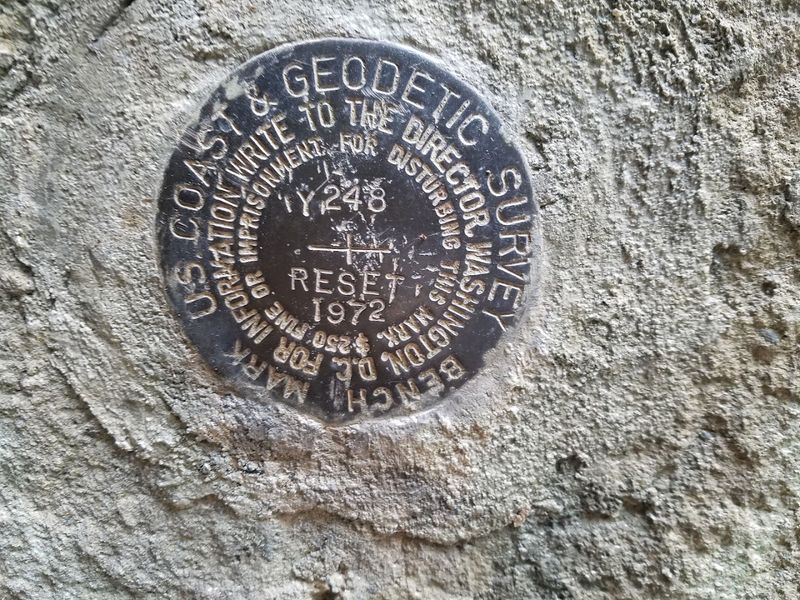
The Braswell Mountain Rail Tunnel doesn’t have a gift shop, visitor center, interpretive signs, or entry fee. There’s no rope keeping you back from the history.
It’s just there, raw and unpolished. That authenticity is rare and part of what makes it so special.
Georgia tourism often focuses on the northern mountains, the southern coast, or Atlanta. Polk County and Rockmart see little mainstream attention, so places like this tunnel remain quietly undiscovered.
No crowds, no queues, no Instagram filters, just the experience itself.
The tunnel offers something increasingly rare: a place that requires you to bring your own context. There are no instructions for what to feel; it simply exists, patient and indifferent, letting the visitor find their own sense of wonder.
The hike in and out is easy enough for most people but remote enough to filter out casual day-trippers. That effort makes the experience feel earned and personal in a way popular tourist sites rarely do.
If you want a Georgia adventure that feels different from the usual weekend itinerary, this tunnel delivers. Pack a flashlight, wear sturdy shoes, and walk through a piece of history that few have seen.
Standing inside a mountain, surrounded by centuries-old stone and silence, is an experience that stays with you long after you leave.