
11 Abandoned Oregon Towns That Are Stunningly Photogenic
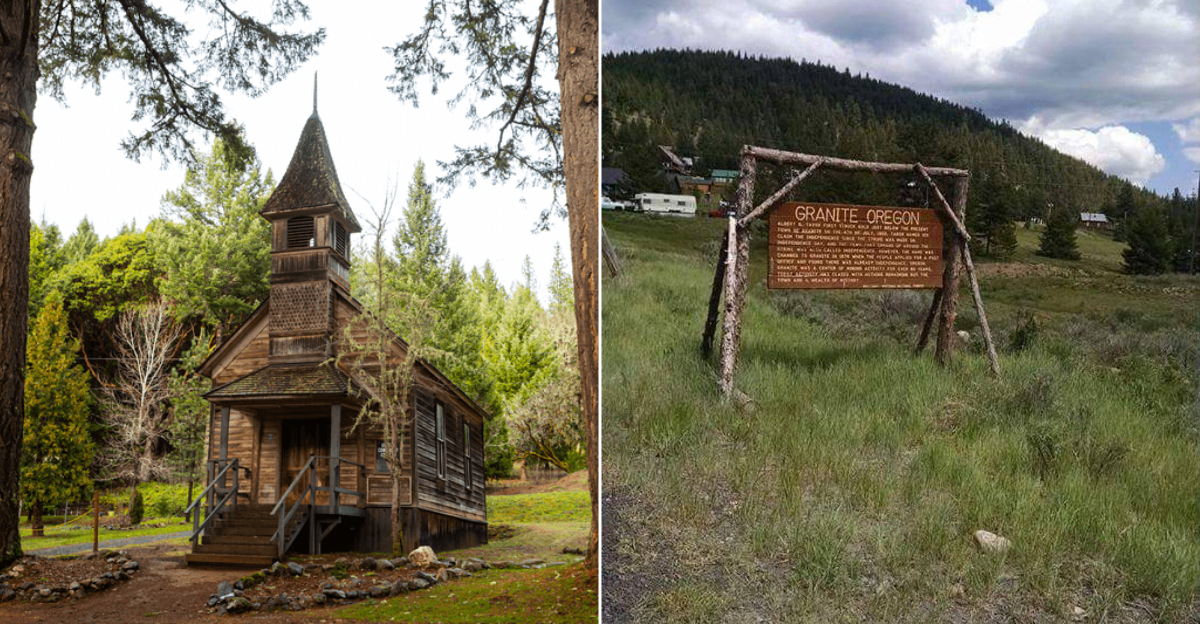
Somewhere between forgotten streets and moss-covered rooftops, Oregon hides towns that time almost forgot. But your camera won’t.
I wandered through empty storefronts, cracked sidewalks, and old wooden porches that creaked with stories, feeling like I had stepped into a movie set abandoned mid-scene.
Every shadow held a secret, every faded sign whispered, “look closer”. Goosebumps ran down my arms as light spilled over rusted metal and peeling paint, turning decay into something strangely beautiful.
Through me, the eeriness passed, and I swear, it’ll pass through you too if you dare to wander. These aren’t just abandoned towns.
They’re snapshots of history frozen in time, waiting for someone curious enough to see their quiet magic.
Photogenic? Absolutely. Creepy? Maybe. Worth it? Every single step.
1. Shaniko
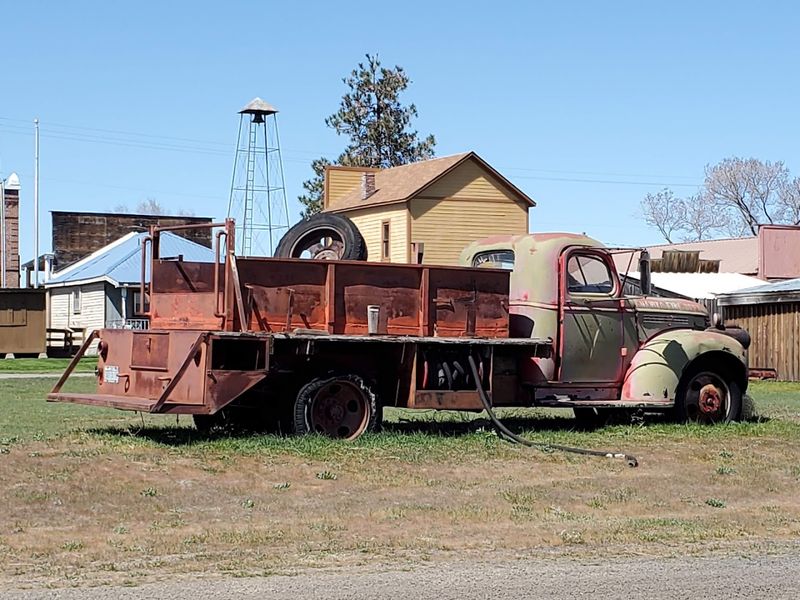
When you first arrive in Shaniko, your brain does a double-take, it looks like a Western film set, though it wasn’t built for movies. Founded at the turn of the 20th century as the self-proclaimed “Wool Capital of the World,” Shaniko thrived on wool and wheat shipments from the Oregon high desert.
Around 1901, it was a bustling commercial hub, but when the railroad bypassed the town, it quietly faded.
Shaniko’s charm lies in its preserved false-front buildings and the striking high-desert light. The sun transforms weathered wood into textures photographers dream about, while the old hotel, water tower, and warehouse each tell silent stories.
Surrounding golden scrubland and open skies create a backdrop that feels almost unreal.
Located in Wasco County on Highway 97, Shaniko is one of Oregon’s most accessible ghost towns. Stabilized structures hint at its past without erasing the beauty of decay.
Early mornings offer soft light and stillness, with only the wind through the sagebrush.
Shaniko doesn’t ask you to imagine history, it immerses you in it, a rare experience on any Oregon road trip.
2. Friend
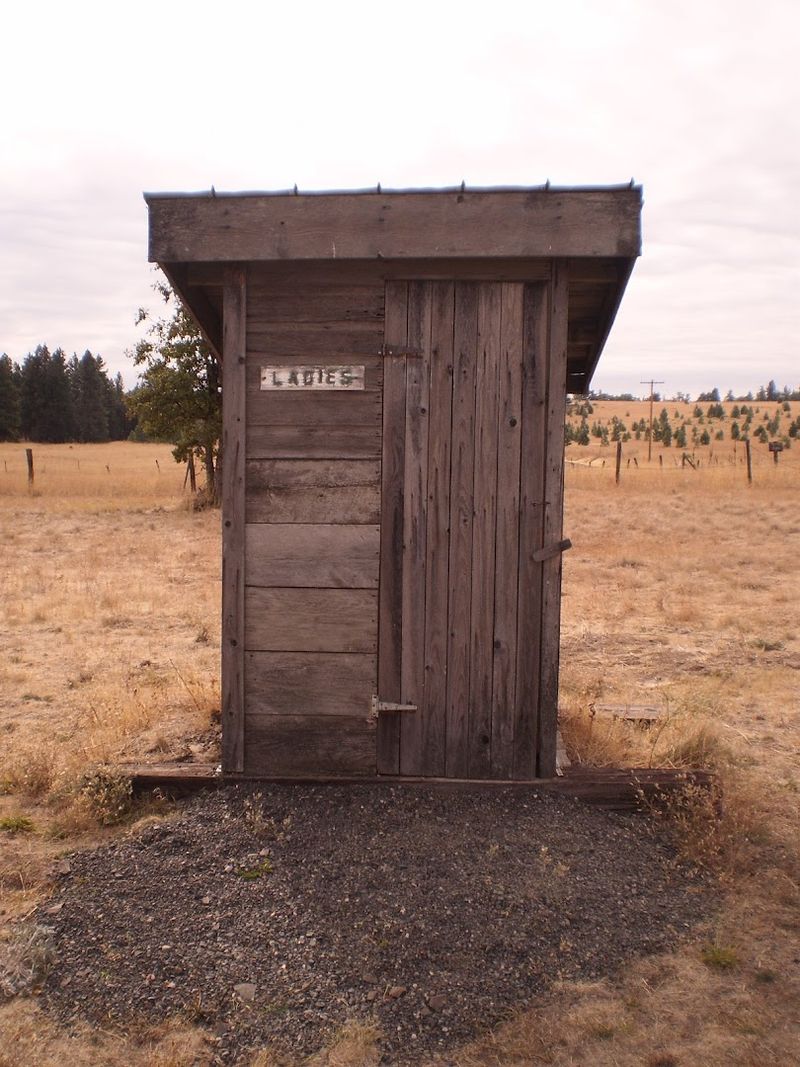
Friend is one of those towns that sounds made up until you spot it on a map, and then you wonder how you never heard of it. Nestled in the wheat-country hills of Sherman County in north-central Oregon, Friend is barely a dot.
A cluster of remnants from a farming community spread across the plateau above the Columbia River Gorge. Its name alone feels poetic, and the town lives up to it in a quiet, melancholy way.
The old store is the centerpiece, haunting yet peaceful. Weathered siding and dark windows sit beneath a vast open sky, while surrounding wheat fields roll gold in summer and pale silver in winter.
Silence dominates here, broken only by wind, a passing hawk, or the gentle creak of old wood. It photographs like a dream and feels even more alive in person.
Friend never boomed, which makes it compelling. It was one of many small agricultural hubs that kept rural Oregon going in the early 1900s.
As farms consolidated and people moved to larger towns, Friend quietly faded. Today, the town is not dramatic ruin.
It is gentle absence, a place where ordinary lives echo softly through history.
3. Hardman
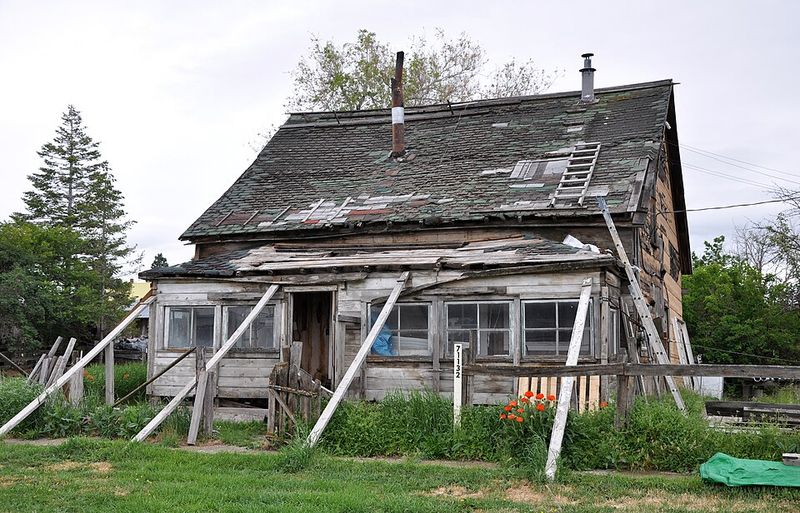
Hardman doesn’t perform for visitors. It has no gift shop, no historical plaques, just a collection of quietly aging farm-era buildings beneath one of eastern Oregon’s vast skies, doing exactly what abandoned places do best: existing without needing anyone to notice.
Founded in the 1870s in Morrow County, Hardman once had a school, post office, and enough ambition to imagine a larger future. At its modest peak, it served surrounding ranches and farms, but as roads connected people to bigger towns, Hardman slowly faded.
By the mid-20th century, the town had mostly dissolved into memory and weathered wood.
What makes Hardman compelling is how its remaining structures meet the landscape. Buildings aren’t dramatically ruined; they lean gently, fading back toward the earth with quiet dignity.
The high-desert light casts long shadows in the morning and warms everything in amber by late afternoon, while the sky itself tells much of the story.
There are no crowds, no noise, no pretense, just a real place that once mattered, standing as subtle proof that history lives as much in wood and silence as in books.
4. Buncom
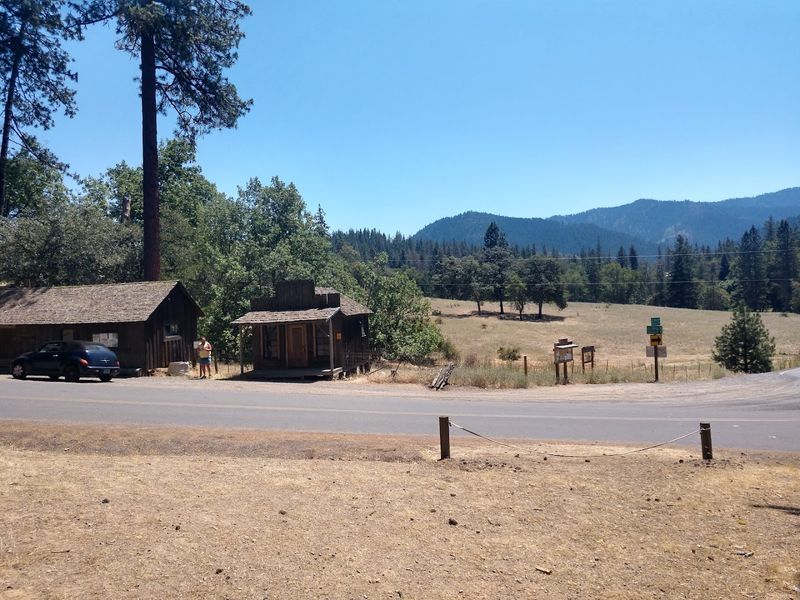
Buncom has a name that sounds like it was invented for a quirky indie film, but its history is surprisingly rich. Nestled in the Illinois River Valley near Jacksonville in southern Oregon, Buncom was a thriving mining settlement in the 1870s and 1880s, pulling gold and silver from the surrounding hills with genuine enthusiasm.
At its height, it had hotels, saloons, a school, and a community newspaper, all the ingredients of a town that believed in its own future.
What sets Buncom apart visually from Oregon’s high-desert ghost towns is the lush green scenery that surrounds it. Southern Oregon’s Siskiyou region is dramatically different from the scrubland of the east.
Here, abandoned structures sit among dense forest, mossy rocks, and the sound of the nearby river.
The contrast between the human-made remnants and the rich natural growth creates a composition that feels almost tropical. Nature does not simply reclaim these buildings; it embraces them.
A small cluster of surviving structures still marks the Buncom townsite. The area has enough historical interest to preserve what remains in stable condition.
Buncom offers genuine quietude.
Standing at the edge of the old townsite, listening to the river, you feel the texture of a place that worked hard, dreamed big, and then let the forest gently take back what it had lent.
5. Golden State Heritage Site
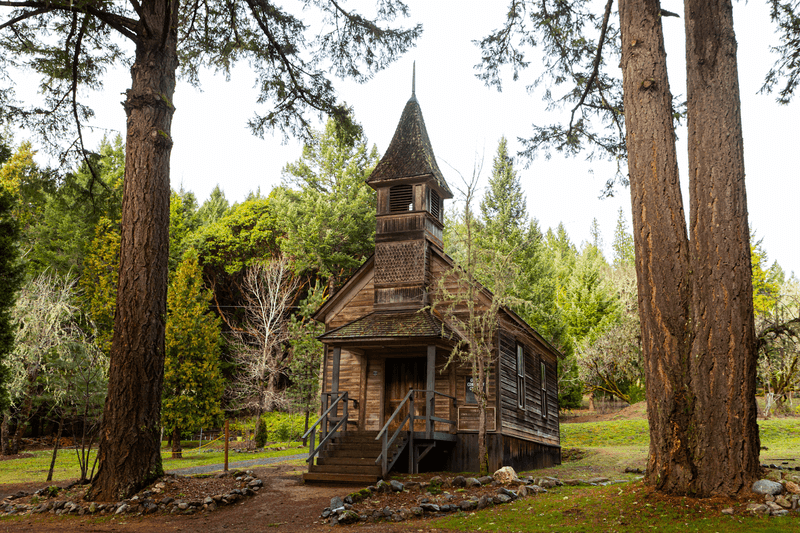
Golden feels like a secret the forest has kept for over a century. Tucked into the wooded hills of Josephine County along Coyote Creek, the settlement dates back to the 1850s when gold discovery brought hopeful miners to southern Oregon’s river valleys.
Unlike many ghost towns that exist as pure ruin, Golden is preserved as a state heritage site, and that care shapes the experience of visiting it.
Four original buildings remain, all in remarkable condition for their age. The church is the centerpiece, a simple white-painted structure among the trees with a quiet dignity that feels almost sacred.
The combination of the creek, Douglas fir forest, and preserved buildings creates an atmosphere more peaceful than haunting.
Morning light filters through the canopy in ways that make every photograph feel intentional and composed.
Reaching Golden requires a drive down a gravel road, which naturally filters visitors so the place often feels entirely your own. The heritage designation protects the structures, letting you appreciate details like handmade construction, small-pane windows, and the silvered wood shaped by decades of Oregon winters.
Golden shows that a ghost town does not need scale to leave a lasting impression; sometimes four buildings and a creek are enough.
6. Waldo
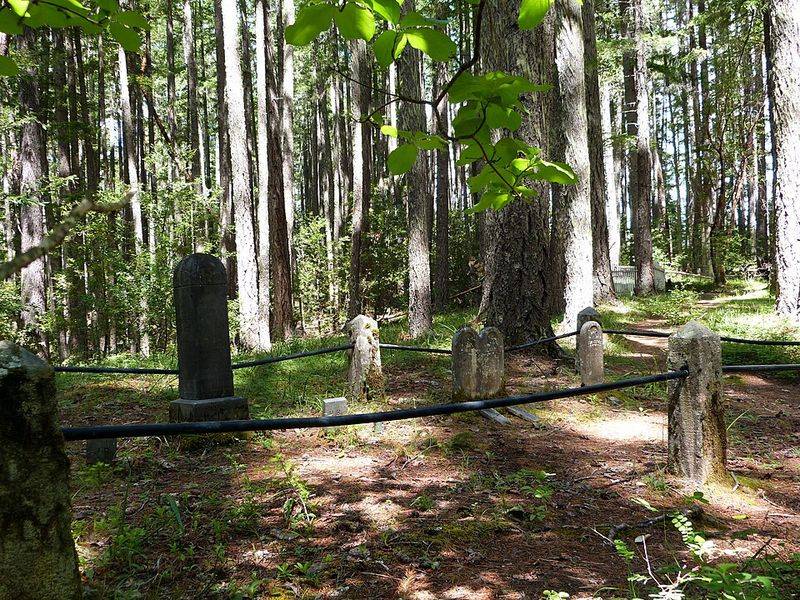
Waldo sits so close to the California border that it might seem unsure of its identity, yet this small ghost town is thoroughly Oregonian.
Located in Josephine County near the Illinois River, Waldo briefly shone during the 1850s and 1860s when placer gold discoveries drew prospectors into the rugged Siskiyou terrain. For a short time, it even served as the county seat, a fact that feels almost impossible to believe when standing there today.
The atmosphere at Waldo is overgrown and beautifully quiet.
Nature has reclaimed much of the townsite, and dense vegetation, moss-covered remnants, and dappled light filtering through the trees create a setting that rewards slow, patient exploration. History here does not announce itself loudly.
You must look carefully, move slowly, and let the place reveal its stories.
Photographers will find the aesthetic of deep-history mining country softened by decades of natural growth compelling. Vines and ferns gently reclaim the town, offering a striking contrast between human ambition and nature.
Waldo never recovered after losing the county seat and as mining declined.
What it lost in relevance, it gained in atmosphere. Few places in southern Oregon carry the same sense of forgotten history and serene, photogenic quietude.
7. Granite
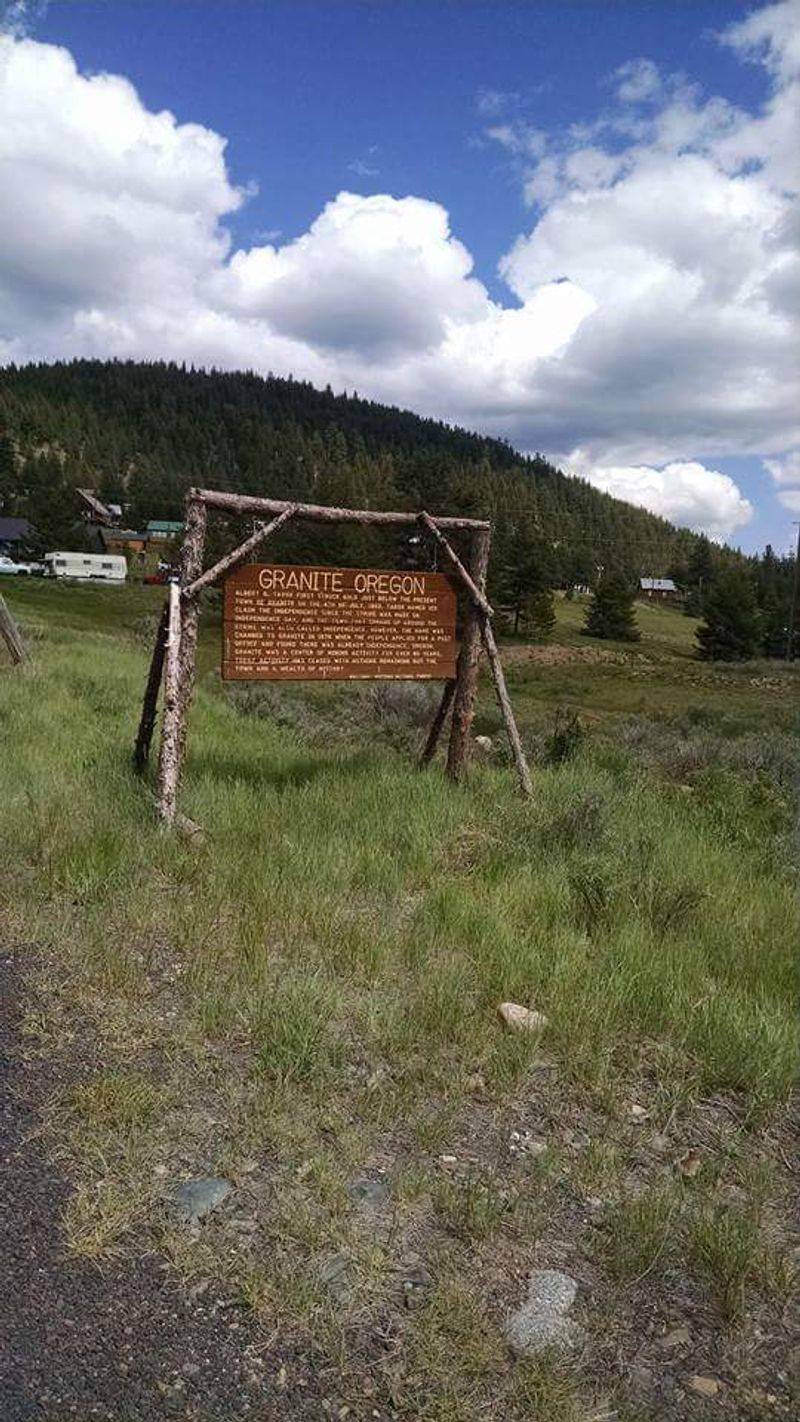
Pull into Granite on a summer morning and the first thing you notice is the silence, not the uncomfortable kind, but the deep quiet that comes from being surrounded by ponderosa pines at high elevation in the Blue Mountains.
Granite sits at around 4,700 feet in Grant County, and the setting alone would be worth the drive even if there were nothing to see. Fortunately, there is plenty.
Granite had its gold-mining heyday in the 1870s and 1880s and was incorporated as a city in 1901, making it one of Oregon’s smallest incorporated towns with a population that hovers in the single digits.
The remaining structures along what passes for a main street have the quality of high-country abandonment, weathered but not collapsed, aged but not defeated. The combination of old buildings, pine forest pressing in on all sides, and mountain light creates a photographic environment that feels effortless to capture.
What makes Granite special is the sense of genuine remoteness. Winding mountain roads separate it from the modern world, and by the time you arrive, the distance from everyday life is complete.
Summer brings wildflowers and clear blue skies, making the old wood glow. Granite is not trying to impress, it is quietly, stubbornly beautiful, and that makes the journey worthwhile.
8. Bourne
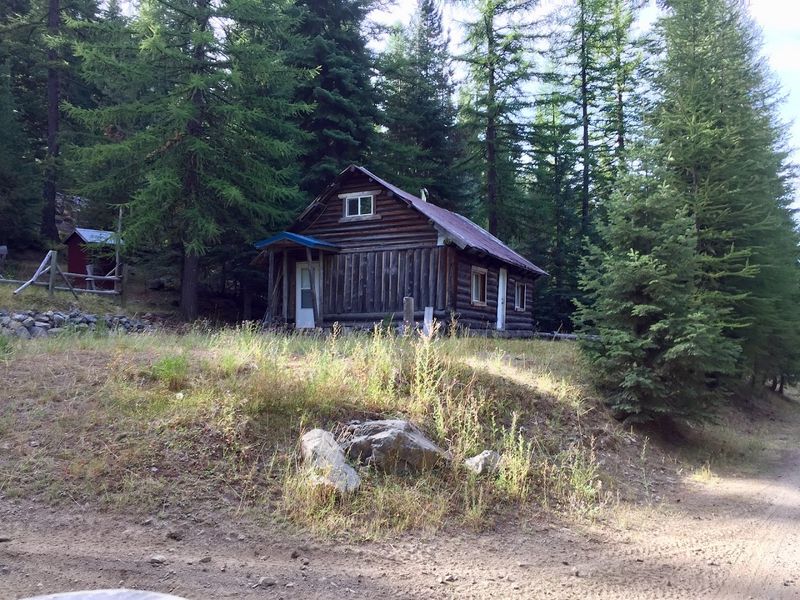
Bourne feels like a ghost town genuinely discovered rather than visited. It sits in a narrow canyon along Cracker Creek in Baker County, surrounded by the Wallowa-Whitman National Forest.
Reaching it requires some effort, but the moment the trees open and the old townsite appears, the journey is rewarded.
The forest presses close on all sides, giving Bourne an intimate, almost secretive quality that more accessible ghost towns cannot replicate.
Gold was discovered here in the 1870s, and Bourne grew around the mining operations that followed, eventually supporting several hundred people at its peak. The Bourne Consolidated Gold Mining Company drove activity in the early 1900s, and the remnants of that ambition remain in the landscape.
Rusted equipment, structural fragments, and the bones of old buildings sit among the trees in states of quiet decay. Cracker Creek runs alongside, adding sound and movement to a scene that would otherwise feel suspended in time.
For photographers, the dense forest, creek, canyon walls, and historical remnants create layered compositions that reward careful framing.
Morning light falls in golden shafts that illuminate old wood and rusted metal. Surrounded by pristine forest, Bourne asks visitors to slow down, look closely, and notice how the mountains absorb human history.
It is a quiet place with a surprisingly loud past.
9. Greenhorn

Greenhorn holds a distinction that is both absurd and charming. It is regularly cited as one of the smallest incorporated cities in the United States, with a population that fluctuates between zero and a handful depending on the season.
It is technically a city, it has almost no residents, and it is absolutely magnificent.
Sitting at nearly 6,000 feet in the Blue Mountains of Grant County, Greenhorn was a gold-mining settlement that incorporated in 1902 and slowly emptied as the mining economy faded.
What remains is a small scattering of wooden structures, some stabilized and some leaning dramatically, surrounded by mountain meadows and dense pine forest. The elevation gives the landscape an alpine character, with crisp air and sweeping views that make you want to linger.
In summer, wildflowers around the old buildings create scenes that feel almost impossibly picturesque.
The near-emptiness of Greenhorn is the point. There are no interpretive panels or gift shops, no other visitors crowding your experience.
You arrive, wander, and let the mountain silence do the rest. The buildings feel raw and authentic, untouched by curation.
Greenhorn does not impress with scale or dramatic ruin. It offers something more subtle and lasting: the rare feeling of standing inside a place that time has nearly, but not entirely, released.
10. Whitney
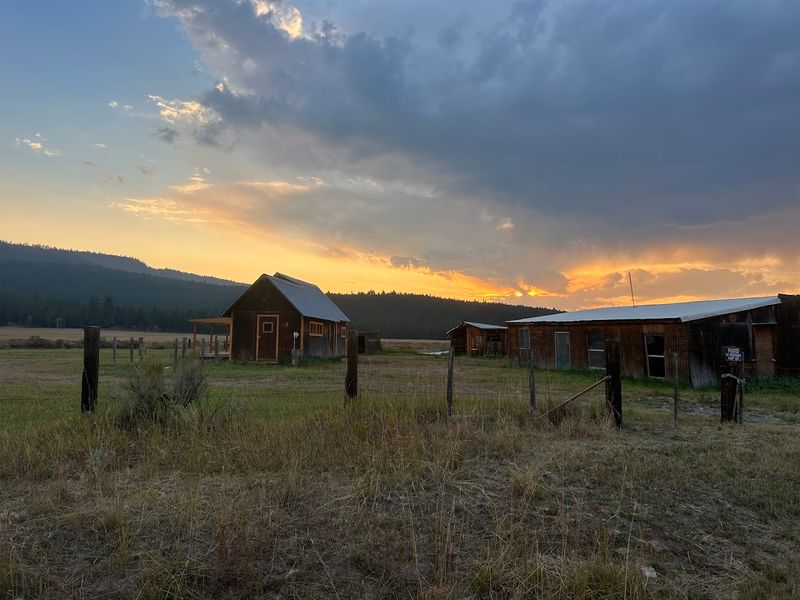
There is something about Whitney that strikes immediately when you pull off the road. It does not require exploration or imagination to register as a ghost town.
The sense is clear and unpretentious, with a blunt visual honesty that more photogenic places sometimes lack. Whitney sits in Baker County along Highway 7, making it one of the more visible ghost towns, and that visibility adds to its particular charm.
Whitney’s history is tied to the timber and railroad industries that shaped much of eastern Oregon in the late 19th and early 20th centuries. The town grew as a service point for logging operations and railroad workers, and for a time it had the functional energy of any working community built around extractive industry.
When the timber economy shifted and the rail lines were reduced, Whitney lost its reason to exist, and people moved on. What they left behind still stands with a quiet, almost defiant presence.
The remaining buildings show weathered grey wood, collapsed rooflines, and windows surrendered to the elements, creating scenes photographers love.
Open meadows and distant mountain ridges emphasize the town’s isolation. Whitney is not the most remote or dramatically ruined ghost town, but its accessible and immediate character makes it a memorable stop on any eastern Oregon road trip.
11. Cornucopia
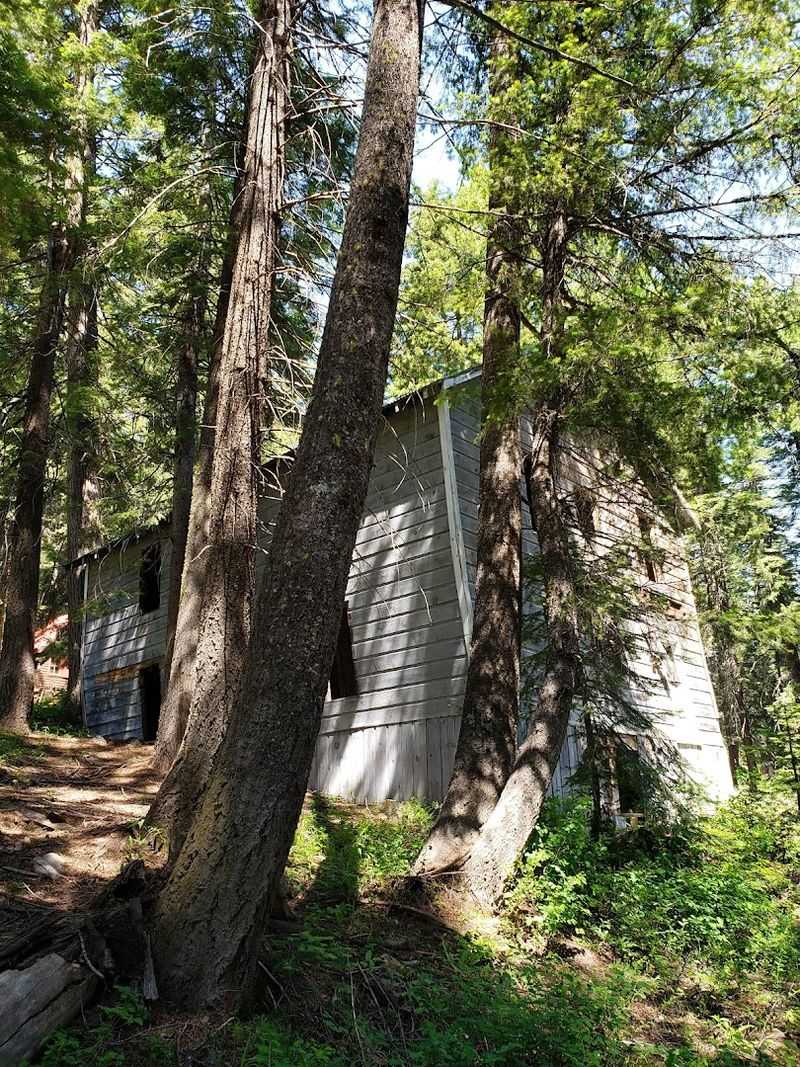
The name alone sets expectations, Cornucopia, a word that promises abundance, and the irony of finding it nearly empty in the mountains of Baker County is not lost on anyone who makes the drive. Cornucopia sits high in the Wallowa Mountains above Pine Valley, and the approach is worth the trip.
A winding road climbs through increasingly dramatic scenery until the old mining camp appears in a mountain setting so beautiful it almost feels unfair.
Gold was discovered near Cornucopia in the 1870s, and the town grew through several boom-and-bust cycles before finally quieting in the 1940s. At its peak, it supported a year-round mining operation with hundreds of workers, housing, and the infrastructure a remote mountain community required.
Today, cabins, mine structures, and scattered remnants sit among pines and wildflower meadows with a strong sense of being left behind.
The scale of the town becomes clear when counting foundations and imagining the activity that once filled them.
Summer is the ideal time to visit. Wildflowers carpet the meadows, snow lingers on peaks into July, and the high-altitude light gives the scene remarkable clarity.
The combination of historical weight and natural grandeur makes Cornucopia one of Oregon’s most emotionally resonant ghost towns.
Standing there in the quiet, you understand why someone once believed this place would be a cornucopia and why the mountain eventually had other plans.