
This Storybook Mansion In Sarasota, Florida Looks Too Magical To Be Real
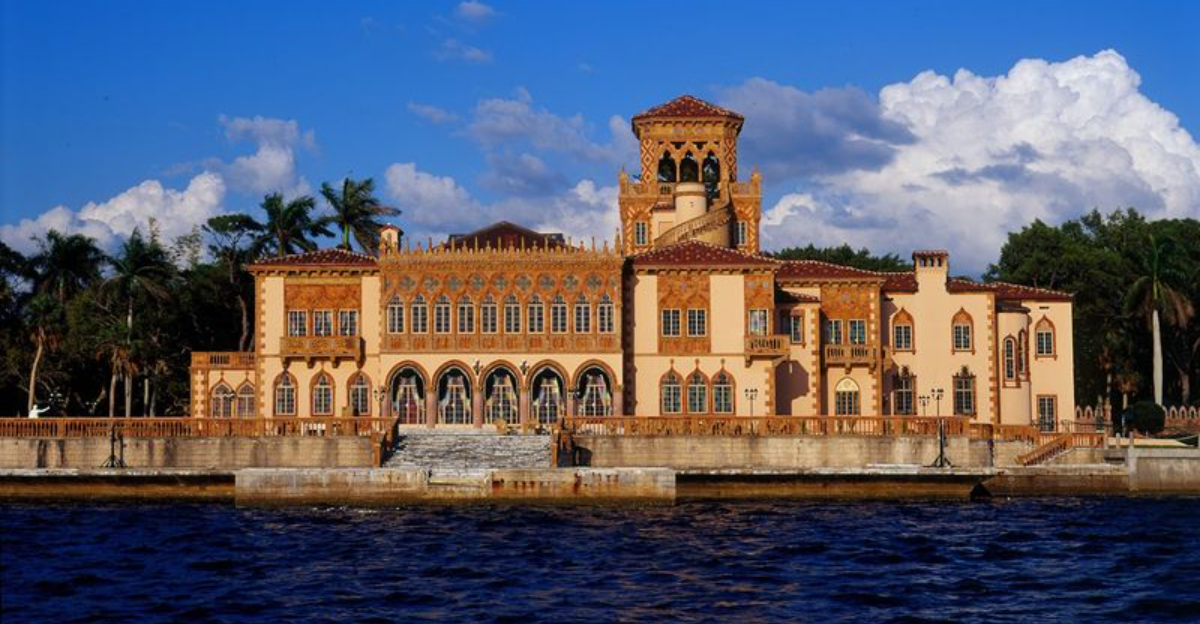
Florida is known for surprises, but few feel as unreal as stumbling upon a waterfront mansion that looks like it belongs in a European fairytale rather than the Sunshine State. At first glance, it almost feels like you have stepped into another country, another era, and another world entirely.
Towers rise dramatically, arched windows glow in the light, and intricate architectural details pull your attention in every direction at once.
The closer you get, the more mesmerizing it becomes. Stonework patterns, sweeping terraces, and grand interiors reveal a level of craftsmanship that feels almost theatrical.
You start noticing things slowly, a ceiling detail here, a carved accent there, each one more impressive than the last. Time seems to slow as you wander, taking it all in.
By the time you step away, one thought lingers clearly. Some places are beautiful.
Others are unforgettable. This one somehow manages to be both at once.
Venetian Gothic Architecture That Defies Florida’s Landscape
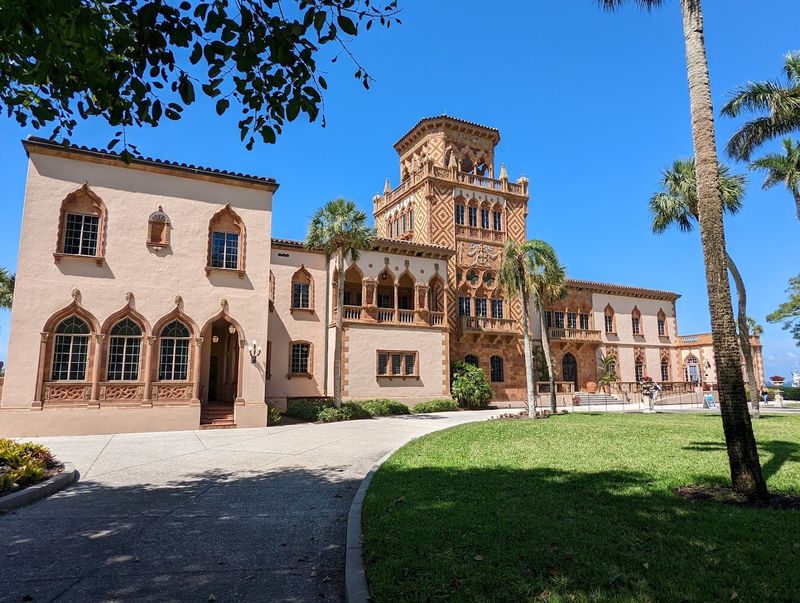
Standing before Ca’ d’Zan feels like someone plucked a Venetian palazzo from the Grand Canal and dropped it onto the Gulf Coast.
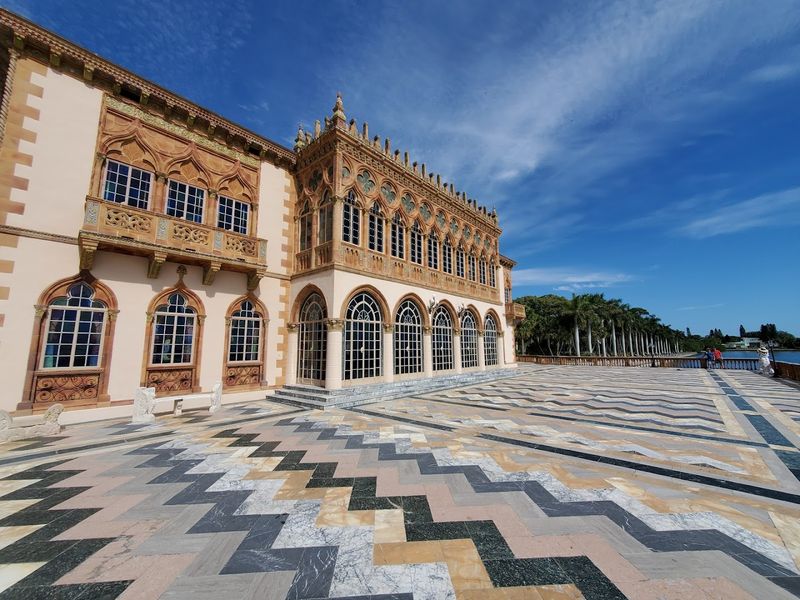
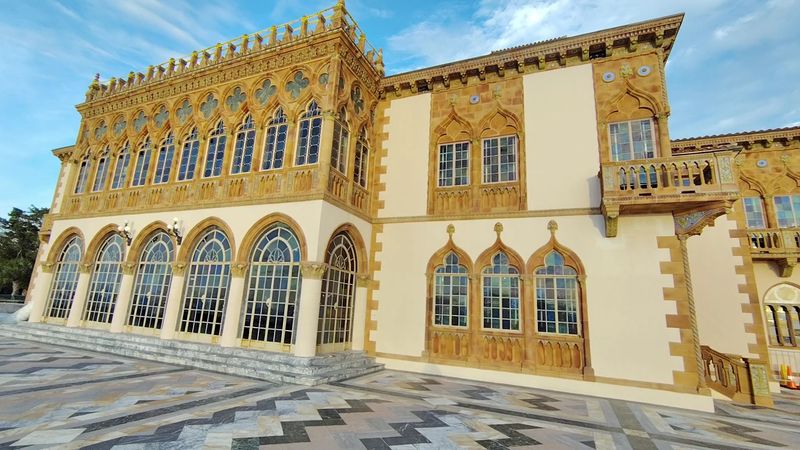
The pink terracotta facade glows against Florida’s bright sky, while ornate balconies, pointed arches, and elaborate stonework create a silhouette that belongs more to the Doge’s Palace than to Sarasota Bay.
John Ringling fell hard for Venice during his travels, and he made sure architect Dwight James Baum understood exactly what he wanted. Every column, every carved detail, every decorative flourish whispers of Italian craftsmanship translated through American ambition and circus fortune.
Walking the perimeter at 5401 Bay Shore Road, Sarasota, FL 34243, just north of downtown along Sarasota Bay, I kept craning my neck upward, catching new details with each pass. The tower alone commands attention, rising above the roofline like a beacon for boats navigating the water.
Mable Ringling had strong opinions about the design too, insisting on certain elements that reflected her own taste for European elegance. The result is a building that refuses to blend in, standing as a bold declaration of wealth, taste, and a deep love for Venetian beauty.
Even the terra-cotta tiles were imported, because nothing local would do for this vision.
I circled the mansion twice, and it still felt unreal.
The Belvedere Tower With Panoramic Bay Views

Climbing up to the belvedere tower, I felt the mansion fall away beneath me as the view opened wide across Sarasota Bay.
This tower was not just for show.
John Ringling used it as a lookout point, scanning the water for arriving guests or simply taking in the expanse of his waterfront kingdom.
The tower rises five stories, capped with a copper roof that has aged into a soft green patina over the decades.
From the top, the bay stretches out in every direction, dotted with boats and framed by distant shorelines.
I could see why the Ringlings chose this spot.
The elevation adds drama to an already dramatic structure, making Ca’ d’Zan visible from the water long before you reach the dock.
Mable loved entertaining, and the tower gave her guests something to marvel at before they even stepped inside.
Standing up there, I imagined the parties, the arrivals by yacht, the grand entrances that must have unfolded below.
The tower also served a practical purpose, offering ventilation and light to the floors below through carefully placed windows.
It is equal parts architectural flourish and functional design, which sums up the entire mansion perfectly.
The Grand Marble-Floored Court With Soaring Ceilings
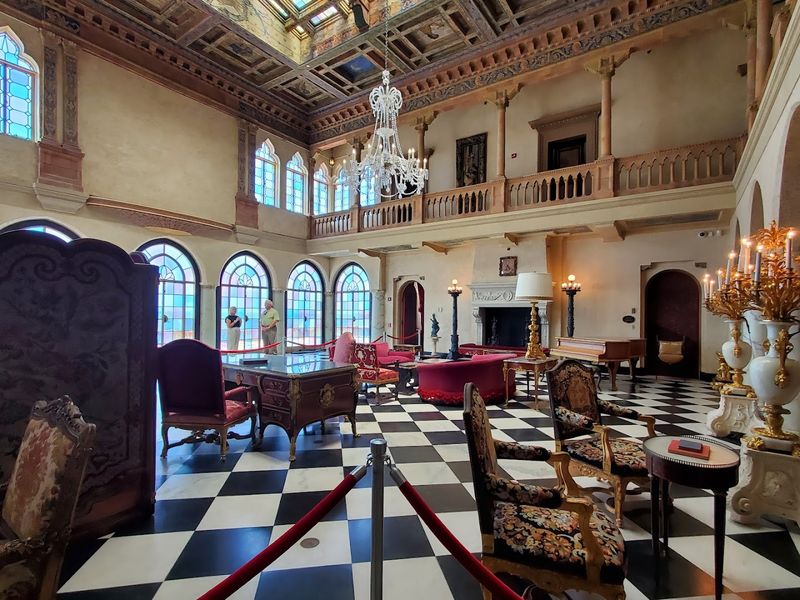
Stepping into the central court, I stopped mid-stride to stare at the floor.
Mable Ringling personally selected the marble, and she chose Viola marble, a rare and stunning variety with swirling patterns of cream, rose, and gold.
The floor alone is a masterpiece, laid out in geometric designs that draw your eye across the space and up toward the two-story ceiling.
Natural light pours through tall windows, making the marble shimmer and shift as you move.
This court was the heart of the home, where guests gathered, where the Ringlings entertained, and where the full scale of their ambition became impossible to ignore.
I stood there trying to imagine the room filled with people in evening dress, music drifting from somewhere deeper in the house.
The ceiling features elaborate moldings and painted details that echo the Venetian palaces John so admired.
Even the columns are works of art, each one topped with hand-carved capitals.
The court feels both grand and surprisingly intimate, a space designed to impress without overwhelming.
Mable understood balance, and it shows in every corner of this room.
I could have spent an hour just examining the craftsmanship in the marble alone.
Waterfront Terrace That Rivals Any Mediterranean Villa
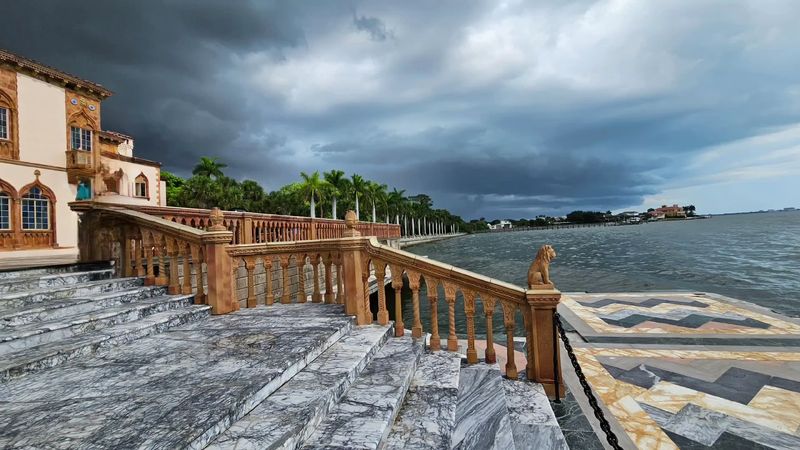
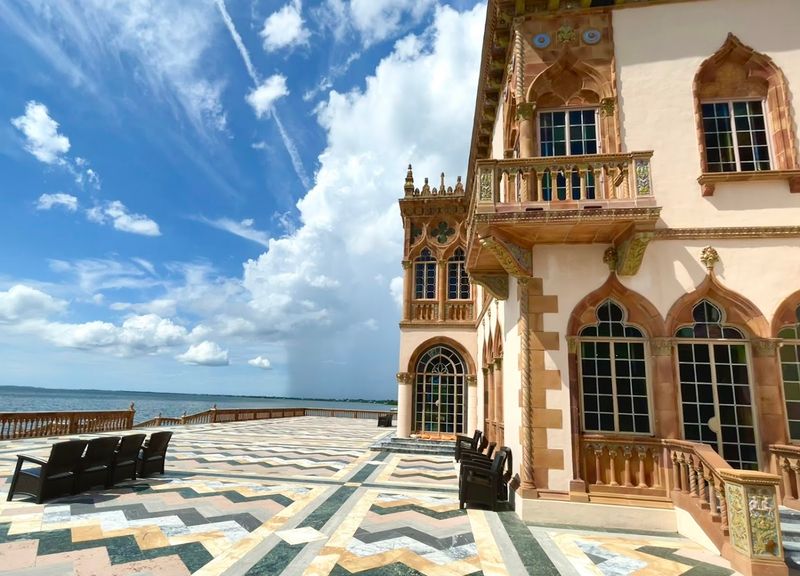
The terrace stretches along the bay side of the mansion, offering a front-row seat to some of the most beautiful water views in Sarasota.
I walked the length of it slowly, pausing at each archway to take in a slightly different angle of the bay.
The Ringlings entertained here often, hosting gatherings that spilled from the indoor rooms out onto this expansive outdoor space.
Terracotta tiles cover the floor, echoing the mansion’s exterior and creating a seamless transition between inside and out.
Ornate balustrades line the edge, detailed enough to feel decorative but sturdy enough to lean against while watching the sunset.
I leaned.
The terrace connects directly to the main living spaces, making it easy to imagine guests flowing between the two during parties.
Mable loved the water, and this terrace gave her a place to enjoy it without ever leaving home.
The scale is impressive, easily accommodating dozens of people without feeling crowded.
I noticed how the arches frame the view, turning each opening into a living painting of sky, water, and distant shoreline.
Even on a quiet afternoon, the terrace hums with the memory of laughter, conversation, and the clinking of glasses.
The Opulent Ballroom Built For Grand Entertaining

Walking into the ballroom, I felt the scale shift.
This room was built for spectacle, designed to hold crowds and dazzle them with every surface.
Crystal chandeliers hang from a ceiling covered in hand-painted frescoes, casting soft light across polished floors that once reflected the swirl of dancers.
The Ringlings threw legendary parties here, inviting friends, celebrities, and business associates to experience their vision of luxury.
I stood in the center and tried to picture the room alive with movement, music, and the kind of energy that only a 1920s gathering could generate.
Tall windows line one wall, offering views of the bay and flooding the space with natural light during the day.
At night, the chandeliers took over, creating an atmosphere that was equal parts romantic and theatrical.
John Ringling understood showmanship, and this room is proof.
Every detail, from the moldings to the drapery hardware, was chosen to impress.
Mable made sure the acoustics worked for live music, and the room still carries sound beautifully.
I clapped once, just to hear the echo, and it rang clear and full.
The ballroom is not just a room, it is a stage, and the Ringlings were always ready for the spotlight.
John and Mable’s Private Suite With Custom Furnishings
The private suite reveals a more personal side of the Ringlings, away from the public spectacle of the ballroom and court.
I walked through slowly, noticing how the furniture, much of it custom-made, reflects both comfort and status.
Mable had strong opinions about her bedroom, insisting on specific fabrics, colors, and arrangements that suited her taste.
The bed alone is a work of art, with carved details and rich textiles that would have been the height of fashion in the 1920s.
Large windows overlook the bay, offering the same stunning views that define the rest of the mansion.
I imagined waking up to that water every morning, the light shifting across the room as the sun rose.
John’s space is equally impressive, though slightly more restrained, reflecting his practical side even within all this luxury.
The suite includes sitting areas, dressing rooms, and enough space to feel like a private retreat within the larger home.
I noticed small details, like the hardware on the closets and the inlaid wood on the vanity, that show the level of care poured into every corner.
This was not just a bedroom, it was a sanctuary designed for two people who lived large but still valued their private moments together.
The Dock That Once Welcomed Yacht Parties
The dock stretches out into Sarasota Bay, a functional structure that also serves as a statement piece.
I walked to the end and turned back to see the mansion from the water, the way arriving guests would have seen it.
From this angle, Ca’ d’Zan looks even more like a transplanted Venetian palace, rising from the shore with impossible elegance.
The Ringlings entertained often by boat, welcoming friends who arrived by yacht for weekend gatherings or longer stays.
The dock made those arrivals seamless, offering a grand entrance that matched the grandeur of the house itself.
I tried to picture the scene, boats pulling up, guests stepping onto the dock in their finest clothes, the mansion glowing in the evening light.
The dock also gave John easy access to the water, which he loved.
He kept boats here, using them for business trips, leisure cruises, and everything in between.
Standing at the end, I felt the breeze off the bay and understood why the Ringlings chose this exact spot.
The water adds a layer of magic to the entire property, turning it into something more than just a house.
The dock is not just a place to tie up a boat, it is the gateway to a world the Ringlings built with vision, money, and a deep love for beauty.
Imported European Furnishings That Define Gilded Age Taste
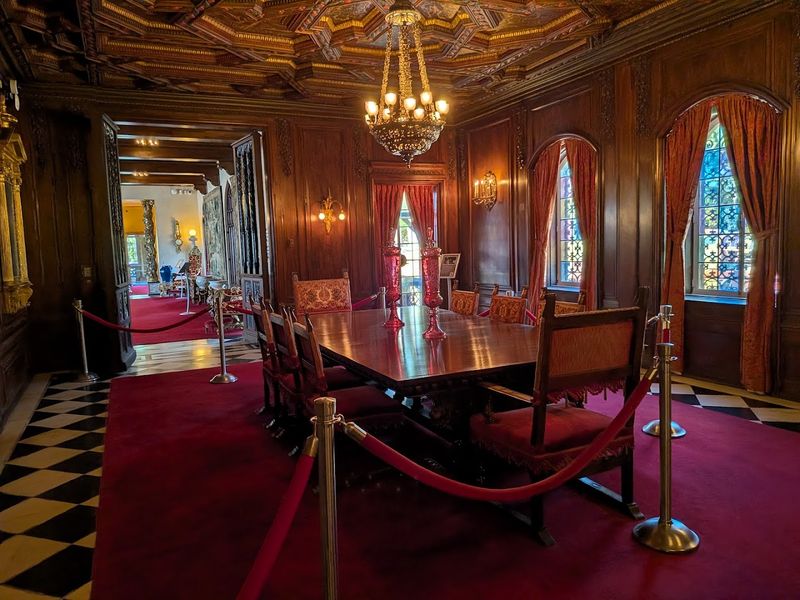
Every piece of furniture in Ca’ d’Zan tells a story of travel, taste, and the Ringlings’ obsession with European craftsmanship.
I moved from room to room, pausing to examine chairs, tables, and cabinets that were shipped across the Atlantic specifically for this house.
John and Mable collected constantly, buying pieces during their trips abroad and arranging for them to be transported back to Florida.
The result is a home that feels like a curated museum, each object chosen for its beauty, history, or both.
I noticed tapestries on the walls, their colors still vibrant despite decades of Florida humidity.
Gilded mirrors reflect light and views, multiplying the sense of space and luxury.
Carved wood details, intricate inlays, and hand-painted surfaces show up in unexpected places, rewarding close attention.
Mable had an eye for mixing styles, blending Italian, French, and Spanish influences without losing coherence.
The furniture is not just decorative, it was meant to be used, sat in, leaned against, lived with.
I sat carefully in one of the chairs, half-expecting it to protest, but it held firm.
These pieces have survived nearly a century, and they still define the character of every room they occupy.
Ornate Stained Glass and Decorative Windows Throughout
Light filters through stained glass windows in unexpected bursts of color, turning ordinary sunlight into something theatrical.
I stood in front of one window for several minutes, watching how the colors shifted as clouds moved outside.
The Ringlings installed stained glass throughout the mansion, using it to add privacy, beauty, and a touch of European cathedral elegance to their Florida home.
Some windows feature geometric patterns, while others depict more elaborate scenes or floral designs.
Each one was custom-made, designed to fit specific openings and complement the surrounding architecture.
I noticed how the glass changes the mood of each room, softening harsh Florida light and creating pockets of jewel-toned glow.
Mable loved the drama of it, the way a simple window could become a focal point.
The windows also serve a practical purpose, offering ventilation while maintaining the mansion’s sense of grandeur.
I opened one carefully, feeling the bay breeze slip through, and marveled at how even the functional elements were treated as art.
The stained glass ties the whole house together, connecting rooms through a shared language of color and craftsmanship.
Standing there, bathed in colored light, I felt like I had stepped into a living painting where every detail mattered.
The Game Room and Bar That Hosted Legendary Gatherings
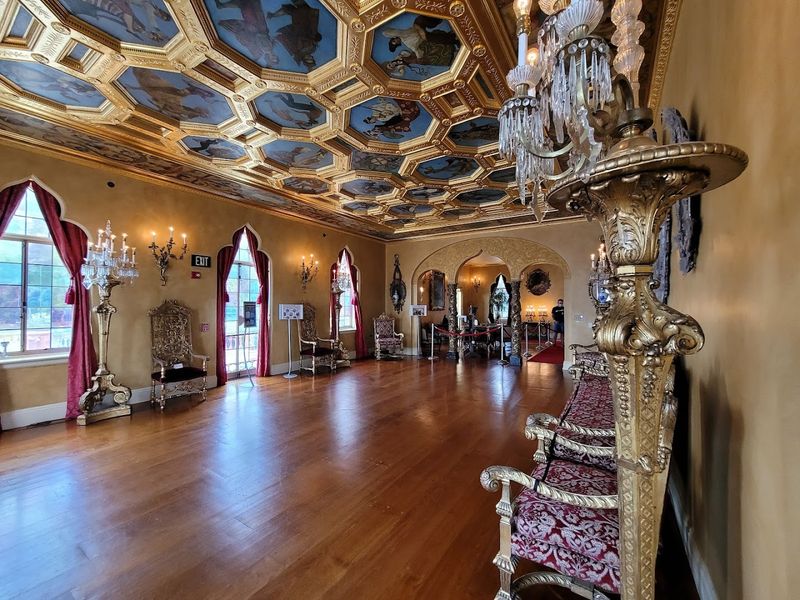
Tucked into the mansion is a game room that speaks to the Ringlings’ love of entertaining and their understanding that great parties need great spaces.
I stepped inside and immediately felt the shift in energy, from formal grandeur to something more relaxed and playful.
The room features wood paneling, comfortable seating, and enough space for billiards, cards, and whatever other amusements the Ringlings and their guests dreamed up.
A bar area occupies one corner, designed for easy service during long evenings of conversation and competition.
I imagined John holding court here, cigar in hand, swapping stories with friends while the rest of the party continued in other parts of the house.
The game room was a retreat within a retreat, a place where the formality could drop just a bit.
Mable made sure the furnishings matched the rest of the house in quality, even if the tone was more casual.
I ran my hand along the edge of the billiard table, feeling the smooth wood and imagining the countless games played here.
The room still holds the echo of laughter, friendly arguments, and late-night conversations that stretched toward dawn.
It is a reminder that for all its grandeur, Ca’ d’Zan was also a home, a place where people gathered, relaxed, and made memories that lasted long after the party ended.