
10 Underrated Florida State Parks You’ll Want to Explore In 2026
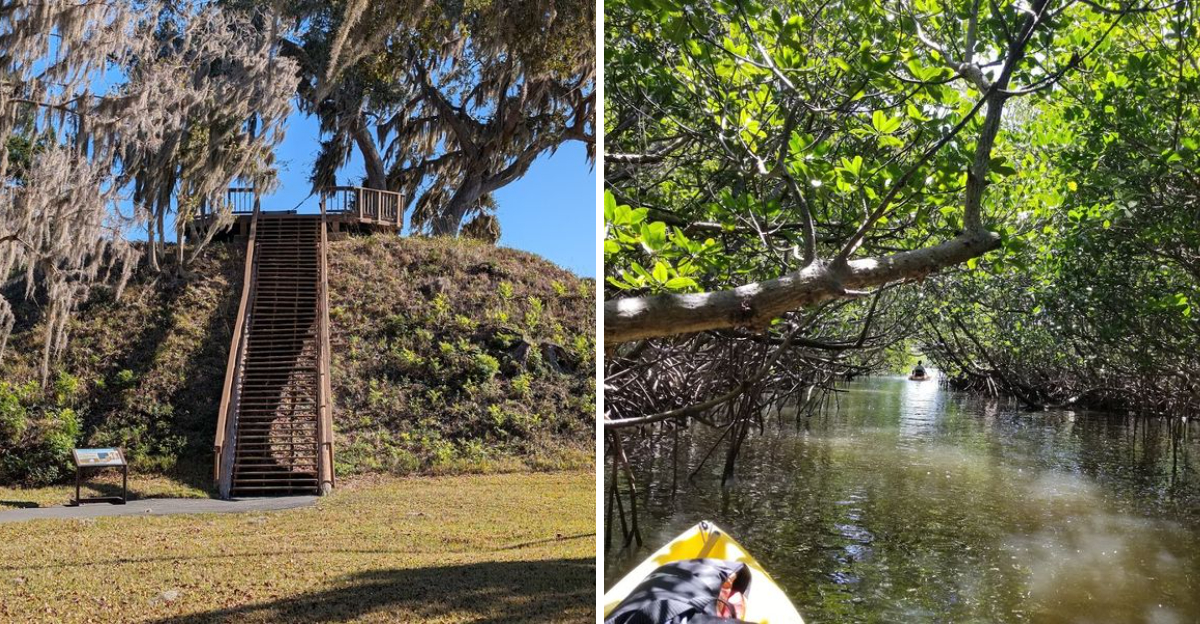
Florida is famous for beaches and roller coasters, but what if the most unforgettable places in the state are the ones hiding far from the crowds? What if the real magic is not behind a ticket gate, but down a quiet trail most travelers never think to explore?
Across the Sunshine State, there are parks that feel like secrets waiting to be discovered. Places where ancient fossils rest beneath your feet.
Where mysterious sinkholes open into crystal-clear water. Where rivers wind through untouched landscapes and history quietly lingers in the trees.
No long lines. No loud attractions.
Just open space, fresh air, and the kind of calm that feels rare in a state known for spectacle.
These underrated Florida parks reveal a different side of the Sunshine State. One that feels wilder, older, and far more peaceful than you ever expected.
1. Windley Key Fossil Reef State Park
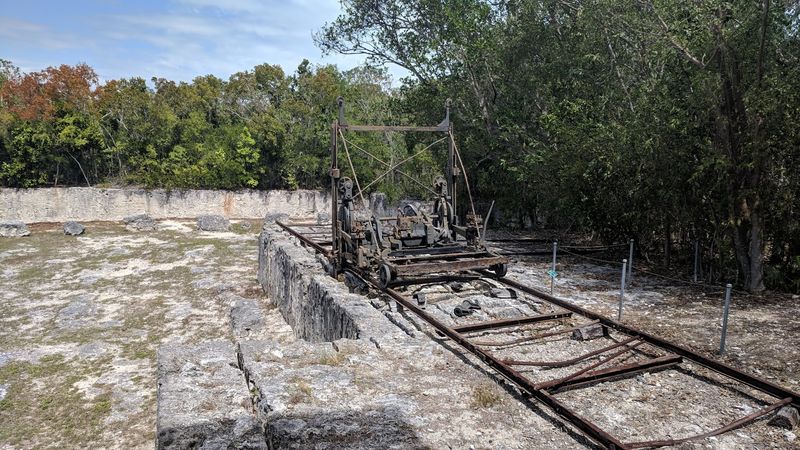
Stepping into Windley Key Fossil Reef State Park at 84900 Overseas Hwy, Islamorada, FL 33036 feels like entering a time machine that whisks you back 125,000 years. This isn’t your typical sandy beach park—instead, you’re walking on what used to be the ocean floor when sea levels were much higher and dinosaurs were still relatively recent history.
The park’s main attraction is the fossilized coral reef, which was quarried in the early 1900s to build Henry Flagler’s Overseas Railroad. Workers carved out huge sections of this ancient reef to create railroad bed material, accidentally creating a geological wonderland in the process.
Today, you can see fossilized brain coral, elkhorn coral, and even tiny sea creatures preserved in stone like nature’s own museum exhibits.
Educational trails wind through the old quarry walls, where interpretive signs explain what you’re seeing without making you feel like you’re back in science class. The Environmental Education Center offers fascinating exhibits about the Keys’ geological history, making complex concepts actually fun to understand.
Photography enthusiasts go bonkers here because the textures and patterns in the exposed reef create absolutely stunning images.
Best of all, this park rarely gets crowded, so you can explore at your own pace without dodging selfie sticks or tour groups.
2. Ochlockonee River State Park
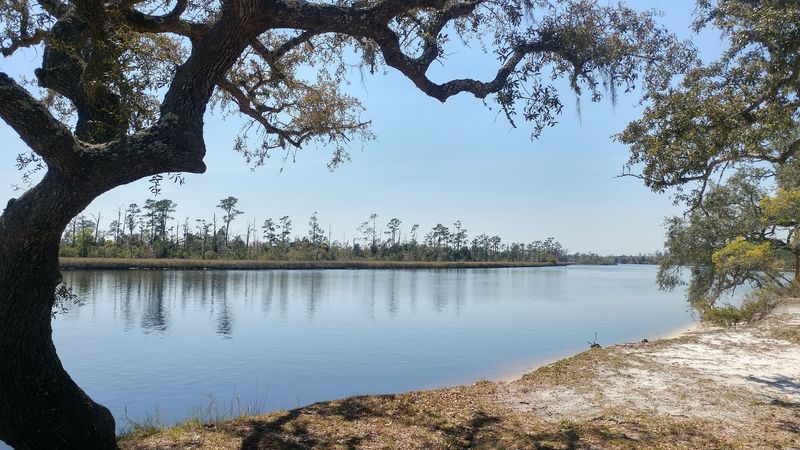
Hidden along Florida’s Panhandle at 429 State Park Road, Sopchoppy Hwy, Sopchoppy, FL 32358, Ochlockonee River State Park is where you go when you want nature without the nature-themed gift shops. This 392-acre slice of paradise sits where the Ochlockonee River meets River, creating a watery playground that kayakers dream about but somehow few people know exists.
The name “Ochlockonee” comes from a Hitchiti Native American word meaning “yellow water,” which perfectly describes the tannin-stained river that flows through towering pines and ancient oaks. Unlike Florida’s famous springs with their crystal-clear waters, this river has character—a rich, tea-colored flow that supports an incredible diversity of wildlife.
You might spot alligators sunbathing on logs, ospreys diving for fish, or even the occasional manatee wandering upstream during warmer months.
Hiking trails meander through pine flatwoods and hardwood forests, offering peaceful walks where the only sounds are birds singing and leaves rustling. The campground here is wonderfully primitive compared to RV resort-style parks, giving you that authentic outdoor experience without sacrificing basic comforts.
Fishing enthusiasts cast lines for largemouth bass, bream, and catfish, often catching dinner while watching spectacular sunsets paint the river gold.
Pack a picnic and claim one of the riverside pavilions for an afternoon that feels wonderfully disconnected from modern chaos.
3. St. Lucie Inlet Preserve State Park
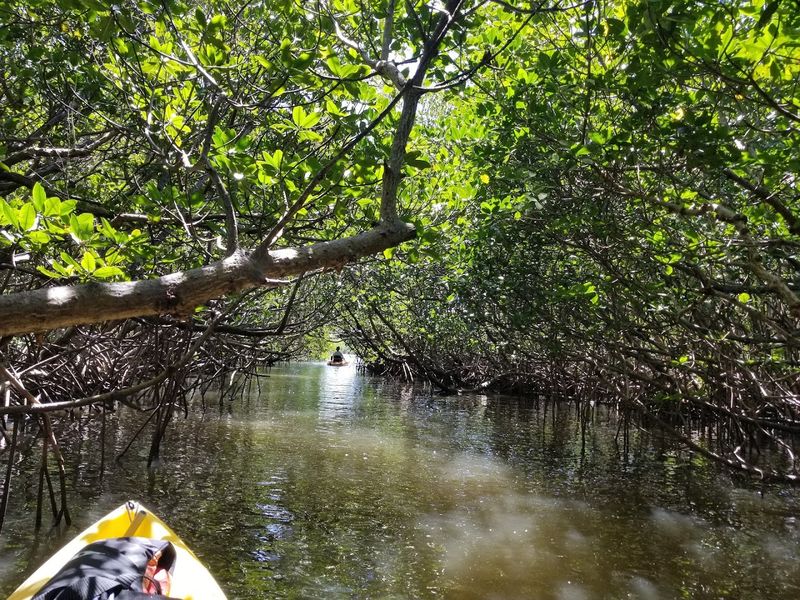
Getting to St. Lucie Inlet Preserve State Park at 5467 N Ocean Dr, Hutchinson Island, FL 34949 requires a boat, which automatically filters out about 90% of potential visitors—their loss, your gain! This 1,136-acre preserve protects one of Florida’s last remaining natural inlets, offering a Robinson Crusoe experience just minutes from civilization.
The park sits at the northern tip of Jupiter Island, where the St. Lucie Inlet connects the Indian River Lagoon to the Atlantic Ocean. This meeting of waters creates incredible biodiversity, making it a hotspot for bird watchers who’ve spotted over 180 species here, including rare visitors that make ornithologists weak in the knees.
The beaches are pristine and usually empty, letting you pretend you’ve discovered your own private island paradise.
Hiking trails wind through coastal hammocks filled with gumbo limbo trees, wild coffee plants, and strangler figs that look like something from a fantasy novel. The inlet itself is popular with surfers who appreciate the consistent waves and lack of crowds fighting for position.
Snorkeling near the rocks can reveal tropical fish, sea turtles, and occasionally even dolphins playing in the current.
Pack everything you need because there are no concession stands or convenience stores—just pure, uninterrupted nature. The Jupiter Inlet Lighthouse visible across the water provides the perfect landmark for navigation and absolutely stunning photography opportunities during golden hour.
4. Falling Waters State Park
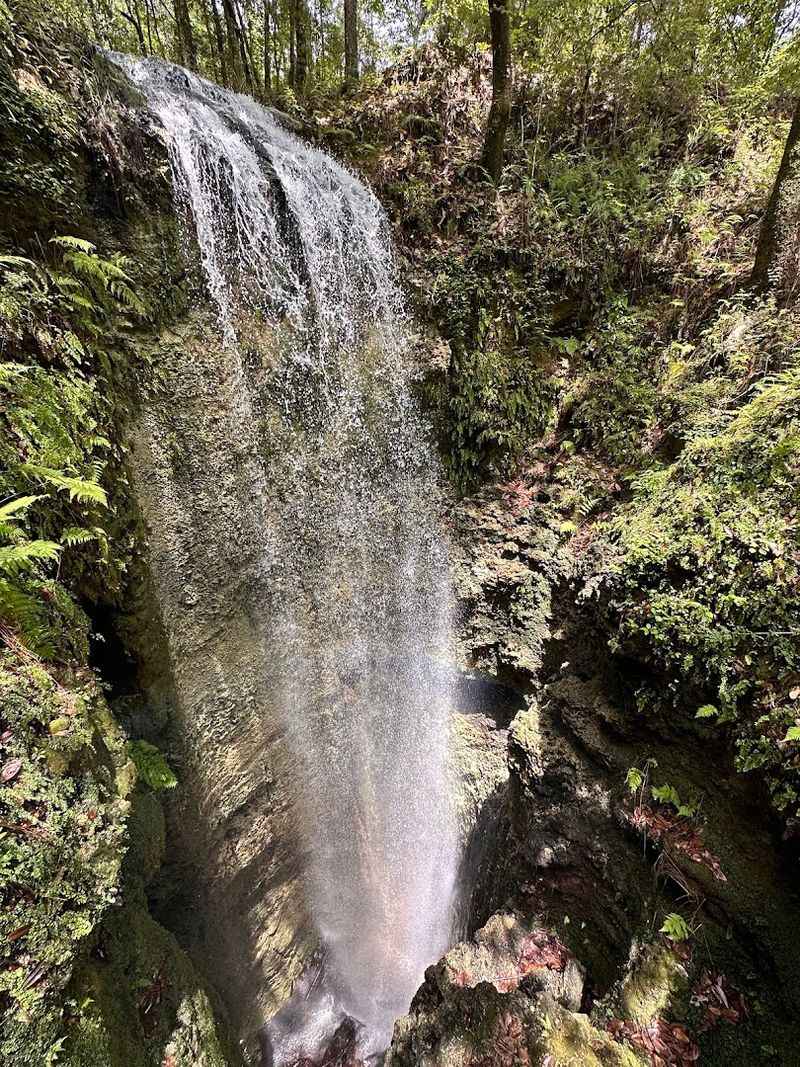
At 1130 State Park Rd, Chipley, FL 32428, Falling Waters State Park boasts something you’d never expect in pancake-flat Florida: the state’s tallest waterfall! Before you picture Niagara Falls, understand that this 73-foot cascade tumbles into a cylindrical sinkhole rather than flowing over a cliff, creating a geological curiosity that’s uniquely Floridian and genuinely mesmerizing.
The waterfall disappears into an underground cavern that no one has ever fully explored, adding an element of mystery that sparks imagination. During dry seasons, the flow becomes a trickle, but after good rains, it roars impressively, proving that Florida can do drama when properly motivated.
The sinkhole itself is about 20 feet wide and 100 feet deep, though the actual bottom has never been reached because it connects to underground cave systems.
Hiking trails loop through longleaf pine forests and hardwood areas, showcasing Florida’s original landscape before development changed everything. Wildflowers bloom throughout spring and fall, painting the forest floor in colors that rival any garden.
The park’s lake offers fishing and swimming opportunities, with a sandy beach area perfect for cooling off after exploring the trails.
Picnic areas with grills let you make a full day of it, and the campground provides a peaceful base for exploring the surrounding Panhandle region. Local legend claims the sinkhole was created when a meteorite struck, though geologists insist it’s just normal karst topography—either way, it’s spectacular.
5. Crystal River Archaeological State Park
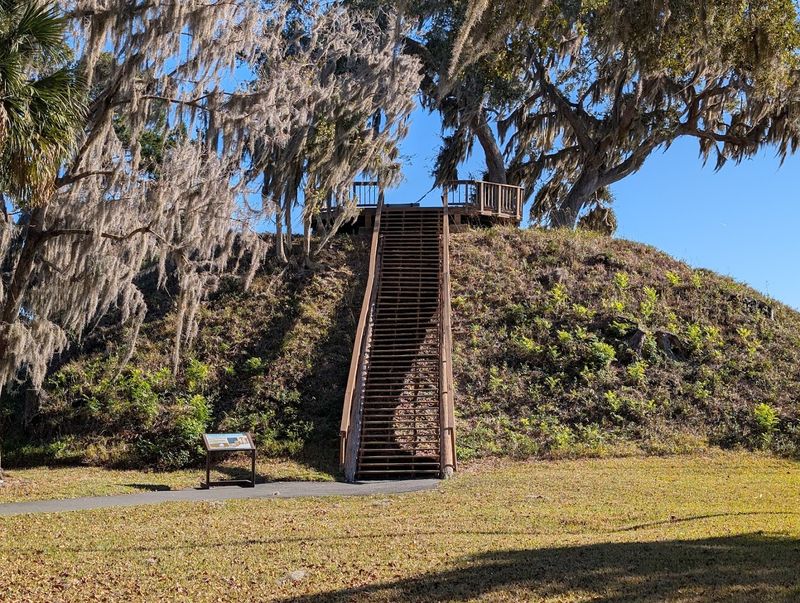
Long before Europeans “discovered” Florida, Native Americans built an impressive ceremonial center at what’s now Crystal River Archaeological State Park, located at 3400 N Museum Point, Crystal River, FL 34429. This 61-acre site preserves over 1,600 years of pre-Columbian history, with burial mounds, temple platforms, and shell middens that tell stories of sophisticated cultures most history books barely mention.
The park’s centerpiece is a 30-foot-tall temple mound that indigenous people constructed entirely by hand, carrying countless baskets of earth and shells to create this sacred space. Standing atop this ancient structure, you can imagine ceremonies conducted here centuries ago while enjoying panoramic views of the surrounding landscape.
Two burial mounds contain the remains of important community members, though they’re now protected and closed to excavation out of respect.
A museum on-site displays artifacts found during archaeological digs, including pottery, tools, and shell ornaments that showcase the artistic abilities of these early Floridians. The interpretive trail winds through the complex with excellent signage explaining what you’re seeing without requiring an anthropology degree.
Unlike many archaeological sites that feel sterile or roped off, this park lets you walk among the mounds and truly connect with the past.
The location along the Crystal River also made it an important gathering place for trade and social interaction between different groups. Today, it’s a peaceful spot for reflection and learning, offering perspective on Florida’s deep human history.
6. Dudley Farm Historic State Park
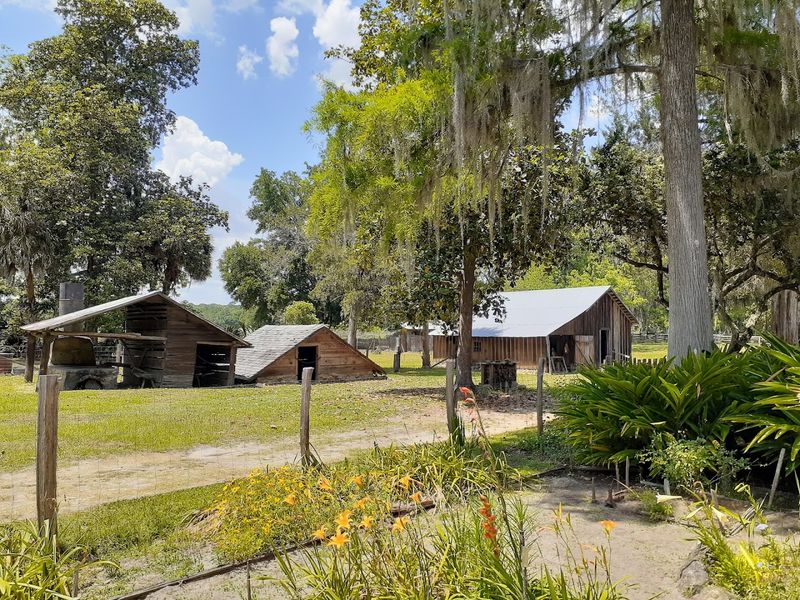
Time-travel to 1880s rural Florida at Dudley Farm Historic State Park, beautifully preserved at 18730 W Newberry Rd, Newberry, FL 32669. This working farm museum shows exactly how Florida families lived, worked, and survived before air conditioning, grocery stores, and the internet made life considerably easier—and arguably less interesting.
The Dudley family farmed this land for three generations, from the 1850s through the 1940s, and their original buildings still stand thanks to careful preservation efforts. You’ll find the farmhouse, commissary, cane syrup shed, several barns, and outbuildings arranged just as they were when the farm operated commercially.
Costumed interpreters demonstrate period-appropriate activities like blacksmithing, cooking on wood stoves, and tending heritage breed animals that would’ve been common in that era.
Kids absolutely love the hands-on aspects here—gathering eggs from chickens, watching demonstrations of butter churning, and understanding that “farm to table” once meant walking to your backyard rather than visiting trendy restaurants. The vegetable gardens grow heirloom varieties using 19th-century techniques, proving that organic farming isn’t some new fad but rather how everyone farmed before chemicals entered agriculture.
Seasonal events like cane grinding in fall and spring planting demonstrations bring the farm’s history to life in engaging, educational ways.
Pack comfortable walking shoes because the 325-acre property includes nature trails through pine forests and wetlands. It’s genuinely fascinating to see how self-sufficient families had to be, making you appreciate modern conveniences while respecting pioneer ingenuity.
7. Fred Gannon Rocky Bayou State Park
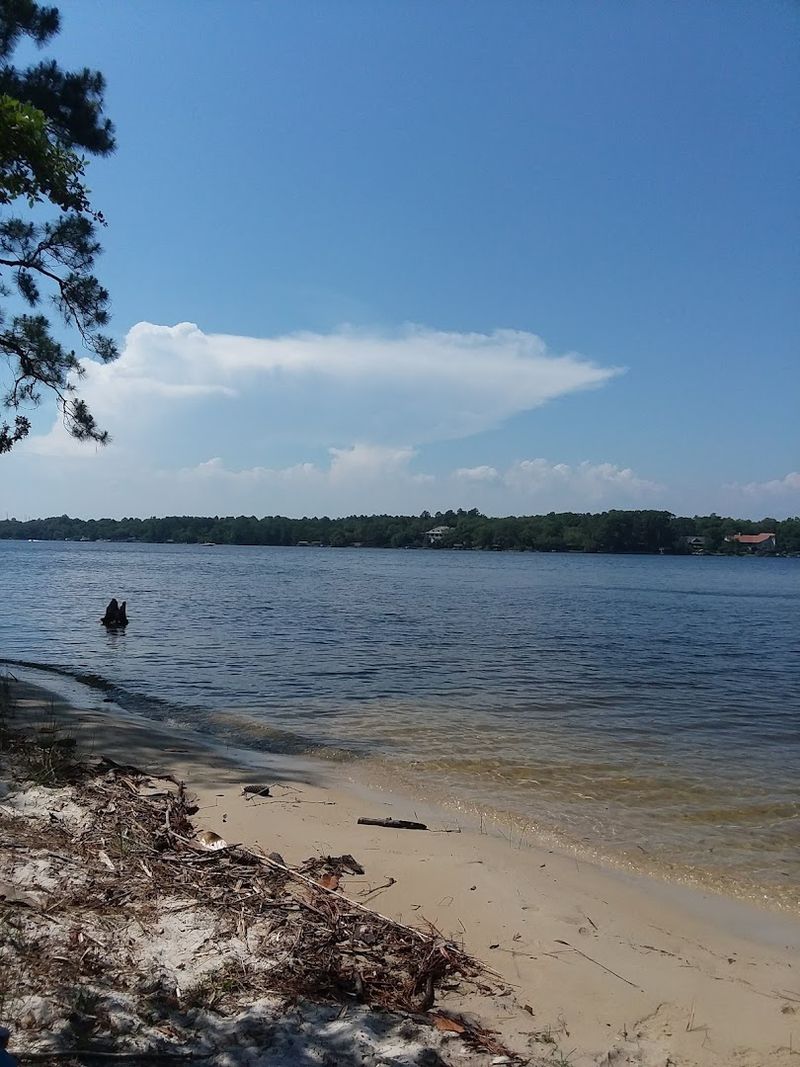
Tucked into Florida’s Emerald Coast at 4281 FL-20, Niceville, FL 32578, Fred Gannon Rocky Bayou State Park offers something increasingly rare: waterfront beauty without high-rise condos blocking your view. This 357-acre gem sits along a pristine arm of Choctawhatchee Bay, where the water really does shimmer that famous emerald color that gives this coastline its nickname.
Despite the name, you won’t find actual rocks here—”Rocky Bayou” apparently refers to the area’s firm, sandy bottom rather than any geological features. The bayou’s calm, protected waters make it perfect for kayaking, paddleboarding, and swimming without worrying about ocean currents or jellyfish invasions.
Fishing enthusiasts cast for redfish, flounder, and speckled trout, often succeeding where more crowded spots fail because fish apparently also appreciate peace and quiet.
Hiking trails wind through sand pine scrub forests, a habitat type that’s increasingly rare in developed Florida. These twisted, gnarly pines create a Dr. Seuss-like landscape that’s simultaneously beautiful and slightly eerie, especially when morning fog rolls through.
The nature trail features interpretive signs explaining the unique ecology without being preachy or boring about conservation.
The park’s campground sits right on the bayou, offering stunning sunrise views that make waking up early actually worthwhile. Picnic areas with grills and pavilions provide perfect spots for family gatherings, and the swimming area includes a sandy beach that kids adore.
It’s close enough to Destin’s attractions for convenience but far enough away to escape the tourist madness completely.
8. Ravine Gardens State Park
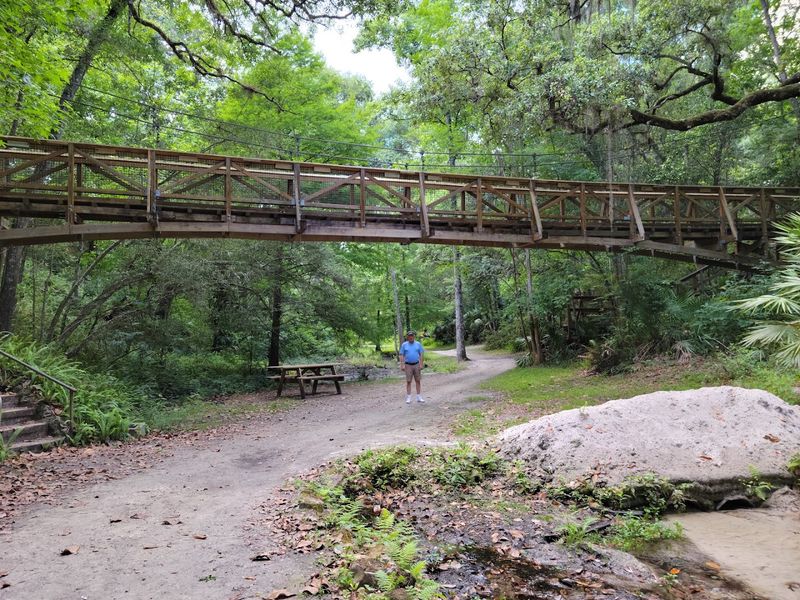
Forget everything you think you know about Florida’s flat landscape when you visit Ravine Gardens State Park at 1600 Twigg St, Palatka, FL 32177. This 59-acre wonderland features steep ravines up to 120 feet deep—yes, in Florida!—created when underground limestone dissolved and the surface collapsed, forming a natural amphitheater that clever humans transformed into spectacular gardens.
During the 1930s, the Works Progress Administration developed these ravines into formal gardens, planting over 100,000 azaleas that explode into jaw-dropping color every spring. The azalea bloom season typically peaks in March, when the ravines become a riot of pink, red, white, and purple blossoms that attract photographers, artists, and anyone with functioning eyeballs.
Even outside bloom season, the gardens remain gorgeous with camellias, magnolias, and native plants providing year-round interest.
Winding paths descend into the ravines, crossing ornamental bridges and passing beside a creek that babbles through the gardens like it’s auditioning for a meditation soundtrack. The microclimate inside the ravines stays cooler and more humid than the surrounding area, creating conditions where plants thrive that normally wouldn’t survive in Florida.
Suspension bridges offer thrilling crossings and perfect vantage points for admiring the landscape from above.
The park also features a formal rose garden, picnic areas, and a playground for kids who’ve exhausted their patience for botanical beauty. Special events throughout the year include nighttime garden illuminations and music festivals that transform the ravines into magical venues.
9. Forest Capital Museum State Park
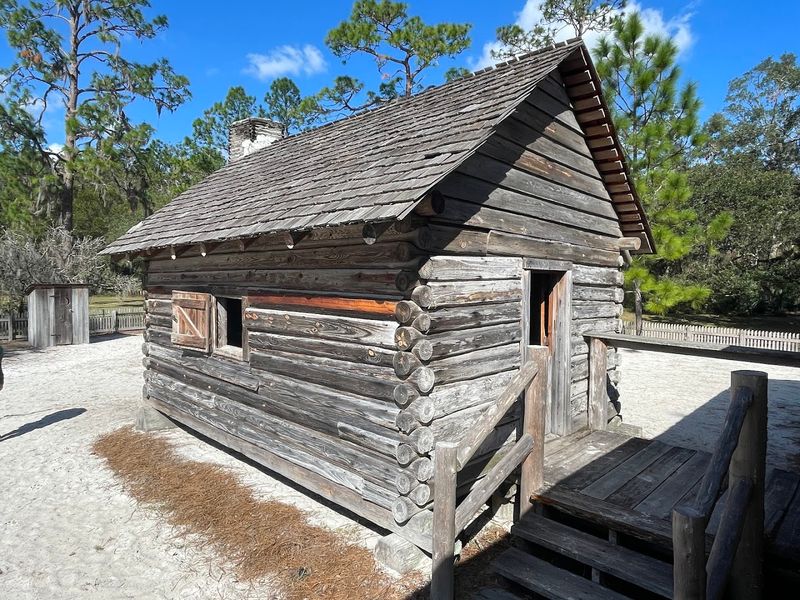
Forest Capital Museum State Park at 204 Forest Park Dr, Perry, FL 32348 celebrates Florida’s often-overlooked timber industry with exhibits that are surprisingly engaging considering they’re about trees. This small park packs a big educational punch, explaining how forestry shaped Florida’s economy, environment, and culture in ways most visitors never consider while enjoying their beach vacations.
The museum building itself showcases the beautiful possibilities of Florida timber, constructed from various native woods that demonstrate both durability and aesthetic appeal. Inside, exhibits trace the evolution of forestry from early logging practices that nearly destroyed Florida’s forests to modern sustainable management that balances economic needs with environmental protection.
You’ll see vintage logging equipment, photographs of early timber operations, and explanations of different tree species that make Florida’s forests so diverse.
Outside, a restored 1863 Cracker homestead shows how pioneer families utilized forest resources for shelter, tools, and fuel. The log cabin, constructed entirely from hand-hewn logs, represents architectural ingenuity that modern builders respect even while preferring power tools.
Interpretive trails wind through a working forest where you can identify different pine species and understand how selective harvesting actually benefits forest health when done properly.
The park hosts an annual Forest Festival each October, featuring chainsaw carving demonstrations, forestry competitions, and educational programs that make tree science genuinely fun. It’s a quick stop but worthwhile, especially if you’re driving through the area and want to understand the landscape you’re passing through.
Plus, the gift shop sells locally-made wood products that make unique, meaningful souvenirs.
10. Myakka River State Park
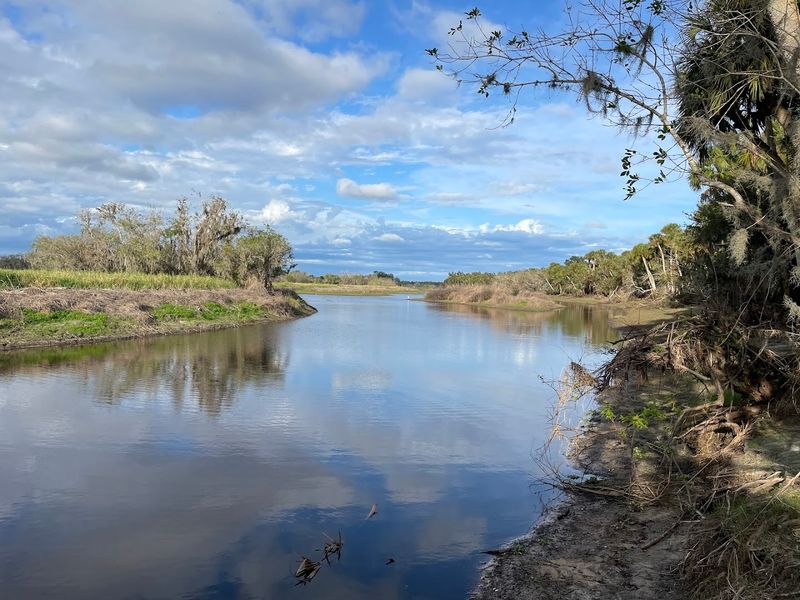
Saving the best for last, Myakka River State Park at 13208 State Road 72, Sarasota, FL 34241 is Florida’s largest state park and arguably its most spectacular. Spanning 37,000 acres of wetlands, prairies, hammocks, and pinelands, this park showcases Old Florida ecosystems that have largely disappeared elsewhere, making it feel like you’ve stepped into a nature documentary—except you’re actually there, and David Attenborough isn’t narrating your every move.
The Myakka River winds through the park for 12 miles, creating diverse habitats that support an incredible array of wildlife. Alligators are so common here that seeing them becomes routine rather than exciting, though watching a massive bull gator sunbathing never gets completely boring.
The bird life is extraordinary, with over 200 species recorded, including endangered wood storks, roseate spoonbills, and bald eagles that nest in the park’s tall pines.
Two large lakes—Upper Myakka Lake and Lower Myakka Lake—offer boat tours aboard the world’s largest airboat, providing thrilling rides and excellent wildlife viewing opportunities. For a completely different perspective, climb the canopy walkway that suspends you 25 feet above the forest floor, or ascend the 74-foot observation tower for panoramic views across endless wilderness.
Hiking trails range from easy nature walks to challenging backcountry treks that take you deep into areas few visitors ever see.
The park’s campground accommodates both tents and RVs, while five primitive cabins built by the Civilian Conservation Corps in the 1930s offer rustic but charming overnight accommodations. It’s absolutely worth spending multiple days here exploring different areas and experiencing how the park transforms from dawn to dusk.