
North Carolina Has 15 Scenic Spots That Deserve Their Own Soundtrack
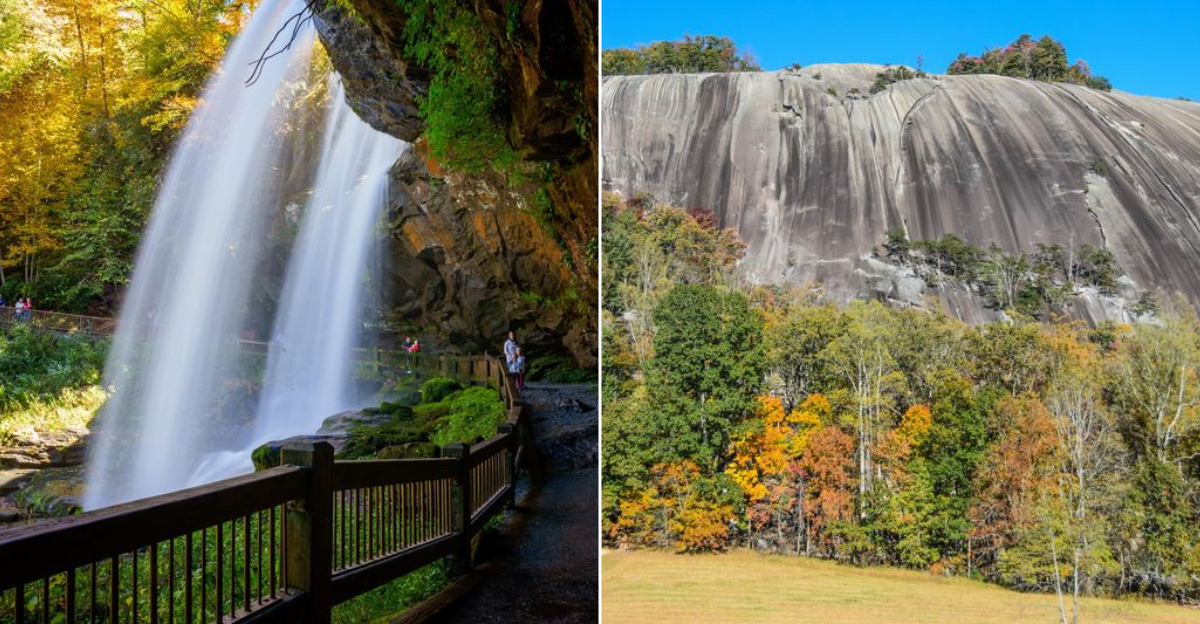
Stop scrolling. North Carolina isn’t just a state, it’s basically a mood board come to life.
Mountains that hum, coastlines that whisper, forests that could star in their own indie film. And honestly?
Each of the scenic spots I stumbled across deserved its own soundtrack. I’ve seen sunrises so dramatic they made me question every playlist I own, waterfalls that could drown out the world’s bad decisions, and little towns so picturesque they practically demanded a slow-motion montage.
Somewhere between the winding roads and cliffside views, I realized North Carolina wasn’t just begging to be visited.
It was screaming for it, in stereo, with a beat.
Grab your earbuds, your camera, maybe a snack. You’re going to need it.
1. Blue Ridge Parkway Visitor Center
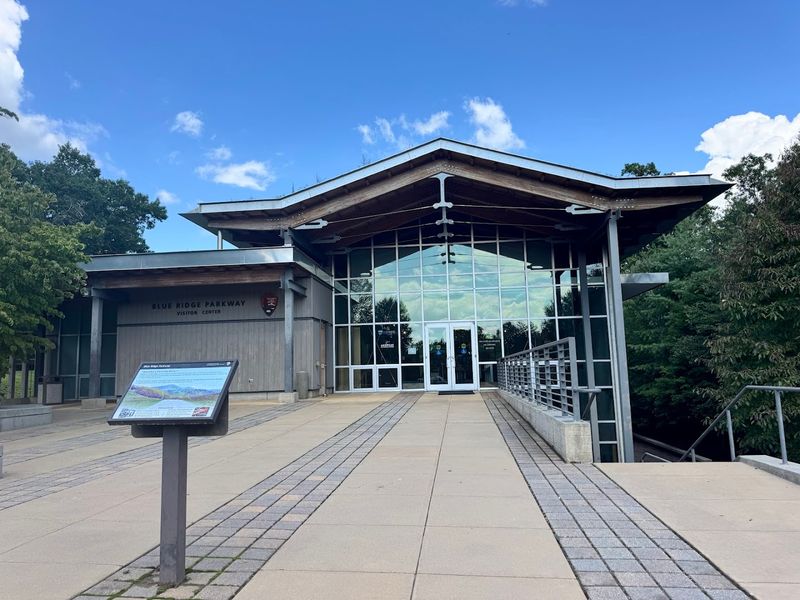
Pull up to the Blue Ridge Parkway Visitor Center at 199 Hemphill Knob Rd in Asheville, and you will immediately understand why this road is called America’s Favorite Drive. The Parkway stretches 469 miles through the Southern Appalachians, and this visitor center sits right at one of its most celebrated entry points.
The overlooks near here offer layered mountain views that look like someone painted them in watercolor and forgot to add the tourist crowds.
The center itself gives you maps, trail info, and enough context to make your drive feel intentional rather than accidental. Rangers here genuinely know their stuff, and the exhibits walk you through the ecology and history of the corridor.
Sunrise visits are borderline unfair in terms of beauty. Fog settles into the valleys below the ridgeline, and the light filters through in a way that makes even the most jaded traveler reach for their camera.
The Blue Ridge Parkway does not just pass through the mountains. It belongs to them.
2. Biltmore Estate

There is nothing subtle about Biltmore Estate, and that is exactly the point. Located at 1 Lodge St in Asheville, this 8,000-acre property is home to the largest privately owned house in America, a 178,926-square-foot French Renaissance chateau built by George Vanderbilt in 1895.
Walking up the approach road through the forest and suddenly seeing that facade emerge is a legitimately jaw-dropping moment.
The grounds alone could occupy a full day. Formal gardens designed by Frederick Law Olmsted, the same landscape architect behind Central Park, frame the estate with the kind of intentional beauty that makes you slow your entire pace.
The walled garden is particularly stunning in spring when the blooms are stacked in every direction.
Inside the house, the rooms feel more like a museum than a home, with original art, tapestries, and furnishings that tell the story of Gilded Age excess in vivid detail. Biltmore earns every bit of the hype surrounding it.
3. Chimney Rock State Park
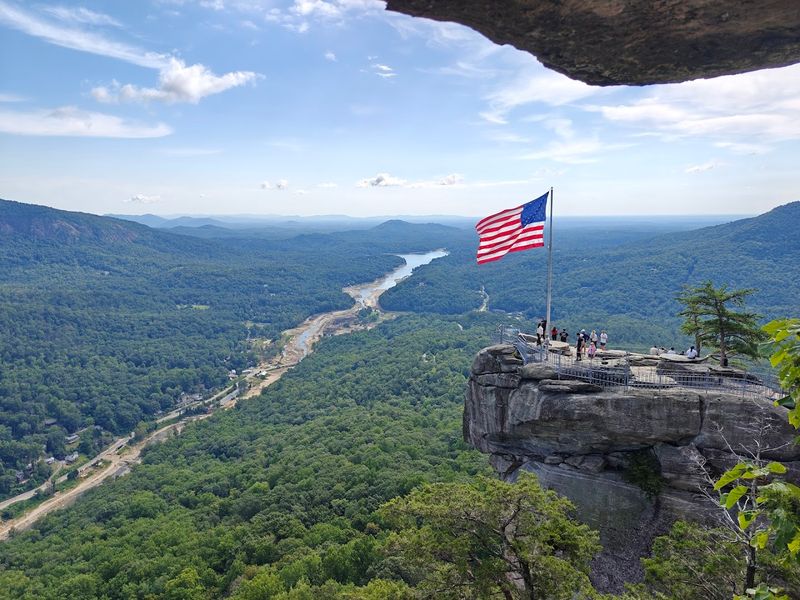
Chimney Rock is the kind of place that makes you feel genuinely small, and somehow that feels great. Sitting at 743 Chimney Rock Park Road in the town of Chimney Rock, this 315-foot granite monolith juts straight up from the floor of Hickory Nut Gorge like it was placed there on purpose.
You can reach the summit by elevator or by trail, and both options deliver views that stretch across Lake Lure and into the surrounding ridgelines with almost cinematic drama.
Fun fact: parts of the 1992 film The Last of the Mohicans were filmed here, which tells you everything you need to know about the visual impact of this place. The Hickory Nut Falls trail is worth every step, leading to a 404-foot waterfall that drops in one clean, spectacular sheet.
The gorge itself creates a microclimate that supports rare plant species and nesting peregrine falcons.
Chimney Rock is not just a scenic overlook. It is a full geological personality statement.
4. Looking Glass Falls Scenic Area
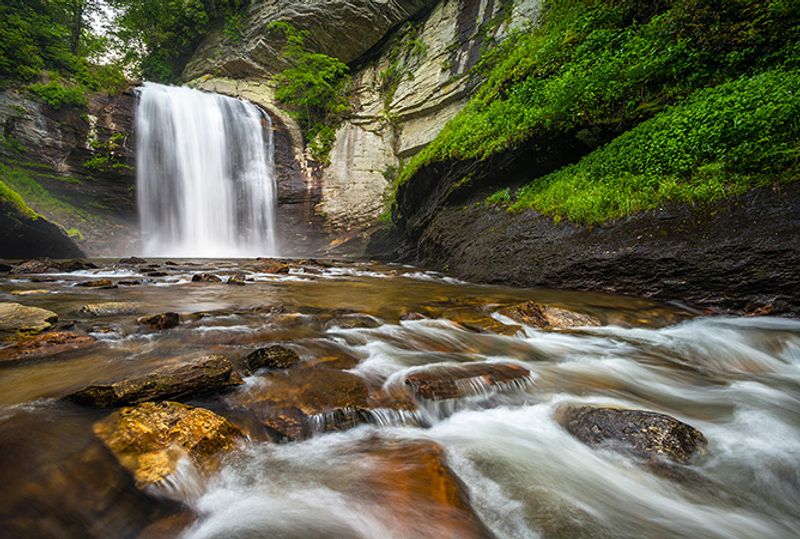
Some waterfalls make you work for it. Looking Glass Falls is not one of them, and that accessibility is part of its charm.
Located right off 1600 Pisgah Highway in Pisgah Forest, this 60-foot waterfall drops in a broad, powerful curtain directly into a crystal-clear plunge pool that you can walk right up to from a paved path.
It is one of the most visited waterfalls in North Carolina, and the first time you see it, you will completely understand why.
The falls are named after Looking Glass Rock, a nearby granite dome that reflects light like a mirror when wet. The surrounding Pisgah National Forest frames the whole scene in deep green, and the sound of the water hitting the pool below is genuinely therapeutic.
Visit in early morning before the crowds arrive and the light hits the mist in ways that feel almost staged.
Some of North Carolina’s most breathtaking views ask for nothing but your eyes and a sense of wonder, no boots, no excuses needed.
5. Sliding Rock Recreation Area
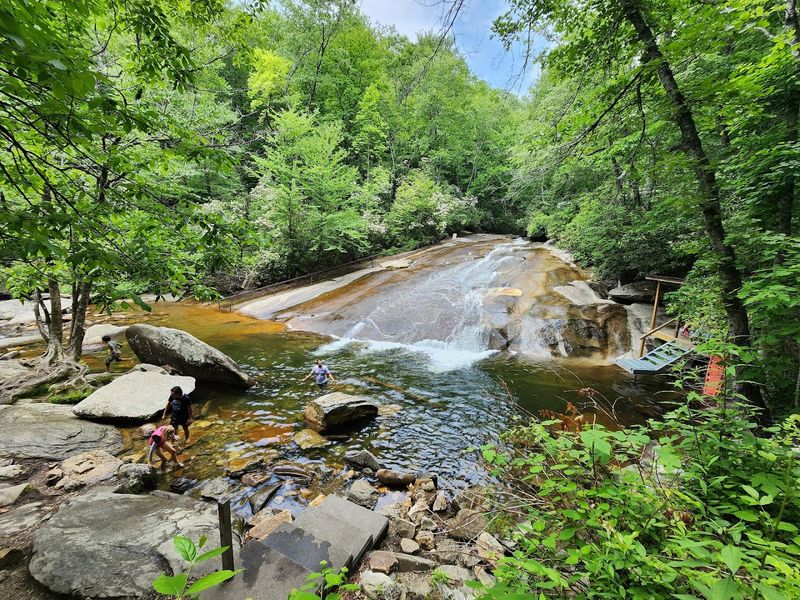
Sixty feet of smooth, water-slicked rock with a seven-foot drop into a cold mountain pool at the bottom. That is Sliding Rock, and it is exactly as fun as it sounds.
Located at 7851 Pisgah Highway in Pisgah Forest, this natural water slide draws thousands of visitors every summer who come ready to scream their way down an 11,000-gallon-per-minute rush of mountain water. The Pisgah National Forest setting makes it feel wild even when the parking lot is full.
The water temperature hovers around 50 to 60 degrees Fahrenheit year-round, which is the kind of cold that immediately resets your entire nervous system. There is an observation deck for anyone who prefers to watch and photograph the action rather than participate in it, and honestly, that vantage point produces some of the best candid shots you will ever take.
Since the 1930s, Sliding Rock has drawn summer crowds in North Carolina, and no matter how many times you plunge down its icy streak, the thrill never fades.
6. DuPont State Recreational Forest
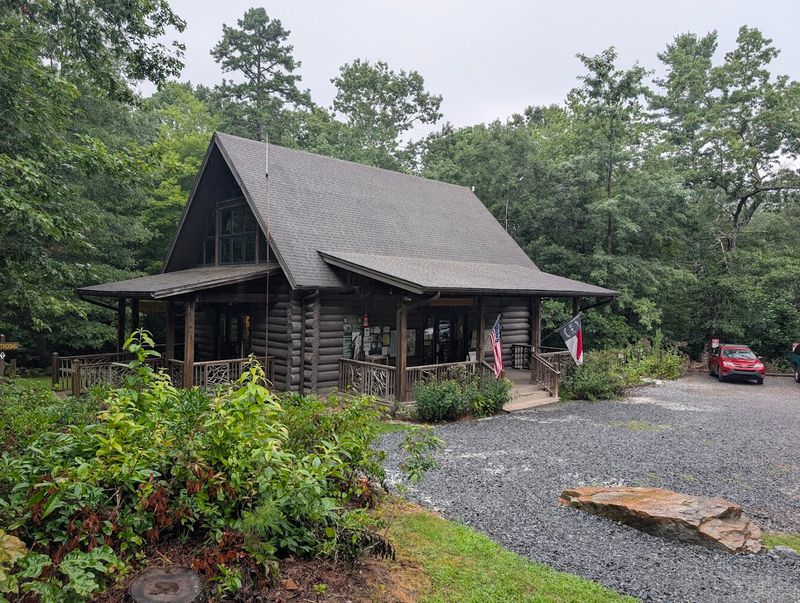
DuPont State Recreational Forest is quietly one of the most impressive natural areas on the East Coast, and not enough people know it. The Aleen Steinberg Visitor Center at 89 Buck Forest Road in Cedar Mountain serves as the starting point for exploring over 10,000 acres of trails, granite domes, and a stunning concentration of waterfalls.
Triple Falls, High Falls, and Hooker Falls are all within a reasonable hike of each other, which is almost an embarrassment of riches.
Triple Falls earned some serious pop culture credentials when it appeared in The Hunger Games films, standing in for the forests of Panem with zero difficulty. The trail system here is well-maintained and varied enough to satisfy both casual walkers and serious hikers.
Flat Creek runs through the heart of the forest, connecting many of the falls with a trail corridor that feels consistently beautiful.
DuPont is the kind of place where you plan for two hours and end up staying all day, completely unbothered by that fact.
7. Dry Falls
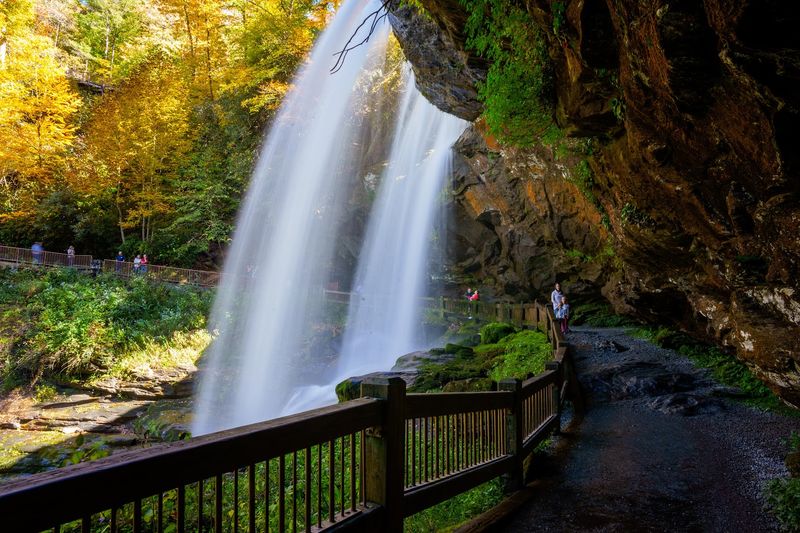
The name sounds like a riddle, but Dry Falls delivers one of the most unique waterfall experiences in the entire state.
Sitting along US Highway 64 near Highlands, NC, this 75-foot cascade on the Cullasaja River is named for the stone ledge that lets you walk behind the full curtain of falling water without getting soaked. You stand inside the falls, looking out through a wall of white water, and it is genuinely surreal.
The Cullasaja Gorge that surrounds Dry Falls is dramatic on its own terms, with steep rock walls draped in ferns and moss that stay vivid green even in dry spells.
The short paved path down to the falls is accessible and well-marked, making this one of those rare spots where the payoff is completely disproportionate to the effort required. Perched above 4,000 feet, the area carries an unexpectedly crisp, alpine vibe for the Carolina foothills, while cascading waters reveal playful geological surprises that never fail to impress.
8. Hanging Rock State Park
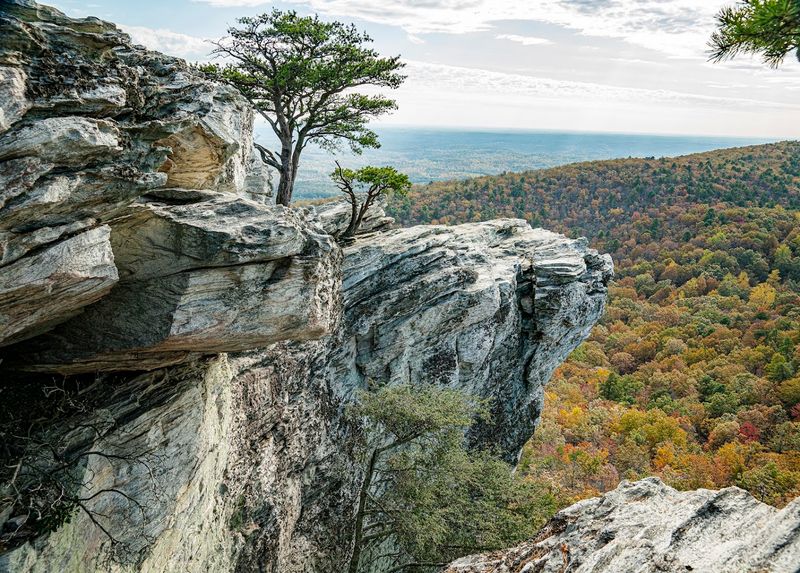
Hanging Rock sits in a part of North Carolina that does not get enough credit. Located at 1790 Hanging Rock Park Road in Danbury, this state park is anchored by the Sauratown Mountains, a range geologists sometimes call mountains away from the mountains because they rise so unexpectedly from the Piedmont plain.
The summit hike to Hanging Rock itself covers about 2.7 miles round trip and ends at a quartzite outcrop with views that stretch across the Carolina foothills in every direction.
The park also features Moore’s Wall, a sheer rock face that draws technical climbers from across the Southeast. There is a small lake with a swimming beach that feels like a genuinely pleasant surprise after a long hike.
Fall color here tends to peak in mid to late October and the combination of exposed rock and hardwood forest creates a patchwork of orange, red, and gold that photographs beautifully from the summit.
Hanging Rock rewards the curious traveler who is willing to look past the more famous mountain destinations and find something unexpectedly magnificent.
9. Pilot Mountain State Park
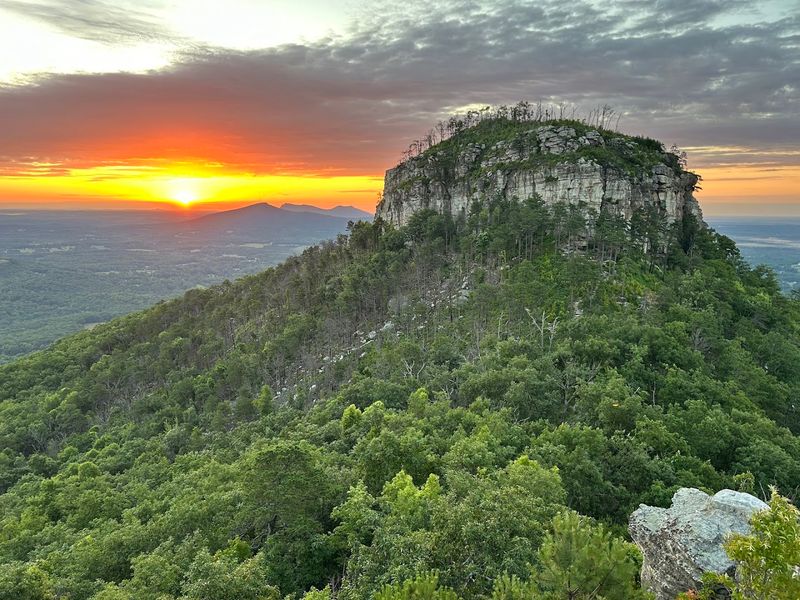
You will see Pilot Mountain from miles away and immediately understand why it has been a landmark for travelers since long before roads existed.
Located at 1721 Pilot Knob Park Road in Pinnacle, this quartzite monadnock rises 1,400 feet above the surrounding Piedmont and looks like something straight out of a fantasy novel. The rounded knob at the top is so distinctive that it served as the inspiration for Mount Pilot in The Andy Griffith Show, a piece of North Carolina television history that locals carry with genuine pride.
The park offers both mountain and river sections, with the Yadkin River corridor adding a completely different texture to the experience. Hiking trails loop around the base of the knob and up to overlooks that put you eye-level with hawks riding thermals above the canopy.
Rock climbers also favor the park’s exposed faces along the lower cliffs. Pilot Mountain does not just stand out on the landscape.
It anchors it, giving the whole Piedmont a reference point that has guided people home for generations.
10. Stone Mountain State Park
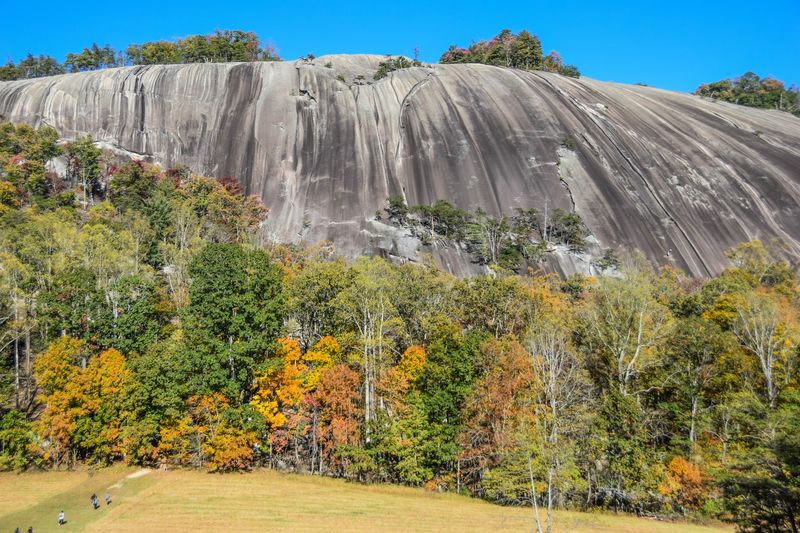
Stone Mountain is not subtle, and it was not trying to be. Sitting at 3042 Frank Parkway in Roaring Gap, this exposed granite dome rises 600 feet above the surrounding forest and covers roughly 600 acres of bare rock face, making it one of the largest exposed granite domes in the eastern United States.
The approach through the forest makes the moment it appears even more dramatic, like the landscape is clearing its throat before making a major announcement.
The park is designated a National Natural Landmark, which tells you the geologists agree this place is exceptional. A moderately challenging trail climbs the dome’s face and rewards hikers with 360-degree views that stretch across the Blue Ridge foothills into the valleys below.
Wildflower meadows around the base bloom in spring with trillium, bloodroot, and flame azalea. The Stone Mountain Loop Trail at 5.5 miles covers waterfalls, the dome itself, and dense hardwood forest in one satisfying circuit.
This park is the kind of hidden gem that makes North Carolina residents feel quietly smug about where they live.
11. Grandfather Mountain
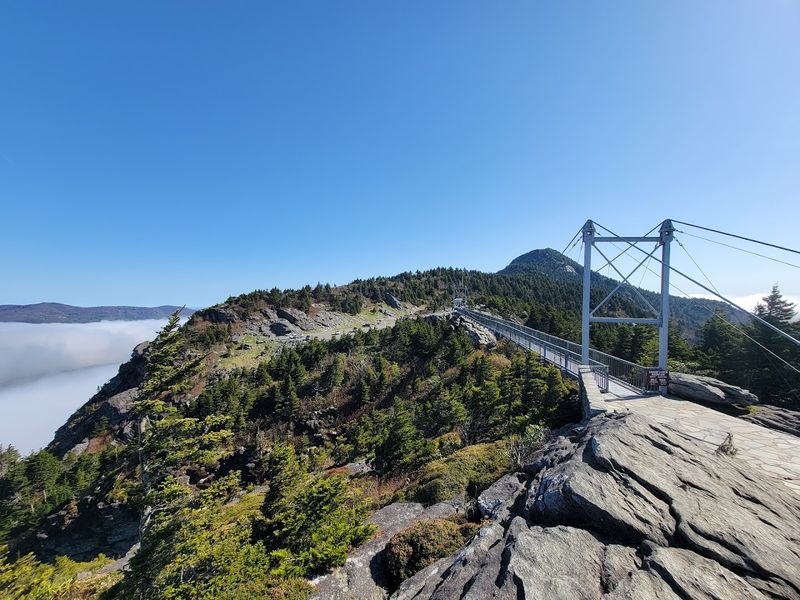
Standing at 5,946 feet, Grandfather Mountain is the highest peak in the Blue Ridge and one of the most biologically diverse places in the entire Appalachian chain. Found at 2050 Blowing Rock Highway in Linville, the mountain is a UNESCO International Biosphere Reserve, a designation it shares with places like the Serengeti and the Amazon.
That context alone should tell you this is not your average mountain overlook.
The Mile High Swinging Bridge at 5,305 feet is the most photographed spot on the mountain, a suspension bridge that spans an 80-foot chasm between two rocky peaks with views that stretch into multiple states on a clear day.
The bridge sways in the wind in a way that is either thrilling or terrifying depending on your relationship with heights. Fourteen distinct ecosystems stack on top of each other as you climb, creating ecological zones that shift from hardwood forest to spruce-fir forest to bare rocky summit.
Grandfather Mountain is not just scenic. It is genuinely one of the most ecologically significant places in North America.
12. Jockey’s Ridge State Park
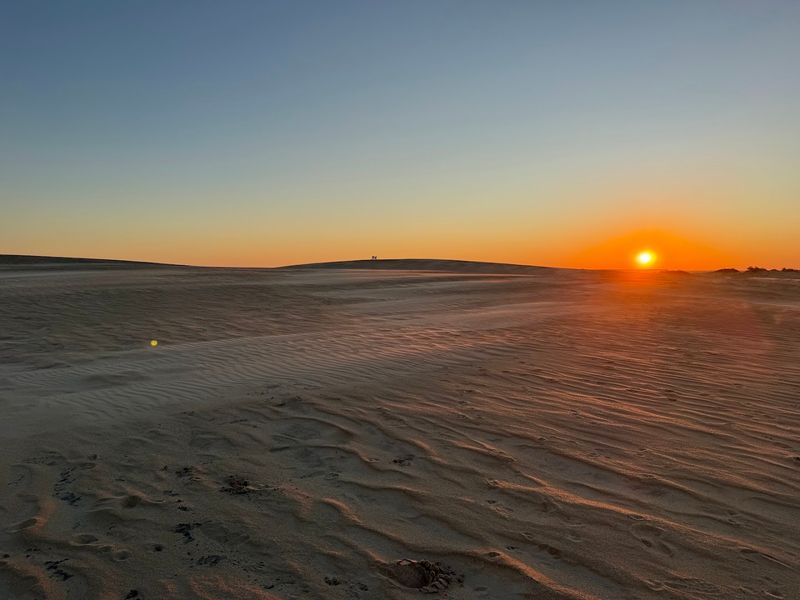
Imagine standing on top of a 100-foot sand dune watching the Atlantic Ocean on one side and Roanoke Sound on the other. That is Jockey’s Ridge, and it is one of those places that makes you question whether you are still in North Carolina or somehow on a different continent entirely.
Located at 300 W. Carolista Drive in Nags Head, this is the tallest active sand dune system on the East Coast, and it shifts in size and shape with every passing season and storm.
The dune has been a hang gliding destination since the 1970s, and watching people launch from the ridge crest against an open sky is a genuinely cinematic sight.
Sunset visits are practically mandatory because the light turns the sand into shades of copper and amber that look almost artificially beautiful. The park also contains a rare dune ecosystem with plants that have adapted specifically to survive in shifting sand.
13. Cape Hatteras Lighthouse And Visitor Center
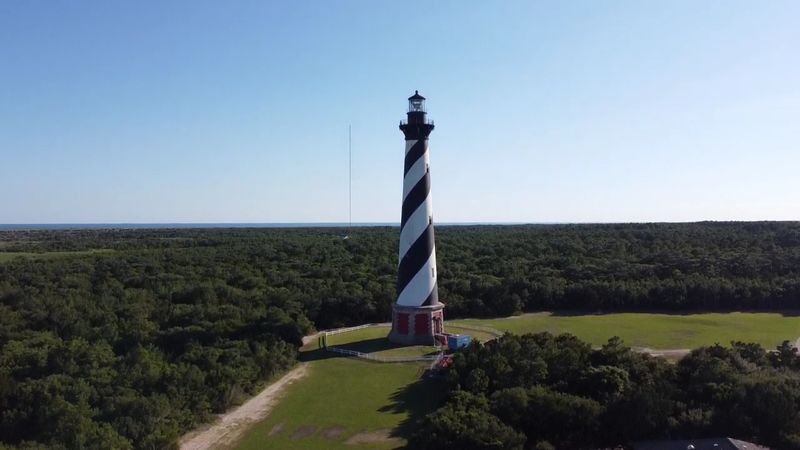
At 198 feet tall, Cape Hatteras Lighthouse is the tallest brick lighthouse in the United States, and it has been warning ships away from the Diamond Shoals since 1870.
Located at 46375 Lighthouse Road in Buxton, the lighthouse sits in the middle of the Cape Hatteras National Seashore, surrounded by wild beach, maritime shrub, and the kind of open sky that makes you feel genuinely exposed to the elements in the best possible way.
The lighthouse was famously moved in 1999, rolled nearly 3,000 feet inland to protect it from encroaching shoreline erosion in one of the most ambitious historic preservation projects in American history.
You can climb all 257 steps to the top during the visitor season and look out over the Outer Banks from a perspective that absolutely nobody gets tired of.
The visitor center at the base tells the full story of the light, the move, and the treacherous shoals that earned this stretch of water the nickname Graveyard of the Atlantic. Cape Hatteras is where history and raw coastal beauty collide without apology.
14. Ocracoke Island Discovery Center
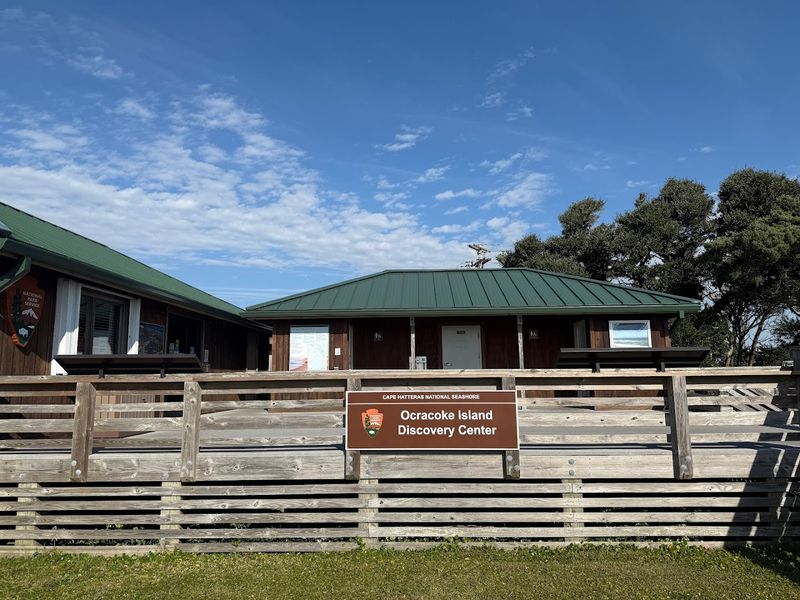
Getting to Ocracoke requires a ferry, which is part of what makes arriving there feel like stepping into a different world. The Ocracoke Island Discovery Center at 38 Irvin Garrish Highway in Ocracoke, NC, is your gateway to understanding what makes this remote barrier island one of the most ecologically and historically rich places on the entire Atlantic coast.
The center covers the island’s natural history, its role in Outer Banks culture, and the famous Ocracoke ponies that have lived here for centuries.
The ponies are believed to be descendants of Spanish mustangs that swam ashore from shipwrecks hundreds of years ago, and they still roam a designated area of the island today. The village of Ocracoke itself has a character unlike anywhere else in North Carolina, unhurried and genuinely charming in a way that feels earned rather than performed.
Looking for a sunset that begs you to stay longer? At this harbor, time slows down, and once it does, leaving feels impossible.
15. Cape Lookout National Seashore

Cape Lookout National Seashore is what the Outer Banks looked like before everything else happened to it. Accessible only by ferry from the Harkers Island Visitor Center at 1800 Island Road in Harkers Island, this 56-mile stretch of undeveloped barrier island coastline includes Core Banks and Shackleford Banks, two places where the only soundtrack is wind, waves, and the occasional wild horse.
The Cape Lookout Lighthouse with its distinctive diamond pattern has been standing since 1859 and remains one of the most recognizable structures on the Atlantic seaboard.
Shackleford Banks is home to a herd of feral horses that have roamed freely for over 400 years, giving the island a sense of timelessness that is hard to manufacture anywhere else.
The shelling on these beaches is legendary among collectors, with Cape Lookout Point accumulating shells from both the ocean and sound sides simultaneously. There are no paved roads, no hotels, and no crowds in any meaningful sense.
Cape Lookout is the version of the Carolina coast that existed before it became a destination, and somehow it stayed that way. Is that not exactly the kind of place worth traveling for?