
13 Missouri Nature Stops That Turn Detours Into Core Memories
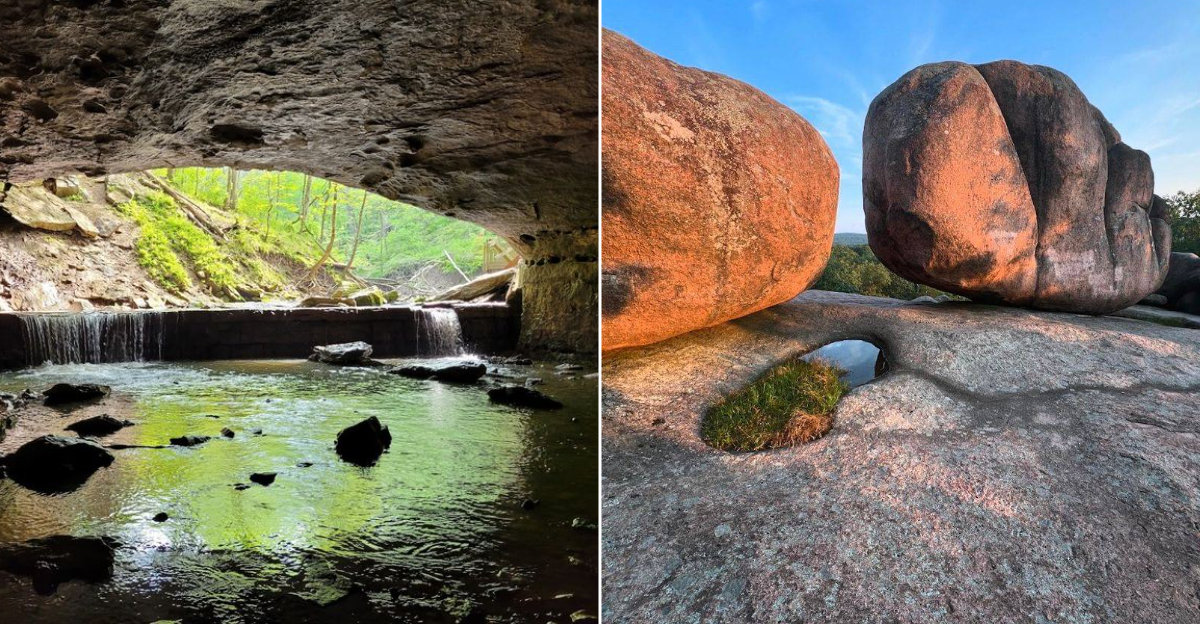
Stop scrolling. Missouri is calling, and it doesn’t care about your schedule.
Twists, turns, and secret trails pop up like surprises in a mystery box. Rivers gleam. Forests hide stories.
Every stop punches boredom in the face and hands you a memory you didn’t know you needed. Sunlight dances on hidden corners, daring you to look closer. Detours aren’t mistakes here, they’re main events.
Snap a photo, take a breath, laugh at how perfect it all feels. Missouri proves the scenic route isn’t just scenic. It’s addictive.
1. Grand Gulf State Park
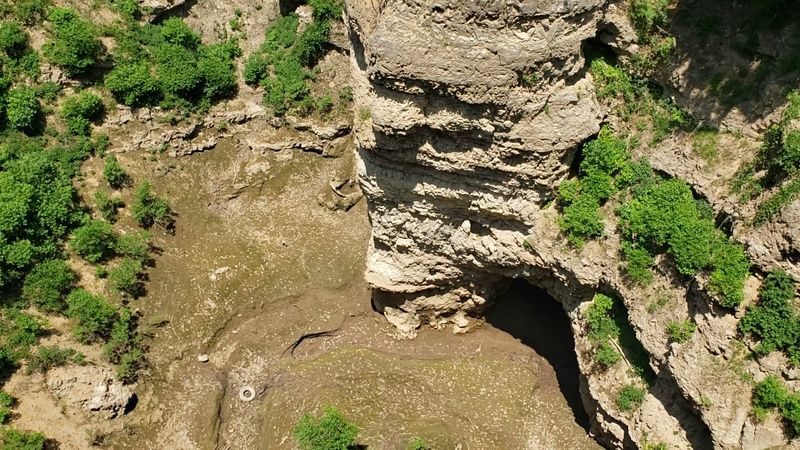
Missouri has been called the cave state, but Grand Gulf State Park takes that title and absolutely runs with it. Located along Highway W in Thayer, MO 65791, this place is basically what happens when an ancient cave system collapses and the earth just decides to keep things interesting.
The result is a mile-long gorge stretching up to 130 feet deep, carved out over millions of years, and it looks like something straight out of a fantasy novel.
A natural bridge spans part of the gulf, and the trail that winds along the rim gives you views that feel almost unreal. The park earns its nickname, the “Little Grand Canyon of Missouri,” without any exaggeration.
Spring is especially stunning when the wildflowers pop against the grey limestone walls.
What makes Grand Gulf special is how untouched it feels. There’s no crowd, no gift shop chaos, just raw geological drama doing its thing.
Plan for at least two hours here because you will stop constantly to stare. This is the kind of place that quietly rearranges your idea of what Missouri looks like.
2. Hickory Canyons Natural Area
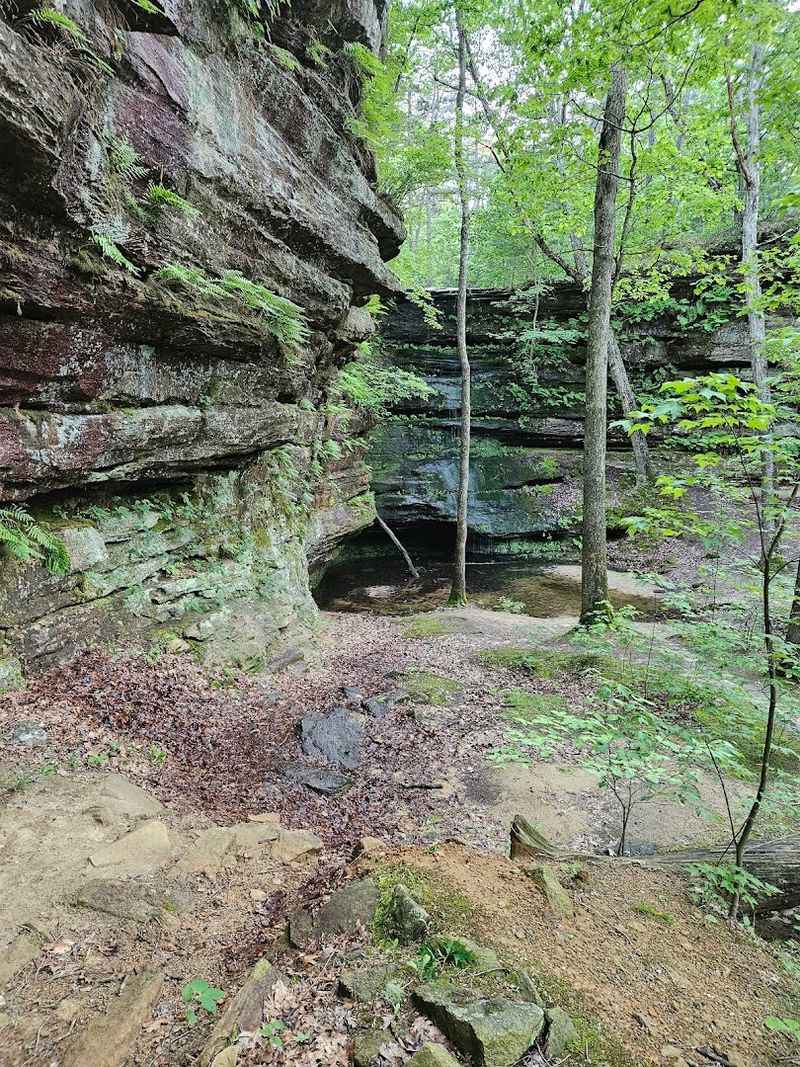
Hickory Canyons Natural Area is the kind of spot that makes you feel like you’ve accidentally wandered into a secret the rest of the world forgot about. Tucked along Sprott Road in Ste.
Genevieve, MO 63670, this natural area features a series of narrow, sandstone box canyons that seem to materialize out of nowhere as you hike the trail.
The canyon walls are draped in moss and fern, and the light that filters through the canopy creates this moody, cinematic atmosphere that no Instagram filter can replicate.
The loop trail is only about two miles, but every turn reveals something that makes you stop mid-step. These canyons were formed by centuries of water erosion cutting through the sandstone, and walking through them feels almost like flipping through geological history pages.
Fall is a particularly magical time to visit when the hickory and oak trees ignite in gold and rust above the canyon rims.
The contrast of warm autumn colors against the cool grey stone is genuinely breathtaking. Pack a snack, slow down, and let this quiet corner of Ste.
Genevieve county do its thing.
3. Pickle Springs Natural Area
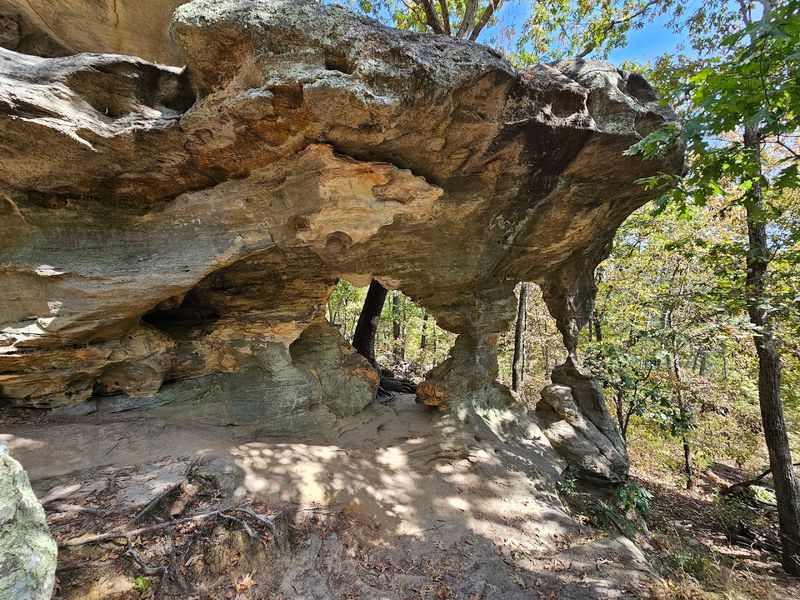
With a name like Pickle Springs, you might expect something quirky, and honestly, this place delivers in the best possible way. Located on Dorlac Road in Ste.
Genevieve, MO 63670, Pickle Springs Natural Area packs an extraordinary amount of geological drama into a two-mile trail loop that consistently surprises hikers around every bend.
The trail takes you through a series of sandstone formations that include arches, box canyons, and towering rock pillars that look like they were sculpted by someone with a very dramatic artistic vision.
There’s a spot called The Slot, a narrow passage between two rock walls, that feels like squeezing through a scene from Indiana Jones. The whole area is part of a National Natural Landmark designation, which means the geology here is considered exceptional on a national scale.
Spring brings a burst of wildflowers, and the cool, shaded canyons make summer visits surprisingly comfortable. The area also supports rare plant communities that thrive in the unique microclimate created by the rock formations.
Pickle Springs is proof that Missouri’s natural landscape has a flair for the dramatic, and sometimes the best adventures come with the most unexpected names.
4. Hughes Mountain Natural Area
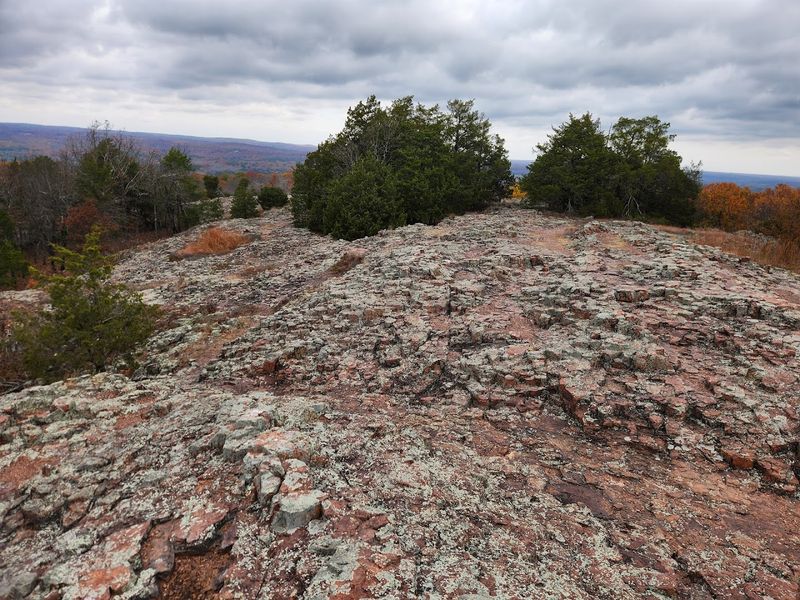
Standing on top of Hughes Mountain feels a little like landing on another planet.
Found along State Highway M in Irondale, MO 63648, this natural area sits atop an ancient volcanic feature called a shut-in, where igneous rock from deep within the earth was pushed to the surface hundreds of millions of years ago and then exposed by erosion over time.
The summit is an open, flat expanse of dark volcanic rock called rhyolite, surrounded by native glades filled with wildflowers and grasses.
The views from the top stretch across the surrounding Ozark hills in every direction, and on a clear day, the horizon feels endless. It’s not a difficult hike, just about a mile each way, but the payoff is completely disproportionate to the effort.
Wildflower season here is genuinely special. Purple coneflowers, prairie dropseed, and other glade species bloom across the rocky outcroppings in a display that feels almost defiant given how harsh the conditions are.
Hughes Mountain is one of those places where the geology tells a story so ancient and dramatic that standing there feels like a privilege. Don’t skip it just because it sounds obscure.
5. Hawn State Park
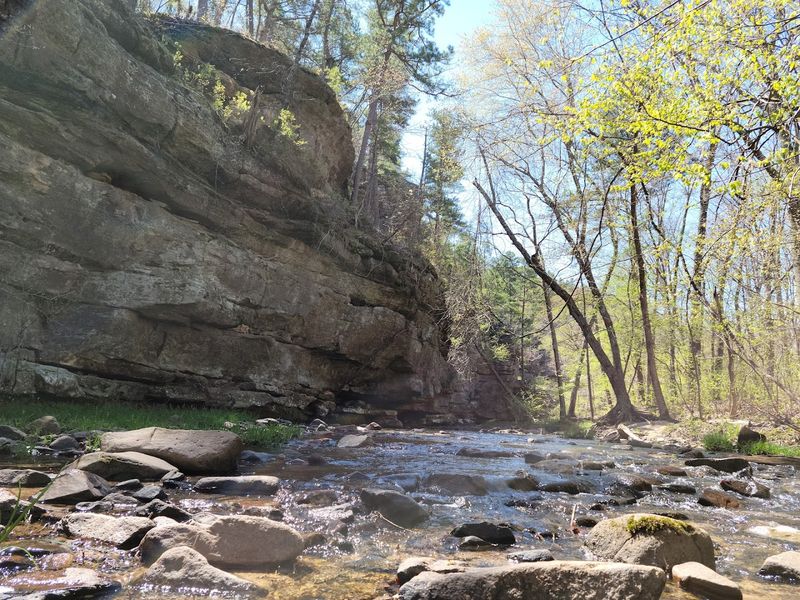
Hawn State Park is one of those places that gets into your head and stays there. Situated at 12096 Park Drive in Ste.
Genevieve, MO 63670, this park is built around a stunning combination of sandstone canyons, crystal-clear Pickle Creek, and some of the most scenic old-growth shortleaf pine forest in the entire state of Missouri.
The Whispering Pines Trail is the crown jewel here, winding through canyon terrain so picturesque that it genuinely looks like a painting. The creek crossings add an element of fun, and the canyon walls are layered with geological history that goes back over 500 million years.
Moss-covered boulders, trickling waterfalls, and the constant sound of moving water make the whole experience feel immersive in a way that’s hard to describe without sounding dramatic.
Fall and spring are peak seasons, but honestly, Hawn is worth a visit in any weather. Winter brings a stripped-down, moody beauty that serious hikers tend to appreciate.
This park represents exactly what Missouri’s natural landscape does best: layering geological wonder with ecological richness until the whole thing feels like more than the sum of its parts. Go early, go slow, and stay longer than you planned.
6. Huzzah Narrows Natural Area
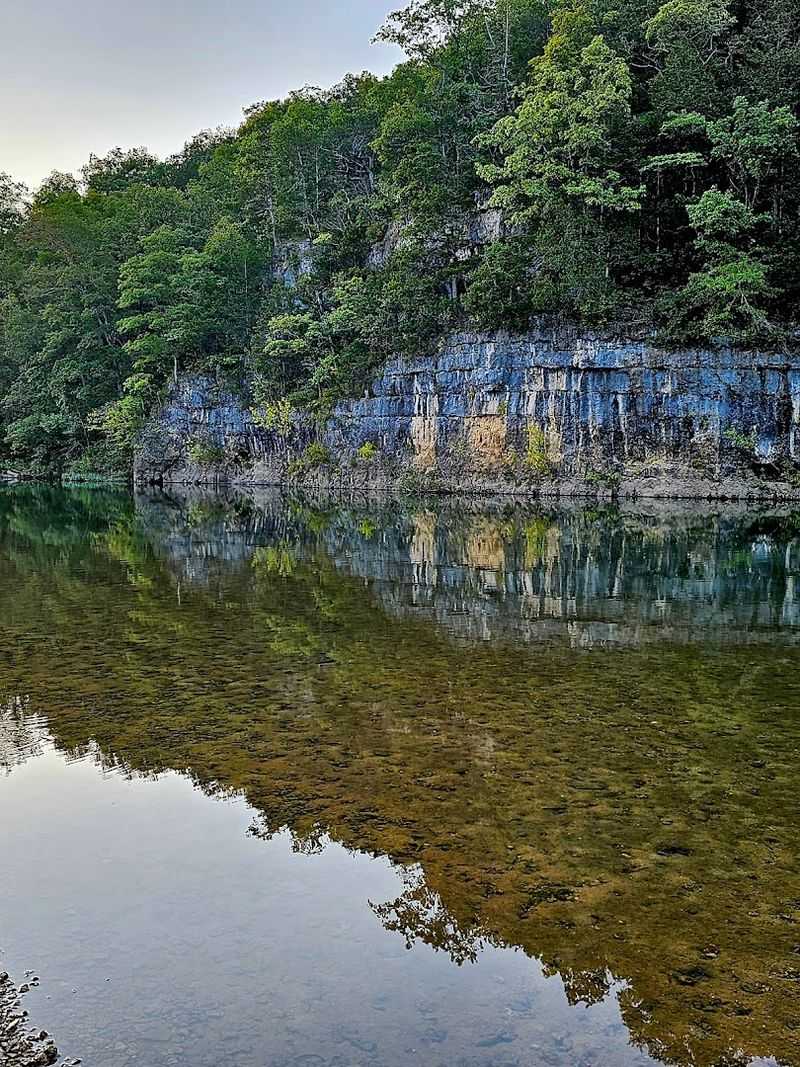
There’s a stretch of the Huzzah Creek valley that looks so impossibly scenic it barely feels like the same Missouri you drove through to get there.
Accessible via the Huzzah Conservation Area at Sfr 23 in Bourbon, MO 65441, the Huzzah Narrows Natural Area is where the creek cuts through a tight limestone gorge, creating a corridor of bluffs and water that feels ancient and alive at the same time.
The narrows themselves are a geological marvel, formed as the creek carved its way through Ordovician-age dolomite over millions of years.
The resulting canyon walls rise sharply on both sides, draped in cedar and hardwood, with the creek running clear and cold at the bottom. It’s the kind of spot that makes you want to sit on a rock and just exist for a while.
Wildlife sightings here are common. Great blue herons work the shallows, and the bluff edges are prime habitat for a surprising variety of bird species.
The natural area protects some of the highest-quality dolomite glade habitat in the Ozarks, which makes it ecologically significant beyond its obvious visual appeal.
7. Echo Bluff State Park
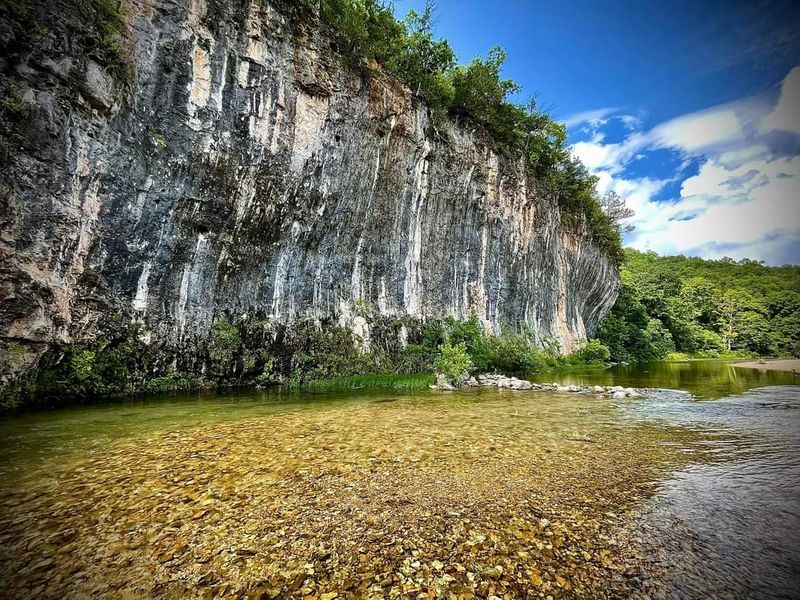
Echo Bluff State Park opened in 2016 and quickly became one of Missouri’s most talked-about natural destinations, and the hype is completely justified.
Located at 35244 Echo Bluff Drive in Eminence, MO 65466, this park sits along Sinking Creek in the heart of the Ozarks, where towering dolomite bluffs rise dramatically above the crystal-clear water below.
The bluffs themselves are the main attraction, stretching along the creek in a series of vertical limestone faces that catch the morning light in a way that photographers absolutely lose their minds over.
Hiking trails wind through hardwood and cedar forest, connecting overlooks that offer sweeping views of the surrounding Ozark landscape. The creek is cold, clear, and spring-fed, which means even in summer it stays refreshingly cool.
What sets Echo Bluff apart from similar parks is how accessible it is without sacrificing the feeling of genuine wilderness. The trails are well-maintained, the scenery is consistently dramatic, and the sense of solitude is easy to find even on busier weekends.
This park sits in Shannon County, one of the least densely populated counties in Missouri, which means the night skies here are extraordinary. Come for the bluffs, stay for the stars.
8. Round Spring, Ozark National Scenic Riverways
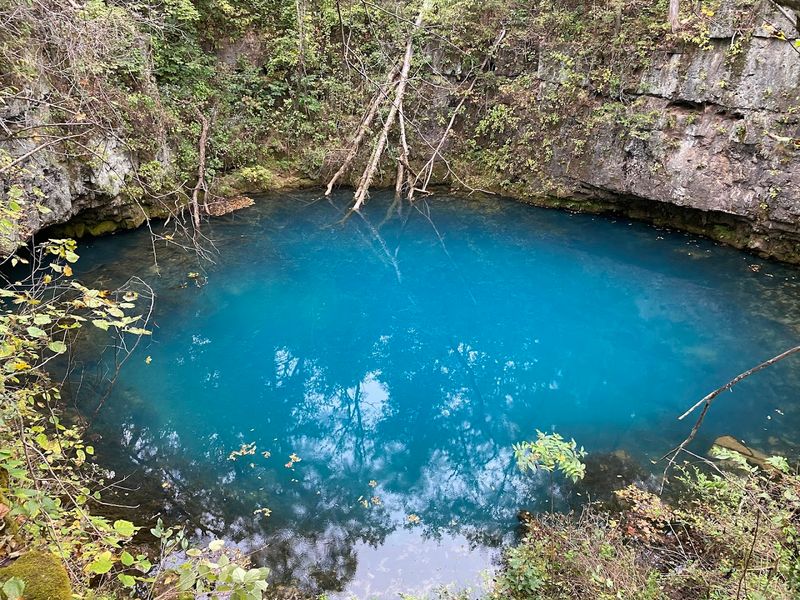
Round Spring is the kind of natural feature that stops you mid-sentence when you first see it.
Part of the Ozark National Scenic Riverways and located at 13209 Round Spring Campground Rd in Eminence, MO 65466, this massive spring pours millions of gallons of crystal-clear, 58-degree water into the Current River every single day, and the color of the water is almost too blue to believe.
The spring itself forms a near-perfect circular pool before flowing through a short cave passage and emerging into the river.
The surrounding landscape is classic Ozark beauty: cedar-draped bluffs, clear-running water, and the kind of quiet that makes your shoulders drop three inches. A cave tour is available seasonally and takes you into the underground passage that feeds the spring, which is genuinely one of the cooler things you can do in the entire state.
The Current River at this location is exceptional for floating, fishing, and simply standing in while staring at the scenery.
Round Spring sits within one of the most protected river corridors in the National Park System, which means the water quality and surrounding landscape are preserved at a standard that’s increasingly rare. This is what the Ozarks have always looked like, and it’s stunning.
9. Prairie State Park
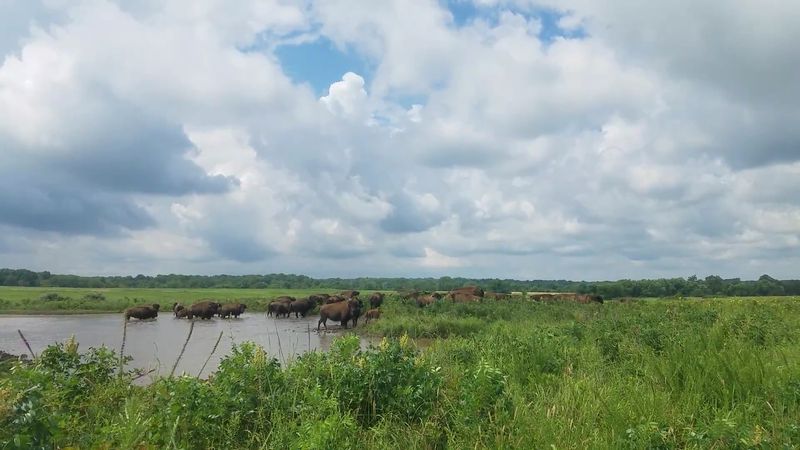
Prairie State Park is the antidote to every nature experience that involves trees. Located at 128 NW 150th Lane in Mindenmines, MO 64759, this park protects the largest remaining piece of native tallgrass prairie in Missouri, and it is a landscape that hits differently than anything else on this list.
Open sky, endless grass, wildflowers in every direction, and bison. Real, live bison.
The bison herd that roams Prairie State Park is a living piece of ecological history. Before European settlement, tens of millions of these animals covered the Great Plains, and watching them move through the tall grass here is a reminder of what this continent once looked like.
The park spans nearly 4,000 acres of restored and remnant prairie, and the biodiversity packed into that grassland ecosystem is remarkable.
Spring and early summer transform the prairie into a wildflower spectacle, with compass plants, prairie blazing star, and wild bergamot creating sweeping color across the landscape.
The birding is exceptional too, with grassland species like dickcissels and meadowlarks filling the air with sound. Prairie State Park challenges you to slow down and appreciate a landscape that most people drive past without a second thought.
That’s exactly what makes it worth the trip.
10. Edward “Ted” And Pat Jones Confluence Point State Park
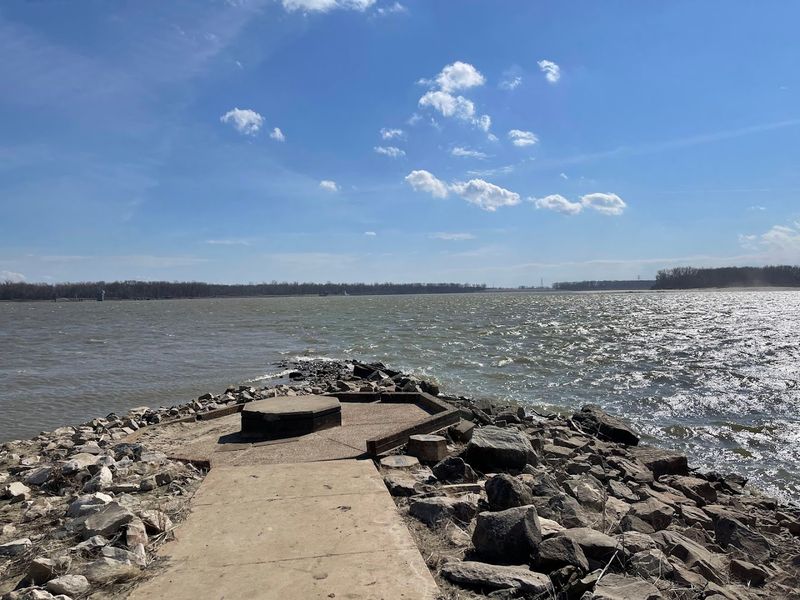
Two of the most powerful rivers in North America meet at a single point, and you can stand right there and watch it happen.
Edward “Ted” and Pat Jones Confluence Point State Park, located at 1000 Riverlands Way in West Alton, MO 63386, sits at the exact spot where the Missouri River flows into the Mississippi, creating a collision of water and history that feels genuinely monumental.
The Missouri carries a distinctive muddy, sediment-heavy color, while the Mississippi runs slightly clearer, and the line where the two rivers merge is often visible right from the trail’s end.
Lewis and Clark passed through this confluence in 1804 on their way west, and standing at the same point where they stood is a strange and powerful feeling. The flat, open landscape here is completely different from the rest of the parks on this list, but that contrast is part of what makes it so striking.
The surrounding wetlands and river forests support an incredible diversity of migratory birds, making this one of the top birding spots in Missouri during spring and fall migration.
Bald eagles are frequently spotted here in winter. The confluence itself is the kind of geographic moment that reframes your sense of scale and reminds you just how big and wild this country still is.
11. Big Oak Tree State Park
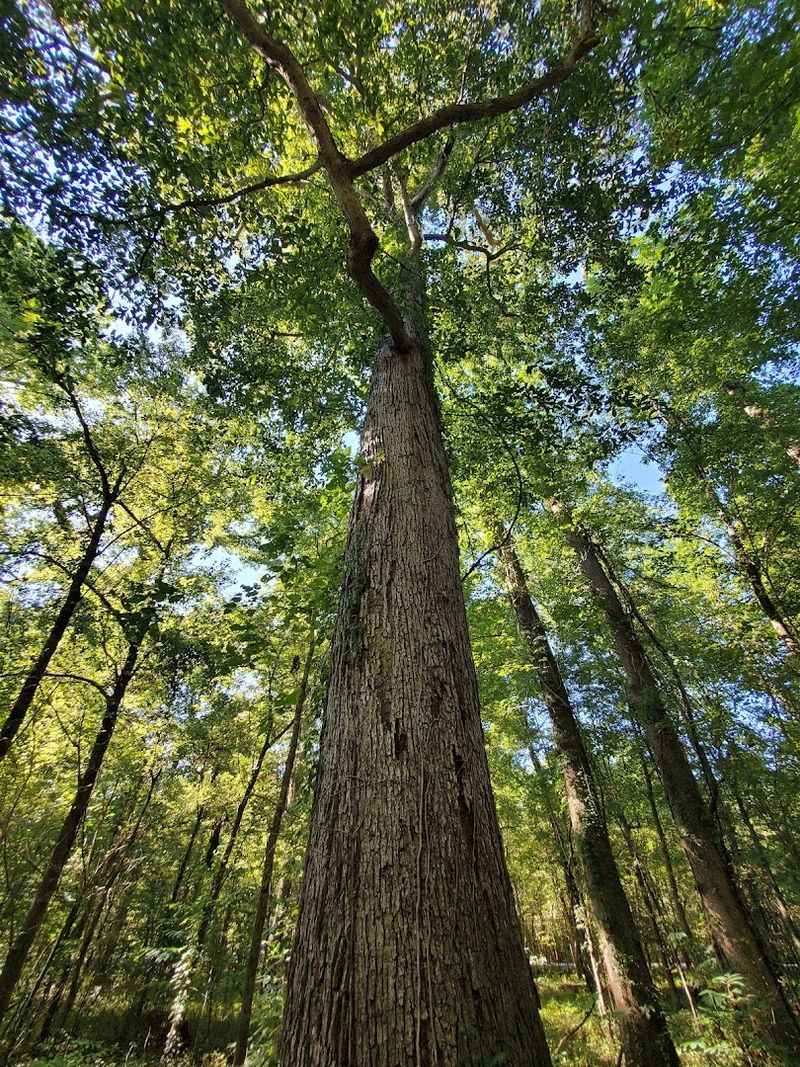
Big Oak Tree State Park is a living museum of trees so massive and ancient that walking among them genuinely feels like stepping back in time.
Located at 13640 S Highway 102 in East Prairie, MO 63845, this park protects one of the last remaining old-growth bottomland hardwood forests in Missouri, a landscape type that has almost entirely vanished from the Midwest.
The trees here are record-breakers in the most literal sense. The park has historically been home to state champion trees, including bald cypress, swamp cottonwood, and pumpkin ash specimens of extraordinary size.
A boardwalk trail winds through the forest, keeping feet dry while delivering views of these towering giants at eye level and above. The canopy closes overhead in summer, creating a cathedral-like space filled with birdsong and filtered green light.
Big Oak Tree sits in the Missouri Bootheel, a region that geographically and ecologically feels more like the Deep South than the Midwest.
The subtropical bottomland vibe, complete with cypress knees rising from the forest floor, is unlike anything else in the state. This park protects an irreplaceable piece of ecological heritage, and every visit is a reminder of what this entire region once looked like before the land was cleared.
Ancient trees have a way of putting things in perspective.
12. Elephant Rocks State Park
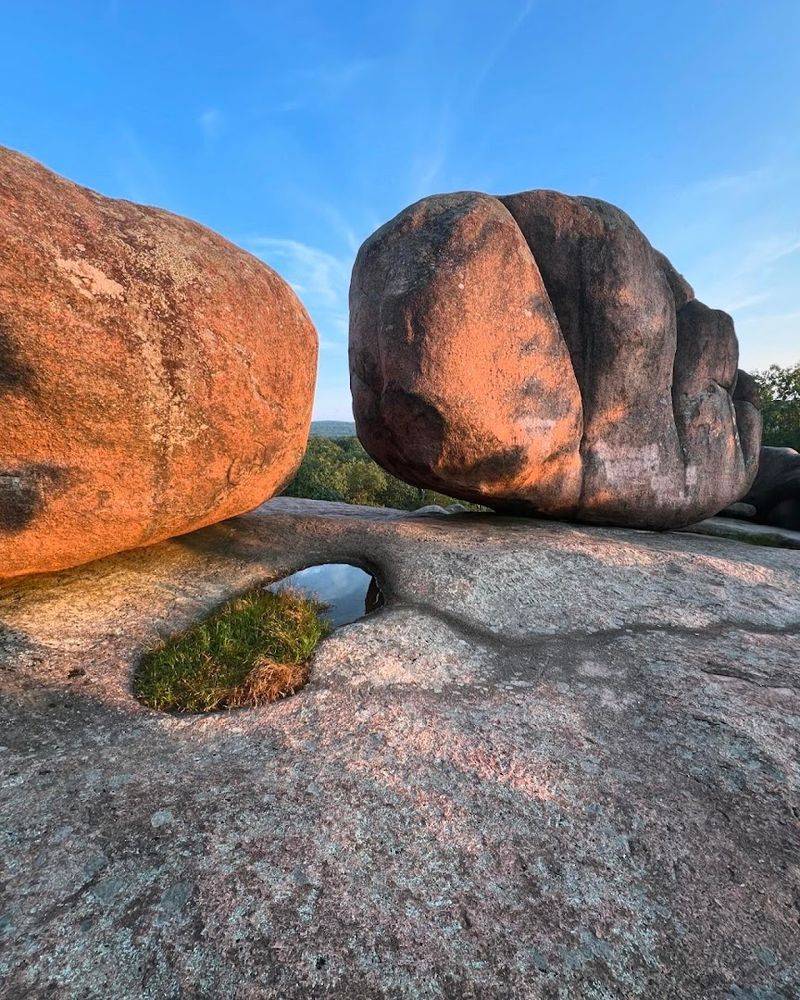
The first time you see Elephant Rocks, you might genuinely think someone arranged them as a joke. Located at 7406 Highway 21 in Belleview, MO 63623, this park is named for a collection of enormous, rounded red granite boulders that look exactly like a parade of elephants lined up trunk to tail across a granite dome.
The largest boulder is over 27 feet tall and weighs an estimated 680 tons.
The granite here is approximately 1.5 billion years old, which makes it among the oldest exposed rock in Missouri.
The boulders were shaped by a process called spheroidal weathering, where water worked its way into fractures in the granite over millions of years, rounding the edges and creating the distinctive elephant-like shapes.
The Braille Trail, one of the first accessible nature trails in Missouri, loops through the boulder field and includes informational signs in both print and Braille.
Elephant Rocks is a place where geology becomes genuinely playful. You can climb on the boulders, squeeze through narrow passages between them, and find yourself suddenly feeling very small next to something 1.5 billion years old.
The park also offers spectacular views of the surrounding St. Francois Mountains. Go on a weekday if possible, because this spot has earned its popularity and the boulder field can get busy on weekends.
13. Rock Bridge Memorial State Park
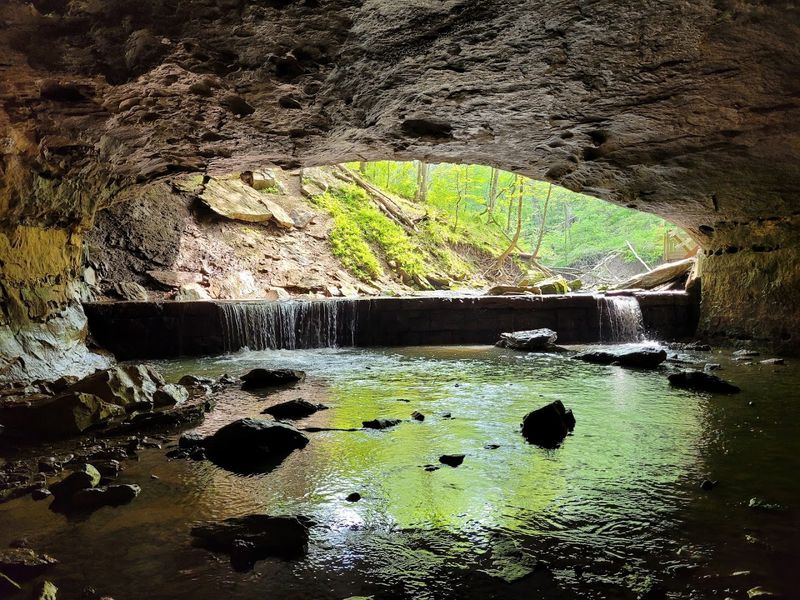
Rock Bridge Memorial State Park has a feature that does exactly what it says on the label, and it’s spectacular.
Situated at 5901 S Highway 163 in Columbia, MO 65203, this park is built around a natural rock bridge spanning a cave opening, one of the most unique geological features in central Missouri and one that surprises nearly everyone who sees it for the first time.
The rock bridge itself is the remnant of an ancient cave system where the ceiling partially collapsed, leaving a natural arch of dolostone spanning the chasm below.
Icebox Cave sits just beyond the bridge, a significant cave system that maintains a constant temperature around 54 degrees Fahrenheit and serves as habitat for the Indiana bat.
The cave tour experience is genuinely memorable, especially when the temperature contrast between the summer heat outside and the cave interior hits you all at once.
The park’s trail network extends beyond the cave area into beautiful Ozark border forest, with Cedar Creek running through the landscape and adding a peaceful soundtrack to every hike.
Rock Bridge is close enough to Columbia to make it an easy day trip, but the experience feels far removed from the city. Some of Missouri’s best nature doesn’t require a long drive, and this park is living proof of that.