
Your Nervous System Might Fall For This Quiet New York Lake Town
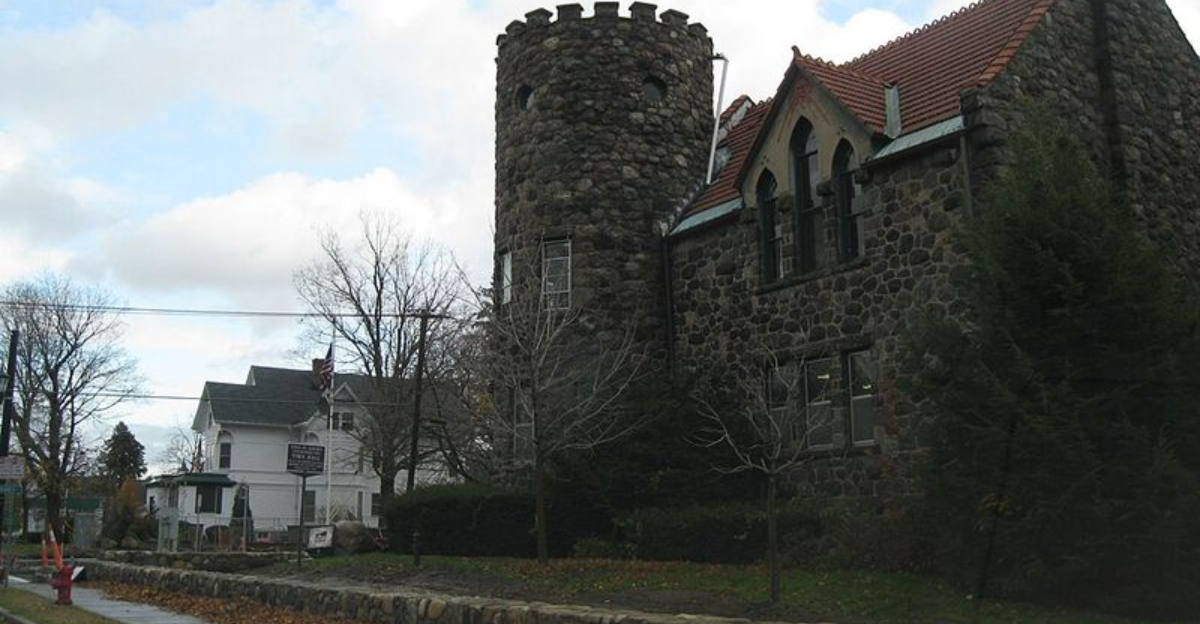
Ever rolled into a place and thought, ok… this could be straight out of a fairytale. Minus the dragons, with way more lake views?
That’s exactly how it felt driving into this quiet New York lakeside town. Sitting along the eastern shore of Cayuga Lake, it has this uncanny ability to slow your pulse just by rolling down your windows.
Streets lined with perfectly preserved 19th‑century homes, historic inns that feel lifted from another era, and a calm shoreline that invites you to just stand still.
It’s the kind of place that makes your planner collect dust. There’s history here too: old college buildings and century‑old architecture that whisper stories from a quieter past. Whether wandering lakeside at dawn or discovering a tucked‑away shop on Main Street, this town doesn’t shout.
It lingers, like a memory you didn’t know you needed until you had it.
The Aurora Inn And Its Lakeside Porch That Rewired My Brain
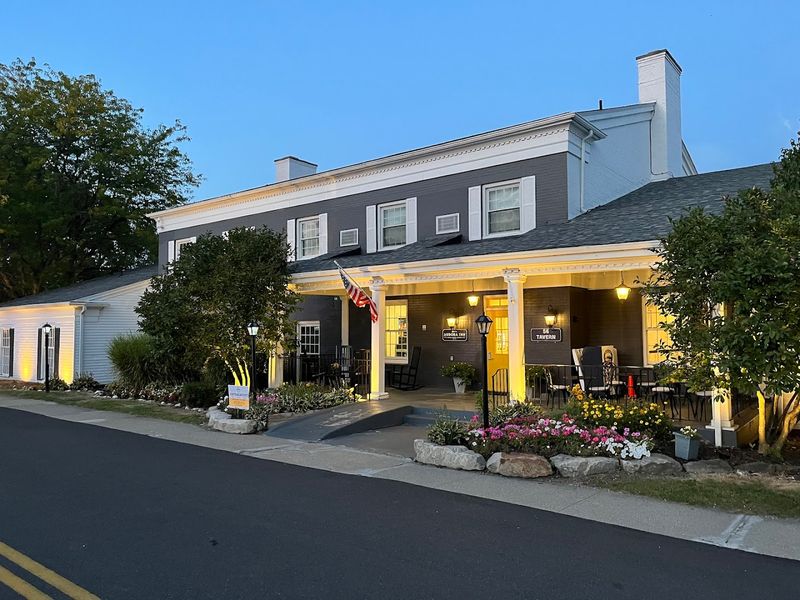
Some places earn their reputation slowly, and the Aurora Inn has had over two centuries to get it exactly right. Built in 1833, this Federal-style landmark sits right on the edge of Cayuga Lake, and the moment I stepped onto its wraparound porch, I felt my shoulders drop about three inches.
The view is the kind of thing that makes you put your phone face-down without even thinking about it.
I ordered a coffee and just sat there watching the light move across the water. No agenda, no timeline.
The porch chairs are perfectly positioned so that every single seat gets the lake view, which felt like a thoughtful act of kindness from whoever designed this place.
The inn itself is beautifully restored with period details that feel authentic rather than staged, like stepping into a well-loved history book.
The dining room inside is warm and unhurried, with a menu that leans into locally sourced ingredients from the surrounding Finger Lakes farms. I had a meal there that I would genuinely describe as soul-restoring, the kind where you eat slowly because you actually want to taste everything.
The bread alone was worth the drive. Aurora is not a flashy destination, and the Aurora Inn matches that energy perfectly.
It is refined without being stiff, historic without feeling dusty.
Sitting on that porch with the lake stretching out in front of me, I understood immediately why people keep coming back here year after year.
Cayuga Lake Itself, Because Nothing Therapy Costs This Little
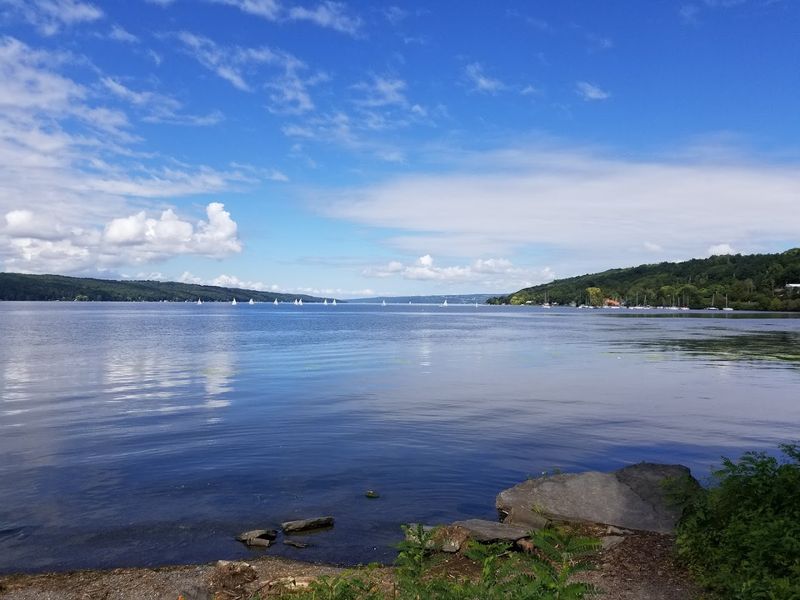
Cayuga Lake is the longest of the Finger Lakes, stretching about 61 miles from north to south, and the section of it that hugs Aurora, New York, located along Route 90 on the eastern shore, is genuinely one of the most calming stretches of water I have ever stood next to.
I walked down to the public waterfront early in the morning and it was so quiet I could hear the water lapping against the dock pilings, which is the kind of sound that costs a lot of money in a meditation app.
The lake has this particular color in the morning, somewhere between slate blue and deep green, that shifts as the sun climbs higher.
I sat on a bench for probably forty minutes just watching it change. There were no boats yet, no noise, just the lake doing its thing and me slowly remembering how to exist without multitasking.
It felt almost embarrassingly restorative for something that required absolutely nothing of me.
Later in the day I walked along the shoreline path and watched the water take on a completely different personality, brighter, more alive, with small ripples catching the afternoon light like scattered glass. Kayaking and paddleboarding are both available in the area if you want to get on the water, but honestly, just being near it was enough for me.
Cayuga Lake does not need your participation to be magnificent.
It just needs you to show up and pay attention, which turns out to be the best use of a Tuesday afternoon.
Wells College Campus, Where Architecture Meets Stillness
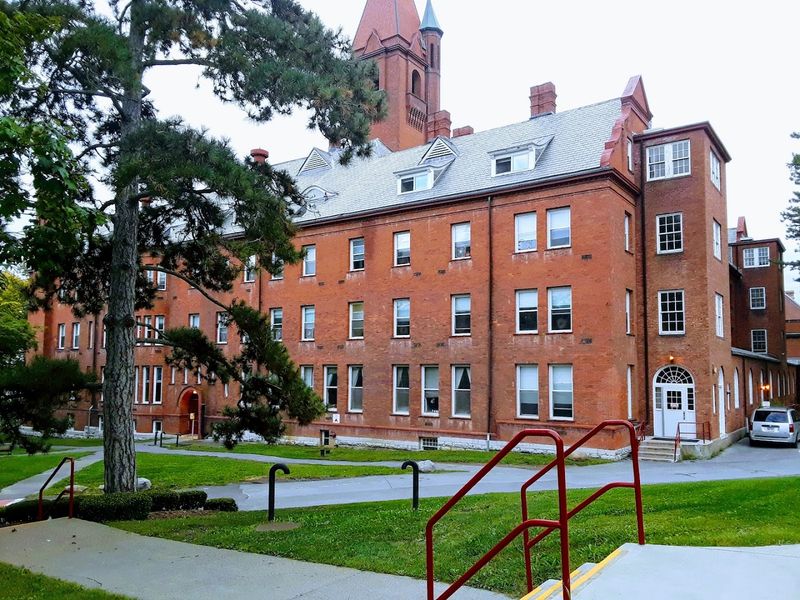
Walking through the Wells College campus felt like accidentally wandering into a film set for a very beautiful coming-of-age story. Founded in 1868, this small liberal arts college sits right along the lakeshore and its Gothic stone buildings, grand archways, and sweeping green lawns create an atmosphere that is equal parts academic and magical.
I had no reason to be there other than curiosity and a good pair of walking shoes, and it turned out to be one of my favorite hours in Aurora.
The campus is compact but richly detailed, with mature trees lining the paths and benches positioned near the water in ways that feel genuinely intentional.
I found a spot near the lake edge where the lawn drops down gently toward the water and just stood there for a while, watching the light filter through the trees. It was the kind of stillness that does not feel empty but rather full, like the place itself has absorbed decades of quiet thought and is generously sharing it with whoever wanders through.
There is a beautiful library on campus and several historic buildings that are worth pausing in front of just to take in the craftsmanship.
The whole place moves at a pace that feels completely out of step with the modern world, and I mean that as the highest possible compliment. If you are someone who finds old buildings and open green spaces quietly thrilling, Wells College campus will feel like finding a secret that everyone somehow forgot to mention to you.
Mackenzie-Childs
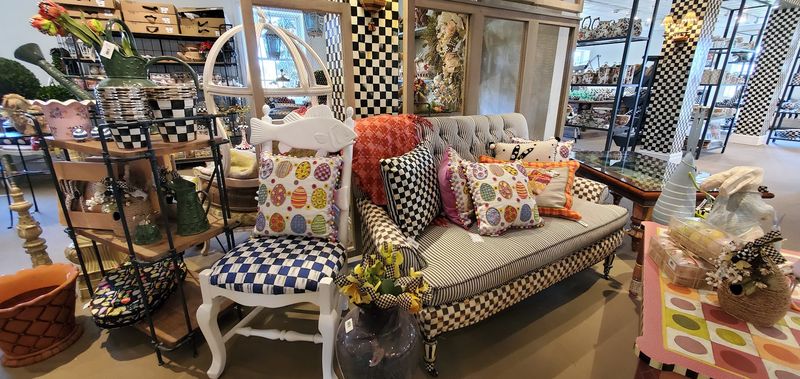
Nothing prepared me for Mackenzie-Childs. Not the photos I had seen online, not the descriptions I had read, nothing.
Pulling up to this working farm and design studio on the outskirts of Aurora felt like driving directly into a fever dream designed by someone with extraordinary taste and absolutely no interest in playing it safe. Everything is painted, patterned, layered, and wildly alive with color in a way that should feel overwhelming but somehow feels completely right.
The brand is known for its hand-painted enamelware, ceramics, and furniture, all made with a signature checkerboard and floral aesthetic that is instantly recognizable.
Touring the farm and the showroom, I kept stopping to pick things up and turn them over in my hands, genuinely delighted by the detail work on even the smallest pieces. A teapot should not be able to make you emotional, and yet here I was.
The grounds themselves are part of the experience. There are painted fences, decorated outbuildings, and garden areas that look like they were styled for a magazine shoot but are actually just the everyday reality of working there.
I spent far longer than I planned wandering around and taking it all in. It is the kind of place that makes you look at your own home and think about whether you have been playing it too safe with your kitchen accessories.
Mackenzie-Childs is joyful in a way that feels almost radical, proof that a little pattern and color can genuinely lift your mood without any other intervention required.
The Pumpkin Hill Bistro
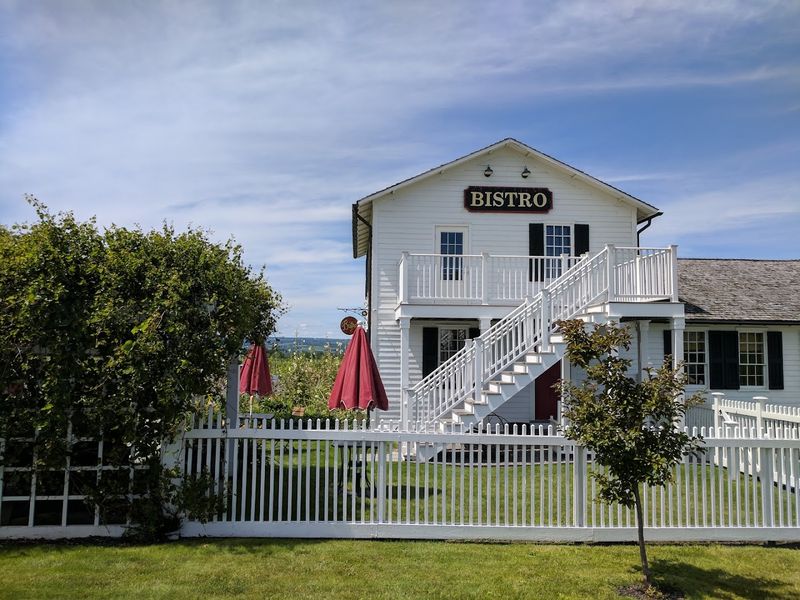
Pumpkin Hill Bistro drew me in with warm, herby aromas before I even stepped inside. Its casual, welcoming vibe and locally inspired menu made me feel instantly at home.
And the ingredients, straight from the Finger Lakes, were exceptional.
I ordered a soup and a sandwich that were both so good I sat with them longer than necessary, eating slowly and deliberately in the way that you only do when something tastes worth paying attention to.
The bread had that particular chew that tells you it was made by someone who actually cares about bread, and the soup was the kind of thing you want to recreate at home but know you probably cannot quite replicate. There is a warmth to the food here that goes beyond temperature.
The bistro has a laid-back rhythm that matched the rest of Aurora perfectly. Nobody was rushing, nobody was hovering, and the whole experience felt like eating at the home of a friend who happens to be an excellent cook.
The menu changes with the seasons, which means every visit has the potential to be a little different. If you are the kind of person who believes that a great meal is one of the most reliable forms of happiness, Pumpkin Hill Bistro will confirm that belief without any hesitation whatsoever.
The Village Of Aurora On Foot
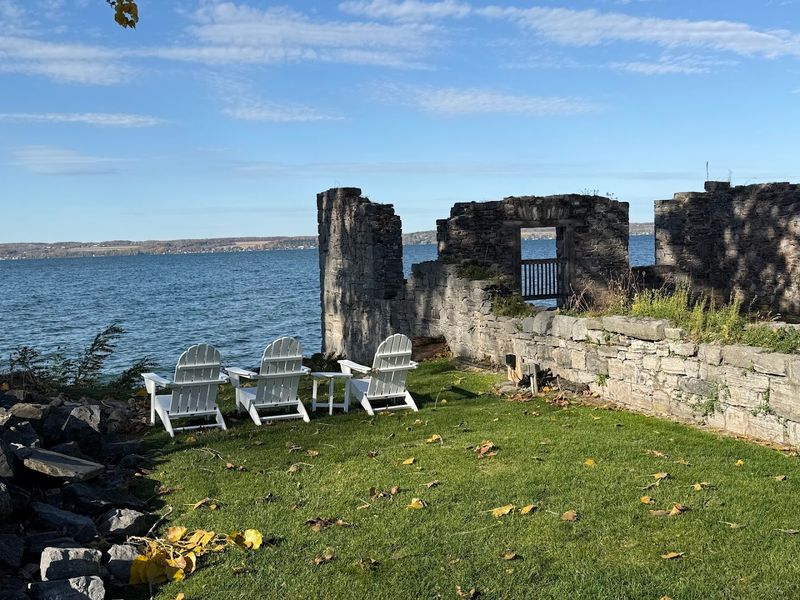
Aurora reveals itself slowly on foot, with a walkable main street along the lake and quiet side streets lined with historic homes and old trees. I spent an afternoon wandering without a plan, and it was one of the best decisions I made all year.
The architecture in Aurora is quietly impressive. Federal-style homes, Victorian details, stone buildings that have been standing since the 1800s and look like they plan to keep standing indefinitely.
There is no chain anything on the main street, which feels like a miracle and also like a policy decision that deserves a round of applause.
Every storefront has a personality, and the overall streetscape has a coherence that suggests people here have thought carefully about what they want their town to look and feel like.
Walking past the lake at different points along the route gives you constantly changing views of the water, sometimes framed by trees, sometimes wide open, sometimes glittering so intensely it is almost hard to look at directly.
There is a particular stretch near the inn where the road curves and the whole lake opens up in front of you that made me stop walking entirely for a moment.
Aurora rewards slowness. The faster you try to move through it, the less of it you actually see.
Leaving Aurora, Which Is Harder Than It Sounds
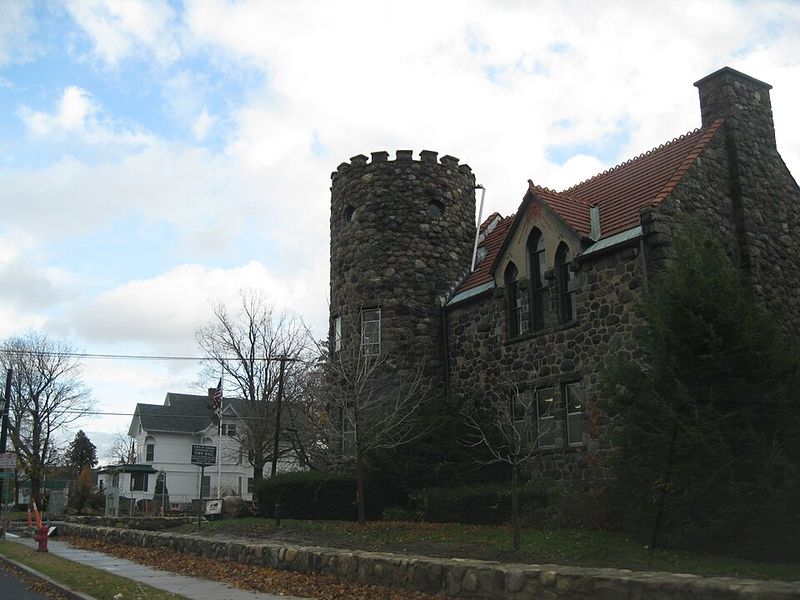
Driving out of Aurora felt genuinely reluctant, which is not something I say about many places. The town has a way of getting into your rhythm and adjusting it without asking permission, slowing everything down to a pace that feels sustainable in a way that regular life often does not.
By the time I was back on the road heading north, I already knew I would be coming back, not because I missed anything but because I wanted more of that particular feeling.
There is something about a place this small and this beautiful that makes you reconsider what you actually need to feel good. Aurora does not have a spa, a rooftop bar, or a curated experience waiting for you at every corner.
What it has is a lake that does not care about your schedule, a main street that has stayed mostly itself for a very long time, food that tastes like someone grew it nearby and cooked it with attention, and a quality of quiet that is increasingly rare and therefore increasingly valuable.
I kept the windows down on the drive out and watched the lake disappear behind the hills in my rearview mirror, which felt appropriately cinematic for a place that had managed to feel like a movie set without trying to.
Aurora is proof that the most restorative places are sometimes the ones that ask the least of you and give back the most.