
This 120 Year Old Ghost Town In Nevada Is A Desert Time Capsule You Cannot Forget
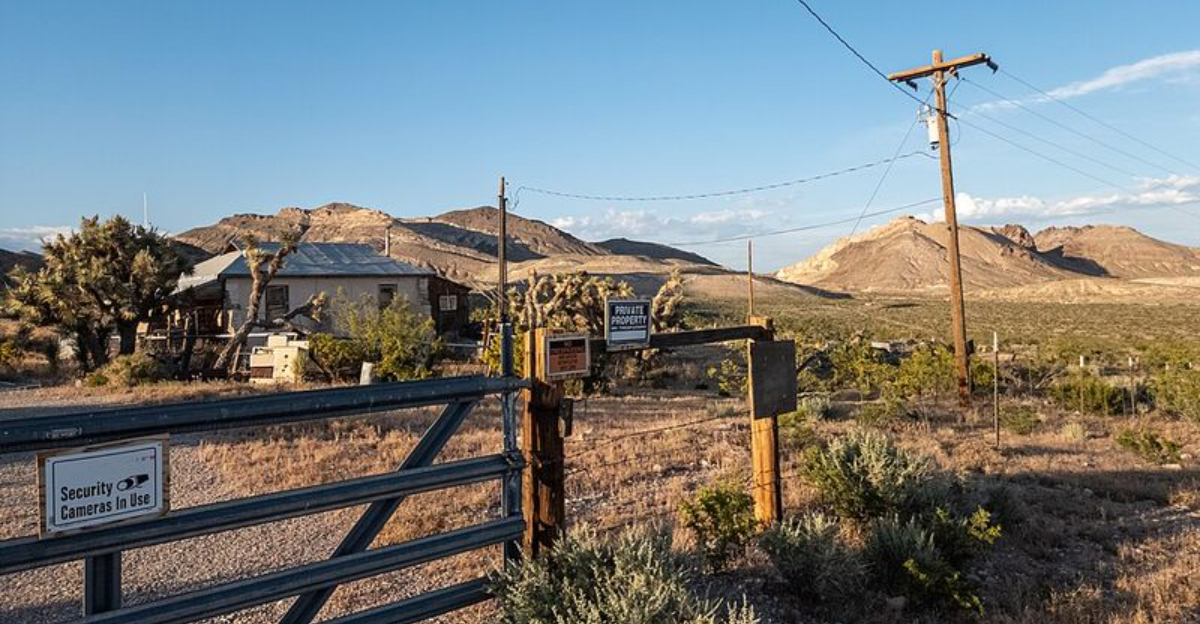
Time travel isn’t real… but this place almost is. Out in the heart of Nevada’s desert, there’s a ghost town that feels frozen in ambition and dust.
Over a century ago, it thrived with marble-floored banks, bustling streets, and a pulse that promised gold and glory. Now, all that remains are skeletal walls, a house made from thousands of glass bottles, and the occasional creak of wind through empty storefronts. It’s not haunted in the Halloween sense.
It’s haunted by history. The echoes of prospectors’ dreams, booming excitement, and inevitable decline.
Walking here, you don’t just see a town, you feel a century of stories hovering in the sun-bleached ruins, daring you to imagine the life that once surged through these now-silent streets.
Rhyolite Ghost Town Ruins
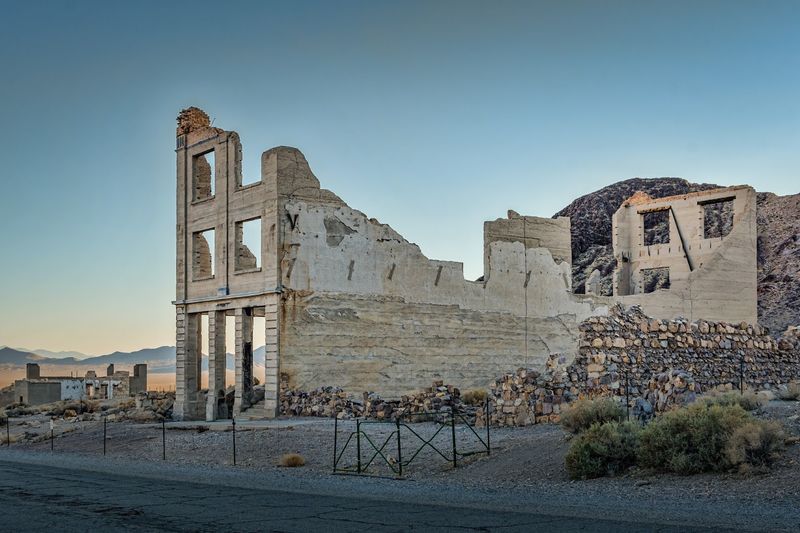
I first saw the Cook Bank’s skeletal facade rising like a movie set, and my breath did that tiny catch that means remember this. The ruins sit outside Beatty in the Bullfrog Hills, catching light that slides across stone like honey on toast.
I parked, stretched, and let the crunch of gravel announce that the day was about to serve a full plate of history.
The air tasted mineral-bright, and the buildings whispered stories through broken windows and tidy lines of brick. I wandered the old mercantile footprints, where wooden thresholds still sketch doorways for the imagination.
Every step offered a new angle, a little frame of shadow and sky, like the desert was curating its own gallery.
I circled the schoolhouse site and pictured lunch pails, chalk dust, and that unstoppable hope towns feel when the future seems guaranteed. Rhyolite grew fast on gold fever, spiking into grand banks and electric lights, then cooled into a stillness that photographs perfectly.
I traced the old railroad grade with my gaze and found rhythm in the alignment of ties now swallowed by time.
You should come for the harmony between ruin and horizon, where space feeds curiosity the way a good roadside diner feeds hunger. The compositions here snap into place without effort, yet you will find new details every time the sun shifts.
Leave with pockets of silence and a camera full of textures, then savor the aftertaste of history that lingers like a sweet desert breeze.
Goldwell Open Air Museum
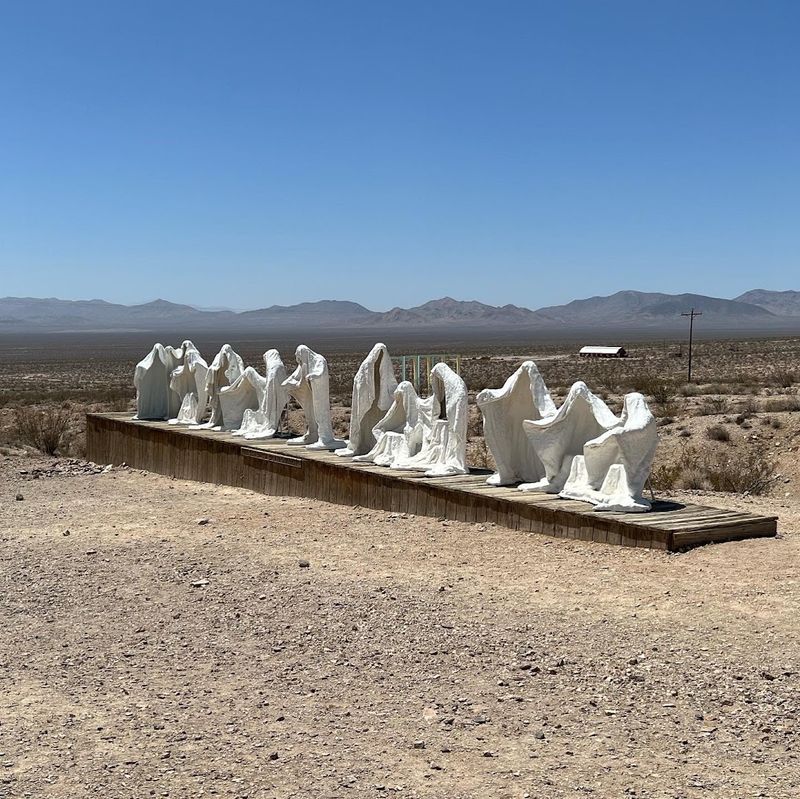
Art in the desert hits differently when it stands shoulder to shoulder with a faded boomtown, and Goldwell Open Air Museum proves it deliciously. Located along Route 374 near Rhyolite’s entrance at 1 Golden Street, Beatty, Nevada 89003, it drapes the landscape in sculpture with a wink.
I rolled up and felt the place greet me like a dream that remembered my name.
First, The Last Supper stood in a row of shrouded figures, ghost-white and quietly dramatic, framing the valley like a stage. I walked the gravel path slowly, tasting the stillness, noticing how each fold of fiberglass caught sun the way frosting catches light.
Nearby, a towering pink brick woman called Lady Desert stacked geometry into a playful ode to the body and the horizon.
I wandered to the miner with a penguin, because of course the desert has room for whimsy served pure. The sculptures seemed to breathe with the breeze, changing personality as clouds rearranged the light.
I loved how the museum let me graze from piece to piece like a buffet, no velvet ropes, just sky.
You should stop here to reset your senses, then drift downhill into Rhyolite carrying fresh curiosity.
The art primes you for the textures of ruins, turning the whole day into one long, savory course. Leave a little space in your memory for the quiet punchline: sometimes the desert tells its best jokes without raising its voice.
Cook Bank Building Facade
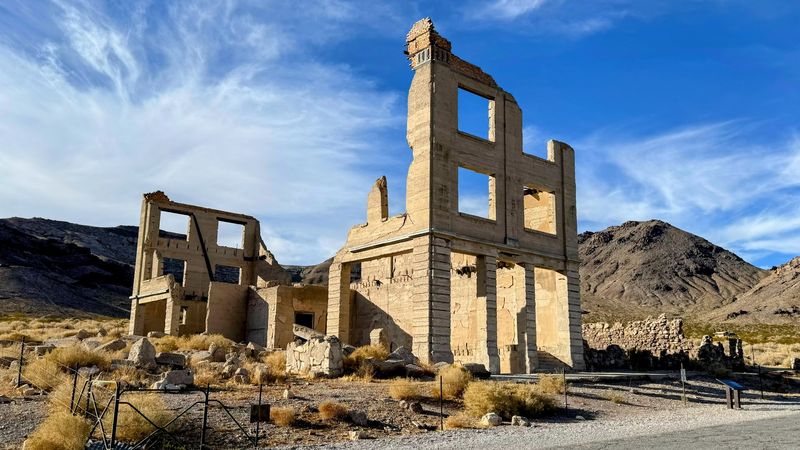
The Cook Bank facade stood like a grand pastry shell, layers and edges crisped by a century of sun. I stepped into its footprint and felt a tingle, the kind you get when a story starts simmering under the surface.
The empty windows framed the valley like serving trays, and I kept shifting my stance to taste every angle.
Signs detailed its 1908 bloom, the marble, the vault, and the elegant bones that once held ambition steady.
I pressed a palm to warm stone and pictured coins clinking, paper shuffling, hope tall as the second floor. A swallow zipped through the open arch, stitching the ruin to the sky with a neat little dart.
The geometry here photographs like a dream, all vertical hunger and horizontal calm. I drifted the perimeter and found small details, from bolt ghosts to the clean line where shadow kissed the sill.
Every few steps, the desert whispered, slow down and look again, and I happily obeyed.
You should come to let scale recalibrate your sense of time, because these ribs of architecture carry flavor long after the feast.
Bring curiosity, good shoes, and a pocket for tiny memories that tend to follow you home. When you leave, the outline will follow you back like a favorite recipe you cannot stop tinkering with.
Bottle House By Tom Kelly
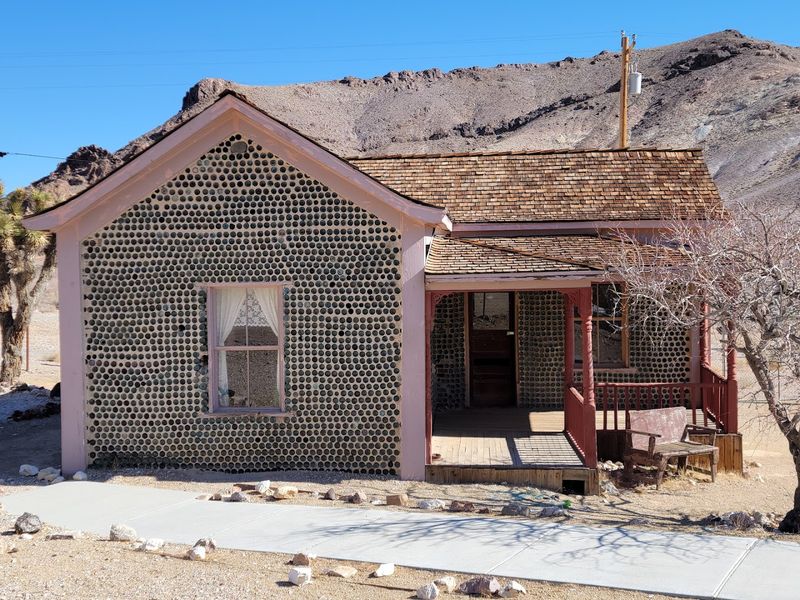
The Bottle House gleamed like candy in the sun, every glass circle catching light and tossing it back with mischief. I walked the fence line slowly, letting the greens and ambers tint the morning like stained-glass lemonade.
Built by Tom Kelly in 1906 from thousands of bottles, it stands as a thrifty poem to resourcefulness.
I paused where the wall stacked into neat, frosty discs, each bubble a memory trapped in glass. The roofline looked homey, and I pictured breakfast sizzling while desert light painted the room sweet.
The texture felt almost edible, like a caramelized crust that crunches then melts into quiet.
I read the plaque, then circled again, because a building this playful deserves seconds. The house tells a story about making do and making magic, and it photographs like a box of bright bonbons.
I listened to the soft wind and thought about how plenty shows up when you look twice at what you already have.
You should see it to remember that creativity often arrives dressed as practicality, smiling wide.
The Bottle House invites your eyes to linger, your camera to behave, and your imagination to nibble. When you wave goodbye, you will carry a pocketful of colored light, sweet as a good memory on a warm day.
Rhyolite Railroad Depot
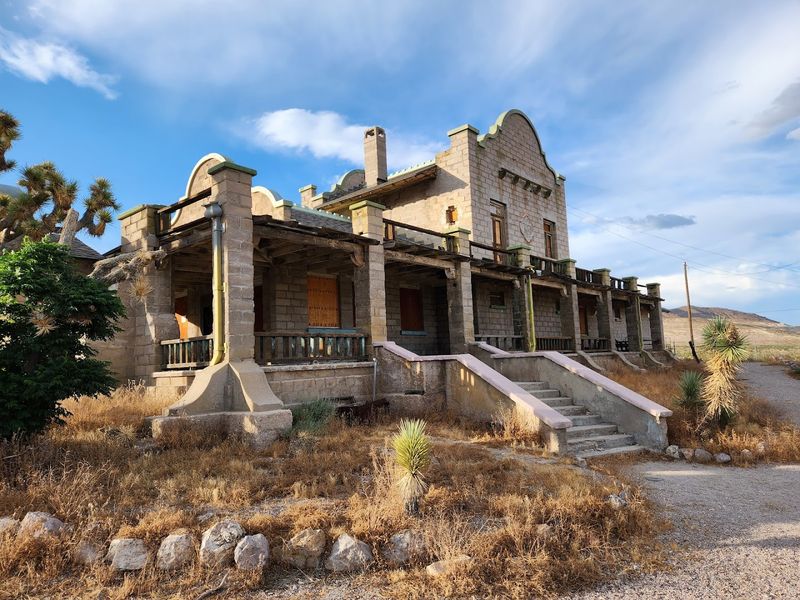
The Railroad Depot sat with the poise of a grand old station waiting for a whistle that now lives only in echoes. Mission Revival curves wrapped the facade in gentle arches that felt like a smile you trust.
I paced the platform edge and imagined luggage thumping rhythm while dust twirled like confetti.
Details peeked out from every angle, from sturdy columns to the way the roofline led my gaze into the hills. I traced the path where passengers once stepped, tasting that first-bite thrill of arrival.
The building still holds its posture, a dignified frame that makes the horizon look properly dressed.
I sketched a quick route in the dirt with my shoe, drawing tracks that vanished into the sage. The silence here is not empty; it is seasoned, like a stew left to bubble until flavors meet.
Photographing the depot felt like plating a classic dish, balanced and sure of itself.
You should come for the architecture that teaches patience and for the way the platform tunes your ears to distance.
Step around the side and let the light shape your shot, because this place rewards those who linger. Leave with the soft click of phantom timetables still turning somewhere in your pocket.
Rhyolite School And Jail Sites
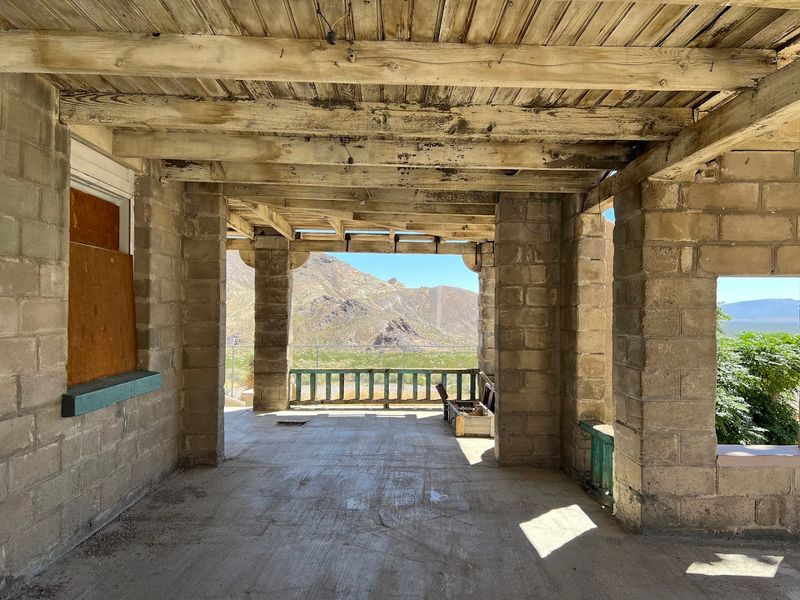
The school site hangs in the air like a sentence that pauses for effect, then lands softly.
I stood where steps once carried chalk dust and ambition, and I pictured recess giggles braided with sage-scented wind. Foundations mark the footprint, and in that outline, the mind plates a full-course meal of possibility.
A short walk away, the compact jail tucks into the earth with a sturdy shrug. Its walls feel like a recipe that uses only a few ingredients but nails the flavor exactly.
I ran a gaze over iron and stone, noting the way sunlight threads through and softens everything it touches.
I loved drifting between the two, tasting the contrast of learning and consequence, of open futures and kept boundaries.
Signs shared dates and breadcrumbs, and I followed with a slow, happy stride. The landscape around them spreads wide, a generous table set for reflection.
You should visit these spots to feel how everyday life lingered even as fortunes shifted. The school and the jail tell a balanced story, sweet and savory in one plate.
When you finish the loop, your steps will settle into a thoughtful calm that pairs beautifully with the hush of the hills.
Sunset Over The Bullfrog Hills
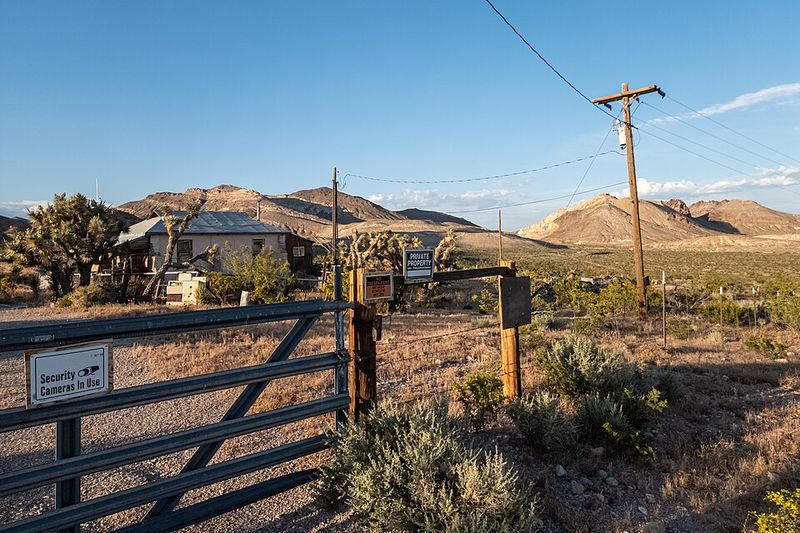
Evening in Rhyolite pours across the ruins like warm syrup, slow and golden. I positioned myself where the Bullfrog Hills cut a clean silhouette and let the sky set the menu.
The last light grazed brick, bottle glass, and rail ties until every edge hummed with quiet flavor.
Shadows stretched into long ribbons, guiding me from the depot to the bank to the soft geometry of the Bottle House. I breathed deeper and felt the day tuck itself in, content and glowing at the seams.
The silence wrapped around my shoulders the way a good blanket invites you to stay for dessert.
Colors stacked and shifted, apricot into plum into the pale blue that means you should take one more photo. I let the camera rest and just watched, spooning up the moment with both hands.
The desert has a way of seasoning time until it tastes exactly right.
You should wait for sunset because it seasons the story of Rhyolite with warmth and balance. The glow clarifies details and plates them beautifully, so your memories leave the table satisfied.
When the first star arrives, you will feel the town exhale, and you may find yourself whispering thank you to the sky.