
This Place Has One Of Arizona’s Most Unreal Views (According To Locals)
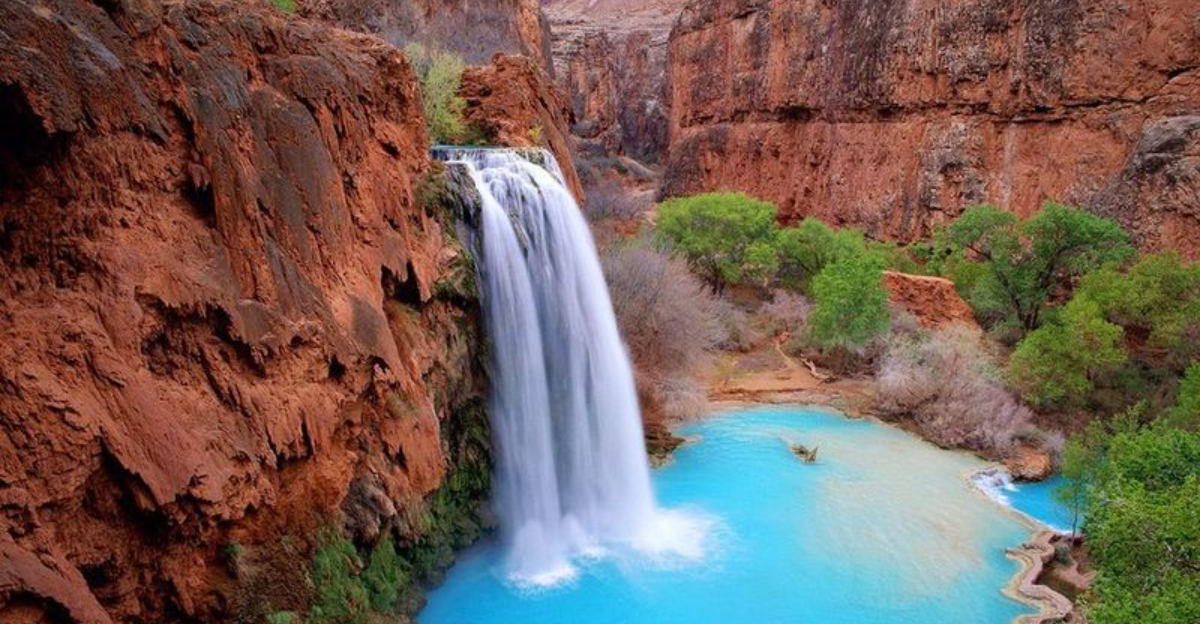
Ever wish you could hop into a postcard and stay forever? This stunning Arizona state park hands you that exact feeling the moment you arrive.
Picture rust‑colored cliffs framing a sparkling lake, whispering pines swaying in the gentle breeze, and trails that wind through a landscape so vibrant it seems painted by nature’s own hand.
It’s the kind of place where you can lose track of time-whether you’re hiking, kayaking, or just lying on a sun‑warmed rock with a good book.
Pack a sense of adventure, bring a camera (or two), and get ready to create memories that feel as timeless as the scenery itself. Locals and seasoned hikers consistently call it one of the most surreal natural views in the state, and after making the journey myself, I completely understand why.
The First Look Feels Almost Unreal
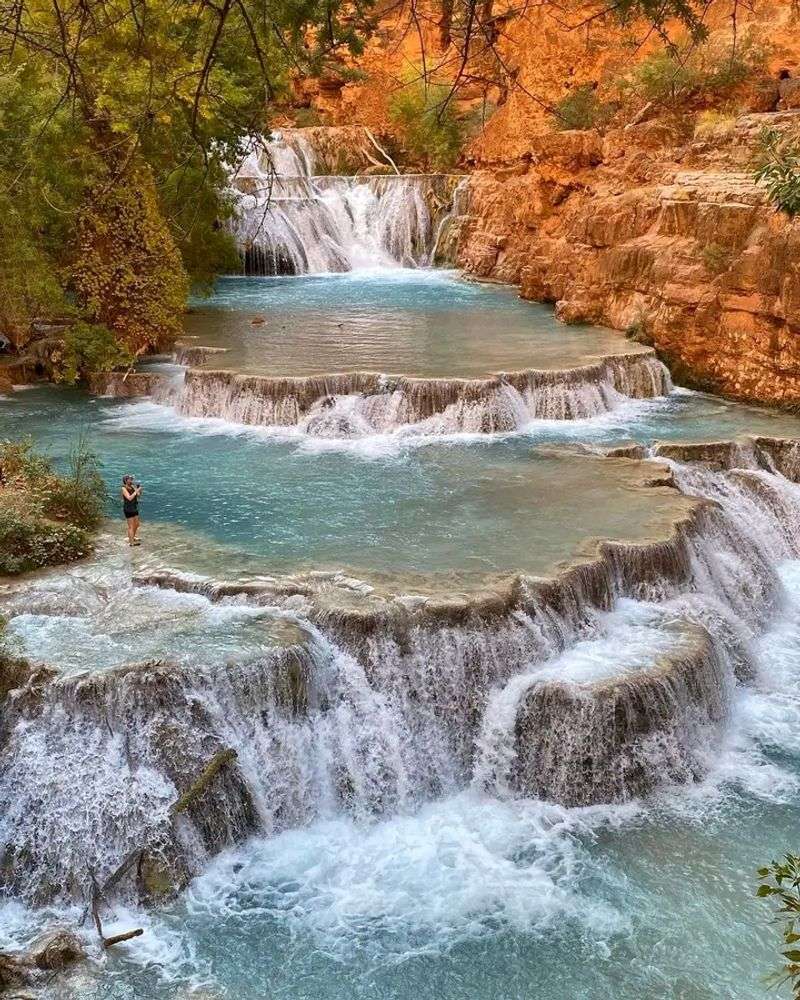
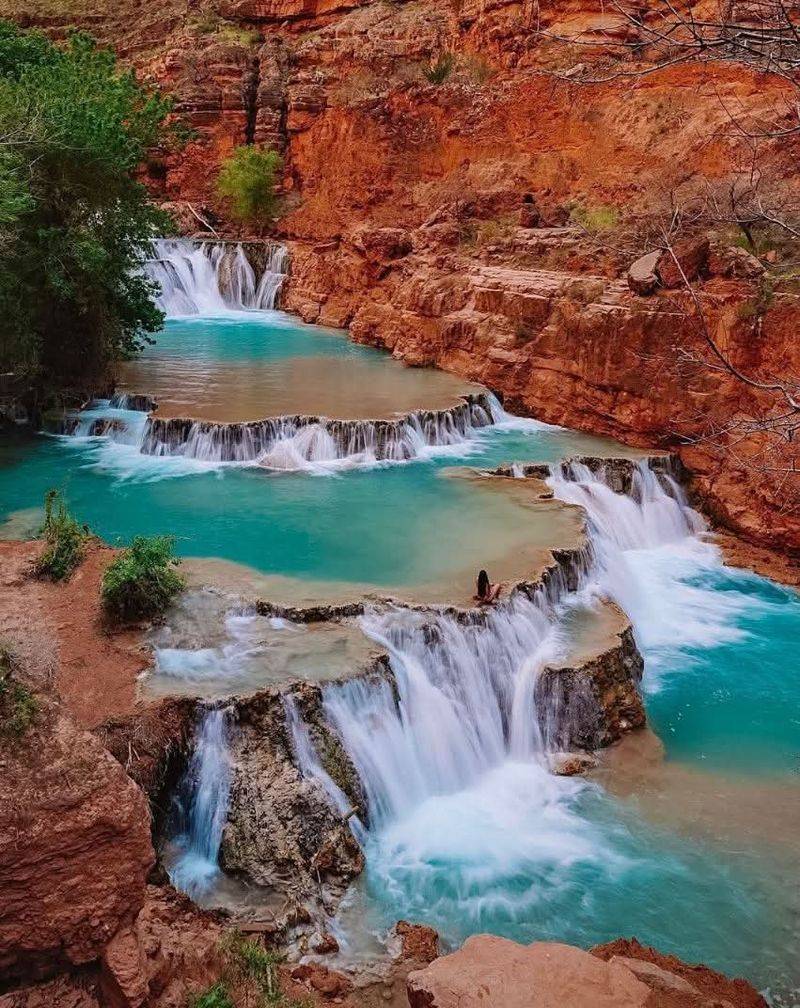
The first thing that gets you is the color. That water really is that bright blue-green in person, and it looks almost edited against the red canyon walls.
Beaver Falls is not one single dramatic drop. It is a layered set of travertine terraces and pools, with water stepping down over pale shelves in a way that makes the whole scene feel softer, wider, and somehow even more photogenic than a classic straight-down waterfall.
The iconic color comes from calcium carbonate in Havasu Creek, which is also what helps build and rebuild those travertine formations over time.
I had one of those rare travel moments here where my brain needed a second to catch up with what my eyes were seeing. It was not just pretty.
It was the kind of beautiful that makes you stop mid-sentence and grin like you accidentally found something you were never supposed to know about.
Beaver Falls, located on Havasupai tribal land near Supai, Arizona 86435, sits at the far end of one of the most rewarding hikes in the entire Southwest.
Getting Here Is Part Of The Story
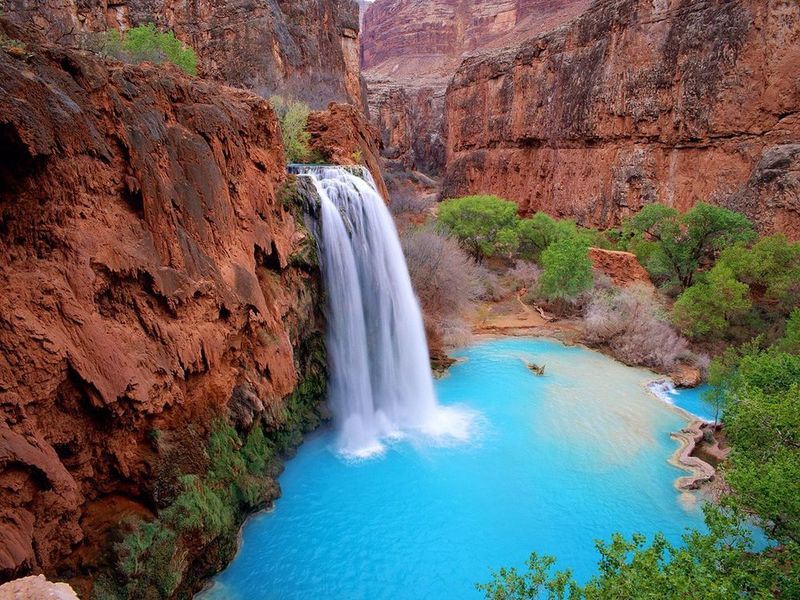
This is important because Beaver Falls is not a day-trip destination. The Havasupai Tribe requires reservations for all visitors, and the National Park Service notes clearly that no day hiking is allowed.
To reach the area, visitors hike from Hualapai Hilltop down 8 miles to Supai Village, then another 2 miles to the campground, and Beaver Falls is typically explored from there on a lower-waterfalls day.
Official Havasupai bookings are 4 days and 3 nights, which tells you everything you need to know about how serious this trip is compared with a standard Arizona hike.
For 2026, campground permits are listed at $455 per person for 3 nights, while lodge permits are $2,277 per room for 3 nights for up to four people.
The Tribe’s current season guidance also says cooler months are ideal for hiking and exploring, while warmer months are better for getting in the water, with the tradeoff of heavier heat and more careful planning.
That longer approach changes the way you see the place. By the time I got there, Beaver Falls did not feel like a sightseeing stop. It felt like the reward at the end of a whole effort, which made the view hit even harder.
Why The Hike Makes The View Better
There is something about a place like this that would not work the same way if it were easy. The remoteness is not an inconvenience tacked onto the experience.
It is the experience. You are heading into a canyon landscape with no road access to Supai, no simple pop-in visit, and no expectation that comfort will do the work for you.
The Havasupai Reservation is remote enough that most of it does not have reliable Wi-Fi or cell service, including most trails and even the campground and lodge areas.
And honestly, that lack of connection is a huge part of the magic. At one point I reached for my phone out of pure habit, realized it was basically useless, and laughed.
Then I put it away and paid attention instead. The canyon walls, the sound of the creek, the little pockets of shade, the flash of color in the water, all of it suddenly felt sharper because there was nothing else competing for my focus.
The Havasupai Tribe describes the canyon’s scenery and waterfalls as amazing at all times of year, and that checks out. There is a softness to Beaver Falls that feels different from the more famous, more photographed waterfall shots people usually associate with the area.
This is the kind of spot that invites you to linger.
Not because there is a checklist of things to do, but because sitting there and taking it in feels like enough. I remember finding a perch near the water and telling myself I would stay five minutes. I was there much longer than that.
The view has that effect. It makes you lose your sense of time in a way that feels more calming than dramatic, like the place is gently telling you to stop rushing everything.
It Is Not Just A View, It Is A Whole Mood
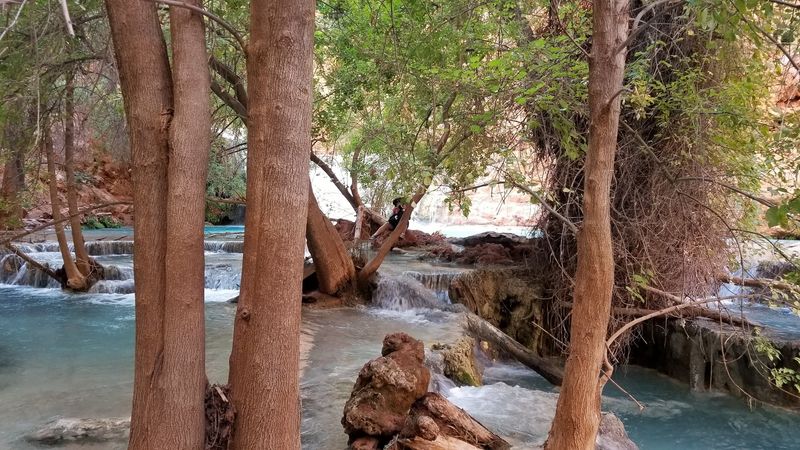
A lot of scenic places are beautiful for thirty seconds and then flatten out once the surprise wears off. Beaver Falls does the opposite.
The longer you stay, the more details start revealing themselves. You notice the way the water spreads across the terraces instead of dropping in one harsh line.
You notice the contrast between the warm rock and the cool pools. You notice how the entire scene feels alive without ever looking chaotic.
The canyon’s scenery and waterfalls as amazing at all times of year, and that checks out. There is a softness to Beaver Falls that feels different from the more famous, more photographed waterfall shots people usually associate with the area.
This is the kind of spot that invites you to linger. Not because there is a checklist of things to do, but because sitting there and taking it in feels like enough.
I remember finding a perch near the water and telling myself I would stay five minutes. I was there much longer than that.
The view has that effect. It makes you lose your sense of time in a way that feels more calming than dramatic, like the place is gently telling you to stop rushing everything.
The Lower Waterfalls Day Everyone Talks About
The Tribe’s own ideal-trip outline suggests using one day to enjoy and explore the lower waterfalls, specifically naming Havasu, Mooney, and Beaver.
Visit Arizona also notes that once you are settled at camp, many people day-hike to the other falls, and that getting beyond Mooney involves scrambling down misty canyon walls while holding onto a chain before continuing on toward Beaver Falls. In other words, this is not a throwaway add-on.
It is one of the signature experiences of the whole trip.
That context matters because Beaver Falls can get overshadowed in broad Havasupai conversations by the famous name recognition of Havasu Falls. But if your favorite travel moments tend to be the ones that feel a little farther, a little quieter, and a little more personal, Beaver Falls has a real case for being the one you end up thinking about most.
That was absolutely the surprise for me. I expected to admire it. I did not expect it to become the spot I kept replaying in my head later.
What To Know Before You Go
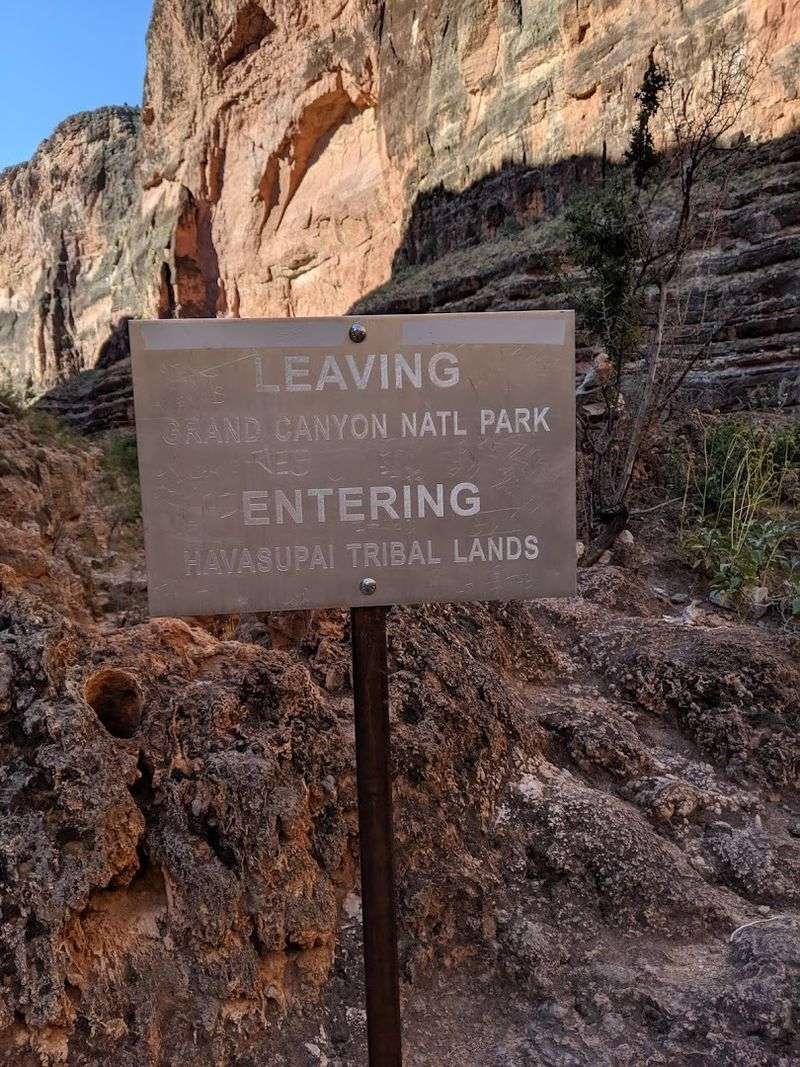
This is one of those places where respecting the rules is part of visiting responsibly. The Havasupai Tribe makes clear that permits are required for all visitors and that the Tribe can close access at any time.
Summer can be brutally hot, with temperatures in peak season soaring well above 100 degrees, and both the Tribe and the National Park Service stress that visitors need to be fit, hydrated, and prepared for a difficult desert hike.
Monsoon season also brings flash-flood risk, and the Tribe specifically warns visitors to get to high ground immediately if flood waters approach.
The Tribe also says drinking water is available in Supai Village and from a freshwater spring in the campground, while other water should be treated or filtered.
And if you are planning on taking photos, personal photos of yourself and the surrounding nature are generally allowed, but photos or recordings of tribal members, homes, buildings, burial grounds, sacred sites, and certain other subjects are not allowed. Drones are prohibited.
That mix of beauty and responsibility is worth taking seriously. This is not a place to treat like a theme park backdrop. It is a sovereign tribal homeland, and the experience is better when you approach it with that respect from the start.
Why Beaver Falls Stays With You
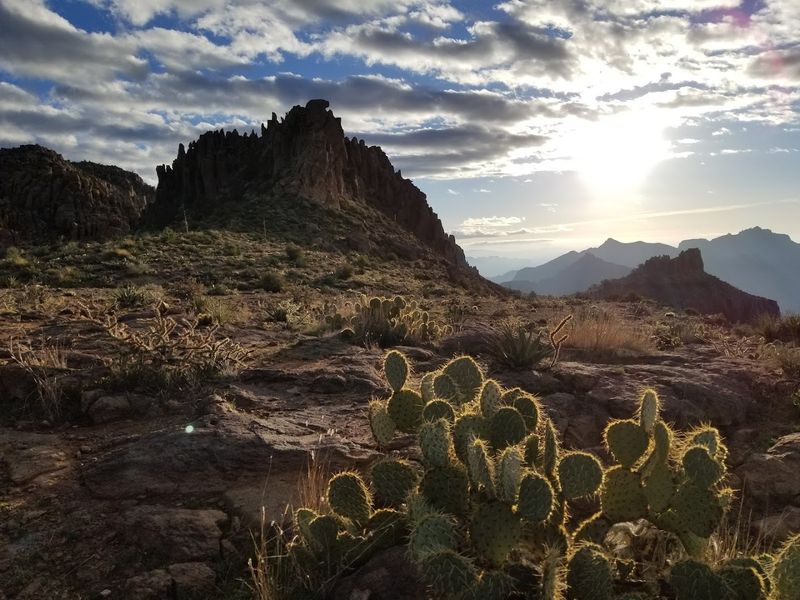
What I loved most is that Beaver Falls never felt flashy, even though it is one of the most visually striking places in Arizona. It felt intimate.
It felt tucked away. It felt like the kind of place you tell a friend about with a slightly wild look in your eyes because you still cannot believe somewhere like that is real.
Yes, the view is unreal. Yes, the color is as beautiful as people say.
Yes, it takes real effort to get there.
But that is exactly why it works. In a state full of giant vistas and instantly impressive overlooks, Beaver Falls offers something a little different.
It is not just a view you admire from afar. It is a place you move through, listen to, cool off beside, and remember in pieces later, the sound of the water, the glow of the pools, the red walls holding everything in.
And that is probably the best way to describe it to a friend: not as a place that is simply pretty, but as a place that makes Arizona feel bigger, stranger, and far more magical than you thought it was before you arrived.