
This Florida Woodland Trail Ends At Haunting Plantation Remains
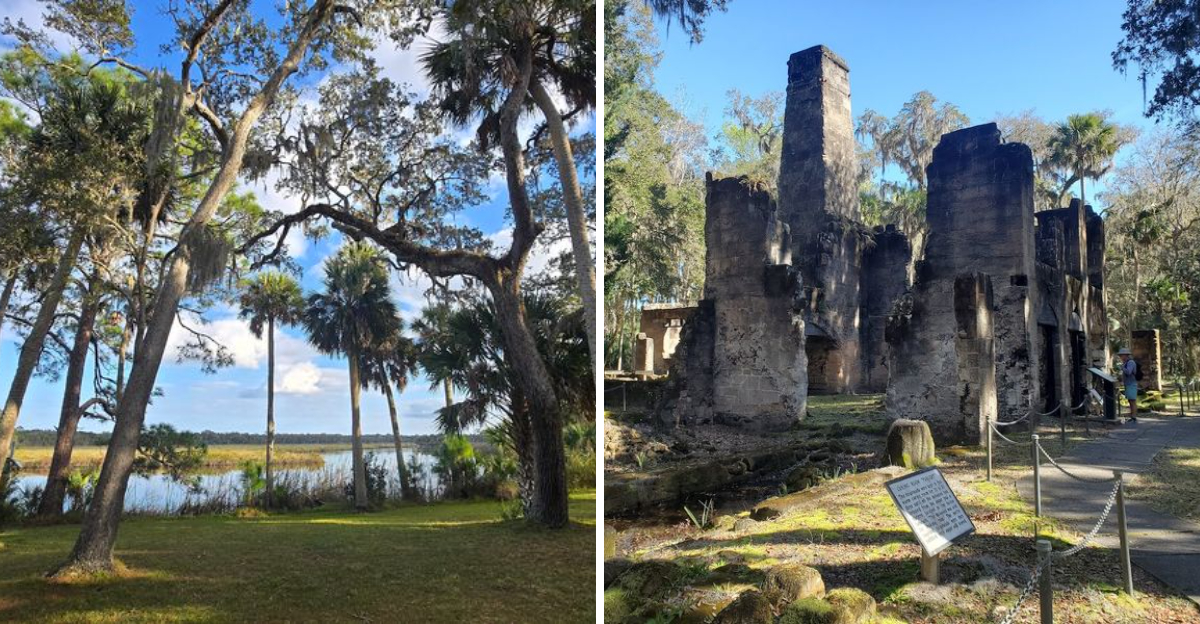
Most Florida adventures involve beaches, sunshine, and bright coastal views. But every once in a while, you step into a place that feels completely different.
Quieter. Older.
Almost mysterious.
This historic park is exactly that kind of place.
The moment you follow the shaded path beneath towering oaks, the atmosphere changes. Spanish moss sways gently overhead, filtering the light and softening the world around you.
Then the ruins appear.
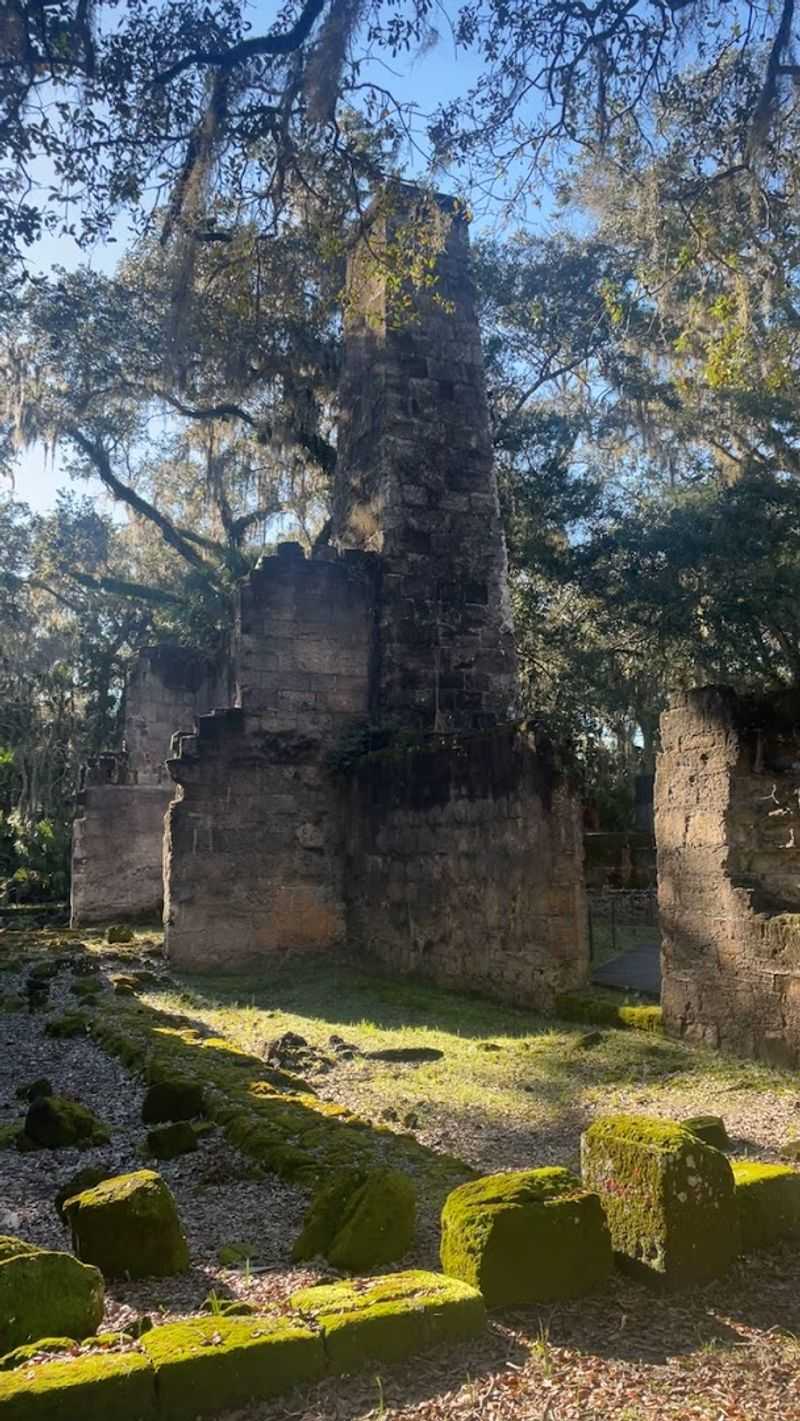
Massive coquina walls rise from the forest floor, weathered and cracked by nearly two centuries of storms, fire, and time. Nature has slowly wrapped itself around the structure, vines and roots weaving through stone as if the forest itself is reclaiming the past.
Standing there, it becomes impossible not to think about the lives connected to this ground. The history, the labor, the conflict, and the moment everything came to an end.
It is haunting. Beautiful.
And unforgettable.
Towering Coquina Sugar Mill Walls
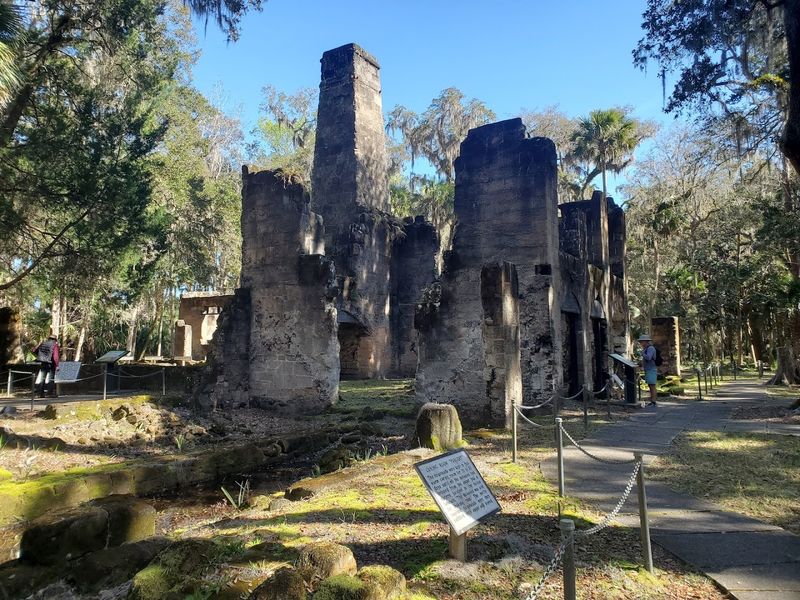
Walking up to the sugar mill ruins always makes my chest tighten just a bit, because these walls stand taller than I expected, maybe fifteen feet in some sections, built from coquina stone that has somehow survived almost two hundred years of hurricanes, heat, and humidity. The mill processed sugar cane using methods that sound brutal when you read the interpretive signs, with massive rollers crushing stalks while workers labored in conditions I cannot begin to imagine under the Florida sun.
Coquina is a sedimentary rock made from compressed shells, and you can see the tiny shell fragments embedded in the walls if you look closely, giving the whole structure a rough, porous texture that catches light in interesting ways during golden hour. I have visited three times now, and each time I notice new details, like the iron fittings still embedded in the stone or the way vines have started claiming the upper sections.
The mill represents the economic engine that drove this entire operation, turning raw cane into sugar that would be shipped north, and standing beside it makes you realize just how much labor and suffering went into producing something we now grab off grocery shelves without a second thought. These haunting ruins stand within Bulow Plantation Ruins Historic State Park at 3501 Old Kings Rd, Flagler Beach, FL 32136.
Self-Guided Historical Tour Through Coastal Hammock
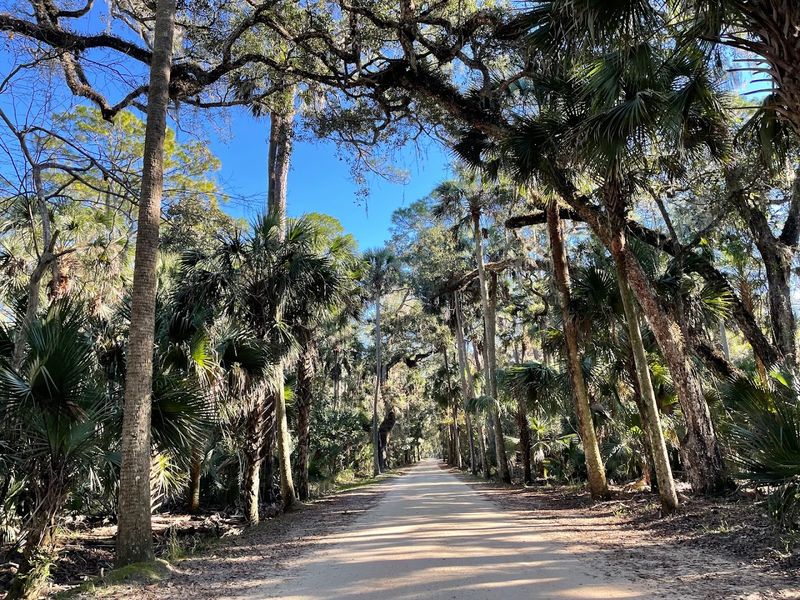
Nobody hands you a brochure or assigns you a guide here, which I actually appreciate because it lets you move at your own pace through the trails that wind from the parking area to the various ruin sites scattered across the property. The self-guided setup relies on well-placed interpretive signs that explain everything from sugar production methods to the layout of the original plantation buildings, and I found myself stopping to read every single one during my first visit.
The coastal hammock environment creates this thick canopy overhead, with live oaks, cabbage palms, and red bay trees forming a natural cathedral that keeps the temperature noticeably cooler than the surrounding areas. I remember one afternoon in late spring when the humidity was intense everywhere else, but the trail felt almost comfortable under all that shade.
This approach works because it gives you space to think about what you are seeing without someone talking at you constantly, and I noticed that most visitors I encountered were moving slowly, quietly, as if the setting demanded a certain reverence or at least contemplation about what happened here generations ago.
Tabby Slave Cabin Foundations
Tucked away behind the main parking area, accessible via a short trail that most people seem to miss entirely, sit the remains of slave cabins built from tabby, a concrete-like mixture of oyster shells, lime, sand, and water that was common in coastal construction. These foundations are just low rectangles now, maybe a foot high at most, outlining spaces that were once homes for the enslaved people who made this plantation function.
I almost walked right past them during my first visit because they are not prominently marked, and honestly, that feels like a metaphor for how these stories get overlooked in broader historical narratives. The cabins were small, cramped spaces where entire families lived, and standing there trying to imagine daily life within those walls made my stomach turn.
What strikes me most is how these humble tabby ruins tell a more important story than the impressive mill walls, because they represent the human cost of the sugar and cotton produced here. I sat on a nearby bench for probably twenty minutes just looking at those foundations, thinking about names and faces that history never recorded, people who built everything around me but left almost no trace beyond these crumbling shells.
Bulow Creek Canoe Trail Access
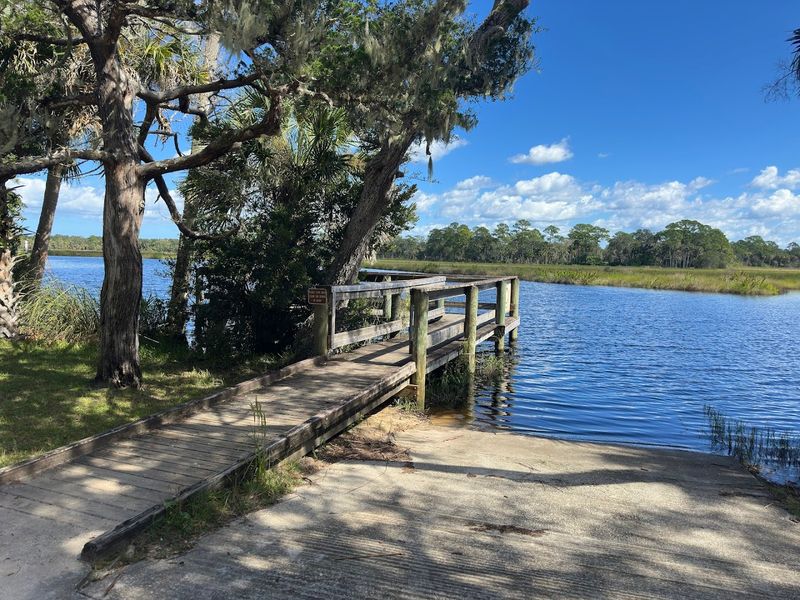
Down past the ruins, the park maintains a boat ramp and dock on Bulow Creek, which offers a completely different way to experience this landscape if you bring a kayak or canoe along for the trip. The creek flows with that distinctive dark tea color you see throughout Florida’s coastal waterways, stained by tannins from decomposing vegetation, and it winds through marshes and hammocks that look essentially unchanged from when the plantation operated.
I launched my kayak here one morning in early fall and paddled upstream for about an hour, seeing only two other people the entire time, plus an alarming number of alligators sunning themselves on the banks. The water trail connects to a larger network of paddling routes, and you can supposedly make it all the way to Tomoka State Park if you have the time and energy.
Having this recreational element integrated into a historic site creates an interesting dynamic, because you are essentially traveling the same waterway that plantation boats used to transport sugar barrels to market, though obviously under vastly different circumstances and with much better safety equipment than anyone had in the 1830s.
Plantation House Foundation Outline
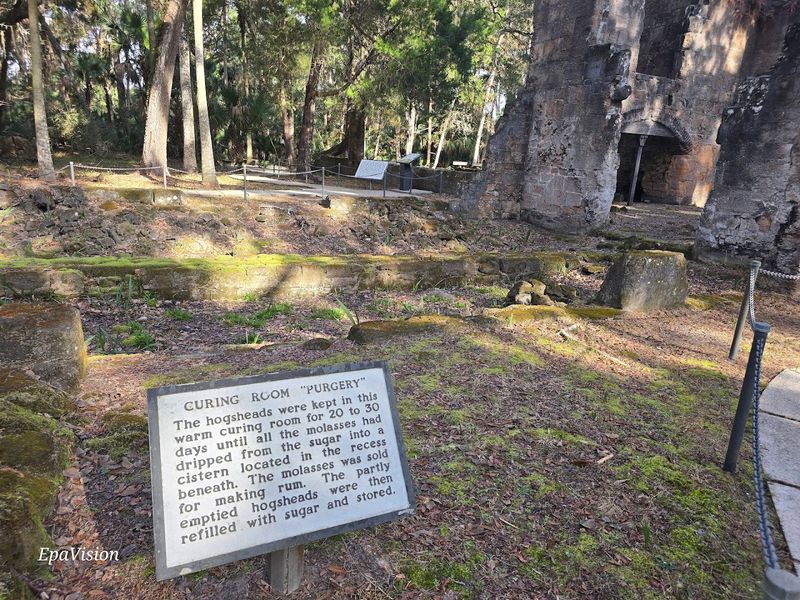
The actual plantation house that Major Charles Bulow and his son John built no longer exists in any meaningful way, reduced to just a foundation outline that traces where walls once stood before Seminole warriors burned everything during the 1836 conflict. You have to use your imagination pretty heavily here, because unlike the mill, there is nothing vertical left to give you a sense of scale or architectural detail.
Interpretive materials explain that this was a substantial two-story structure, which makes sense given that the Bulow family was running the largest sugar operation in East Florida and would have needed appropriate housing for that status. I paced out the foundation perimeter during one visit and was surprised by how large the footprint actually was, probably bigger than most modern homes.
What gets me is how thoroughly this building vanished, as if the land itself wanted to erase the memory of what happened here, and now you are left standing in a clearing trying to reconstruct an entire world from rectangular stone lines in the grass. The contrast between the durable mill ruins and the disappeared house feels significant somehow, like the machinery of exploitation outlasted the people who profited from it.
Historic Tools and Household Artifacts Display
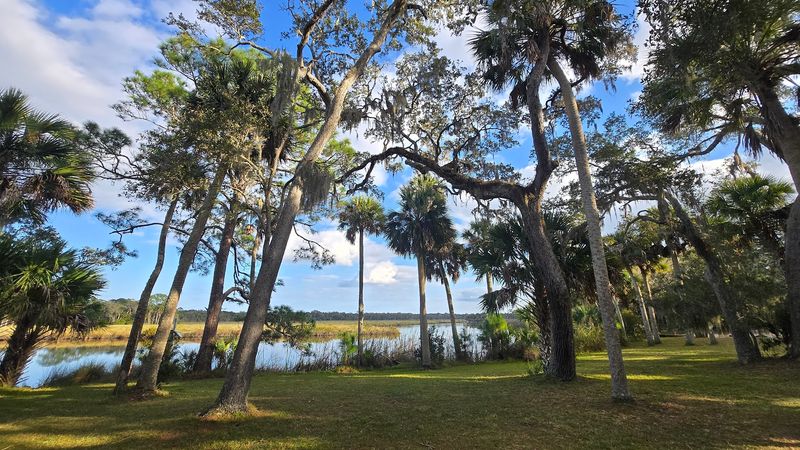
Near the mill ruins, the park maintains several display cases protecting historic tools and household items recovered from the site or representative of the period, giving you a tangible connection to daily life beyond just looking at walls and foundations. I spent probably thirty minutes examining these artifacts during my second visit, fascinated by things like sugar processing implements, cooking utensils, and agricultural tools that looked both ingenious and terrifying.
The displays are thoughtfully arranged with explanatory text that helps you understand what each item was used for and how it fit into the plantation’s operations, though I noticed the signage could use some updating as one reviewer mentioned. What really grabbed my attention were the domestic items, because they humanize the people who lived here in a way that architectural ruins cannot quite achieve.
Seeing actual objects that actual people held and used two centuries ago creates a different kind of historical connection than reading about events in a textbook, and I found myself wondering about specific individuals who might have wielded these tools or cooked with these implements during their daily routines in this isolated Florida wilderness.
Six-Mile Hiking Trail Through Wilderness
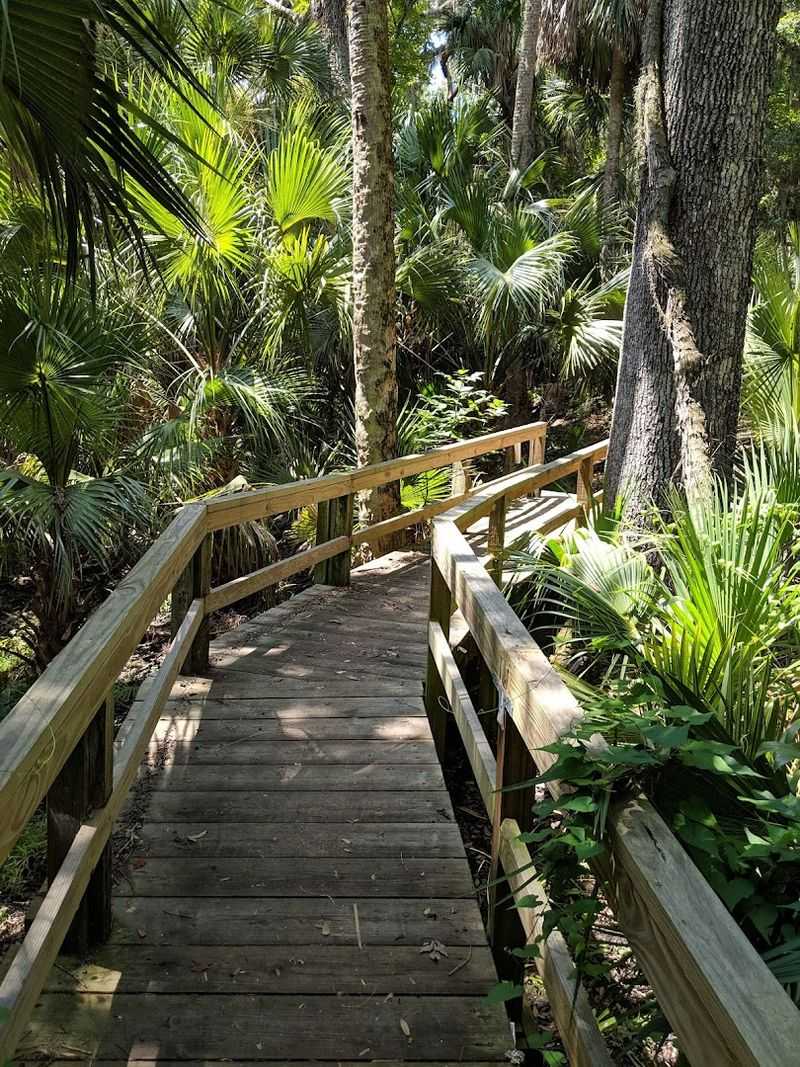
For visitors wanting more than just a quick look at the ruins, the park offers a six-mile trail that runs through the property, though I should mention that storm damage occasionally closes sections, so check current conditions before planning a serious hike. This trail connects the northern and southern sections of the park, winding through coastal hammock, pine flatwoods, and wetland edges that show you what this entire region looked like before development.
I attempted the full loop once during a cooler winter morning and made it about four miles before the heat and humidity convinced me to turn back, though I did reach Cedar Creek and got to cross a small footbridge with impressive views of the wetlands. The trail is not heavily trafficked, which means you might encounter wildlife like armadillos, deer, or the occasional gopher tortoise, and you will definitely need to watch for snakes in warmer months.
This hiking option transforms the park from a quick historical stop into a legitimate nature experience, and if you are the type who likes combining outdoor exercise with cultural education, this trail delivers both in significant doses.
Educational Plaques Explaining Sugar Production
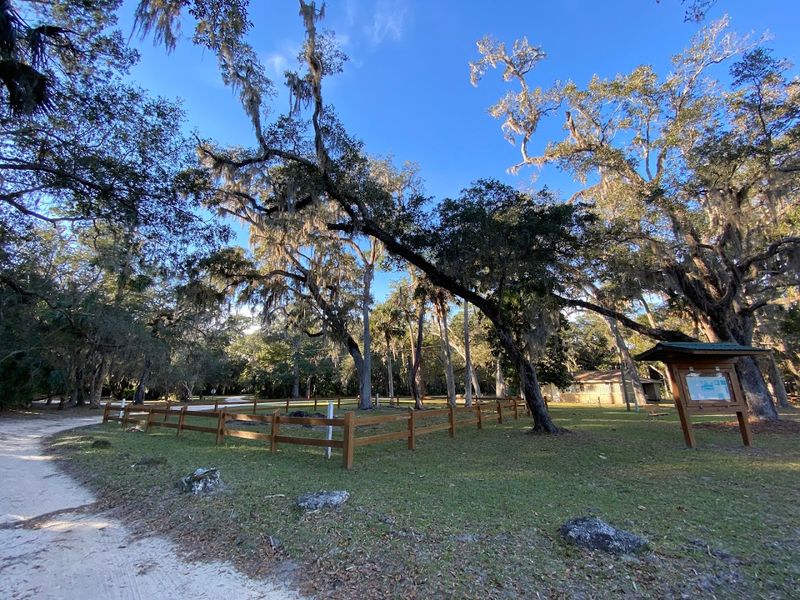
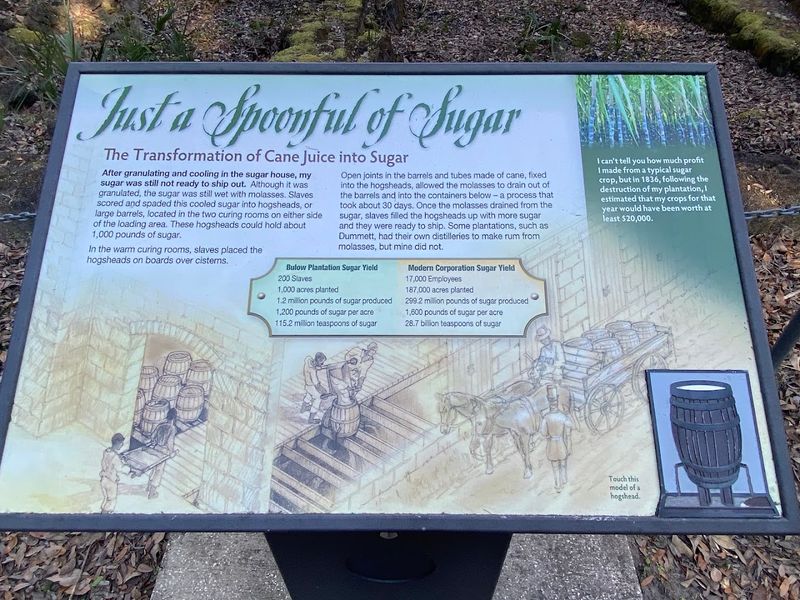
Throughout the site, particularly concentrated around the mill ruins, you will find interpretive plaques that explain the sugar production process in sometimes uncomfortable detail, making it clear just how labor-intensive and dangerous this operation was for the people forced to work it. I appreciated that the park does not romanticize plantation life or gloss over the brutal realities of enslaved labor, though I also noticed that some visitors seemed surprised or uncomfortable with how direct the information was.
The plaques walk you through each step from harvesting cane in the fields through crushing, boiling, and crystallization, and when you read about the heat, the machinery, the long hours, and the constant risk of injury, you start to understand why this system depended on enslaved workers who had no choice about participating. One sign specifically addresses how the mill machinery worked, with massive rollers that could easily crush a hand or arm if someone was not careful or became too exhausted to react quickly.
I found myself reading these plaques multiple times during different visits, each time noticing new details or making new connections about how this economic system functioned and who paid the real price for those profits.
Second Seminole War Historical Context
Understanding why these ruins exist at all requires knowing about the Second Seminole War, a brutal conflict from 1835 to 1842 that erupted when the United States government tried to force Seminole people westward, and during which warriors attacked and burned numerous plantations including this one in January 1836. The park’s interpretive materials explain this context, though I wish there was even more information about the Seminole perspective and motivations beyond just the basic facts of the attack.
The Bulow plantation was specifically targeted, likely because of its size and economic importance, and the destruction was thorough enough that the family never attempted to rebuild, abandoning the property entirely after the attack. I find this military history fascinating because it shows how these seemingly permanent economic operations could vanish almost overnight when the political and social tensions that surrounded them finally exploded.
Walking through ruins created by deliberate destruction rather than simple decay adds another emotional layer to the experience, because you are not just seeing what time did to these buildings, but what people did to them during a moment of violent resistance against an oppressive system.
Honor System Entry Fee and Limited Hours
Before you even reach the ruins, you will encounter the park’s honor system entrance fee, which asks for four dollars per vehicle collected via a payment box where you drop cash in an envelope or scan a QR code for electronic payment, a system that somehow still works in 2024. I always bring exact change because the sign specifically mentions they cannot accept cards at the box itself, though the QR code option provides a modern alternative if you remember to use it.
The park operates Thursday through Monday from 9 AM to 5 PM, staying closed on Tuesdays and Wednesdays, which caught me off guard during my first attempted visit when I showed up on a Wednesday afternoon and found the gates locked. This limited schedule seems to be a staffing issue common among smaller state parks, and while it makes sense from a resource perspective, it definitely requires planning your visit around their open days.
What I appreciate about the honor system is that it reflects a certain trust in visitors, and based on the park’s well-maintained condition, it seems like most people do pay their share, contributing to the preservation of these important historical resources for future generations to contemplate and learn from.