
13 Underrated But Can’t-Miss Places In Michigan For Out-Of-Towners
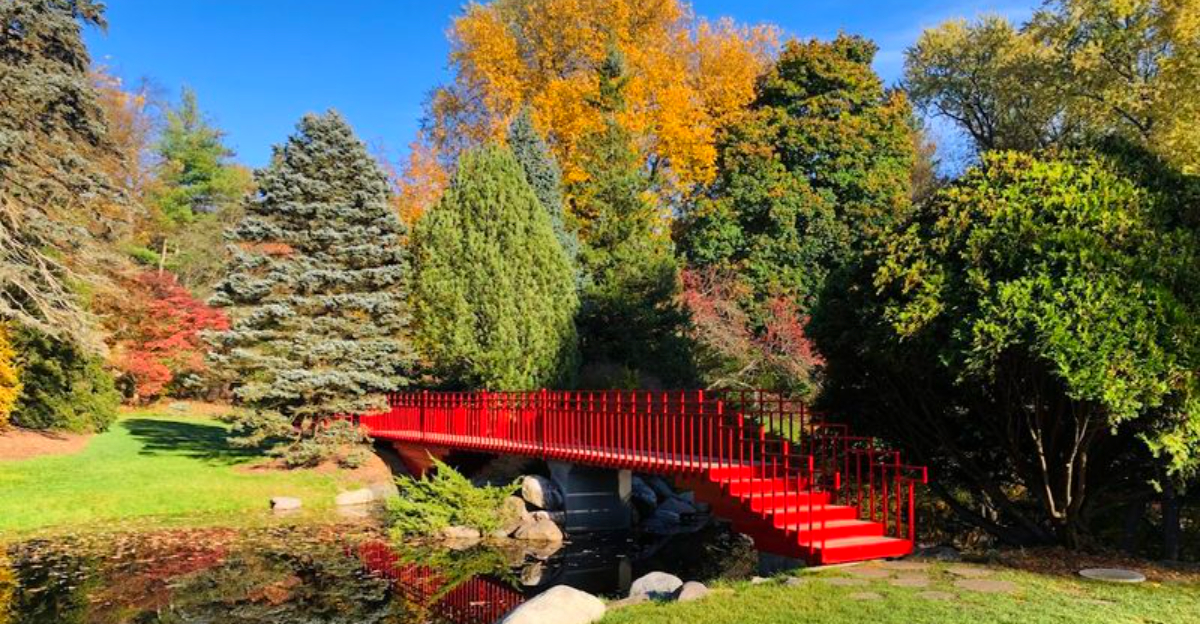
Michigan’s best surprises usually require a bit of dirt on your tires and a willingness to venture just off the obvious, high-traffic routes.
There is a specific, quiet magic found where crystal-clear water whispers under ancient cedar roots and small towns guard treasures that haven’t been buffed smooth by mass tourism.
It’s a landscape defined by “stubborn patience,” where the sky is dark enough to make you feel delightfully small and the history is stitched into the very trails you walk.
If you’re willing to let the map breathe, you’ll find that the most personal memories are made in the silence of a hidden shoreline or a starlit clearing.
Explore Michigan’s hidden natural wonders, from the emerald depths of Kitch-iti-kipi to the ancient white pines of Hartwick Pines and the pristine stargazing at Keweenaw Dark Sky Park.
Pack your curiosity and a reliable pair of boots, because once you step into these quiet, ice-shaped corners, the rest of the world starts to feel very far away.
1. Kitch-Iti-Kipi Big Spring, Palms Book State Park (Manistique Area)
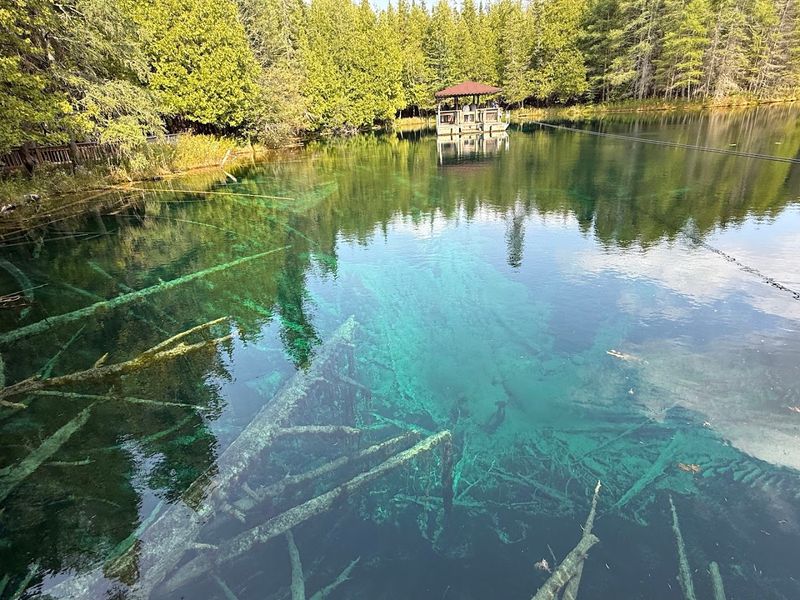
The first glimpse of Kitch-iti-kipi is almost unreal, a turquoise lens revealing cedar logs suspended in water like slow-moving ghosts.
Known as the Big Spring, this natural wonder is Michigan’s largest freshwater spring, spanning 200 feet across and plunging 40 feet deep.
Large lake trout drift through the depths like punctuation marks, appearing calm and certain in their emerald world. The raft’s glass-bottom viewing area makes you linger, but the loop stays tidy and efficient so everyone gets a chance to peer into the abyss.
Interpretive signs near the dock keep the history brief, wisely letting the mesmerizing water do the talking.
Once a private attraction that could have been lost to commercial development, the spring was preserved through the stubborn state stewardship of John I. Bellaire, who convinced the state to buy the land for ten dollars in the 1920s.
It remains a small miracle of environmental protection. Be sure to bring cash for the park pass kiosk or have your Michigan Recreation Passport ready on your vehicle’s plate, the logistics are simple but worth remembering.
Since the spring maintains a constant temperature of 45°F year-round, it never freezes, making it a spectacular steam-shrouded destination even in the depths of a Great Lakes winter.
2. Ocqueoc Falls (Ocqueoc)
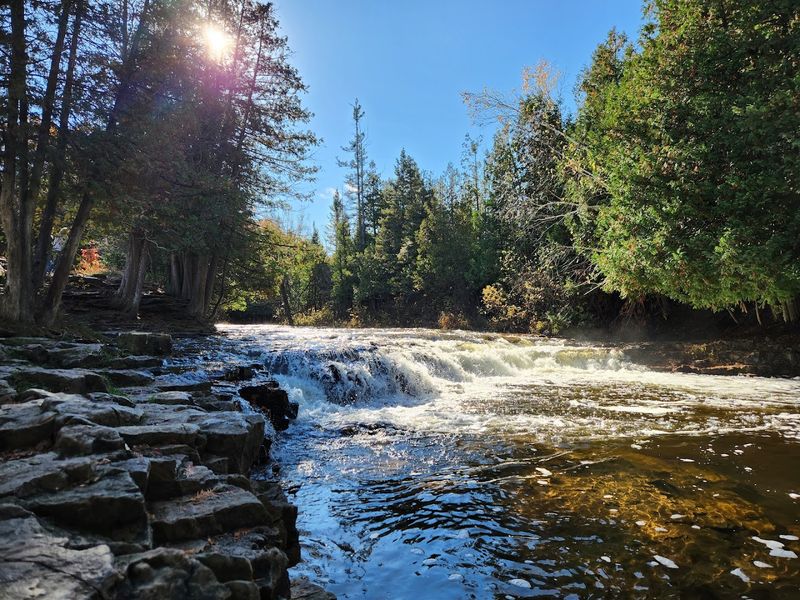
The sound comes first at Ocqueoc Falls, a friendly, low-frequency rush over limestone shelves that feel handmade but are wholly natural. These falls are modest and generous, lacking the intimidating vertical drop of more famous cataracts.
The water slides over three distinct ledges into cool pools that beg for a summer pause.
It is the only major waterfall in Michigan’s Lower Peninsula, making it a prized local secret in a region more famous for sandy coastlines. The gentler profile makes it a place where children wade safely and grownups remember how to play.
It feels like a swimming hole that happens to be historically significant.
The Civilian Conservation Corps left a light, durable imprint here during the Great Depression, and more recent accessibility work has turned this into a gold standard for inclusive tourism.
It is the rare waterfall designed with wheelchairs in mind, featuring a paved trail and a specialized ramp that allows everyone to get right down to the water’s edge.
The small parking area fills up early on hot days, so make this your first stop of the morning.
3. Fayette Historic State Park And Historic Townsite (Garden)
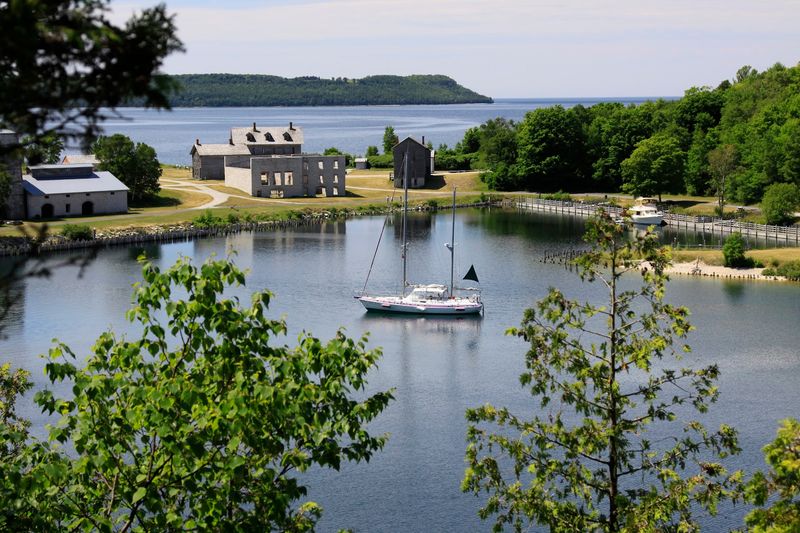
Weathered company houses, a schoolhouse, and a grand hotel still face the water as if waiting for a payday that was cancelled a century ago.
The blast furnace ruins, jagged stone walls and iron skeletons, read like a diagram of nineteenth-century industrial ambition.
It is a ghost town that feels less haunted and more paused, as if the residents stepped away for a moment and forgot to return. That pause makes the site feel strangely intimate, not theatrical.
You can almost hear work continuing, even though nothing moves.
From 1867 to 1891, the charcoal iron-smelting operation fed a hungry nation’s demand for steel, until local hardwoods were thinned and the market for pig iron cooled. Preservation efforts brought fresh paint, careful carpentry, and a masterful sense of restraint to the site.
Restored rooms hold modest furnishings, simple beds, wooden chairs, and cast-iron stoves, which hit differently than the era’s gilded estates.
To see the layout clearly, walk the cliff trail for a harbor panorama, then cut back through the townsite during golden hour when the sun hits the limestone. Summer tours add context without crowding your imagination.
Dress in layers, lake breezes off Lake Michigan can bite even in the middle of July.
4. Negwegon State Park (Black River, Near Alpena)
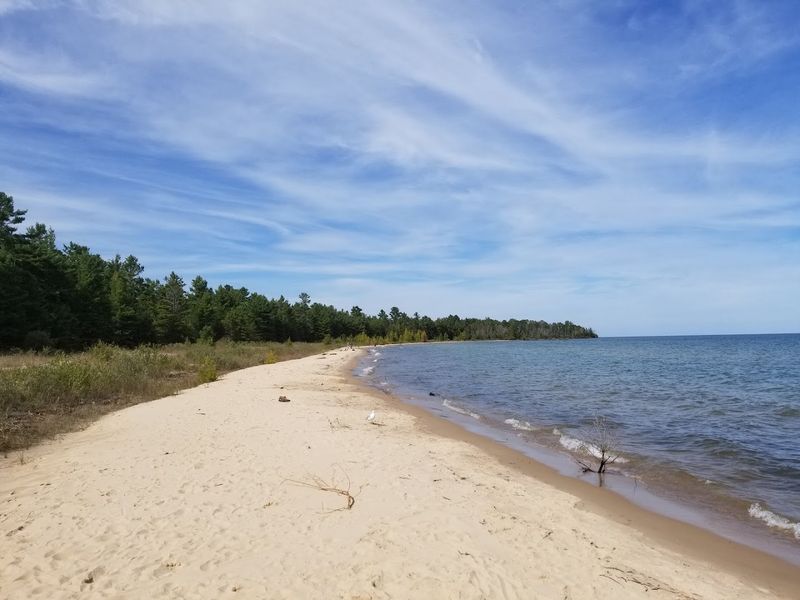
Silence has a physical texture at Negwegon State Park, a deep hush stitched together by wind through jack pine and the faint rhythmic hiss of Lake Huron’s edge.
Trails wander without insisting on a destination, and the beach feels like a secret kept by careful cartographers.
It is one of the most undeveloped stretches of shoreline in the Lower Peninsula.
Driftwood becomes sun-bleached sculpture without human intervention, and the place is the antithesis of a manicured resort. The lack of infrastructure is part of the point, and it keeps the scale human.
You start noticing small things because there is nothing loud competing for attention.
This land carries deep Anishinaabe stories and a history of selective logging that fortunately spared its core solitude. Michigan kept it rustic, providing only vault toilets and a few primitive campsites that require hike-in or boat-in.
That decision discourages the casual drive-by tourist in favor of the dedicated seeker of quiet.
Preparation is key, bring a paper map because cell service will flicker and die once you leave the main road. Mosquitoes and stable flies attend evening gatherings with enthusiasm, so pack heavy-duty repellent.
You will want extra water, sturdy shoes, and time to sit on a log and watch the lake change color.
5. Sanilac Petroglyphs Historic State Park (Cass City area)
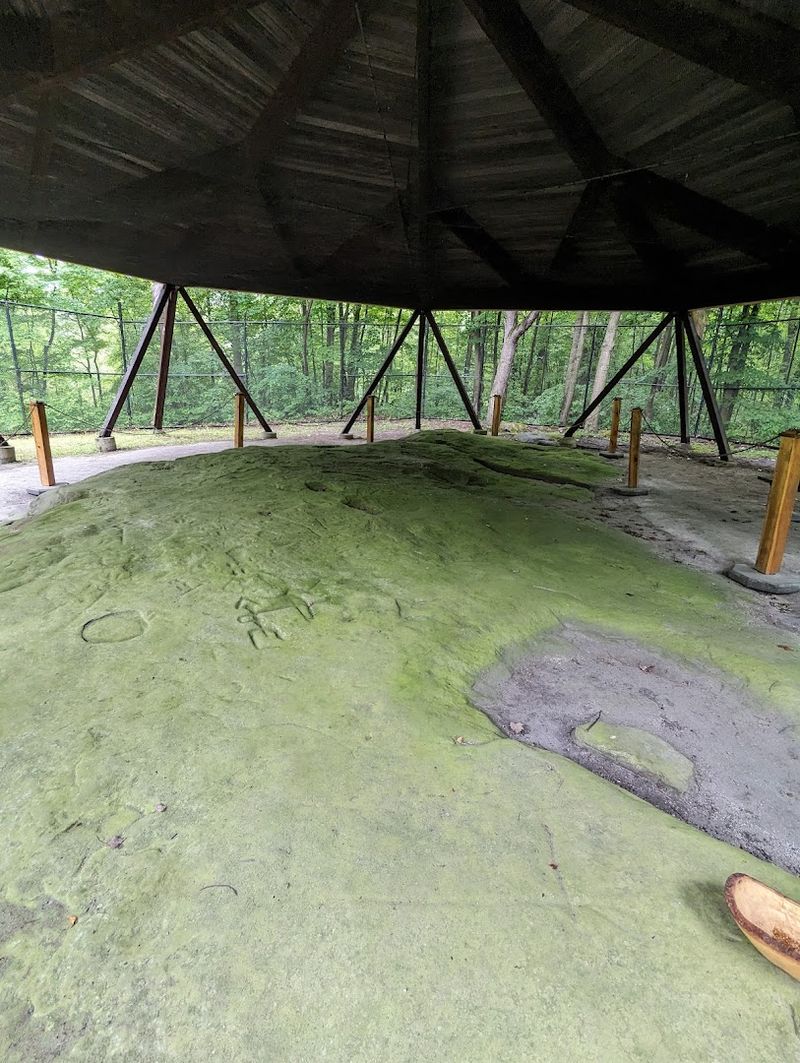
Under a simple pavilion, sandstone holds careful carvings that read like low-relief whispers. Figures and tracks cross the rock in a narrative you feel more than translate. The air carries a chapel stillness without ceremony.
These petroglyphs, called Ezhibiigaadek Asin by the Anishinabek, survived weather, vandalism, and wildfire. Partnerships guide care here, with tribal and state voices in patient dialogue. Preservation means restraint, so visitors meet the art on its own terms.
Check seasonal hours because the site opens selectively. Stay on the walkway and give the stone respectful distance. A short loop trail slips into oak-pine woods, where birds provide the best commentary you will hear all day.
6. Sanilac Petroglyphs Historic State Park (Cass City Area)
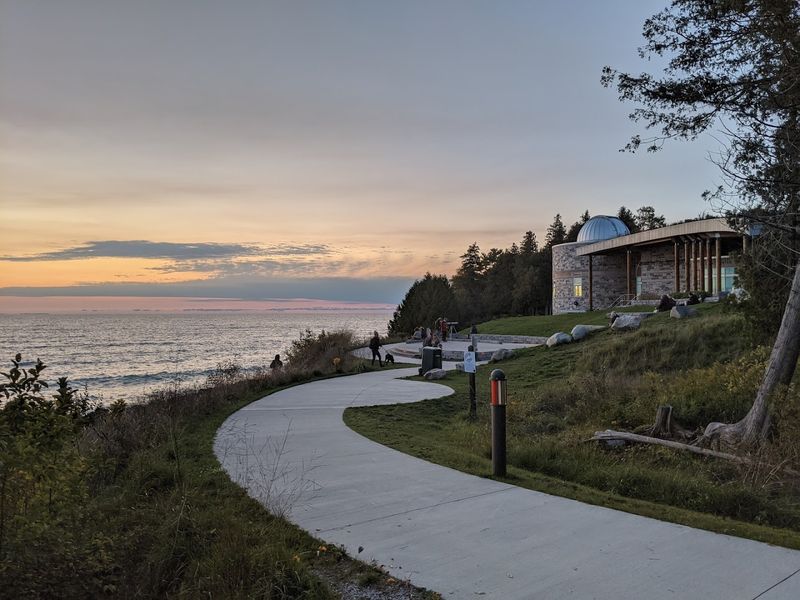
Under a simple protective pavilion in the Thumb, a massive slab of Marshall Sandstone holds carvings that read like low-relief whispers from the past. Figures, animals, and mysterious tracks cross the rock in a narrative you feel more than translate.
The most famous figure is a bowman, poised to fire, symbolizing a connection to the land that spans over a thousand years.
The air in the clearing carries a chapel-like stillness, even without ceremony or religious architecture. You end up lowering your voice without thinking about it.
The quiet feels like part of the preservation.
These petroglyphs, called Ezhibiigaadek Asin, written on stone, by the Anishinabek, survived brutal weather, vandalism, and a catastrophic wildfire in 1881 that revealed the carvings to modern settlers. Partnerships guide the care of the site today.
A short one-mile loop trail slips into oak-pine woods, crossing a creek where birds provide the only commentary you need.
It’s a reminder that history is not always in books. Sometimes it is etched into the earth and waiting for you to slow down enough to notice it.
The experience is simple, and that simplicity is the point.
7. Whiting Forest Canopy Walk at Dow Gardens (Midland)
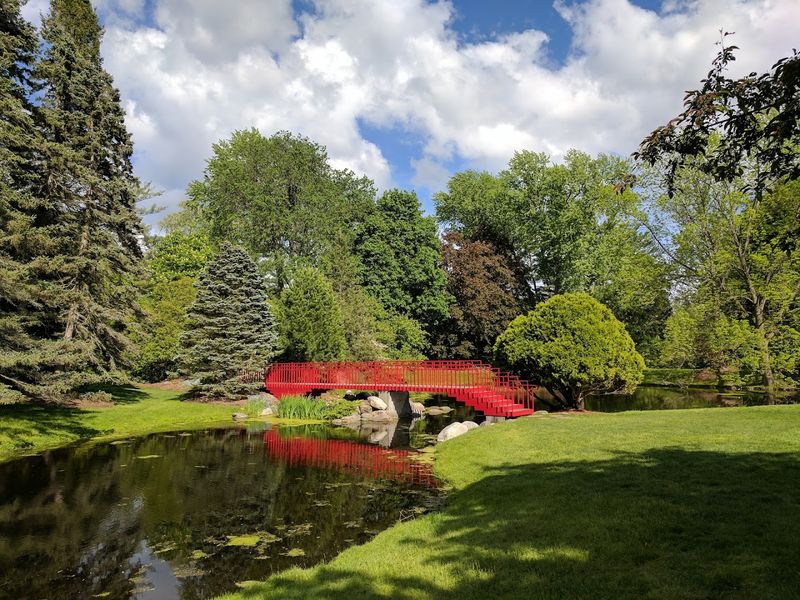
Feet rise to tree-height at Whiting Forest, where ramps braid through oak and maple canopies. Platforms pause above ponds and play areas, translating childhood treehouse dreams into public architecture. The structure hums with quiet confidence.
Dow Gardens grew from corporate and community gardening into a polished cultural space. The canopy walk, one of the nation’s longest, balances engineering with gentleness. It handles crowds well without blunting curiosity.
Timed tickets streamline busy days, especially during fall color spikes. Shoes with grip help on damp mornings. Afterward, follow the artful wayfinding to the cafe, then wander the ground-level paths to let your senses recalibrate slowly.
8. Keweenaw National Historical Park (Calumet)
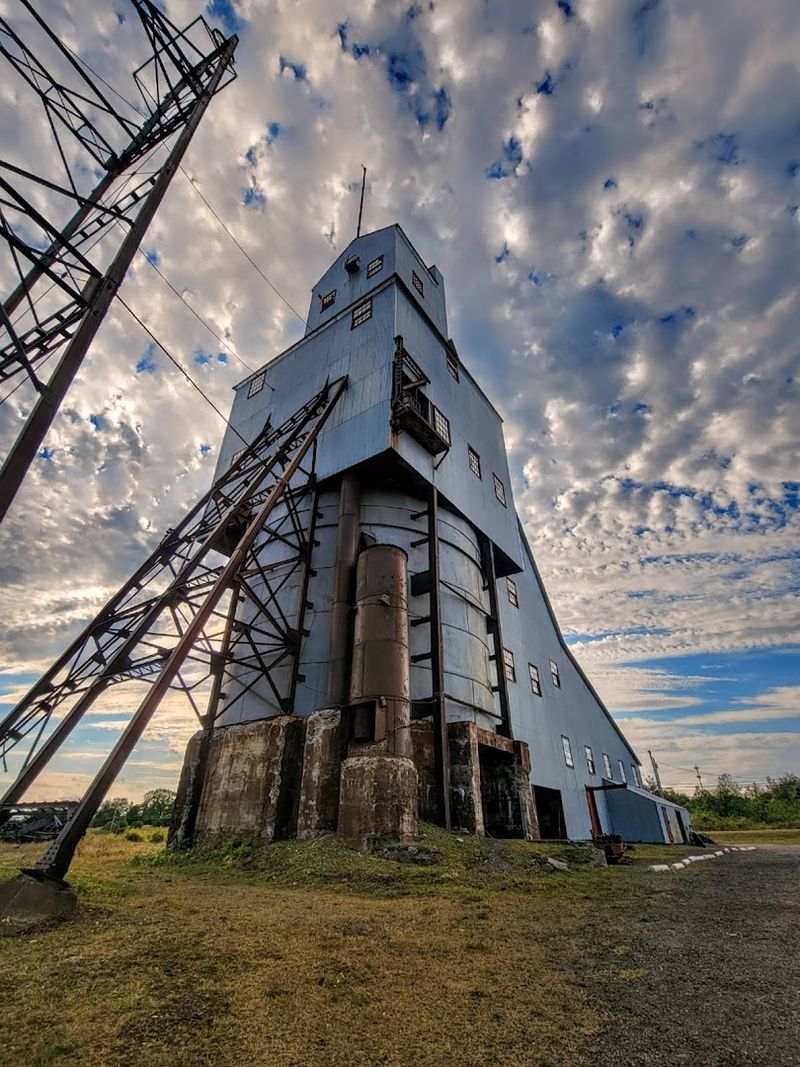
Streets in Calumet wear red sandstone like a winter coat, sturdy and a little solemn. Headframes and hoists stake the skyline with purposeful geometry. The air tastes faintly metallic if you imagine hard enough.
Once the heart of American copper, the Keweenaw fueled wires and wars. The park’s partnership model connects independent sites, from Quincy to Calumet Theatre, under one interpretive umbrella. Preservation moves slowly but surely, brick by brick.
Start at the Calumet Visitor Center for bearings, then mix tours with unguided wanderings. Lake-effect weather turns capricious, so pack layers year-round. I duck into bakeries between sites for warmth and stories, which feel as essential as maps.
9. Tunnel of Trees scenic drive, M-119 (Harbor Springs to Cross Village)
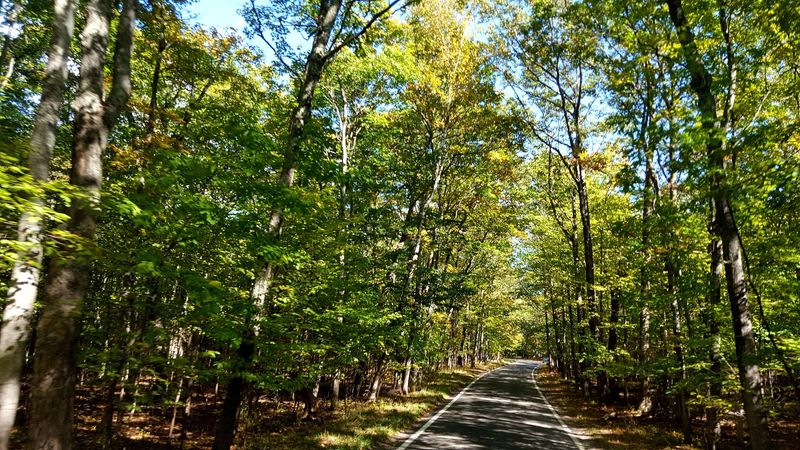
The road narrows to a conversation between tires and leaves on M-119. Curves encourage patience, and glimpses of lake arrive like well-timed jokes. Motorcycles hum through the dappled shade, unhurried.
This byway grew from blufftop paths stitched between old resorts and farms. Locals treat it as a living room that just happens to be paved. Small businesses along the route keep the mood neighborly.
Drive off-peak, especially weekday mornings in October, when color peaks. Pull-offs are small and sporadic, so plan stops rather than sudden swerves. End in Cross Village for a simple meal, letting the road’s rhythm taper gently.
10. Turnip Rock (Port Austin)
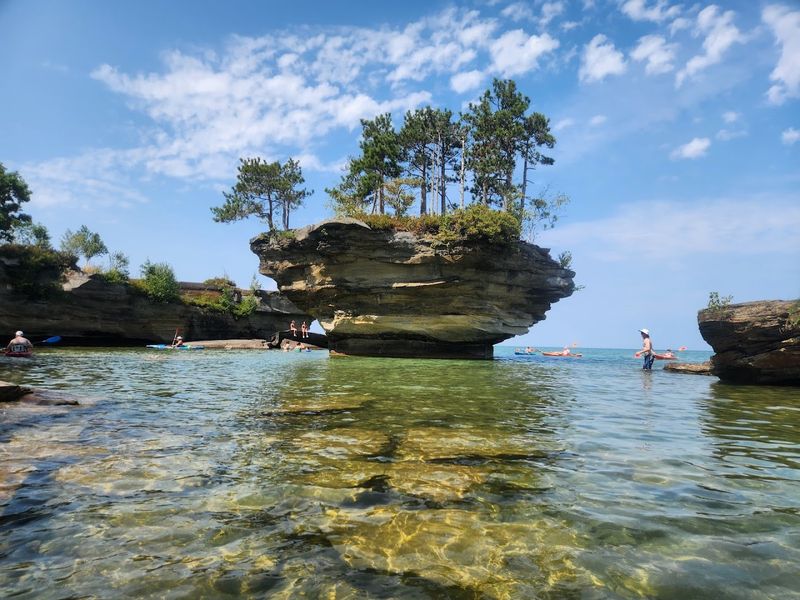
Water sculpts a patient joke at Turnip Rock, a tidy sea stack wearing a crown of trees. The route there is the real treat, a paddle along honeycombed cliffs and shallow coves that glow aquamarine. Wind decides your schedule.
Private land hems the formation, so access is by water only, a boundary that preserves its quiet. The geology tells a story of relentless freeze-thaw and wave abrasion. Locals respect the no-landing norm because the roots need space.
Launch early to beat afternoon gusts, and rent a stable kayak if you are new to open water. Check a marine forecast frankly. On calm days, reflections double the spectacle.
11. Port Crescent State Park and Dark Sky Preserve (Port Austin area)
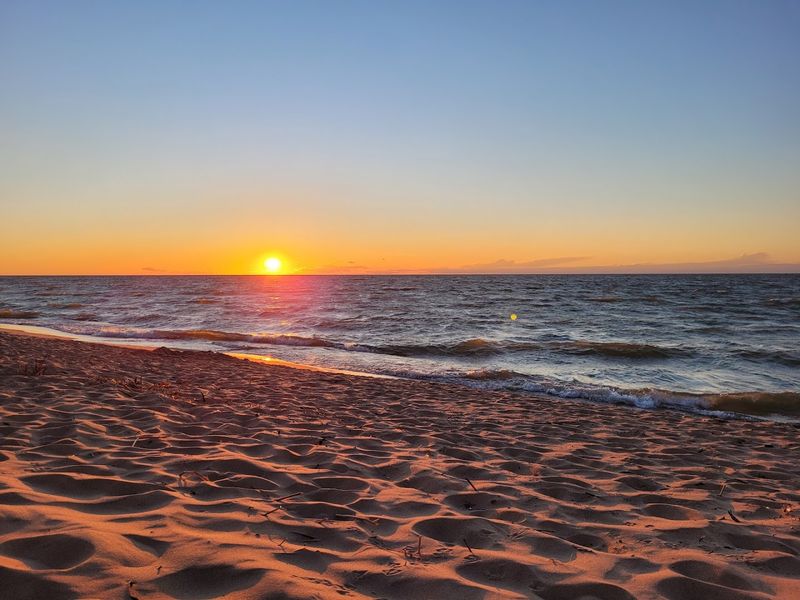
Daylight shows off a long, clean arc of sand at Port Crescent, with dunes knuckling into beachgrass. The Pinnebog River finishes its sentence here, slipping into Huron with unshowy grace. Even the campgrounds feel unhurried.
After sunset, designated dark sky areas invite quiet stargazing, with the lake absorbing stray light. The park grew from a timber town’s ghosted footprint, and you can still sense industry’s absence. That emptiness feels oddly generous.
Bring red lights, a blanket, and patience for your eyes to adjust. Birders should time spring for migrations along the shoreline. Bathrooms and parking make logistics easy, but the mood still leans wild at the edges.
12. Isle Royale National Park (Lake Superior)
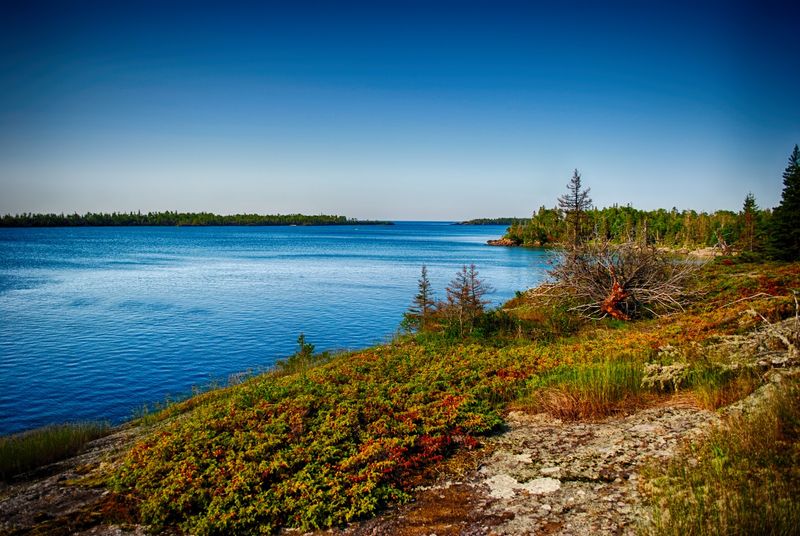
Isle Royale feels like a sentence finished in granite and lichen. Ferries and seaplanes enforce patience, which rewires your sense of time upon arrival. Loons write their own hours across the coves.
The island’s wolf and moose study is a world-known chapter in ecology, ongoing and unsentimental. Old mining scars and fish camps sit quiet beside long portage trails. Wilderness character is the point, not the backdrop.
Reserve transit early, carry layers for Superior’s quick moods, and store food like a serious person. Stick to marked routes, where boardwalks guard delicate bog mats. I count days in cups of instant coffee and trail miles, which suits the pace perfectly.
13. Tahquamenon Falls State Park (Paradise)
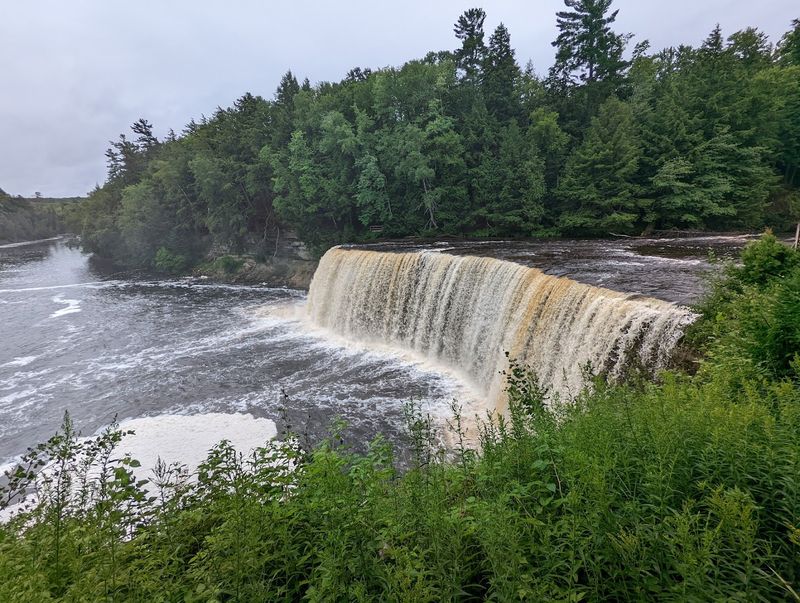
The water here runs tea-colored from cedar tannins, turning the Upper Falls into a living sepia photograph. Mist peels off the lip and drifts into hemlock, generous and cooling. The roar writes its own punctuation.
Logging history shadows the river, and Longfellow’s story lent it fame. The park’s trail network connects Upper and Lower Falls with boardwalks and dirt stretches. Breweries nearby nod to the region’s working past without nostalgia syrup.
Arrive after rain to feel the volume in your ribs. Stairs stack up quickly, so pace yourself and reward knees at overlooks. In winter, snow dresses the scene quietly, and you get a cathedral for the price of good boots.