
This 5-Mile Waterfall Hike In Arkansas Should Be On Your Bucket List
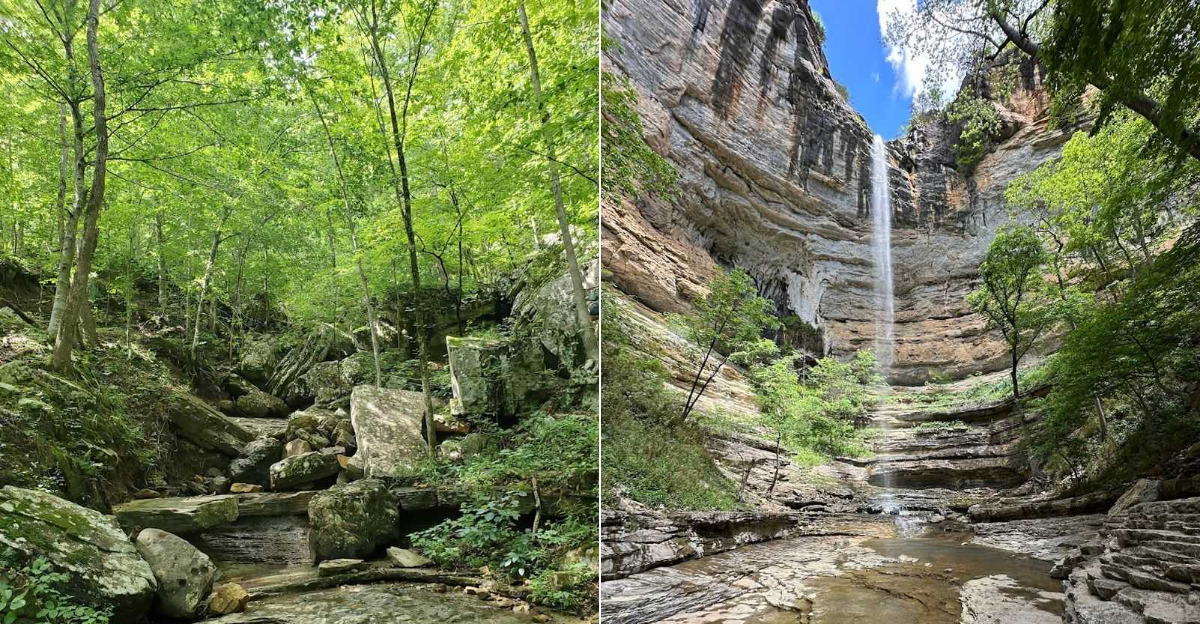
I still remember the moment I heard the waterfall before I ever saw it. That low roar echoed through the trees and made me pick up my pace without even thinking about it.
I was deep in the Ozarks on a cool spring morning, following a quiet trail that sloped steadily downhill through tall hardwoods and damp leaves. The hike felt easy at first.
Gravity was doing most of the work. Birds were busy overhead and the forest smelled fresh after recent rain.
The sound of rushing water kept getting louder with every turn in the trail. Then the trees thinned and the canyon opened up in front of me.
A massive curtain of water poured off a towering cliff and filled the air with mist. I just stood there for a minute, taking it all in.
Moments like that remind me why hiking in Arkansas never gets old.
A Hidden Canyon Where Water Plunges From The Sky
Standing in this canyon feels less like visiting a waterfall and more like stepping into a natural chamber carved by time. The walls rise steeply on three sides and curve inward, forming a massive stone bowl.
Every drop of water echoes around the space. The sound ricochets off the rock and fills the air with a steady roar.
The waterfall itself does not creep down the cliff. Water launches off a high sandstone ledge and drops through open air before crashing into the rocks below.
The scale becomes obvious the moment you look up. Mist drifts outward from the impact zone and settles on everything nearby.
Within minutes my jacket felt cool and damp.
The curved canyon walls make the place feel enclosed, almost like you are standing inside something rather than beside it. The noise of the outside world disappears completely.
This canyon is home to Hemmed-In Hollow Falls, reached from Compton Trailhead, Compton, AR 72624.
The Forest Trail That Slowly Pulls You Into The Ozarks
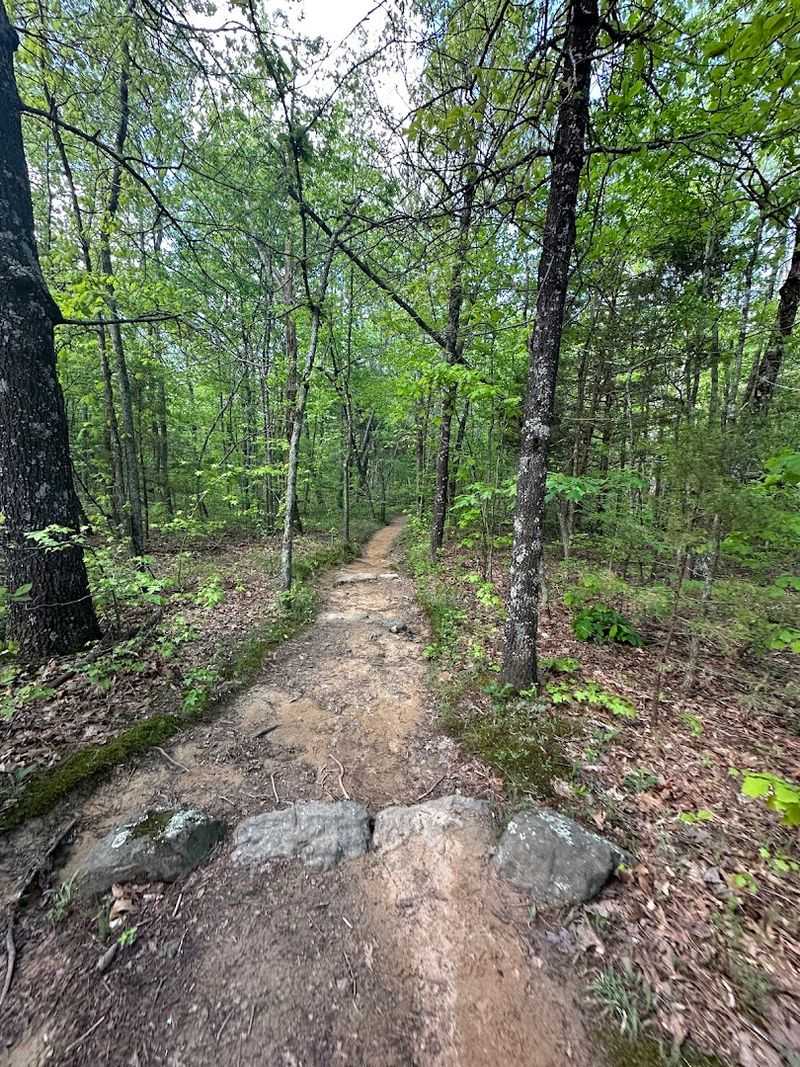
Before you ever see the waterfall, the trail itself delivers a full-on Ozark experience that is hard to replicate anywhere else in the region.
Leaving the Compton Trailhead, the path moves quickly into a thick canopy of hardwoods, where the light shifts from bright to dappled within the first quarter mile.
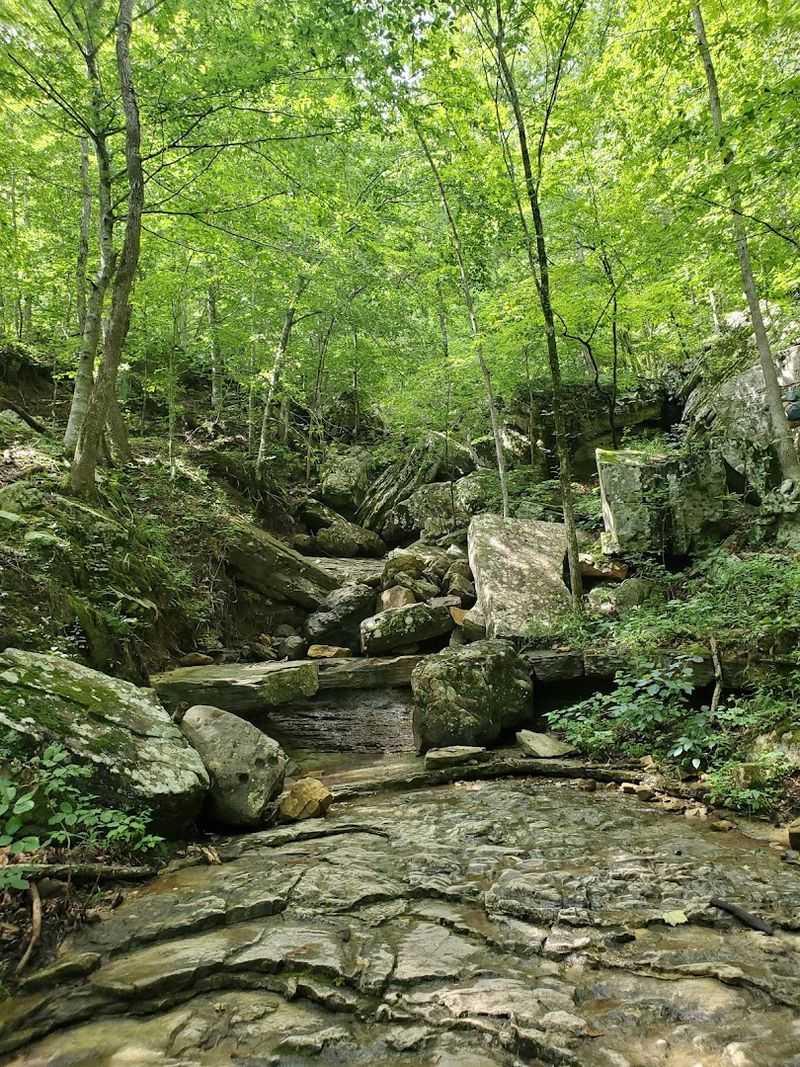
The forest here feels genuinely old, with mossy boulders, gnarled root systems crossing the trail, and the occasional deer track pressed into the soft earth beside the path.
I noticed early on that the trail does not waste time with flat, easy warm-ups; it begins dropping in elevation almost immediately, which is your first reminder that what goes down must eventually come back up.
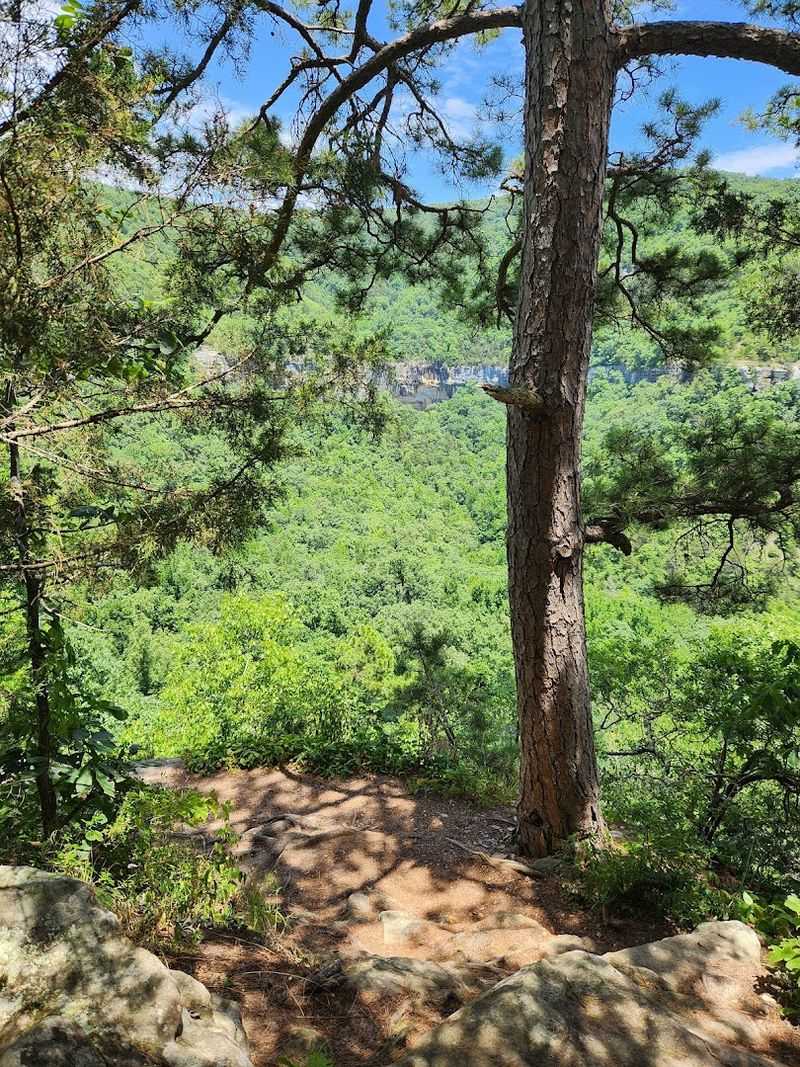
Scenic overlooks along the way offer views across the Buffalo River valley far below, and I stopped at each one without apology. The trail passes through sections of the Buffalo National River area, one of the first national rivers designated in the United States, adding a layer of historical significance to every step.
By the time the canyon walls start to appear ahead of you, the forest has already done its job of making you feel a thousand miles from ordinary life.
A 5-Mile Journey That’s Easier Going Down Than Coming Back Up
The numbers on paper sound manageable: five miles round trip with about 1,400 feet of elevation change.
In practice, those numbers have a way of introducing themselves very personally somewhere around the halfway point on the return climb.
The trail from the Compton Trailhead descends sharply into the canyon, which means the first half of your hike feels like a reward and the second half feels like the bill arriving at the table.
I wore hiking boots with solid ankle support, and I was grateful for every ounce of that grip on the rocky, uneven descent toward the hollow.
The trail is rated strenuous, and the National Park Service is not being dramatic about that label; the footing requires constant attention, especially after rain when the rocks become slick.
Trekking poles are not required, but after watching two other hikers use them on the climb back out, I mentally added a pair to my gear list for next time.
Finishing the return climb and stepping back into the trailhead parking area felt like crossing a finish line, and I wore that particular kind of tired with genuine pride.
When The Canyon Suddenly Opens And The Waterfall Appears
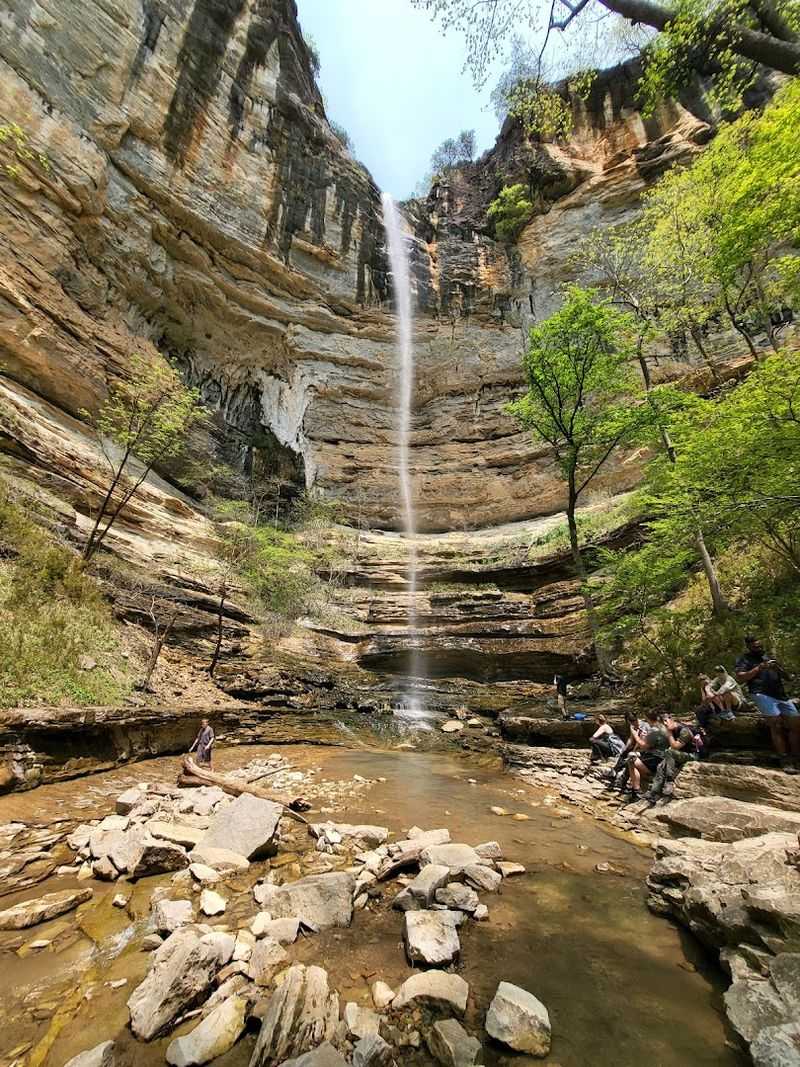
There is a specific moment on the trail to Hemmed-In-Hollow where the trees thin, the canyon walls close in, and then the whole scene opens up at once.
Nothing in the approach prepares you for the scale of what appears, because the trail keeps the waterfall hidden until you are almost standing directly beneath it.
I rounded a final bend in the path and stopped mid-step, genuinely unable to process what I was looking at for a few seconds.
The falls appear as a thin white ribbon at first, high above the canyon rim, and then your eyes adjust to the distance and the full height registers in a way that makes your brain quietly recalibrate its sense of scale.
Other hikers near me went silent at the same moment, which felt like a small, unplanned ceremony.
The canyon floor around the base of the falls is covered in smooth, pale rocks that have been shaped by centuries of water flow, and the pool at the bottom shimmers with constant movement.
That first view is the kind of payoff that makes a person understand why hikers keep coming back to the Ozarks, season after season, trail after trail.
The Towering Cascade That Makes This Hike Worth Every Step
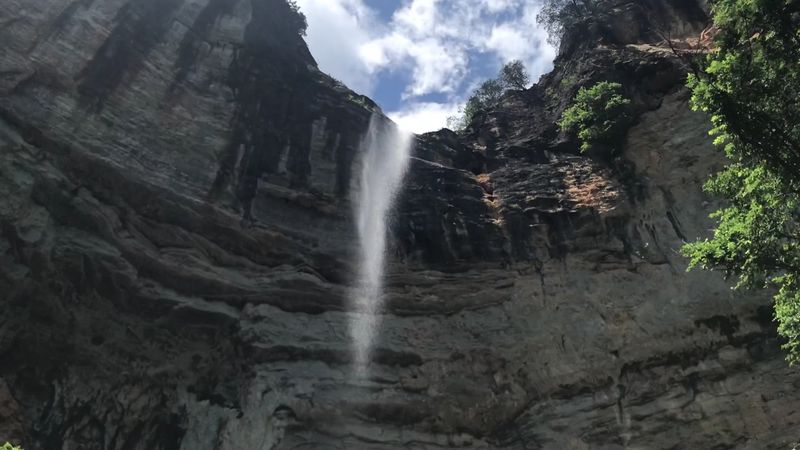
At 209 feet, Hemmed-In-Hollow Falls holds the title of the tallest waterfall between the Rocky Mountains and the Appalachian Mountains, and standing beneath it makes that record feel completely believable.
The water launches off a broad sandstone ledge near the top of the canyon and falls almost entirely through open air, which gives the cascade a clean, uninterrupted look that sets it apart from waterfalls that slide down rock faces.
During high water periods, the volume of flow is powerful enough to generate a constant mist that drifts outward across the entire hollow floor.
The sandstone walls surrounding the falls are streaked with mineral deposits in shades of rust, gray, and cream, creating a natural color palette that photographers spend hours trying to capture correctly.
I sat on a flat rock near the base for nearly twenty minutes just watching the water and listening to the sound fill the canyon.
The falls are named for the enclosed, bowl-like shape of the hollow that contains them, and the name does a better job of describing the experience than most trail guides manage.
Reaching this cascade after a demanding hike through the Ozarks turns the waterfall from a scenic attraction into something that feels genuinely earned.
The Best Time Of Year To See The Falls
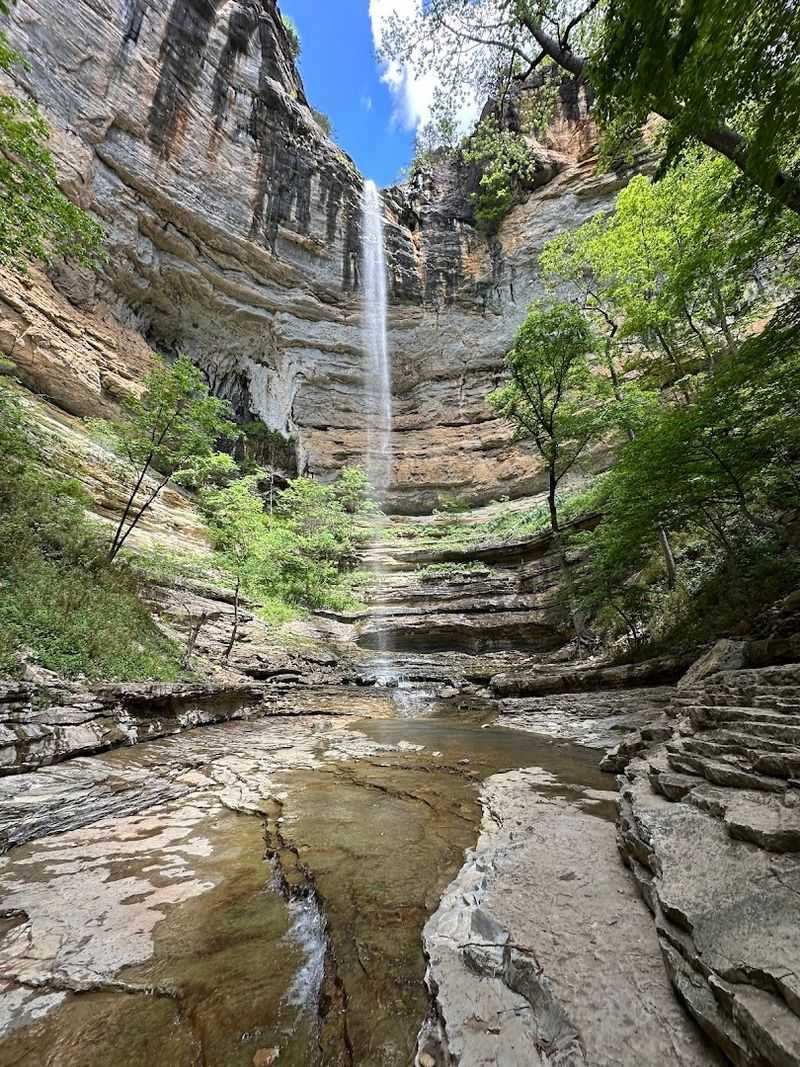
Timing a visit to Hemmed-In-Hollow Falls is almost as important as the hike itself, because the waterfall is entirely dependent on recent rainfall to perform at its best.
Spring is widely considered the prime season, particularly from late February through April, when snowmelt and seasonal rain combine to push the falls to their most dramatic volume.
I visited in early April after a week of steady rain in the region, and the falls were running with enough force to make conversation difficult within fifty feet of the base.
Summer visits can still be rewarding, but dry stretches in July and August sometimes reduce the flow to a modest trickle that does not quite match the scale of the canyon surrounding it.
Fall brings a completely different kind of beauty, with the hardwood canopy turning gold and orange above the canyon walls, even if the water flow is more restrained.
Winter visits are possible for experienced hikers who are comfortable with cold temperatures and icy trail conditions, and the frozen or near-frozen falls in January and February create a genuinely surreal scene.
Checking recent rainfall reports before heading out is one of the smartest moves any first-time visitor can make before lacing up their boots.
Where The Trail Begins For This Unforgettable Adventure
Every great hike has a starting point, and for Hemmed-In-Hollow Falls, that starting point sets the tone immediately.
The Compton Trailhead sits in a small, unpaved parking area surrounded by trees, with a trail register and informational signage that gives you a clear sense of what you are about to take on.
Cell service is unreliable in this part of Newton County, so downloading an offline map before leaving home is a practical step that more than one hiker has wished they had taken after the fact.
Pets are allowed on the trail but must remain on a leash.
Carrying at least two liters of water per person is standard advice for this trail, and given the elevation change and the remote location, erring on the side of more is always the smarter call.
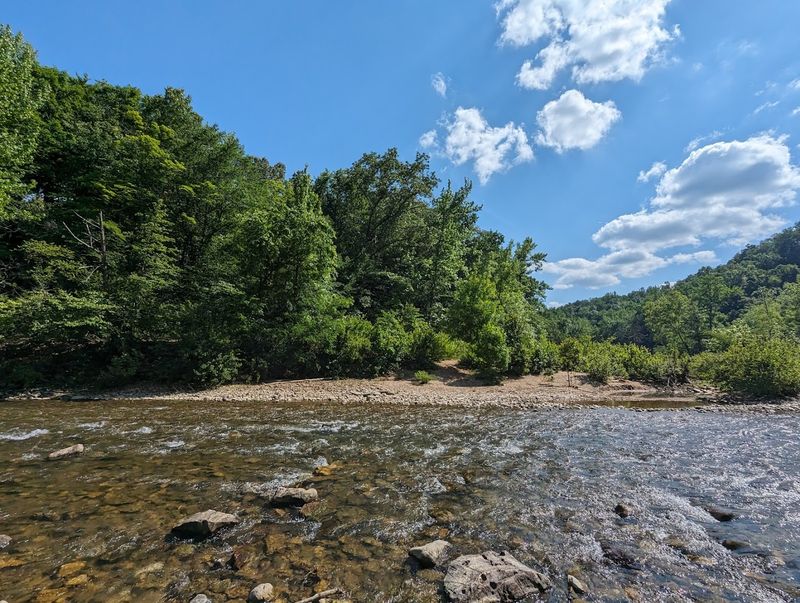
The trailhead area is managed as part of the Buffalo National River system, and the quiet, no-frills atmosphere of the parking area reflects the wild character of everything that follows.
Pack your layers, charge your camera, tell someone your plans, and head for the Compton Trailhead, where one of the most rewarding hikes in the American South begins its descent into the Ozarks.