
Descend Into A Hidden Canyon That Feels Like A Mini Rainforest At This Illinois State Park
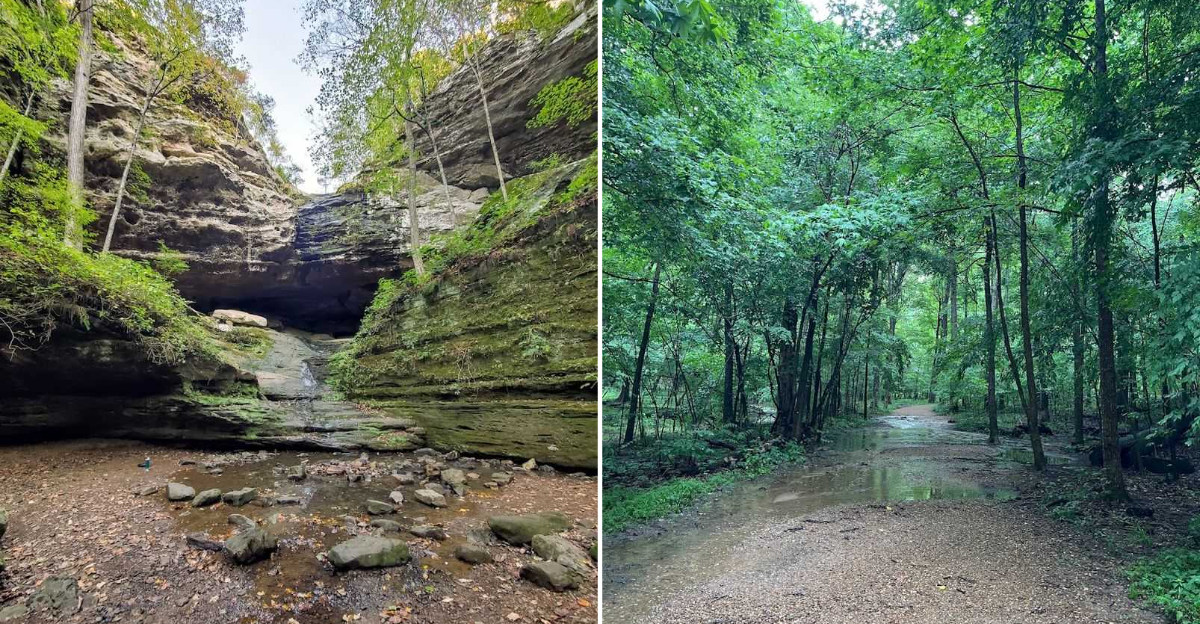
Southern Illinois hides a canyon that feels almost accidental in a state known for farmland and open horizons. A short walk leads into a narrow hollow where sandstone walls rise overhead, the light softens, and the temperature drops enough to notice.
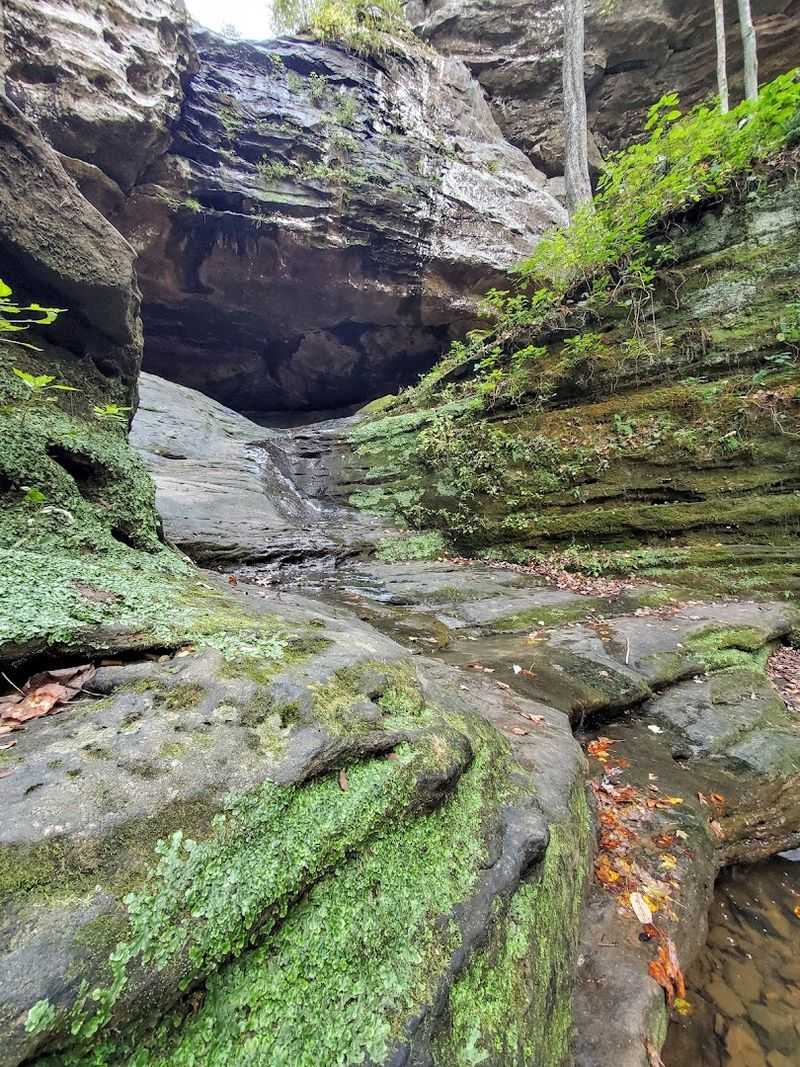
After rain, water slips over the rock ledges and echoes through the canyon, while moss and ferns cling to the damp stone. The trail itself is surprisingly short, yet the scenery feels far larger than the distance suggests.
In less than three-quarters of a mile, towering bluffs, massive boulders, and a seasonal waterfall create one of the most dramatic little landscapes in Illinois.
A Canyon Carved By Ancient Water
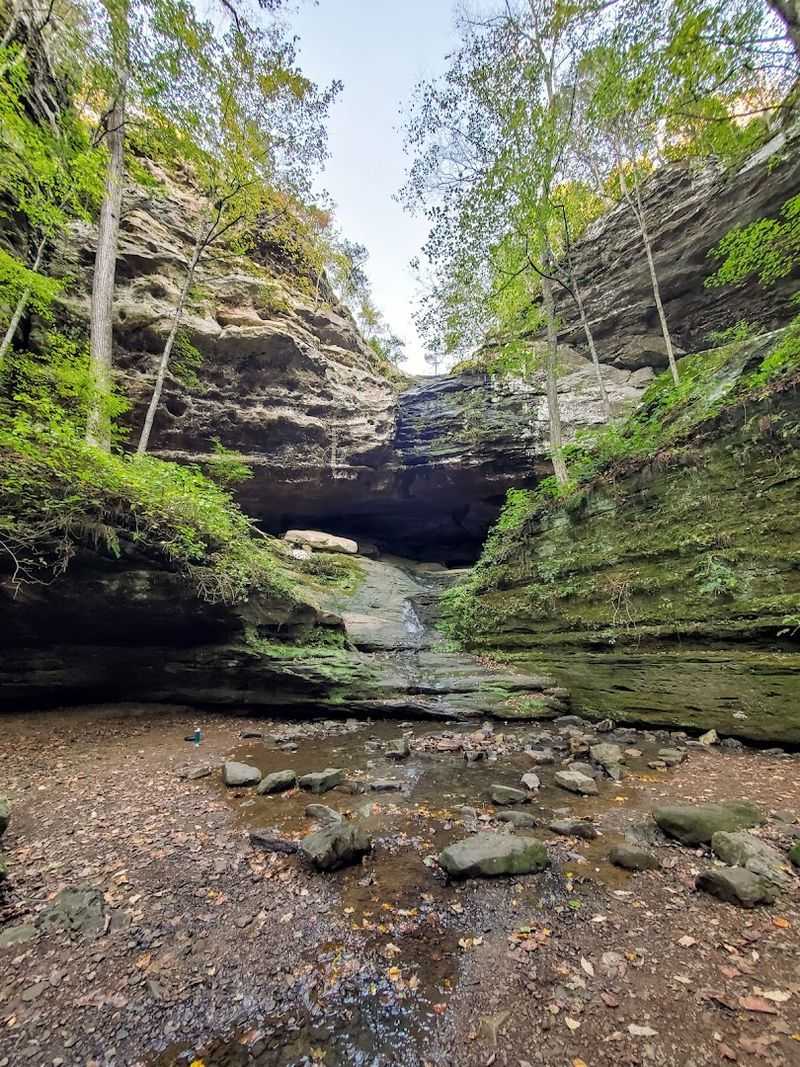
Millions of years of patient geological work created the canyon that Big Rocky Hollow Trail winds through today. The sandstone walls you walk between were shaped by water, pressure, and time working together across countless seasons.
Standing at the base of those bluffs, you can actually see the layered lines in the rock where different periods of sediment settled and eventually hardened into stone.
The canyon sits within the Shawnee Hills region of southern Illinois, a rugged landscape that is sometimes nicknamed the Illinois Ozarks because of its rocky terrain.
Long periods of erosion gradually shaped these hollow formations, leaving behind dramatic overhangs, narrow passages, and sheltered rock alcoves that stay cool even during summer heat.
What makes this canyon especially striking is its scale relative to the surrounding terrain. You approach through fairly ordinary woodland, and then the walls rise up on either side and the temperature drops by several degrees almost instantly.
That sudden shift in environment is one of the most memorable physical sensations the trail offers, and it happens within the first few hundred feet of entering the hollow.
The Trail Distance And Difficulty Level
Short trails sometimes get dismissed as not worth the effort, but Big Rocky Hollow Trail proves that distance has nothing to do with how rewarding a hike can be.
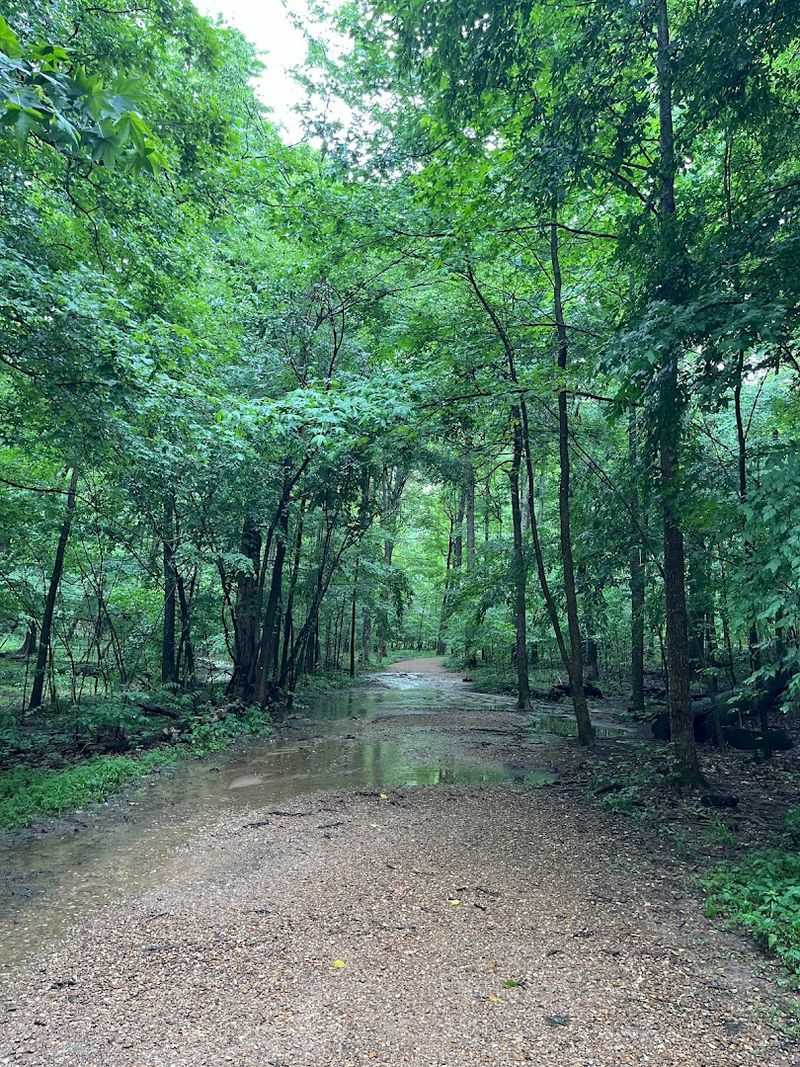
The trail is about three-quarters of a mile round trip, making it a short and approachable hike for most visitors. The path is mostly wide and covered in compacted gravel, which keeps footing stable even after rain.
Elevation changes are minimal throughout the route. The route is generally considered easy, though hikers should still watch their footing in wet areas near the creek and waterfall.
Families with young children, older adults, and casual hikers who do not spend every weekend on a mountain regularly complete this trail without any difficulty.
That said, stream crossings do add a small element of adventure. Permanent stepping stones have been placed at the major crossing points, so you can keep your feet dry with a bit of careful footwork.
After recent rain, parts of the trail and creek crossings can become wet or slick, adding to the dramatic canyon setting but requiring extra caution. The whole loop typically takes between thirty and fifty minutes at a relaxed pace.
The Waterfall At The Rock Shelter
Every trail needs a destination, and Big Rocky Hollow Trail delivers one that genuinely earns the walk to reach it.
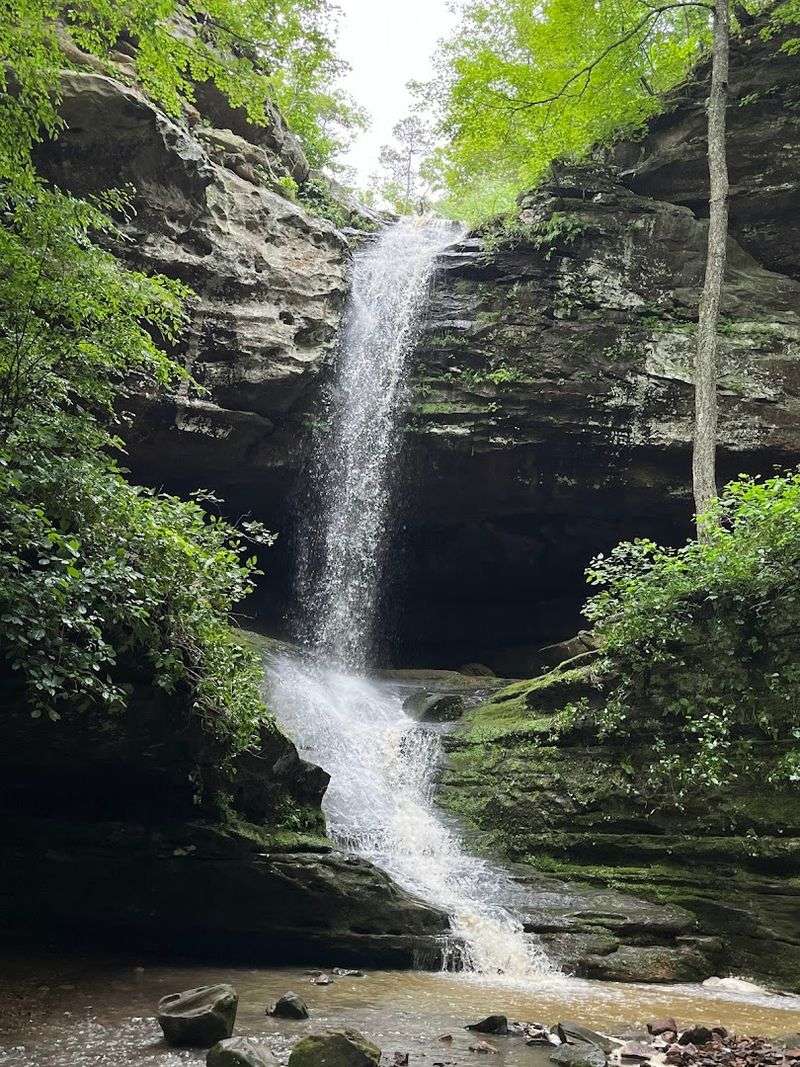
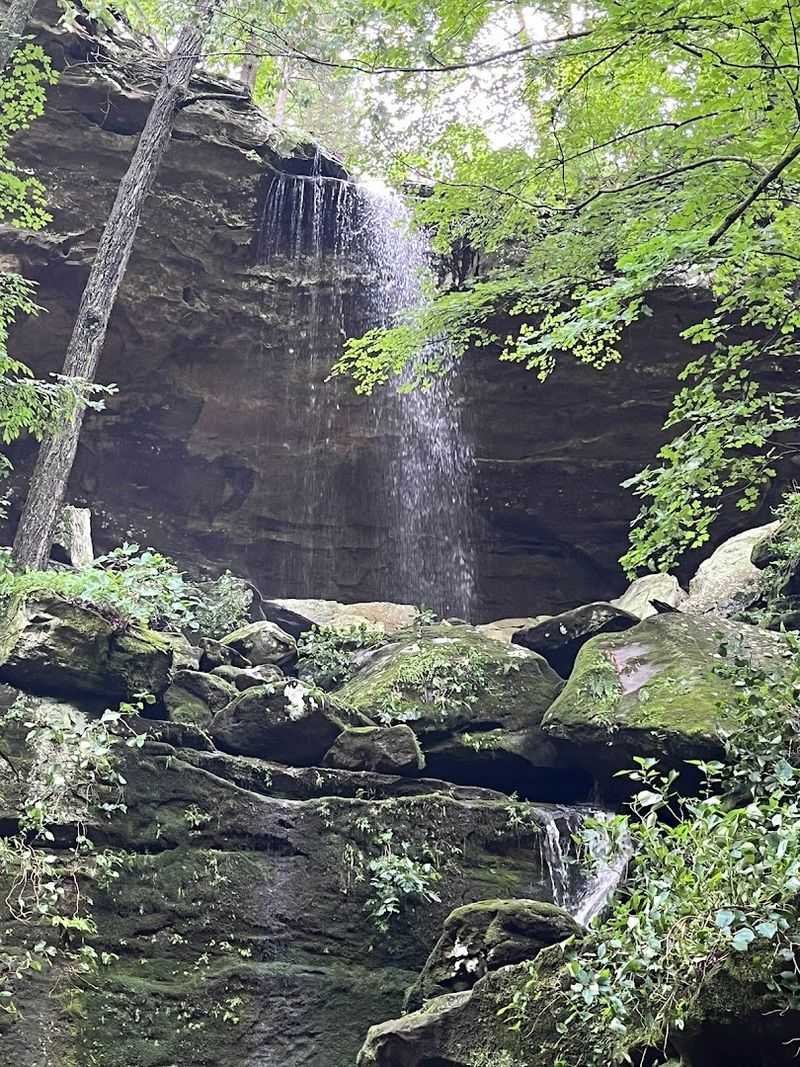
At the far end of the hollow sits a sandstone rock shelter, a wide natural overhang carved into the bluff face, and when conditions are right, a waterfall spills directly over its edge and drops into the canyon below.
The waterfall is seasonal and fed by rainfall rather than a permanent stream, which means timing your visit matters.
Spring visits and the days following significant rain events tend to produce the most impressive flow. After a heavy overnight rain, the water can cascade down in a steady, dramatic curtain that fills the hollow with both sound and mist.
During drier periods, it may slow to a thin trickle or pause entirely.
Even without the waterfall running at full force, the rock shelter itself is worth the visit. The overhang creates a natural amphitheater effect, and the walls inside are covered in damp moss and fern growth that gives the space a prehistoric, almost otherworldly quality.
Standing underneath that curved ceiling of ancient stone while water drips around you is one of those travel moments that stays with you long after you drive home.
Why It Feels Like A Mini Rainforest
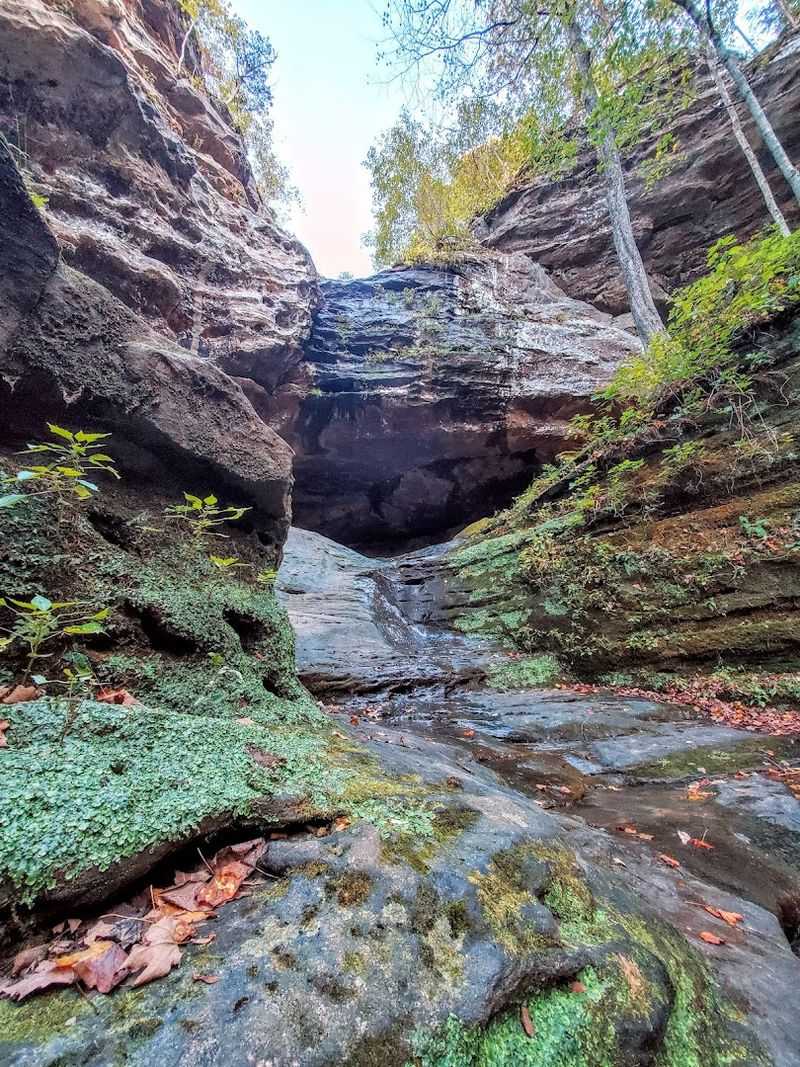
Illinois is not a state most people associate with rainforest vibes, yet something genuinely unusual happens inside Big Rocky Hollow. The canyon walls block direct sunlight for most of the day, keeping moisture locked inside the hollow.
That combination of shade, damp rock, and limited airflow creates a microclimate that supports plant life you would not expect to find in the Midwest.
Thick carpets of bright green moss cover the sandstone walls and boulders throughout the hollow. Ferns grow in dense clusters along the trail edges and in every crack and ledge of the bluff faces.
The air inside the canyon carries a distinctive earthy, humid quality that feels noticeably different from the drier woodland you walk through to reach it.
After rain, small waterfalls appear all along the canyon walls, not just at the main rock shelter. Water seeps through cracks in the sandstone and drips from overhangs at multiple points along the trail, creating a chorus of trickling sounds that surrounds you as you walk.
The overall effect is a sensory experience that genuinely earns the rainforest comparison, even if the canyon sits squarely in the heart of southern Illinois farm country just outside Goreville.
Wildlife And Plant Life Along The Route
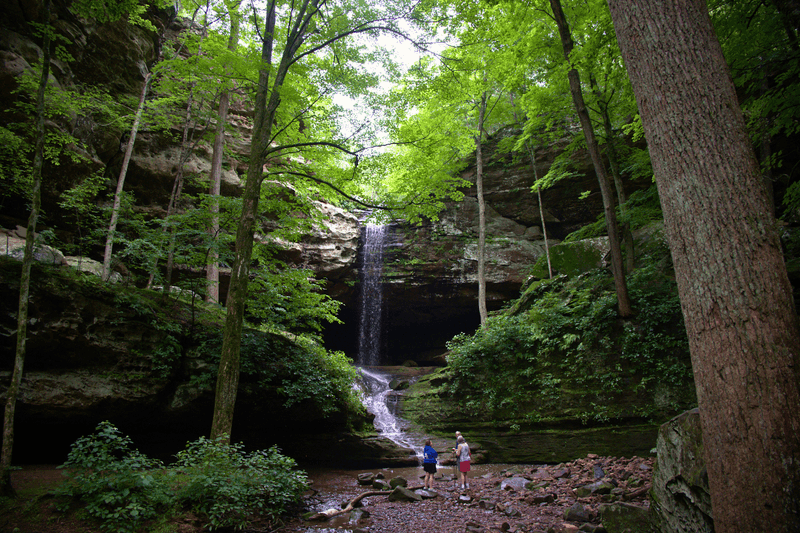
Biodiversity thrives in environments where multiple habitat types meet, and the Big Rocky Hollow Trail sits at exactly that kind of intersection.
The canyon combines shaded rock walls, flowing water, dense canopy cover, and open woodland edges, giving a wide range of species the conditions they need to establish themselves. Birding along this trail can be surprisingly productive for such a short route.
Wood thrushes, pileated woodpeckers, and various warbler species frequent the treetops above the canyon during spring and early summer migration.
The canyon walls and overhangs also provide nesting habitat for cliff-nesting birds that prefer sheltered rocky surfaces. Salamanders and small amphibians hide under the damp rocks near the stream crossings, particularly in the wetter months.
Plant life along the trail reflects the varied conditions within the hollow. Columbine, trillium, and wild ginger bloom in the canyon understory during spring.
Native ferns claim nearly every available surface on the shaded bluff faces.
The canopy above the trail is dominated by oak, hickory, and tulip poplar, and in autumn their combined color display turns the canyon into a completely different kind of visual spectacle worth planning a return visit around.
The Best Time Of Year To Visit
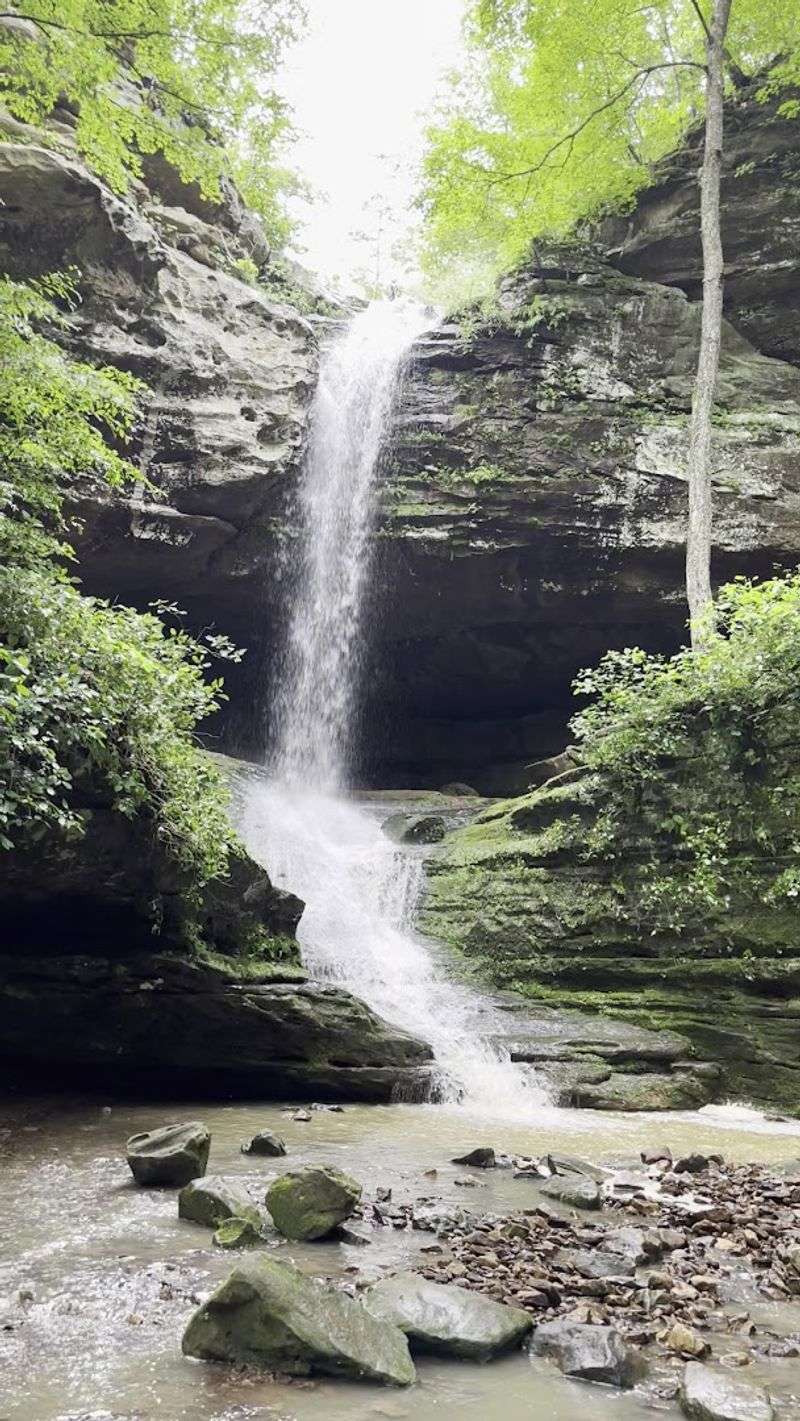
Picking the right season for a visit to Big Rocky Hollow Trail can significantly change what you experience on the trail. Spring stands out as the most dynamic time to go.
Snowmelt and spring rains keep the streams running full, the waterfall performs at its most impressive, and the canyon walls drip with fresh moisture that intensifies the lush green plant life covering every surface.
Autumn runs a close second in terms of visual impact.
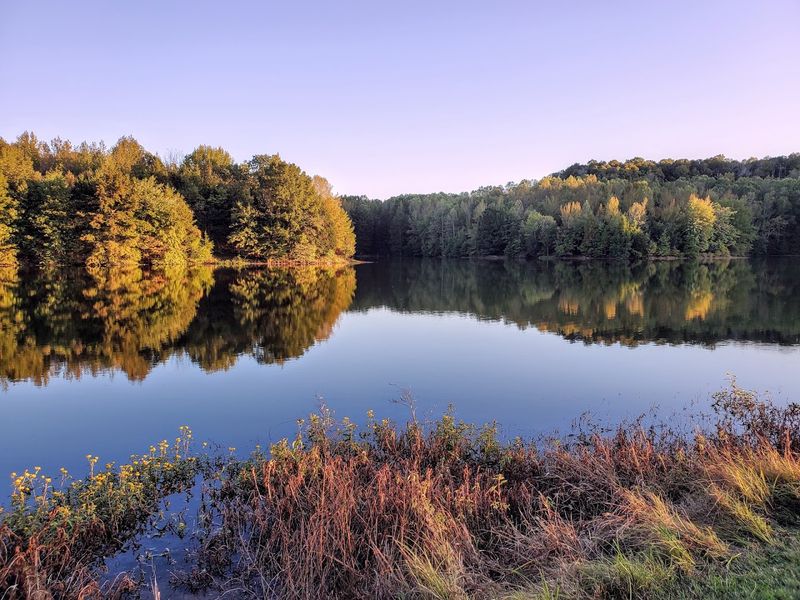
The tree canopy above the canyon transforms into a patchwork of orange, red, and gold during October, and the contrast between those warm colors and the cool gray sandstone walls creates genuinely stunning photography conditions.
Parking areas can fill up quickly on autumn weekends, so arriving early in the morning on a weekday gives you a much calmer experience. Summer visits are pleasant because the canyon stays cooler than the surrounding landscape, providing natural air conditioning on hot days.
Winter brings its own spare beauty, with bare branches revealing the full scale of the bluff walls and occasional ice formations decorating the rock faces near seeping water. Visitors can hike the trail throughout the year, though conditions can change with weather and seasonal rainfall.
Ferne Clyffe State Park
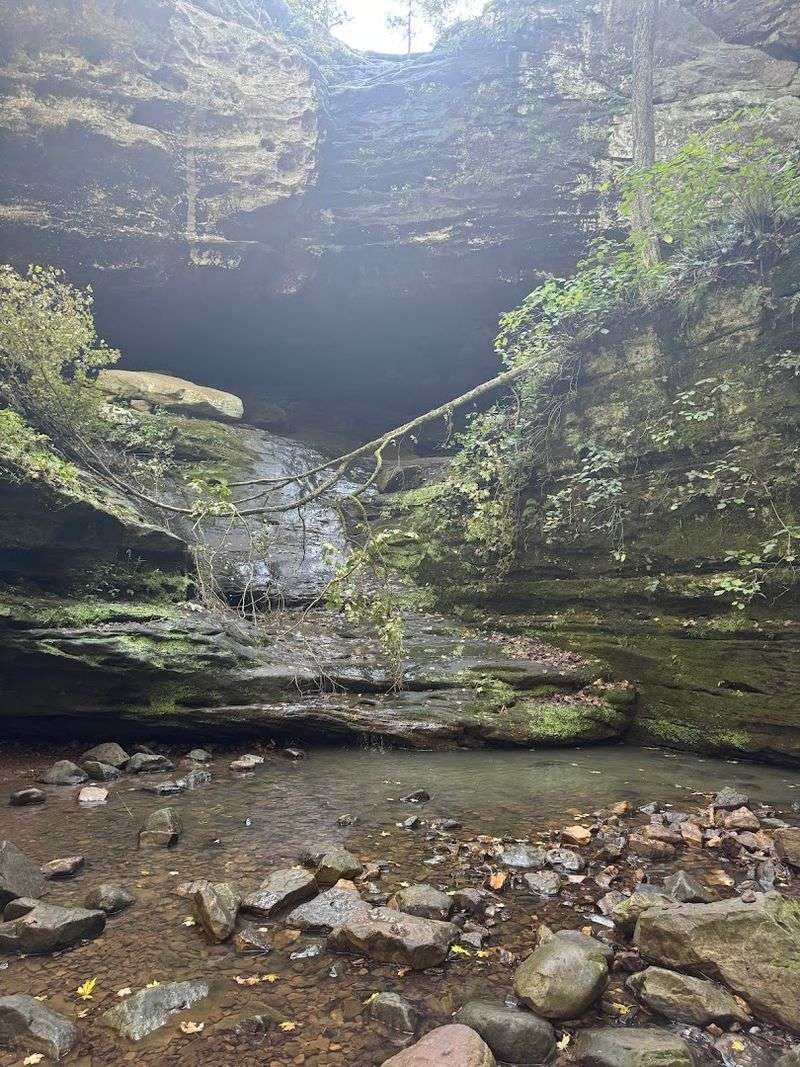
Big Rocky Hollow Trail exists within a much larger natural area that rewards visitors who have time to explore beyond a single path.
Ferne Clyffe State Park covers over 2,400 acres in Johnson County, Illinois, and offers more than a dozen trails ranging from easy canyon walks to longer ridge hikes with panoramic views across the Shawnee Hills. The park sits near Goreville, Illinois, in the southern tip of the state where the landscape shifts dramatically from flat agricultural land to forested ridges and rocky hollows.
The park takes its name from the combination of ferns and cliffs that define its character, and both are present in abundance. Hawk’s Cave, a massive rock shelter visible from another trail within the park, is one of the largest natural rock overhangs in Illinois.
The park also includes a small lake, picnic areas, a campground, and facilities that make it a practical base for a full day or even a weekend of outdoor exploration.
Ferne Clyffe sits within the biologically rich Shawnee Hills region of southern Illinois, an area known for its unusual geology and remarkable plant diversity. Visiting Big Rocky Hollow is a perfect starting point for understanding why this corner of Illinois surprises so many first-time visitors.
Practical Tips For Planning Your Visit
A little preparation goes a long way toward making a visit to Big Rocky Hollow Trail as enjoyable as possible. The parking area near the trailhead is generously sized, with restroom facilities and picnic tables available for day visitors.
Arriving on a weekday morning gives you the best chance of having the canyon largely to yourself, which makes a real difference in how peaceful the experience feels.
Footwear matters more than most people expect on this trail. While the main path is gravel and relatively even, the stepping stones at stream crossings require a bit of balance, and the areas near the rock shelter can be slippery with moisture and algae growth on the sandstone.
Waterproof trail shoes or hiking boots with good grip are a smart choice, especially after recent rainfall.
Bringing a camera or making sure your phone is fully charged before you arrive is worth mentioning because the photographic opportunities inside the canyon are genuinely excellent.
The soft, diffused light inside the hollow works well for detail shots of moss, ferns, and water. Bug repellent is useful during warmer months, and a light jacket is a practical addition even on summer days since the canyon temperature can feel surprisingly cool compared to the trailhead.
Photography Opportunities Inside The Canyon
Few trails in the Midwest offer as much photographic variety per mile as Big Rocky Hollow. The canyon compresses a remarkable range of textures, colors, and light conditions into a short distance, which means almost every turn in the trail presents a new composition worth capturing.
Sandstone walls streaked with mineral deposits, boulders draped in bright green moss, and streams catching filtered light through the canopy all reward careful framing.
The rock shelter waterfall is the most photographed feature on the trail, and for good reason. When water is flowing well, the combination of the curved sandstone ceiling, the falling water, and the fern-covered walls creates a layered scene with natural depth and movement.
Shooting from slightly below and to the side of the falls tends to capture both the water and the shelter architecture in a single frame.
Autumn foliage photography at this location has a different character than typical fall color shots because the canyon setting adds a vertical dimension that open landscapes lack.
Looking upward from the canyon floor toward a frame of orange and gold leaves against a blue sky is an angle that produces images very different from standard fall foliage photographs. The trail is short enough that you can walk it multiple times in a single visit to capture different lighting conditions.
Why This Trail Stands Out In Illinois
Illinois has a reputation for flatness that is not entirely fair, but it is accurate enough that most visitors are genuinely caught off guard by what they find in the southern part of the state.
The Shawnee Hills region produces landscape that feels geologically out of place in the Midwest, and Big Rocky Hollow Trail is one of the best single examples of that unexpected terrain. The combination of canyon depth, rock shelter architecture, and lush canyon vegetation is rare anywhere in the region.
What separates this trail from other short nature walks is the intensity of the sensory experience it delivers. The canyon walls create a feeling of enclosure that focuses your attention on the immediate environment in a way that open trails simply cannot replicate.
Sound behaves differently inside the hollow, water is always audible somewhere nearby, and the scale of the surrounding bluffs makes the human body feel appropriately small within the landscape.
For travelers passing through southern Illinois, Big Rocky Hollow Trail offers a memorable stop that requires only a short walk yet delivers an impressive canyon landscape rarely associated with the state.