
This Old Arkansas Mill Still Grinds Flour Just Like It Did 150 Years Ago
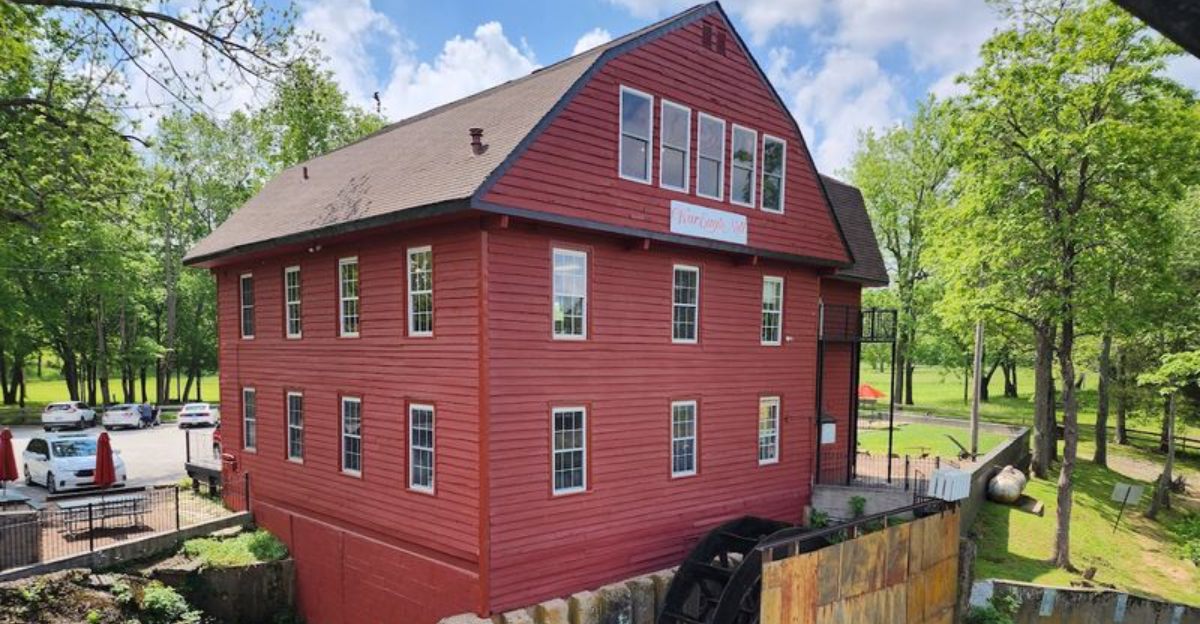
How often do we pass a machine without thinking about the force behind it? I stood on a thick wooden floor that pulsed with a steady thrum under my boots.
The whole building seemed to breathe with it. This wasn’t the quiet buzz of a modern motor or the smooth hum of a factory line.
The vibration came from massive stones spinning only a few feet away. Outside, creek water pushed against a giant wheel that set everything in motion.
Arkansas has a habit of keeping old traditions working instead of freezing them behind museum ropes. The air inside carried the warm, dry smell of ground grain.
A light dust settled across the old timber beams. I leaned closer to watch kernels vanish between the stones and return as soft flour.
No screens. No control panels.
Just water, stone, and gravity doing the job. After a few minutes, it hits you.
Some methods were already right the first time.
When Water Power Turned Grain Into Daily Bread
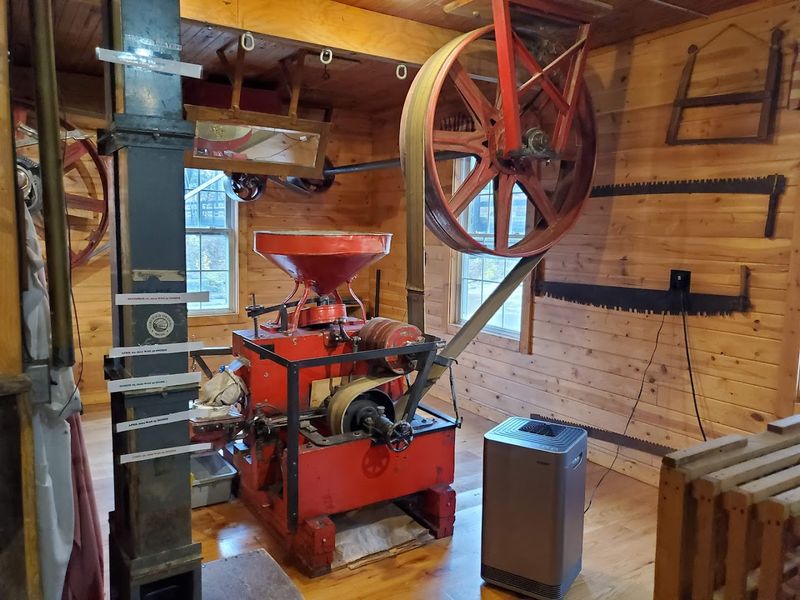
Before electricity made everything effortless, communities across Arkansas depended on the power of moving water to process their grain. One old gristmill still shows exactly how that relationship worked.
A large wooden water wheel sits on the outside of the building, fed by water drawn from a nearby creek, and watching it turn is oddly hypnotic. The wheel converts the creek’s energy into rotational force, which travels inside through a system of wooden and iron gears before reaching the millstones above.
Farmers once brought harvested corn, wheat, and other grains by wagon, often traveling miles across rough Ozark terrain just to have their crop milled into something their families could cook and eat. The mill served as more than a processing site.
It was also a gathering place where neighbors exchanged news, traded goods, and caught up on local life.
Realizing that daily bread depended on water flowing at the right speed gives the whole operation a weight that no supermarket flour aisle can match. You can see it all in action at War Eagle Mill, 11045 War Eagle Rd, Rogers, AR 72756.
The Millstones And Gears Still Doing The Work
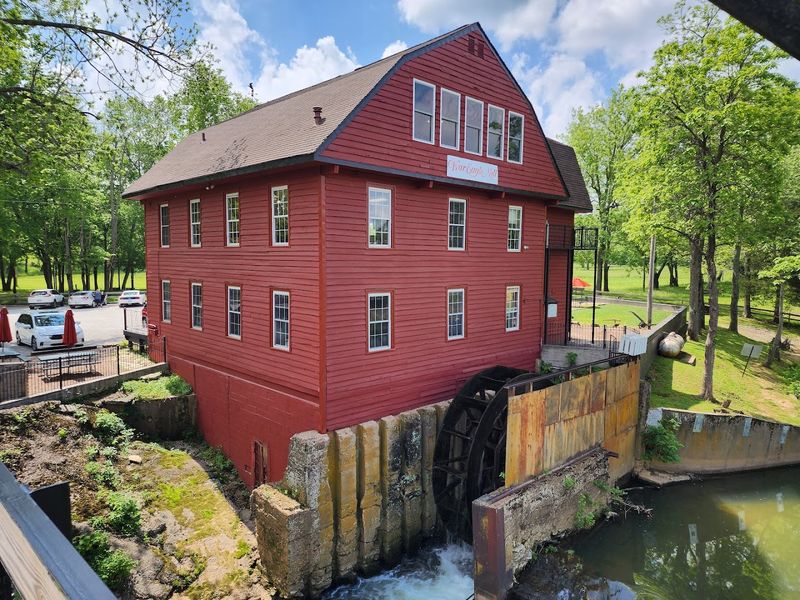
Most people picture millstones as simple flat rocks, but the ones inside War Eagle Mill are carefully engineered tools with grooves carved into their faces in a pattern called the furrow, which is designed to cut and shear grain rather than just crush it.
The millstones are made from extremely hard rock used for grinding grain, and their sheer weight can make the floor groan when they are running at full speed.
One stone sits stationary on the bottom, called the bed stone, while the upper stone, called the runner stone, spins on top of it at a controlled speed.
The gap between the two stones is adjusted by the miller to determine how fine or coarse the resulting flour will be, and getting that gap right requires real experience and feel.
Wooden and iron gears transfer the rotational energy from the water wheel up through the floor and into the mechanism that drives the runner stone, and these gears are themselves a feat of old-world craftsmanship.
Seeing the whole mechanical chain from water wheel to spinning stone makes you appreciate how much engineering thought went into what looks like a simple rustic building from the outside.
How Whole Grain Slowly Becomes Fresh Flour
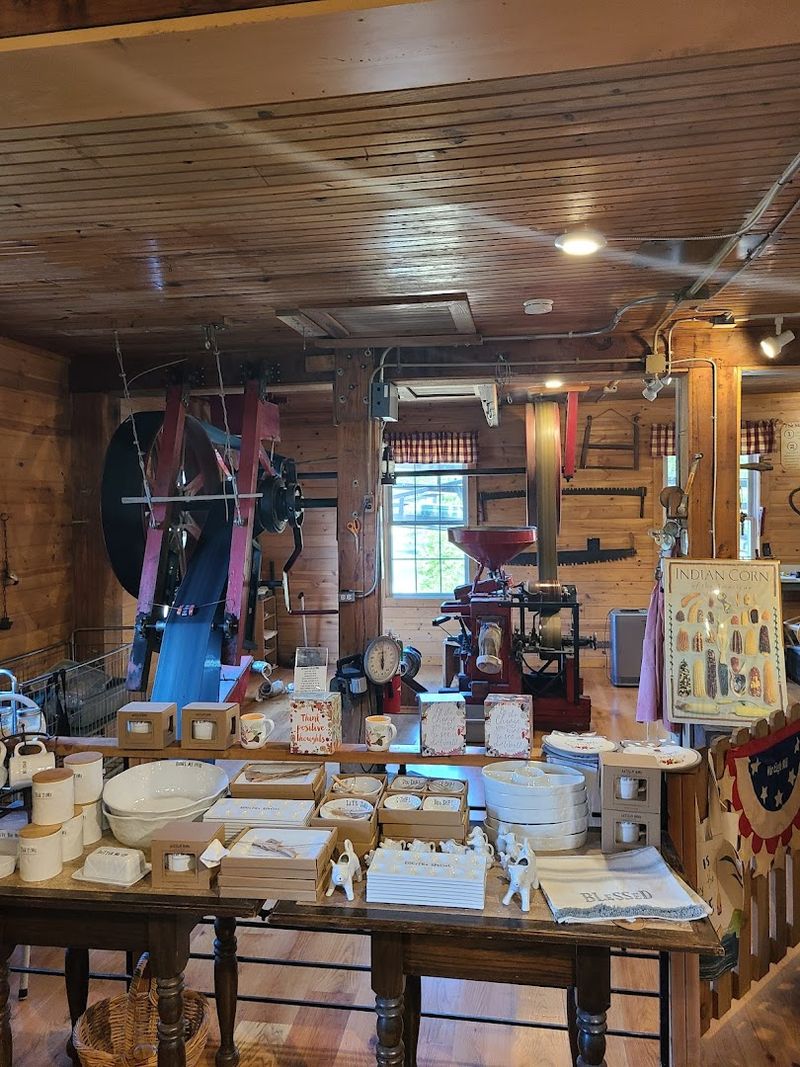
Grain enters the milling process through a wooden hopper suspended above the millstones, and gravity does the first part of the work by feeding kernels steadily down into the eye at the center of the runner stone.
As the grain moves outward between the two spinning stone faces, it gets progressively ground finer and finer until it exits around the outer edge as flour or meal, still warm from the friction of the stones.
Stone grinding is notably different from modern steel roller milling because the stones grind the entire grain kernel together, keeping the bran, germ, and endosperm mixed into the final product rather than stripping them apart.
That distinction matters enormously for nutrition because the germ contains oils and vitamins that are lost when grain is processed at high heat or separated by industrial rollers.
After leaving the stones, the flour falls into a collection box and can then be sifted to different levels of fineness depending on what the customer needs for baking.
Watching raw grain disappear into the hopper and reappear moments later as warm, fragrant flour feels like a small miracle every single time, no matter how many times you observe it.
The Skill And Care Required To Run The Mill
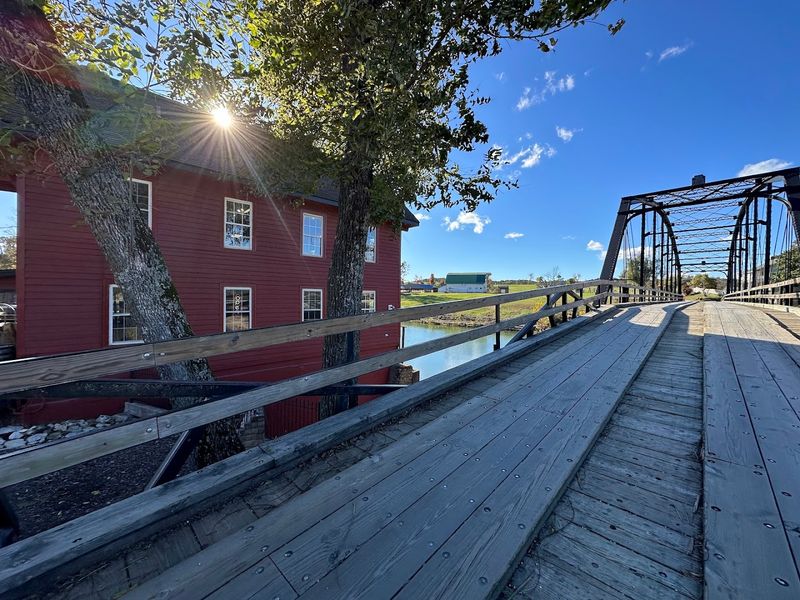
Running a gristmill sounds straightforward until you realize how many variables a skilled miller must monitor simultaneously to produce consistently good flour.
The speed of the water wheel changes with creek levels, meaning the miller must constantly adjust the flow of water through the sluice gate to maintain the right rotational speed at the stones.
Too fast and the grain burns slightly from friction, leaving a bitter taste in the flour, while too slow means the stones do not grind efficiently and the texture suffers.
The gap between the runner stone and the bed stone must be calibrated carefully depending on the type of grain being milled, its moisture content, and the desired fineness of the finished product.
Millers historically learned their trade through years of apprenticeship, developing an almost instinctive feel for the sounds and vibrations that told them everything was running correctly.
At War Eagle Mill, the staff who operate the mill today carry on that tradition of hands-on knowledge, and they are genuinely happy to explain what they are watching for if you ask them while they work.
The craft of milling is as much about sensory awareness as it is about mechanical knowledge, and that human element is what keeps the flour tasting right.
The Sound and Motion Of Stones Turning All Day
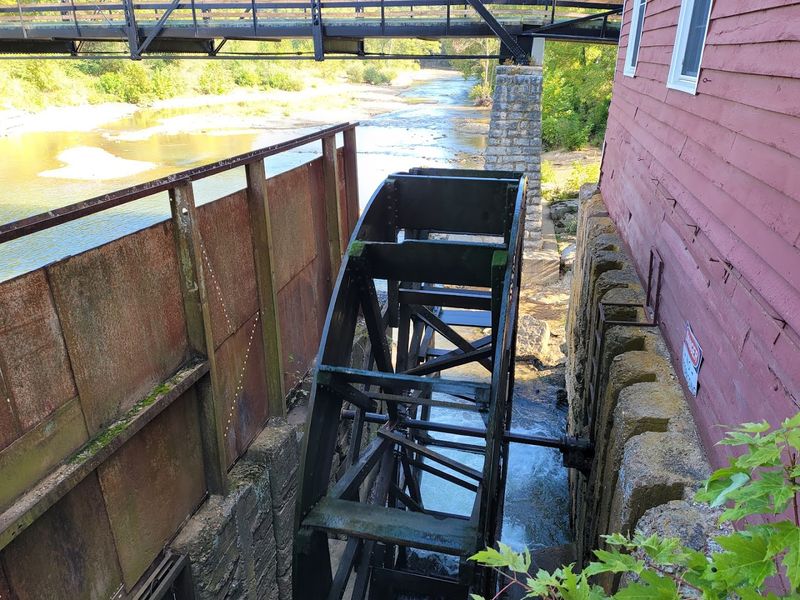
Nothing quite prepares you for the physical experience of standing inside a working gristmill, because the sound and vibration are far more present than most visitors expect before they walk through the door.
The millstones produce a deep, rhythmic grinding tone that you feel as much as hear, a low rumble that travels up through the wooden floorboards and into your feet while fine flour dust drifts through the air around you.
The water wheel outside adds its own layered soundtrack, a steady churning and splashing that blends with the creek noise to create something genuinely immersive and calming at the same time.
Wooden gears and shafts creak and knock in a syncopated rhythm as they transfer power from the wheel to the stones, giving the whole building a sense of coordinated motion that feels almost alive.
The smell is one of the most unexpected pleasures, a warm, nutty, slightly sweet scent of freshly ground grain that fills the interior completely and makes you want to stand there longer than you planned.
Photographers and sound enthusiasts will find the mill endlessly interesting, since the light filtering through dusty air creates a visual atmosphere that is difficult to reproduce anywhere else in the region.
Why Stone Ground Flour Still Wins People Over
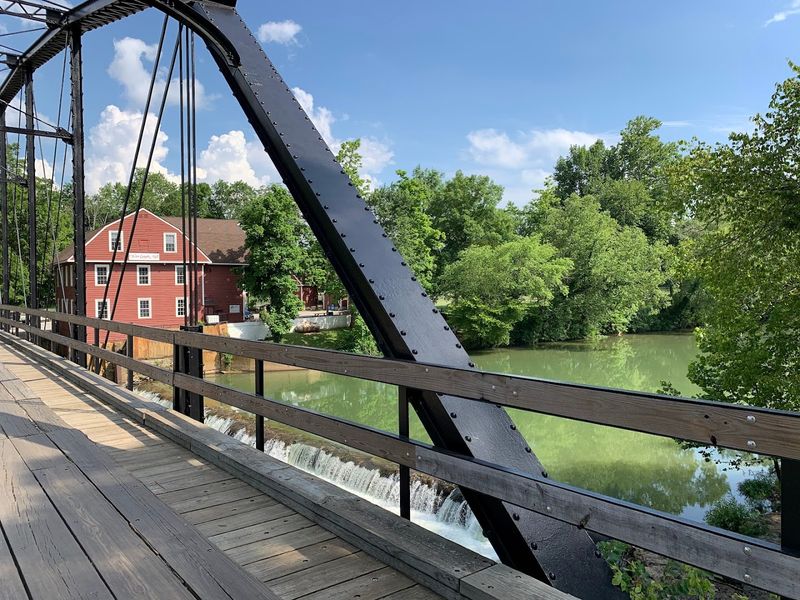
Stone ground flour has made a genuine comeback in recent years among bakers and home cooks who noticed that bread made from it simply tastes different, richer, more complex, and more satisfying than loaves made from standard supermarket flour.
The reason comes down to how the milling process treats the grain, because stone grinding keeps the temperature low enough to preserve the natural oils in the wheat germ, and those oils carry a lot of the flavor that disappears in industrial milling.
Whole grain stone-ground flour also retains more fiber and micronutrients than many roller-milled flours because the entire grain kernel remains intact during the milling process.
Bakers who use War Eagle Mill flour often describe the resulting bread as having a heartier crumb and a more pronounced wheaty flavor that pairs exceptionally well with simple toppings like honey or sharp cheese.
The cornmeal from the mill is equally prized, especially for making Southern-style cornbread where the coarser, more flavorful grind makes a noticeable difference in both texture and taste.
You can purchase bags of their stone ground products directly at the mill, and taking a few home is one of the best ways to extend the experience long after you have left the Ozarks behind.
Keeping A 150 Year Old Milling Tradition Alive
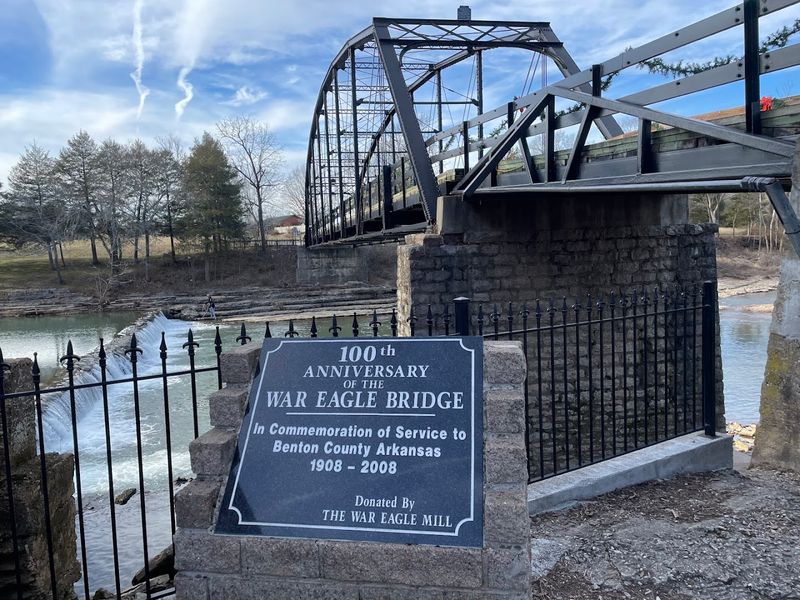
Preserving a working gristmill for 150 years is not a passive achievement because it requires continuous investment in maintenance, education, and community connection to keep the tradition meaningful rather than merely decorative.
War Eagle Mill has changed hands and been rebuilt more than once over its long history, with flood and fire both testing the commitment of the people who believed the mill was worth saving and restoring each time.
The current operation runs the mill as a genuine working business, selling stone ground products and operating a restaurant on the premises, which means the building earns its own upkeep rather than relying purely on donations or grants.
Educational visitors, including school groups from across the Rogers area and beyond, regularly tour the mill to learn firsthand how pre-industrial food processing worked and why it still matters to understand today.
The annual War Eagle Mill Arts and Crafts Fair draws tens of thousands of visitors to the surrounding area each October, making the mill a cultural anchor for the broader Ozark region and not just a quiet historical footnote.
Staying operational and relevant in a world of automated food production is itself an act of intentional preservation, and the people behind War Eagle Mill have clearly committed to that work with both hands.
A place that has outlasted wars, floods, and a century and a half of changing tastes deserves more than a quick glance on the drive through northwestern Arkansas.