
Minnesota’s Culinary Treasure That Belongs On Every Bucket List
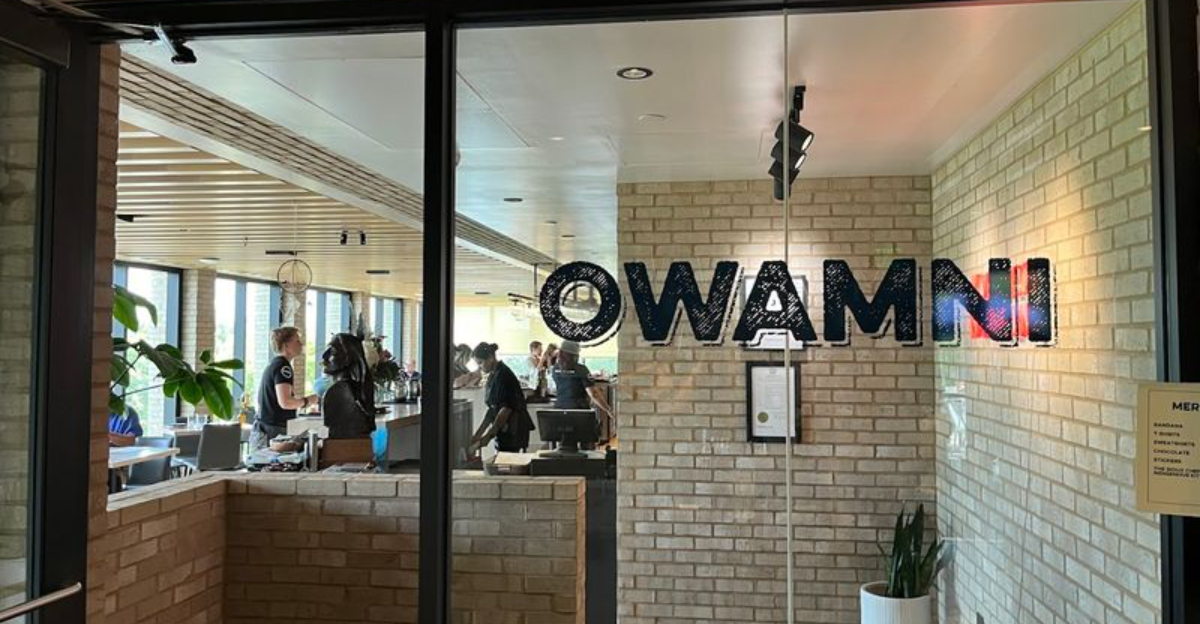
Stop whatever you’re doing. No, seriously, pause.
Because somewhere along the Mississippi in Minnesota, I discovered a meal that completely rewired my taste buds and my brain. This wasn’t just food. It was a full-on flavor revolution.
Every bite hit like a mic drop, every ingredient felt like a secret handed down through centuries. Bold, earthy, surprising, somehow both comforting and mind-blowing at the same time.
By the time I left, I wasn’t just full, I was changed. This is the kind of culinary experience that doesn’t just belong on a plate.
It belongs on every serious food lover’s bucket list. Miss it, and you’re missing one of the most unforgettable meals of your life.
The Rice Bowl That Changed How I Think About Comfort Food
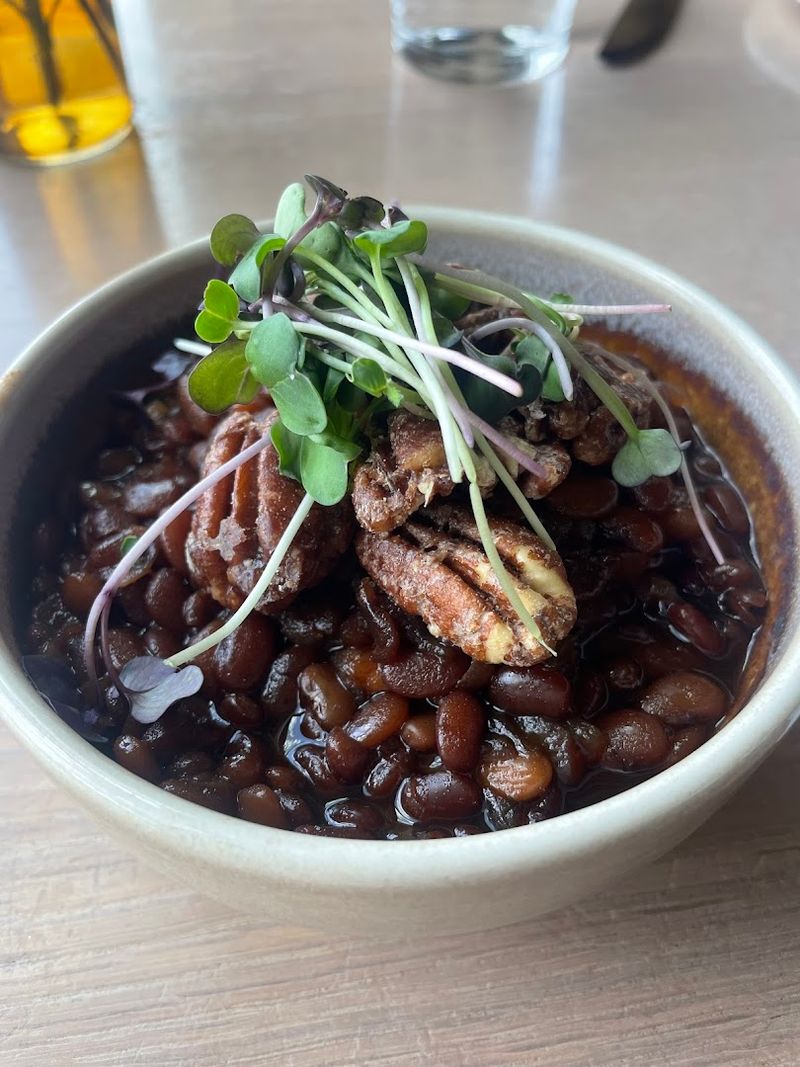
Before I sat down at Owamni, I honestly thought I knew what wild rice was. I’d had it in soups, in casseroles, in that classic Minnesota hot dish at every holiday gathering.
But what arrived at my table that evening completely rewired my understanding of what this grain can actually be.
The wild rice bowl at Owamni is served with roasted seasonal vegetables, cedar-braised ingredients, and a deeply savory broth that felt like it had been simmering for centuries, not just hours. The textures were extraordinary, chewy and tender at the same time, with little bursts of smokiness that kept pulling me back for another bite.
Wild rice, or manoomin, is sacred to the Anishinaabe people, and eating it here felt like participating in something much larger than dinner.
What really got me was how clean and honest everything tasted. There were no heavy sauces trying to mask anything, no unnecessary complexity for the sake of looking fancy.
Every ingredient earned its place on that plate. I kept pausing mid-bite just to pay attention, which is not something I normally do at restaurants.
The bowl felt grounding in a way that’s genuinely rare in the dining world.
It reminded me that the most powerful food doesn’t always come with a dramatic presentation, sometimes it just arrives quietly and makes you go completely still.
Sitting By The Mississippi While Eating Food
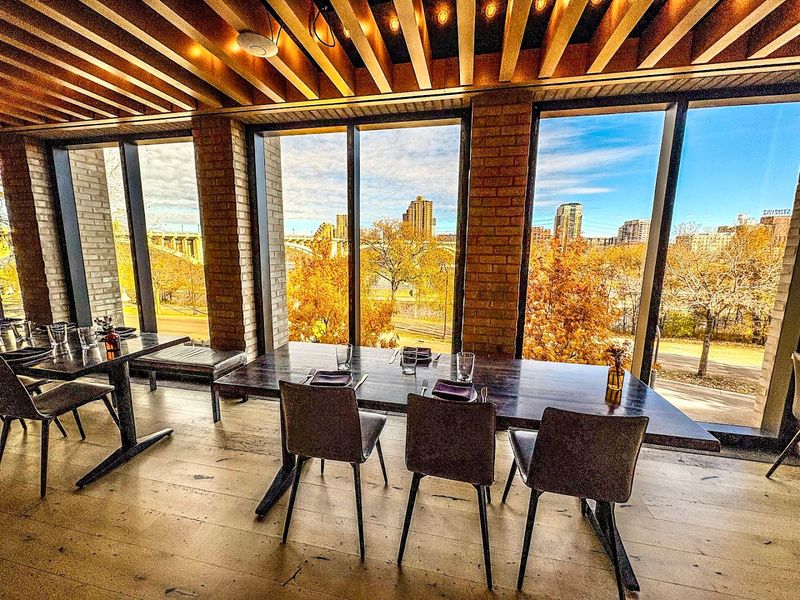
The location alone would make Owamni worth visiting even if the food were just average, which it absolutely is not. Sitting at 420 S 1st St, Minneapolis, MN 55401, right along the riverfront in Mill Ruins Park, this restaurant has one of the most meaningful settings I’ve ever dined in.
The Mississippi River flows just beyond the windows, and there’s something almost ceremonial about eating Indigenous food on land that has held Indigenous history for thousands of years.
I grabbed a spot near the edge of the terrace and spent a solid few minutes just absorbing the view before even opening the menu.
The river was moving steadily, the trees were full and green, and the air smelled like summer and earth and something ancient. It genuinely felt like the restaurant and the landscape were in conversation with each other.
That sense of place is intentional. Chef Sean Sherman and co-founder Dana Thompson designed Owamni to reconnect people with the land, the water, and the foodways that existed here long before European settlers arrived.
Eating outdoors by the Mississippi while tasting food rooted in that very region creates a feedback loop of meaning that I was not prepared for emotionally. By the time my second dish arrived, I had already decided this was one of the most intentional dining experiences I’d ever had.
The river just made it feel complete.
The Bison Made Me Rethink Everything I Knew About Protein
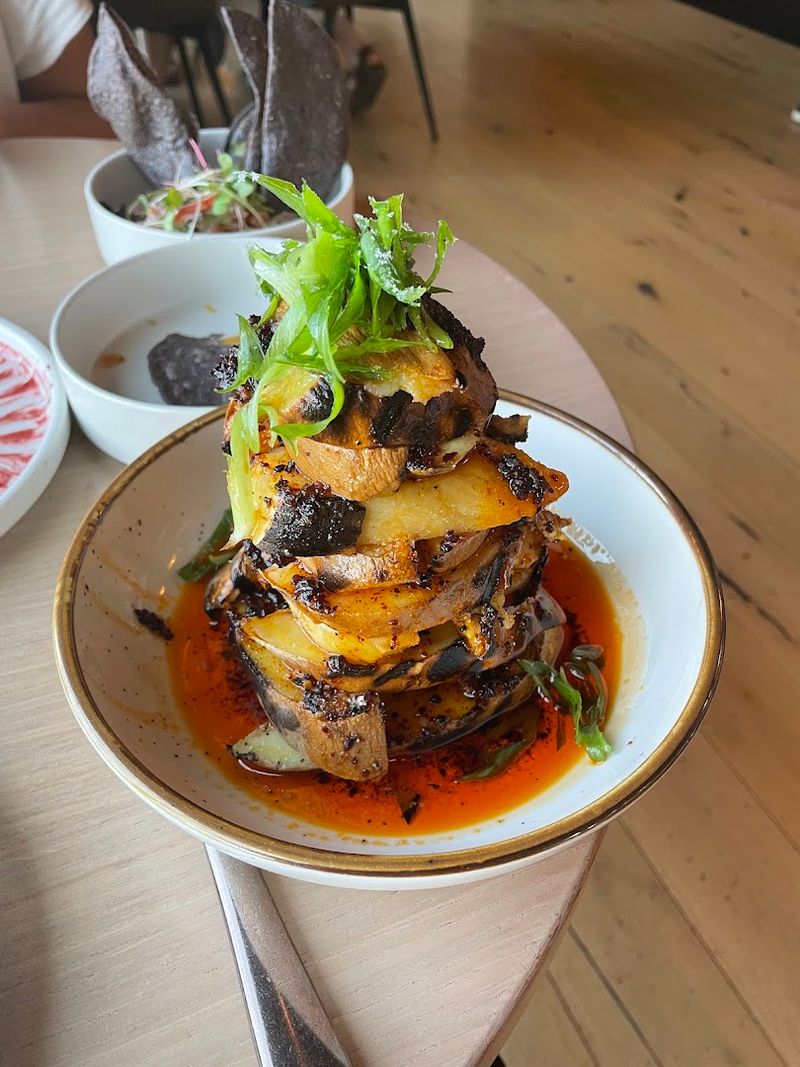
Bison has been part of Indigenous foodways across North America for thousands of years, and tasting it prepared with that kind of respect and knowledge is a completely different experience from anything you’d find at a standard steakhouse.
When my bison dish arrived at Owamni, I actually leaned forward in my chair because the smell hit me first, rich and smoky with hints of something herbal and wild that I couldn’t immediately identify.
The meat was tender in a way that felt effortless, like it hadn’t been forced into submission but simply coaxed into its best possible version.
It was paired with roasted root vegetables and finished with indigenous seasonings that added depth without overpowering the natural flavor of the bison itself. There was a restraint to the cooking that I found incredibly impressive.
Nothing was over-seasoned, nothing was trying too hard.
Bison is leaner than beef and has a slightly sweeter, earthier flavor profile that works beautifully when paired with the kind of plant-based accompaniments Owamni uses throughout their menu. I’d eaten bison before at other spots, but it had always felt like a novelty.
Here it felt like a homecoming for the ingredient itself. The dish was confident without being showy, which is honestly the hardest balance to strike in a kitchen.
That plate of bison made me want to learn everything about where my food actually comes from.
Three Sisters Flavors
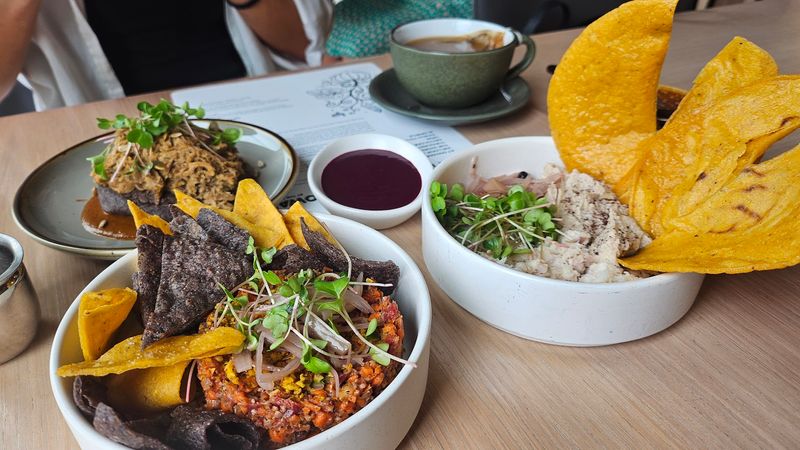
The Three Sisters, corn, beans, and squash, have been grown together by Indigenous communities across North America for centuries. They support each other in the garden, and on the plate at Owamni, they support each other in flavor too.
I ordered a dish featuring all three and ended up having a quiet little moment of appreciation that caught me completely off guard.
The corn was prepared in a way that brought out a natural sweetness I’d never quite tasted before. The beans were earthy and satisfying without being heavy.
The squash had a gentle caramelized quality that tied everything together like a warm ending to a really good story. Together, they created a harmony that felt ancient and totally modern at the same time, which is a tricky thing to pull off but Owamni does it without breaking a sweat.
What made this dish stick with me long after I left was how it reframed vegetables as the main event rather than a supporting act.
There was no meat needed here to make the plate feel complete or substantial. The Three Sisters stood entirely on their own, and they were more than enough.
I’ve eaten at a lot of restaurants that call themselves farm-to-table or ingredient-driven, but this was the first time I genuinely felt that philosophy rather than just reading it on a menu.
These flavors carried real weight, cultural, historical, and delicious.
The Cedar Tea That Became My New Favorite
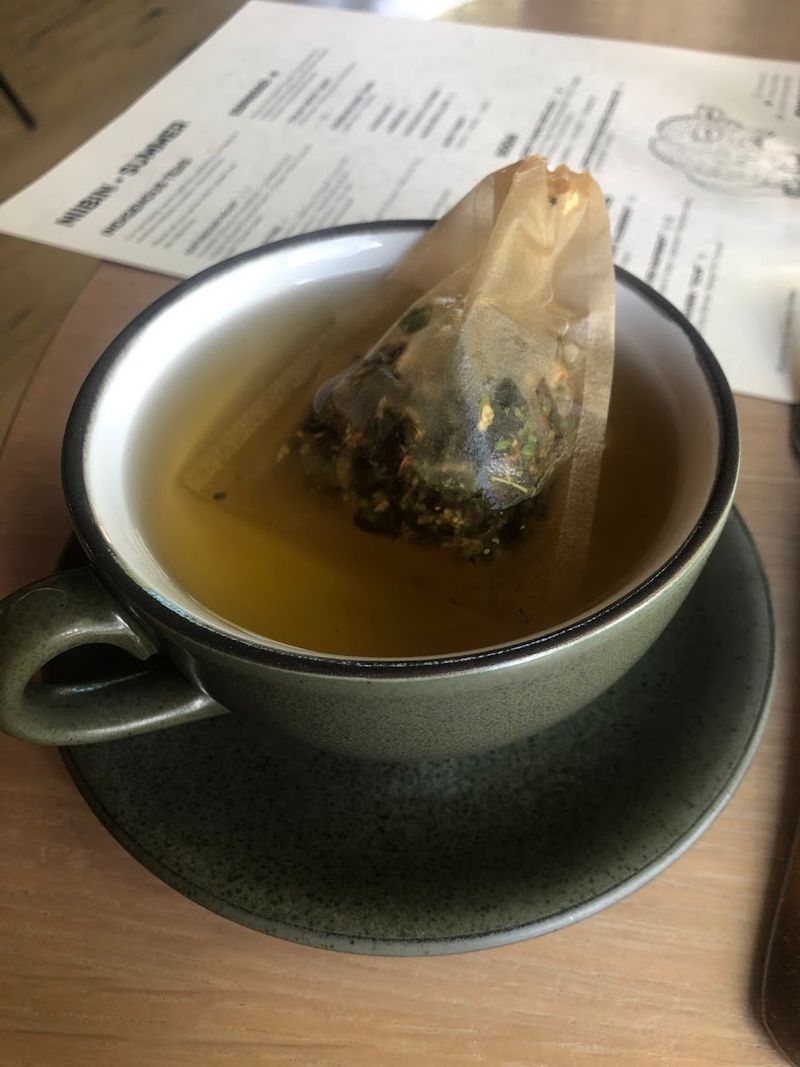
I’ll be honest, I almost skipped the beverages entirely and just focused on the food. That would have been a serious mistake.
Owamni’s drink menu is just as thoughtful and rooted in Indigenous ingredients as everything else they serve, and the cedar tea I ordered became one of the most unexpectedly memorable parts of my entire visit.
Cedar tea sounds simple, and in some ways it is. But the flavor is something you genuinely cannot predict until you taste it.
It’s earthy and slightly resinous, with a clean, bright quality that feels like breathing in a forest.
It’s warming without being heavy, and it has this grounding quality that made me slow down and actually be present at the table instead of scrolling through my phone between courses.
Owamni’s beverage options are rooted in plants, roots, and botanicals that Indigenous communities have used for generations, both for nourishment and for ceremony.
Sipping cedar tea by the Mississippi River while eating food prepared from pre-colonial recipes felt like the kind of full-circle experience that travel writers try to describe but rarely actually manage to achieve. I held that cup for a long time after it was empty just because it felt right.
If you visit Owamni and skip the drinks, you’re genuinely missing half the story they’re trying to tell. That cedar tea was quiet, powerful, and completely unforgettable.
The Frybread Truth
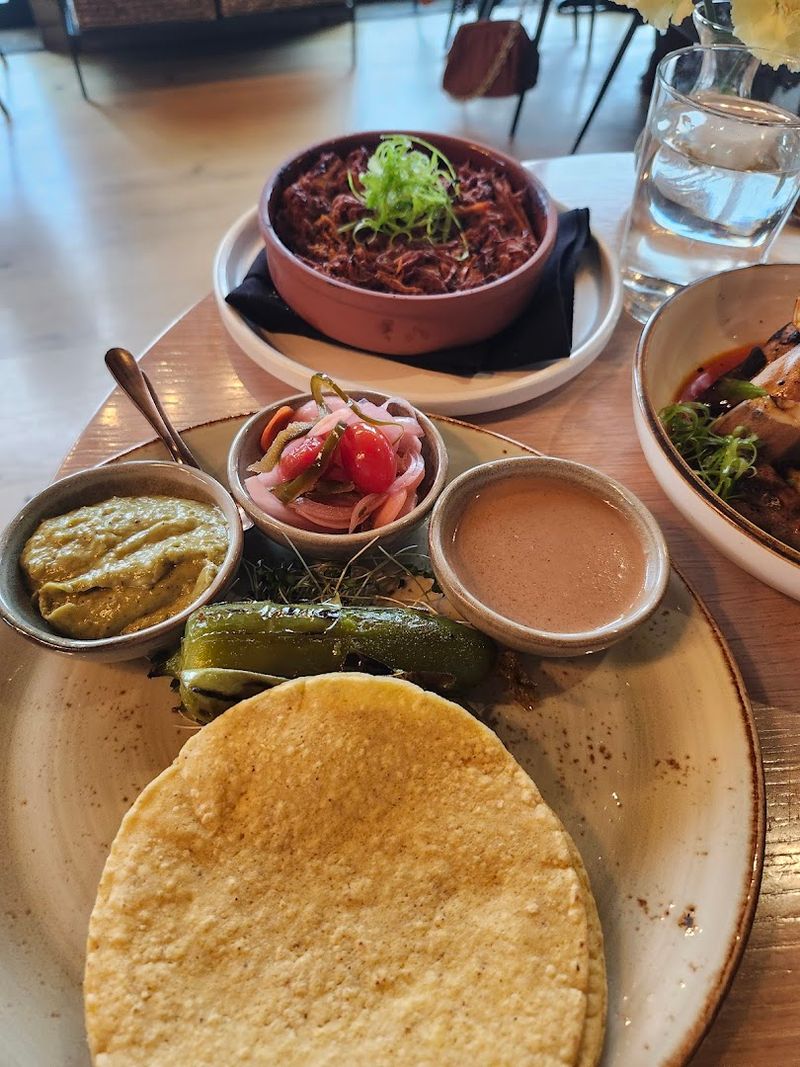
One of the most fascinating and intellectually honest things about Owamni is what they choose not to serve. Frybread, which has become widely associated with Indigenous culture across America, is intentionally absent from the menu.
The reason is something I read about before visiting and then saw reflected in every single dish that came to my table throughout the night.
Frybread was created out of necessity during a deeply painful period of forced relocation, when Indigenous communities were given government commodity foods like lard and white flour because their traditional food systems had been deliberately destroyed.
Knowing the history behind the menu made the food taste different, not better or worse in a technical sense, but heavier with meaning and intention. Every ingredient on every plate was chosen because it represents something that was nearly taken away.
Eating at Owamni felt like participating in an act of cultural restoration, and I mean that with complete sincerity and zero dramatization. It’s the kind of restaurant that makes you think as much as it makes you taste, and that combination is extraordinarily rare.
Owamni doesn’t just feed you. It educates you, gently and deliciously, without ever once feeling like a lecture.
Why Owamni Earned Its James Beard Award

In 2022, Owamni won the James Beard Award for Best New Restaurant in America, which is essentially the culinary world’s version of winning a Grammy and an Oscar in the same year.
When I heard that before my visit, I filed it away as impressive context. After actually eating there, I understood it as a genuine understatement.
The James Beard Foundation described Owamni as a restaurant that opened a new chapter in American dining, and sitting inside that warm, thoughtfully designed space, surrounded by natural materials and the quiet buzz of a room full of people having their minds gently expanded, I completely agreed.
This is not just an excellent restaurant. It is a genuinely important one.
What Chef Sean Sherman and his team have built at Owamni is a living argument that Indigenous foodways deserve to be centered, celebrated, and taken seriously at the highest levels of American culinary culture. Every course I ate that evening felt like a small act of reclamation, joyful and proud rather than mournful.
The food was extraordinary by any measure, but its significance goes well beyond technique or flavor. Owamni in Minnesota made me feel like I had been let in on something real and rare and worth protecting.
If you have a bucket list of restaurants to visit before you leave this earth, and you haven’t added Owamni to the top of it yet, what exactly are you waiting for?