
This 94-Foot Illinois Tower Might Be The Strangest Landmark In The Midwest
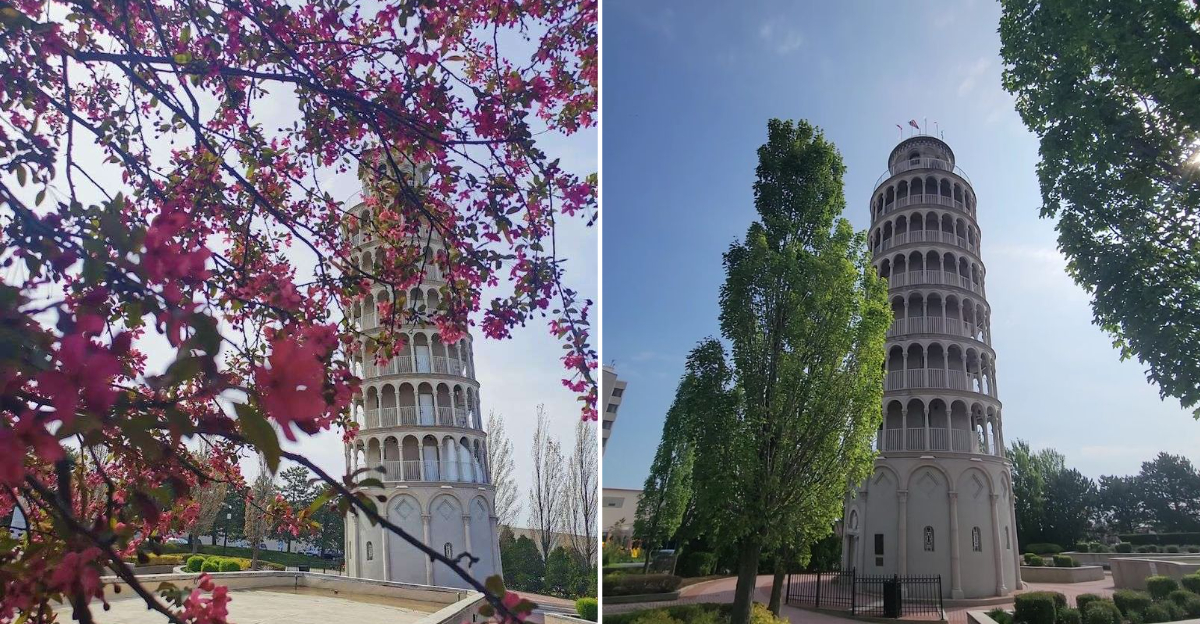
Along a busy road in the northern suburbs of Chicago, a tower leans at an angle that looks instantly familiar. Drivers slow down, glance twice, and wonder for a moment if their eyes are playing tricks on them.
The scene feels oddly out of place in Illinois, where Italian medieval architecture is not exactly part of the everyday landscape. The structure is a half-scale replica of the famous Leaning Tower of Pisa, completed in 1934 after construction began in 1931.
Built as part of a recreational complex created by a local industrialist, the tower started life with a practical purpose rather than any ambition to become a roadside attraction. Decades later, it still tilts in the same unmistakable way, drawing curious looks and camera phones from anyone passing by.
The story behind it is far stranger than the view from the road suggests.
Built By A Local Industrialist
Long before social media road trips were a thing, one man decided a quiet Illinois suburb needed its own Italian landmark.
Robert Ilg, a successful industrialist and owner of the Ilg Electric Ventilating Company, commissioned the tower in 1934 as a decorative water tower to serve the swimming pools and recreational facilities at Ilgair Park, a leisure complex built for employees of his company.
Ilg was apparently a fan of the original Leaning Tower of Pisa and wanted to bring a piece of that Old World charm to the American Midwest. The structure was built at roughly half the scale of the original, rising to 94 feet tall.
It was never intended to become a public landmark, but history had other plans.
Over the decades, the tower outlasted its original purpose and became a beloved local curiosity that continues to attract visitors from across the Chicago area and beyond. What started as one man’s personal architectural whim turned into one of Illinois’s most unexpected and enduring roadside attractions.
A Half-Scale Tower Replica
The real Leaning Tower of Pisa in Italy stands about 183 feet tall on its low side and roughly 186 feet on its high side. The Niles version clocks in at 94 feet, making it almost exactly half the height of its famous Italian inspiration.
Despite the size difference, the architectural details were taken seriously during construction.
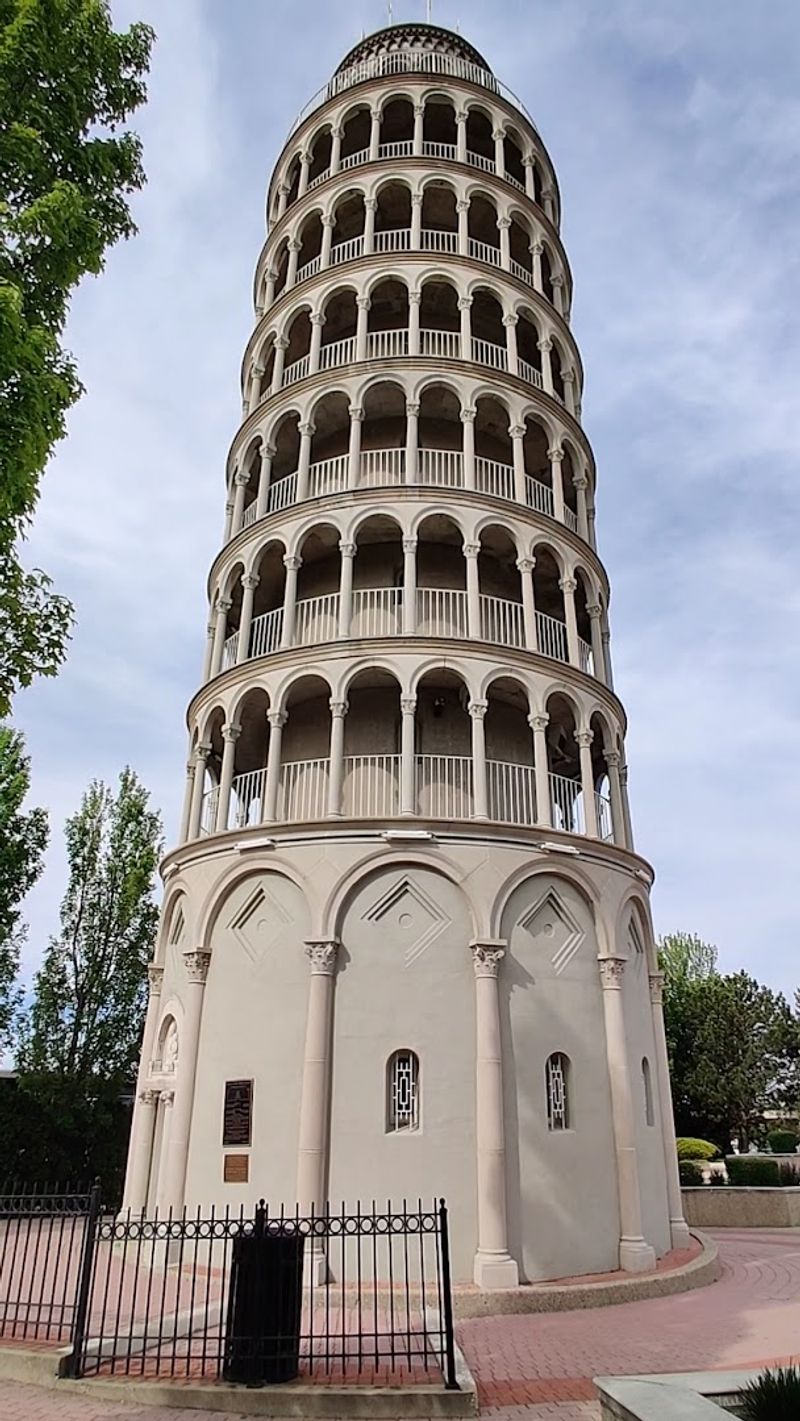
The builders carefully replicated the distinctive white stone appearance, the rounded arched galleries, and of course the signature lean that makes the original so recognizable worldwide.
Standing at the base and looking up, the resemblance is genuinely striking and a little surreal when you remember you are in suburban Illinois.
The tilt of the Niles version mirrors the lean of the Pisa original, giving photographers the same classic opportunity to snap that playful forced-perspective shot where it looks like you are holding the tower up.
It is a smaller structure, but it carries every bit of the visual drama that makes the Italian original so iconic and beloved.
Free To Visit
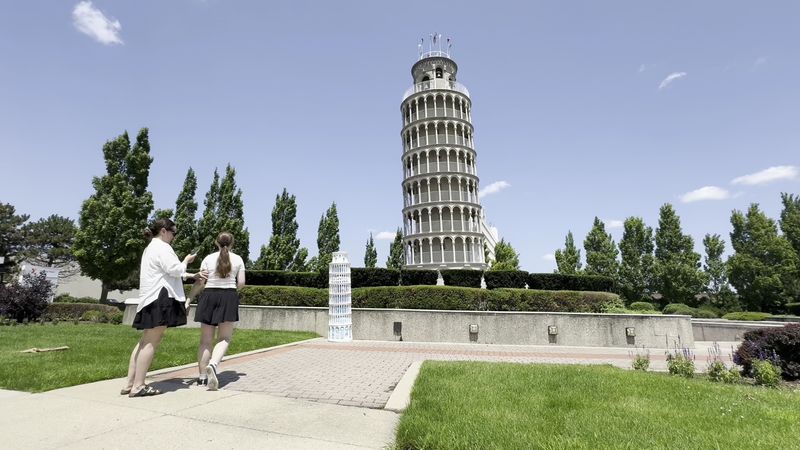
One of the most refreshing things about this landmark is that visiting costs absolutely nothing. There is no admission fee, no ticket booth, and no reservation required.
The grounds surrounding the tower are open to the public, making it an easy and budget-friendly stop for families, road trippers, and curious locals alike.
The grounds surrounding the tower are generally open to visitors throughout the week. On weekdays and Fridays, the grounds are open from 5 AM to 10 PM.
Saturday hours run from 5 AM to 7 PM, while Sunday hours are 6 AM to 5 PM, giving visitors plenty of flexibility to plan a visit around their schedule.
For anyone passing through the Chicagoland area looking for a quick and memorable detour, this spot delivers a lot of character without any cost. Free landmarks with this much personality are genuinely rare, and the Leaning Tower of Niles earns its place on any spontaneous Illinois road trip itinerary.
The Reflecting Pool
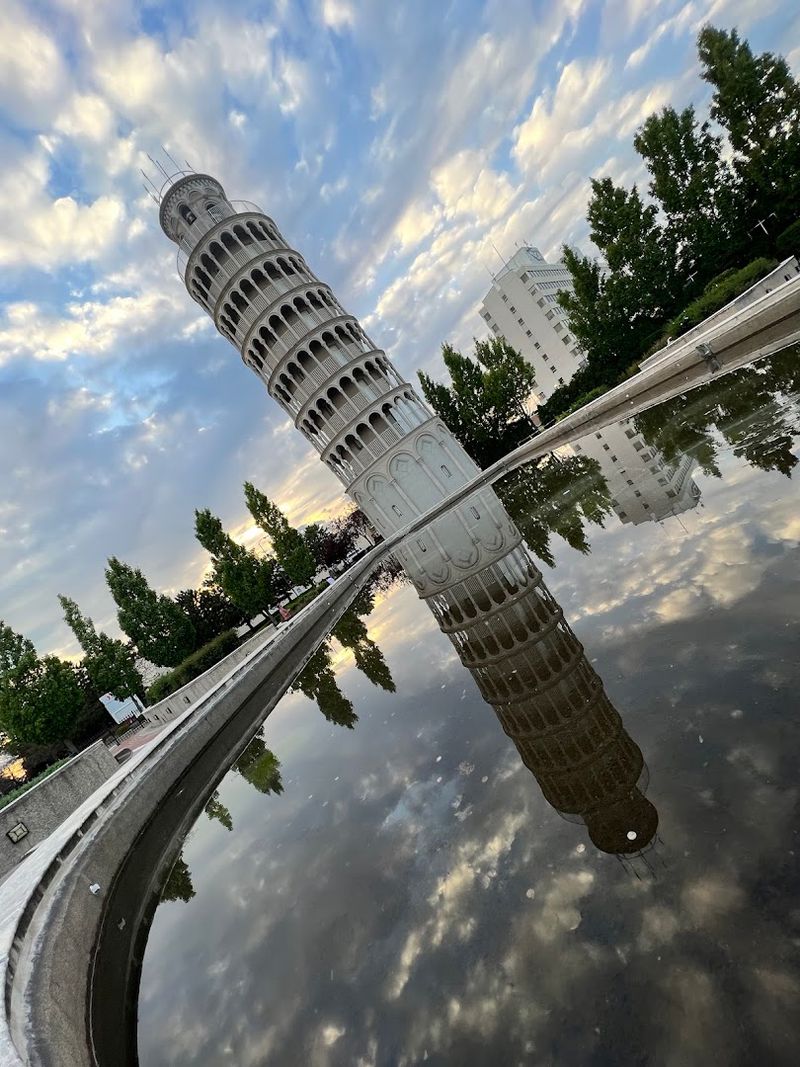
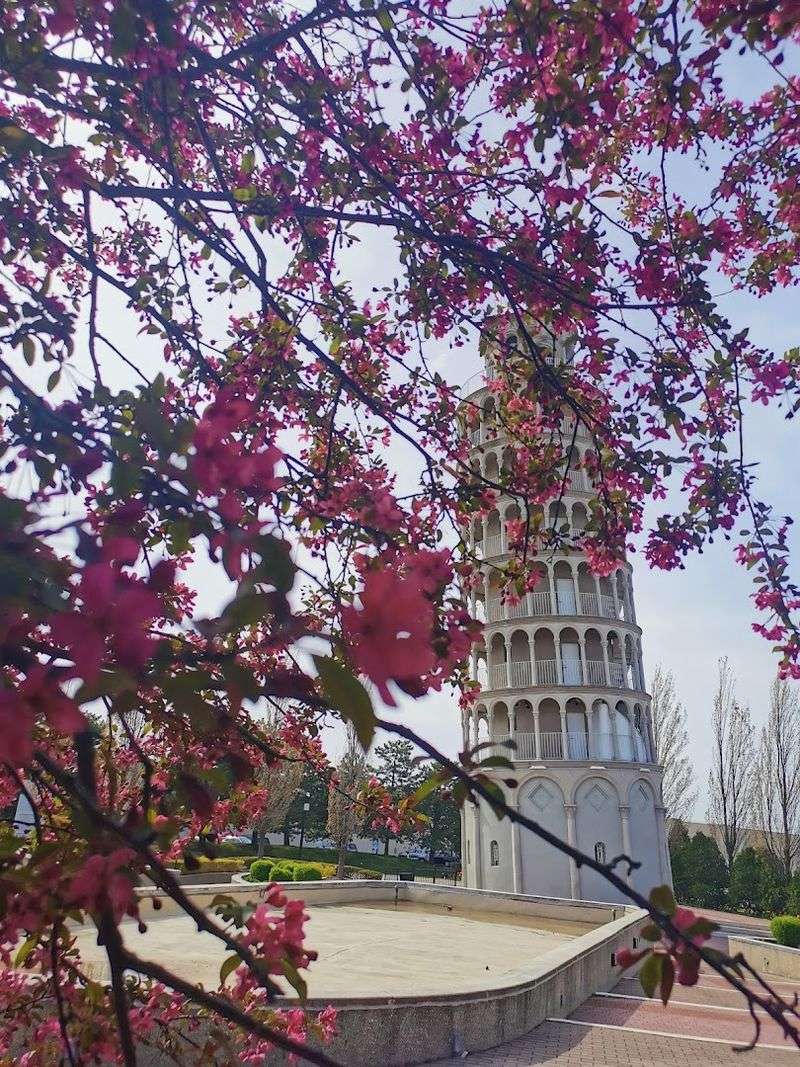
During warmer months, a reflecting pool sits in front of the tower and transforms an already photogenic landmark into something truly special. The still water mirrors the leaning structure above it, creating a doubled image that makes for stunning photography at nearly any time of day.
The pool is part of a well-kept garden that surrounds the base of the tower, featuring manicured greenery and a peaceful atmosphere that feels surprisingly removed from the busy road just steps away.
It is the kind of spot where you can sit for a few minutes and genuinely feel like you have stumbled into a small European courtyard.
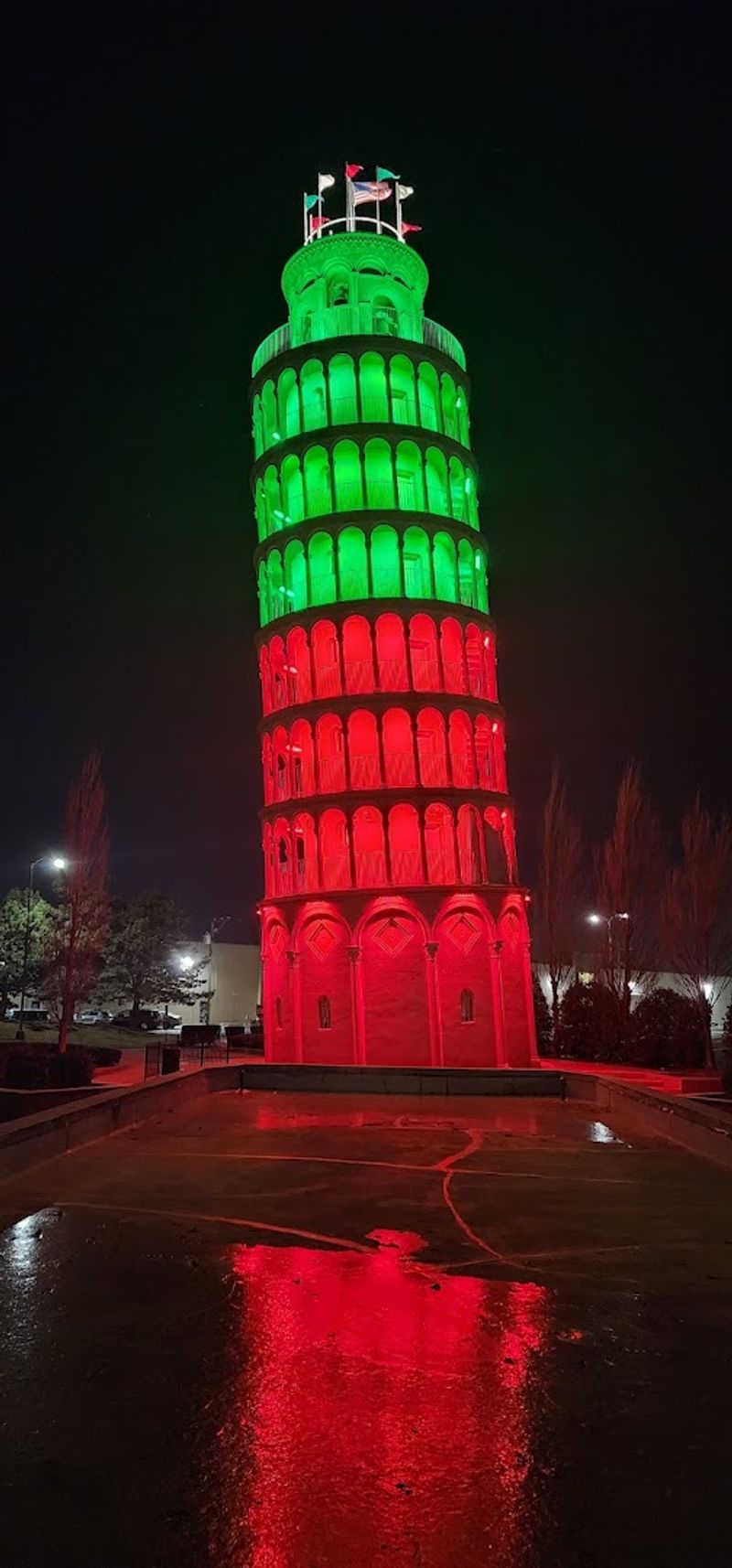
At night, the tower is lit up with colored lights that shift throughout the year depending on the season or occasion, and those lights reflect in the pool below with a dreamy, almost cinematic quality. Visiting after dark on a clear evening gives the whole scene a glow that daytime photos simply cannot replicate.
The Tower’s Bell Chimes
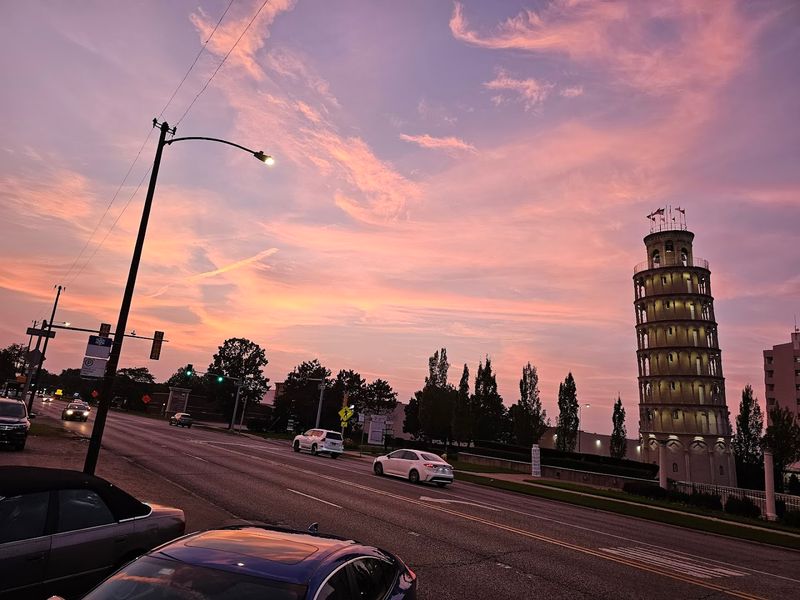
There is something wonderfully unexpected about hearing bells ring out along a busy commercial strip in suburban Illinois. The Leaning Tower of Niles features restored bells that ring several times each day, adding an unexpected auditory layer to the experience.
The bells are faint but audible, especially in the quieter moments of the late afternoon. Visitors who time their arrival right get the bonus of hearing the chimes drift across the surrounding area, which briefly makes the whole scene feel more authentically European than anyone expects from a Chicago suburb.
The sound is subtle enough that you might wonder for a moment whether it is coming from the tower or a nearby church, which only adds to the charm. It is one of those small sensory details that turns a quick photo stop into a more complete and memorable experience.
The bells ring daily at 9 AM, noon, 3 PM, and 6 PM, with additional clock chimes sounding every fifteen minutes.
Parking Near The Tower
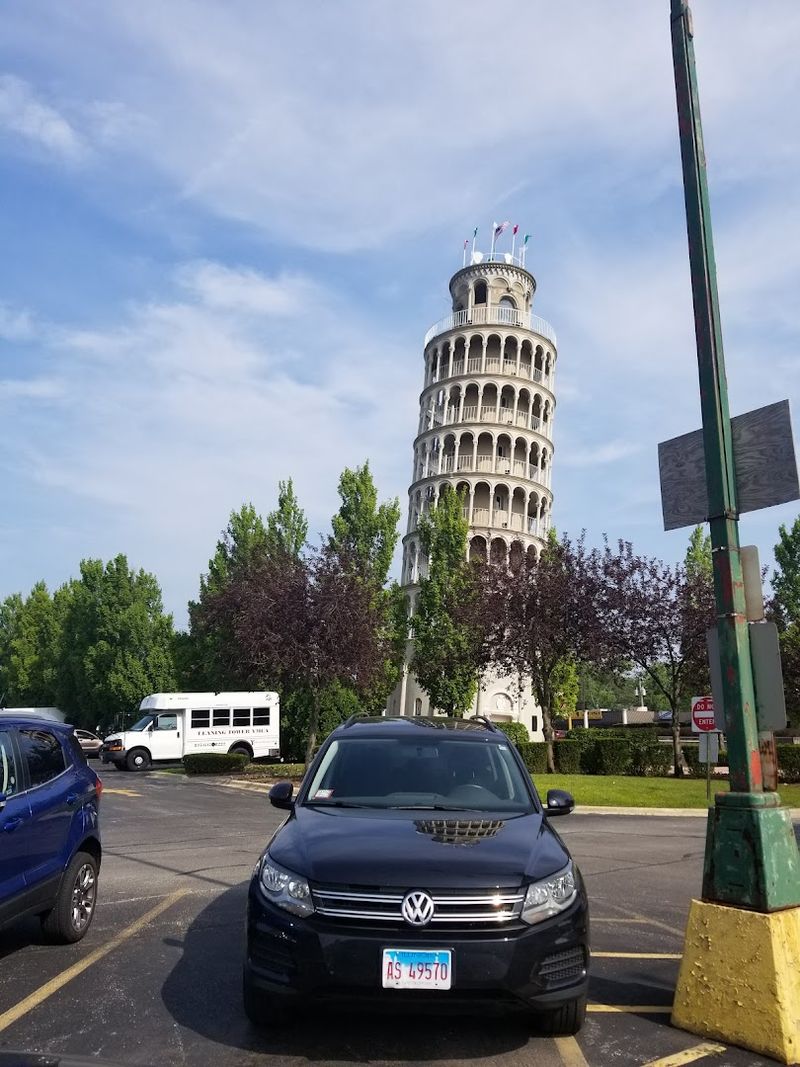
Parking in the Chicago area is rarely a stress-free experience, but the Leaning Tower of Niles is a pleasant exception. Visitors will find several nearby parking options in the surrounding commercial area within a short walk of the tower.
Public parking availability around the site can change over time, so following posted signs and local guidance when arriving is recommended.
The lot near the YMCA building adjacent to the site has also been used by visitors when available, making the whole parking situation far more manageable than most popular attractions in the region.
The tower sits on W Touhy Avenue, which is a busy main road, so arriving with a clear parking plan makes the visit smoother.
Once you park and walk up to the grounds, the tower appears almost suddenly and the visual payoff is immediate. The approach alone makes the short walk from the lot feel worthwhile.
A Landmark Hidden In Plain Sight
For decades, thousands of drivers passed this tower every single day without ever noticing it. Sitting along W Touhy Avenue, one of the most heavily trafficked corridors running through Chicago’s northern suburbs, the Leaning Tower of Niles is technically hiding in plain sight behind layers of commercial development and fast-moving traffic.
Surrounding businesses, shopping centers, and suburban sprawl have gradually grown up around the site since 1934, making the tower easy to miss unless you already know where to look.
It is the kind of landmark that longtime area residents have driven past for years before finally stopping, only to wonder why they waited so long.
In recent years, the rise of social media has helped bring fresh attention to the site, introducing a new generation of visitors who discovered it through photos and posts shared online.
That digital word of mouth has helped introduce the landmark to a new generation of visitors discovering it through photos shared online.
Well-Maintained Grounds
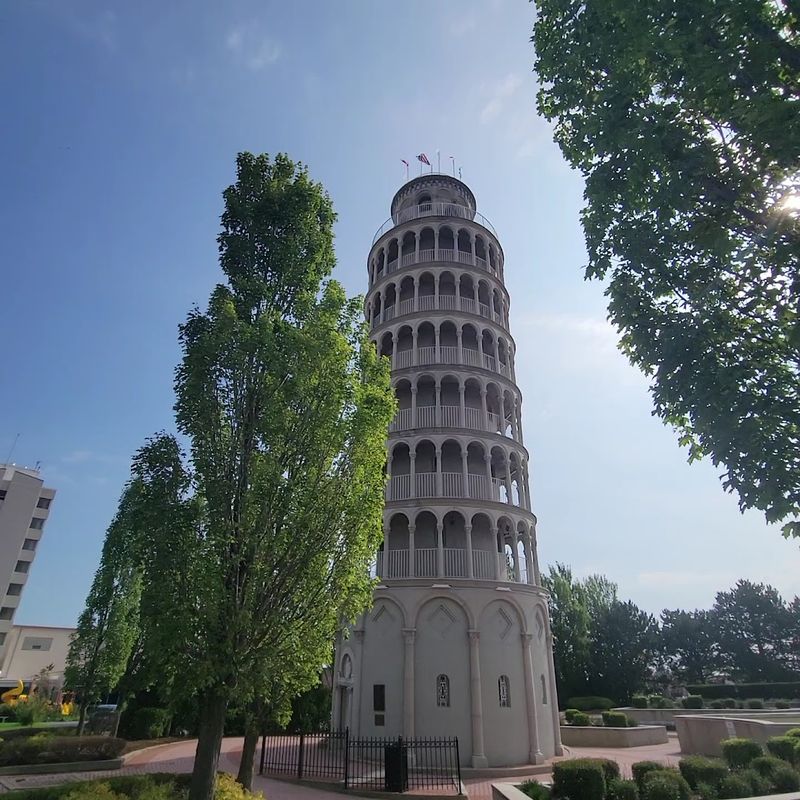
Whoever is responsible for keeping the Leaning Tower of Niles looking sharp deserves genuine credit. The garden surrounding the structure is consistently clean, neatly trimmed, and thoughtfully landscaped, making the entire site feel like a maintained public park rather than a forgotten roadside oddity.
Lush greenery frames the base of the tower, and the surrounding grounds offer enough space to walk around, take in different angles, and enjoy the setting without feeling rushed or crowded.
The cleanliness of the site makes it comfortable for families with young children, and the open layout means there is always a good spot to set up for a photo without obstacles in the way.
Even in the colder months, the site maintains its dignity with the tower itself standing as the centerpiece of a tidy, well-presented space. Visiting in different seasons offers genuinely different visual experiences, from the lush green of summer to the stark, dramatic look of the tower against a grey winter sky.
You Can’t Climb The Tower
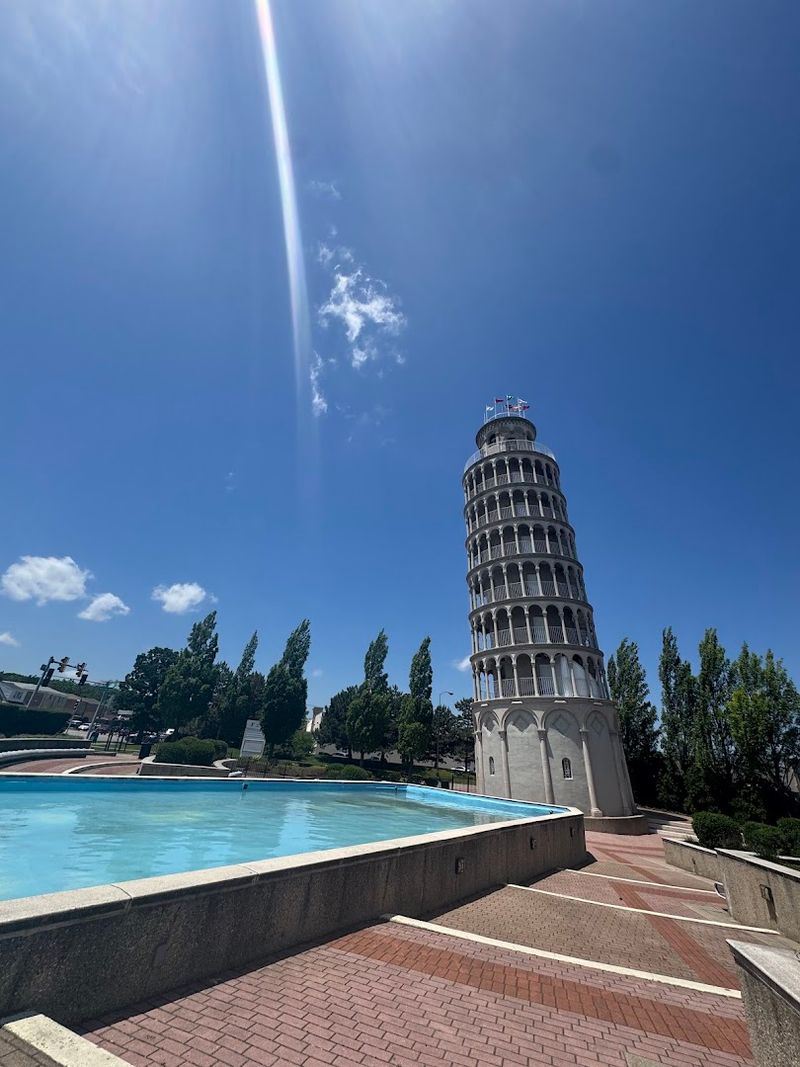
Unlike the original in Pisa, which offers tours to the top for ticketed visitors, the Leaning Tower of Niles is not open for interior access or climbing. There are no narrow staircases to navigate, no crowds pressing past you on a tight spiral, and no waiting in a long queue just to reach the upper galleries.
What you get instead is the full exterior experience, which is honestly quite satisfying on its own terms. Walking around the base, looking up at the arched galleries stacked above you, and studying the craftsmanship of the replica up close gives you a real appreciation for the effort that went into building it back in 1934.
The lean itself is most dramatic when viewed from certain angles, and finding that perfect spot where the tilt really registers in the frame takes a few minutes of wandering, which is part of the fun.
Ground-level photography here rewards patience, creativity, and a willingness to crouch, tilt, and experiment with your shot.
A Perfect Photo Stop
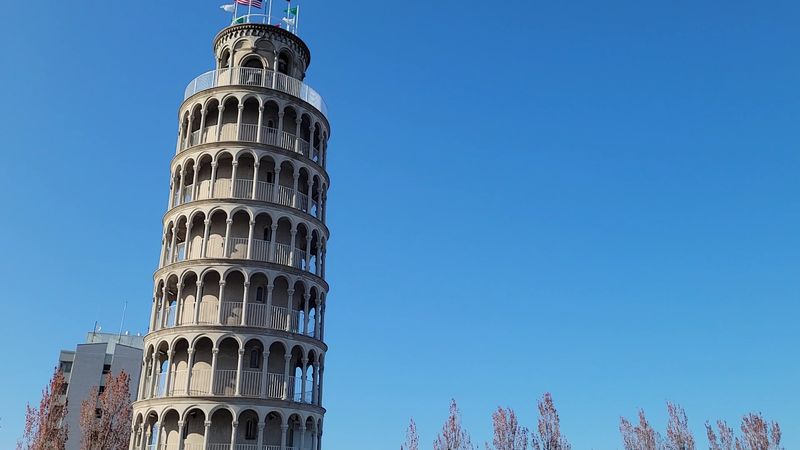
Road trips through Illinois do not always come loaded with obvious photo opportunities, which is exactly what makes the Leaning Tower of Niles such a satisfying discovery.
The classic forced-perspective shot, where you appear to be pushing or pulling the leaning structure, is practically a rite of passage for anyone who visits.
The tower provides an instantly recognizable backdrop that photographs beautifully in almost any lighting condition.
Morning light gives the white surface a warm glow, while golden hour in the late afternoon turns the whole scene into something almost painterly. Even overcast days have a moody, atmospheric quality that works surprisingly well in photos.
For travelers driving between Milwaukee and Chicago, or exploring the northern suburbs for the first time, this stop adds a genuinely fun and memorable chapter to any itinerary.
It takes maybe fifteen to twenty minutes to walk around, snap your photos, and soak in the quirky charm before heading back on the road with a story worth telling.