
This Stunning Castle In Florida You’ll Want To Visit Over And Over Again
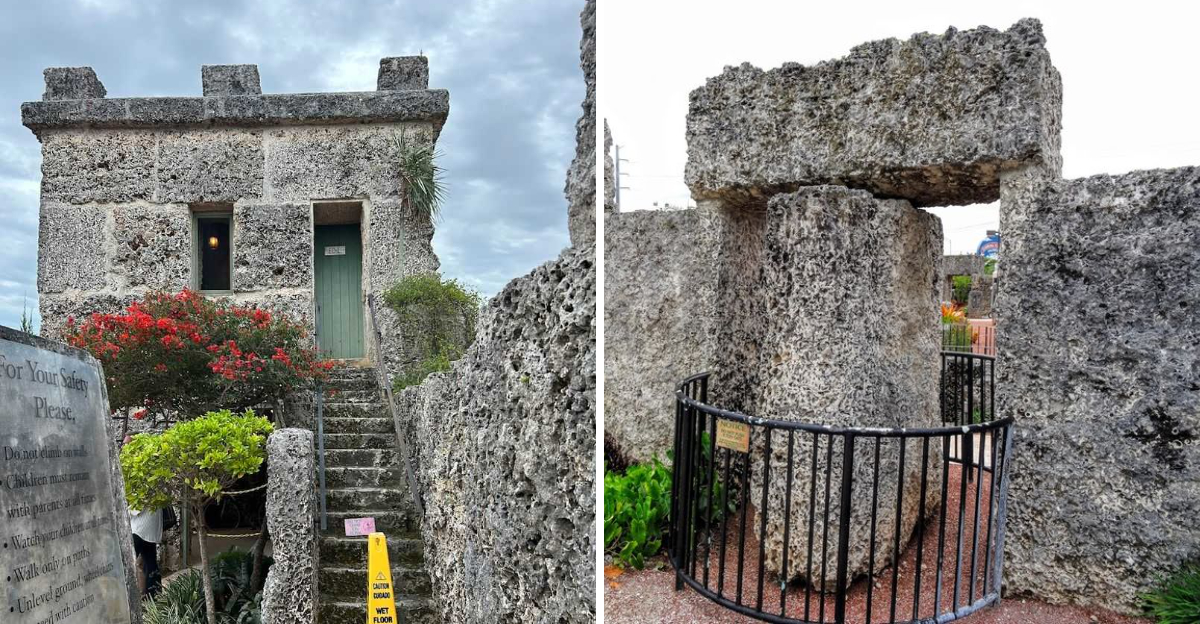
Have you ever stumbled across a place so strange that your first thought is, “How is this even possible?” Hidden somewhere in South Florida stands a stone complex that has puzzled visitors, historians, and engineers for decades.
At first glance, the towering coral blocks look like the ruins of an ancient civilization. Massive slabs weighing several tons form walls, gates, and sculptures that seem far too heavy for one person to move.
Yet every piece of this mysterious structure was built by a single man.
Edward Leedskalnin, a quiet Latvian immigrant who weighed barely 100 pounds, spent nearly three decades secretly creating this incredible stone monument between 1923 and 1951. Working mostly at night and using only simple hand tools, he somehow carved and positioned enormous coral blocks without modern machinery.
Some say it was built for lost love. Others believe he discovered a forgotten method of moving stone.
One thing is certain. The more you explore this unusual Florida landmark, the more questions appear, and the mystery only grows stronger.
A Monument Built Entirely By One Heartbroken Man
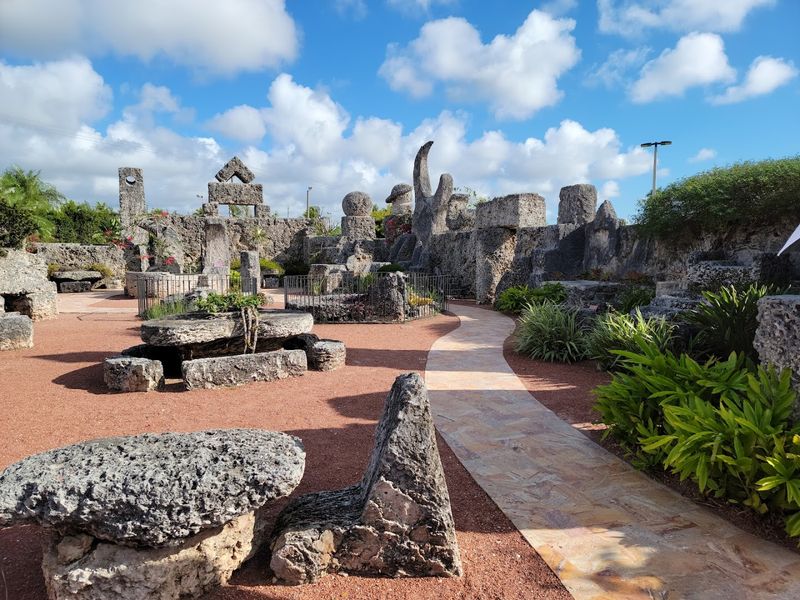
Edward Leedskalnin weighed barely 100 pounds and stood just over five feet tall, yet he somehow carved and positioned more than 1,100 tons of coral rock into towers, walls, furniture, and celestial sculptures. His former fiancée Agnes Scuffs left him the day before their wedding in Latvia, and he spent the next 28 years building this tribute to their failed romance.
I walked past his hand-carved rocking chairs, each weighing thousands of pounds but balanced so perfectly they move with a gentle push.
The engineering defies everything we understand about construction from that era. Ed worked alone, mostly at night, using only basic tools like chains, pulleys, and tripods fashioned from telephone poles.
When neighbors asked how he moved stones weighing several tons, he smiled and said he understood the secrets of the pyramids.
Standing beside his nine-ton gate that swings open with one finger, I felt the same chill visitors have experienced for decades. This wasn’t just construction, it was obsession transformed into coral and limestone, a physical manifestation of longing that refuses to fade even now, decades after Ed’s passing in 1951.
Massive Stone Gates That Move With One Finger
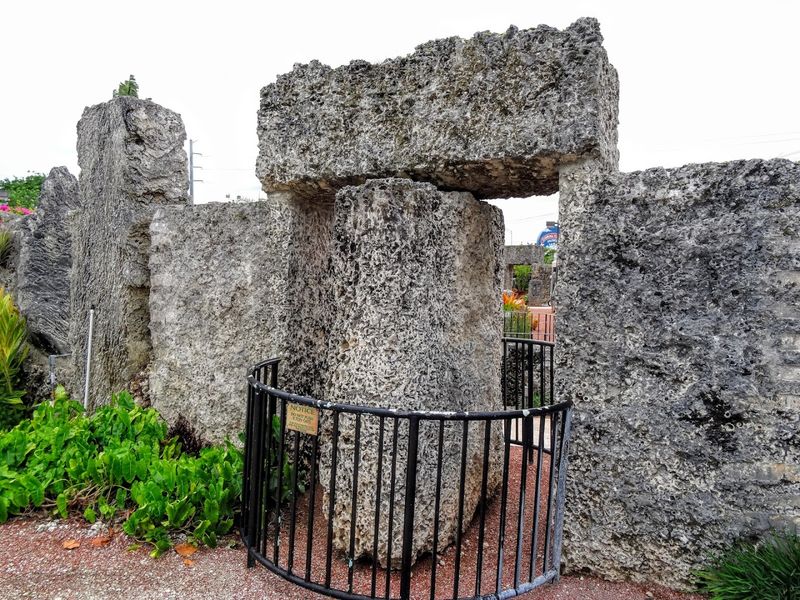
Walking up to a gate that weighs nine tons, I expected it to be permanently fixed in place like every other multi-ton rock formation I’d encountered. Then the tour guide touched it with a single finger, and the massive coral slab began rotating smoothly on its axis.
My jaw actually dropped, which probably happens to everyone who witnesses this engineering miracle for the first time.
Ed Leedskalnin designed this gate with such perfect balance and precision that it operated flawlessly for decades. The stone sits on a truck bearing, centered so expertly that friction barely exists.
When the gate finally stopped working in 1986, engineers discovered the bearing had rusted, and even with modern equipment, they struggled to replicate Ed’s original installation.
I’ve returned to Coral Castle four times now, and I always make someone who’s never been touch that gate themselves. Watching their faces transform from skepticism to wonder never gets old.
The gate represents everything mysterious about this place: how did a man with a fourth-grade education and no formal training achieve what modern engineers find difficult to explain or reproduce?
Perfectly Aligned Astronomical Calendar And Sundial
Ed spent three years carving a stone calendar that tracks the winter and summer solstices with stunning accuracy. I visited during the winter solstice once, and watching the sunlight hit exactly where Ed intended it to fall nearly a century ago gave me goosebumps.
This wasn’t just artistic expression but mathematical precision carved into coral rock without computers, laser levels, or modern surveying equipment.
The sundial he created tells time accurately throughout the day, its shadow moving across hand-carved markings that have weathered decades of Florida heat and hurricanes. I checked it against my phone multiple times during my last visit, and the stone timepiece matched within minutes.
His understanding of astronomy, geometry, and the earth’s rotation seems impossibly advanced for someone who supposedly had minimal formal education.
Tour guides mention that some researchers believe Ed possessed knowledge of ancient building techniques, possibly related to how the Egyptians constructed the pyramids. Standing there looking at his celestial instruments, I couldn’t dismiss those theories as easily as I might have before seeing the evidence carved into coral.
The precision speaks to something beyond lucky guessing or trial and error.
Hand-Carved Coral Furniture Weighing Thousands Of Pounds
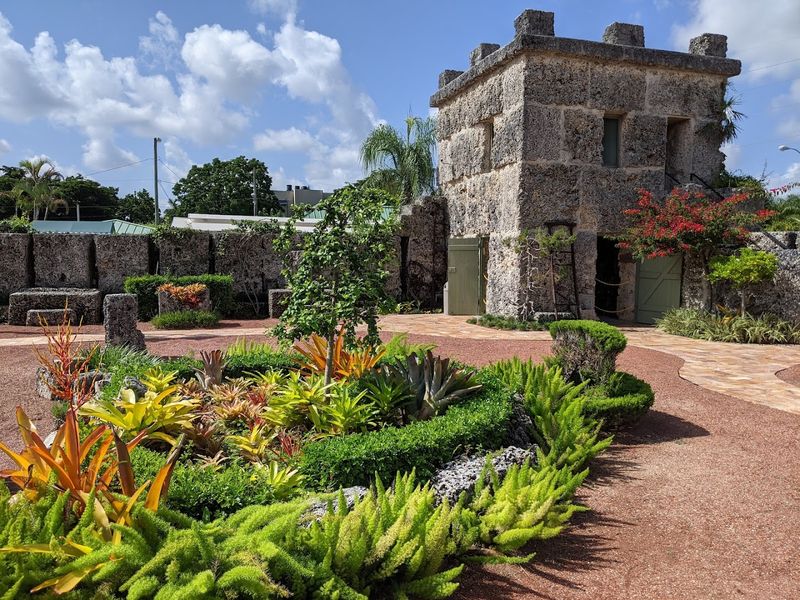
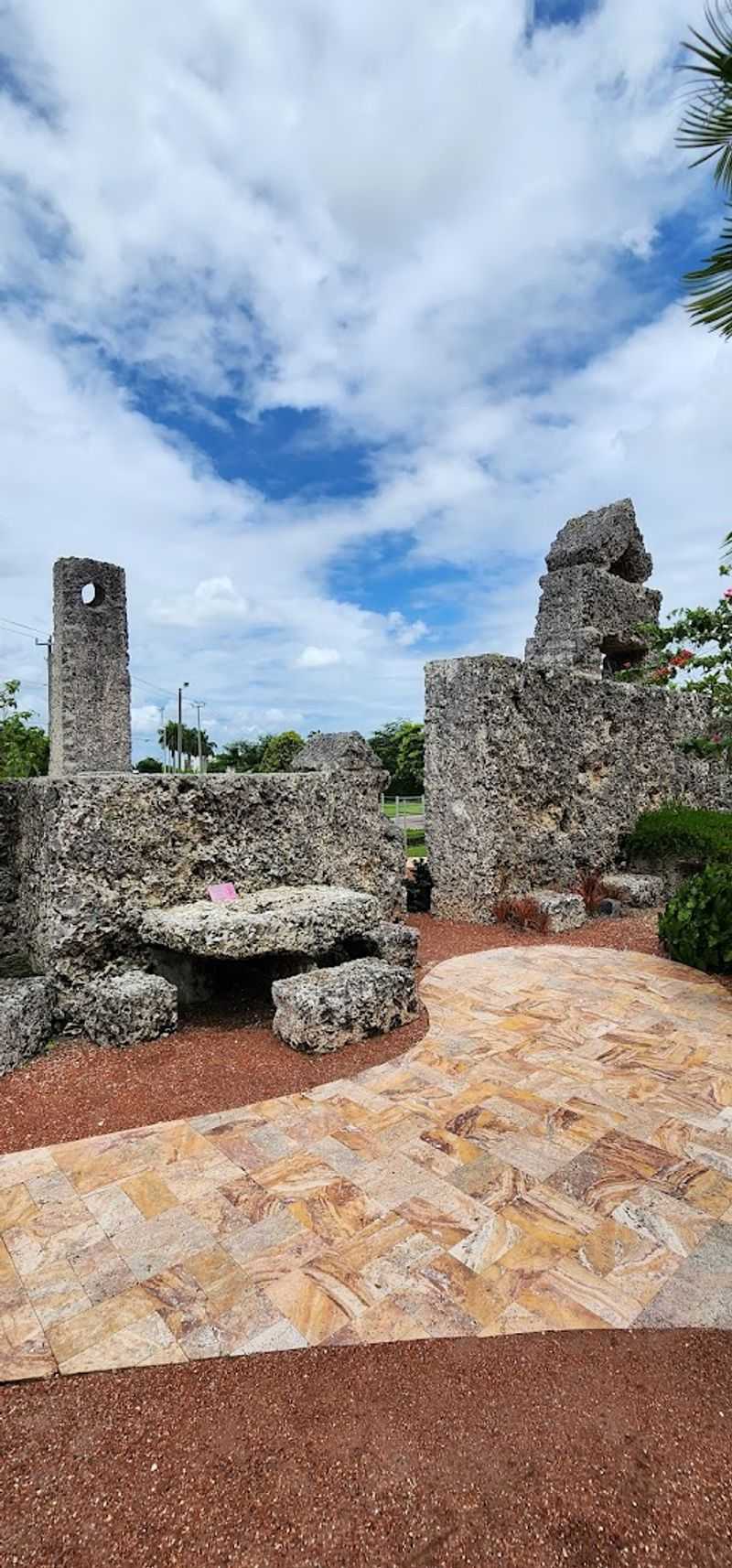
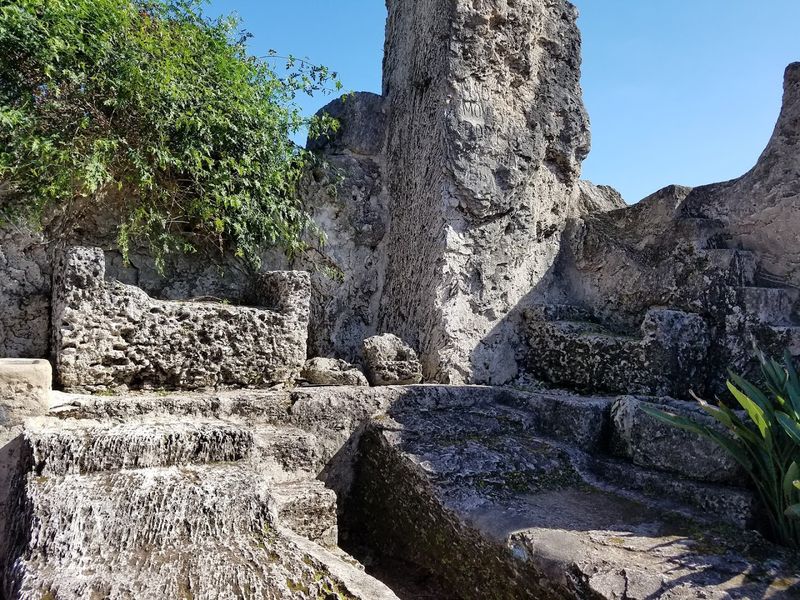
Sitting areas throughout Coral Castle feature chairs, tables, and thrones carved entirely from coral rock, each piece weighing more than most cars. I gently pushed one of the rocking chairs during my first visit, half expecting it to be cemented in place as a joke.
Instead, it rocked smoothly back and forth, balanced so perfectly that the massive weight became almost irrelevant to its movement.
Ed created heart-shaped tables, throne-like chairs fit for royalty, and even stone beds, all without power tools or heavy machinery. The surfaces show tool marks from his chisels and hand tools, evidence of countless hours spent shaping coral into functional art.
I ran my fingers across the carved armrest of one chair and tried imagining the patience required to hollow out stone by hand, one chip at a time.
What strikes me most about the furniture isn’t just the physical achievement but the romantic symbolism woven throughout. Heart shapes appear everywhere, tables are sized for two, and the overall layout suggests Ed built this as a home he hoped Agnes might one day share.
Every carved curve and polished surface represents another day spent transforming heartbreak into something beautiful and permanent.
Mystery Construction Methods That Baffle Modern Engineers
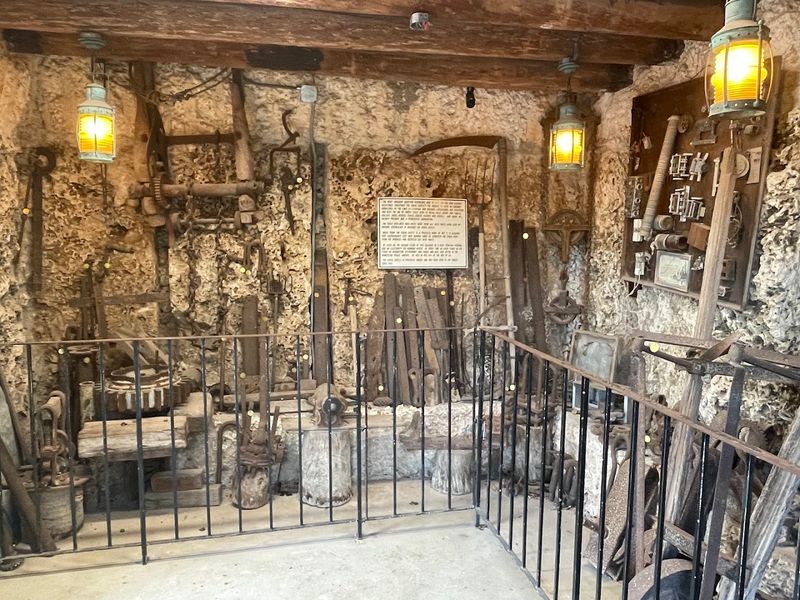
Nobody ever witnessed Ed moving the largest stones, which has fueled decades of speculation about his construction methods. I learned during the tour that he worked exclusively at night, stopping whenever anyone approached, and threatened to abandon the entire project if people tried to watch.
This secrecy has spawned theories ranging from lost ancient knowledge to magnetic levitation and even extraterrestrial assistance.
The tools he left behind include chains, pulleys, and wooden tripods, equipment that seems laughably inadequate for moving 30-ton blocks. Modern engineers who’ve studied the site admit they couldn’t replicate his work using only the tools Ed possessed.
I stared at his workshop area trying to imagine how those simple implements could raise stones higher than a two-story building and position them with millimeter precision.
One tour guide mentioned that when Ed moved the entire castle from Florida City to Homestead in the 1930s, he hired a truck only to transport the stones after he’d already loaded them himself. Neighbors reported seeing the rocks on the truck but never saw Ed load them.
The physics don’t add up, the timeline seems impossible, and yet here stands the evidence that somehow, he did exactly what everyone says couldn’t be done.
Intricate Stone Carvings Depicting Celestial Bodies
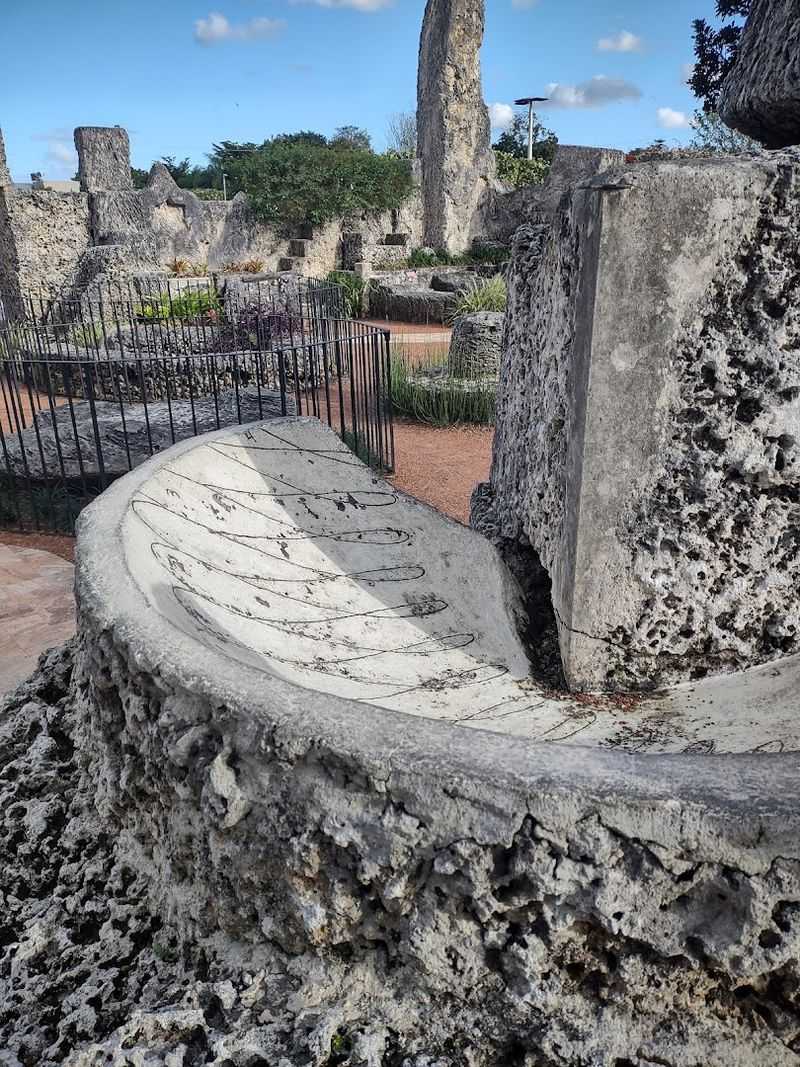
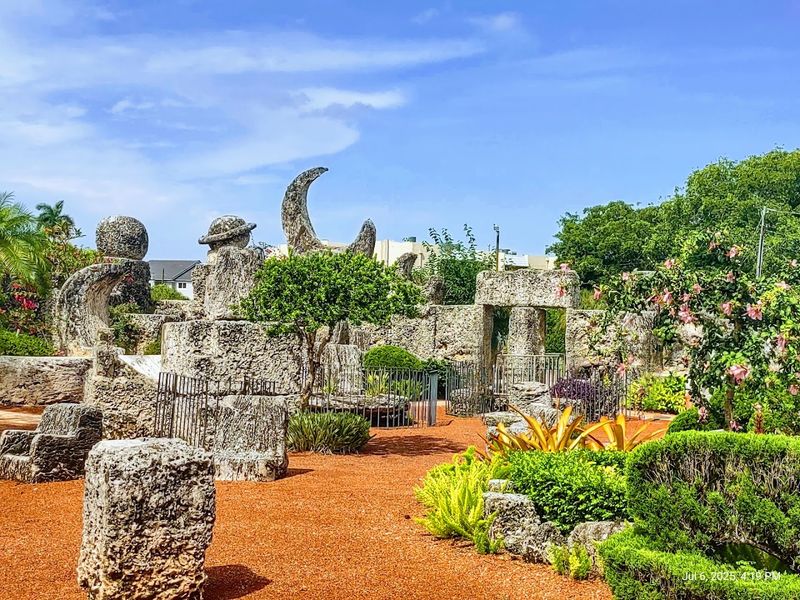
Mars, Saturn, and crescent moons carved into coral stone decorate various structures throughout the property, each one demonstrating Ed’s fascination with astronomy and the cosmos. I noticed during my third visit that the planetary symbols aren’t randomly placed but seem to follow specific astronomical relationships.
The crescent moon appears in multiple locations, always oriented correctly according to how it would appear in the night sky during different seasons.
Ed carved these celestial bodies with remarkable detail considering his tools and the rough texture of coral rock. Some pieces show phases of the moon, others depict planets with their characteristic features, and still others seem to represent star patterns or constellations.
I asked the tour guide if Ed had any formal astronomy training, and she laughed, reminding me he barely attended school past fourth grade.
What fascinates me most about these carvings is how they blend science with romance. Ed clearly saw connections between the heavens and his earthly heartbreak, perhaps finding comfort in the eternal movements of celestial bodies while his own life remained stuck in the past.
The stars and planets he carved will outlast us all, just as his love for Agnes outlasted their brief engagement by decades.
The Polaris Telescope Aligned To The North Star
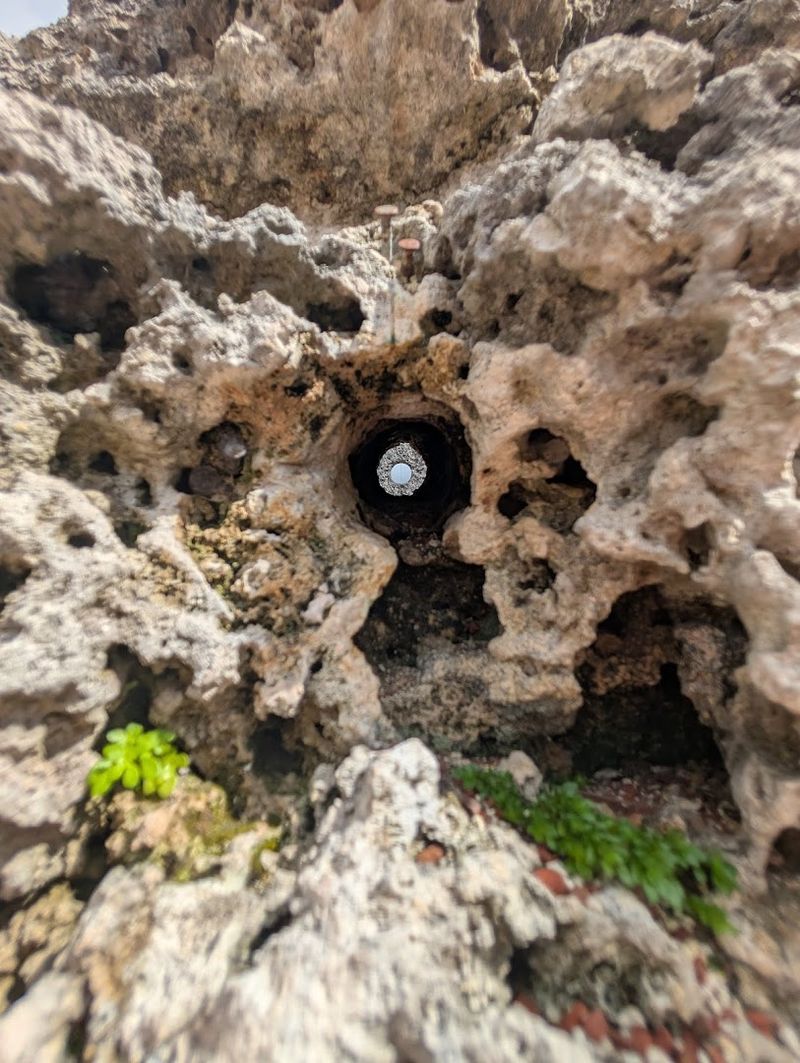
Ed built a 25-ton telescope from coral rock, complete with a crosshair opening that aligns perfectly with Polaris, the North Star. I looked through it during an evening visit, and sure enough, Polaris appeared centered in the frame exactly as Ed intended when he carved it decades ago.
The precision required to align a static stone structure with a celestial object visible only at night demonstrates knowledge that seems beyond what a self-taught builder should possess.
The telescope stands tall among his other astronomical instruments, a testament to Ed’s obsession with the cosmos and precise measurements. Unlike modern telescopes that adjust and track stars across the sky, this one remains fixed, yet Polaris appears in the same spot year after year because Ed understood how to account for the Earth’s rotation and the star’s position.
I’ve tried explaining this to friends, and they struggle to believe one man calculated and executed this without computers or advanced mathematical training.
Tour guides love to mention that some researchers tested one of the coral stones and supposedly found it wasn’t from Earth, though this claim remains disputed. Standing beneath the telescope looking up at Polaris, I didn’t need alien theories to feel awestruck by what Ed accomplished through sheer determination and mysterious knowledge.
Guided Tours Revealing Fascinating Stories And Theories
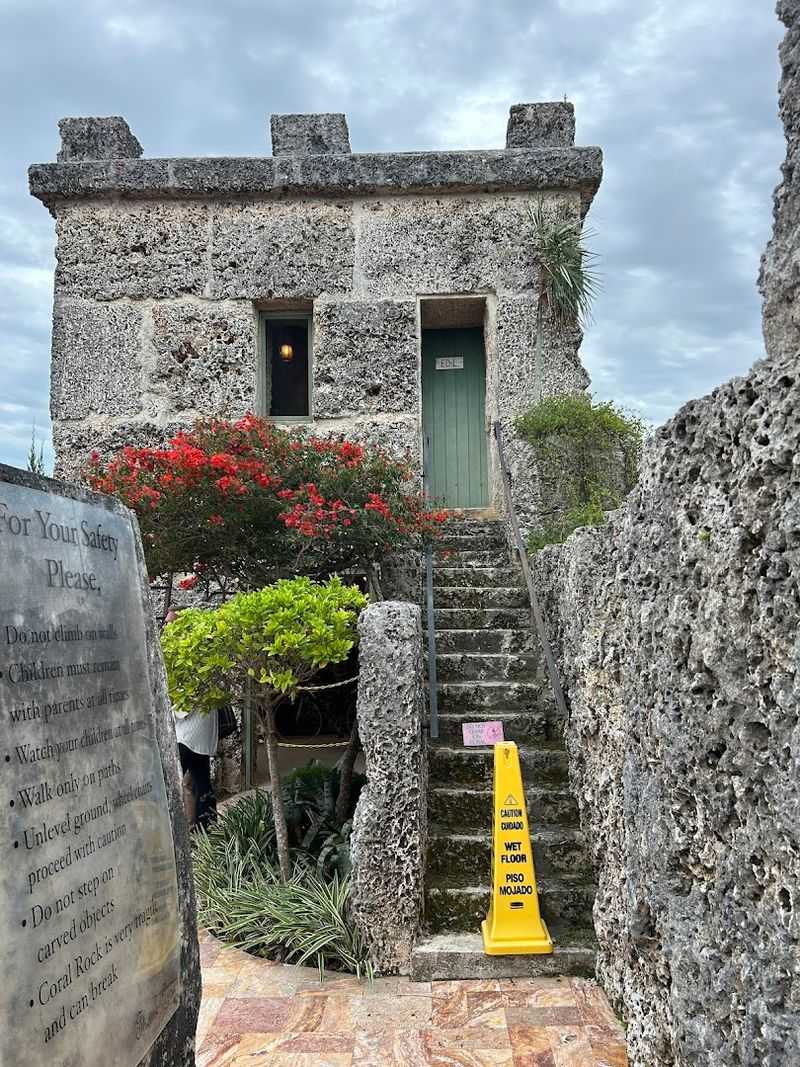
Every tour I’ve taken at Coral Castle has revealed new details I missed during previous visits. The guides aren’t just reciting memorized facts but sharing genuine enthusiasm for Ed’s story and the ongoing mysteries surrounding his construction methods.
Willie, Andrea, and Jordy get mentioned repeatedly in reviews because they transform a simple museum tour into an engaging theatrical performance filled with humor, history, and healthy skepticism about various theories.
Tours run on the hour, and I recommend arriving early to watch the introductory film before joining your guide. The documentary provides context about Ed’s life in Latvia, his heartbreak, and his journey to Florida, though some visitors complain it focuses too much on Billy Idol’s music video filmed at the site.
I found the video helpful for understanding Ed’s motivations, even if it feels dated by modern standards.
What I appreciate most about the guided format is how it prevents vandalism while ensuring everyone hears the complete story. You can’t wander freely anymore like in the old days, but given how some visitors behave, I understand why management implemented stricter controls.
After the tour ends, you can explore at your own pace, taking photos and contemplating the mysteries your guide just described in entertaining detail.
A Love Story Carved In Stone Across Decades
Agnes Scuffs left Ed the day before their wedding in 1913, when she was 16 and he was 26, and he never recovered from the rejection. Every heart carved into coral, every table set for two, every romantic symbol scattered throughout the property speaks to his eternal devotion to a woman who married someone else and lived her life an ocean away.
I can’t decide if it’s beautifully tragic or tragically beautiful, but either way, the emotion carved into stone hits differently than any love letter ever could.
Ed called Agnes his “Sweet Sixteen,” and that nickname appears in various forms throughout the castle. He created this entire monument hoping she might one day visit and see what her rejection had inspired him to build.
She never came, never acknowledged his decades of labor, and probably never knew the extent of what he created in her memory. I find that absence somehow makes the story more poignant, this one-sided love affair preserved in coral for generations to witness.
Standing in the courtyard surrounded by Ed’s handiwork, I think about how heartbreak affects people differently. Some write poetry, others compose music, but Ed moved mountains of coral rock with his bare hands, transforming pain into something that would outlast both of them and puzzle visitors for a century or more.
An Enduring Mystery That Keeps Visitors Returning
I’ve visited Coral Castle four times now, and I still leave with more questions than answers. How did Ed move 30-ton blocks without modern equipment?
Where did he learn engineering principles that still puzzle many experts today? Did he really understand secrets of the pyramids, or was that simply part of the legend surrounding his work?
The mystery doesn’t fade with repeated visits. In fact, it often deepens as you start noticing new details and contradictions hidden throughout the site.
Theories about magnetic levitation, antigravity devices, and extraterrestrial assistance might sound far-fetched at first. But when you stand beside those perfectly balanced stones, conventional explanations don’t always feel completely satisfying.
I’m not saying Ed had alien help, but it’s easy to understand why people reach for extraordinary explanations when ordinary ones seem incomplete. Something remarkable clearly happened here, something that still fascinates visitors today.
What keeps drawing people back isn’t only the massive stone structures but also the human story behind them: a quiet immigrant with little formal education who transformed heartbreak into a lasting creation. Whether you lean toward mystical theories or prefer scientific curiosity, Coral Castle continues to spark wonder and imagination for everyone who walks through its gates.