
This Gainesville, Florida Spot Is Where Half A Million Bats Erupt Into The Sky Every Night
Have you ever witnessed a moment in nature so surprising that an entire crowd suddenly goes quiet? In Florida, there is a place where that exact scene unfolds almost every evening as the sun begins to set.
At first, nothing seems unusual. Visitors gather in an open area, chatting quietly and glancing toward a few simple wooden structures nearby.
The sky slowly darkens, and for a brief moment everything feels completely still.
Then it begins.
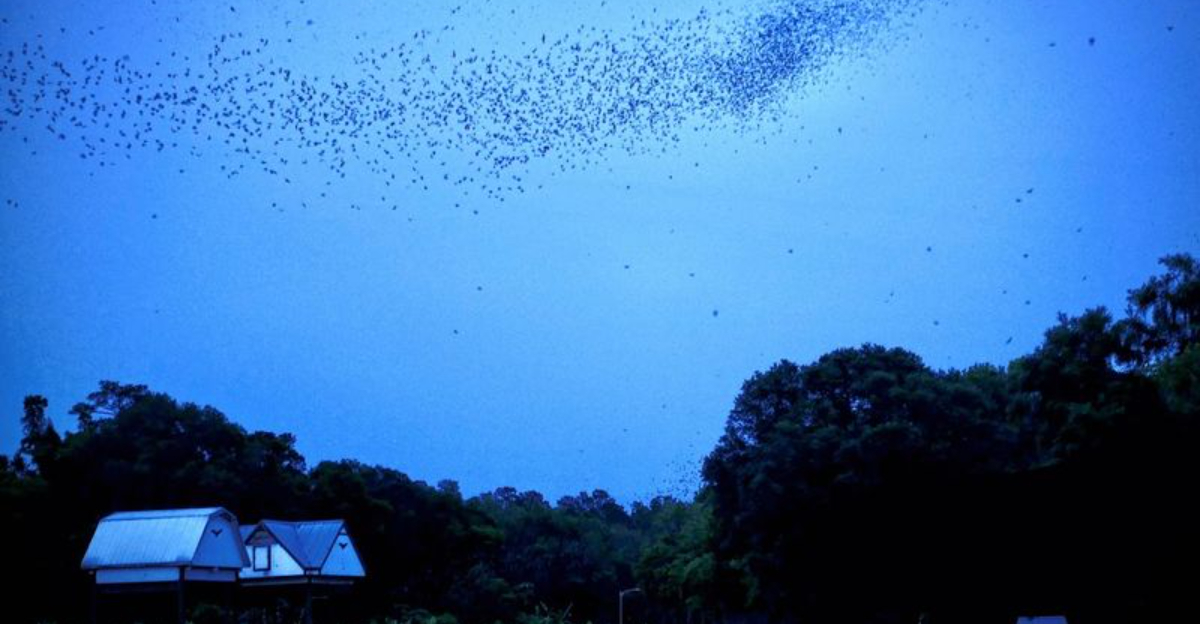
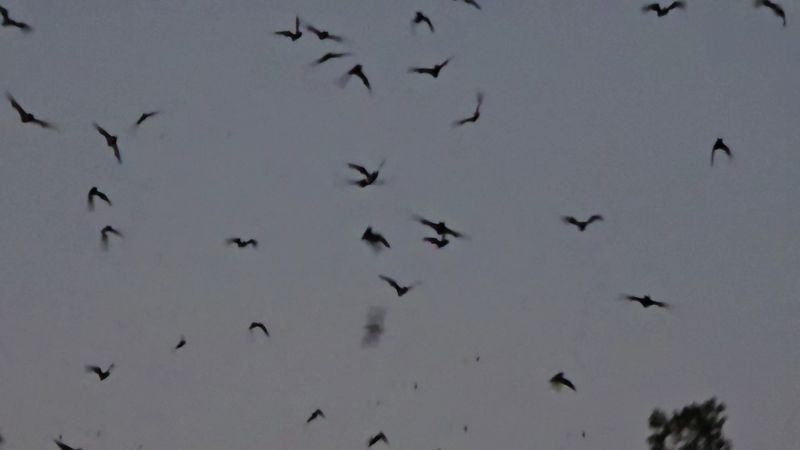
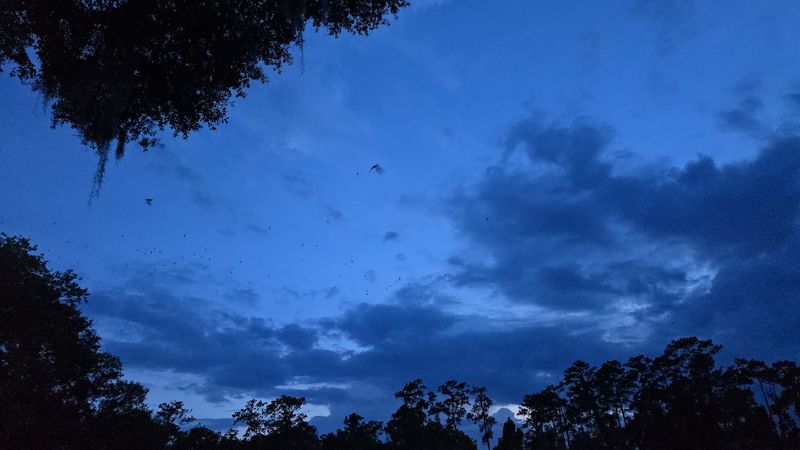
A few bats slip into the air, followed by dozens more. Within seconds, the trickle becomes a rushing stream as thousands upon thousands swirl upward, forming a living river that stretches across the evening sky.
The movement feels endless, like watching nature press fast-forward.
This incredible spectacle happens every warm evening, when roughly half a million bats pour out in waves that seem almost unreal.
It is one of Florida’s most unforgettable wildlife experiences, and the kind of natural show that makes first-time visitors stare in disbelief while locals keep coming back just to see it again
A Nightly Spectacle That Rivals Any Fireworks Show
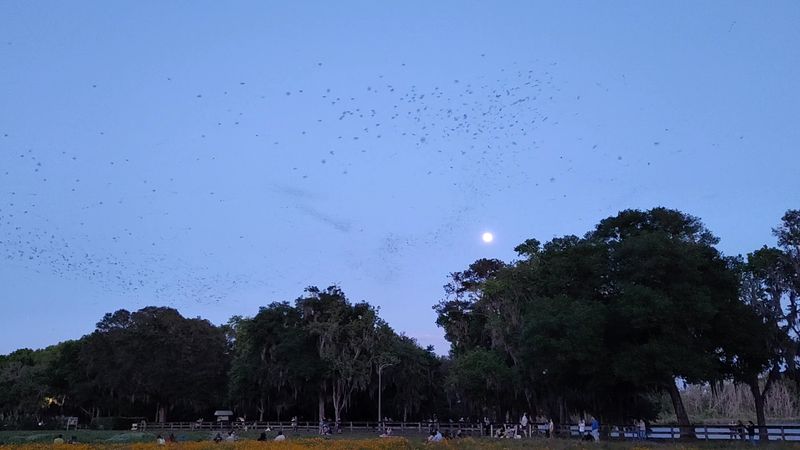
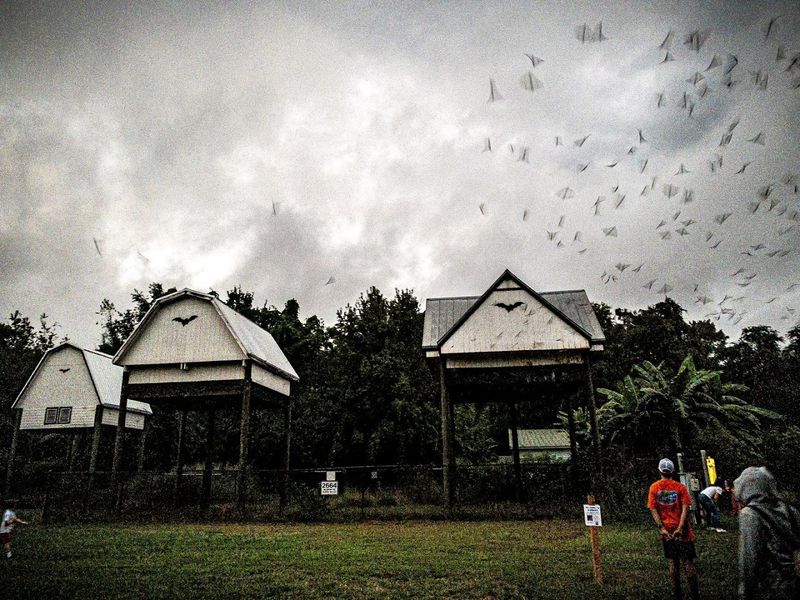
Watching half a million bats take flight feels like witnessing nature’s own choreographed performance. The Brazilian free-tailed bats wait until about ten to fifteen minutes after sunset, then suddenly explode from the houses in dense columns that stream overhead for several minutes.
I’ve stood beneath that living cloud more times than I can count, and the sight never gets old. The sheer volume of wings creates a soft rushing sound, while the bats form shifting patterns against the twilight sky that photographers scramble to capture.
What makes this display even more remarkable is its consistency. On warm evenings throughout the active season, you can set your watch by these creatures.
They emerge with purpose, heading out to consume an estimated 2,500 pounds of insects each night.
The southeastern bats trickle out first in smaller numbers, almost like opening act performers testing the stage. Then the main event begins when the Brazilian free-tails pour out in overwhelming numbers, creating that unforgettable spectacle that draws crowds of students, families, and wildlife enthusiasts to Museum Road.
Standing there as darkness falls, you realize you’re witnessing something truly special that happens right in the heart of a college town. If you want to see this incredible nightly display yourself, the bat houses are located at 100 Museum Rd, Gainesville, FL 32611.
An Ingenious Solution Born From Stadium Renovation
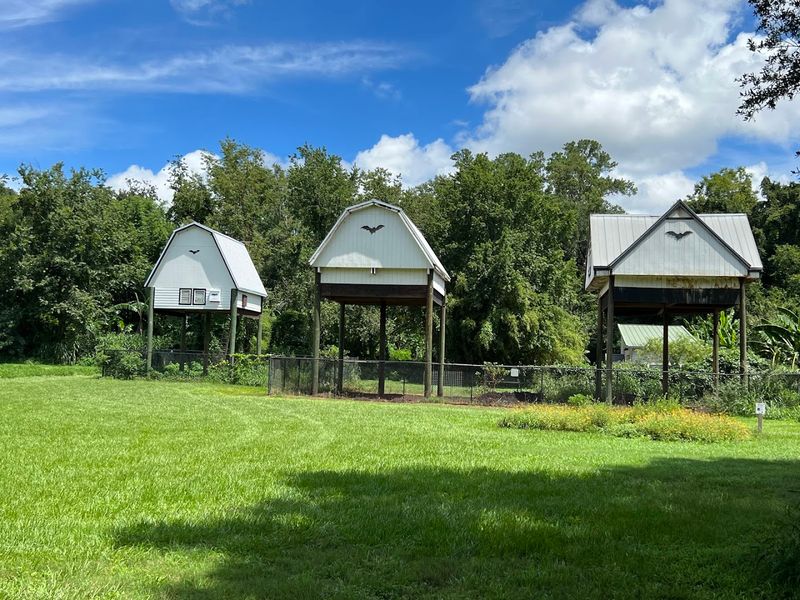
These towers weren’t always part of the Gainesville landscape. Back in the 1980s, thousands of bats were roosting in Florida Field at Ben Hill Griffin Stadium, creating a situation that needed addressing before renovations could proceed.
Rather than simply displacing these beneficial creatures, university researchers came up with a creative alternative. They designed and built specialized bat houses on campus to give the stadium residents a new home that would serve them even better than the stadium ever could.
The project succeeded beyond anyone’s initial expectations. What started as a practical solution to a stadium problem became the largest occupied bat houses in the world, attracting not just the relocated bats but eventually growing to house hundreds of thousands more.
Located at Museum Road in Gainesville, FL 32611, these structures represent thoughtful wildlife management at its finest. The design includes multiple chambers that provide ideal roosting conditions, maintaining the temperature and humidity levels that bats need to thrive.
This eco-friendly approach turned what could have been a conflict between human needs and wildlife into a conservation success story that benefits both the university community and the local ecosystem in measurable ways.
Lake Alice Provides The Perfect Backdrop
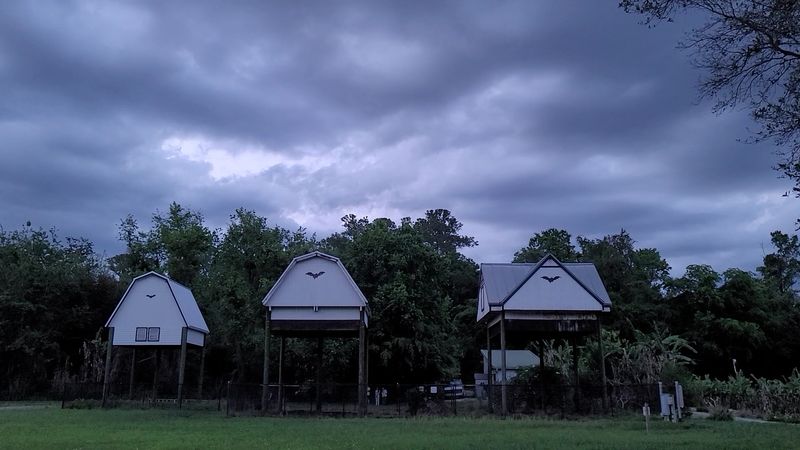
Right across the street from the bat houses, Lake Alice stretches out like a postcard of old Florida. The lake creates a stunning setting where you can arrive early and enjoy the natural beauty while waiting for the evening’s main attraction to begin.
I’ve spent countless pre-bat hours walking along the lake’s edge, spotting alligators sunning themselves and watching dozens of bird species go about their evening routines. Turtles pile onto logs, herons stalk the shallows, and the whole scene radiates that peaceful energy that makes you forget you’re on a university campus.
The combination of the lake and the bat houses turns a simple wildlife viewing into a complete nature experience. Families spread out on the grass, couples walk the paths, and photographers position themselves to capture both the water’s reflection and the sky above.
That cool breeze coming off Lake Alice on a warm evening makes the wait comfortable, even pleasant. The entire area feels like a hidden oasis where campus life fades away and the natural world takes center stage.
By the time the bats start their exodus, you’ve already enjoyed an hour or more of Florida’s diverse ecosystem, making the whole visit feel like a mini adventure rather than just a quick stop.
A Community Gathering Unlike Any Other
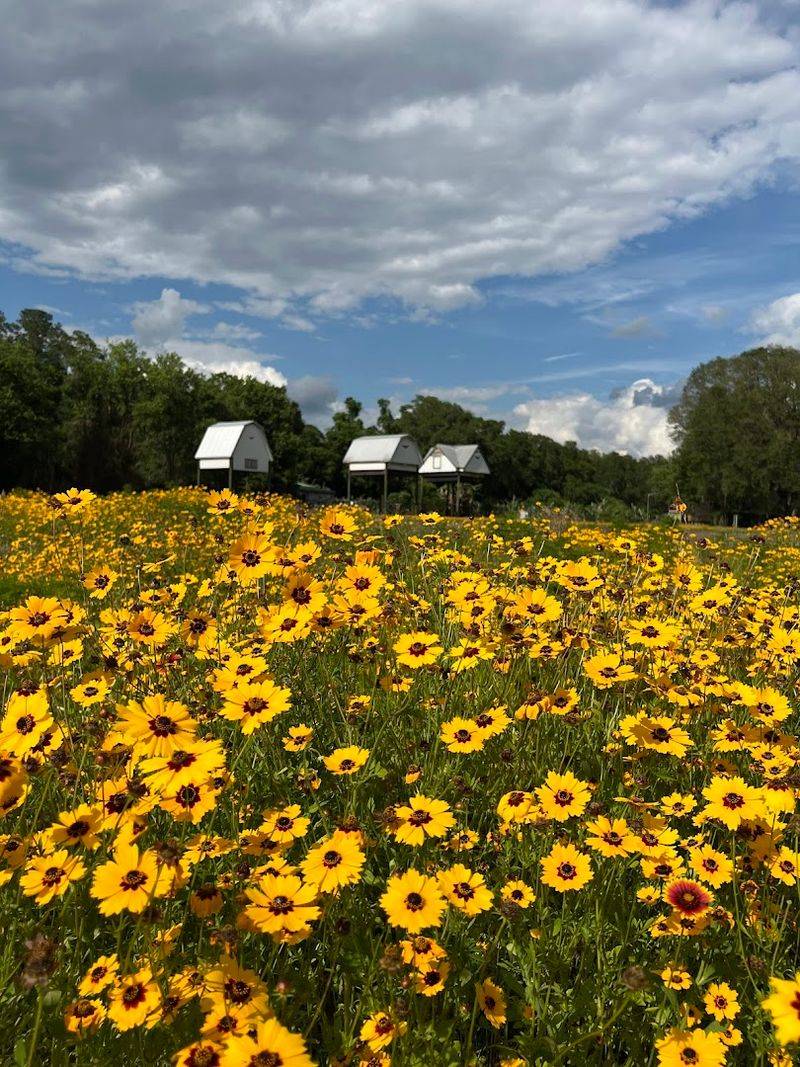
Something magical happens as sunset approaches and people start arriving at the bat houses. Strangers become a temporary community, united by anticipation and shared wonder at what’s about to unfold above their heads.
Students arrive with blankets and settle onto the grass, families with young children claim spots near the front, and regulars who’ve seen this show dozens of times still come back for another performance. The atmosphere buzzes with friendly conversation and that special excitement that comes before a natural spectacle begins.
Unlike most wildlife viewing that requires silence and distance, this experience encourages social connection. People chat about previous visits, share tips about the best viewing angles, and point out the first bats to emerge as if spotting them first is a shared victory.
I’ve watched complete strangers help each other get better photos, explain the science behind the emergence to curious kids, and collectively gasp when the main swarm begins. That sense of community adds another layer to the experience that you don’t get watching nature documentaries alone on your couch.
The benches along the sidewalk fill up fast, but the grassy areas provide plenty of space for everyone to find their perfect viewing spot without feeling crowded or rushed.
Timing Your Visit For Maximum Impact
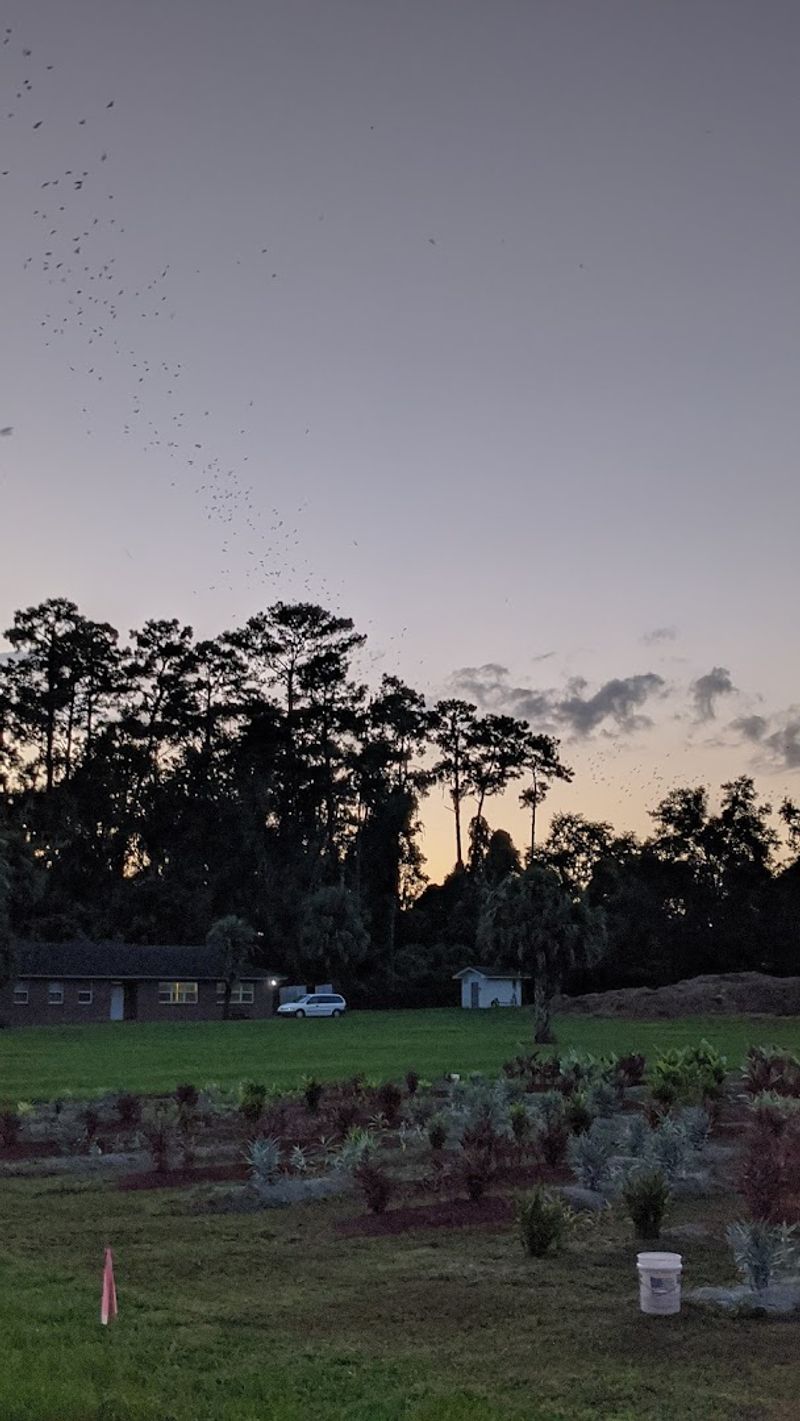
Success at the bat houses depends entirely on showing up at the right moment. The bats operate on nature’s schedule, emerging roughly ten to twenty minutes after the sun dips below the horizon, though the exact timing shifts with the seasons.
In September, I’ve watched the first bats appear around 7:40 or 7:50 in the evening, while summer months see earlier emergences and winter visits might leave you waiting longer or seeing no bats at all if temperatures drop too low. The houses stay open from 6 PM to 9 PM daily, giving you a window to arrive and settle in.
Smart visitors check the sunset time for their visit date and plan to arrive at least thirty minutes early. This buffer lets you claim a good viewing spot, explore Lake Alice across the street, and get your cameras ready without the stress of rushing.
Temperature matters as much as timing. When evening temperatures fall below 55 degrees, those little creatures decide to stay home, and you’ll find yourself staring at silent houses while other disappointed visitors slowly drift away.
The website at floridamuseum.ufl.edu/bats provides current information about viewing conditions and seasonal patterns that can help you plan the perfect visit.
An Insect Control System That Actually Works
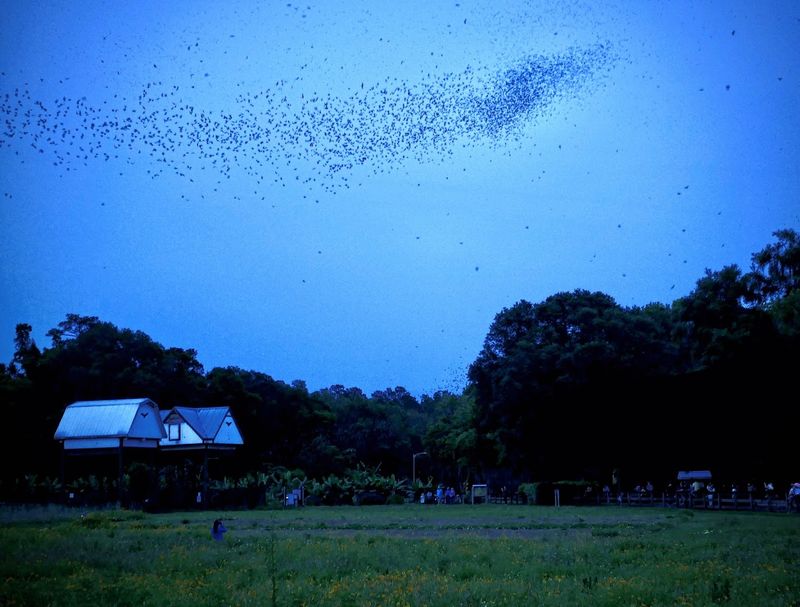
Beyond the spectacle, these bats serve as Gainesville’s unpaid pest control workforce. Every single night during the active season, the colony collectively consumes approximately 2,500 pounds of insects, including mosquitoes, moths, and agricultural pests that would otherwise plague the area.
That’s not just an impressive statistic for nature lovers to quote. It translates to real benefits for everyone living, working, or studying in the region.
Fewer mosquitoes means more comfortable evenings outdoors, and reduced agricultural pests helps local farmers avoid pesticide use.
The Brazilian free-tailed bats that make up the majority of this colony are particularly efficient hunters. They can fly up to 60 miles in a single night’s foraging trip, covering vast areas and consuming their body weight in insects before returning home at dawn.
I find it fascinating that these tiny mammals, each weighing less than half an ounce, collectively make such a massive impact on the local ecosystem. Their presence demonstrates how wildlife conservation and human interests can align perfectly when we create the right conditions.
Watching them pour out each evening isn’t just entertainment but witnessing an ecological service that keeps the entire region more livable and balanced throughout the warm months.
Facilities That Make The Experience Comfortable
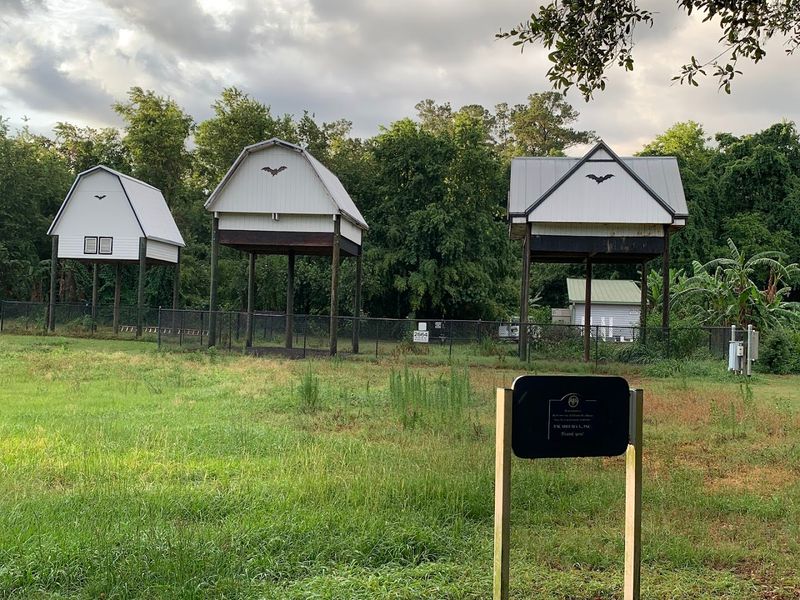
The university maintains this viewing area with visitors in mind, providing amenities that turn what could be a rough outdoor adventure into a comfortable evening out. Sidewalks with benches line the viewing area, giving you options whether you prefer to sit or stand during the emergence.
Free parking sits adjacent to the bat houses, eliminating the stress of finding a spot or feeding meters while you watch. That convenience matters when you’re trying to time your arrival perfectly with sunset and don’t want to miss the show because you’re circling blocks looking for a space.
Restrooms located nearby solve the practical problem that often makes outdoor viewing challenging, especially for families with young children. You can arrive early, explore the area, and not worry about needing facilities during the critical viewing window.
The grounds themselves stay well-maintained throughout the season. Mowed grass provides clean places to sit or spread blankets, and the pathways remain clear and accessible for visitors of all mobility levels.
During the day, you can even walk close enough to the houses to hear the bats rustling and squeaking inside if you approach quietly and carefully. That auditory preview adds another dimension to understanding just how many creatures live in those deceptively simple-looking wooden towers.
Weather Dependency Creates Anticipation
Part of what makes each visit feel special is knowing the show isn’t guaranteed. These bats respond to temperature and weather conditions, making every successful viewing feel like a small victory over the unpredictable forces of nature.
Cold fronts can shut down the evening emergence completely. I’ve arrived on nights when temperatures hovered around 54 degrees, joined other hopeful visitors in waiting, and watched absolutely nothing happen as the bats sensibly stayed tucked inside their warm roosts.
Rain and strong winds also keep the colony grounded, though light drizzle sometimes doesn’t deter them if the temperature stays warm enough. That uncertainty means checking weather forecasts becomes part of planning your visit, adding an element of strategy to what seems like a simple outing.
The warmest months from late spring through early fall provide the most reliable viewing, with summer evenings offering near-perfect conditions most nights. During these peak months, you can visit with reasonable confidence that you’ll witness the full spectacle.
That weather dependency actually enhances the experience rather than diminishing it. Knowing the bats might not emerge makes the nights when they do pour out in massive numbers feel even more remarkable and worth celebrating with the crowd around you.
Educational Value Beyond The Visual Show
The bat houses function as more than entertainment venues. They serve as living laboratories where researchers study bat behavior, population dynamics, and the ecological role these creatures play in Florida’s environment.
Signs and information around the site explain the science behind what you’re witnessing. You’ll learn about the different species present, why bats choose certain roosting conditions, and how the university’s conservation efforts have created this thriving colony.
For families, this combination of spectacle and education creates perfect teaching moments. Kids who might find textbook biology boring suddenly ask questions about echolocation, migration patterns, and food chains when they’re standing beneath thousands of flying mammals.
The Florida Museum of Natural History maintains the site and provides resources online that deepen understanding before or after your visit. Learning that these bats migrate thousands of miles, navigate using sophisticated biological sonar, and play crucial roles in ecosystems transforms them from spooky Halloween symbols into fascinating examples of evolutionary adaptation.
I’ve overheard countless conversations where parents explain concepts to children, students discuss their biology coursework, and visitors share facts they’ve learned from previous trips. That informal education happening alongside the visual experience makes the bat houses valuable community resources beyond their conservation purpose.
A Free Activity That Delivers Premium Experiences
In a world where memorable experiences often come with hefty price tags, the bat houses offer something increasingly rare. This spectacular natural show costs absolutely nothing, making it accessible to everyone regardless of budget constraints.
That free admission matters for college students managing tight finances, families looking for activities that won’t break the bank, and tourists who want to experience Gainesville’s unique attractions without spending their entire travel budget. You get world-class wildlife viewing without tickets, reservations, or admission fees.
The value extends beyond just saving money. Free access removes barriers that might prevent people from experiencing nature, creating opportunities for spontaneous visits that wouldn’t happen if you had to plan and budget for expensive admission.
I’ve brought out-of-town visitors who initially seemed skeptical about spending an evening watching bats, only to have them declare it the highlight of their Gainesville trip. That reaction happens repeatedly because the experience delivers far more than the zero-dollar cost suggests it should.
The combination of spectacular wildlife, beautiful setting, community atmosphere, and educational value creates an experience that would easily justify a substantial admission fee at any commercial attraction, yet here it remains freely available every warm evening throughout the season for anyone who shows up.