
Pennsylvania’s Boulder Field Hides One Of The Civil War’s Most Haunted Locations
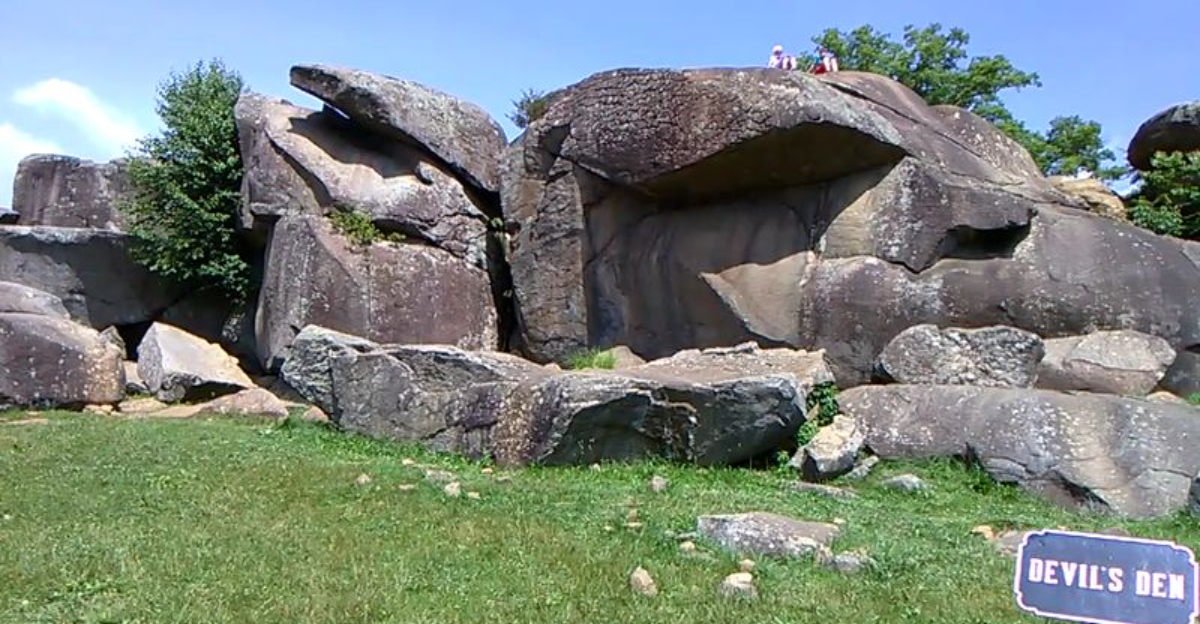
History sometimes leaves its mark in the most unusual landscapes.
Massive boulders scattered across a quiet field can look peaceful at first glance, yet stories linger among the stones that hint at something far more dramatic.
Wind moves softly through the gaps, footsteps echo across the rocks, and the imagination starts to wander.
It is eerie atmosphere, historic mystery, and the fascinating blend of nature and legend that keeps curious travelers coming back.
Pennsylvania feels like a living history book when you explore places like this, full of stories waiting to be discovered.
Some landscapes carry powerful stories that stretch back generations, where natural scenery and historic events have become deeply connected.
Visitors arrive expecting striking views and soon discover a deeper layer of intrigue tied to the past. The atmosphere alone can make a simple walk feel unforgettable.
I sometimes imagine carefully stepping across the rocky ground, pausing for a moment of silence, and wondering how many stories those weathered stones could tell if they could speak.
How A Rocky Field Got Such A Sinister Name
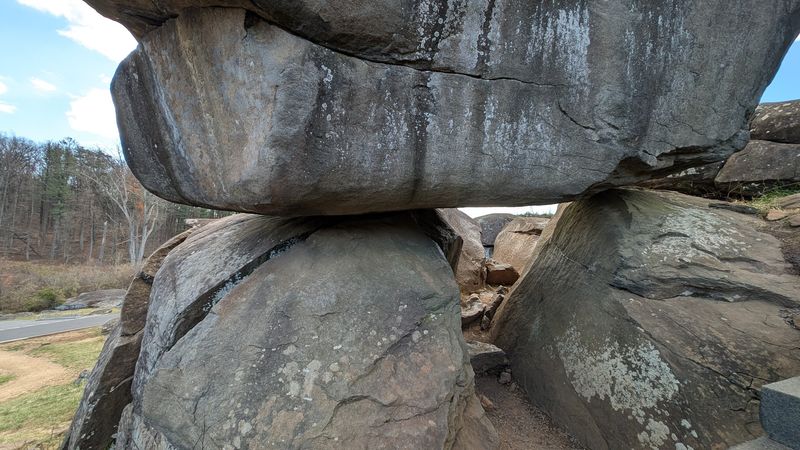
Long before any soldiers set foot here, local folklore gave this boulder field a reputation that made people nervous.
One widely repeated explanation is that the name “Devil’s Den” grew out of old stories about a large snake said to live deep within the rock crevices, a creature locals nicknamed “the Devil.”
That pre-war legend added a layer of dread to an already intimidating landscape.
The rocks are enormous, stacked in ways that create dark gaps and shadowy tunnels, which probably fueled the imagination of anyone passing by on a foggy morning.
Interestingly, the name stuck even after the battle made the place famous for entirely different reasons.
Today, the combination of that older snake story and the site’s Civil War history creates a double layer of storytelling that few places can match.
Ohio tourists and history buffs alike find the name’s origin surprisingly fascinating once they hear it.
The Battle That Shaped Devil’s Den Forever
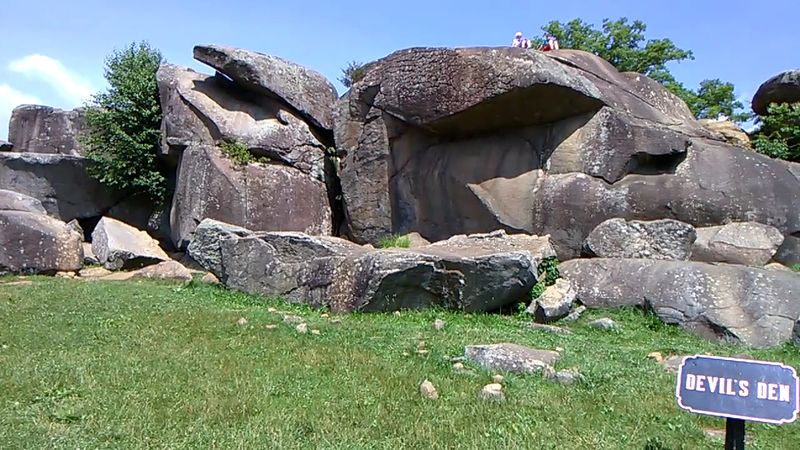
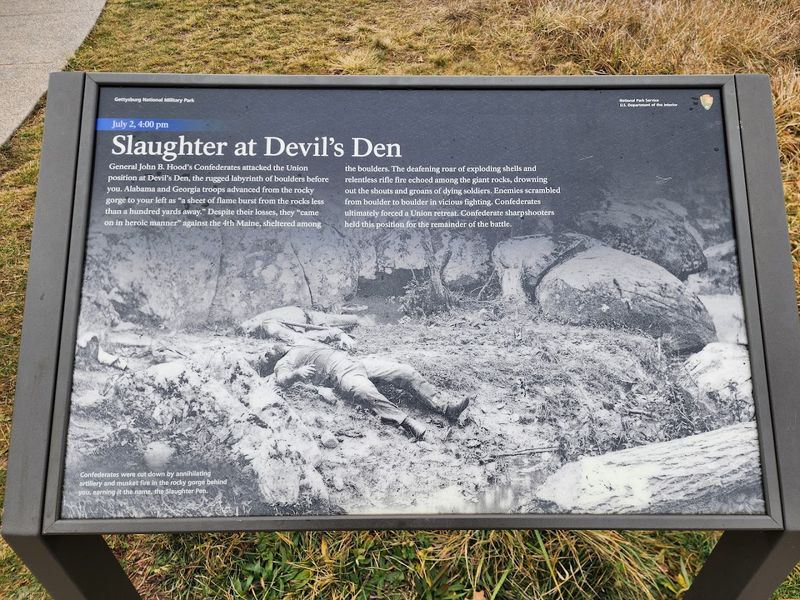
On July 2, 1863, one of the Civil War’s bloodiest afternoons unfolded right here among the boulders.
Confederate forces pushed hard against Union positions, turning this rocky field into a fierce combat zone that neither side would forget.
The terrain itself played a huge role in the fighting. The massive rock formations gave soldiers natural cover, but they also made movement unpredictable and dangerous.
Regiments from Alabama marched through grueling conditions, reportedly without water, before launching their assault across this very ground.
What makes this spot so striking today is how little it has changed. The boulders still sit in roughly the same positions soldiers crouched behind over 160 years ago.
Visitors from Ohio and beyond consistently say that standing here makes the history feel startlingly real, almost like the landscape itself remembers every moment of that brutal summer day.
The Iconic Photograph That Started A Controversy
After the battle ended, photographers Alexander Gardner and Timothy O’Sullivan arrived at Devil’s Den and created one of the most recognized images of the entire Civil War.
The photograph, titled “Home of a Rebel Sharpshooter,” showed a Confederate soldier’s body positioned dramatically among the rocks.
Here is where things get complicated. Researchers later discovered that the body had been moved and staged to create a more powerful composition.
The soldier was reportedly repositioned from another location, and props were added to heighten the emotional impact of the scene.
Despite the staging, the image became iconic and helped shape public understanding of the war’s human cost.
It sparked ongoing debates about photography, truth, and storytelling that are still discussed in history classrooms today.
Many visitors, including groups traveling from Ohio, seek out the exact rock formation where the photograph was taken to see it with their own eyes.
The Ghostly Confederate Soldier Seen By Hundreds
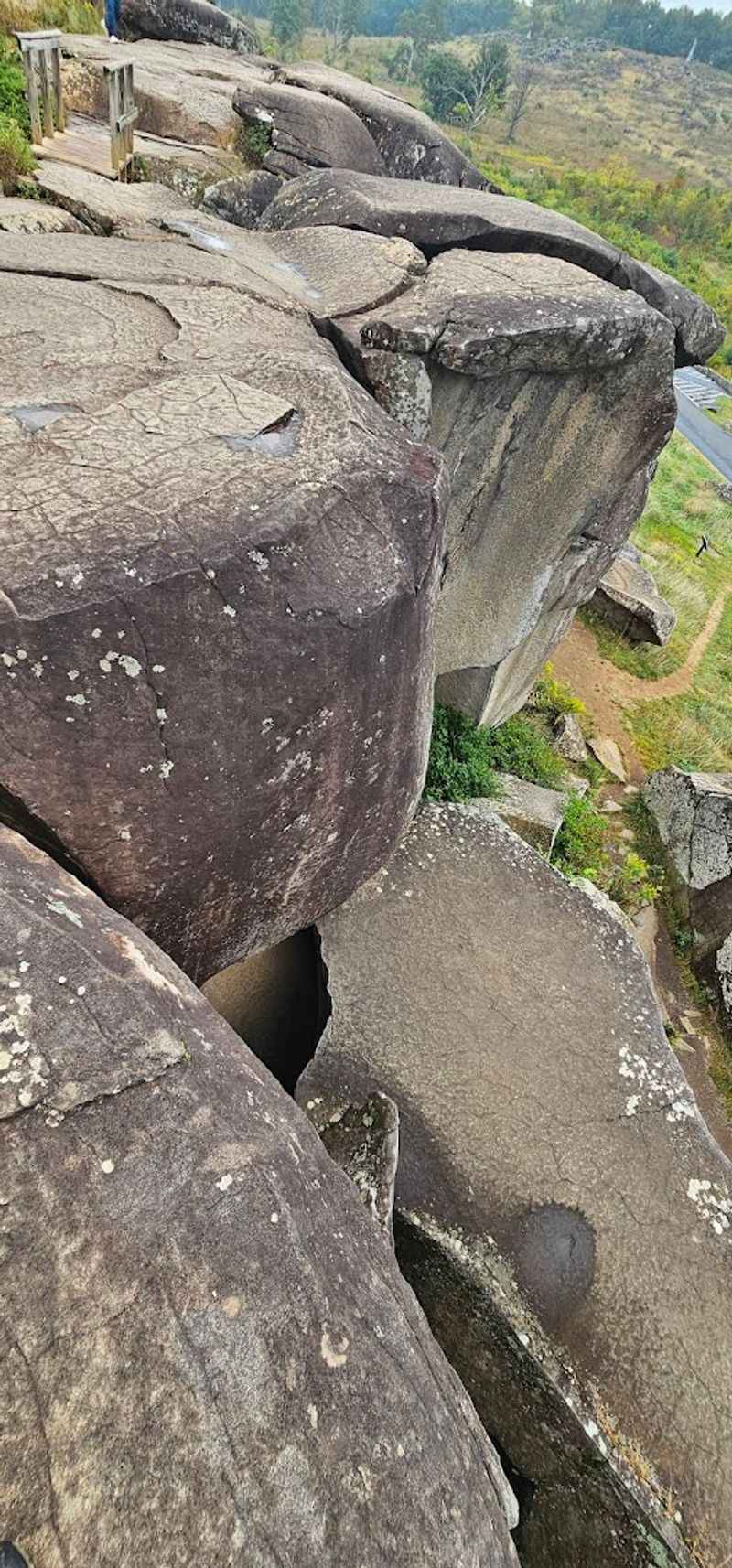
Of all the paranormal reports connected to Devil’s Den, one apparition stands out above the rest.
Visitors and investigators have described seeing a disheveled Confederate soldier with long gray hair, torn clothing, a floppy hat, and bare feet wandering among the boulders.
What makes these accounts intriguing is how similar some descriptions sound across people who do not know each other.
The figure is usually described near the large rock formations, and witnesses say he appears solid before vanishing without a clear explanation.
Paranormal groups from across the country, including teams from Ohio, have shared stories about this kind of encounter.
Some visitors connect the legend to the trauma of the July 1863 fighting, and the setting makes it easy to understand why the stories persist.
Whether you believe in the paranormal or not, the sheer number of reports has helped cement Devil’s Den as one of Gettysburg’s most talked-about eerie stops.
The “Helpful Hippy” Apparition That Guides Lost Visitors
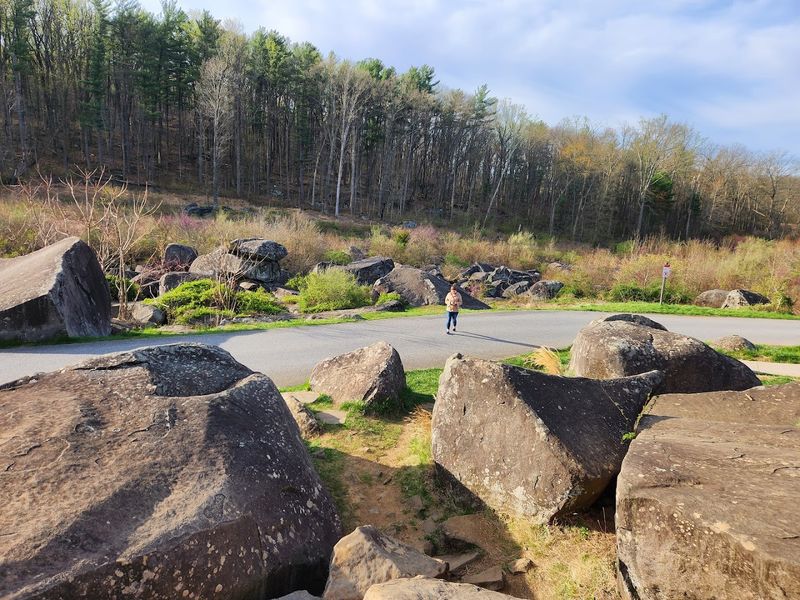
One of the quirkiest paranormal stories attached to Devil’s Den involves a figure that visitors have nicknamed the “Helpful Hippy.”
The story usually describes a barefoot man in ragged clothing and a floppy hat who approaches confused or lost visitors and offers directions around the site.
The really unsettling part comes right after. Once the visitor thanks the man and turns back around, he is gone, with no clear sign of where he went.
Multiple unconnected people have shared versions of this tale over the years, which is part of why it continues to circulate.
Some paranormal writers suggest it could be connected to the same barefoot soldier figure described in other sightings, but that remains in the realm of legend.
Visitors traveling from Ohio and other states have shared similar accounts online, adding to the collection of stories that keep Devil’s Den on many paranormal travel lists.
Why Your Camera Might Stop Working Here

Electronics behaving strangely at haunted sites is a common claim, and Devil’s Den is frequently included in those conversations.
Some visitors say their camera batteries drain quickly after arriving, even when devices were charged beforehand.
Other stories describe phones freezing, glitching, or shutting down without an obvious cause while people are taking photos near the rocks.
Paranormal investigators sometimes link reports like these to the idea of unusual energy at historic sites, but there is no confirmed explanation that separates Devil’s Den from ordinary issues like temperature, signal, battery age, or heavy phone use during a visit.
Still, these repeated anecdotes are part of the modern folklore that surrounds Devil’s Den and adds to its reputation as an eerie place to explore.
The Rehabilitation Project That Brought It Back
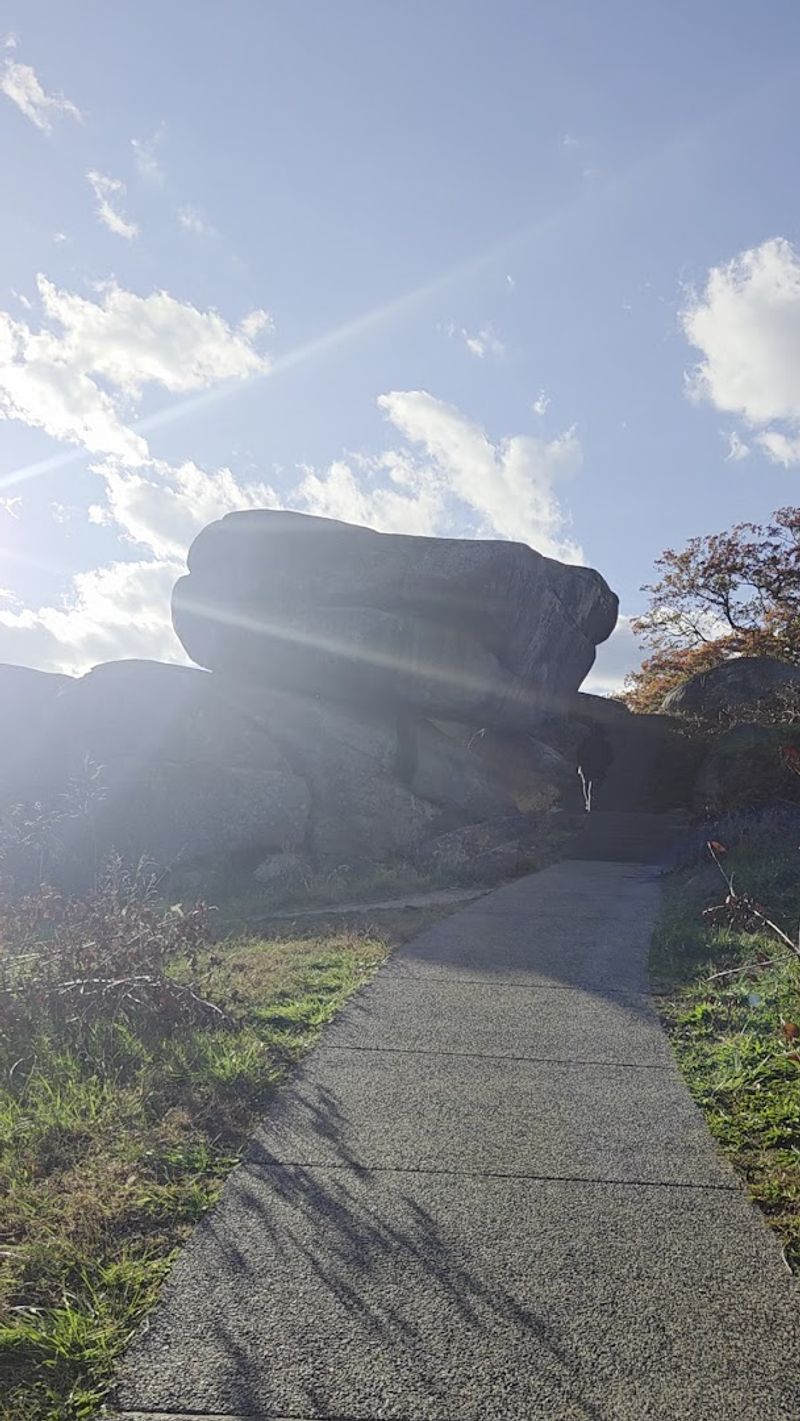
Years of heavy foot traffic and environmental wear had taken a serious toll on Devil’s Den.
Erosion was carving away at the landscape, and safety concerns made certain areas off-limits to the public for an extended period while the National Park Service worked on a major rehabilitation project.
The restoration effort focused on stabilizing the terrain, improving visitor access, and preserving the natural and historical features of the site.
It was a careful balance between keeping the place accessible and protecting what makes it historically significant.
The site officially reopened to the public on September 30, 2022, much to the excitement of longtime fans who had been waiting patiently.
Visitors who had been coming to Devil’s Den for decades, including many from Ohio, noted that the improvements made the experience even better without stripping away any of the raw, rugged character that defines this place. The boulders look as dramatic as ever.
The Witness Tree That Saw It All
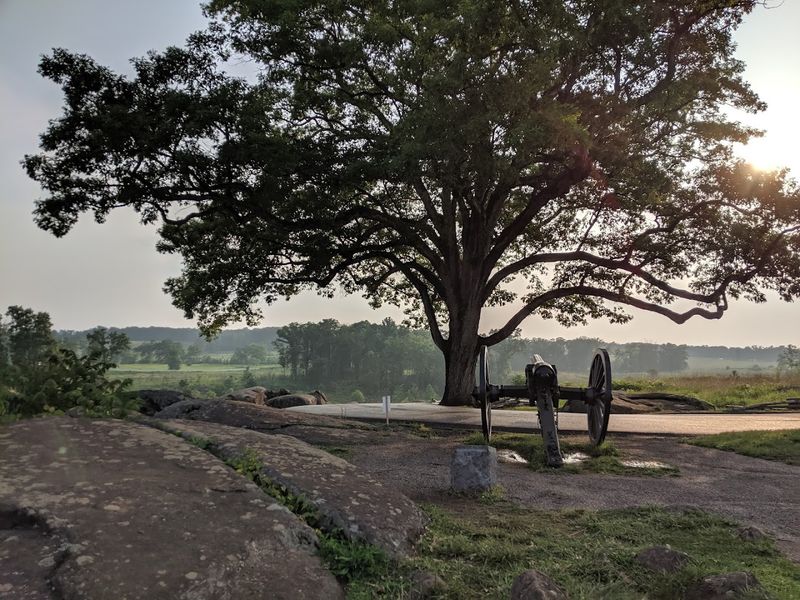
Standing at the top of the hill above the main boulder field is one of the most quietly powerful features of the entire site: a massive oak tree known as the Witness Tree.
This tree was alive and growing during the Battle of Gettysburg, meaning it literally witnessed the fighting that took place below it on July 2, 1863.
The sheer age and size of the tree make it a natural focal point for visitors who want a tangible connection to the past.
Its bark and roots have absorbed over 160 years of seasons, storms, and the footsteps of countless people paying their respects.
Reviewers from all over the country, including travelers from Ohio, consistently mention the Witness Tree as one of the most moving parts of visiting Devil’s Den.
There is something about standing beside a living thing that was present during a pivotal moment in American history that no photograph or museum exhibit can fully replicate.
Rock Formations With Names Worth Finding
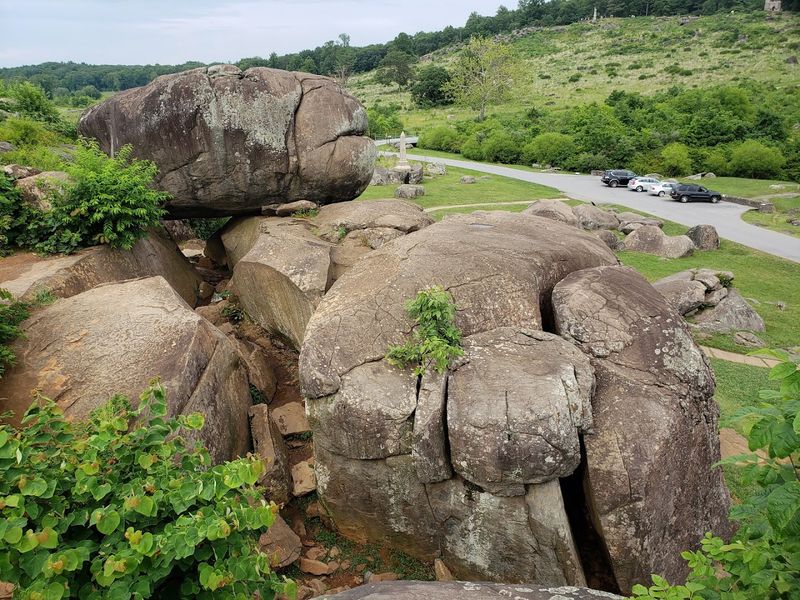
Most people arrive at Devil’s Den focused on the history and the haunted reputation, but the boulder field also has a surprisingly fun scavenger hunt for those willing to look closely.
The rock formations scattered across the site have been given their own colorful names over the years.
Among the commonly mentioned are the Elephant Rock, the Devil’s Slipper, and the Devil’s Kitchen, each tied to a shape or setting that becomes obvious once you know what you are looking for.
Finding them adds a playful layer to the visit that younger explorers especially enjoy.
Beyond the formations themselves, Gettysburg-focused guides also point out small rock carvings that visitors seek out around Devil’s Den.
Dedicated visitors sometimes use resources like the Battle of Gettysburg Buff site to track a few of these details down, turning a history trip into something closer to a treasure hunt.
Practical Tips For Planning Your Visit
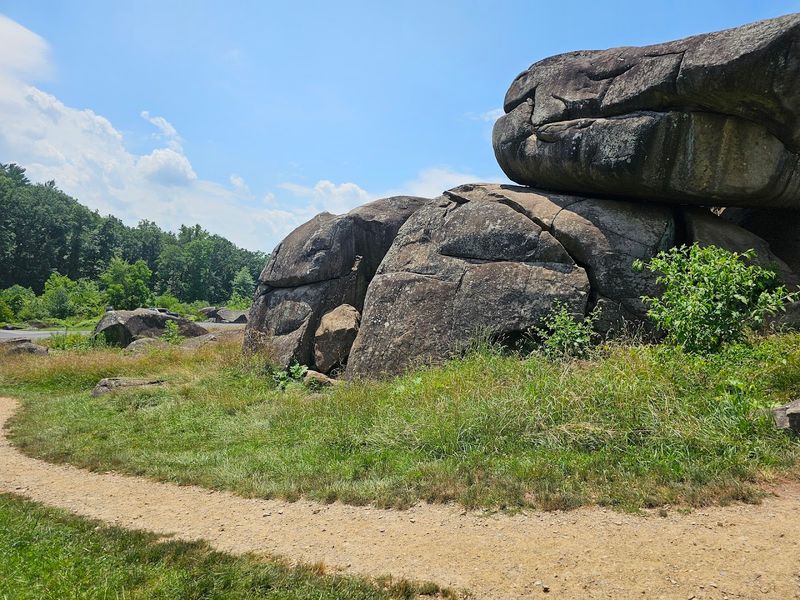
Planning a trip to Devil’s Den is straightforward, but a few practical tips will make the experience much smoother.
The site is located on Sickles Avenue in Gettysburg, PA 17325, within Gettysburg National Military Park, and admission to the park grounds is free, which makes it an easy addition to any road trip itinerary.
Park grounds and roads are generally open daily from 30 minutes before sunrise to 30 minutes after sunset, which gives plenty of time for both morning explorers and those who prefer late-day light on the boulders.
Comfortable, sturdy shoes are a must since the terrain is uneven and the rocks require careful footing. Summer visits can get crowded and hot, so early spring or fall tends to offer a more relaxed experience.
The National Park Service also provides self-guided tours through the official NPS App, which can add helpful context while you explore.