
This Remote Florida National Park Is One Of The Most Secluded In The United States
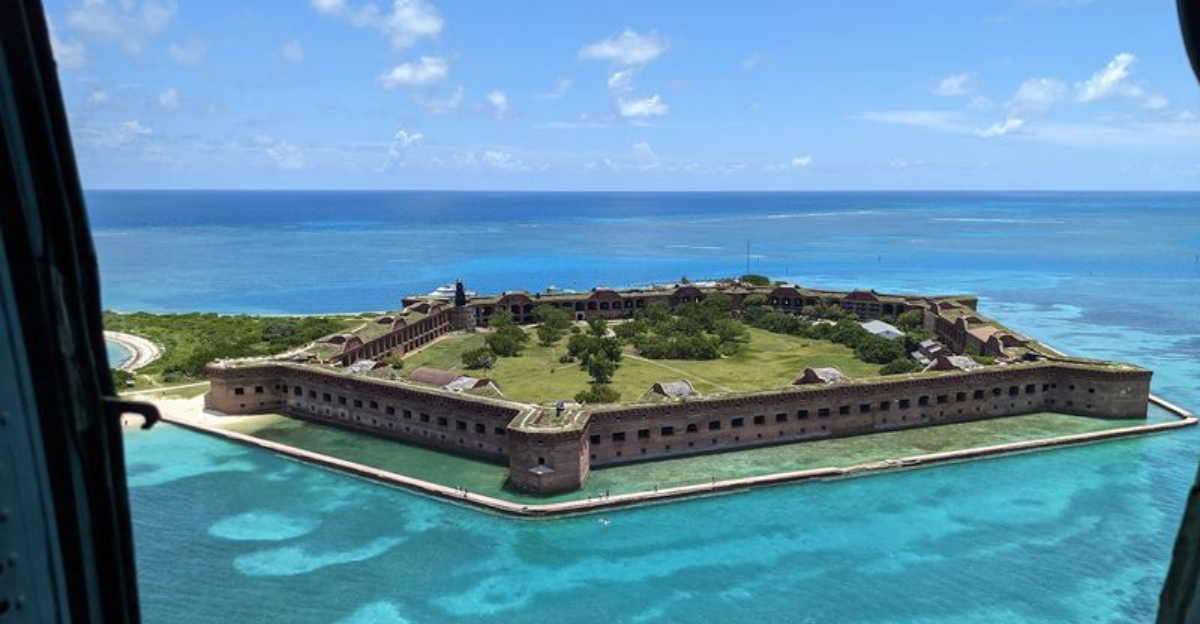
Far beyond the busy beaches of Florida lies a place that feels almost unreal at first glance. Out in the open Gulf, surrounded by endless turquoise water, a massive brick fortress rises from the sea like something pulled from the pages of a history book.
The journey to reach it already feels like part of the adventure. The mainland slowly disappears behind you, and the water stretches in every direction until the horizon seems to swallow the world.
Then, almost suddenly, the fortress appears.
Towering walls stand against the bright blue sky while the surrounding waters glow with the clear colors that make this corner of Florida so extraordinary.
What waits here is far more than just a historic structure. Visitors discover quiet beaches, remarkably clear water perfect for snorkeling, and a sense of calm that is hard to find anywhere else in the state.
Florida has many famous destinations, but places like this remind you that some of the most unforgettable experiences are found far beyond the usual travel routes.
Getting There Requires Serious Commitment

Reaching Dry Tortugas demands more planning than your average Sunday drive to a state park. You have two options: board the Yankee Freedom ferry for a nearly three-hour voyage across open water, or splurge on a seaplane that cuts travel time to forty minutes while offering views that belong on a screensaver.
I chose the seaplane on my first visit, and watching the water shift from deep navy to glowing turquoise as we approached Garden Key made every dollar worth it. The ferry crowd gets breakfast and lunch included in their ticket price, plus more time on the island, but those prone to seasickness should consider the choppy Gulf waters before committing.
Booking either option requires advance planning since spots fill up weeks ahead during peak season. No casual drop-ins exist here, which filters out the tourists looking for easy entertainment and leaves behind people genuinely excited about remote exploration.
The journey itself becomes part of the adventure rather than just transportation. My seaplane pilot pointed out shipwrecks beneath us and explained how the Tortugas got their name from the sea turtles Ponce de León spotted in 1513, turning the flight into an impromptu history lesson that beat any audio guide.
Zero Cell Service Creates Actual Disconnection

My phone lost signal the moment we crossed into park waters, and every app suddenly became useless decoration. No texts, no emails, no Instagram stories, no weather updates, and no quick way to Google random facts during conversations.
At first, I felt that familiar modern panic of disconnection, patting my pocket every few minutes as if the signal might suddenly return. Then something shifted around hour two when I realized I was actually watching the water instead of photographing it for people who were not there.
The park rangers mentioned that even satellite phones struggle out here, making Dry Tortugas one of the few places in America where you genuinely cannot stay plugged in. Families spread picnic blankets without kids begging for WiFi passwords, couples snorkeled without stopping to check notifications, and I had actual conversations with strangers instead of pretending to be busy on my device.
This forced digital detox feels increasingly rare in our hyperconnected world. I watched a teenager initially complain about the lack of service, then spend two hours sketching the fort in a notebook she found in her backpack, rediscovering a hobby she had abandoned for TikTok.
The Fort Itself Defies Belief
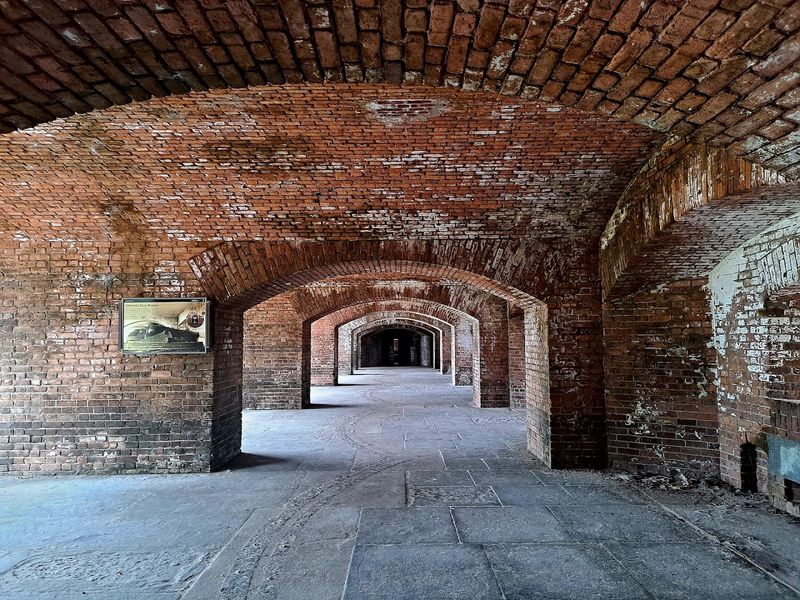
Fort Jefferson contains over sixteen million bricks stacked into walls eight feet thick and fifty feet high, all constructed on a tiny island where every single brick arrived by boat. Construction started in 1846 and continued for thirty years, yet the fort was never actually finished despite becoming the largest masonry structure in the Western Hemisphere.
Walking through the massive arches and climbing the spiral staircases, I kept thinking about the workers who built this place in brutal heat with no air conditioning, no modern machinery, and certainly no food delivery apps. The scale overwhelms you in person, the kind of ambitious engineering that makes you wonder what we’ve lost in our age of efficiency and cost-cutting.
Park rangers lead tours explaining how the fort served as a military prison during and after the Civil War, most famously holding Dr. Samuel Mudd who treated John Wilkes Booth’s broken leg. I joined a tour led by a ranger who clearly loved his job, pointing out architectural details and sharing stories about prisoners who tried escaping into seventy miles of shark-filled ocean.
Even without the guided information, simply wandering the empty corridors and imagining the soldiers and prisoners who lived here creates an eerie time-travel feeling you cannot replicate at more accessible historical sites.
Snorkeling Rivals Any Tropical Destination

The water around Fort Jefferson glows with that specific shade of blue-green that usually requires a passport and currency exchange. I grabbed snorkel gear from the ferry’s complimentary equipment and waded in near the moat wall, where the visibility stretched so far I could see fish fifty feet away.
Within minutes I was floating above brain coral, elkhorn formations, and more tropical fish than I could identify without an underwater guide. Parrotfish nibbled algae off rocks, sergeant majors darted in schools, and a sea turtle glided past with the casual confidence of someone who owned the place.
The best snorkeling spot sits along the fort’s southern wall where the structure creates a protected area teeming with marine life. I spent two hours in the water and barely covered a fraction of the available reef, constantly distracted by something new and colorful demanding attention.
Unlike crowded snorkel tours in the Caribbean where you’re herded around with fifty other tourists, here you might share the water with a dozen people maximum. I found entire sections of reef where I was completely alone except for the fish, creating an intimate experience that felt more like personal discovery than organized tourism.
Camping Offers Unmatched Stargazing

Only ten campsites exist on Garden Key, all operating on a first-come basis that requires securing your spot the moment you arrive. Campers bring everything since the island provides exactly nothing: no water, no food, no firewood, no trash service, no bathrooms beyond composting toilets.
I met a photographer on the ferry who camps three nights every year specifically for the stargazing, which he claims rivals Valley and Big Bend for darkness and clarity. With zero light pollution for seventy miles in any direction, the night sky explodes with stars invisible to most Americans living under urban glow.
The Milky Way stretches so clearly you can see the dust lanes, planets shine bright enough to cast shadows, and satellites track across the darkness in steady lines. One camper told me she saw more shooting stars in a single night here than during her entire childhood combined.
Waking up to sunrise over the fort while still in your sleeping bag, then rolling directly into morning snorkeling before the day-trippers arrive, creates a rhythm of island life that day visitors only glimpse. The solitude after the last ferry departs transforms the experience from tourist attraction into genuine wilderness adventure.
Wildlife Encounters Happen Constantly

Sea turtles patrol the waters like slow-moving submarines, completely unbothered by snorkelers floating above them. I watched a loggerhead surface for air twenty feet from shore, take several breaths while eyeing the tourists photographing it, then dive back down to continue grazing on seagrass.
Bird species I had never seen before perched on every available surface, from magnificent frigatebirds with seven-foot wingspans to brown noddies that nest in the fort’s crumbling walls. The park sits along a major migration route, making it a crucial rest stop for exhausted birds crossing the Gulf of Mexico.
During spring migration, birdwatchers arrive with serious camera equipment and life lists, hoping to spot rarities blown off course by storms. Even as a casual observer, I found myself fascinated by the variety of species using this tiny speck of land as their mid-ocean oasis.
Dolphins sometimes cruise past the island, nurse sharks rest in the shallows, and barracuda hover motionless in deeper water. The lack of development and limited human presence means wildlife behaves naturally rather than performing for tourists or fleeing from crowds, creating authentic encounters that feel increasingly rare in our overdeveloped world.
History Layers Upon History

Before the fort existed, Spanish explorers named these islands for the sea turtles they found here in abundance. Before that, indigenous peoples likely used the islands as fishing camps, though little evidence remains after centuries of storms and construction.
The fort’s primary purpose was controlling navigation through the Gulf of Mexico and protecting the Mississippi River’s mouth, though it never fired a shot in anger. Instead, it became most famous as a prison, holding not just Dr. Mudd but also deserters from the Union Army who probably regretted their decisions while sweating through Florida summers in a brick oven.
After the military abandoned the fort in 1874, it sat empty except for occasional salvagers and squatters until becoming a national monument in 1935. I found graffiti carved into walls by soldiers from the 1860s, prison cells that once held men convinced they would never see their families again, and a lighthouse that guided ships through treacherous waters before GPS made navigation automatic.
Each layer of history reveals itself through architectural details, ranger stories, and the physical space itself. Standing in the same courtyard where prisoners once exercised creates a tangible connection to the past that no textbook or documentary can replicate.
The Isolation Filters Out Casual Tourists

Nobody accidentally ends up at Dry Tortugas while looking for a beach to park at for an afternoon. The distance, cost, and planning required mean every single visitor chose this destination specifically, creating a self-selecting crowd of people genuinely interested in what the park offers.
I struck up conversations with retirees checking off their final national parks, families who saved for years to afford the seaplane, international tourists who flew to Florida specifically for this experience, and solo travelers like myself who prefer places that demand effort over convenience. The ferry ride itself becomes social as passengers bond over shared excitement and exchange travel stories.
This filtering effect eliminates the crowds that plague more accessible national parks, where parking lots overflow and trails turn into highways of humanity. Here, even on a busy day, you can find empty sections of beach and quiet corners of the fort where the only sounds come from waves and seabirds.
The commitment required also means people show up prepared and respectful, following leave-no-trace principles without needing constant reminders. I watched visitors carefully pack out every piece of trash, stay on designated paths, and give wildlife appropriate space, creating a community of conscientious travelers rather than careless tourists.
Weather Creates Dramatic Conditions

The Gulf of Mexico makes its own rules regarding weather, and Dry Tortugas sits exposed to every mood swing and tantrum. I watched clouds build on the horizon during my visit, transforming from innocent puffs into towering thunderheads that the ferry captain monitored carefully on radar.
Summer brings afternoon storms that roll across the water with impressive speed, sending everyone scrambling for shelter inside the fort’s thick walls. Winter offers calmer conditions but occasional cold fronts that make the ferry ride choppy enough to test even experienced sailors’ stomachs.
The dramatic weather actually enhances the experience rather than diminishing it, creating constantly changing light conditions that photographers dream about. I took my favorite photo when a storm passed just north of the island, leaving us in sunshine while lightning struck the water a few miles away.
Park rangers sometimes cancel ferry trips entirely when conditions turn dangerous, which means flexible travel plans work better than rigid schedules. The seaplane offers slightly more reliability but even it cannot fly in severe weather, reminding visitors that nature ultimately controls access to this remote outpost regardless of how much we paid for tickets.
The Experience Stays With You

Months after my visit, I still think about Dry Tortugas when I need mental escape from daily stress. The memory of floating in that impossibly clear water, the feeling of standing atop the fort’s walls with nothing but ocean in every direction, the satisfaction of reaching somewhere genuinely remote in our increasingly connected world.
I met people who return annually, making the pilgrimage part of their regular routine like visiting family or attending a favorite festival. One couple told me they honeymoned at Dry Tortugas thirty years earlier and now bring their grandchildren, passing down the tradition of seeking out places that require effort and reward commitment.
The photos I took barely capture what being there actually felt like, which might be the point. Some experiences resist translation into pixels and social media posts, existing most powerfully as personal memories rather than public content.
Every time someone mentions Florida, I launch into an unprompted speech about Dry Tortugas, probably annoying friends who just wanted to talk about Miami or Disney World. But I cannot help myself because this place deserves more visitors, more recognition, more appreciation for what it represents: a corner of America that remains genuinely remote, genuinely wild, and genuinely worth the journey required to get there.