
Step Inside The Unusual Cleveland Museum That Is Easily Ohio’s Most Curious Discovery

There is a place in Ohio where centuries of medical curiosity sit quietly behind glass cases, waiting for someone brave enough to look closely. I stumbled across it on a Friday afternoon, and I genuinely had no idea what I was walking into.
The collection inside is so packed with strange, fascinating, and surprisingly beautiful objects that I ended up staying far longer than I planned.
If you have ever wondered how doctors worked before modern technology, or how far medicine has truly come, this free museum on a university campus in Cleveland, Ohio will answer every question you never thought to ask, and then some.
A Museum Hidden Inside a Historic Library Building

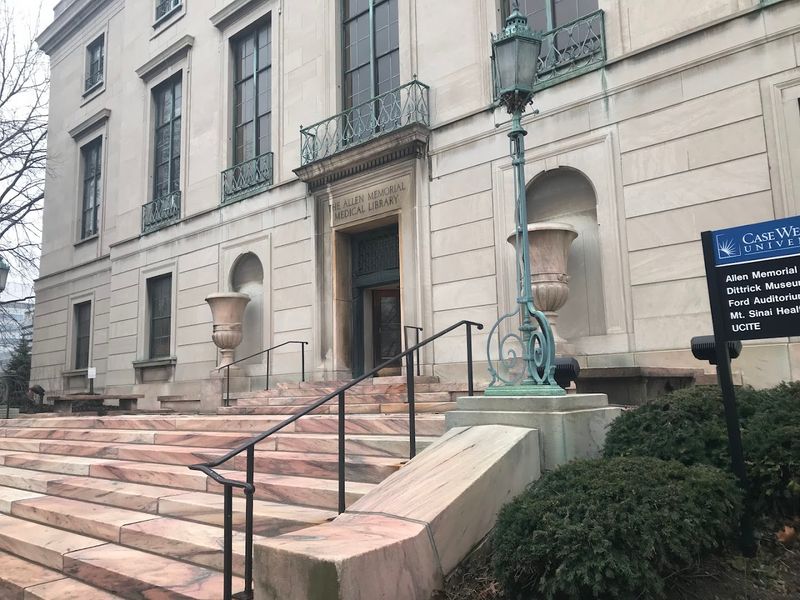
There is something quietly dramatic about arriving at a building that looks like it belongs in a period film rather than on a modern university campus. The Allen Memorial Medical Library is exactly that kind of place.
The architecture alone sets the mood before you even get through the door.
The Dittrick Medical History Center lives inside this distinguished building on the Case Western Reserve University campus. From the outside, you might walk right past it without realizing what is tucked inside.
But the moment you step into the entrance hall, the atmosphere shifts into something that feels genuinely historic.
The building itself is worth a slow look before you head upstairs to the museum. Stone details, tall ceilings, and the kind of quiet that only old academic buildings seem to hold all greet you at once.
This is not your typical museum entrance, and that contrast between the ordinary campus surroundings and the remarkable contents inside is part of what makes the whole visit feel like a real discovery.
You can find this unusual, but amazing museum at 11000 Euclid Ave., Cleveland, OH 44106.
Over 175,000 Artifacts and the Story Behind Them

The number alone is worth pausing on. The Dittrick Museum holds over 175,000 artifacts and surgical instruments, making it one of the most densely packed medical history collections in the entire country.
For a free museum, that is a genuinely staggering figure.
The collection was first established in 1898 by the Cleveland Medical Library Association, which means this institution has been quietly gathering and preserving medical objects for well over a century. That kind of longevity gives the collection a depth that larger, flashier museums sometimes lack.
What stands out most is how carefully everything is presented. Each piece comes with clear, well-written information placards that use thoughtful typography and strong color contrast, making them easy and enjoyable to read.
You do not need a medical background to appreciate what you are looking at. The curators have done the hard work of making complex history feel approachable, and the result is a display that rewards curiosity at every turn.
The Self-Guided Tour Experience
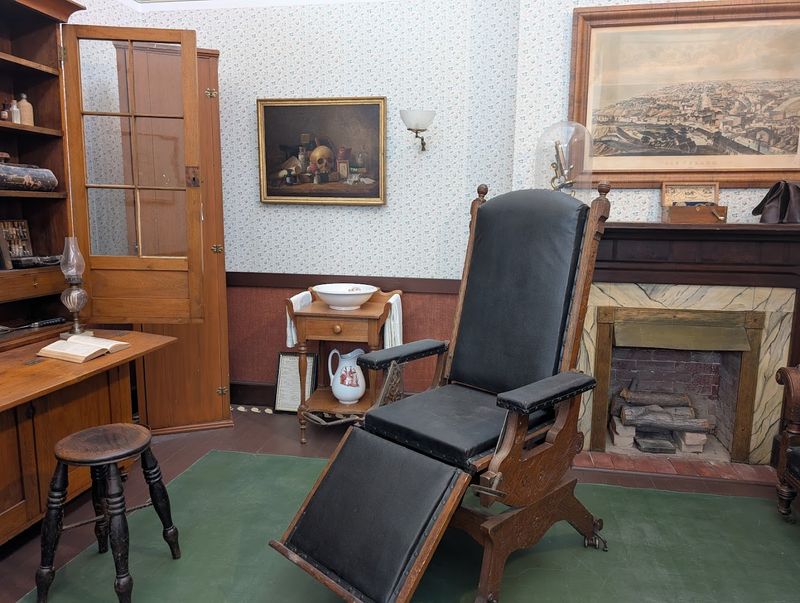
Self-guided tours are sometimes a polite way of saying you are on your own with minimal context. At the Dittrick, the opposite is true.
The layout is so well organized and the written descriptions so thorough that I never once felt lost or unsure of what I was looking at.
The museum is compact enough to navigate comfortably in 45 minutes, but rich enough that spending an hour and a half reading everything is completely reasonable. I personally lost track of time somewhere between the antique surgical tools and the reconstructed doctor’s office displays.
There is also a table near the entrance offering free books, which is a small but genuinely charming touch. The student staff who help run the museum are knowledgeable and approachable without being intrusive.
The whole setup feels less like a formal institution and more like a well-curated personal collection that someone has generously decided to share with the public, which makes the experience feel warm and unhurried in the best possible way.
Reconstructed Doctor’s Offices Through the Decades
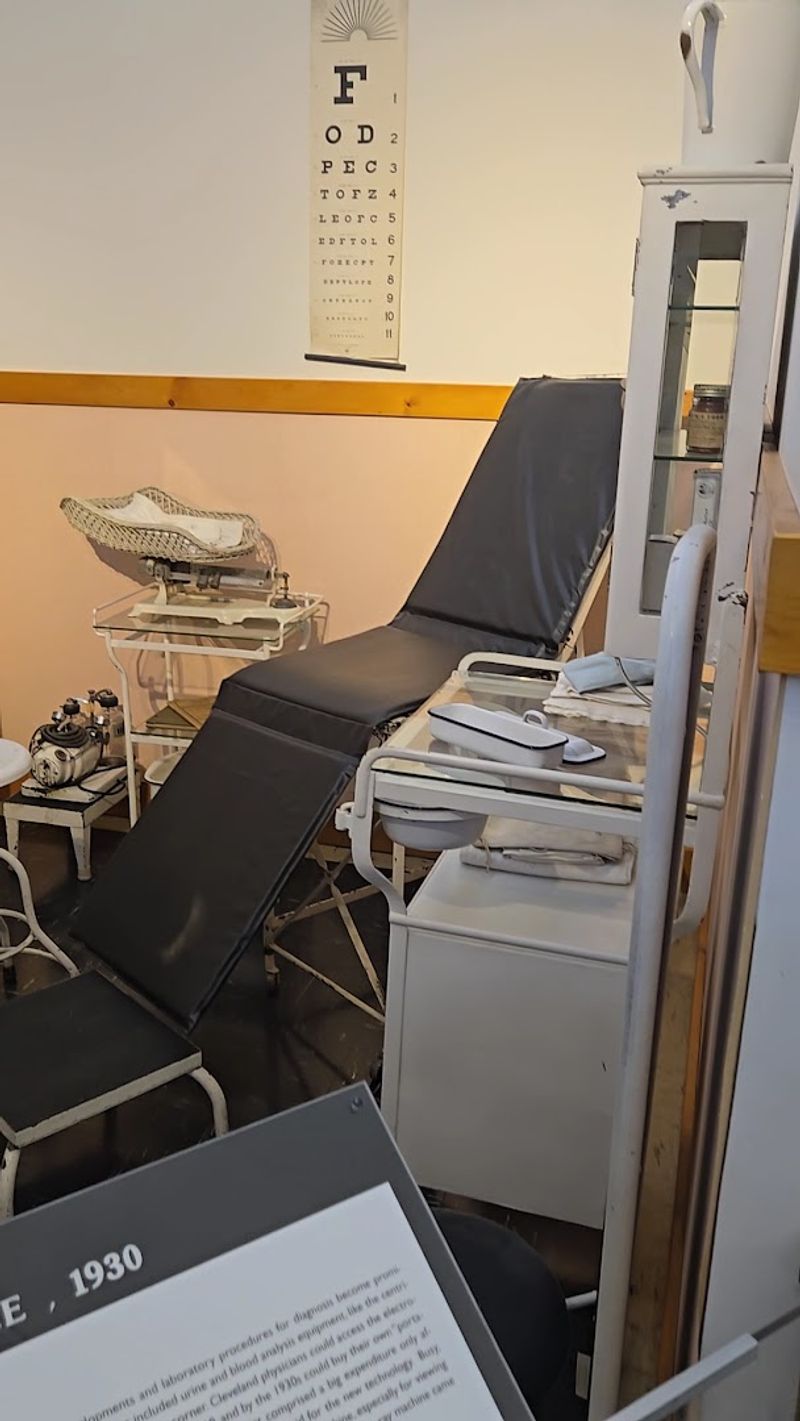
One of the most visually striking parts of the museum is the series of reconstructed examination rooms and doctor’s offices from different eras. These are not simple prop arrangements.
They are carefully assembled period environments that genuinely transport you into a specific moment in medical history.
I spent a long time in front of the 1920s doctor’s room, trying to identify tools I had never seen before and reading about how each one was used. The contrast between those instruments and what a modern clinic looks like today is both humbling and a little unsettling in the most educational way possible.
What makes these displays particularly effective is the attention to detail. The furniture, the equipment placement, the lighting, and the accompanying text all work together to create something that feels like a time capsule rather than a museum exhibit.
You come away with a genuine sense of how medical care evolved across generations, and how much the patient experience changed alongside the tools.
The History of Women’s Health and Contraception Exhibit
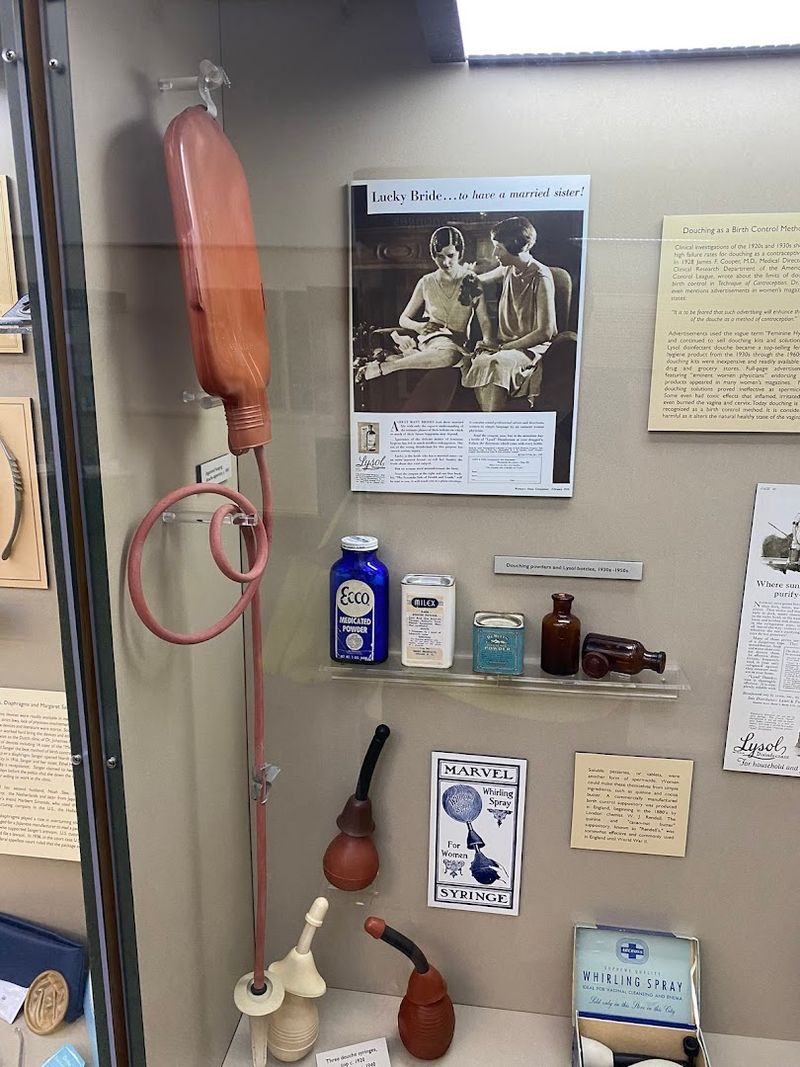
Among the most talked-about sections of the museum is its comprehensive exhibit on the history of women’s health and contraception. This display covers an enormous timeline, presenting historical products and practices in a way that is informative, respectful, and genuinely eye-opening.
The breadth of the collection here is remarkable. Visitors encounter objects spanning centuries, each one accompanied by context that explains not just the object itself but the social and medical attitudes of the era that produced it.
It is the kind of exhibit that makes you think as much as it makes you look.
The presentation avoids sensationalism and instead treats the subject with the seriousness it deserves. For anyone interested in the history of medicine as it relates specifically to women’s experiences, this section alone is worth the visit.
The Dittrick handles a complex and sometimes controversial subject with clarity and care, and the result is one of the most thoughtful exhibits I have encountered in any museum, regardless of size or budget.
Murals in the Stairwell Worth Slowing Down For
Most museum visitors focus entirely on the main exhibits and overlook the spaces in between. At the Dittrick, that would be a real missed opportunity.
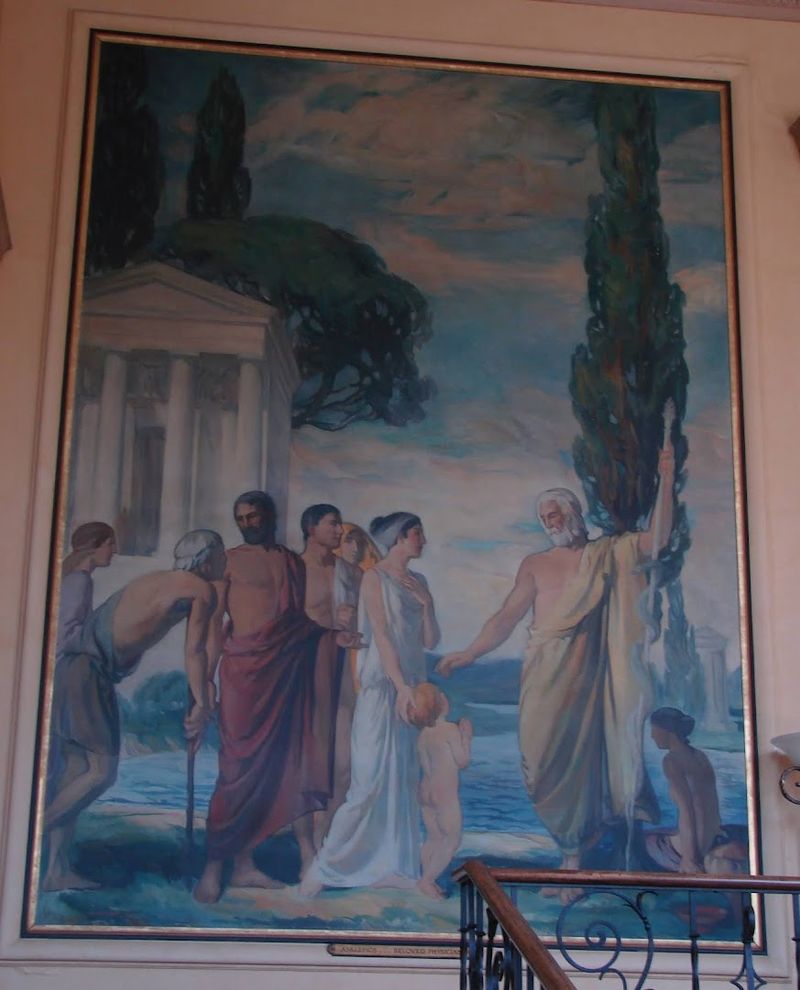
The stairwell leading up to the museum features four large murals depicting the mythological origins of medicine, and they are genuinely beautiful.
The murals portray Asklepios being taught by the centaur Chiron, Machaon as surgeon and son of Asklepios, Asklepios as Beloved Physician, and Asklepios as the Greek God of Medicine. Each image is rendered with a classical artistic style that feels entirely at home in this setting.
I paused on the stairwell longer than I expected to, reading the labels and taking in the imagery. There is something quietly profound about entering a space dedicated to medical history through a passage decorated with the ancient myths that first gave medicine its meaning.
It sets a tone that the rest of the museum carries through beautifully, reminding you that the human desire to heal is as old as storytelling itself.
Cleveland’s Surprising Role in the History of Radiology

Before my visit, I had no idea that Cleveland played a meaningful role in the early development of radiology. The Dittrick Museum changed that quickly, and it is one of those facts that genuinely reshapes how you think about a city you thought you already understood.
The displays covering Cleveland’s place in the founding days of radiology are detailed and well-sourced. They trace the progression of imaging technology and the physicians who pushed it forward, connecting local history to a much larger story about how modern medicine learned to see inside the human body.
Ohio has a habit of quietly producing important chapters in American history, and this is one of the more unexpected examples. The exhibit does not overstate its case but presents the evidence clearly and lets the significance speak for itself.
Coming away from this section, I had a new appreciation for both the museum and the city it calls home. Sometimes the most interesting history is the kind that nobody outside the region ever thinks to talk about.
The Underground Railroad Historical Marker Outside

Just outside the museum’s operating entrance on Adelbert Road stands a historical marker that adds an entirely different dimension to the visit. The marker commemorates the Horatio Cyrus and Martha Cozad Ford home, which served as a refuge on the Underground Railroad.
Freedom seekers were assisted from this location to the dock and given passage to Canada. The marker also references David Hudson’s contributions to the Underground Railroad and Western Reserve College, which was originally located in Hudson before relocating to Cleveland in 1882.
In 1854, Frederick Douglass delivered the commencement address in Hudson, a fact recorded on the marker that stopped me in my tracks. The presence of this historical note outside a medical museum is a reminder that the building and its surrounding campus exist within a much larger American story.
Taking a moment to read this marker before or after your museum visit adds real weight to the experience and connects the history of medicine to the broader history of human struggle and perseverance in this part of Ohio.
What to Expect From the Hours and Admission
The Dittrick Museum keeps a focused schedule that is worth knowing before you plan your trip. The museum is generally open on Fridays from 10:30 AM to 4 PM and on Saturdays from 12 PM to 4 PM, although the official site currently notes closures on March 13 and March 14, with regular hours resuming March 20.
Those are the only two days normally available, so timing your visit matters.
Admission is completely free, which makes this one of the most accessible cultural experiences in Cleveland. There is no ticket counter, no membership required, and no suggested donation pressure.
You simply arrive, and the collection is yours to explore at whatever pace suits you.
Parking requires a short walk. The nearest reliable option is the Severance Hall parking garage, and from there it is an easy stroll to the museum entrance.
The museum can be reached by phone at 216-368-3648, and more information is available at the official website through Case Western Reserve University. For a free experience that genuinely delivers on its promise, the limited hours are a small trade-off that is absolutely worth planning around.
How Long Should You Plan to Spend Here

The honest answer is that it depends entirely on how curious you are. Most visitors spend between 45 minutes and an hour and a half, and both ends of that range are completely reasonable.
The museum is compact, but compact does not mean thin.
Every display case, every placard, and every reconstructed room offers more than a quick glance can absorb. I read slowly and still felt like I could have spent more time in the rare books section alone.
The density of information packed into a relatively small footprint is genuinely impressive.
If you are visiting with someone who moves quickly through museums, you can cover the main highlights efficiently and still leave with a solid understanding of what the collection offers. If you are the type who reads every label and circles back to look at things twice, budget the full 90 minutes without hesitation.
Either way, the experience scales well to your level of interest, which is a quality that even much larger and better-funded institutions do not always manage to achieve.
Why This Free Museum Deserves Far More Attention

Free museums in the United States range from perfunctory to extraordinary, and the Dittrick sits firmly at the extraordinary end of that scale. The 4.8-star rating it holds across dozens of reviews is not an accident.
It reflects a consistent, high-quality experience that surprises nearly everyone who walks through the door.
What makes the Dittrick particularly special is the combination of breadth and care. The collection is enormous in scope, the curation is thoughtful, and the staff clearly love what they do.
That combination is rarer than it should be.
Ohio has no shortage of worthwhile museums, but very few offer this specific blend of medical history, social history, rare artifacts, and genuine curiosity-fueling detail at absolutely no cost.
The Dittrick Museum of Medical History at the Allen Memorial Medical Library is the kind of place that stays with you after you leave, not because it was shocking or spectacular, but because it was genuinely illuminating.
That quiet, lasting impression is what separates a truly great museum from one that simply fills a building with interesting objects.