
These Colorado Ruins Are A Hauntingly Beautiful Portal Of The Ancient Ancestral World
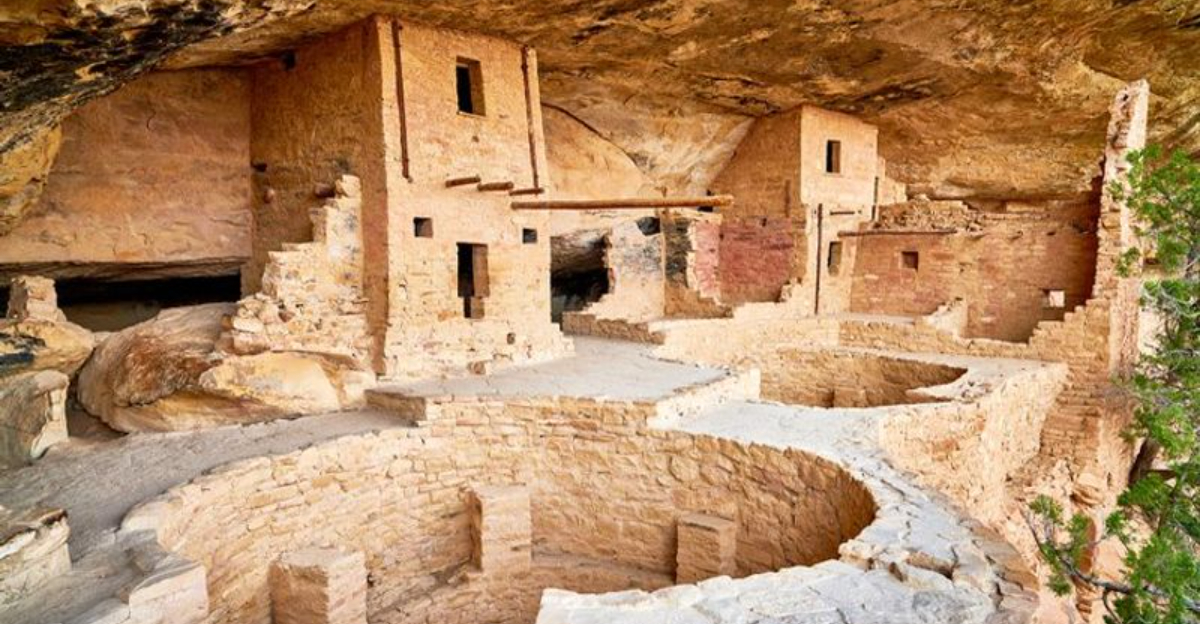
This is the kind of place that makes your sense of scale completely useless. You look out across the canyon, take in the cliffs, the silence, the sheer size of it all, and then suddenly realize those shapes tucked into the stone are not tricks of light.
They are homes, towers, rooms, an entire community built into the rock with staggering skill and patience. In Colorado, moments like that do not just impress you, they rearrange your brain a little.
The people who lived on this plateau for more than 700 years did not leave behind ruins that feel distant or decorative. They left a presence.
Every wall, alcove, and doorway carries the weight of real lives, real choices, and astonishing ingenuity. What hits hardest is how quiet the revelation feels.
Colorado does not need neon signs when history can rise straight out of sandstone and stop you cold. You do not just see this place.
You absorb it.
Cliff Palace: The Crown Jewel of Ancient Architecture
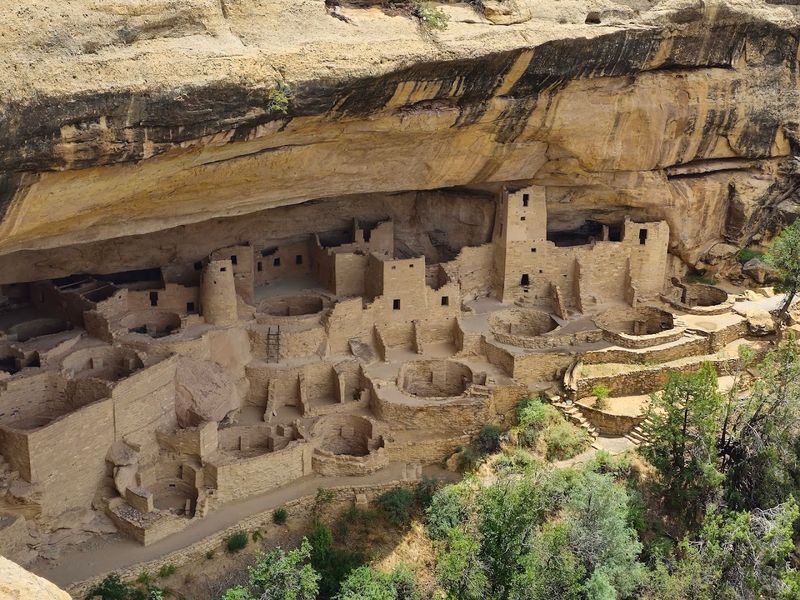
Nothing quite prepares you for your first look at Cliff Palace. You are walking a trail, minding your own business, and then the canyon opens up and there it is: a 150-room stone city tucked into a natural rock overhang like it was always meant to be there.
It is the largest cliff dwelling in North America, and it has the quiet authority of something that knows it.
Built by the Ancestral Puebloans, Cliff Palace contains 23 kivas, which are circular ceremonial chambers, along with towers, storage rooms, and living quarters. Archaeologists estimate it once housed between 100 and 150 people at its peak.
Every stone was placed by hand without metal tools, which makes the precision almost unreasonably impressive.
Guided ranger tours are the only way to access Cliff Palace, and that structure works in your favor. Rangers add layers of context that a self-guided walk simply cannot replicate.
Pro Tip: Book your tour ticket in advance through recreation.gov, especially in summer, because spots fill quickly. Arrive early, wear sturdy shoes with grip, and bring water.
The ladders and stone steps are part of the experience, not the obstacle.
Balcony House: Where Courage Meets Curiosity
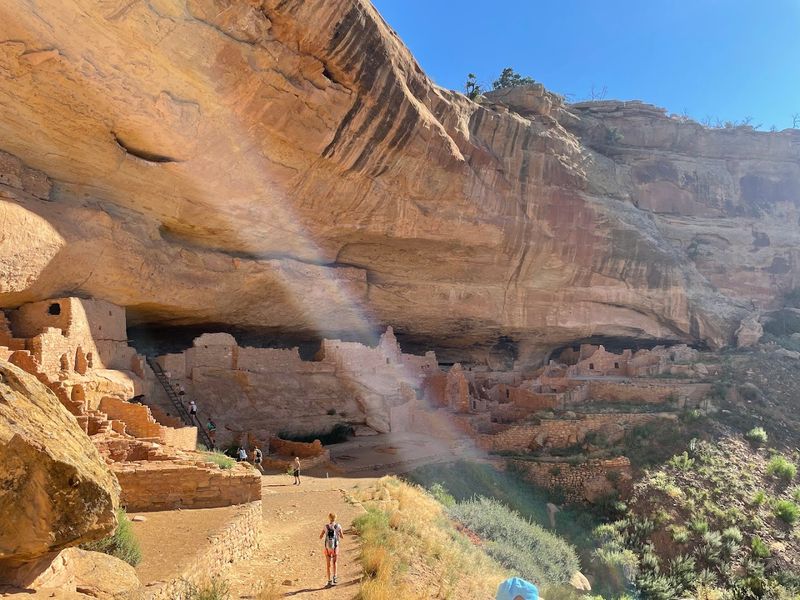
If Cliff Palace is the grand hall, Balcony House is the adventure course. Perched 600 feet above the canyon floor, this 40-room dwelling requires visitors to crawl through a narrow tunnel, scale a 32-foot ladder, and squeeze through a tight rock passage to exit.
People with a relaxed relationship with heights tend to thrive here. Everyone else discovers something interesting about themselves.
Built around the same period as other Mesa Verde structures, Balcony House was clearly designed with defense in mind. Its single crawl-through entrance made it nearly impossible to enter undetected, and its position on the canyon wall gave residents a commanding view of the valley below.
The Ancestral Puebloans were not just builders; they were strategic thinkers.
The tour experience here leans more physical than contemplative, which makes it a genuine hit with older kids and adults who want their history served with a side of elevation anxiety. Insider Tip: This tour is not recommended for young children or anyone with mobility limitations.
Check the park website for age and physical requirements before booking. The payoff for those who qualify is a perspective on ancient ingenuity that very few places on earth can match.
Chapin Mesa Archeological Museum: History You Can Actually Hold Onto
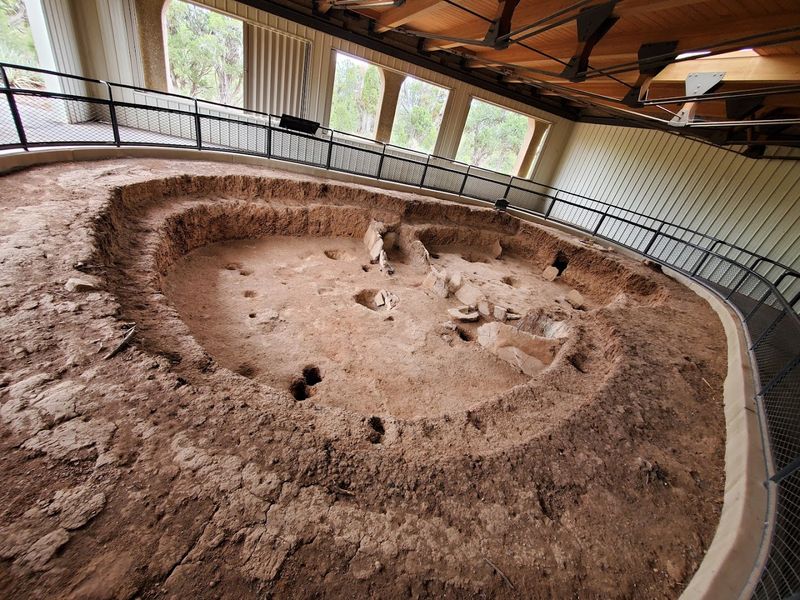
Before you wander the canyon rim trails or peer into alcove dwellings, the Chapin Mesa Archeological Museum is worth an honest chunk of your morning. It is one of the oldest national park museums in the country, and it does what good museums do: it answers the questions you did not know you had before you arrived.
The collection includes pottery, tools, and artifacts recovered from Mesa Verde sites, some dating back more than a thousand years. Ancestral Puebloan pottery on display here ranges from corrugated cooking vessels to finely painted black-and-white ceremonial ware.
Each piece was made without a pottery wheel, shaped entirely by hand using coiling techniques passed down through generations.
What makes this museum particularly effective is its sequencing. Exhibits walk you through the full arc of Ancestral Puebloan culture, from early pit house settlements to the elaborate cliff dwellings you will see outside.
Why It Matters: Understanding the timeline before you see the structures transforms a sightseeing trip into something closer to genuine comprehension. Admission to the museum is included with your park entry fee.
Plan for at least 45 minutes here, and do not skip the diorama room, which gives a surprisingly vivid sense of daily life in the cliff dwellings.
Wetherill Mesa: The Quieter Side of the Plateau
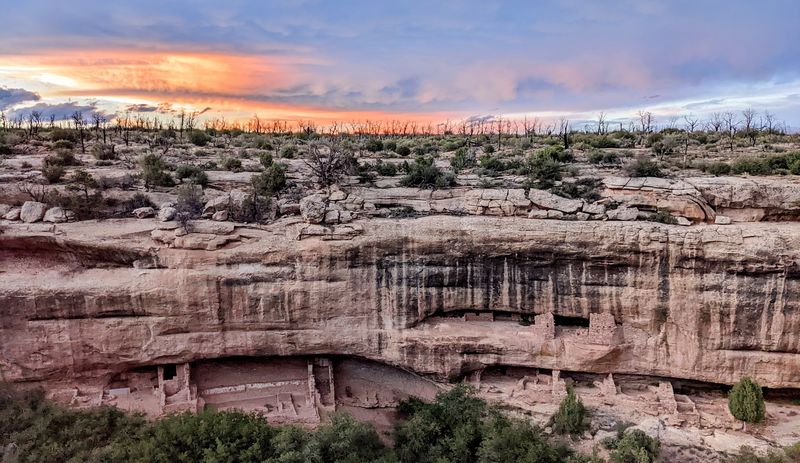
Most visitors to Mesa Verde follow the same loop: Chapin Mesa, Cliff Palace, Balcony House, done. Wetherill Mesa, on the western side of the park, rewards the people who check the map a second time.
It is less trafficked, more atmospheric, and home to Long House, the second-largest cliff dwelling in the park.
Getting to Wetherill Mesa involves a 12-mile drive on a winding road that is closed to vehicles over 25 feet. Once there, visitors can use a tram system to reach trailheads, or walk the mesa top trails past a series of smaller, open-access sites.
The Step House site on Wetherill Mesa is unique because it contains both a modified Basketmaker pit house and a later Pueblo-period cliff dwelling side by side, offering a rare visual comparison of two distinct architectural eras.
Long House tours are ranger-led and require advance ticket reservations, similar to Cliff Palace. Best For: Visitors who want a fuller picture of Mesa Verde without the midday crowds that cluster around the more famous Chapin Mesa sites.
The road to Wetherill Mesa is typically open from late May through early October. Arriving here on a weekday morning gives you something genuinely rare at a popular national park: room to think.
Petroglyph Point Trail: Reading the Walls of Time
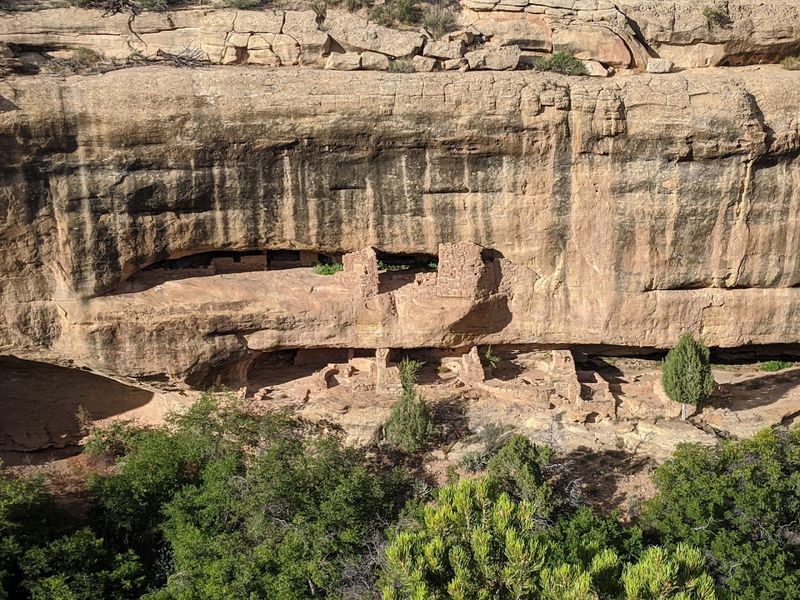
There is something quietly astonishing about standing in front of a canyon wall covered in symbols carved by human hands roughly 800 years ago and realizing that whoever made them had reasons, stories, and intentions we can only partially guess at. The Petroglyph Point Trail at Mesa Verde delivers exactly that moment, and it does so without a guided tour requirement.
The trail is a 2.8-mile loop that begins near the Chapin Mesa Archeological Museum and winds through pinon and juniper woodland before arriving at one of the largest and best-preserved petroglyph panels in the park. The carvings include spirals, human figures, and animal shapes, all chipped into the sandstone surface using a technique called pecking.
No one has fully decoded the meaning of every symbol, which is either frustrating or fascinating depending on your temperament.
The trail is rated moderate and involves some uneven terrain and stone steps. Planning Advice: Pick up a free trail guide from the museum before you start; it corresponds to numbered stops along the route and adds significant context to what you are seeing.
Start before 10 a.m. to avoid the midday heat in summer. Bring at least one liter of water per person and keep an eye on children near the canyon edges, which are unfenced in several sections.
Mesa Top Loop Road: Ancient Pit Houses and Canyon Overlooks
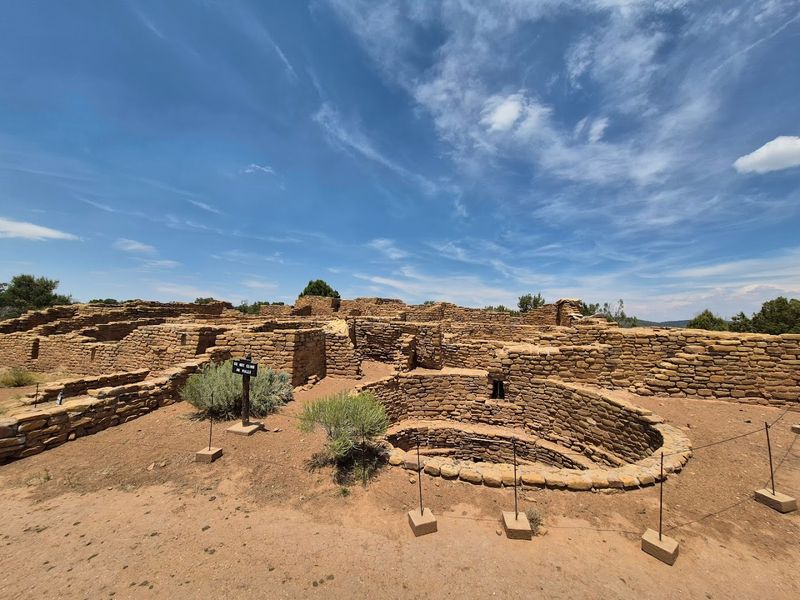
Not every meaningful experience at Mesa Verde requires a ladder or a ranger escort. The Mesa Top Loop Road is a six-mile paved driving route on Chapin Mesa that puts a surprising amount of ancient history within easy reach of anyone willing to get out of the car at the right moments.
And here is the thing: all the right moments are clearly marked.
The loop passes a series of excavated pit houses and mesa-top pueblos that predate the cliff dwellings by several centuries. These earlier structures represent the Ancestral Puebloans before they moved into the canyon walls, and seeing them changes your understanding of the cliff dwellings themselves.
The shift from open mesa-top living to deeply sheltered alcove construction happened over generations, and the Mesa Top Loop makes that evolution visible in real space rather than just on a museum timeline.
Several stops along the route offer canyon overlooks with direct sightlines to cliff dwellings visible across the canyon. Quick Verdict: This is the most accessible option in the park for visitors with mobility considerations, families with very young children, or anyone working within a tight time window.
Most stops have paved or hard-packed surfaces. Budget two hours to do it properly, stopping at each numbered pullout and reading the interpretive signs, which are genuinely well-written and informative.
Final Verdict: Why Mesa Verde Earns Repeat Visits
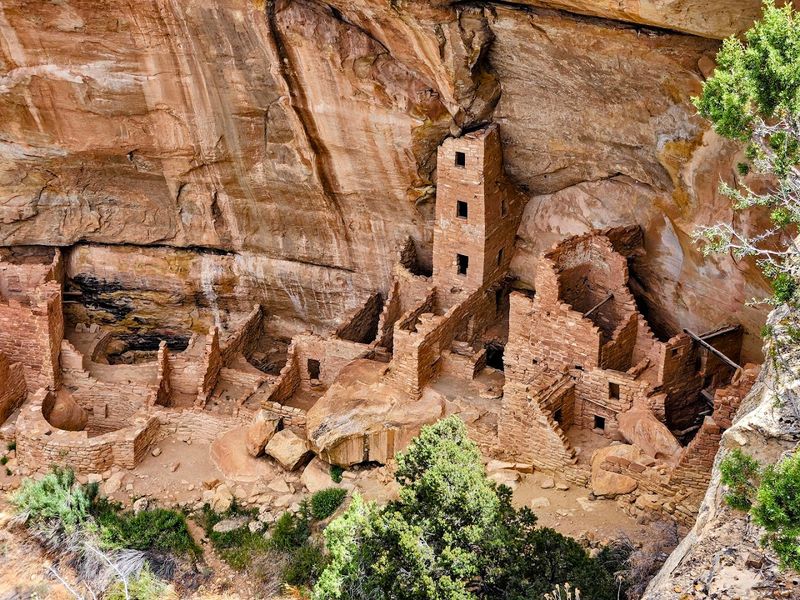
Mesa Verde is the kind of place that changes slightly every time you return, not because the ruins move, but because you do. A first visit tends to produce awe.
A second visit produces questions. By the third, you start to feel something harder to name, a kind of respectful familiarity with people who lived complex, organized lives in one of the most dramatic landscapes on the continent.
The park covers more than 52,000 acres and contains over 5,000 archaeological sites, of which the cliff dwellings are only the most photographed fraction. Rangers here are exceptionally knowledgeable, and the interpretive programs are among the best in the National Park System.
The elevation sits around 7,000 to 8,500 feet, so first-time visitors from lower elevations should drink extra water and pace themselves, especially on trail-based tours.
Key Takeaways:
Mesa Verde does not ask for much. It just asks that you show up ready to be genuinely surprised.