
This Recreated Colorado Fort Was Actually The Crossroads Of The Entire American West
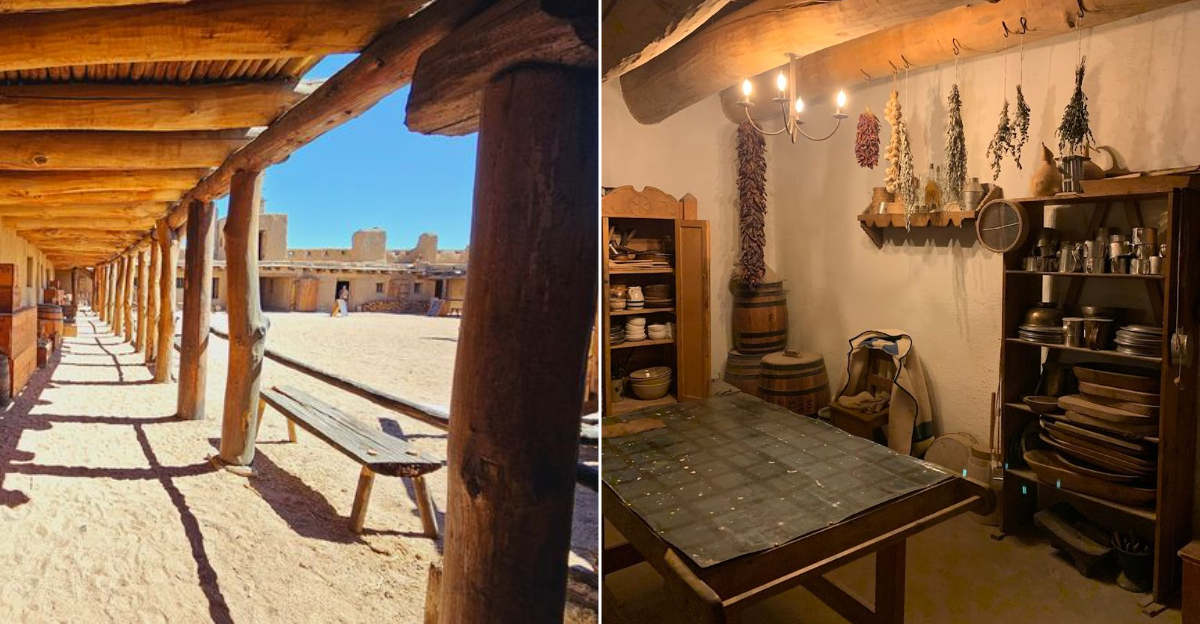
In Colorado, history does not always sit quietly behind glass. Sometimes it rises straight out of the plains and stops you in your tracks, looking almost too cinematic to be real.
This remarkable landmark feels less like a museum and more like a doorway into another century, where trade, ambition, survival, and cultural exchange all collided in one unforgettable setting.
Long ago, an incredible mix of travelers moved through its gates, from trappers and merchants to military leaders and Native nations, each helping shape a larger story that stretched far beyond the horizon.
You can almost feel the energy of those encounters still hanging in the air, as if the walls remember every negotiation, every handshake, and every life-changing decision.
Colorado’s past comes alive in places like this, where the landscape itself seems to whisper stories of movement and transformation. For anyone who has ever wanted to stand somewhere history truly happened, this is the kind of place that makes the past feel thrillingly close.
The Adobe Walls That Rewrote the Map
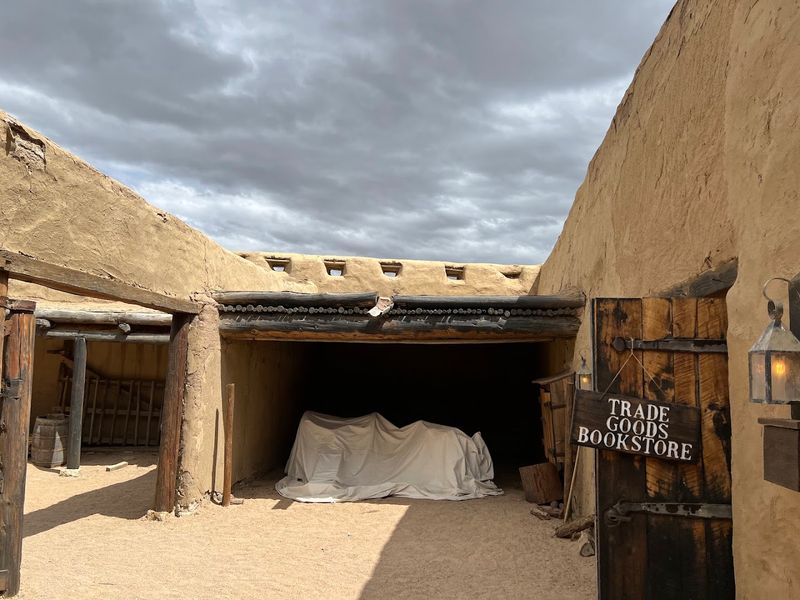
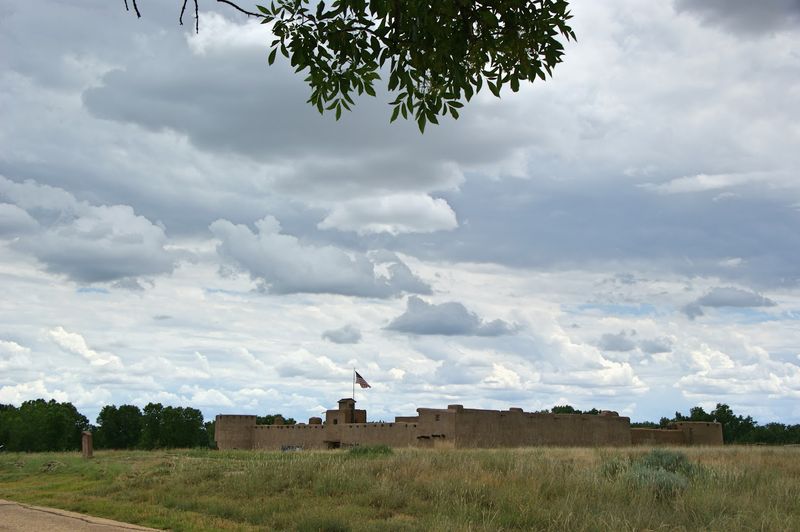
Before there were railroads, highways, or Google Maps, there was this spot, and it was basically the GPS of the entire American West. Built in 1833 along the Arkansas River, this adobe trading post became the single most important waypoint on the Santa Fe Trail.
Trappers from the Rocky Mountains, merchants from Missouri, and traders from Mexico all converged here with goods, news, and ambitions.
The reconstruction you see today is not a loose interpretation. It was rebuilt using meticulous measurements and written descriptions recorded by an army lieutenant who spent time at the original fort.
Every room, every wall thickness, every courtyard proportion was cross-referenced against those historical documents.
Standing inside those thick mud-brick walls on a bright Colorado morning, you get a very specific feeling that the history here is not decorative. It is structural.
Why It Matters:
Original fort dates to 1833, making it one of the earliest permanent structures in the region. Reconstruction is considered historically authentic based on firsthand documentation.
Located along the Arkansas River, which was once the U.S.-Mexico border.
A Trading Post Unlike Anything Else on the Frontier
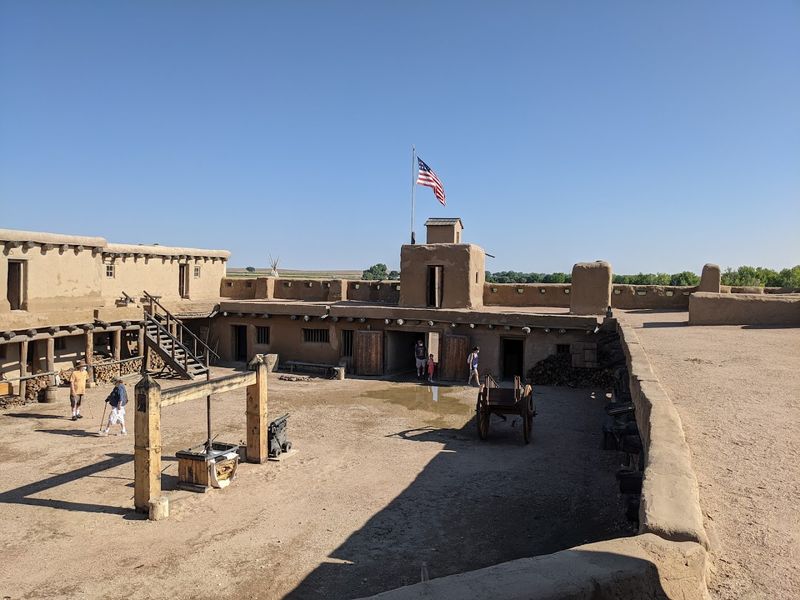
Most frontier outposts were rough, temporary, and forgettable. Bent’s Old Fort was none of those things.
It operated as a full-scale commercial hub where buffalo robes were traded, relationships between cultures were negotiated, and the economic engine of the early West ran at full speed.
The fort facilitated trade between trappers from the southern Rockies, travelers from the eastern United States, Hispanic traders from New Mexico and Mexico, and Native American communities including the Cheyenne, Arapaho, Comanche, and Kiowa. That is not a footnote in history.
That is the whole story of the American West condensed into one courtyard.
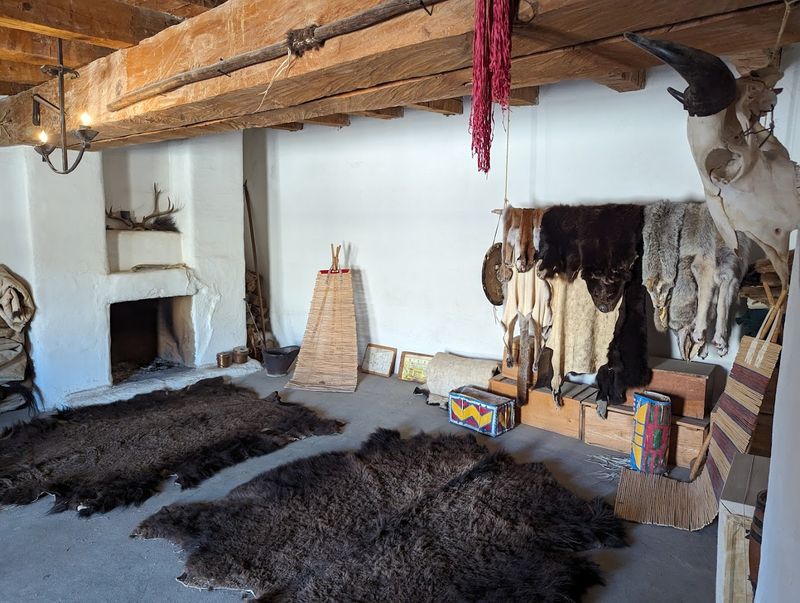
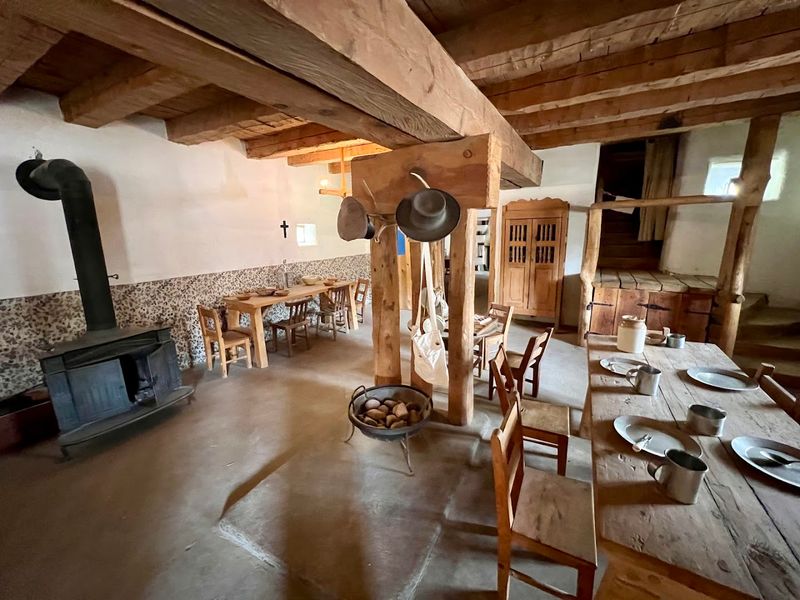
Today, the reconstructed interior is fitted out just as it would have appeared during its operational years, right down to the trade goods, furniture, and tools of the era.
Best For:
History enthusiasts who want context, not just atmosphere. Families looking to make westward expansion feel tangible and real.
Anyone who has ever watched a Western film and wondered what the real thing looked like.
The Santa Fe Trail’s Most Famous Address
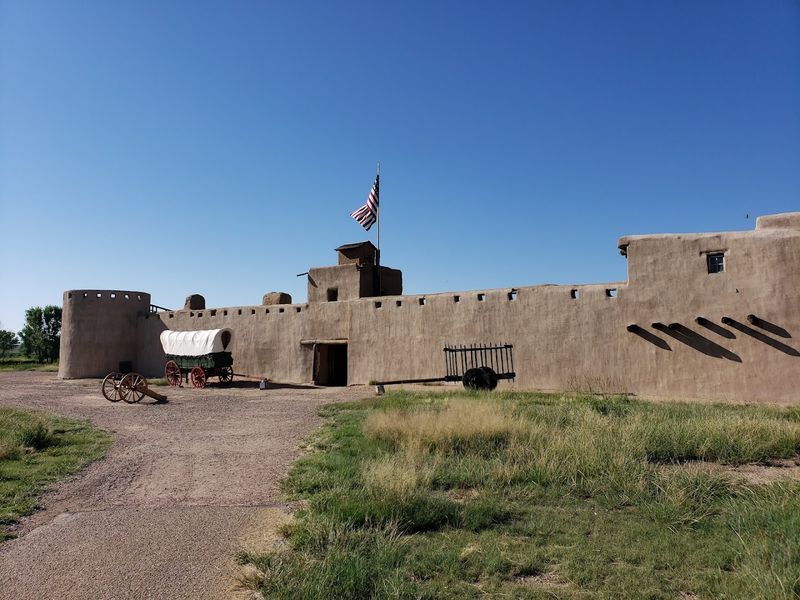
The Santa Fe Trail was the commercial lifeline of the early American Southwest, and Bent’s Old Fort sat squarely at its most critical junction. Caravans of wagons heading southwest toward Santa Fe would stop here to resupply, rest, and trade before crossing into what was then Mexican territory just across the Arkansas River.
That geographic detail is worth pausing on. When you stood at the river’s edge near this fort in the 1840s, the opposite bank was a foreign country.
The United States ended right here, and Mexico began. The fort existed at the literal edge of the nation, which gave it enormous strategic and commercial importance.
General Stephen Watts Kearny’s Army of the West used the fort as a staging point during the Mexican-American War in 1846, a fact that underscores just how central this location was to the shaping of the modern American Southwest.
Insider Tip:
Ask a ranger to point out where the U.S.-Mexico boundary ran along the Arkansas River. The geographic context transforms an already interesting site into something genuinely mind-bending.
Rangers Who Actually Know Their Stuff
Park rangers at a lot of historic sites will hand you a pamphlet and wish you luck. The rangers at Bent’s Old Fort operate on a different level entirely.
Visitors consistently describe them as knowledgeable, enthusiastic, and genuinely invested in making sure you leave understanding why this place matters.
Guided tours cover everything from the fort’s architectural construction to its role in major historical events, the lives of the people who lived and worked here, and the complex web of cultures that intersected within these walls. One ranger reportedly held an entire fireside conversation with a group of visitors that lasted well over an hour.
The staff has also been praised for their helpfulness in practical situations, including assisting families with young children who needed a little extra support during their visit.
Pro Tip:
Check the schedule ahead of time, as guided tours are not offered every day. If a tour is available during your visit, take it without hesitation.
Rangers can also point you toward additional resources if you want to go deeper into any particular aspect of the history.
The Walk In Sets the Mood Perfectly
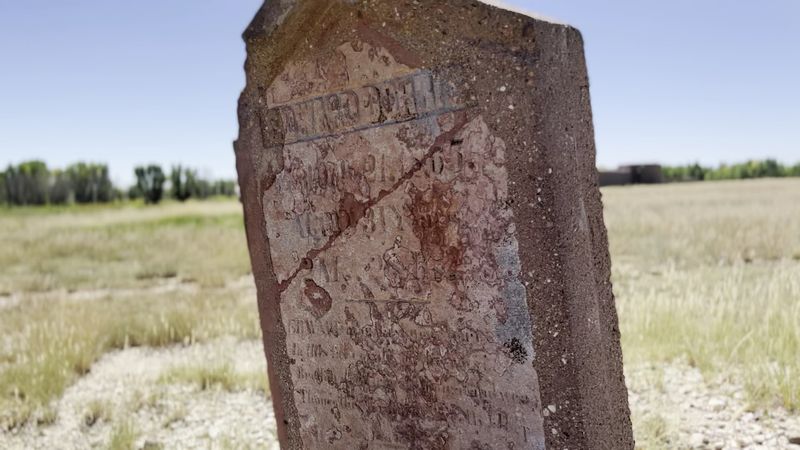
There is something almost theatrical about the approach to Bent’s Old Fort, and that is entirely by design. You park in a lot just off the road, and then you walk a short, reasonably level trail to reach the fort itself.
Along the way, you pass an old graveyard that serves as a quiet, understated reminder of just how serious life on the frontier actually was.
By the time the adobe walls come into view, you have already shifted mental gears. The walk does not feel like a chore.
It feels like a transition, from the modern world into something older and considerably more complicated.
On a hot Colorado summer day, the trail can be intense under direct sun, so sunscreen, a hat, and water are genuinely recommended rather than just politely suggested. The parking area also has picnic tables and restrooms, which makes the logistics of a family visit much more manageable.
Quick Tip:
Start your visit early in the morning to avoid peak heat on the trail. The graveyard along the path is worth a slow, respectful pause.
Sturdy strollers can manage the path, though some areas may require extra effort.
Where Multiple Cultures Actually Got Along
One of the most genuinely surprising things about Bent’s Old Fort is how many different peoples used it peacefully and productively. The Cheyenne and Arapaho tribes were regular trading partners.
Hispanic merchants arrived from the south. Trappers and mountain men came down from the Rockies.
Eastern traders made the long journey from Missouri.
For a brief period in the 1830s and 1840s, this fort was one of the few places on the continent where all of these groups could meet on relatively equal commercial terms. That is not a romanticized version of history.
The fort’s success depended on maintaining those relationships, and the Bent family worked hard to do exactly that.
Understanding this aspect of the fort’s story changes how you see the American West entirely. It was not simply a story of one culture pushing westward.
It was a messy, fascinating, occasionally violent, and sometimes genuinely collaborative encounter between many different worlds.
Who This Is For:
Anyone who wants a more complete and honest picture of Western American history. Teachers and parents looking for a teachable moment that sticks.
Visitors who appreciate complexity over simple narratives.
The Mid-Visit Reality Check: Plan Your Tour in Advance
Here is the part of the visit that catches some people off guard, and it is worth knowing before you make the drive. Guided tours are not available every single day, and some areas of the fort may be restricted depending on current structural conditions.
As of early 2026, certain rooms were closed due to ongoing preservation work.
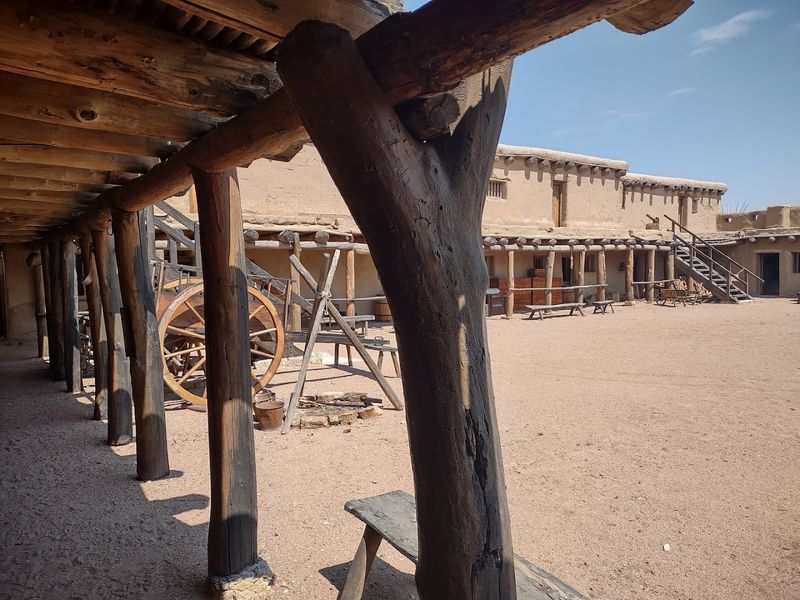
A few visitors have arrived expecting a fully open walk-through experience and found themselves limited to the exterior and open courtyard areas. That is still worth the trip, but knowing ahead of time lets you plan for the version of the visit that suits your interests best.
The simplest fix is a quick phone call to 719-383-5010 or a check of the official NPS website at nps.gov/beol before you go. Scheduling a guided tour in advance is the move if you want the full experience, and most visitors who take the tour describe it as the highlight of the entire stop.
Common Mistakes to Avoid:
Showing up without checking whether a guided tour is available that day. Assuming all rooms will be accessible during preservation periods.
Underestimating how much time the full tour takes, plan for at least two hours.
General Kearny’s Army Marched Right Through Here
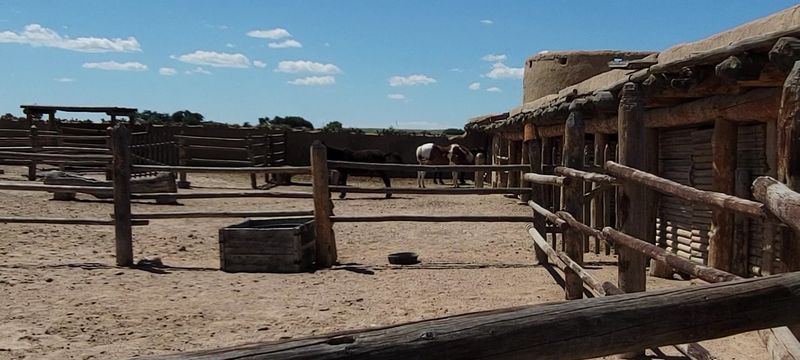
In August of 1846, General Stephen Watts Kearny assembled his Army of the West at Bent’s Old Fort before marching southwest to claim New Mexico for the United States. He recruited William Bent and several other men, including J.B.
Charbonneau, the son of Sacagawea, to guide his troops into Mexican territory.
That is not a minor footnote. That is one of the pivotal moments in the reshaping of North American geography, and it happened right here in this courtyard.
The fort served as the last major supply and staging point before the army crossed into what was then Mexico.
The historical weight of that moment is hard to overstate. Within a few years of that march, the entire Southwest would become part of the United States, fundamentally altering the map of the continent.
Bent’s Old Fort was the launching pad for all of it.
Fun Fact:
J.B. Charbonneau, who guided Kearny’s troops, had previously been educated in St. Louis by William Clark of Lewis and Clark fame.
He reportedly spoke English, French, German, Latin, and multiple Native languages.
A Gift Shop That Actually Earns Its Square Footage
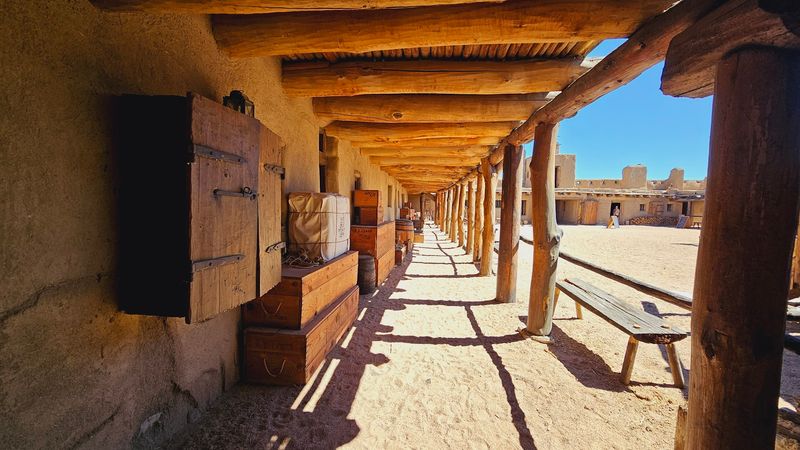
Gift shops at historic sites can feel like an afterthought, a few refrigerator magnets and some branded pencils wedged near the exit. The shop at Bent’s Old Fort operates with considerably more ambition.
Visitors consistently describe it as well-stocked and genuinely worth browsing, with items that reflect the actual history of the site rather than generic frontier kitsch.
One detail that National Park passport collectors will appreciate: the stamp station is located in the gift shop. If you are working your way through NPS sites and collecting passport stamps, do not leave without getting yours.
The shop also carries books and educational materials related to the Santa Fe Trail, the Mexican-American War, and the history of the southern Colorado region. For families traveling with curious kids, a well-chosen book from the gift shop can extend the learning well beyond the parking lot.
Best Strategy:
Visit the gift shop after your tour so you know exactly which topics you want to explore further. NPS passport holders should ask about the stamp location upon arrival.
No food or beverages are sold on site, so bring your own snacks and water.
Living History That Refuses to Stay in the Past
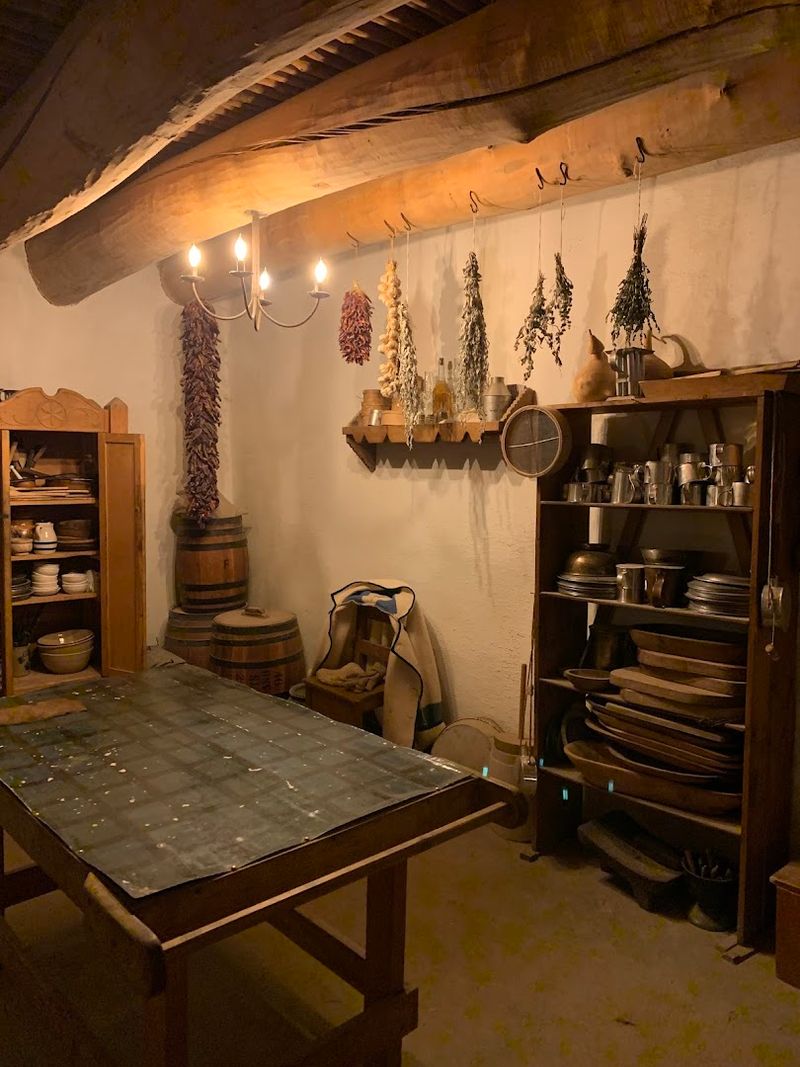
On certain days, Bent’s Old Fort does something that most historic sites only attempt half-heartedly. It comes alive.
Living history actors move through the fort in period-accurate clothing, demonstrating what daily life looked like for the people who worked, traded, and lived within these walls in the 1830s and 1840s.
The effect is not campy or awkward. When it is done well, and visitors report that it often is, it collapses the distance between then and now in a way that no interpretive sign ever quite manages.
Watching someone demonstrate the process of trading buffalo robes or preparing goods for a caravan departure makes the history feel immediate rather than archived.
The fort’s interior is fitted out with period-appropriate furnishings and tools throughout the year, even on days without live reenactment. Every room you walk through is arranged as it would have been during the fort’s operational years, which gives the space a lived-in quality that is genuinely rare among historic reconstructions.
Planning Advice:
Check the NPS website or call ahead to find out if living history programming is scheduled during your visit. Living history events tend to draw larger crowds, so arrive early.
Southern Colorado’s Most Underrated Road Trip Stop
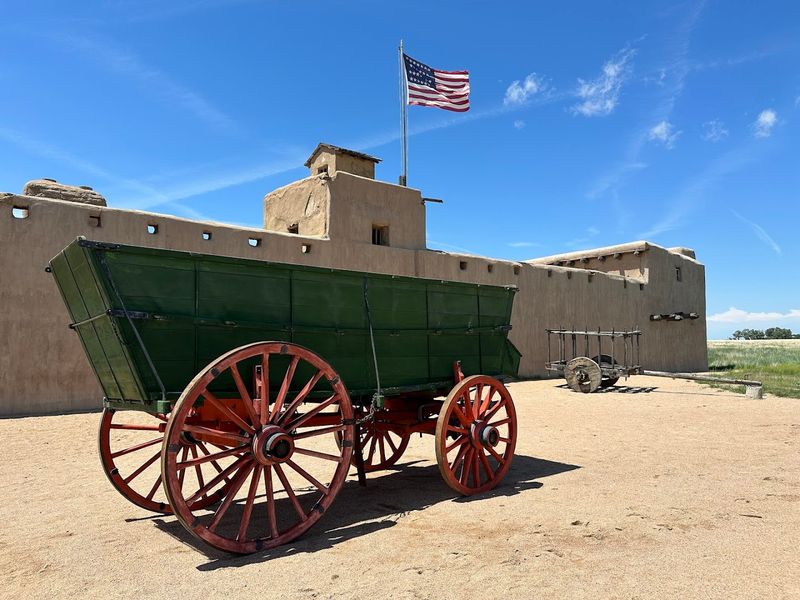
La Junta, Colorado sits in the southeastern corner of the state, a part of Colorado that most road trippers skip in their rush toward the mountains. That is a navigational error worth correcting.
Bent’s Old Fort is located just a short detour off US 50, which means it slots naturally into any route crossing the southern plains.
The surrounding landscape has its own austere appeal. Wide, flat, and surprisingly quiet, the high plains of southeastern Colorado look almost exactly as they did when wagon trains rolled through in the 1840s.
That visual continuity between the landscape and the history makes the visit feel unusually coherent.
La Junta itself has the straightforward, no-fuss energy of a working agricultural town. A quick stop in town before or after the fort visit rounds out the experience in a way that feels genuinely local rather than curated for tourists.
Best For:
Road trippers on US 50 looking for a stop that delivers real historical substance. Families who want a meaningful detour that does not require significant backtracking.
Anyone who appreciates wide-open landscapes as part of the historical context.
Final Verdict: Why This Fort Belongs on Your List
Bent’s Old Fort National Historic Site earns its 4.8-star rating the honest way, through genuine historical substance, knowledgeable staff, and a physical space that rewards curiosity. It is not a passive experience.
The more questions you ask and the more time you spend, the more the layers of this place reveal themselves.
The fort is open daily from 9 AM to 4 PM, and the tour is free. The walk from the parking area is short and manageable for most visitors, though the Colorado sun demands respect in summer months.
Families, couples, solo history enthusiasts, and serious researchers all find something worth their time here.
At its core, this is a place where the American West was not just witnessed but actively shaped. That is a rare thing to stand inside.
Key Takeaways:
Open daily 9 AM to 4 PM at 35110 CO-194, La Junta, Colorado. Free guided tours available on select days, call 719-383-5010 to confirm schedule.
Authentic reconstruction based on firsthand historical documentation. Allow at least one to two hours for a full visit.
Bring water, sunscreen, and a hat for the trail in warm weather. Gift shop carries NPS passport stamps and history-focused merchandise.