
11 Illinois Waterfall Hikes Worth The Trip In 2026
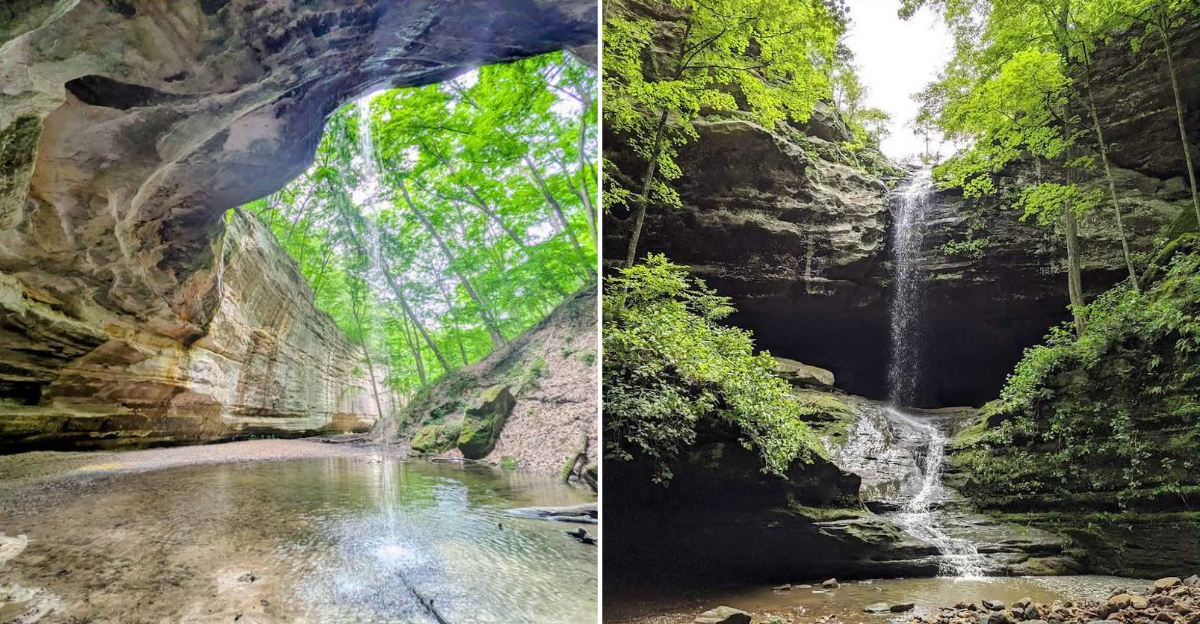
Waterfalls rarely come to mind when people think about Illinois, because cornfields usually get the spotlight. However, Illinois hides a surprising number of waterfalls carved into sandstone canyons, forest ravines, and quiet backcountry trails.
Some crash down narrow canyon walls, while others slip gently over layered rock after a heavy rain. Starved Rock draws attention for good reason, yet the story stretches far beyond a single park.
Southern Illinois, especially around Shawnee National Forest, holds rugged terrain that feels nothing like the flat landscapes many expect from the Midwest.
Years of exploring these trails reveal something important: timing matters. The best time to visit is after spring rain or snowmelt, because the scenery transforms completely.
The following hikes highlight the most memorable waterfall trails across Illinois right now. Each one delivers a scene worth the drive and a place many travelers still overlook.
1. St. Louis Canyon, Starved Rock State Park
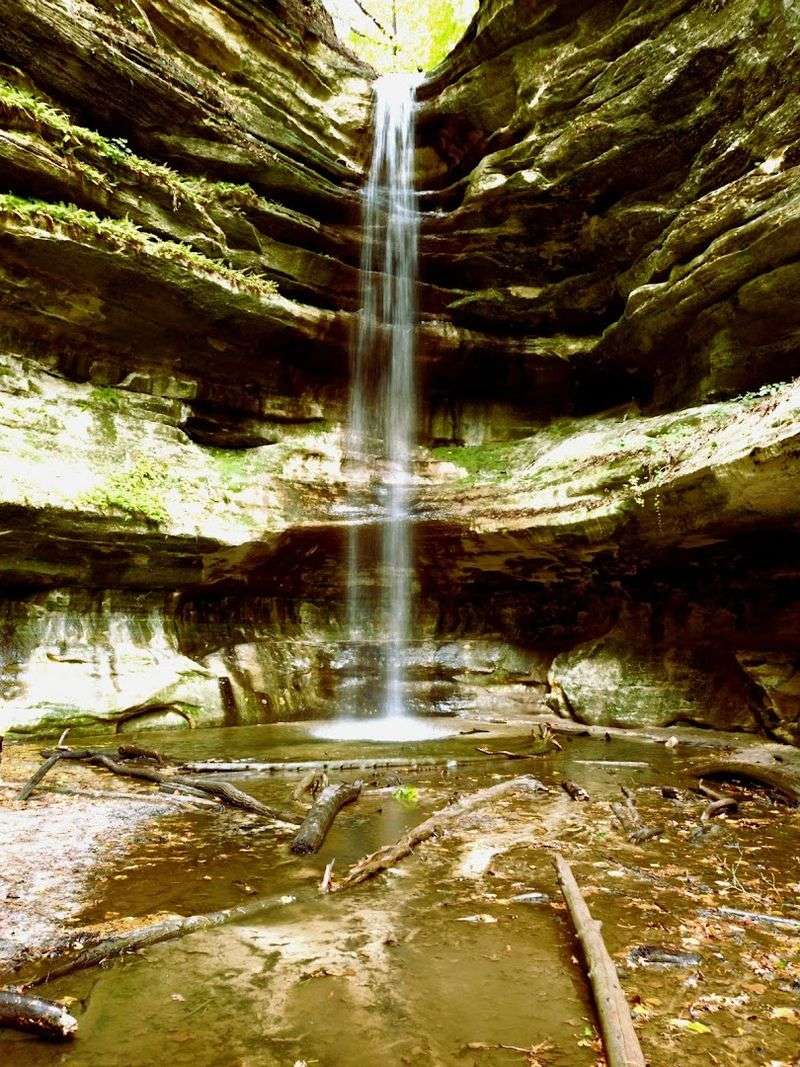
Few places in northern Illinois hit you with as much visual drama as St. Louis Canyon, and it tends to stop first-time visitors right in their tracks.
Found inside Starved Rock State Park near Utica, Illinois, this canyon features a tall, narrow waterfall that drops into a moss-covered sandstone bowl that looks almost prehistoric.
The walls are carved with centuries of erosion, and the acoustics inside the canyon make the water sound twice as powerful as it looks.
The trail to reach it is relatively short and well-maintained, making it accessible for families and casual hikers.
Spring is the best season to visit, when snowmelt pushes the falls to their full height. Even in summer, the canyon stays noticeably cooler than the surrounding forest, which makes it a refreshing stop on a warm day.
Plan to spend time just sitting and listening once you arrive. The experience is genuinely hard to replicate anywhere else in the state.
2. Wildcat Canyon, Starved Rock State Park
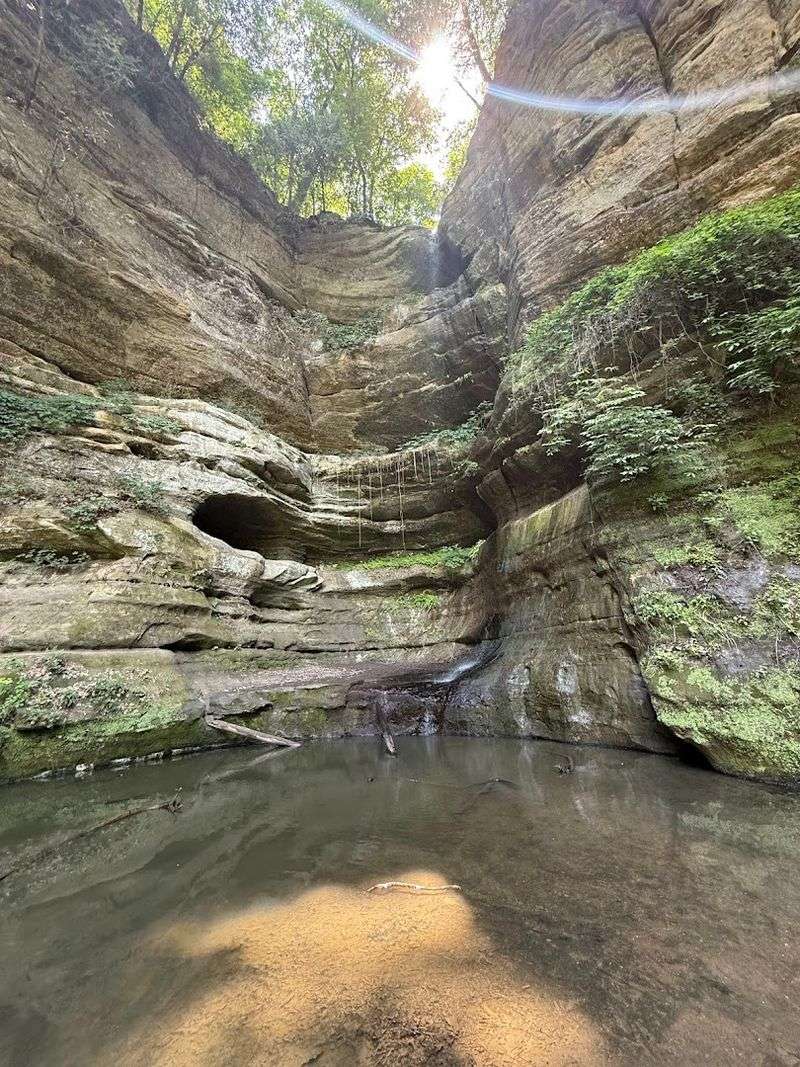
There is something wild and slightly theatrical about Wildcat Canyon that earns it the name every single time you visit. Also located within Starved Rock State Park near Utica, Illinois, this canyon features a seasonal waterfall that spills over layered sandstone ledges into a narrow canyon.
The effect is one of the most photogenic scenes in the entire park, especially after a good rain. The hike into the canyon involves some rocky terrain, so wearing proper footwear is a smart move before you head out.
One thing that sets Wildcat apart from neighboring canyons is the sense of depth you get as you move deeper into the gorge.
The walls grow taller, the light gets softer, and the sound of falling water becomes constant. Fall foliage season transforms this trail into something almost unreal, with orange and red leaves framing the cascades from above.
It is one of those spots that rewards repeat visits throughout the year.
3. LaSalle Canyon, Starved Rock State Park
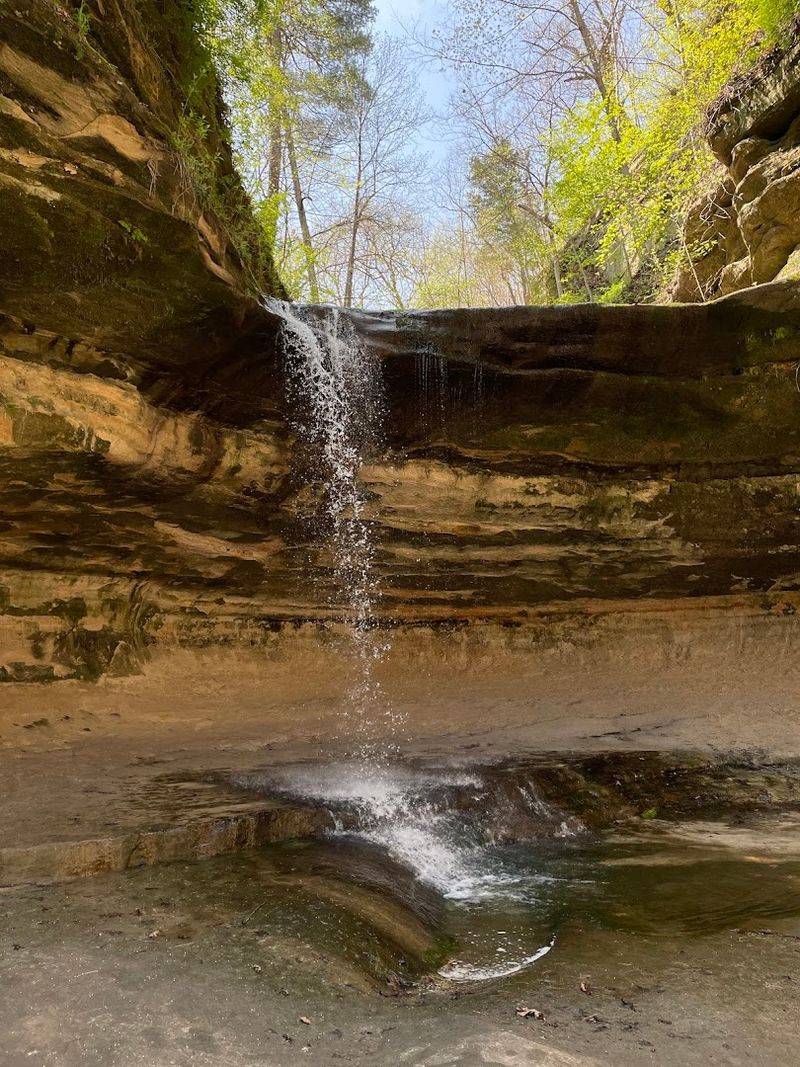
LaSalle Canyon holds a special reputation among regulars at Starved Rock State Park, and it is not hard to see why. The canyon, located near Utica, Illinois, contains one of the most striking waterfall formations in the park, where water fans out across a wide rock face before collecting in a shallow pool at the base.
The circular shape of the canyon creates a natural amphitheater effect that feels both intimate and grand at the same time.
The trail leading here passes through dense woodland and connects to several other canyon trails, making it easy to combine LaSalle with a longer loop hike.
Winter visits offer a completely different experience, as the falls sometimes partially freeze and the canyon walls take on an icy, glittering quality that photographers love. Bring sturdy boots if you plan to visit between November and February.
Summer mornings are ideal for a quieter visit before the park fills up with weekend crowds. This canyon consistently ranks among the top picks for first-time visitors to the park.
4. Ottawa Canyon, Starved Rock State Park
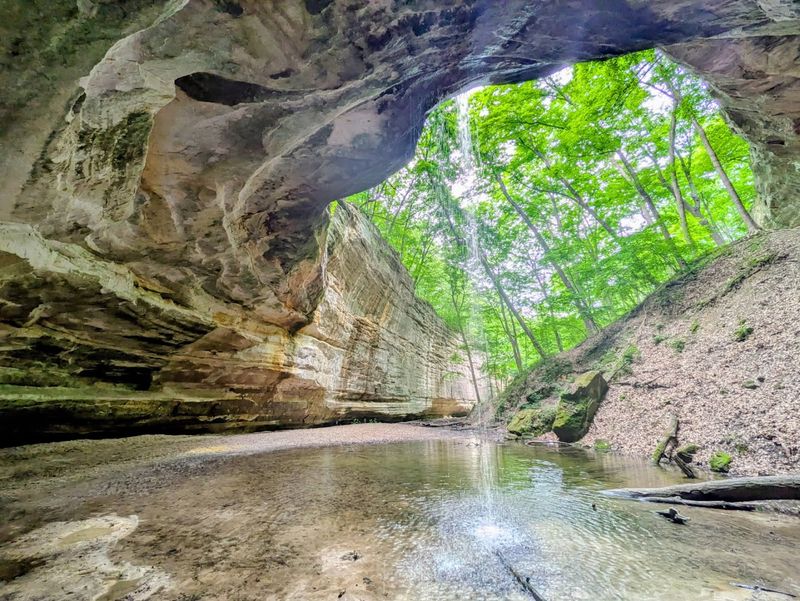
Ottawa Canyon rewards the hikers who take the time to seek it out, and it tends to feel a bit more secluded than some of the more heavily trafficked canyons in Starved Rock State Park.
Situated near Utica, Illinois, this canyon has a quieter, more intimate atmosphere, with a smaller waterfall that feels personal rather than dramatic. The sandstone walls are etched with swirling patterns shaped by thousands of years of flowing water.
The trail approaching Ottawa Canyon winds through open forest before narrowing as it descends toward the sandstone canyon floor. Because it sees slightly fewer visitors than LaSalle or St. Louis Canyon, you have a better chance of having the space mostly to yourself on a weekday morning.
The canyon floor stays damp and green throughout spring and early summer, giving it a lush, almost garden-like quality. Pack a light snack and take your time here.
The slower pace suits the mood of this particular spot perfectly.
5. Cascade Falls, Matthiessen State Park
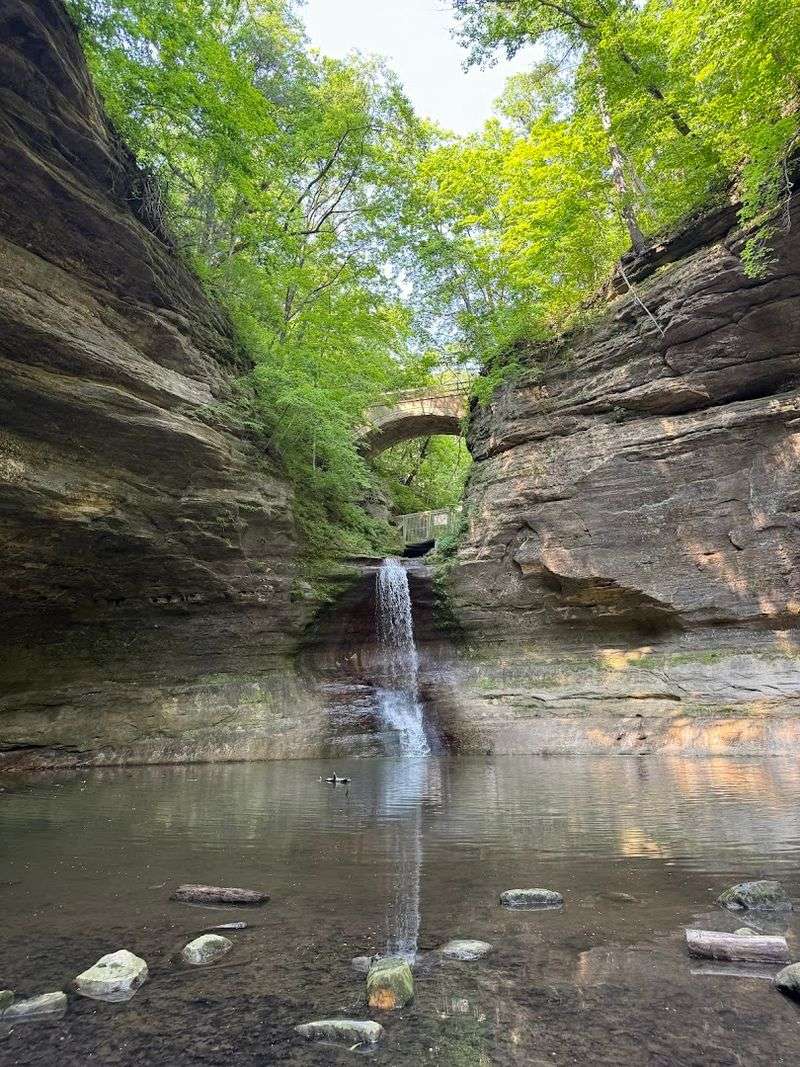
Matthiessen State Park sits just south of Starved Rock, and Cascade Falls is one of the main reasons hikers make the short detour to visit it. Located near Utica, Illinois, the falls drop through a narrow defile in the rock before spreading across a wide ledge and continuing downstream through the Dells area of the park.
The entire sequence of water movement is surprisingly complex for a relatively small stream. What makes Cascade Falls stand out is how it fits into the larger trail system at Matthiessen.
You can combine a visit here with a walk through the Lower Dells, which features additional cascades and creek crossings that keep the hike interesting from start to finish. The park generally sees fewer visitors than neighboring Starved Rock, which means a more relaxed atmosphere on most days.
Early morning light in spring hits the falls at a beautiful angle that makes the water appear almost golden. Sturdy shoes with good grip are recommended since the rocks near the base can be slippery.
6. Lake Falls, Matthiessen State Park
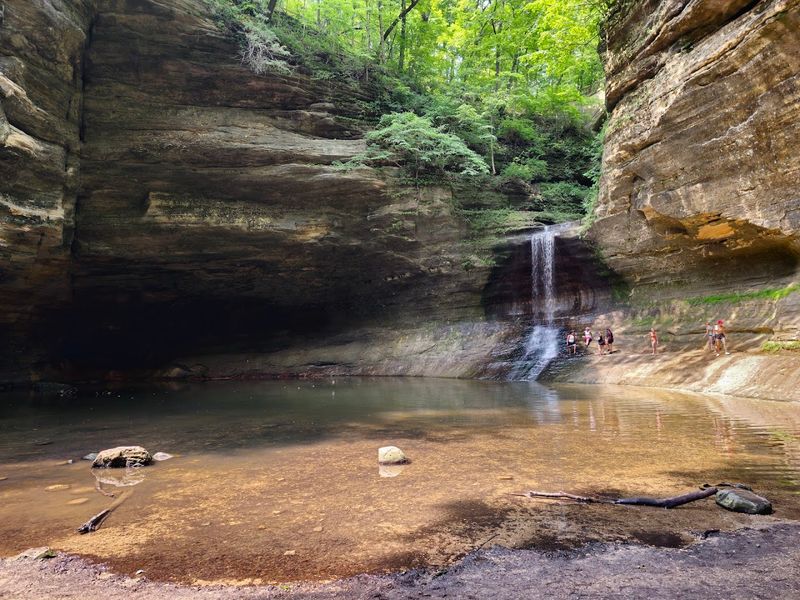
Right at the heart of Matthiessen State Park near Utica, Illinois, Lake Falls drops into one of the most picturesque natural pools in the entire state.
The waterfall drops into a shallow pool at the base of the canyon where water collects before continuing downstream through the dells. It is the kind of spot that makes you want to slow down and just observe for a while.
The trail system around Lake Falls connects directly to other features in the Upper Dells, so you can build a satisfying half-day loop that covers several different water features in one outing.
The path involves some gentle elevation changes and a few wooden bridges, all of which add to the adventure without making the hike feel strenuous. Late spring tends to bring the highest water levels, which amplifies the sound and visual impact of the falls considerably.
Matthiessen is often overshadowed by its famous neighbor, but Lake Falls alone makes this park well worth a dedicated visit.
7. Ferne Clyffe Waterfall, Ferne Clyffe State Park
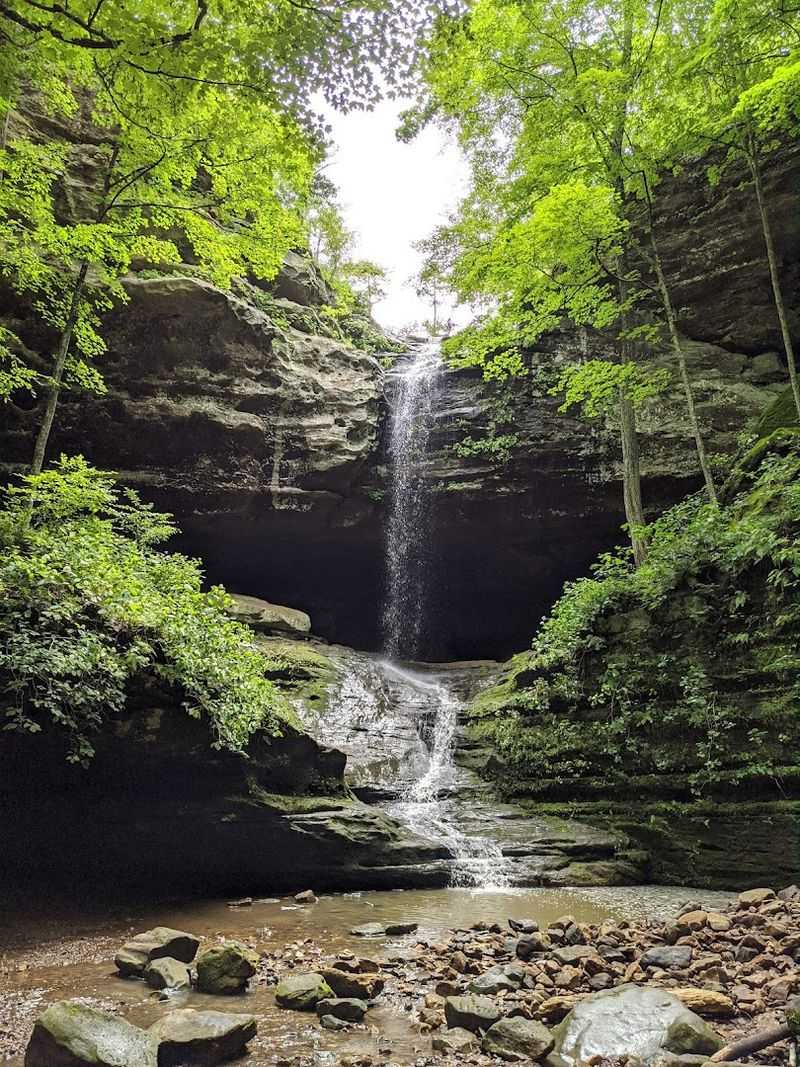
Head south to the Illinois Ozarks region and Ferne Clyffe State Park near Goreville, Illinois, delivers a completely different flavor of waterfall experience.
The park’s main waterfall drops over a curved, overhanging bluff into a hollow below, creating a natural rock shelter that hikers can walk behind during dry conditions. The scale of the cliff face is genuinely impressive, especially when water is running strong after heavy spring rains.
The Big Rocky Hollow Trail is the primary route to the falls, following an easy path through a hardwood forest to the base of the bluff where the waterfall appears after rain.
Keep an eye out for wildflowers blooming along the trail edges in April and May, as this section of southern Illinois has a surprisingly diverse plant community.
The park also has excellent camping facilities, which makes it easy to turn a waterfall hike into an overnight adventure. Ferne Clyffe tends to fly under the radar compared to Shawnee National Forest spots, but regulars know it is one of the best-kept secrets in southern Illinois.
8. Rocky Glen Waterfall, Waterfall Glen Forest Preserve
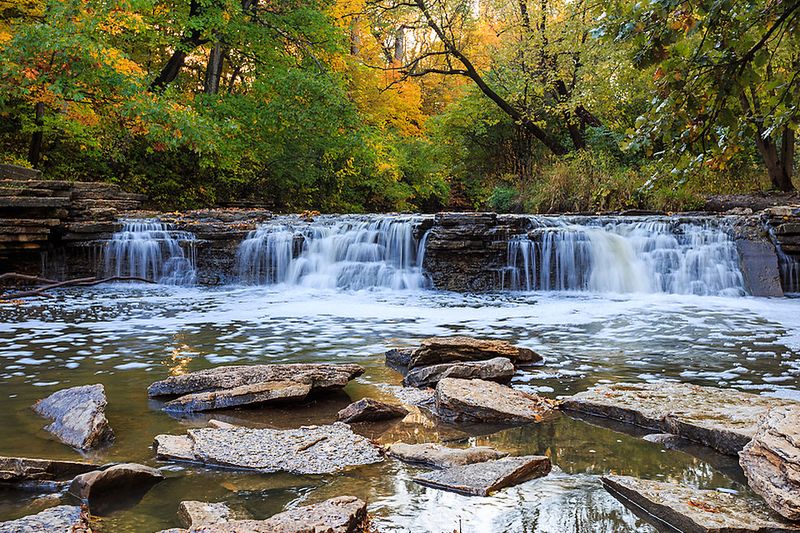
Waterfall Glen Forest Preserve near Darien, Illinois, is a surprisingly wild-feeling escape sitting just southwest of Chicago, and Rocky Glen is the hidden highlight most casual visitors miss entirely.
The waterfall here is modest in size but charming, cascading through a small ravine and originally constructed by the Civilian Conservation Corps during the 1930s.
Getting there requires a bit of trail navigation, which adds a satisfying sense of discovery to the outing.
The preserve features a 9.5-mile main loop trail with several short connector paths, making it one of the best longer hikes in the Chicago metro area without leaving the suburbs.
Rocky Glen sits along a branch of the loop that dips into the ravine system, where the landscape shifts noticeably and the tree canopy closes in above you.
Fall is a particularly beautiful time to make the trip, as the ravine fills with color and the waterfall has usually picked up flow from autumn rains. Pack a trail map before heading out since some of the side paths can be easy to miss.
9. Burden Falls, Burden Falls Wilderness, Shawnee National Forest
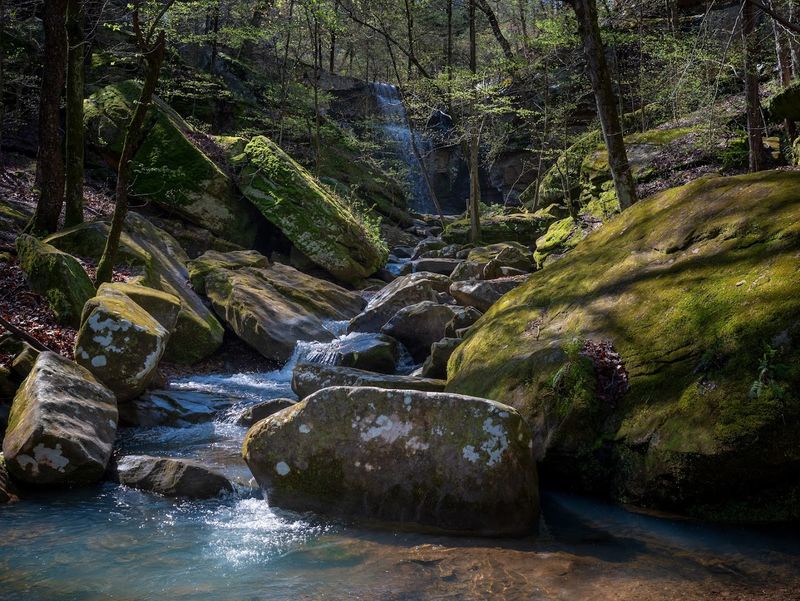
Burden Falls is one of the most impressive natural water features in all of Illinois, and the remote setting inside the Burden Falls Wilderness area of Shawnee National Forest makes the experience feel genuinely adventurous.
Located in Pope County in far southern Illinois, the creek drops about twenty feet over a sandstone ledge before continuing down additional cascades that become most impressive after significant rainfall.
The surrounding wilderness has a raw, untouched quality that sets it apart from the more developed state park destinations in the northern part of the state.
The access trail is short but can be rough underfoot, particularly after wet weather when the path becomes slick with mud. Wearing waterproof hiking boots is a practical choice here.
The best flow typically occurs between late winter and late spring, so planning a March or April visit gives you the highest chance of seeing the falls at full power.
Facilities are limited in this remote wilderness area, so hikers should come prepared with water and basic supplies. The solitude and scenery here are genuinely hard to match anywhere else in Illinois.
10. Jackson Falls, Shawnee National Forest
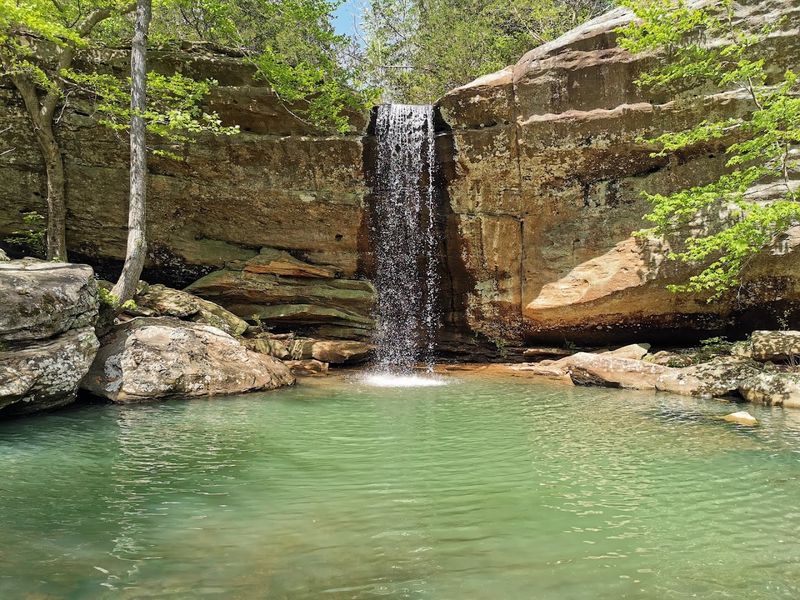
Climbers and hikers both have strong opinions about Jackson Falls in Shawnee National Forest, and those opinions are almost universally enthusiastic.
Located in Pope County near the small community of Ozark, the falls sit within a dramatic sandstone amphitheater that is also one of the most popular rock climbing destinations in the Midwest. Even if scaling vertical walls is not your thing, the natural architecture of the site is worth the hike on its own terms.
The waterfall drops into the bowl of the amphitheater from a significant height, and the surrounding cliff faces are covered in textured sandstone that catches light beautifully in the late afternoon.
The trail to the falls is short and relatively easy, which means you can spend the bulk of your time exploring the base of the cliffs and watching the water interact with the rock formations below.
Spring and early summer bring the most consistent water flow. Visiting on a weekday keeps the atmosphere quieter, though the climbing crowd is generally friendly and adds an interesting energy to the scene.
11. Boulder Falls, Bell Smith Springs Recreation Area
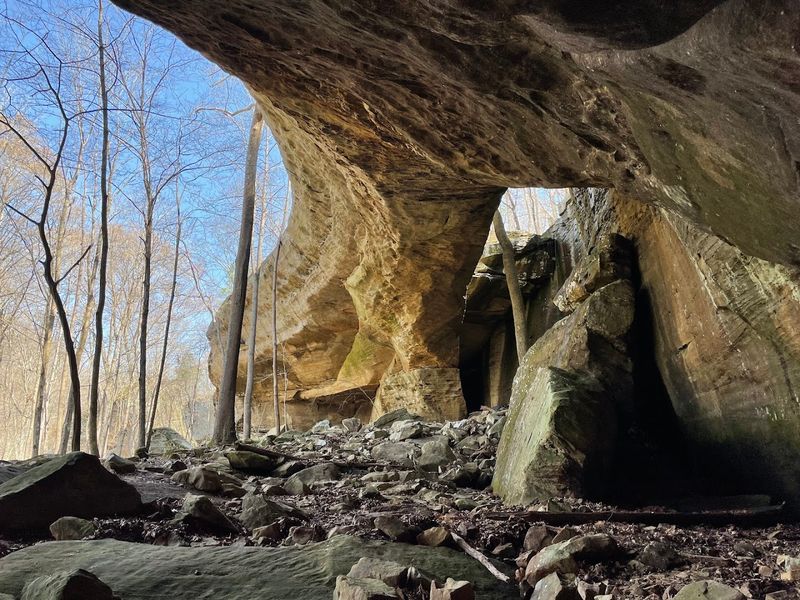
Bell Smith Springs Recreation Area in Shawnee National Forest is already one of the most scenic destinations in southern Illinois, and Boulder Falls adds a waterfall reward to an already outstanding trail network.
Located in Pope County near Simpson, Illinois, the falls tumble over and around a collection of massive sandstone boulders that have accumulated in the creek valley over thousands of years.
The combination of rushing water and jumbled rock creates a scene that looks more like the Appalachian foothills than the Illinois most people picture.
The trail system at Bell Smith Springs covers several miles of varied terrain, including creek crossings and canyon passages that make the hike feel like a proper backcountry adventure.
Boulder Falls fits naturally into a longer hike that also passes a natural rock bridge and several deep pools, giving you plenty of reasons to spend a full day exploring the area. Late spring offers the best waterfall flow, though the swimming holes nearby are most appealing in summer.
Bring solid footwear and a sense of curiosity, because every turn in this area reveals something worth stopping for.