
Here Are 12 Underrated But Must-See Places In Illinois For Out-Of-Towners
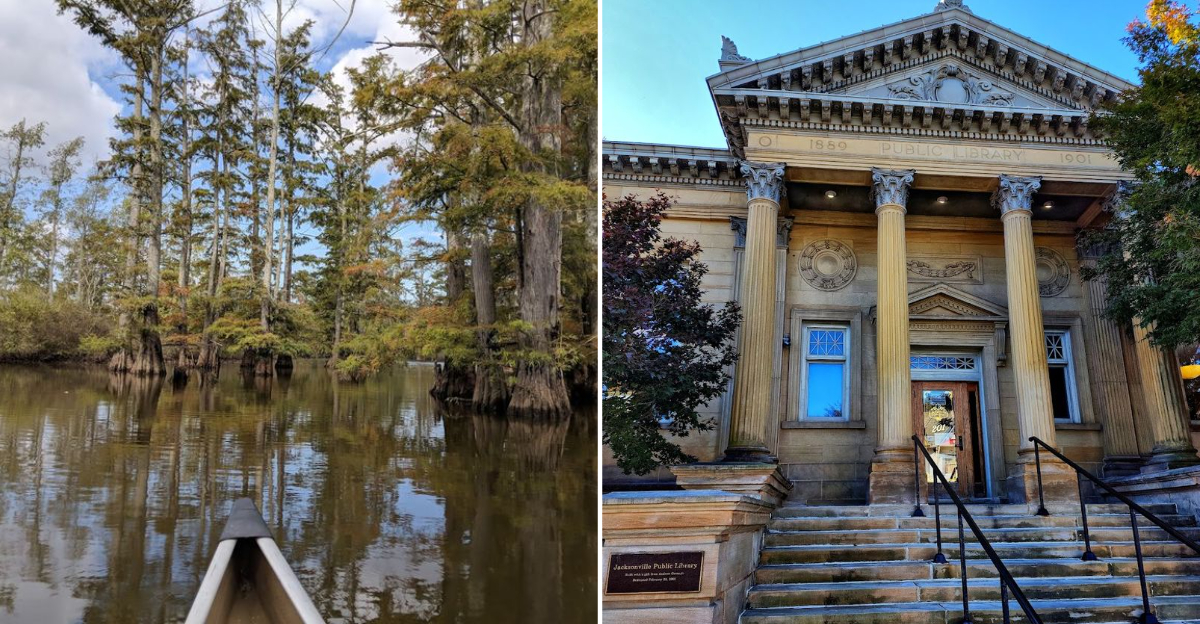
Across Illinois, history whispers from towering earthen mounds, sandstone cliffs rise in impossible shapes, and wetlands mirror skies you won’t believe exist. Quiet corners hold stories older than any guidebook, and a single walk can feel like discovering a secret the world forgot to tell.
Missing these places means passing up moments you’ll regret, moments that turn a simple trip into a story worth telling. This list uncovers twelve destinations that pull you in with intrigue, surprise, and undeniable beauty.
Each one demands attention, whether it’s a mysterious canyon near a city or a forest where white pines stretch farther than memory allows. Don’t let Illinois’s most extraordinary experiences slip by unnoticed; these stops transform ordinary travel into something unforgettable.
1. Leaning Tower of Niles, Niles
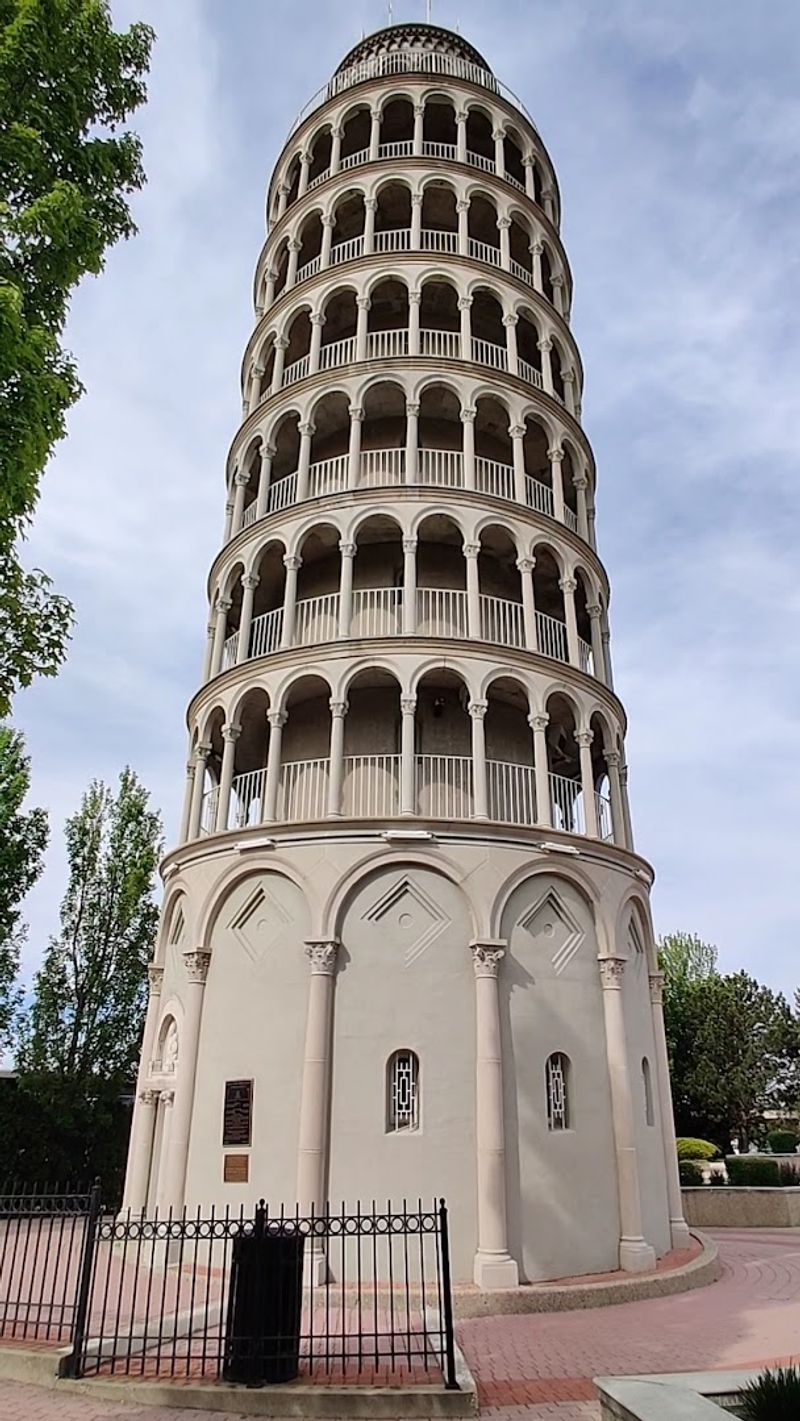
Yes, you read that correctly. There is a leaning tower in Illinois, and it has absolutely nothing to do with Italy’s famous original, except that it looks almost exactly like it.
The Leaning Tower of Niles at 6300 W Touhy Ave, Niles, IL 60714, is a half-scale replica of the Leaning Tower of Pisa, built between 1931 and 1934 by businessman Robert Ilg as a water tower for a nearby pool complex.
Standing about 94 feet tall, it leans slightly, though not exactly at the same angle as its Italian counterpart. Visitors can freely explore the surrounding grounds, reflecting pool, and plaza for photos, but interior access to the tower itself is currently not available, keeping this quirky stop budget-friendly and photo-ready.
Visiting on a weekday morning means fewer crowds and better lighting for photography. It is genuinely one of those spots that makes you do a double-take from the road.
2. Alfred Caldwell Lily Pool, Chicago
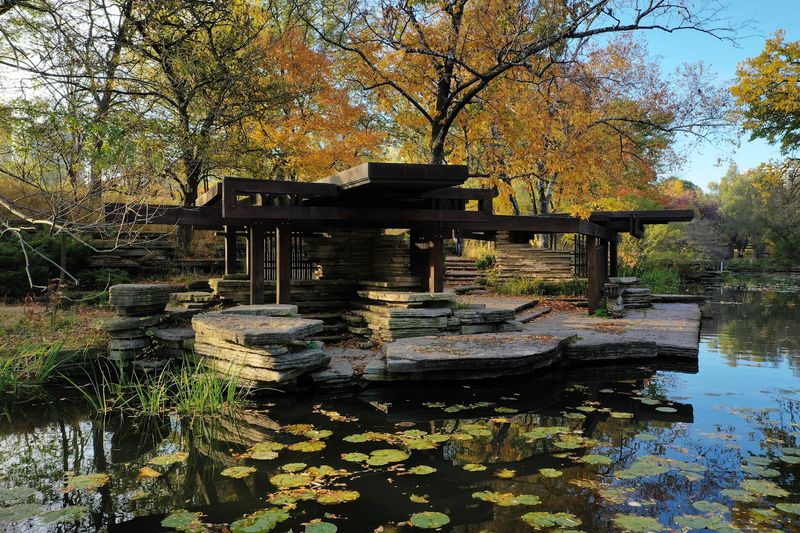
Tucked behind the hustle of Chicago’s Lincoln Park, the Alfred Caldwell Lily Pool at 125 W Fullerton Pkwy, Chicago, IL 60614 is one of the city’s most peaceful and least-visited corners.
Designed by landscape architect Alfred Caldwell and completed in 1936, this National Historic Landmark blends Prairie-style architecture with a naturalistic water garden that feels worlds away from the urban buzz just outside its walls.
Flat limestone council rings, rustic stone bridges, and a small cascading waterfall surround a lily-covered pool that attracts birds and butterflies throughout the warmer months. The design was inspired by Frank Lloyd Wright’s Prairie movement, making every angle feel intentional and artful.
Spring and early summer bring the best blooms, but even fall visits reward you with colorful foliage reflected in the still water.
Entry is free during the Lily Pool’s seasonal opening, typically from mid-April through mid-November, and the calm atmosphere makes it a perfect midday reset on a busy Chicago itinerary. Few places in the city feel this quietly extraordinary.
3. Cahokia Mounds State Historic Site, Collinsville
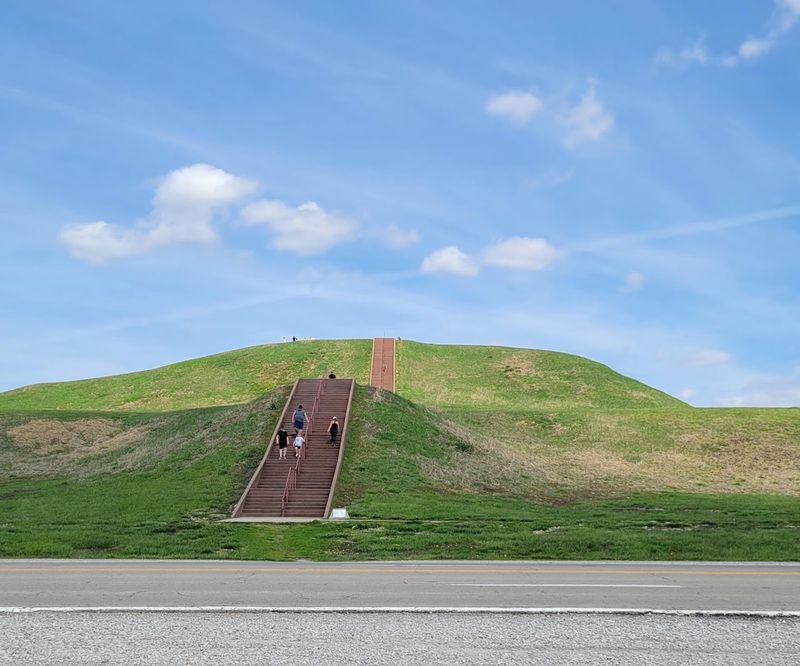
Long before European settlers arrived in North America, a sophisticated pre-Columbian city stood near what is now Collinsville, Illinois.
Cahokia Mounds State Historic Site, located at 30 Ramey St, Collinsville, IL 62234, preserves the remains of the largest prehistoric city north of Mexico, home to an estimated 20,000 people at its peak around 1100 CE.
The site features more than 70 surviving earthen mounds, including Monks Mound, which covers more ground at its base than the Great Pyramid of Giza. Climbing to the top of Monks Mound rewards visitors with sweeping views across the Mississippi River floodplain.
The on-site interpretive center offers exhibits and artifacts that bring this lost civilization to life, though visitors should check current hours as temporary closures for renovations sometimes occur.
It is a UNESCO World Heritage Site, ranking alongside some of the most significant cultural places on Earth. Plan for at least two hours to explore the grounds properly.
4. Mississippi Palisades State Park, Savanna
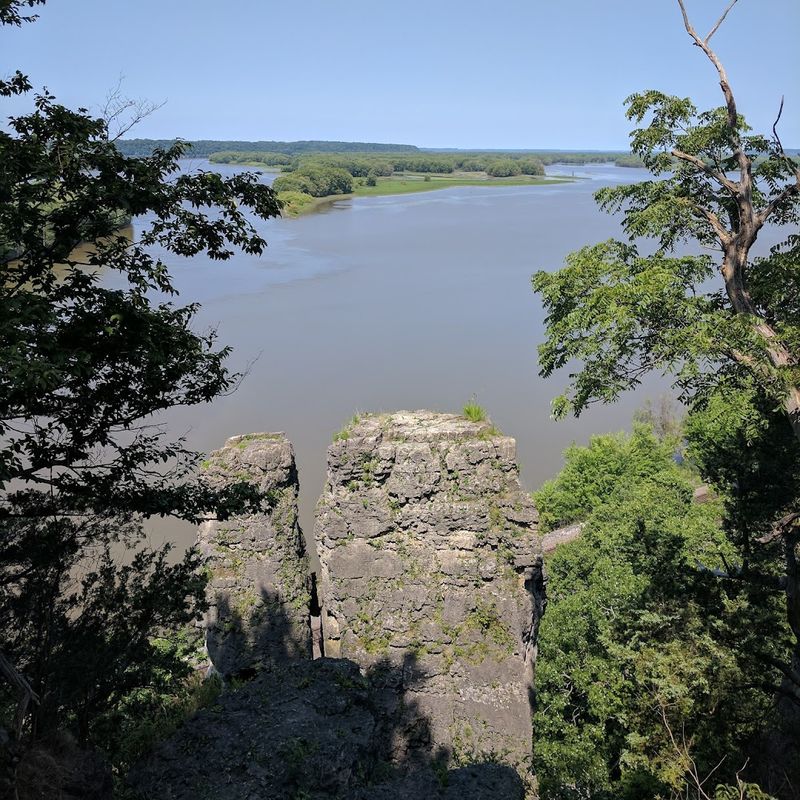
The overlooks at Mississippi Palisades State Park near Savanna, IL 61074, along IL-84, deliver some of the most dramatic scenery in the entire state.
Towering limestone bluffs carved by centuries of wind and water rise sharply above the Mississippi River, creating a rugged landscape that feels more like the American Southwest than the Midwest.
The park offers over 15 miles of hiking trails ranging from easy riverside walks to more challenging ridge climbs.
Twin Sisters, Sentinel Rock, and Indian Head are among the most popular rock formations, each offering a different perspective on the river valley below. Fall is the absolute best time to visit, when the bluffs glow in shades of orange, red, and gold.
Camping is available year-round, and birdwatchers will find the park especially rewarding during spring and fall migration seasons. Pack a lunch, bring sturdy shoes, and give yourself a full day.
The views from the top are the kind you want to sit with for a while.
5. Garden of the Gods Recreation Area, Karbers Ridge
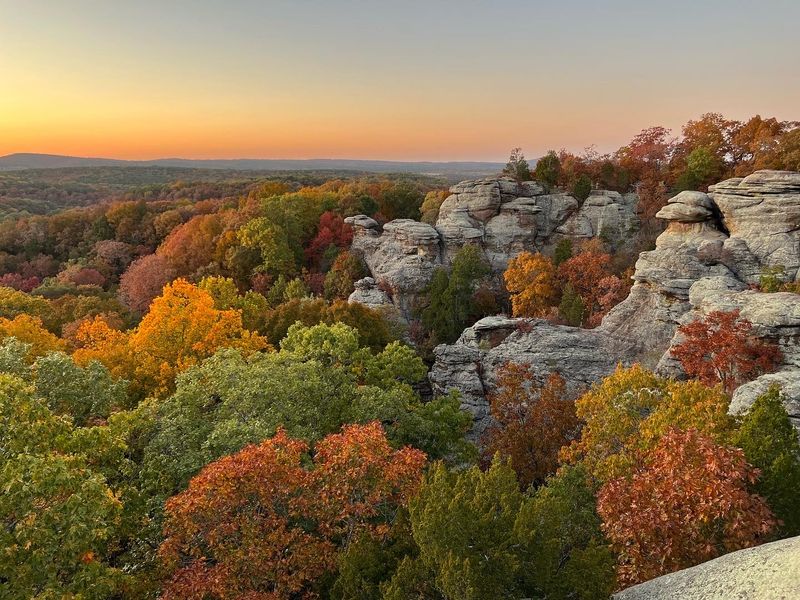
Southern Illinois holds a geological surprise that stops first-time visitors in their tracks. The Garden of the Gods Recreation Area on Karbers Ridge Rd, Karbers Ridge, IL 62955, features towering sandstone formations sculpted over 300 million years into shapes that seem almost too dramatic to be real.
Names like Camel Rock, Anvil Rock, and Devil’s Smokestack hint at just how wild the scenery gets.
A short observation trail of about one mile winds through the main rock formations, making it accessible even for casual hikers. For those who want more, the Wilderness Trail extends deeper into the Shawnee National Forest with longer, more challenging routes.
Sunrise and sunset light up the orange and red rock faces in spectacular ways, so timing your visit around golden hour pays off.
The area is part of the Shawnee National Forest and is open year-round with free admission. Autumn weekends get busy, so a weekday visit in late September or early October hits the sweet spot between colorful foliage and manageable crowds.
6. Henry N. Barkhausen Cache River Wetlands Center, Cypress
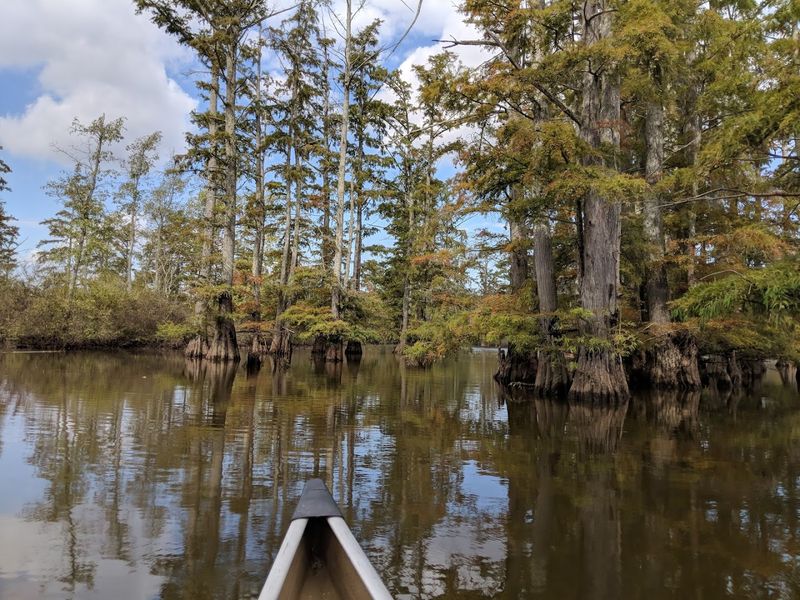
Bald cypress trees that are over 1,000 years old stand knee-deep in still, mirror-like water at the Cache River Wetlands in southern Illinois.
The Henry N. Barkhausen Cache River Wetlands Center at 8885 IL-37 S, Cypress, IL 62923, serves as the gateway to one of the most ecologically significant wetland systems in the entire country, designated as a Wetland of International Importance by the Ramsar Convention.
Boardwalk trails allow visitors to walk directly through the swamp without getting their feet wet, offering close-up views of the ancient cypress trees and the rich wildlife that calls this place home. Great blue herons, river otters, and over 200 bird species have been recorded in the area.
The visitor center provides free educational exhibits about the wetland ecosystem and trail maps for self-guided tours, though hours are limited and vary seasonally.
Spring is particularly magical when wildflowers carpet the forest floor. This is one of those rare places that feels genuinely prehistoric, and that feeling never really leaves you.
7. Middle Fork River Forest Preserve, Penfield
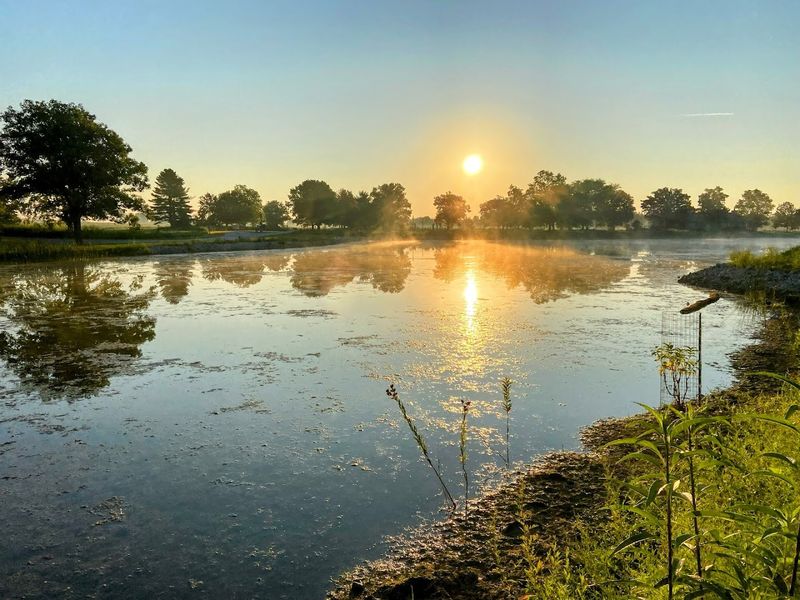
Paddlers and nature lovers who have discovered the Middle Fork River Forest Preserve near Penfield, IL 61862, tend to keep it quietly to themselves.
The preserve, accessible via 3485 County Road 2700 E, protects a stretch of the Middle Fork of the Vermilion River, which holds the distinction of being Illinois’ only National Scenic River.
Canoeing and kayaking are the main draws here, with calm sections suitable for beginners and faster stretches that give more experienced paddlers a satisfying challenge.
The surrounding floodplain forest is home to white-tailed deer, wild turkeys, and a wide variety of migratory songbirds. Fishing is also popular, with smallmouth bass and rock bass common catches along the river.
Hiking trails through the preserve offer a quieter alternative for those who prefer to keep their feet dry. Late spring through early fall is the best window for paddling, when water levels are cooperative and the forest is fully leafed out.
It is the kind of place that rewards those willing to look beyond the obvious.
8. Pullman National Historical Park, Chicago
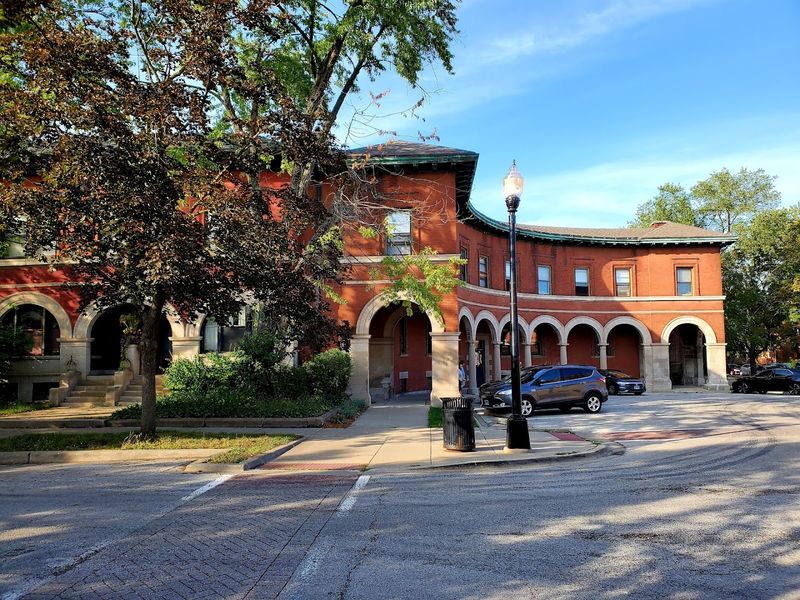
Most Chicago visitors never make it to the South Side neighborhood of Pullman, and that is genuinely their loss.
Pullman National Historical Park at 11001 S Cottage Grove Ave, Chicago, IL 60628, preserves one of America’s most ambitious urban planning experiments, a company town built in the 1880s by railroad car magnate George Pullman for his workers.
The neighborhood’s remarkably intact Victorian architecture tells the story of industrial-era America, labor rights, and the complex relationship between employers and their employees.
The 1894 Pullman Strike, which drew in President Grover Cleveland and changed American labor law, unfolded right here on these very streets. A visitor center opened in 2021 offers exhibits and ranger-led tours that bring this layered history to life.
The park is free to visit and is easily reachable by Chicago’s Metra Electric train. Walking the tree-lined streets and admiring the original brick row houses gives you a window into a pivotal chapter of American history that most textbooks only briefly mention.
It is well worth the trip.
9. Peck Farm Park, Geneva
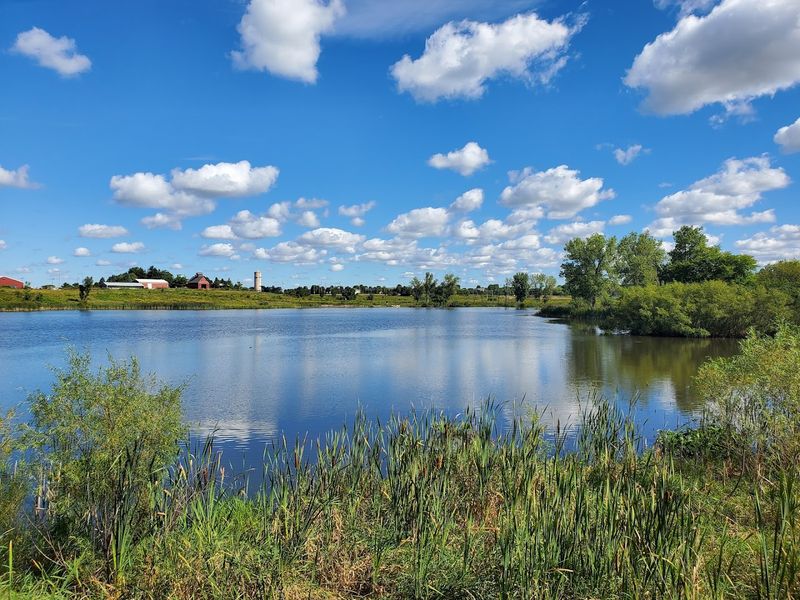
Just west of Chicago in the Fox River Valley, Peck Farm Park at 4038 Kaneville Rd, Geneva, IL 60134, offers a refreshingly unpretentious outdoor experience that families and solo visitors both enjoy.
The park is centered around a restored historic farmstead and includes a nature center, prairie restoration areas, wetland trails, and beautifully maintained gardens.
The nature center features live animals and hands-on exhibits aimed at younger visitors, but the outdoor trails are equally rewarding for adults. Spring wildflower displays along the wetland boardwalk are genuinely impressive, and the butterfly garden in summer attracts dozens of native species.
The park also hosts seasonal programming including maple syrup demonstrations in late winter and fall harvest events.
Admission to the park is free, though some programs require registration. The surrounding Kane County forest preserve trails connect directly to Peck Farm, making it easy to extend your visit with a longer hike along the Fox River.
It is the kind of place that earns a return trip before you have even finished your first visit.
10. White Pines Forest State Park, Mt. Morris
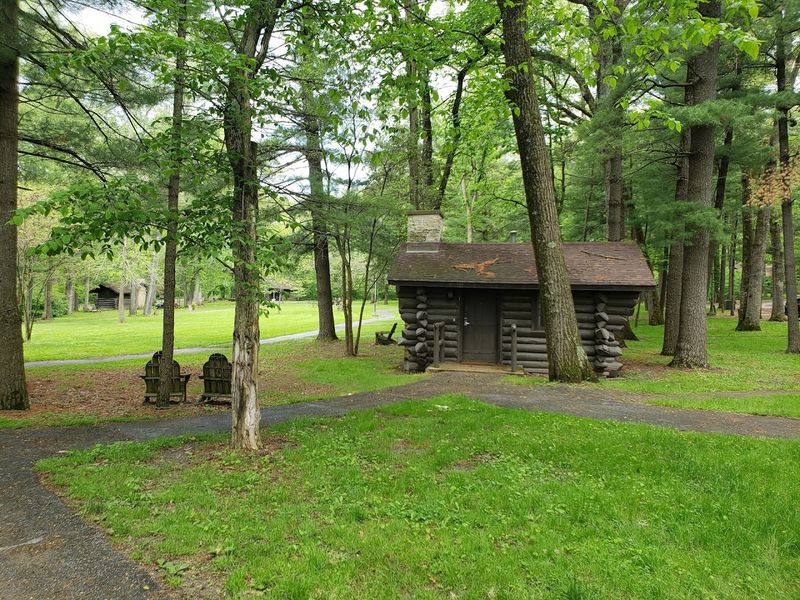
White Pines Forest State Park near Mt. Morris, IL 61054, at 6712 West Pines Road, protects the southernmost stand of native white pine trees in the United States.
That single fact alone makes it worth a detour. These towering, fragrant conifers create a forest atmosphere that feels completely out of place in northern Illinois, making the park feel like a quiet surprise every time you visit.
About 10 miles of trails wind through the park, ranging from gentle riverside paths along Pine Creek to hillier routes that take you deep under the pine canopy. The park is popular with birders because the dense evergreen cover attracts species not commonly found elsewhere in the region.
A classic log cabin lodge operates within the park and serves traditional American meals, adding a cozy, old-fashioned charm to the experience.
Fall and early spring are the calmest seasons to visit. The pine scent alone, especially after a light rain, makes the whole trip feel like a sensory reset that lingers long after you have driven home.
11. Sagawau Canyon Nature Preserve, Lemont
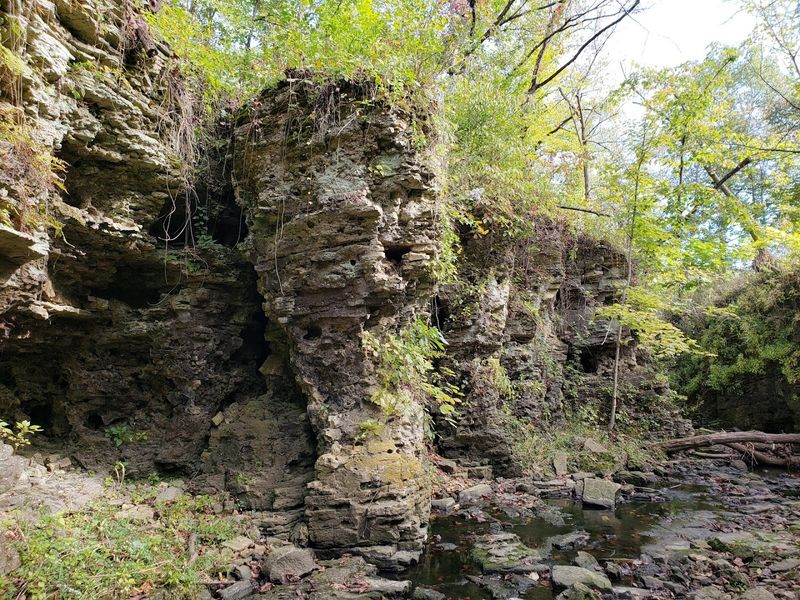
Hidden in plain sight just 30 miles southwest of downtown Chicago, Sagawau Canyon Nature Preserve at 12545 111th St, Lemont, IL 60439 contains the only natural canyon in the Chicago region.
That is a remarkable distinction for a place most locals have never visited. The canyon was carved by ancient glacial meltwater and features walls of dolomite limestone draped in mosses and ferns that give it a cool, almost otherworldly atmosphere.
Access to the canyon interior is restricted to ranger-guided tours offered seasonally on weekends from spring through fall, which must be booked in advance through the Forest Preserves of Cook County.
Self-guided access is available along the canyon rim at any time, while interior tours remain free and typically last about 90 minutes, highlighting geology, plant life, and wildlife. A self-guided trail along the canyon rim is available any time without a reservation.
The preserve is also a designated Important Bird Area, and early morning visits reward birdwatchers with sightings of warblers and other woodland species. Booking a guided canyon tour early in the season is strongly recommended, as spots fill up faster than you might expect.
12. Jacksonville Public Library, Jacksonville

Libraries do not usually make travel bucket lists, but the Jacksonville Public Library in Jacksonville, IL is a genuine exception worth knowing about.
The building itself is an architectural standout, with a history tied to the broader story of public education and civic pride in small-town Illinois. Jacksonville as a whole is one of the most historically rich small cities in the state, home to the Illinois School for the Deaf and several institutions founded in the 19th century.
The library serves as a community anchor and a window into the town’s deep intellectual heritage. Visiting the downtown area around the library reveals beautifully preserved 19th-century commercial architecture and a walkable historic district that rewards curious explorers.
Local historical society resources available through the library are particularly useful for anyone researching the region’s past.
Jacksonville is an easy day trip from Springfield or St. Louis. The town’s low-key atmosphere, genuine local pride, and well-preserved streets make it the kind of place that quietly wins you over the longer you spend time there.