
This Nevada Trail Is The Gateway To A Forgotten Ghost Town
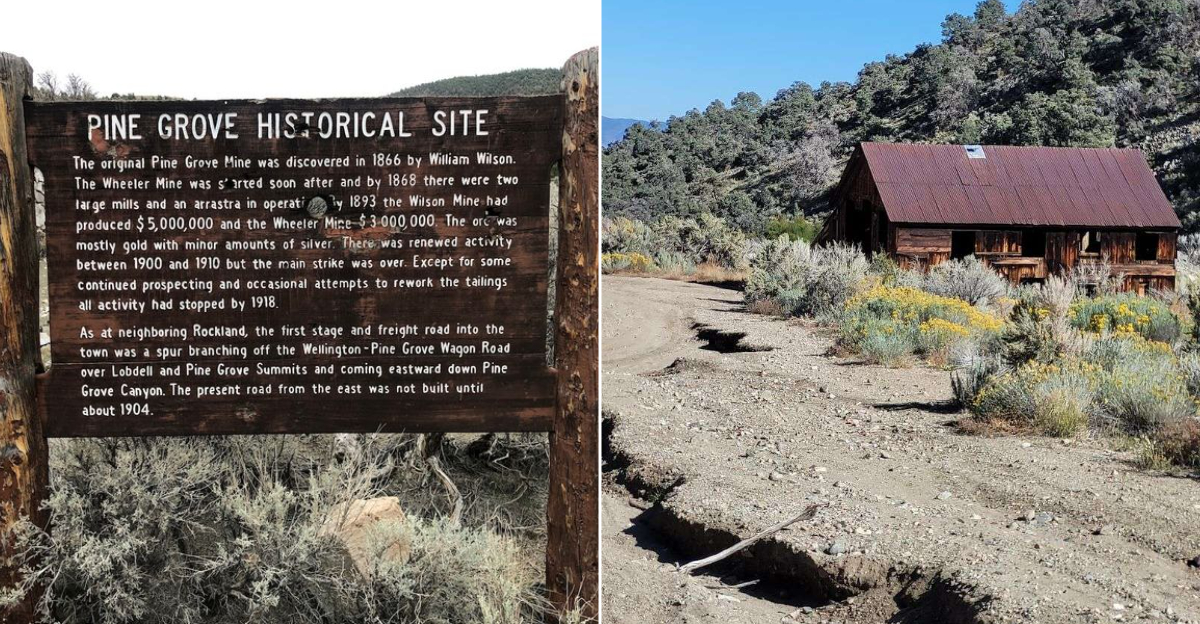
Nevada does ghost towns differently. Out here, you don’t just stumble upon them.
You earn them. I remember standing at the start of the trail, staring into miles of rugged hills and dusty canyon roads, wondering how many people had taken this same path more than a century ago.
Back in the late 1800s, hopeful miners traveled deep into these mountains chasing gold, slowly building a bustling settlement that once held hundreds of residents, hotels, stores, and busy mills. Today, the journey feels quieter.
The trail winds through sagebrush, rocky hills, and wide-open Nevada landscapes that feel wonderfully untouched. With every step deeper into the canyon, the modern world fades a little more. And then it appears.
Weathered stone walls. Crumbling foundations.
The quiet skeleton of a once-busy mining town hidden in the hills. Reaching it felt less like finishing a hike and more like stepping straight into Nevada’s forgotten Wild West.
The Trail That Starts It All
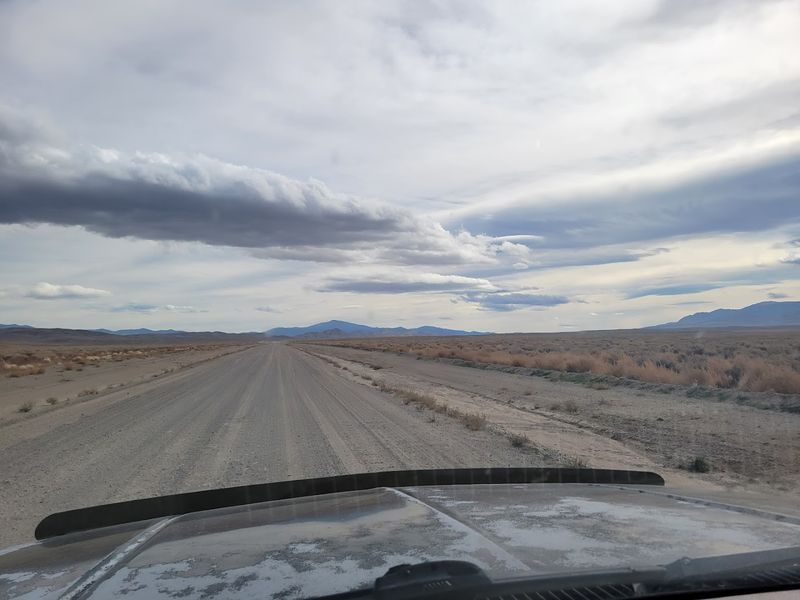
Standing at the trailhead, I remember thinking it looked deceptively simple. The Pine Grove Ghost Town Trail kicks off with a steady climb through open sagebrush flats that smell like the earth itself woke up and decided to show off.
The air was sharp and clean in a way that city air never quite manages, and I could already feel the outside world fading behind me with every step forward.
The trail stretches 9.45 miles out and back, which sounds manageable until the 1,483 feet of elevation gain starts making itself known around mile two.
My calves had a few choice opinions about that, but the sweeping views of the valley below kept convincing me to push just a little further. The path weaves through juniper and pinyon pine, which gives the whole experience a surprisingly lush feel for the Nevada desert.
What I loved most was how the trail builds anticipation like a really good mystery novel. Every bend in the path teases something new, whether it is a dramatic rock formation, a hawk riding a thermal overhead, or a distant ridge that seems to promise something worth finding.
The trailhead is accessible off Pine Grove Road outside Yerington, and the moderate difficulty rating is accurate but earns its label. By the time I reached the upper elevations, I was breathing harder but grinning wider, completely hooked on where this trail was taking me next.
Finding Your Way To The Starting Point
Getting to the Pine Grove Ghost Town Trail is half the adventure, and I mean that in the best possible way. The trailhead sits off Pine Grove Road near Yerington, Nevada, roughly in the heart of Lyon County, about 20 miles east of the small town center.
Yerington itself is a charming little desert community that feels like stepping into a quieter, slower version of Nevada that the Las Vegas crowd never sees.
I drove out on a clear weekday morning and the road to the trailhead is mostly manageable in a standard vehicle, though a high-clearance truck makes the final stretch considerably more comfortable. The surrounding landscape on the drive in already starts telling the geological story of the region, with layers of exposed rock and sweeping basin views that had me pulling over twice just to take it all in.
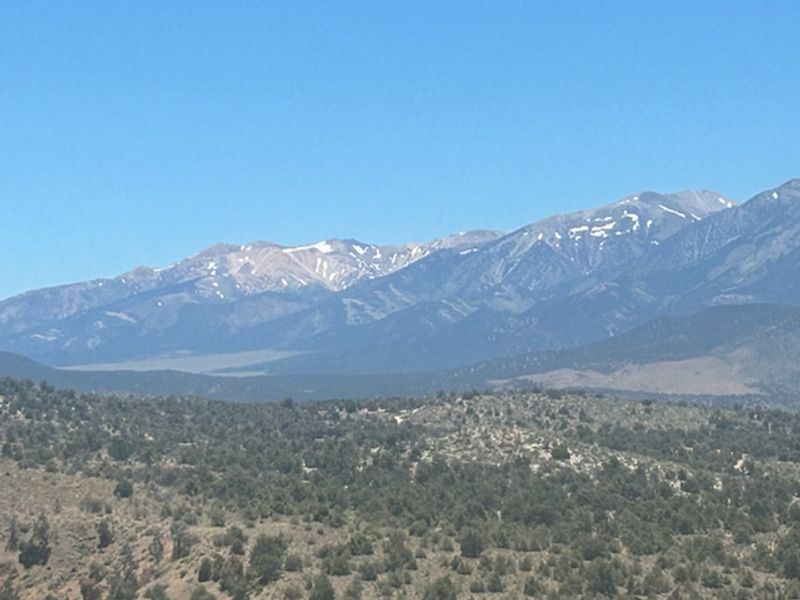
The Wassuk Range looms in the background like a dramatic movie backdrop.
Cell service disappears pretty quickly once you leave town, so downloading an offline map before heading out is genuinely smart planning rather than optional prep work. I used a trail app with GPS tracking and it saved me from second-guessing a junction about three miles in.
There are no entrance fees and no permits required, which makes this one of those rare free adventures that still feels wildly premium.
Arriving early in the morning means cooler temperatures and the kind of golden light that makes every photo look like a National Geographic cover.
The Elevation Gain That Earns The View
Nobody warned me that the middle section of this trail would turn my legs into absolute jelly, and honestly, I respect the honesty of the mountain for keeping that secret until I was already committed.
The elevation climb becomes most pronounced between miles two and four, where the switchbacks tighten and the sagebrush gives way to actual pine forest canopy. At that point, every exhale feels earned in a way that a treadmill simply cannot replicate.
Pausing to catch my breath actually turned out to be one of the better decisions I made all day. From the higher vantage points, the Walker River Valley spreads out below in this incredible patchwork of agricultural greens and desert tans that looks almost painted.
The contrast between the lush irrigated fields near Yerington and the raw, untouched mountain terrain directly underfoot was genuinely striking and made me feel like I was standing at the edge of two completely different worlds.
The 1,483-foot gain over the full distance averages out to a steady but manageable grade, meaning you are not scrambling over boulders or gripping cliff edges.
Trekking poles made a noticeable difference on the looser gravel sections, and I was grateful I tossed mine into the pack at the last second before leaving the car. The physical effort of this climb is exactly what makes arriving at the ghost town feel like a genuine reward rather than just a destination you drove to and parked at.
The Silver Rush History Behind Pine Grove
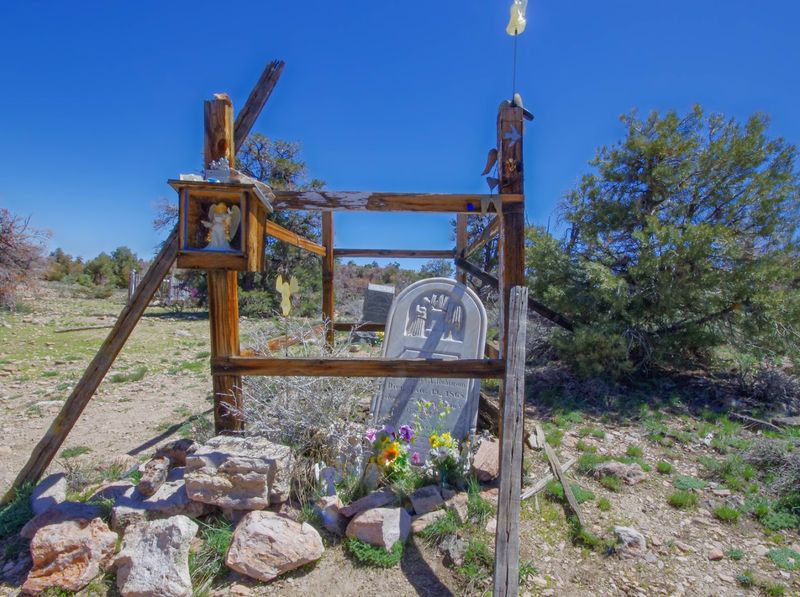
Pine Grove did not just appear out of nowhere. Silver was discovered in the Wassuk Range in the early 1870s, and that single geological fact was enough to pull hundreds of hopeful miners into some pretty unforgiving terrain.
The town that sprouted up was a full-fledged community complete with mills, cabins, and the kind of relentless optimism that only a silver strike can produce in a human being.
At its peak, Pine Grove had multiple stamp mills processing ore and a population that made it a legitimate settlement rather than just a dusty camp.
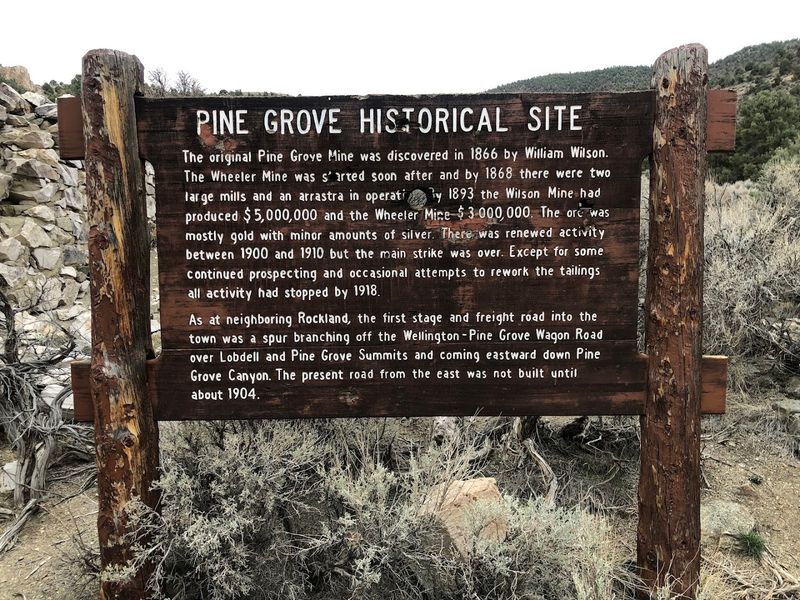
The mines produced meaningful silver output through the 1870s and into the 1880s before the deposits began to thin and the economic math stopped working in the miners’ favor. When the ore dried up, people left with the same urgency they arrived with, and Pine Grove quietly folded back into the mountain.
Walking through what remains felt like reading a chapter of history that most textbooks skip entirely.
Nevada is absolutely riddled with ghost towns from the mining era, but Pine Grove carries a particular intimacy because the trail to reach it keeps the crowds thin. You are not sharing this experience with tour buses or souvenir stands.
The ruins here belong to the hikers willing to climb for them, and that exclusivity gives the whole place a weight that more accessible historical sites sometimes lack. Silver built this place, silence inherited it.
What The Ghost Town Ruins Actually Look Like
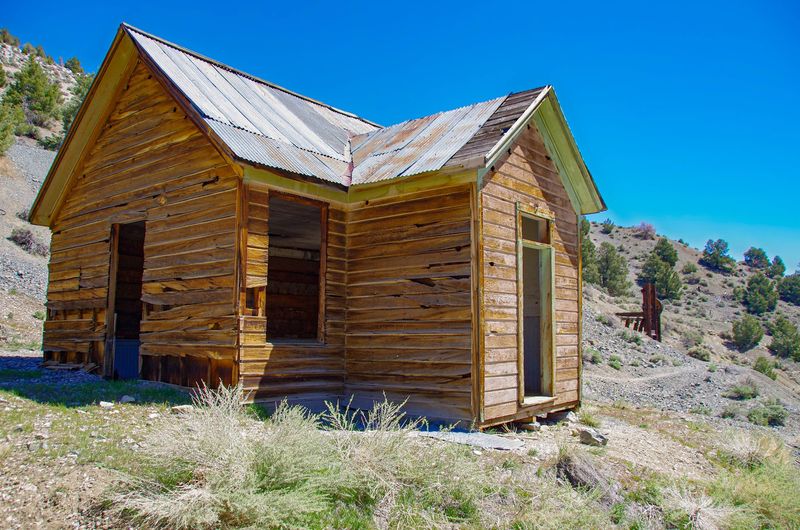
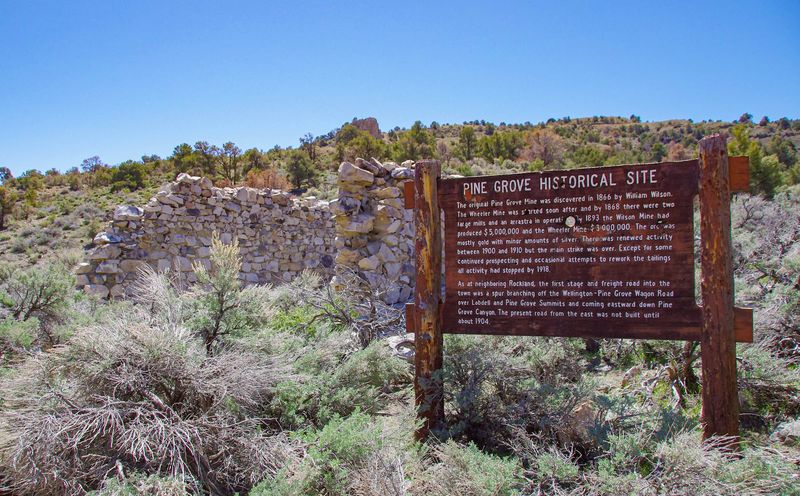
Reaching the ruins of Pine Grove after miles of climbing felt like the trail had been holding its breath the whole time and finally exhaled. The remnants are scattered across a hillside clearing in a way that feels organic rather than arranged, like the mountain simply reclaimed what was always hers and left the bones behind as a reminder.
Stone foundations, collapsed walls, and the outlines of structures that once held real human lives sit quietly among the pines.
What struck me most was how tangible it all felt. This was not a reconstructed heritage site with informational plaques and roped-off sections.
These are actual ruins, untouched and unfiltered, sitting exactly where they fell over a century ago.
Running my hand along a crumbling stone wall and thinking about the miner who stacked those rocks with his bare hands in 1876 was the kind of moment that makes a hike transcend exercise entirely.
The site covers enough ground that you can wander for a solid 30 to 45 minutes without retracing your steps.
Old mining equipment remnants, structural foundations, and scattered debris from the mill operations tell a fragmented but compelling story if you take time to piece it together. I found myself photographing details obsessively, a rusted bolt here, a collapsed doorframe there, because each fragment felt like a sentence in a very long letter written by people who never expected anyone to read it.
The silence up there is genuinely something special.
Wildlife And Nature Along The Way
Pine trees and elevation do something magical for Nevada wildlife, and the Pine Grove trail introduced me to that fact in the most delightful way possible. About a mile in, a mule deer stepped onto the path roughly 40 feet ahead of me, stared with that signature unbothered deer expression, and then vanished into the brush like it had somewhere more important to be.
That single moment set the tone for the whole hike.
The pinyon-juniper woodland zone that dominates the mid-elevation sections of the trail is genuinely rich habitat. I spotted several species of birds including what I am fairly confident was a mountain bluebird, which felt like a little bonus prize for making the climb.
The transition from open desert scrub near the trailhead to actual forested terrain higher up means the ecosystem shifts noticeably as you gain elevation, which keeps the scenery from ever feeling repetitive.
Wildflowers in spring and early summer add splashes of yellow and purple along the trail edges, and the pinyon pines produce those iconic little nuts that smell incredible when the sun warms them.
I did not see any rattlesnakes, but the terrain is exactly the kind of environment where staying aware of your footing and watching where you step is genuinely sensible advice rather than paranoia. The natural beauty of this trail functions as a complete experience independent of the ghost town reward waiting at the top.
Nature here does not play second fiddle to history.
Tips For Making The Most Of Your Visit
After doing this hike, I came back with a mental checklist of things I wish someone had told me before I went. Water is absolutely non-negotiable on this trail.
There are no reliable water sources along the route, and the combination of elevation gain and Nevada sun means you will go through more than you expect. I carried two liters and wished I had packed a third by the time I reached the ruins.
Starting early is not just a suggestion, it is genuinely the move. Morning temperatures in the Wassuk Range are dramatically more pleasant than midday heat, especially from late spring through early fall.
I hit the trailhead at around 7 a.m. and was back at my car before noon, having avoided the hottest part of the day entirely while still spending meaningful time exploring the ruins at the top. Sunscreen and a hat are also doing serious work up here.
Wear sturdy hiking boots with ankle support because the upper sections of the trail have loose rock and uneven terrain that flip-flops and trail runners handle with varying degrees of success. Bring a camera or make sure your phone is fully charged because you will absolutely want to document what you find up there.
The ghost town does not have any formal preservation, so the Leave No Trace principle of taking nothing but photographs and memories is both the ethical and the only approach. If you have been searching for a hike that genuinely delivers history, nature, and solitude all at once, Pine Grove just answered your question.