
This Historic Ghost Town In Arizona Will Transport You Back To The 1800s
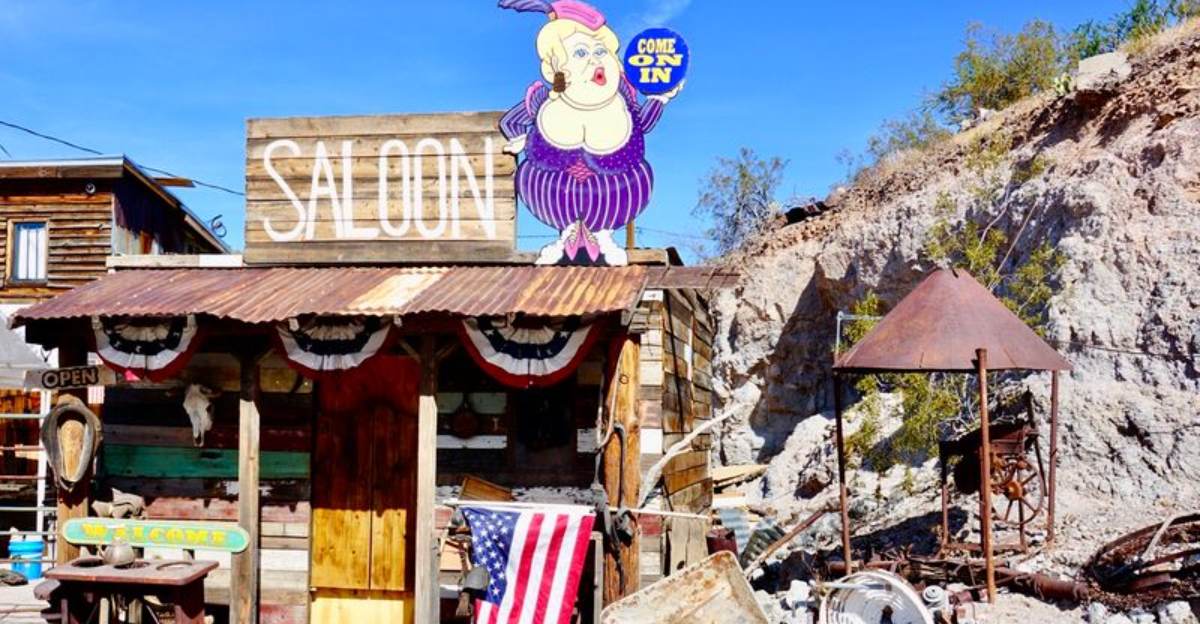
I’m convinced I accidentally wandered through a secret rip in the space-time continuum during my last road trip through Arizona. One minute I was checking my phone, and the next, I was dodging dusty tumbleweeds and trying my hardest not to look suspicious to the local outlaws.
If you’ve ever wanted to ditch the 21st century and see what life was really like back in the 1800s, this rugged little corner of the desert is calling your name. It’s got all the charm of a vintage Western movie, minus the actual high-noon duels.
You’ll leave feeling like a total pioneer, even if your only real “struggle” was choosing which postcard to buy. It’s easily my favorite way to experience the wild, untamed side of Arizona.
This tiny town, sitting along the legendary Historic Route 66, has held onto its 1800s soul with remarkable stubbornness, and the result is one of the most uniquely charming destinations in the entire American Southwest.
The Story Behind The Name
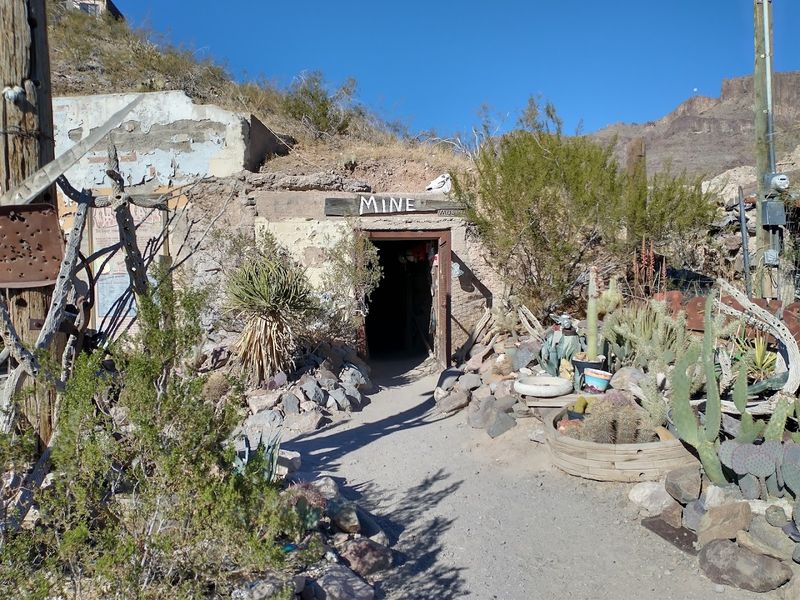
Few towns carry a name with as much weight as this one does. The town was named after Olive Oatman, a young woman whose life became one of the most remarkable frontier stories of the 19th century.
In 1851, when Olive was just 13 years old, her family was attacked while traveling through Arizona Territory, and she was taken captive along with her younger sister Mary Ann.
Olive eventually lived with the Mojave tribe for several years, where she received traditional blue chin tattoos that she carried for the rest of her life. She was released in 1856 and later became a public figure, sharing her story widely across the country.
Her tale captured the imagination of a nation still coming to terms with the vast, unpredictable American frontier.
Naming the town after her was a way of honoring her connection to this land. Knowing this backstory before you visit adds a layer of depth to every street corner you walk through in Oatman.
The Gold Rush That Built A Boomtown
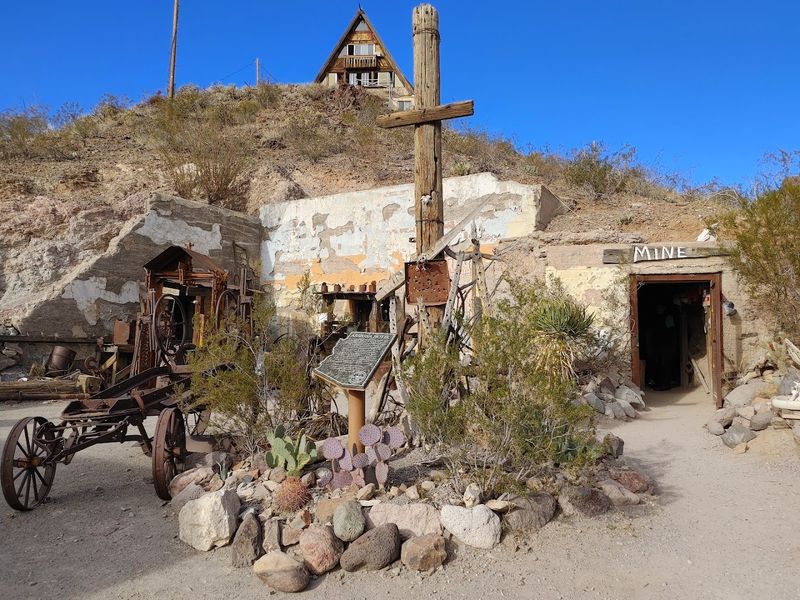
Gold has a way of turning quiet desert hillsides into roaring cities almost overnight. That is exactly what happened in Oatman when prospectors discovered rich gold deposits in the nearby Black Mountains in the early 1900s.
By 1916, the population had exploded to over 3,500 residents, making it one of the most active and lively mining communities in the entire Southwest.
The mines around Oatman produced an extraordinary amount of gold during their peak years, and the wealth that flowed through this small desert town was staggering.
Businesses, hotels, and saloons lined the main street as fortune-seekers poured in from across the country, each one hoping to strike it rich in the Arizona sun.
Mining operations eventually wound down by the 1940s, and the population drained away almost as quickly as it had arrived. But the buildings, the boardwalks, and the bones of that boomtown era still stand today, giving every visitor a tangible connection to one of Arizona’s most electrifying chapters.
Walking The Wooden Boardwalks Of Main Street
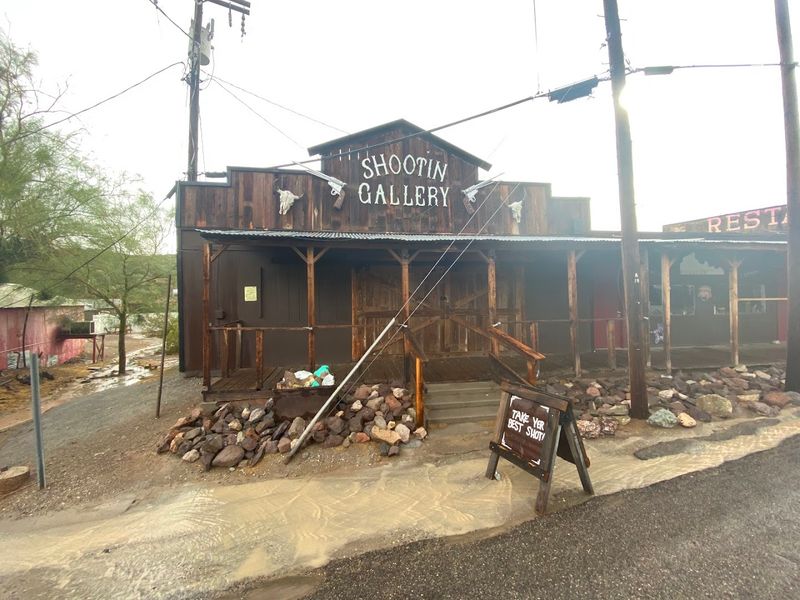
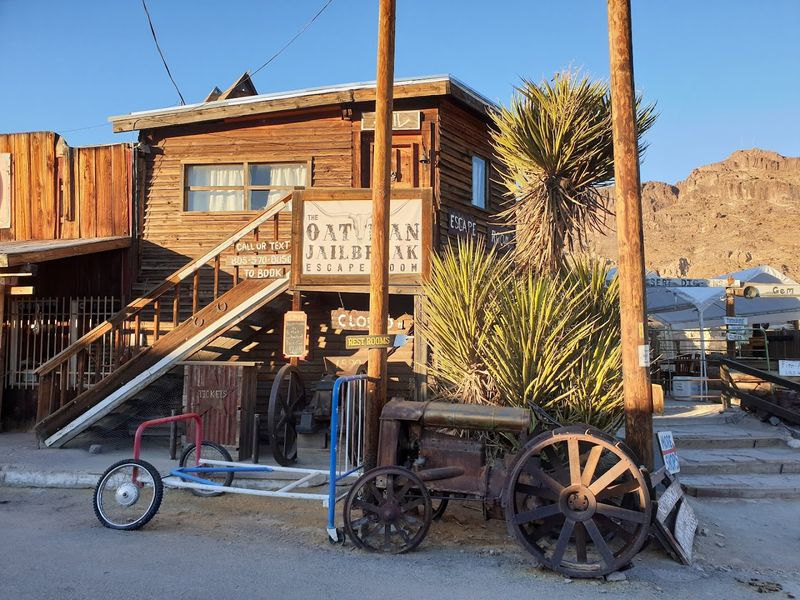
There is something almost theatrical about walking down Oatman’s Main Street for the first time. The wooden boardwalks beneath your feet are the real deal, not a theme park recreation, and the storefronts that line both sides of the road have been standing since the early 1900s.
The whole street feels like a place that time politely decided to skip over. Shops selling Route 66 souvenirs, turquoise jewelry, and handmade crafts occupy buildings that once housed mining supply stores and frontier businesses.
The signage is weathered, the wood is sun-bleached, and the general vibe is one of cheerful, dusty authenticity that you simply cannot manufacture.
On a busy weekend, the boardwalks fill with tourists snapping photos alongside the famous wild burros, and the energy becomes wonderfully festive. Even on a quieter weekday, the street holds a magnetic stillness that pulls you into its 1800s atmosphere and makes leaving feel like a small act of reluctance.
The Legendary Oatman Hotel
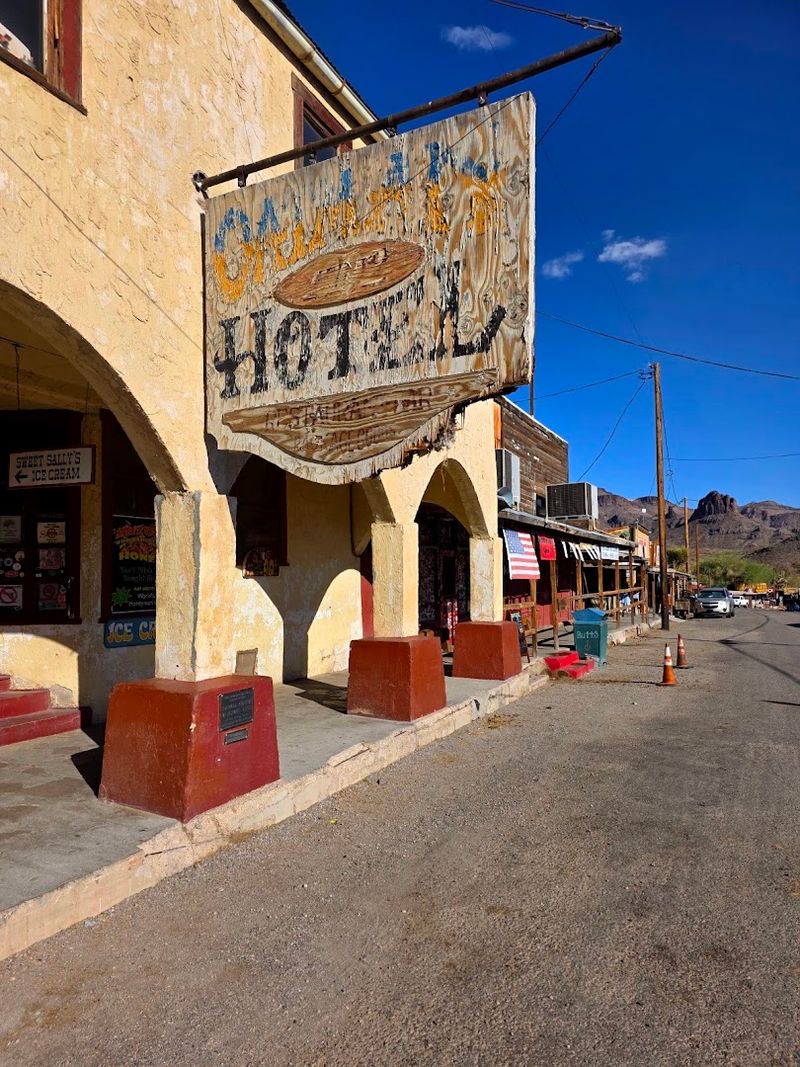
Built in 1902, the Oatman Hotel is arguably the most storied building in a town full of stories. It has survived fires, economic booms and busts, and nearly a century of desert weather, and it still stands on Main Street as a proud reminder of what Oatman once was.
Today it operates as a restaurant and museum, but its walls hold far more than just old photographs. The hotel’s most famous chapter involves Hollywood royalty.
Clark Gable and Carole Lombard spent their honeymoon here in 1939 after eloping in Kingman, Arizona.
Their room has been preserved as a tribute to that romantic chapter, and visitors can peek inside to see the modest furnishings that once hosted two of the biggest stars of the Golden Age of cinema.
The lobby walls are plastered with signed dollar bills left by visitors over the decades, a quirky tradition that has turned the ceiling and walls into a papery mosaic of names and notes. It is the kind of detail that makes the hotel feel genuinely alive.
Wild Burros Roaming The Streets
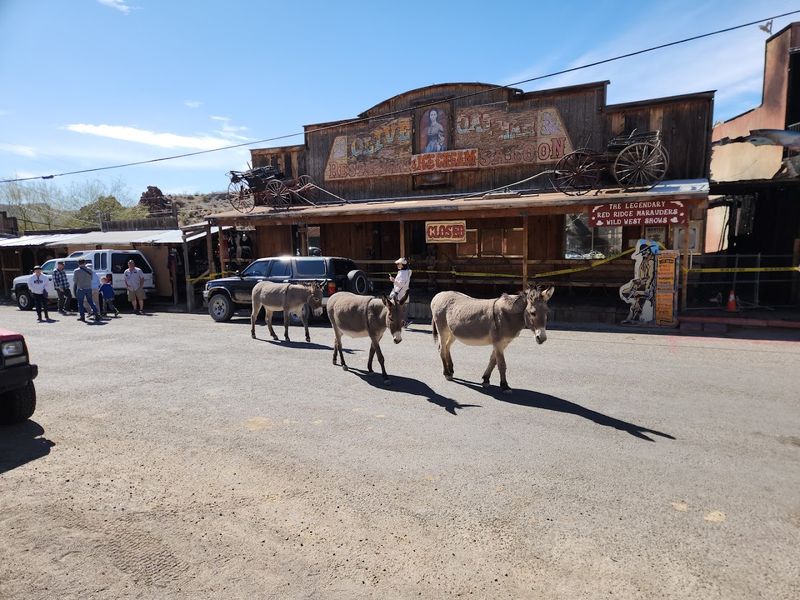
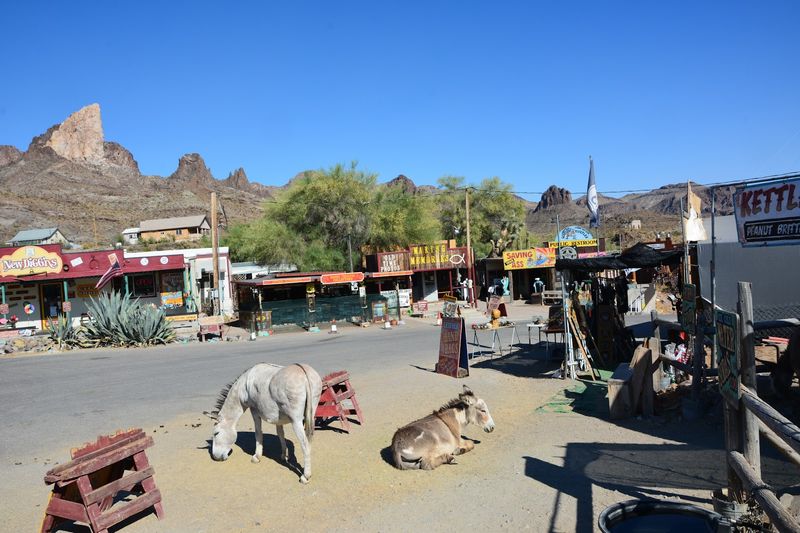
Nothing quite prepares you for the moment a burro trots up to you on a public street and nudges your hand looking for a snack. Oatman’s wild burros are descendants of the pack animals that miners used during the gold rush era.
When mining operations shut down, the burros were released into the surrounding desert, and their descendants eventually wandered back into town, apparently deciding that a steady stream of tourists offering carrots was a perfectly acceptable lifestyle.
The burros are completely free-roaming and protected by law, which means they go wherever they please, including the middle of the road during peak tourist hours.
Vendors sell bags of carrots near the main street so visitors can feed them, and the burros have become so comfortable around people that they will follow you down the boardwalk without a second thought.
Watching a burro casually block traffic while a line of Route 66 road-trippers waits patiently is one of those only-in-Oatman moments that you will be telling people about for years.
Oatman’s Place On Historic Route 66
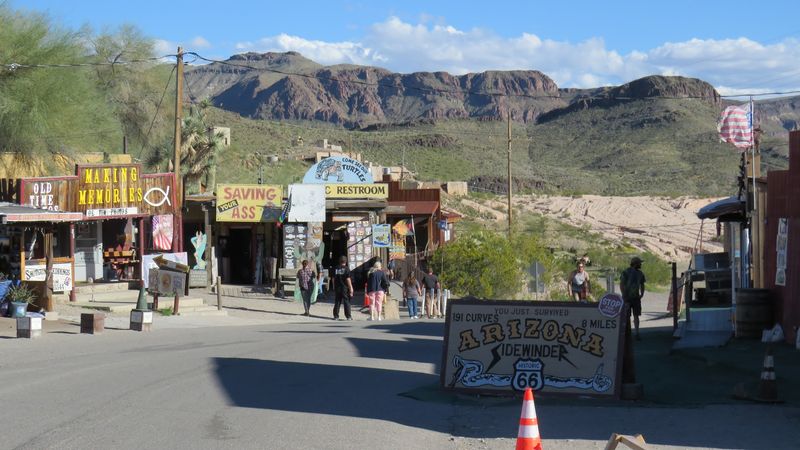
Route 66 is one of the most mythologized roads in American history, and Oatman sits on one of its most dramatic and scenic stretches. The section of the Mother Road that passes through the Black Mountains near Oatman is famously twisty and steep, cutting through rocky canyon walls with the kind of views that make passengers forget to breathe.
It is a drive that demands your full attention and rewards it generously.
For decades, Route 66 was bypassed by Interstate 40, and Oatman was largely cut off from the main flow of cross-country travelers. That isolation is actually part of what preserved the town’s authentic character, since it never had to modernize to keep up with highway traffic.
When Route 66 nostalgia surged in the late 20th century, Oatman found itself perfectly positioned as one of the road’s most beloved stops.
The Route 66 centennial in 2026 is already generating fresh excitement around Oatman, with renewed interest bringing visitors who want to experience the original American road trip in its most untouched form.
The Black Mountains Setting
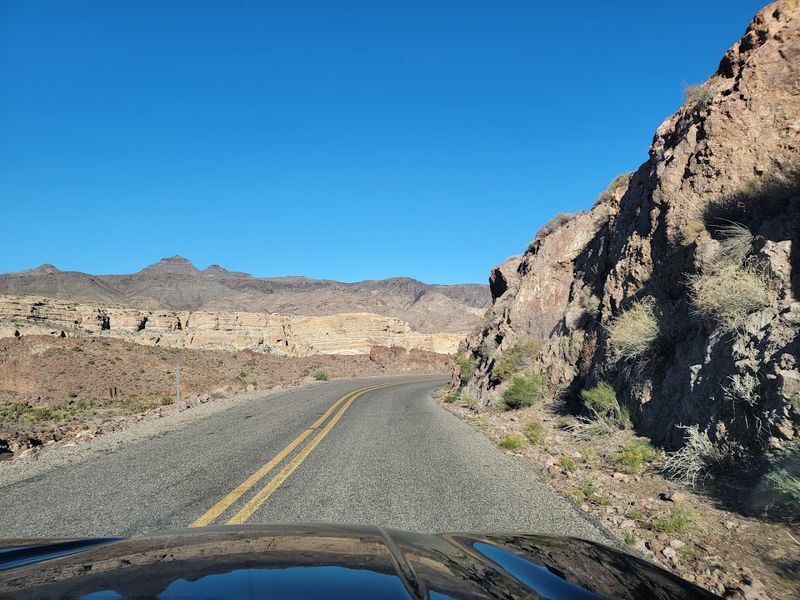
Oatman’s physical setting is jaw-dropping in the most matter-of-fact way possible. The town sits tucked into the folds of the Black Mountains in Mohave County, surrounded by jagged volcanic rock formations that rise sharply from the desert floor.
The landscape has a raw, ancient quality that makes the town feel even more remote and otherworldly than its small size would suggest.
The mountains earned their name from the dark basalt and volcanic rock that dominates the terrain, and the contrast between that dark stone and the bright desert sky creates a visual drama that photographers absolutely love.
At sunrise and sunset, the colors that wash across the mountain faces shift through shades of orange, purple, and deep crimson in a display that feels almost unreasonably beautiful.
Hiking trails in the surrounding area offer access to some of the region’s most striking geological features, and the elevation changes provide welcome relief from the valley heat during warmer months. The landscape alone makes the drive to Oatman worth every mile of winding mountain road.
Shopping For Handmade Goods And Souvenirs
Shopping in Oatman is nothing like browsing a mall. The shops along Main Street stock the kind of goods that feel genuinely rooted in the place they come from, including handmade turquoise and silver jewelry, Native American crafts, leather goods, Route 66 memorabilia, and mining-era collectibles that you will not find anywhere else.
Every store has its own personality, and browsing through them feels more like treasure hunting than shopping. Several vendors specialize in items that connect directly to Oatman’s history, such as replica mining tools, vintage maps, and locally made art inspired by the surrounding desert landscape.
The prices are reasonable, and the shopkeepers tend to be genuinely knowledgeable about what they sell, often sharing a story or two about the items in their inventory.
Picking up a piece of turquoise jewelry or a hand-stamped Route 66 keepsake from Oatman carries a different kind of satisfaction than buying something mass-produced. You are taking home a small piece of a place that has been stubbornly, beautifully itself for over a century.
Planning Your Visit To Oatman
Getting to Oatman requires a bit of intentional planning, and that is part of the adventure. The town is located along Historic Route 66 in Mohave County, roughly 28 miles southwest of Kingman, Arizona.
The mountain road leading into town is narrow and winding, so larger RVs and vehicles with trailers should check road conditions before making the drive.
Most standard cars handle the route without any trouble. The best times to visit are fall through spring, roughly October through April, when temperatures are comfortable and the desert light is particularly stunning.
Summer months can push temperatures well above 100 degrees Fahrenheit, which makes midday visits genuinely uncomfortable, though early morning arrivals can still be rewarding even in summer.
Oatman’s main street is open daily, and the gunfight reenactments typically happen on weekends. Bringing cash is a smart move since not every shop accepts cards.
Most importantly, bring carrots for the burros, because earning the trust of a wild desert burro is one of the most unexpectedly joyful experiences this remarkable little town has to offer.