
This Wild Colorado Canyon Feels Like One Of The State’s Best-Kept Secrets
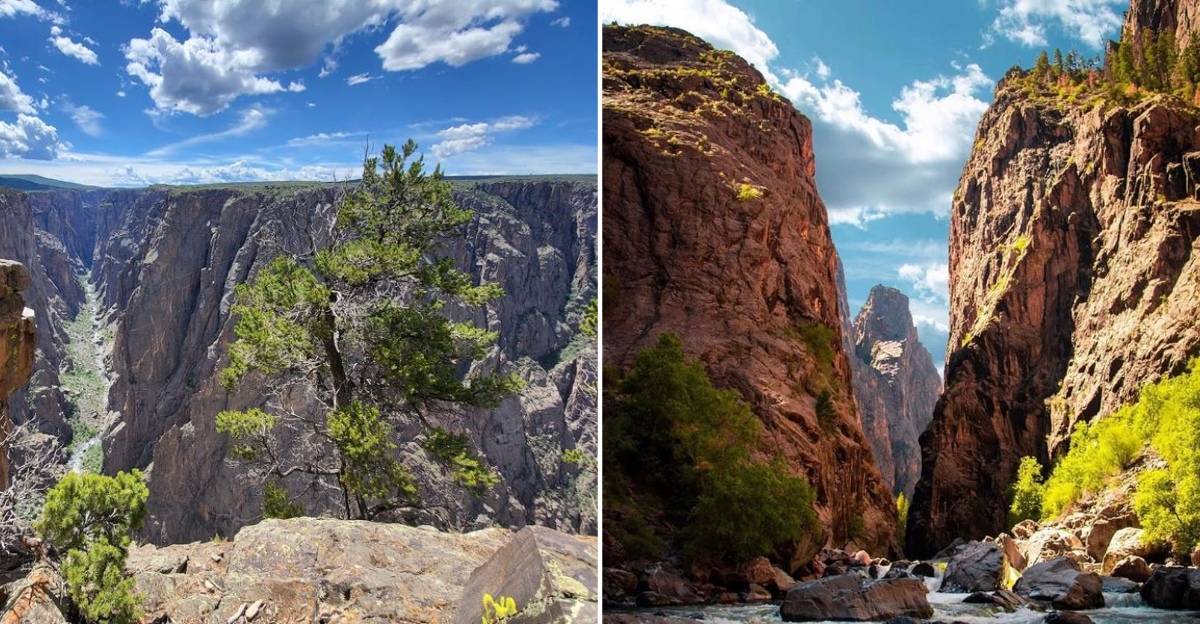
Tucked into the western edge of Colorado, this spot is the kind of place that makes you wonder why everyone isn’t talking about it.
The canyon walls drop so steeply and so darkly that sunlight barely reaches the bottom, creating a landscape that feels almost otherworldly.
Located at 9800 Hwy 347, Montrose, Colorado, this park consistently earns five-star praise while somehow flying under the radar of the crowds that swarm more famous national parks.
If you’ve been searching for a Colorado adventure that feels genuinely wild and surprisingly accessible, this is the one worth putting on your map.
The Canyon That Earns Its Name
Some place names are a stretch. This one is not.
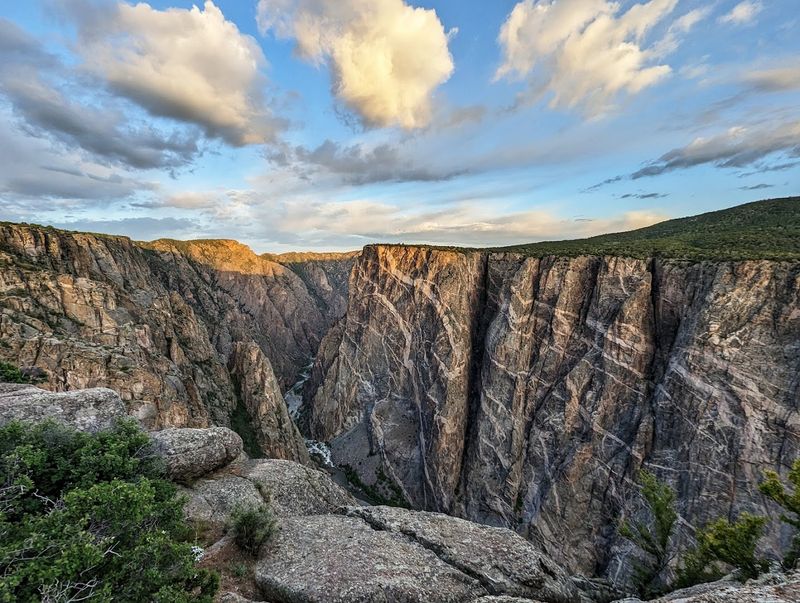
This spot earned every word of its title honestly, with walls so sheer and dark that afternoon light barely filters to the canyon floor. Standing at the rim for the first time genuinely recalibrates your sense of scale.
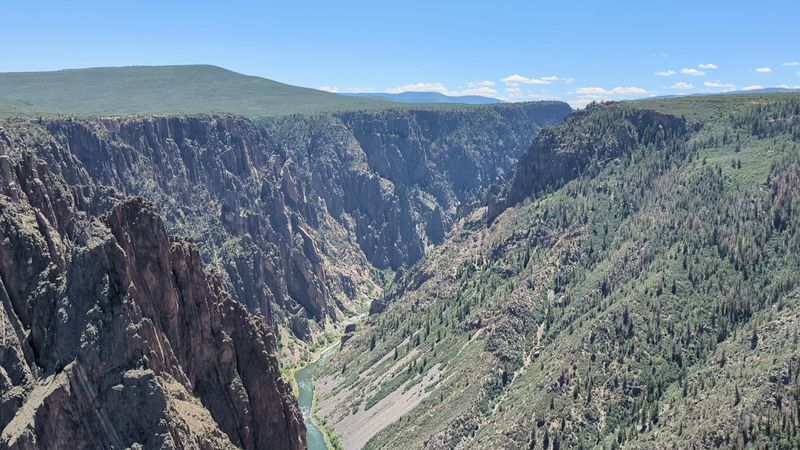
The canyon stretches roughly 48 miles long, and the national park protects the most dramatic 14-mile section. At its deepest point, the gorge drops 2,722 feet, making it one of the steepest canyons in North America.
The dark color comes from ancient Precambrian rock, some of the oldest exposed geology on the continent.
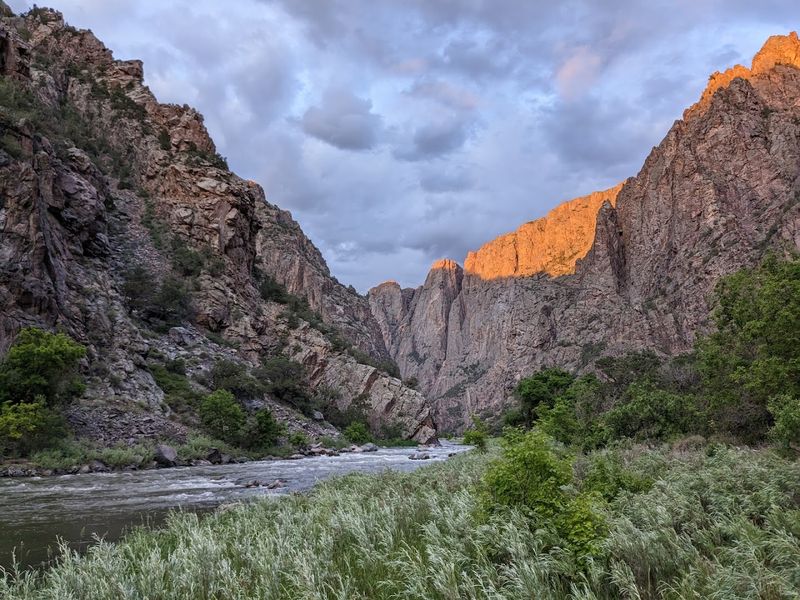
Visitors consistently describe the experience as standing at the edge of the world. The Gunnison River, visible as a thin ribbon far below, carved this canyon over two million years.
That combination of geological age and raw visual drama is exactly what makes this park feel unlike anywhere else in Colorado.
Why It Matters: This is not a scenic overlook with a guardrail and a gift shop. It is a genuinely humbling natural feature that rewards the drive every single time.
South Rim Road: The Accessible Crowd-Pleaser
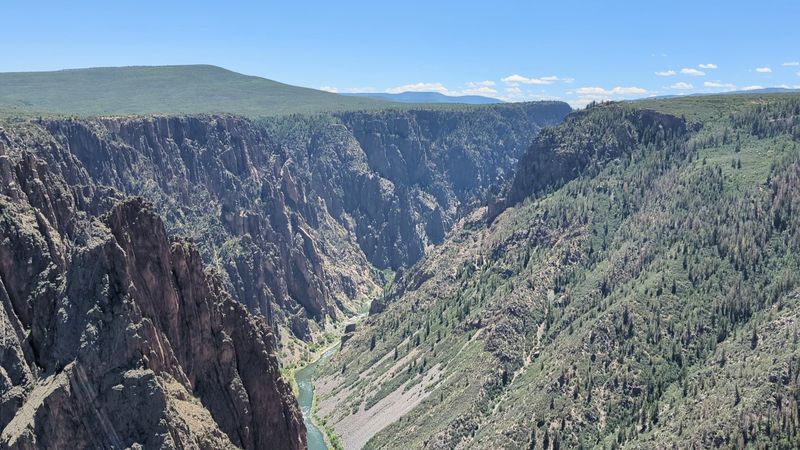
Not every great national park experience requires a full day of strenuous hiking. The South Rim is proof of that, offering a paved road with pullouts and overlooks spaced conveniently enough that you can see the whole show without committing to a single trail longer than a short walk.
The South Rim Drive runs about seven miles and connects a series of viewpoints, each one revealing a slightly different angle of the canyon. Some overlooks sit right at the road’s edge, meaning visitors with mobility limitations or families with small children can still get genuinely spectacular views without much effort at all.
Visitors have noted that spending two hours hitting every overlook along the South Rim is completely doable, and the views keep changing as you move along the canyon’s edge. The South Rim is also the more visited side of the park, which means the visitor center, restrooms, and campground facilities are well-maintained and easy to find.
Best For: Families, first-time visitors, travelers short on time, and anyone who wants maximum scenery with minimum logistical stress on a weekend trip through western Colorado.
North Rim: Where the Crowds Thin Out
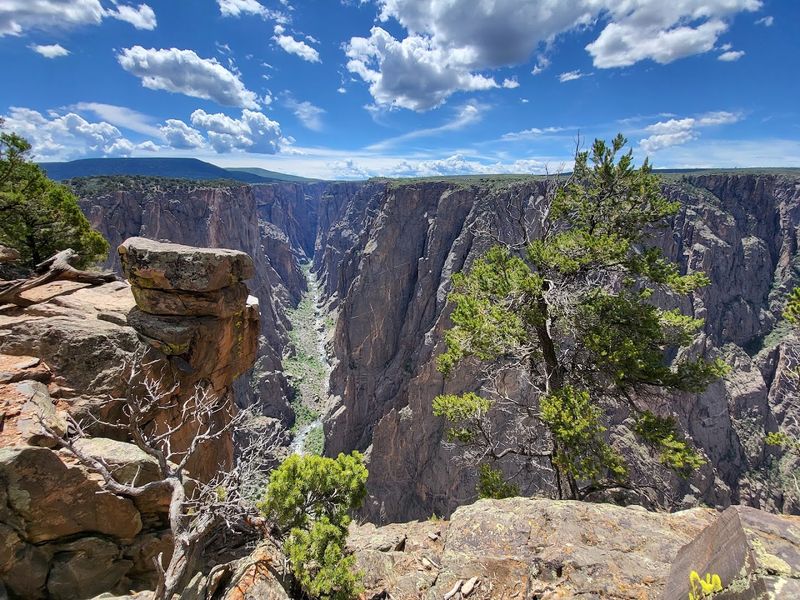
Here is a small piece of insider knowledge that regular visitors guard like a favorite parking spot: the North Rim of Black Canyon of the Gunnison is less visited, harder to reach, and arguably more stunning than the South. That combination is rare in any national park system.
The North Rim requires a longer drive on an unpaved road, which naturally filters out the casual day-trippers. What you get in return is a quieter experience with views that visitors consistently rank as more dramatic.
Exclamation Point, a trail accessible from the North Rim Ranger Station, is frequently cited as a highlight of the entire park.
From Exclamation Point, hikers also have the option to continue to the summit of Green Mountain, adding elevation and a broader panoramic reward. The trail is rated as manageable even for moderately fit visitors, making the payoff feel genuinely earned without being punishing.
Insider Tip: If you can spend two days at the park, dedicate one to each rim. Visitors who do both consistently say the North Rim changed how they thought about the whole place.
That is not a small claim, and it holds up.
The Painted Wall: Colorado’s Tallest Cliff
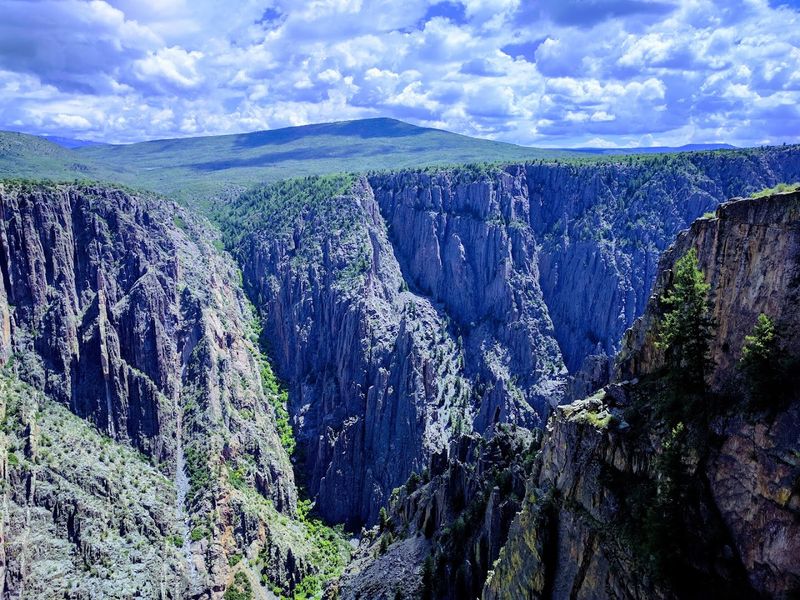
Colorado has no shortage of dramatic geology, but the Painted Wall stops people mid-sentence. Rising 2,250 feet from the canyon floor, it is the tallest cliff face in the entire state of Colorado, and it earns that distinction with visual flair that no photograph fully captures.
The wall’s name comes from the streaks of pink and white pegmatite that cut through the dark ancient rock in patterns that genuinely resemble brushstrokes. These lighter veins formed when molten rock forced its way through cracks in the existing stone roughly 1.7 billion years ago.
The result looks intentional, like someone decided the canyon needed decoration.
Several South Rim overlooks provide direct sightlines to the Painted Wall, and the viewing experience shifts depending on the time of day and light conditions. Morning light tends to bring out the contrast between the pale streaks and the surrounding dark rock in a way that afternoon visits sometimes miss.
Quick Tip: Check which overlooks offer the best direct view of the Painted Wall before you start driving the rim road. The Painted Wall View overlook is specifically positioned for this purpose and should not be skipped under any circumstances.
Wildlife You Did Not Schedule
Planning a national park visit involves maps, timing, and snack logistics. What you cannot plan is the bear feeding in a tree across from the park entrance sign, which is exactly what one visitor encountered while stopping for a routine photo opportunity.
That kind of moment is why people keep coming back.
Black Canyon of the Gunnison has a reputation for wildlife encounters that feel genuinely unscripted. Bear families have been spotted along park roads and near campgrounds.
Wildflowers bloom across the rim in season, and the canyon itself creates an acoustic channel that carries the sound of the Gunnison River up from the depths, which adds a layer to the experience that no overlook photo can replicate.
The park’s relative low visitation compared to Colorado’s other national parks means wildlife has not been pushed to the margins. Animals move through the area with a normalcy that more crowded parks rarely offer anymore.
Common Mistake to Avoid: Do not assume wildlife sightings are guaranteed and do not approach animals for photos. Maintain safe distances and treat any encounter as the unexpected bonus it genuinely is, not a scheduled attraction.
Camping at the Bottom: East Portal and the Drive Down
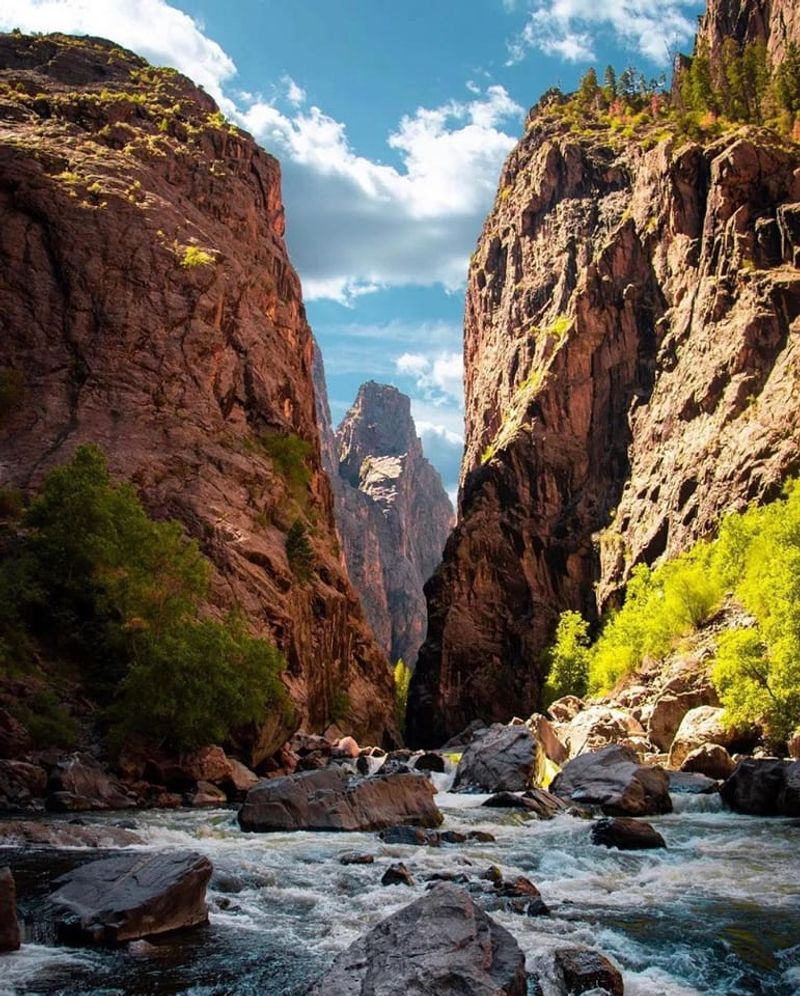
Most visitors experience Black Canyon from the rim, which makes complete sense given that the views up top are extraordinary. But there is another option that rewards the adventurous and the patient: driving down to the canyon floor via the East Portal Road, where the Gunnison River waits at the bottom.
The East Portal Road is paved all the way down, which is genuinely good news given the grade. Drivers are advised to use low gear on the descent, a reminder that your brakes are doing serious work and deserve some consideration.
At the bottom, a picnic area sits near the river in a setting that feels completely removed from the rim experience above.
The East Portal Campground sits at the bottom as well, offering a level campground with power hookups available. Water is not available at the campground itself, only at the visitor center above, so preparation matters.
Visitors who have camped here describe it as one of the most peaceful campground settings they have encountered in any national park.
Planning Advice: Bring enough water for your entire stay before descending. The visitor center at the top is your last reliable water stop, and that detail is worth writing on your hand if necessary.
Final Verdict: The Colorado Park Worth the Detour
Black Canyon of the Gunnison National Park sits at 9800 Hwy 347, Montrose, Colorado, and carries a 4.8-star rating across well over a hundred visitor accounts. That number is not driven by novelty or hype.
It reflects a place that consistently delivers on a very specific and powerful promise: raw, ancient landscape with remarkably low crowds.
Visitors describe it as underrated, awe-inspiring, and worth every mile of the drive. It is the least visited of Colorado’s four national parks, which is either a mystery or a gift depending on how you look at it.
Either way, the canyon does not care about its ranking. It has been here for two million years and will outlast the conversation.
Whether you have a full weekend or just an afternoon to spare, the park scales to fit your schedule. Two hours covers the South Rim highlights.
Two days covers both rims, the trails, the wildlife, and the kind of quiet that most people drive past on their way to somewhere more famous.
Key Takeaways:
Both rims offer distinct experiences worth exploring separately. The South Rim is accessible and family-friendly with minimal hiking required.
The North Rim offers solitude and arguably more dramatic views. Wildlife encounters, including bears, are a genuine possibility.
East Portal Road leads to the canyon floor and a riverside campground. Water is only available at the visitor center, so plan accordingly.