
14 Colorado Museums To Visit This March For A Day Of Beauty And Culture
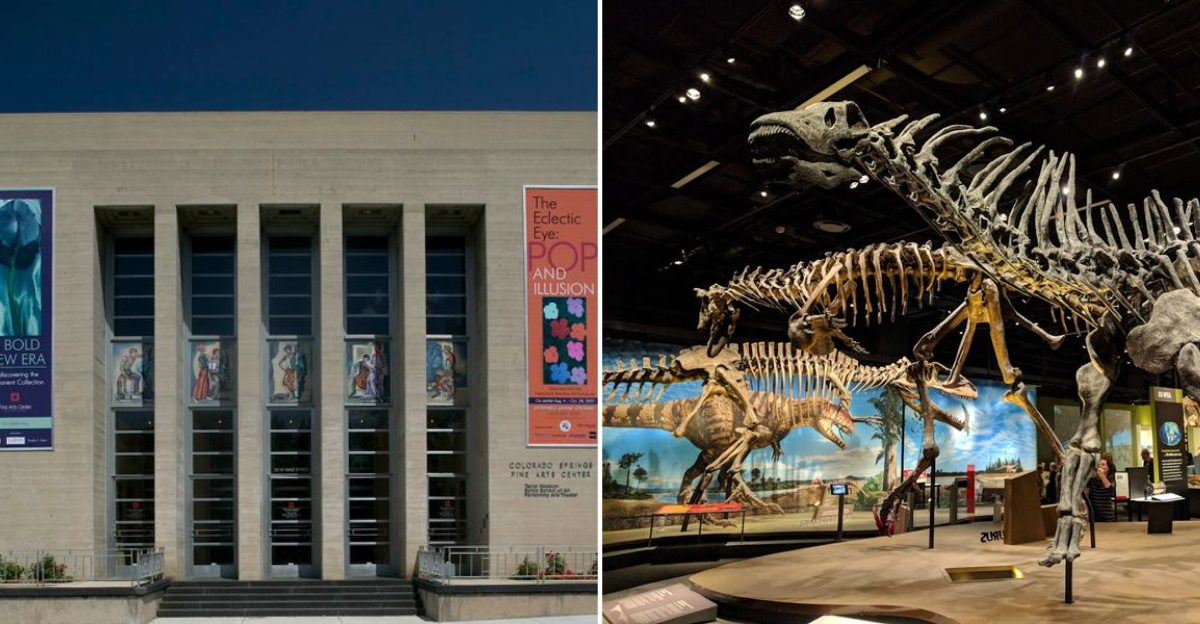
March in Colorado feels like the season is winking at you, trading icy mornings for bright afternoons and mountain views that look freshly polished just for spring.
It is the ideal moment to lace up your walking shoes, leave the heavy winter routine behind, and spend a day wandering through spaces filled with giant stories, wild artifacts, bold paintings, and the kind of exhibits that make you lose track of time in the best way.
Whether you are craving a solo afternoon of quiet inspiration or a family adventure packed with curious questions and unexpected favorites, there is plenty to explore without the shoulder to shoulder summer rush. Colorado’s museums shine in March because the pace feels easier, the rooms feel calmer, and every stop has a little more breathing room to surprise you.
Grab a coffee, charge your phone, and turn one simple outing into fourteen unforgettable reasons to explore today.
1. Denver Art Museum — Denver, Colorado
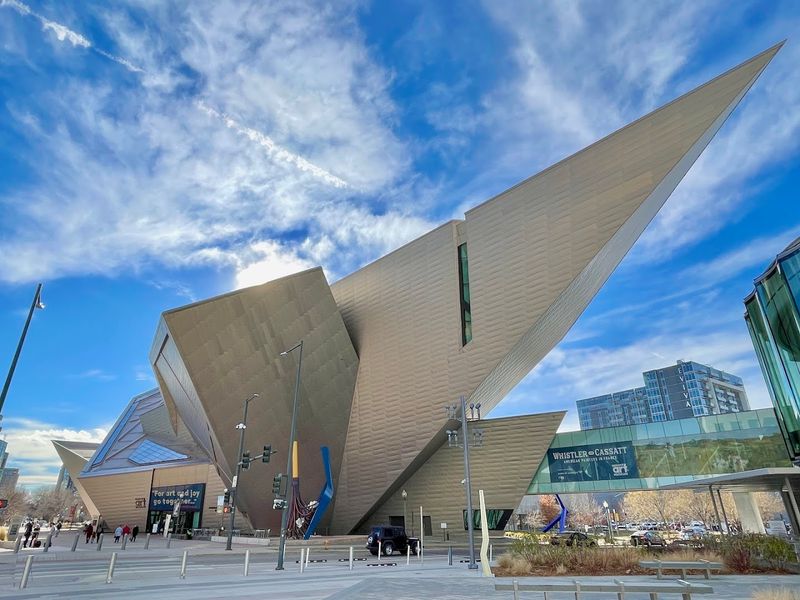
Few buildings in the American West announce themselves quite like the Denver Art Museum. The angular titanium-clad Hamilton Building looks like something a visionary architect dreamed up after a very good cup of coffee, and the interior is every bit as dramatic.
Located at 100 W 14th Ave. Pkwy. in Denver, this is the kind of place where you walk in for an hour and emerge three hours later, blinking, slightly overwhelmed, and genuinely moved.
The collection spans more than 70,000 works, covering everything from pre-Columbian art to contemporary American pieces. The Native Arts collection alone is considered one of the finest in the country, and the rotating exhibitions keep even repeat visitors coming back.
March is an especially good time to visit because the crowds are manageable and the light through those towering windows is spectacular.
My honest advice: skip the audio guide on your first pass and just wander. Let the building surprise you around every corner.
Then double back with the guide for context. Grab a coffee in the cafe, rest your feet, and remind yourself that world-class culture does not require a passport or a long flight.
2. The Kirkland at the Denver Art Museum — Denver, Colorado
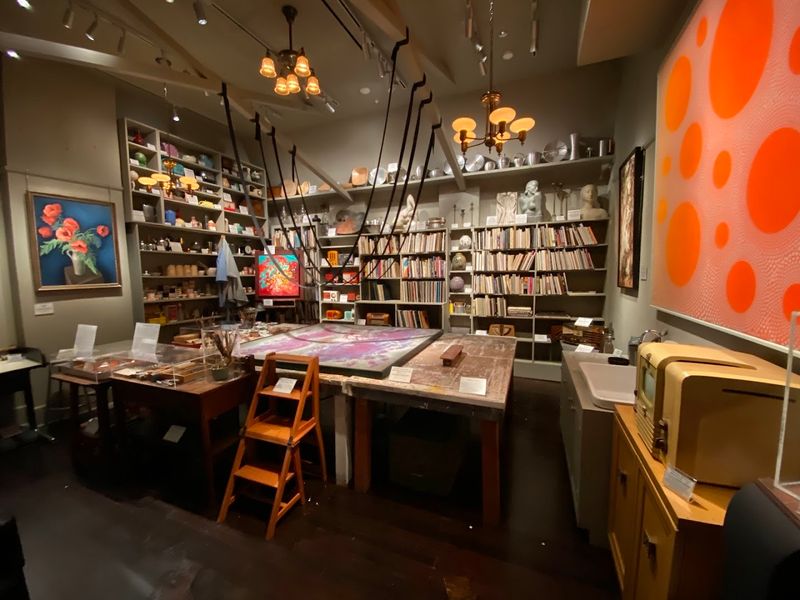
Tucked right next door to the Denver Art Museum at 1201 Bannock Street, The Kirkland is one of those hidden gems that locals treat like a well-kept secret. It honors the legacy of Vance Kirkland, one of Colorado’s most celebrated painters, and pairs his vivid abstract work with an extraordinary collection of decorative arts from the 20th century.
Walking in feels a little like stepping into a very stylish time capsule.
Kirkland’s studio has been preserved with remarkable care, and you can actually peer into the space where he created his signature “dot paintings” while lying on a padded board suspended above the canvas. That detail alone makes the visit unforgettable.
The decorative arts collection – featuring furniture, ceramics, and objects from major design movements – adds an unexpected richness that elevates the whole experience.
Because it shares a campus block with the larger Denver Art Museum, it’s easy to combine both visits in a single afternoon. I’d actually recommend starting here, where the scale is more intimate, before heading into the larger museum.
The contrast between the two spaces makes each one feel more meaningful. Plan at least 90 minutes for this one.
3. Clyfford Still Museum — Denver, Colorado
There’s a reason art critics describe the Clyfford Still Museum as one of the most powerful single-artist experiences in the world. Located at 1250 Bannock Street in Denver, this purpose-built museum houses roughly 94 percent of Still’s entire lifetime output – an almost unheard-of concentration of work from one of Abstract Expressionism’s founding giants.
Still insisted his estate remain intact, and the result is a deeply immersive encounter with a singular creative mind.
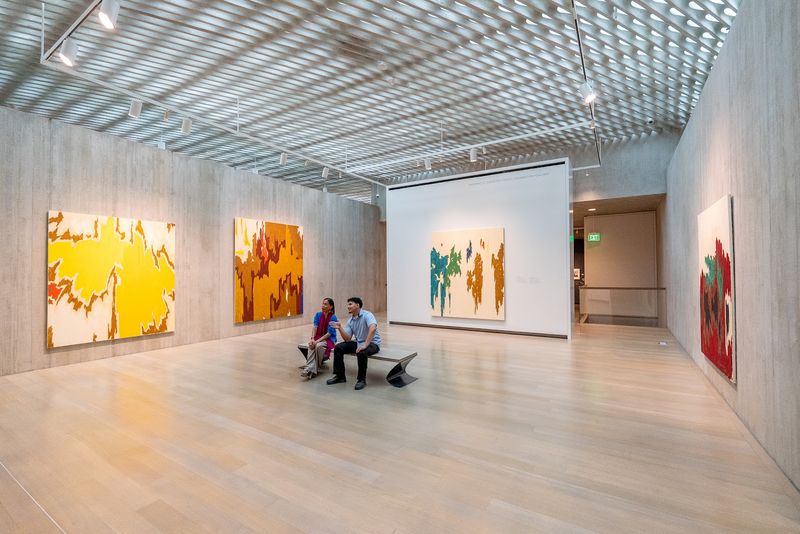
The building itself deserves mention. Designed with diffused natural light filtering through a textured concrete roof, the galleries feel calm and meditative – exactly the right atmosphere for paintings that demand your full attention.
Still’s massive canvases, with their jagged fields of color, can feel almost geological, like staring at a cross-section of the earth.
Honestly, I was skeptical before my first visit. Abstract art can feel intimidating if you’re not already steeped in it.
But something about the scale and the silence of these rooms changes that quickly. You don’t need a background in art history to feel the emotional weight here.
Just show up, slow down, and let the work do its thing. March foot traffic is light, which makes this already-quiet museum feel even more personal.
4. MCA Denver — Denver, Colorado
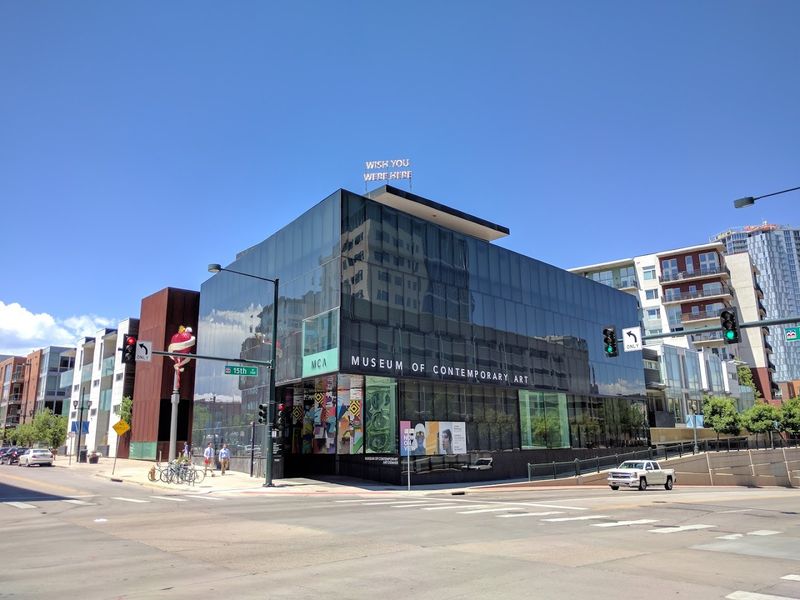
Contemporary art museums can sometimes feel like they’re trying too hard to be edgy. MCA Denver, located at 1485 Delgany St., manages to be genuinely exciting without the pretension.
Positioned near the South Platte River in the hip RiNo-adjacent neighborhood, this non-collecting institution focuses entirely on living artists, which means every visit brings something fresh and unpredictable to the table.
The rooftop alone is worth the trip. On a clear March day, the views of downtown Denver and the Front Range mountains are stunning, and the rooftop cafe gives you a great excuse to linger.
Inside, the rotating exhibitions cover painting, sculpture, video, performance, and installation work, often with a strong emphasis on regional and underrepresented voices. The programming is ambitious without being alienating.
What I appreciate most about MCA Denver is its energy. It feels like a place where conversations happen, where ideas are still being worked out.
The staff tends to be genuinely enthusiastic and knowledgeable, which goes a long way. Admission is free on Fridays, which makes this an especially easy add to a Denver cultural day.
Pair it with a walk along the Platte River Trail afterward, and you’ve got yourself a near-perfect March afternoon.
5. Denver Museum of Nature & Science — Denver, Colorado
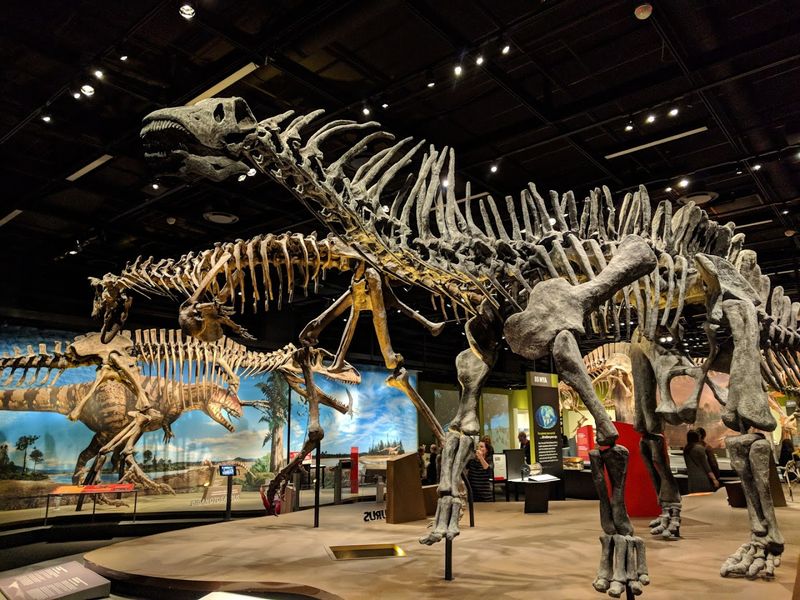
Some museums are for adults who want to feel cultured. The Denver Museum of Nature & Science, at 2001 Colorado Blvd. in the gorgeous City Park neighborhood, is for everyone – and it pulls it off without dumbing anything down.
Dinosaur fossils, Egyptian mummies, space exploration exhibits, a planetarium, and an IMAX theater all live under one very well-organized roof. It’s the kind of place that makes you feel eight years old again, in the best possible way.
The Prehistoric Journey exhibit is a personal favorite. Walking past full-scale dinosaur skeletons while reading about the ancient ecosystems of what is now Colorado gives you a humbling sense of deep time.
The Gems and Minerals Hall is another quiet knockout – cases of crystals and gemstones that glow like something out of a fairy tale. March visits are particularly pleasant because school spring breaks haven’t quite kicked in yet, so the crowds are still manageable.
Families with kids of any age will find this museum endlessly engaging. But even solo adults who think they’ve outgrown natural history museums tend to leave surprised.
Budget a solid half-day minimum, and if you can, book the planetarium show in advance. The City Park setting makes an after-visit stroll feel like a natural reward.
6. History Colorado Center — Denver, Colorado
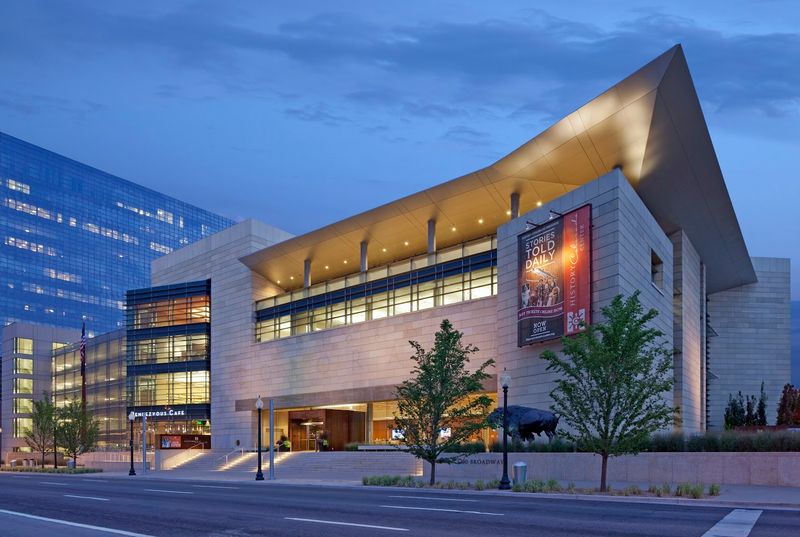
History museums live or die by their ability to make the past feel relevant, and History Colorado Center at 1200 N Broadway in Denver does this better than most. Opened in 2012, the building is modern and welcoming, with exhibits that use smart design and interactive technology to tell Colorado’s layered story – from Indigenous peoples and Spanish colonizers to miners, ranchers, and the communities that shaped the state into what it is today.
One of the standout features is the “Destination Colorado” exhibit, a time-travel experience that lets you virtually explore different eras of the state’s history. It’s genuinely fun for adults and kids alike, and it avoids the dusty-display-case approach that makes some history museums feel more like storage units than storytelling spaces.
The exhibits on Colorado’s Indigenous nations are particularly thoughtful and well-researched.
What strikes me most about this museum is its honesty. It doesn’t shy away from complicated chapters in the state’s history, and that integrity makes the whole experience more trustworthy.
Located just a few blocks from the Denver Art Museum, it fits naturally into a full cultural day in the Golden Triangle neighborhood. Allow at least two hours, and consider the rotating special exhibitions, which frequently bring national-caliber content to Denver.
7. Center for Colorado Women’s History — Denver, Colorado
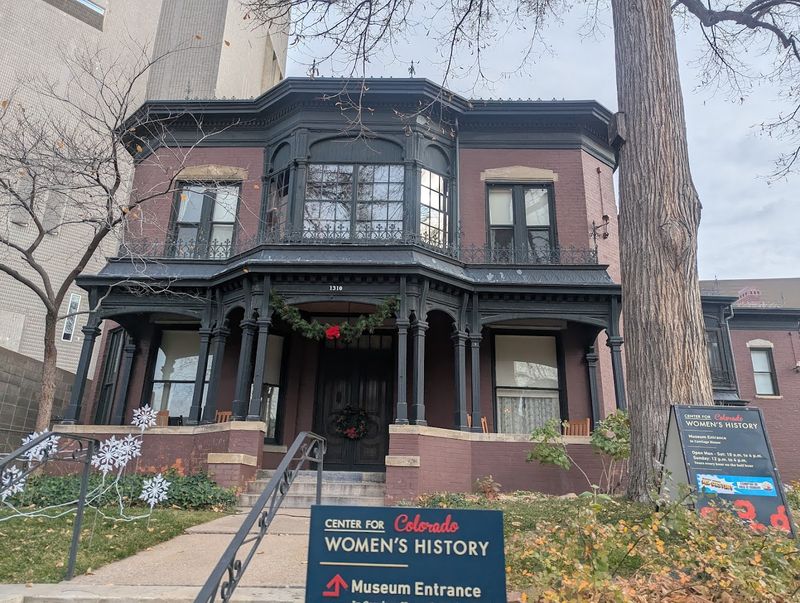
Housed inside the beautifully preserved Byers-Evans House at 1310 Bannock St. in Denver, the Center for Colorado Women’s History tells stories that have too often been left out of the standard historical record. The building itself is a landmark – one of the oldest surviving homes in Denver – and stepping inside feels like entering a world where domestic life and public history intersect in fascinating ways.
The center focuses on the remarkable contributions of Colorado women across politics, arts, labor, and civic life. Colorado was actually a pioneer in women’s suffrage, becoming the first state to grant women the right to vote through a popular referendum back in 1893.
That history is woven throughout the exhibits with care and context, making it feel genuinely exciting rather than obligatory.
What I find most compelling here is the sense of rediscovery. You leave knowing names and stories you probably never encountered in a school textbook, and that feeling of filling in the gaps is quietly thrilling.
The intimate scale of the house keeps the experience personal and unhurried. It sits right in the Golden Triangle museum district, making it an easy and rewarding addition to any Denver cultural day.
A visit here takes roughly an hour and is worth every minute.
8. Museo de las Americas — Denver, Colorado
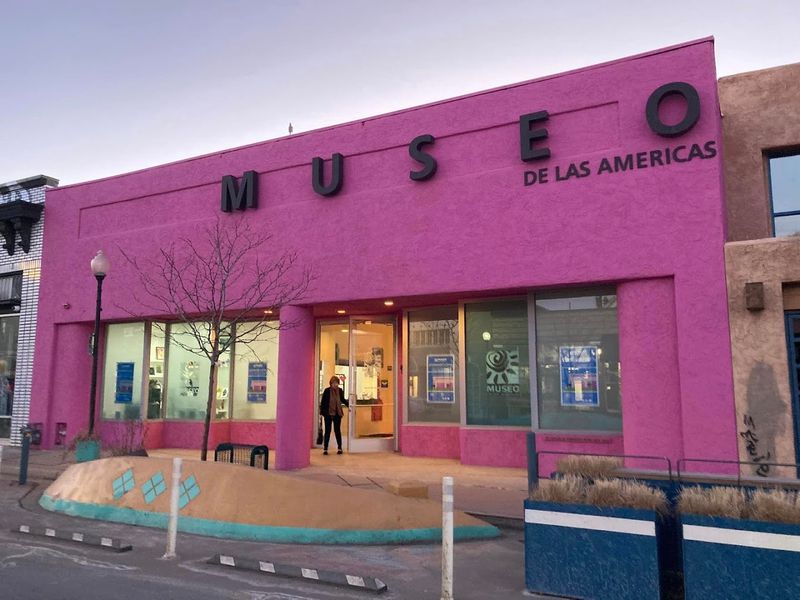
Santa Fe Drive in Denver is one of those streets that rewards slow walking, and at 861 Santa Fe Drive sits a museum that is as vibrant as the neighborhood around it. Museo de las Americas is the first Latin American art and culture museum in the Rocky Mountain region, and its mission – to celebrate the diversity of Latino heritage across the Americas – is carried out with genuine passion and curatorial intelligence.
The rotating exhibitions cover art, history, and culture from across Latin America and the Caribbean, as well as the Latino experience in the American West. The work on display ranges from folk art and colonial religious paintings to contemporary photography and multimedia installations.
The range is remarkable, and the quality is consistently high. March often brings fresh exhibitions timed to spring programming, making it a particularly good time to visit.
The surrounding Santa Fe Arts District adds real texture to the experience. After your museum visit, you’re steps away from galleries, restaurants, and public murals that extend the cultural conversation into the street.
I’d recommend pairing the Museo with a stroll down Santa Fe Drive and a meal at one of the neighborhood’s many excellent Latin American restaurants. Budget about 90 minutes for the museum itself, and let the neighborhood do the rest.
9. American Museum of Western Art – The Anschutz Collection — Denver, Colorado
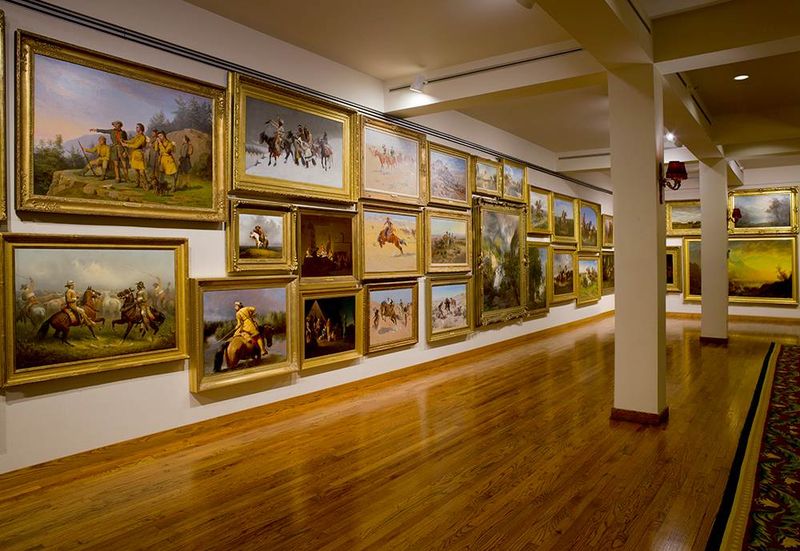
If you want to understand how the American West was imagined, romanticized, and mythologized through paint on canvas, the American Museum of Western Art at 1727 Tremont Place in Denver is an essential stop. The Anschutz Collection is one of the finest private collections of Western American art ever assembled, featuring works by Frederic Remington, Albert Bierstadt, Thomas Moran, and dozens of other artists who shaped the visual identity of the frontier era.
The building has its own story to tell. Housed in the historic Navarre Building, a Denver landmark with a colorful past, the museum adds architectural character to an already rich experience.
The galleries are elegantly arranged, allowing the large-scale landscape paintings to breathe and command the attention they deserve. Bierstadt’s luminous mountain scenes, in particular, are the kind of work that stops you mid-stride.
Tours are typically required and offered on specific days, so checking the schedule before you go is essential. That guided format actually works in the visitor’s favor – the docents here are knowledgeable and enthusiastic, providing context that genuinely deepens your appreciation of the work.
For anyone interested in American history, landscape painting, or the mythology of the West, this museum is a quiet revelation. Plan accordingly and you won’t regret it.
10. Boulder Museum of Contemporary Art — Boulder, Colorado
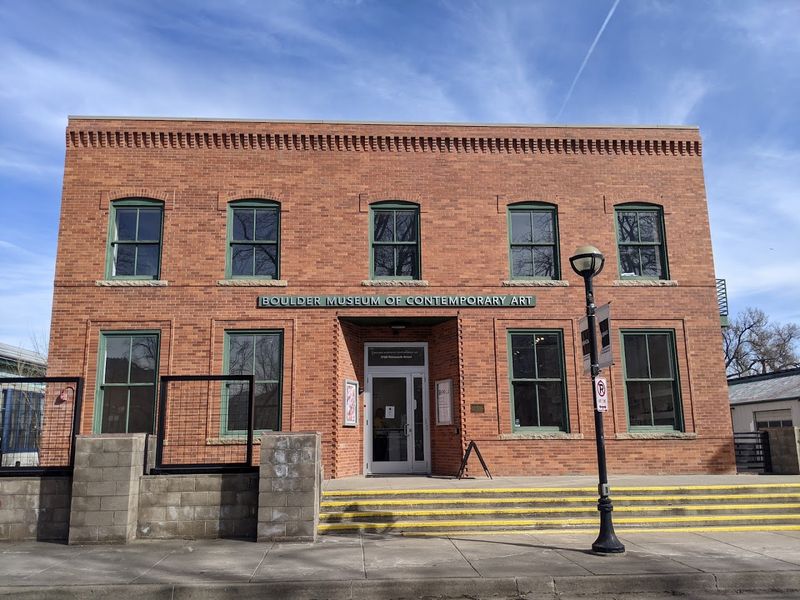
Boulder has a well-earned reputation for doing things its own way, and its contemporary art museum is no exception. Located at 1750 13th Street, just a short walk from the famous Pearl Street Mall, the Boulder Museum of Contemporary Art – known locally as BMoCA – punches well above its weight for a mid-sized city institution.
The programming is bold, the curation is thoughtful, and the atmosphere is refreshingly unpretentious.
BMoCA focuses on living artists and emerging voices, with a particular interest in work that engages with social, environmental, and cultural questions. The result is a museum that feels alive and genuinely engaged with the world outside its walls.
March often brings strong exhibition cycles as the museum transitions from winter programming into its spring season, making it an ideal time to catch something fresh.
Boulder itself is worth the 30-minute drive from Denver. After the museum, walk the Pearl Street Mall, grab lunch at one of the many excellent local restaurants, and if the weather cooperates – and in March it sometimes does beautifully in Colorado – take a short walk toward the Flatirons foothills.
It’s the kind of day that feels spontaneous but ends up being exactly what you needed. BMoCA is free on the first Friday of every month.
11. Aspen Art Museum — Aspen, Colorado
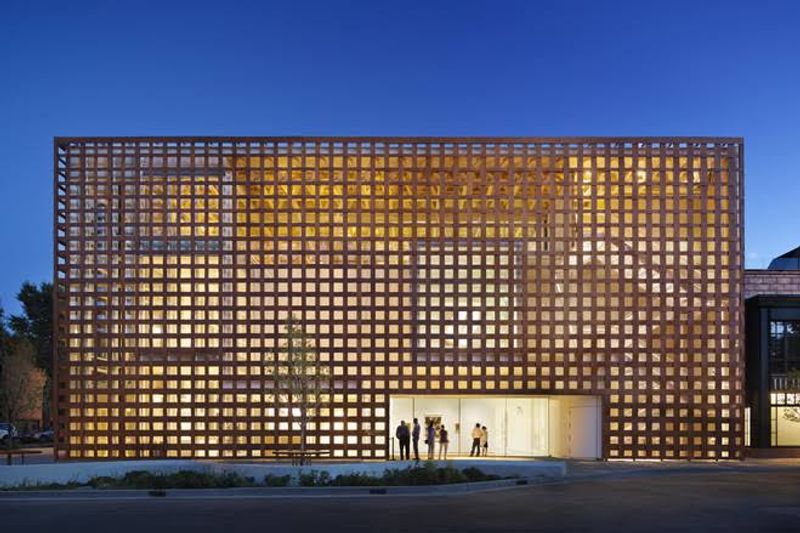
Aspen has a reputation for glamour, but the Aspen Art Museum at 637 East Hyman Avenue is the kind of place that earns its prestige through substance rather than scenery. Designed by Pritzker Prize-winning architect Shigeru Ban, the building is wrapped in a woven wood-composite screen that filters mountain light in extraordinary ways.
Before you even look at the art, the architecture has already made an impression.
The museum is non-collecting, meaning it operates entirely through temporary exhibitions featuring contemporary artists from around the world. The caliber of work shown here regularly rivals major urban institutions, which is surprising and delightful given the mountain-town setting.
Admission is always free, which removes any hesitation about stopping in for even a brief visit. The rooftop sculpture terrace, with its views of the surrounding peaks, is one of the more memorable spots in Colorado.
March in Aspen is late ski season, which means the town still has energy but the desperate holiday crowds have thinned. Combining a museum visit with a walk through downtown Aspen or a final ski day on the mountain makes for an exceptionally satisfying trip.
The drive from Denver through the Rockies is itself a dramatic experience, and arriving at a free world-class art museum at the end of it feels like a genuine reward.
12. Colorado Springs Fine Arts Center at Colorado College — Colorado Springs, Colorado
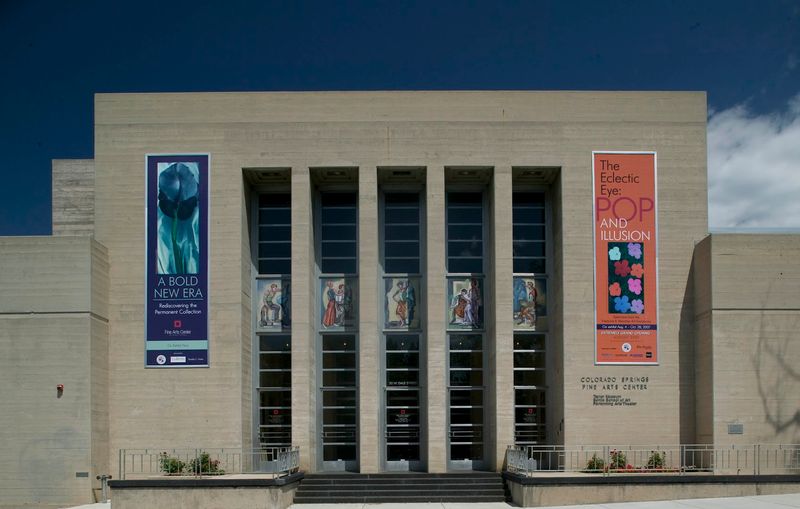
Colorado Springs tends to get overshadowed by Denver in cultural conversations, which is a genuine shame when you consider what’s sitting at 30 W. Dale St. The Colorado Springs Fine Arts Center at Colorado College is a spectacular Art Deco building that has been serving the community since 1936, and its collection – spanning Southwest American art, Native American works, Latin American modernism, and contemporary pieces – is far more comprehensive than casual visitors expect.
The building alone justifies the drive. The facade is a masterwork of 1930s design, and the interior spaces feel both grand and welcoming.
The theater inside the complex hosts performances alongside the visual arts programming, making this a true multi-arts center in the classic sense. The permanent collection includes works by Georgia O’Keeffe, John Singer Sargent, and Marsden Hartley, among many others – names that would headline any major museum.
Colorado Springs is about an hour and fifteen minutes south of Denver on I-25, making it a very manageable day trip. Pair the Fine Arts Center with a drive through nearby Garden of the Gods for a day that moves between natural and human-made beauty with equal satisfaction.
March is an excellent month for this route — the crowds at Garden of the Gods are thin, and the rock formations in winter light are genuinely dramatic.
13. Loveland Museum — Loveland, Colorado
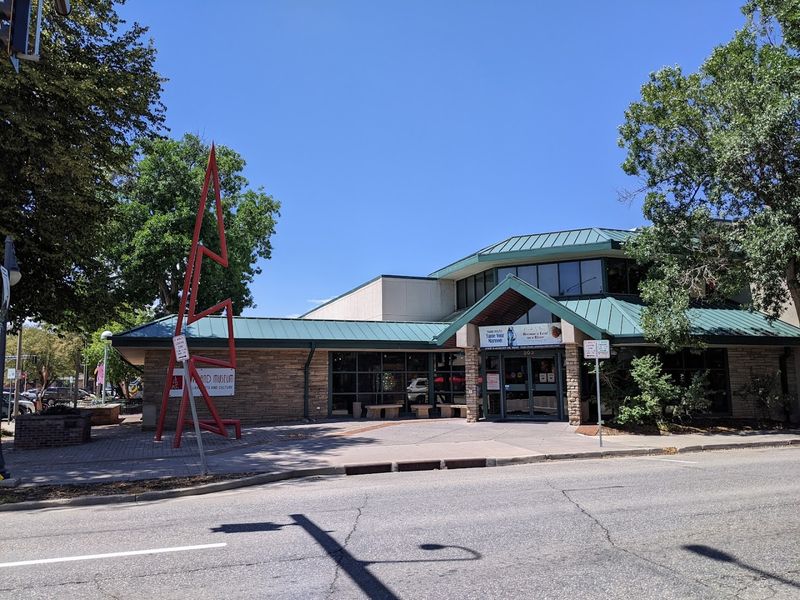
Loveland, Colorado has a quiet charm that rewards visitors who take the time to explore it, and the Loveland Museum at 503 N. Lincoln Ave. is one of the city’s most reliable pleasures.
Known for its strong rotating art exhibitions and thoughtful local history galleries, this community museum manages to feel both regionally rooted and artistically ambitious – a balance that many larger institutions struggle to achieve.
The museum’s art programming draws heavily from the sculptural arts tradition that Loveland is genuinely famous for. The city hosts one of the largest outdoor sculpture collections in the country, and the museum serves as a kind of anchor and context for that broader civic art conversation.
The history galleries cover the agricultural and ranching heritage of the region with warmth and specificity, and the rotating exhibitions frequently feature nationally recognized artists.
Loveland sits about an hour north of Denver and makes for a very easy day trip, especially if you combine the museum with a walk through the downtown sculpture corridor and a stop at one of the town’s well-regarded local restaurants. March is a lovely time to visit because the crowds are minimal and the surrounding landscape – foothills to the west, open plains to the east – has a quiet, wintry beauty that photographs exceptionally well.
This is an underrated stop that consistently surprises first-time visitors.
14. El Pueblo History Museum — Pueblo, Colorado
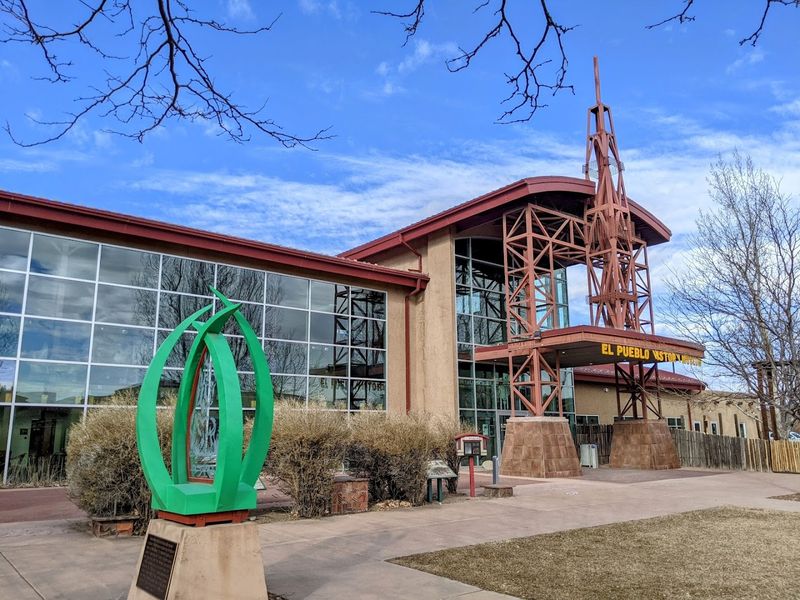
Pueblo doesn’t always make the top of Colorado travel lists, but El Pueblo History Museum at 301 N. Union Ave. makes a compelling case for the city’s place in the state’s cultural story.
Built around the archaeological site of the original El Pueblo trading post, a 19th-century crossroads where Indigenous peoples, Spanish colonists, Mexican traders, and American mountain men all intersected, this museum tells one of the most genuinely multicultural stories in the entire region.
The reconstructed adobe trading post at the center of the museum is a tactile, vivid way to experience frontier-era commerce and daily life. The exhibits surrounding it cover the broader history of southern Colorado and the Arkansas River valley with impressive depth, touching on the Ute people, the Hispanic settlements of the region, and the industrial history that later made Pueblo a steel town.
It’s layered, honest, and surprisingly moving.
Pueblo is about two hours south of Denver, which makes it a slightly longer day trip, but the drive down I-25 through the southern Front Range is beautiful in its own stark way. The museum pairs well with a walk along the Arkansas Riverwalk, one of Pueblo’s most attractive public spaces.
March in southern Colorado tends to be milder than in Denver, so you may find genuinely pleasant weather for an outdoor stroll after your museum visit.