
This Twisty Arkansas Road Will Make You Grip The Wheel And Smile
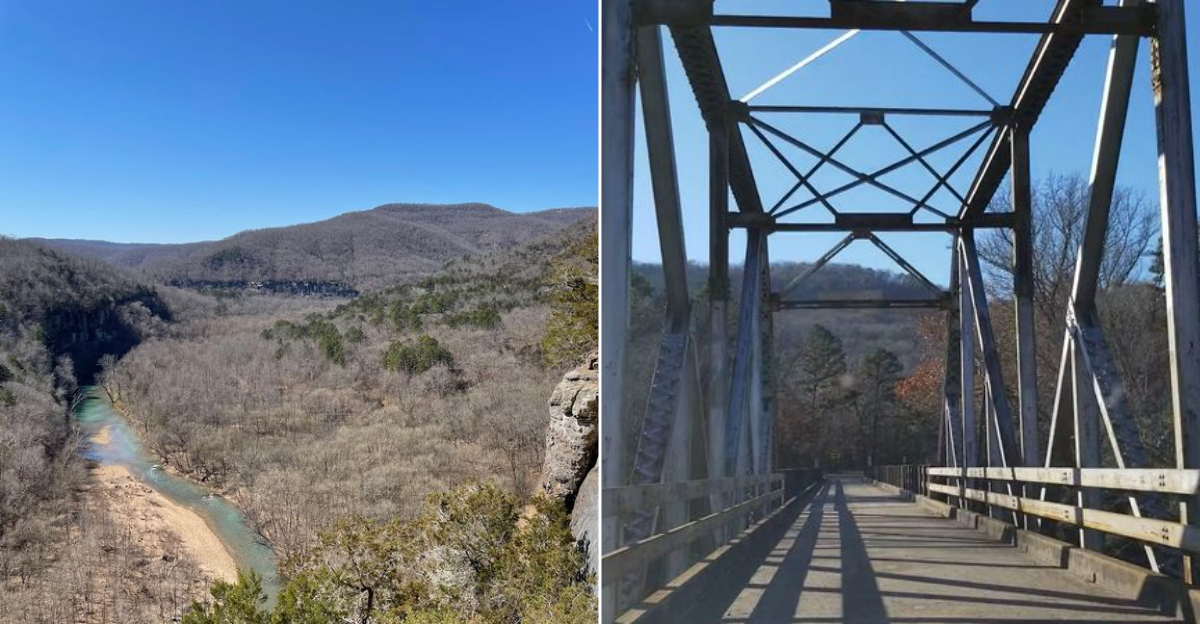
Some roads feel safe. This one doesn’t. Arkansas hides a stretch that twists and drops like it’s daring you to keep up. I hit the first curve and immediately knew this was different.
The asphalt curls sharply, climbs steeply, and dives suddenly. Trees lean close, shadows playing tricks on your eyes. My hands gripped the wheel tighter than I expected, and I couldn’t stop smiling.
Every turn keeps you guessing. Every bend tests your focus.
The wind snatches at your hair. Sunlight flickers through the canopy, teasing you with fleeting glimpses of the valley below.
It’s equal parts thrilling and humbling. And somehow, even though my heart raced, I wanted more. This road doesn’t just take you from point A to B. It pulls you in and refuses to let go.
Over 100 Curves That Keep You Honest
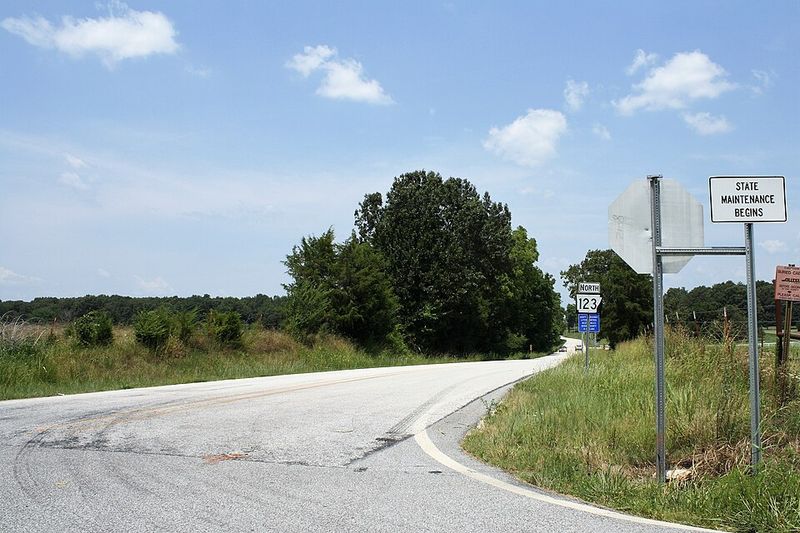
Nothing prepares you for the sheer number of curves on Highway 123 until you are already in the middle of them, laughing nervously and whispering encouragement to your car. I lost count somewhere around curve forty-something, and honestly, I think the road was laughing at me for even trying to keep track.
The switchbacks come fast, come sharp, and come with absolutely zero apology.
What makes this stretch between Lurton and Mount Judea so legendary is the relentless rhythm of the turns. You round one bend feeling accomplished, and another immediately appears, as if the mountain is testing whether your confidence has gotten too big for its boots.
Spoiler alert: it had, and the mountain won.
Experienced drivers talk about “reading the road,” and on Highway 123, you are basically reading a novel at high speed. Slow down before the apex, keep your eyes scanning ahead, and resist every temptation to check your phone.
The road demands presence in the most literal sense possible. I found myself completely locked in, more focused than I had been in months, with zero mental bandwidth left for anything except the next curve.
There are over 100 documented switchbacks on this highway, and each one genuinely feels like a pop quiz on your driving ability.
If you pass them all, you have earned serious bragging rights at the next dinner party.
The Road With A Legendary Nickname
Every legendary road earns its nickname through reputation, and the Arkansas Dragon earned every single letter of its title.
Located along the Lurton to Mount Judea corridor in Newton County, Arkansas, this highway has been quietly building its legend among road enthusiasts for decades while the rest of the country slept on it. I stumbled across it during a road trip research spiral at two in the morning, and I knew immediately that I had found something special.
The comparison to Tennessee’s Tail of the Dragon is inevitable, but Highway 123 has its own distinct personality.
Where the Dragon in Tennessee feels like a manicured motorsport challenge, the Arkansas Dragon feels raw, organic, and genuinely untamed. The road winds through terrain that has not changed much since the Ozark settlers carved paths through these hills generations ago.
There is history baked into every mile marker.
What struck me most was how the road felt alive. The tree canopy closes in overhead on certain sections, creating a tunnel of green that filters sunlight into something almost magical.
Then suddenly the trees part and you get a view that drops your jaw straight onto the dashboard. The Arkansas Dragon is not just a road nickname, it is a genuine identity.
Drivers who have tackled both legendary routes consistently say that Highway 123 carries a wilder, more authentic energy that keeps pulling them back for another run.
The Green Cathedral Surrounding Every Mile
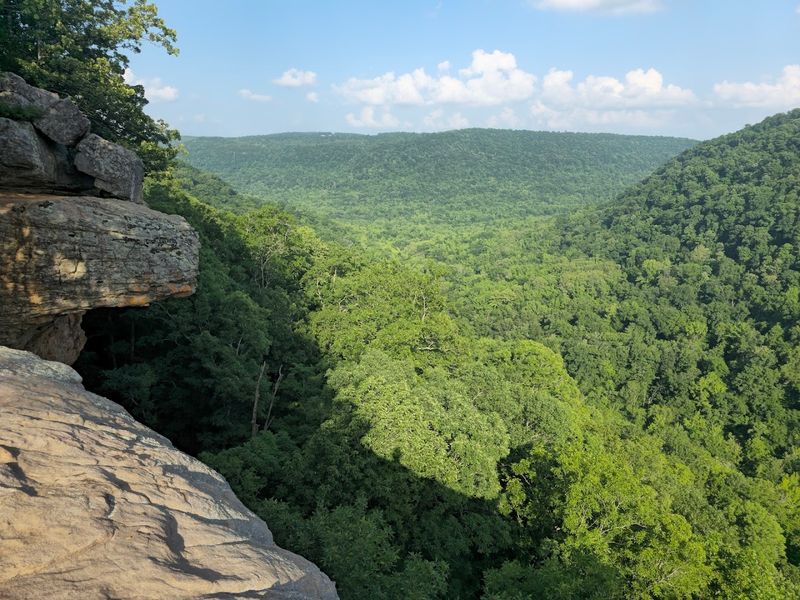
Driving through the Ozark National Forest on Highway 123 felt less like a road trip and more like being swallowed whole by the most beautiful thing I have ever seen.
The forest does not just line the road, it surrounds it, claims it, and occasionally makes you feel like the pavement was placed there as a polite suggestion rather than a permanent fixture. Ancient hardwoods tower on both sides, their roots gripping the hillsides with a confidence I deeply envied on the steeper sections.
The Ozark National Forest covers over 1.2 million acres across Arkansas, and Highway 123 cuts through one of its most dramatic and least-traveled corridors.
That means the wildlife is abundant, the air smells like pine and creek water, and the sense of solitude is genuinely profound. I spotted deer grazing at the roadside twice, and once caught a glimpse of what I am fairly certain was a red-tailed hawk riding a thermal above the tree line.
Autumn transforms this drive into something otherworldly. The hardwoods ignite in shades of amber, crimson, and gold that make every photograph look like it was professionally edited.
Spring brings a completely different energy, with wildflowers pushing through the forest floor and the whole landscape buzzing with new growth. Summer is lush and intensely green, while winter strips the trees bare and reveals the raw geological drama of the mountains underneath.
Every season delivers a completely different version of the same spectacular show.
A Historic Landmark Worth Slowing Down For
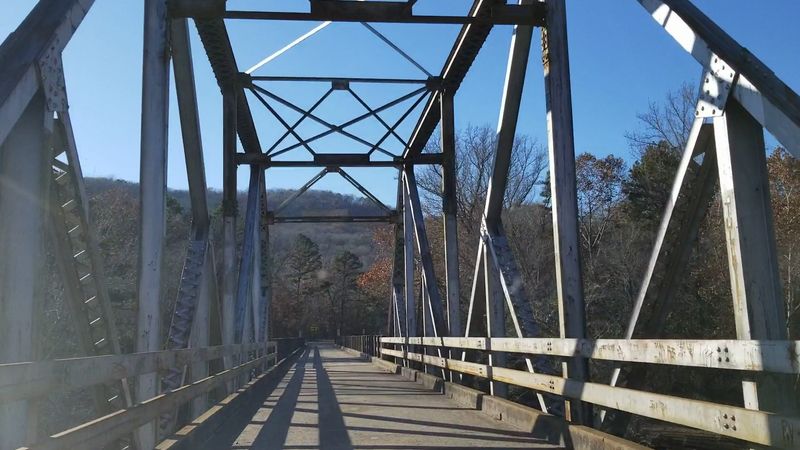
Most people blast past historical markers without a second glance, but the Big Piney Creek Bridge on Highway 123 stopped me cold in the best possible way.
Built in 1931, this historic structure carries a quiet dignity that feels completely at home in the surrounding landscape. Standing on it and looking downstream at the clear, rocky creek below, I felt like I had stepped backward in time by about ninety years.
The bridge represents a fascinating chapter in Arkansas road-building history, constructed during an era when engineers were still figuring out how to tame these mountain highways for modern vehicles.
The craftsmanship is visible in every detail, from the solid arch supports to the way the structure integrates naturally into the creek valley. It is the kind of infrastructure that modern highway projects rarely produce because function has long since overtaken form in road design.
Big Piney Creek itself is worth more than just a passing glance from the bridge. The water runs clear and cold over smooth limestone beds, and the surrounding riparian corridor is thick with sycamore and willow trees that create a completely different microenvironment from the upland forest above.
Fishermen know this creek well for its smallmouth bass population, and on the morning I visited, the whole scene was so quietly perfect that I sat on the bridge railing for twenty minutes just listening to the water.
A Hidden Backcountry Gem Along The Route
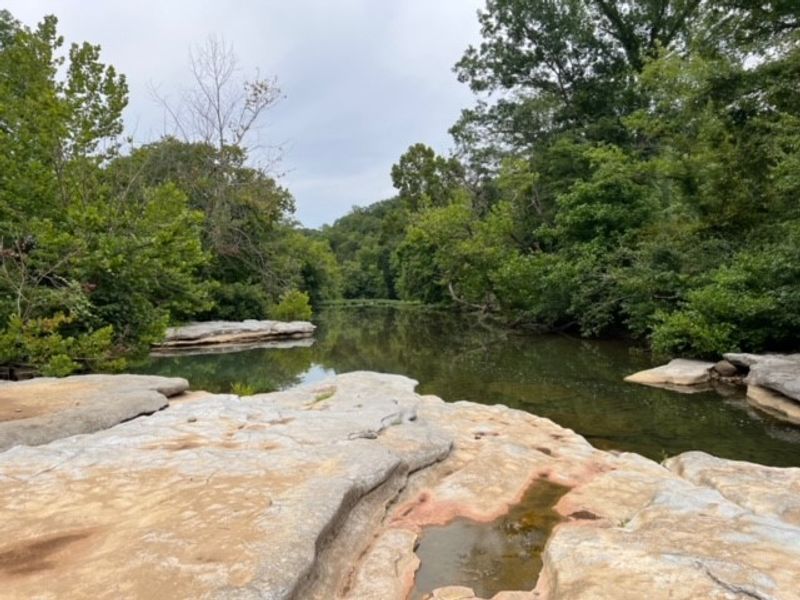
Tucked away off Highway 123 like a secret the mountain decided to keep all to itself, the Valley of Peace is one of those discoveries that makes a road trip feel genuinely transformative. I almost missed the trailhead entirely, which would have been a tragedy of the highest order.
The trail leading into the valley is modest and unpretentious, giving absolutely no hint of what waits at the end of it.
Once you step into the valley, the noise of the world disappears completely. The surrounding ridgelines create a natural acoustic barrier that muffles everything except birdsong and the sound of your own footsteps on the soft trail.
The landscape opens into a broad, grassy basin ringed by dense forest, and the whole effect is so serene that I instinctively lowered my voice even though there was nobody else around. Some places just ask you to be quiet, and this was one of them.
The Valley of Peace is accessible via a trail off Highway 123, and the hike in is moderate enough that most reasonably active people can manage it without specialized gear.
Bring water, wear sturdy shoes, and give yourself at least an hour to properly absorb the experience rather than rushing through it. I sat in the middle of that valley for a long time, eating a granola bar and feeling genuinely grateful that I had taken the slower, less-traveled route through Arkansas.
The best places always reward the people willing to walk a little further to reach them.
Nature’s Greatest Showstopper
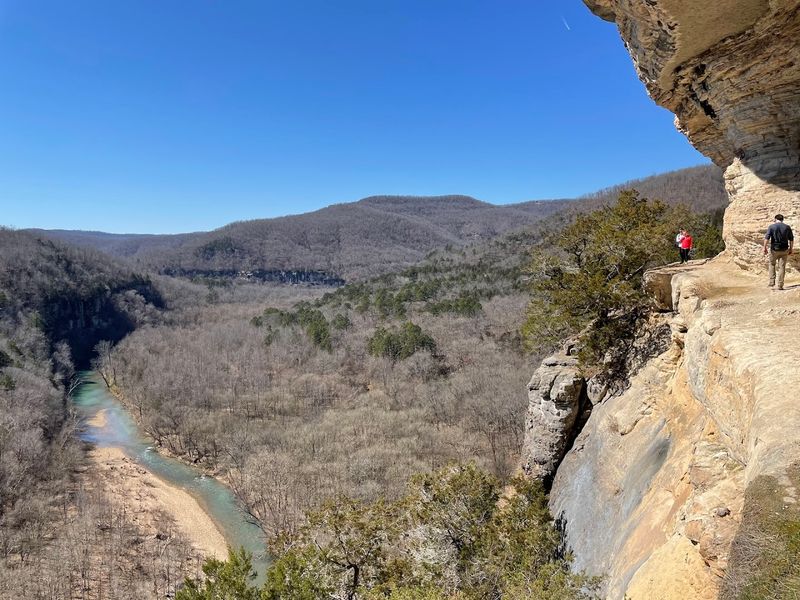
Seeing the Buffalo National River from the heights of Highway 123 was one of those travel moments I will be describing to people for the rest of my life. The river appears below like a ribbon of silver, winding through a valley so green and dramatic that it looks less like Arkansas and more like a landscape painting someone hung in a museum.
I pulled over at the first available spot and just stood there with my mouth open for an embarrassingly long time.
The Buffalo National River holds the distinction of being the first national river designated in the United States, protected by Congress in 1972. That designation has kept its surrounding landscape remarkably pristine, which means the views from Highway 123 show you a river corridor that looks essentially the same as it did a century ago.
Limestone bluffs rise dramatically above the water in some sections, and the contrast between the pale rock and the deep forest green is genuinely stunning.
The river also represents an outdoor recreation destination of serious caliber for those who want to extend their Highway 123 adventure beyond the road itself. Canoeing, kayaking, and fishing are popular activities along the Buffalo, and the river’s clarity is legendary among paddlers who travel from across the country to experience it.
Standing above it from the highway gives you an appreciation for its scale and beauty, but getting down to water level reveals an entirely different and equally magnificent perspective.
The Perfect Basecamp For Your Adventure

After a full day of wrestling with Highway 123’s curves and climbing its ridgelines on foot, finding Haw Creek Falls felt like the universe offering a well-deserved high five.
The falls are located within the Ozark National Forest near the Highway 123 corridor, and they deliver exactly the kind of reward that a long day on a mountain road deserves. The water drops over a wide limestone ledge into a clear, shallow pool that practically begs you to take your boots off and wade in.
The Haw Creek Falls Campground sits nearby and offers a genuinely rustic overnight experience that pairs perfectly with a Highway 123 adventure.
Waking up in the Ozark forest, making coffee while listening to the creek, and then heading back out onto that magnificent road felt like the ideal way to experience everything this corner of Arkansas has to offer.
The campground is primitive in the best sense, meaning the focus stays entirely on the natural environment rather than amenities.
What I loved most about ending my Highway 123 journey at Haw Creek Falls was how it gave the whole experience a sense of completion. The drive had been thrilling and demanding and beautiful all at once, and the falls provided a quiet, contemplative counterpoint to all that adrenaline.
Sitting beside the water as the light faded through the trees, I realized that Highway 123 had given me exactly what the best road trips always deliver: a story worth telling, a landscape worth remembering, and the very strong urge to turn around and do it all over again.