
This Arkansas Hike Leads To A Mysterious Abandoned Homestead
Ever stumble onto a trail and wonder if it’s leading somewhere, or nowhere at all? That’s exactly how I felt on a hike in Arkansas.
The path slipped between towering oaks and tangled underbrush. Sunlight danced on the leaves, creating patterns that looked almost intentional, like someone had left secret messages. My boots crunched over roots and fallen branches, each step echoing in the quiet.
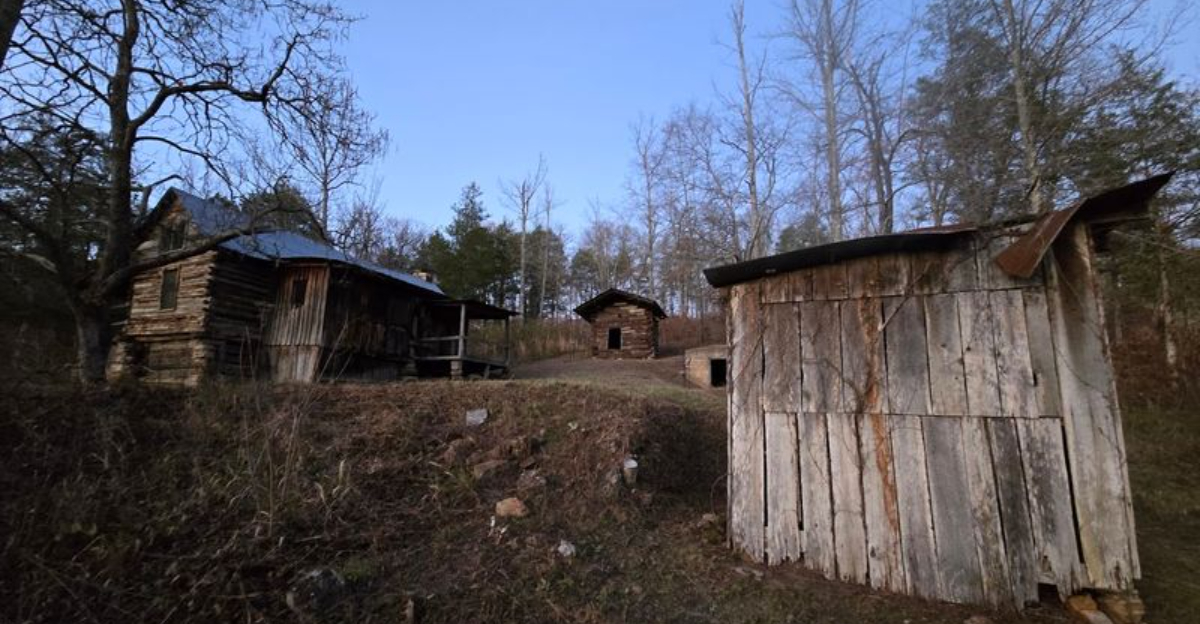
Then, just when I thought I was alone, I spotted it. A forgotten homestead, tucked into the woods.
Roof sagging, paint peeled, windows staring blankly at me. It was like the forest had swallowed a piece of history and held it hostage.
Curiosity took over. I edged closer, imagining the lives once lived here.
The air smelled of damp wood and mystery. Arkansas had me hooked. This hike wasn’t just exercise.
It was a story unfolding under my feet.
Where The Adventure Begins
Pulling into the Ponca Access parking area feels like arriving at the opening chapter of a really good book. The lot sits right at the intersection of Highway 43 and Highway 74, which sounds ordinary until you step out of the car and the Ozark hills just swallow your entire field of vision.
I stood there for a solid minute just soaking it in before I even thought about the trail.
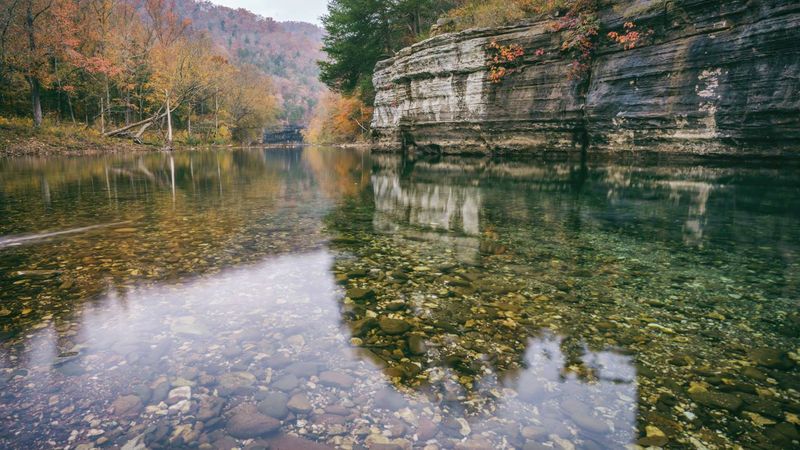
The starting point of the Villines Homestead Trail is the Ponca Low-Water Bridge, a flat concrete crossing over the Buffalo River that sets the whole mood immediately.
The water was clear and shallow when I crossed, and I could see smooth river rocks glinting below. There is something about stepping over a river to begin a hike that just feels intentional, like you are making a commitment to whatever comes next.
Trail signs appear shortly after the bridge, and the path is mostly dirt and grass, wide enough to feel welcoming but rustic enough to feel like an actual adventure.
The elevation gain is only about 50 feet over the entire half-mile route, which means practically anyone can handle this without breaking a real sweat. I passed towering sycamores and heard the river gurgling behind me as I moved forward.
The whole atmosphere had this quiet, expectant energy, like the trail itself knew it was leading somewhere worth finding. Comfortable shoes and a water bottle are really all you need to get started here.
The Half-Mile That Changes Everything
Half a mile sounds like almost nothing, and honestly, in terms of physical effort, it really is nothing. But what that half-mile delivers in atmosphere and storytelling is the kind of thing that stays with you long after your boots are back in the car.
I kept thinking about how every single step I was taking was a step closer to 1882, and that thought alone made the whole walk feel cinematic.
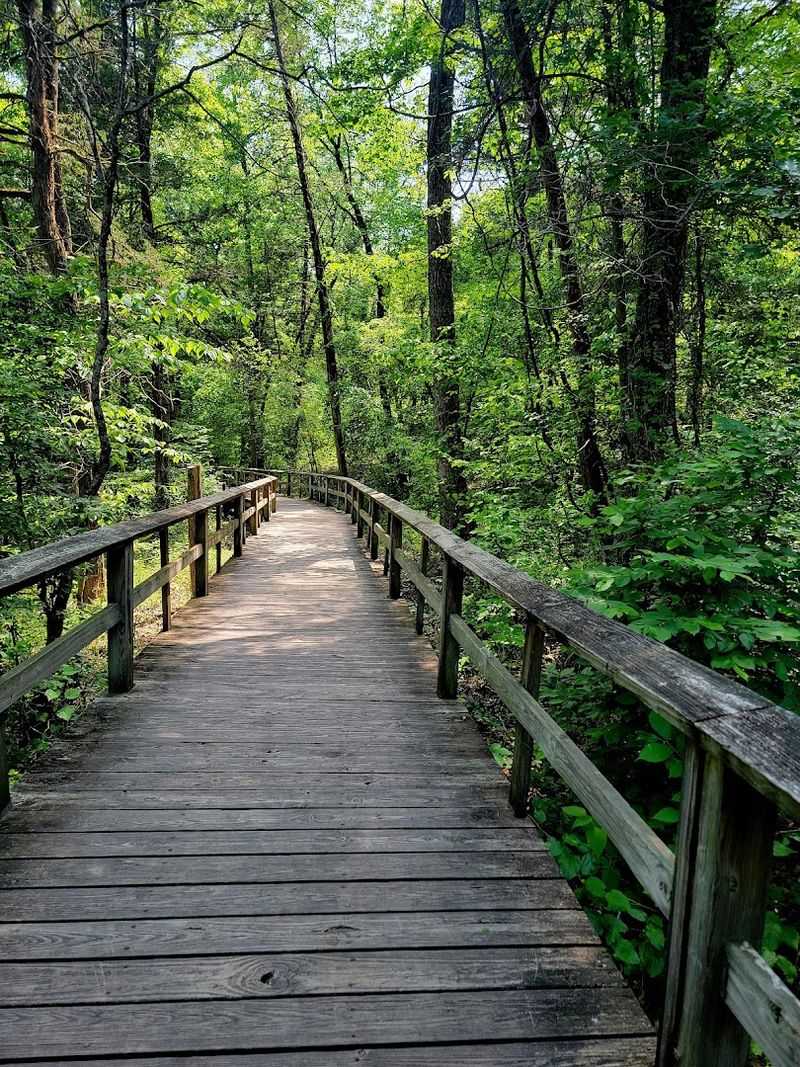
The trail winds through classic Ozark bottomland scenery, with big old trees forming a loose canopy overhead and soft light filtering through in the late morning.
The ground is unpaved and natural, which I genuinely appreciated because it keeps the whole experience grounded in what it actually is: a walk into the past. There is no manicured boardwalk here, no gift shop at the end, just the trail and the trees and the quiet.
About halfway along, I noticed the landscape starting to open up slightly, and the vegetation shifted just enough to signal that something man-made was coming.
That subtle change in the environment, the way the trees thinned and the ground leveled, felt like the trail was giving me a heads-up. I slowed down without even deciding to.
The air smelled like cedar and river mud, and somewhere ahead, the Villines homestead was waiting.
Short hikes like this one remind me that the distance to something remarkable is rarely measured in miles. Sometimes the most powerful journeys are the ones you can finish in under twenty minutes.
The Legend Behind The Land
Before I ever set foot on this trail, I did a little reading, and the name James Villines kept popping up alongside the nickname Beaver Jim. I thought it was quirky and fun, but the more I learned, the more I realized this man was genuinely extraordinary.
He earned that nickname through serious beaver trapping skills along the Buffalo River, and he became one of the most recognized figures in the early settlement history of this part of Arkansas.
James and his wife Sarah Arbaugh established the homestead in 1882, which means they were building a life here when the Ozarks were still raw and largely untamed.
They were not just surviving out here. They were thriving, raising crops, preserving food, maintaining animals, and creating a self-sufficient world in the middle of the wilderness.
Standing at the site of what they built, I felt a deep respect for that level of determination and resourcefulness.
Wood rots, stone crumbles, and history tends to disappear without anyone noticing. But something about this place held on.
Local preservation efforts and the protection of the Buffalo National River corridor have helped keep the story alive.
Knowing the name and the backstory of the person who built something transforms the way you look at it. These were not just walls.
They were someone’s entire world.
A Masterclass In Frontier Architecture
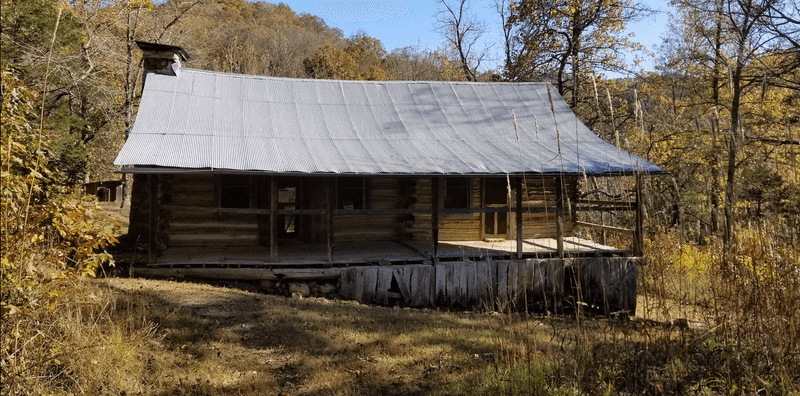
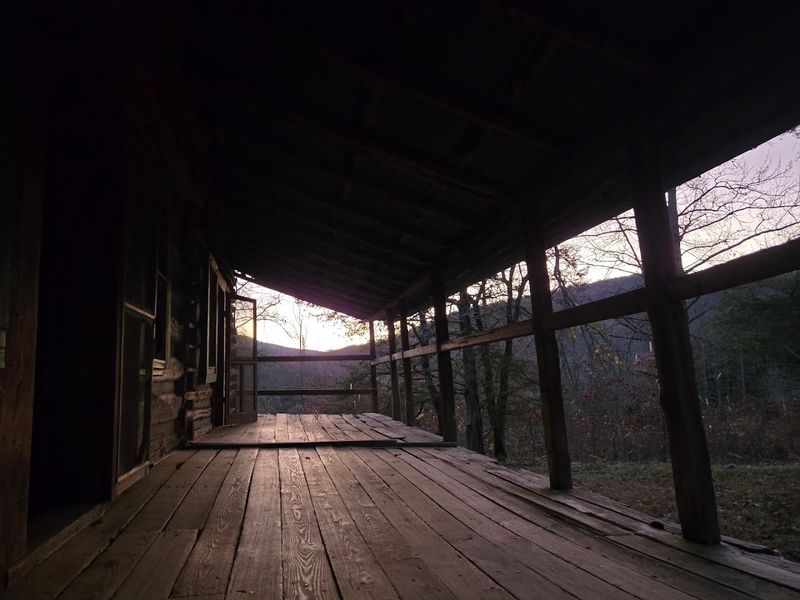
When the log cabin came into view through the trees, I actually stopped walking. Not because I was tired, but because the sight of it hit differently than I expected.
The double-pen design, two separate log rooms connected under one roof, is a style that was common in the Ozarks during the 19th century, and seeing a real surviving example of it felt like finding a page torn out of a history textbook and left standing in the woods.
The logs are massive and weathered to a deep gray, notched together at the corners with the kind of craftsmanship that did not rely on power tools or hardware stores.
I walked around the exterior slowly, running my eyes along the chinking between the logs and imagining what it must have looked like when it was freshly built and full of life. The structure has this sturdy, no-nonsense presence that tells you exactly what kind of people built it.
Visitors are generally advised to admire the cabin from the outside rather than entering, which is smart advice given the age of the structure.
But honestly, the exterior alone gives you everything you need. The way the cabin sits in its clearing, surrounded by old growth trees and filtered Ozark light, is genuinely beautiful in a raw and unpolished way.
No staged photo op could replicate this.
The cabin does not need a filter or a caption. It speaks entirely for itself, and what it says is worth listening to carefully.
Where Food Was Life
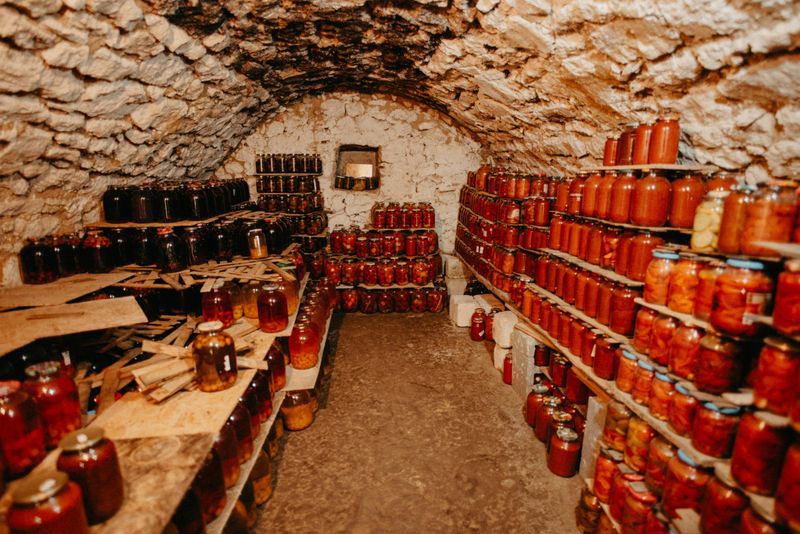
Standing in front of the smokehouse, I had a genuine moment of appreciation for how much work went into just eating back in 1882. There were no refrigerators, no grocery runs, no delivery apps.
There was only the land, the season, and whatever you had the skill and foresight to preserve.
The smokehouse at the Villines Homestead is a small, solid structure that tells a big story about what daily survival actually looked like in the Ozarks.
Smoked meat was not a weekend barbecue luxury for the Villines family. It was a preservation method that kept food edible through the winter and into the following year.
The smokehouse would have been one of the most important buildings on the entire property, right alongside the root cellar, which was used to store vegetables, canned goods, and other perishables in the cool underground environment. Together, these two structures formed the original food storage system of the homestead.
The root cellar is partially embedded into the hillside, which is exactly how they were designed to work. The earth acts as natural insulation, keeping temperatures stable regardless of what the weather was doing above ground.
I crouched down to look at the entrance and thought about how many times someone walked this same short path carrying an armload of sweet potatoes or smoked ham. These buildings are not dramatic or visually flashy, but they carry a kind of quiet, practical genius that modern convenience has made us completely forget about.
The Full Picture Of Frontier Life
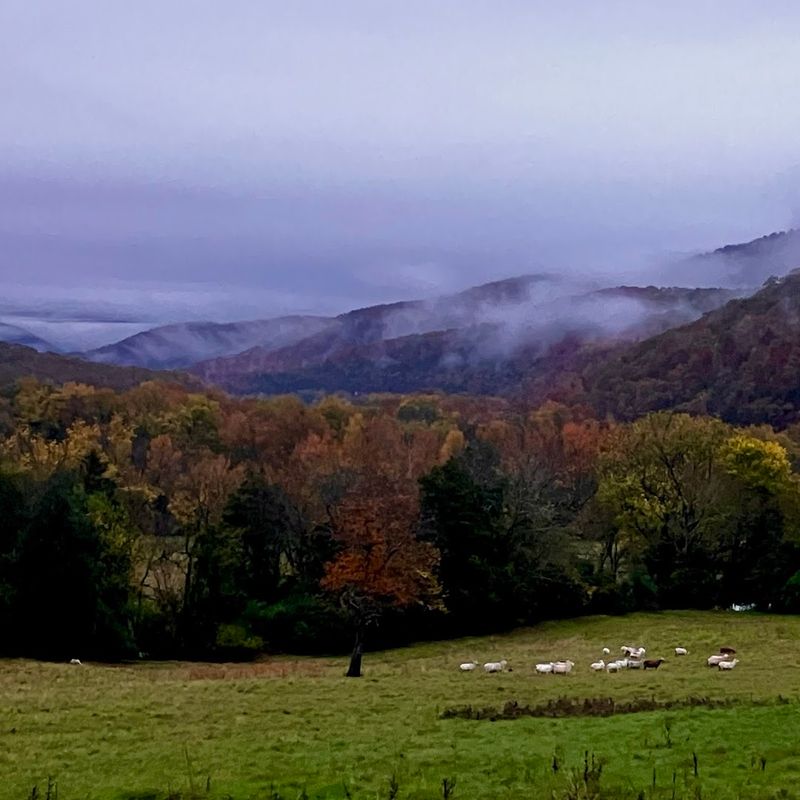
There is something unexpectedly charming about seeing a 140-year-old outhouse still standing in the Arkansas woods. I laughed when I spotted it, not out of mockery, but out of genuine delight at the completeness of this place.
The Villines Homestead is not just a cabin with a plaque. It is a full compound of structures that together paint a remarkably vivid picture of what life required in the 1880s Ozarks.
The barn is the largest structure on the property and carries that classic silhouette of a working farm building, wide boards, a generous footprint, and the kind of worn texture that only comes from decades of weather and use.
Animals would have been sheltered here, tools stored, and the rhythms of farm life organized around its presence. Walking around it, I kept thinking about how central this building would have been to the Villines family’s daily routine from sunrise to well past sunset.
What makes the Villines Homestead so special as a destination is exactly this completeness. You are not looking at one lonely relic.
You are looking at an entire ecosystem of survival, a cabin, a smokehouse, a root cellar, a barn, and yes, an outhouse, all in one clearing in the Ozark woods. Each structure had a purpose, and together they formed a working home.
Most abandoned places give you fragments.
This one gives you the whole story, and that kind of rare completeness is what makes this short trail so worth every single step.
Winding Paths And Stunning Views
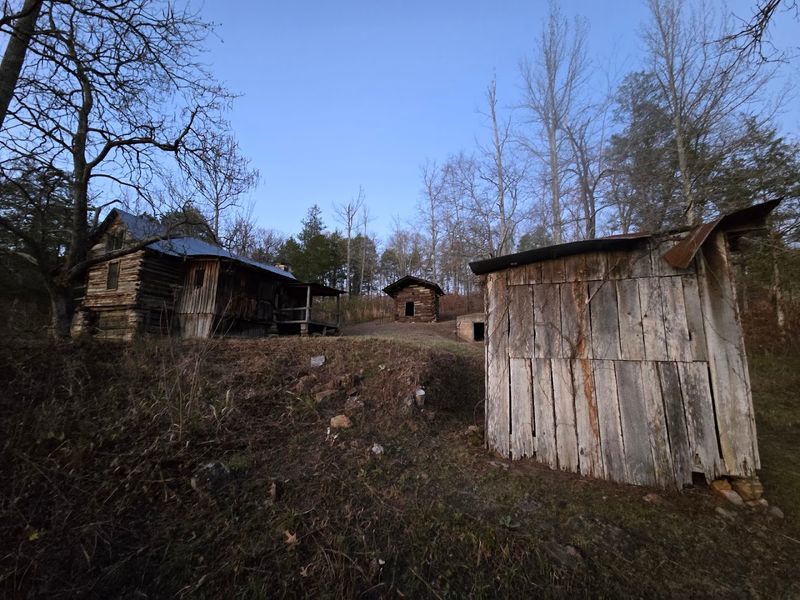
By the time I walked back across the Ponca Low-Water Bridge and reached my car, I had covered a grand total of one mile. One mile, and I felt like I had experienced something genuinely meaningful.
That is the thing about the Villines Homestead Trail that no trail rating system can fully capture.
The physical effort is minimal, but the emotional and historical payoff is enormous.
The trail is open year-round, which means you can visit in the blazing green of an Arkansas summer, the golden crunch of fall, or the stark and quiet beauty of winter when the trees are bare and the structures stand out even more dramatically against the pale sky.
Each season offers a completely different version of the same experience, and I am already planning a return trip in October when the Ozark foliage turns. Checking trail conditions before visiting is always a smart move, especially after heavy rain when the low-water bridge crossing can change.
Pack a water bottle, wear shoes with actual grip, and bring your curiosity because that is the most important thing to carry on this hike.
The Villines Homestead Trail is proof that extraordinary history does not always require a long drive or a strenuous climb. Sometimes it is waiting just half a mile past a river crossing in a quiet corner of the Arkansas Ozarks, patient and unhurried, the way good stories always are.