
Travel Back In Time At Arkansas Granny Hendersons Cabin
Today, most of us can’t even imagine what life was like 100 years ago. I came to Granny Henderson’s Cabin to see for myself, to feel the weight of a day that started before sunrise and ended long after the fire burned low.
Every creaky floorboard, every hand-hewn wall, every tiny corner of this cabin tells a story of hard work, resilience, and a life stripped down to the essentials.
I traced the paths Eva Henderson walked carrying water and tending crops, and suddenly the challenges of modern life, the constant pings, the endless scrolling, felt absurdly easy.
Sitting on the porch, watching the Buffalo River slip quietly by, I realized this wasn’t just a cabin. It was a lesson in patience, grit, and simple beauty that no history book could ever fully capture.
The Hike That Earns Every View
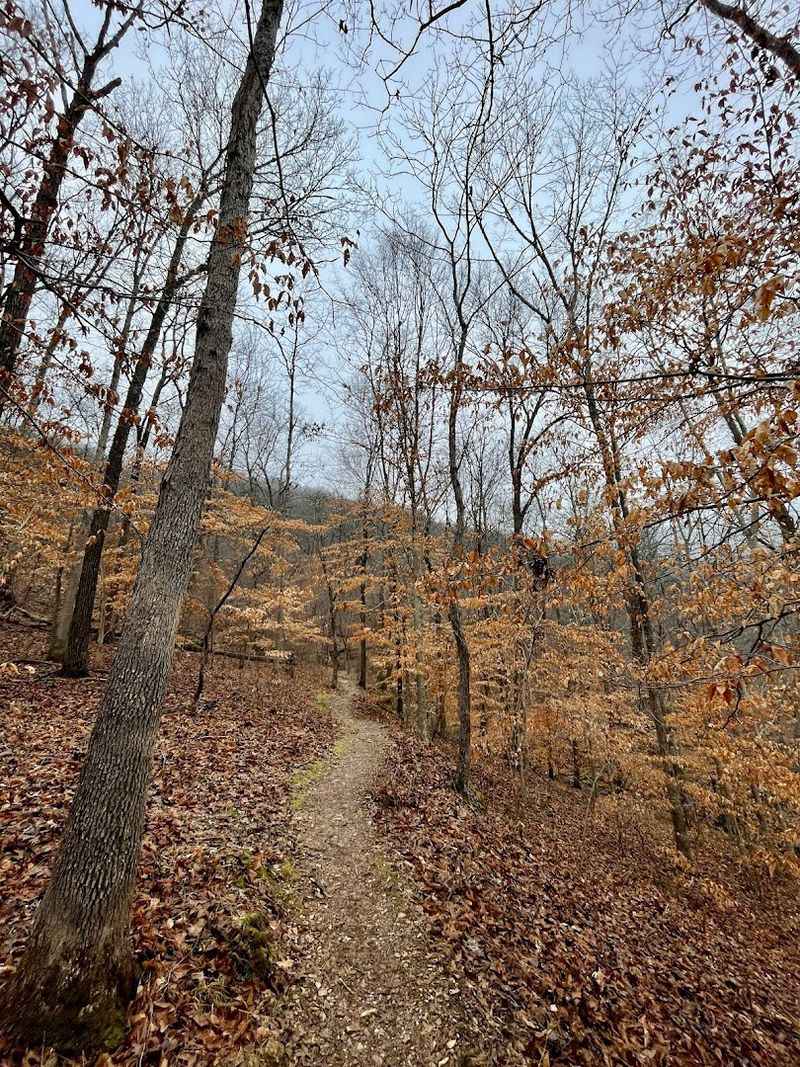
Nobody hands you Granny Henderson’s Cabin on a silver platter, and honestly, that is exactly what makes it so rewarding. The trail out to the cabin is roughly a 6-mile round trip from the Hemmed-In Hollow parking lot, threading through some of the most jaw-dropping Ozark scenery I have ever had the pleasure of hiking through.
You connect via the Centerpoint Trail, the Hemmed-In Hollow Trail, and Sneeds Creek Trail, and each one brings its own personality to the journey.
I wore my trusty trail runners and still managed to slip on a mossy rock crossing a creek, so do yourself a favor and lace up some proper hiking boots before you head out.
The terrain is rated moderately strenuous, which means there are real elevation changes, exposed roots, and creek crossings that demand your full attention. Bring more water than you think you need, pack some snacks, and give yourself plenty of time so you are not rushing the return leg.
Every bend in the path offered something new, a limestone bluff here, a crystal-clear creek there, and then suddenly, through a clearing, the cabin appeared. My jaw actually dropped.
The hike is the experience, not just the means to get there, and your legs will absolutely agree by mile three.
Standing Inside A Living History Lesson
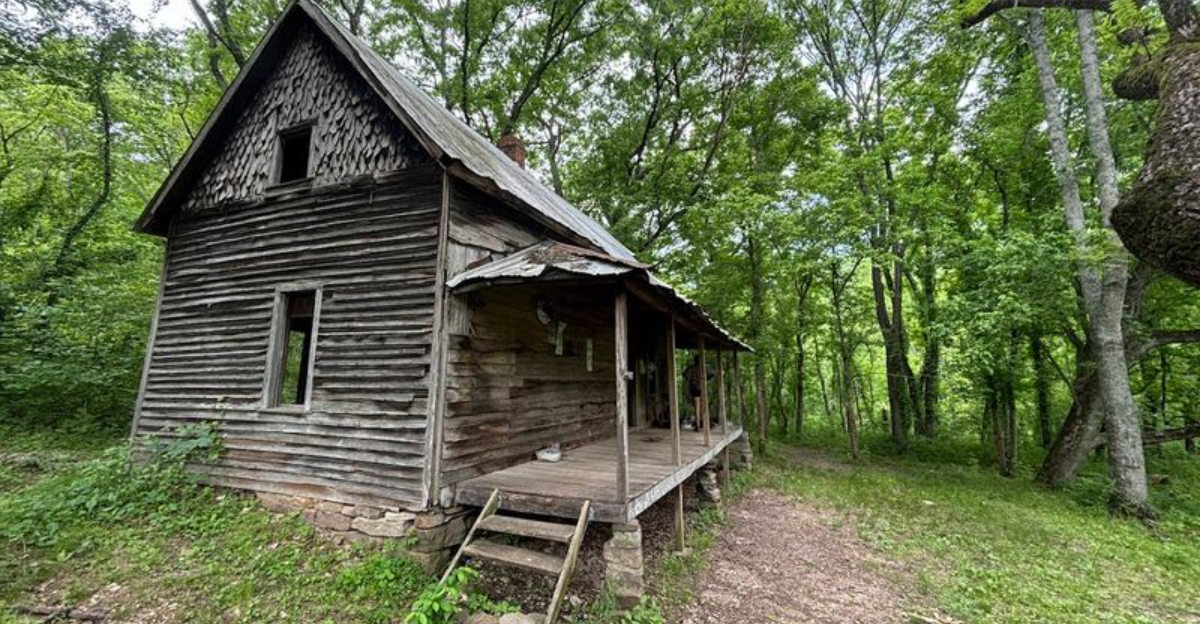
Granny Henderson’s Cabin sits at the end of that trail like a quiet old friend who has seen absolutely everything. Located in the Ponca Wilderness area near Jasper, Arkansas, along the Buffalo National River, this cabin was hand-built by Frank Henderson and his wife Eva in the early 1900s using native timber and stone pulled straight from the surrounding land.
Standing in front of it, I kept thinking about how every single log was placed by human hands without a power tool in sight.
The cabin is a single-story structure with a stone chimney that still looks impressively sturdy for something well over a century old. There are no velvet ropes, no museum placards blocking your view, no gift shop selling souvenir magnets.
Just the cabin, the trees, and the sound of the wind moving through the Ozarks like it always has. The National Park Service maintains the site, but they have wisely kept the atmosphere raw and authentic.
Walking around the perimeter, I noticed the way the stone foundation settled into the earth like it grew there naturally.
The cabin does not scream for attention, it earns it quietly. This is not a reconstruction or a replica, it is the actual structure where a real woman lived her entire life, and that weight is something you feel in your chest more than you read about in any guidebook.
Eva “Granny” Henderson, The Woman Behind The Legend
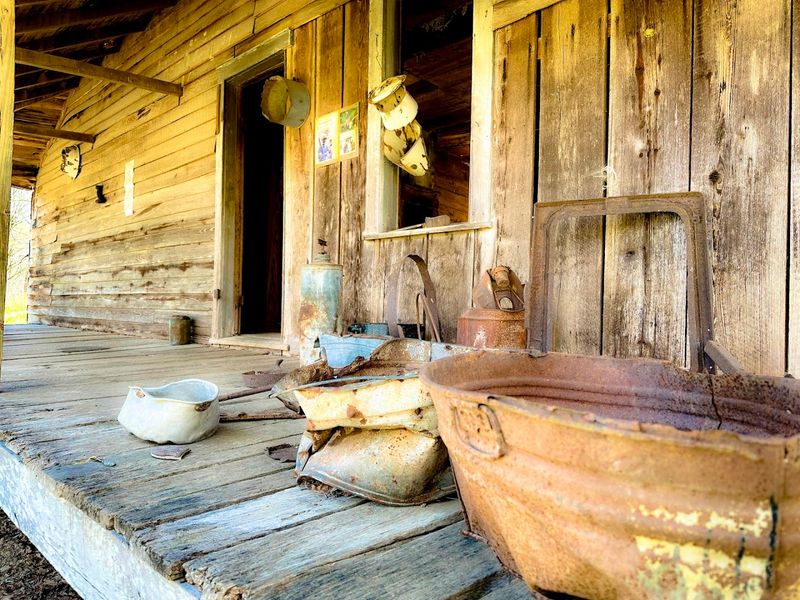
Let me tell you, the more I learned about Eva Henderson, the more I wanted to pull up a chair and just listen. She and her husband Frank built their homestead from scratch in the early 1900s, farming the land, raising cattle, and living without electricity or running water in a way that most of us today cannot even fully picture.
When Frank passed away in 1959, Eva did not pack up and leave. She stayed, alone, in that cabin, in those hills, on her own terms.
Paddlers and campers who traveled along the Buffalo River started calling her Granny, because she had this warm, open-door energy that made strangers feel like family. She would share her water with anyone passing through, a simple act of generosity that somehow feels enormous when you consider she was an elderly woman living completely off the grid.
She became a beloved figure in the area, a living piece of Arkansas folklore.
In 1978, at 87 years old, she was compelled to sell her 167-acre property to the National Park Service after the Buffalo River was designated the first National River in the United States back in 1972.
She moved to a nearby home built by her grandson but passed away in 1979, just a year after leaving the only home she had truly known. Her story is not a sad one, it is a fierce one.
The Buffalo National River Backdrop That Steals The Show
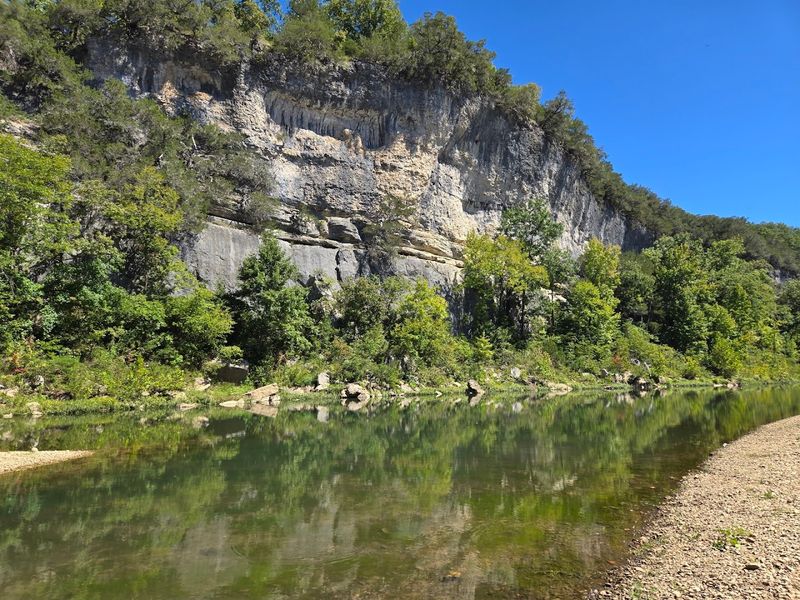
The Buffalo National River is not just a backdrop to this story, it is practically a main character. Designated as the first National River in the United States in 1972, the Buffalo flows freely for 135 miles through the Arkansas Ozarks without a single dam interrupting its journey.
Hiking toward Granny Henderson’s Cabin, I crossed paths with the river multiple times, and every single glimpse of that clear, cold water moving over smooth limestone rocks made me stop and stare like a tourist seeing the ocean for the first time.
The river corridor is home to an extraordinary range of wildlife, including white-tailed deer, wild turkey, and river otters, and the plant life shifts dramatically depending on which side of a bluff you are standing on.
The entire area surrounding the cabin feels ancient and alive at the same time, like the land itself has been holding its breath for a few million years and is just now deciding to exhale slowly in your direction.
What I did not fully appreciate before visiting was how the river shaped the Henderson family’s daily life. Water for drinking, cooking, and livestock all came from natural sources on and around their property.
Seeing the river through that lens, not as a recreation destination but as a lifeline, completely changed the way I looked at it.
The Buffalo River is stunning, but knowing its history makes it genuinely extraordinary.
Hemmed-In Hollow, The Waterfall That Demands Respect
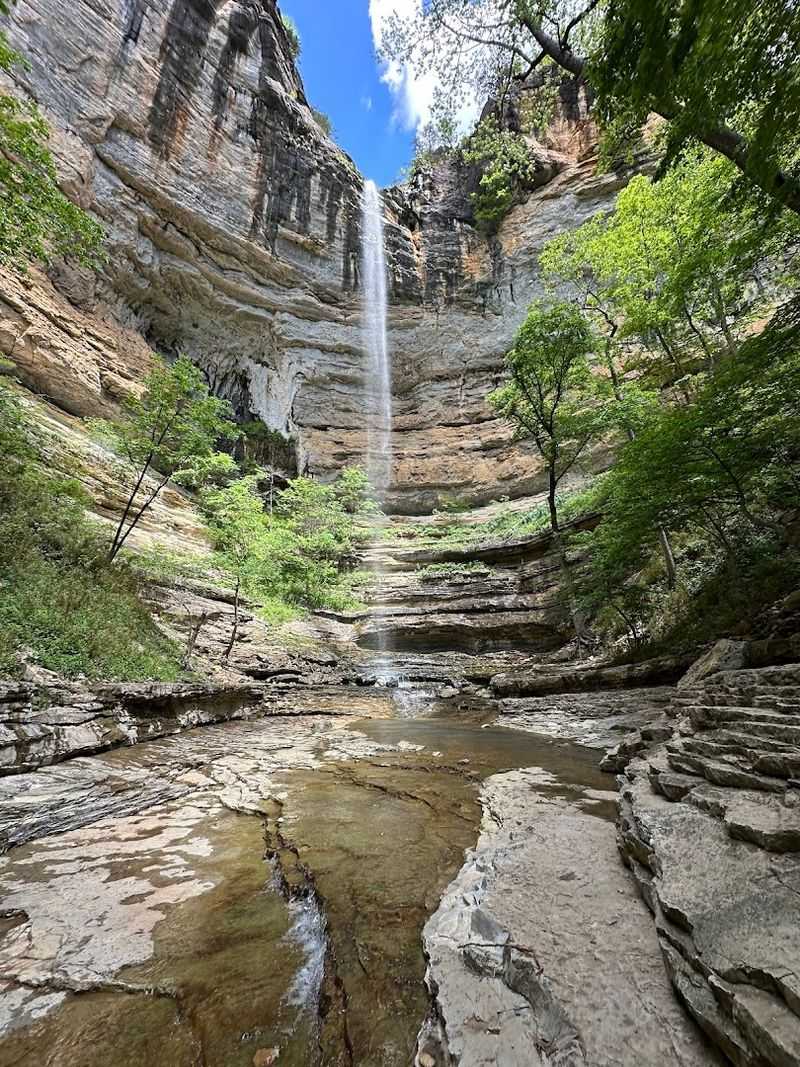
Right along the trail to Granny Henderson’s Cabin lives one of Arkansas’s most spectacular natural features, and it genuinely stopped me in my tracks.
Hemmed-In Hollow is home to a waterfall that plunges around 209 feet, making it the tallest waterfall between the Rockies and the Appalachians. Read that again.
Tallest between the Rockies and the Appalachians, and yet somehow it feels like a well-kept secret that only the trail-worthy get to witness in person.
The waterfall sits in a natural amphitheater of towering bluffs that wrap around it like cupped hands, creating this incredible acoustic effect where the sound of falling water fills the whole space.
I sat on a rock at the base for a good twenty minutes just absorbing it, feeling the mist on my face and listening to the roar that bounced off the limestone walls. There is no cell service out there, no notifications, no noise from the outside world, just you and a 209-foot curtain of falling water doing its ancient thing.
Visiting Hemmed-In Hollow on the same hike as Granny Henderson’s Cabin means you are essentially getting two bucket-list experiences for the price of one pair of sore legs.
The hollow is a short detour from the main trail, and skipping it would be a decision you would absolutely regret on the drive home. Go to the waterfall, stand under the mist, and let the Ozarks rearrange your priorities a little.
The Ponca Wilderness, Where Silence Is The Main Event
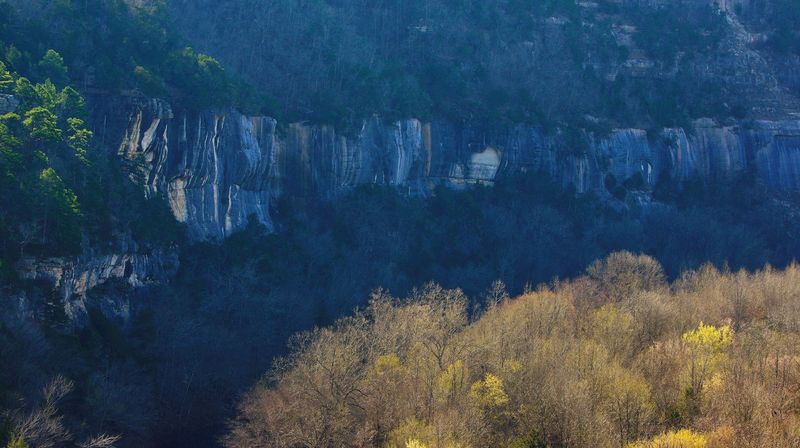
Before this trip, I genuinely underestimated how much I needed a place with absolutely nothing going on. The Ponca Wilderness area, which surrounds Granny Henderson’s Cabin and much of the upper Buffalo River corridor, is one of those rare places where quiet is not just the absence of noise but an actual presence you can feel pressing gently against your shoulders.
I arrived expecting a hike and left having experienced something closer to a reset.
The wilderness area protects thousands of acres of Ozark hardwood forest, limestone bluffs, and creek drainages that have remained largely untouched by development.
The biodiversity out here is remarkable, with dozens of species of wildflowers blooming along the trail depending on the season, and the tree canopy in late spring is so thick and green it filters the sunlight into something that looks almost surreal, like hiking through a nature documentary filmed with a very fancy camera.
Standing in the middle of that forest, knowing that Granny Henderson walked these same ridges for decades and found them worth staying for, added a layer of meaning to every step I took.
The wilderness does not try to impress you with amenities or signage. It just exists, fully and unapologetically, and somehow that is more than enough.
What Granny Henderson’s Cabin Teaches You About Simplicity
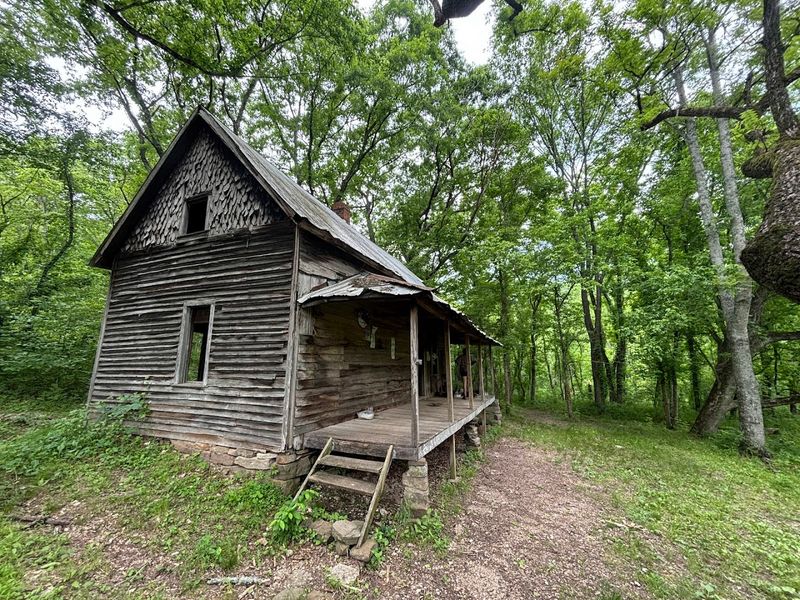
Here is the thing nobody tells you before you hike out to see a 100-year-old cabin in the Arkansas wilderness: you will walk away rethinking your entire relationship with your smartphone.
Granny Henderson lived in this cabin without electricity, without running water, without any of the conveniences that most of us treat as absolute necessities, and by all accounts, she lived fully and on her own terms right up until age 87. That is not a small thing to sit with.
The cabin itself is a masterclass in purposeful design. Every element exists for a reason, the stone chimney for heat and cooking, the timber walls for insulation, the placement of the structure for natural shelter from the elements.
There is no wasted space, no decorative clutter, no room dedicated to storing things you forgot you owned. Standing inside, I felt a strange mix of humility and envy that I did not entirely expect.
I left Granny Henderson’s Cabin carrying something heavier than my backpack, a genuine appreciation for what it means to live with intention.
In a world where we are constantly adding, upgrading, and optimizing, this little cabin in the Ozarks is a quiet argument for subtraction. If you have ever wondered whether you could strip your life down to what truly matters, this place will not give you the answer, but it will absolutely make you ask the question louder.
Have you ever stood somewhere and felt your priorities quietly rearrange themselves?