
The Most Gorgeous Golf Course In America Is In Arizona And It’s Not In Scottsdale
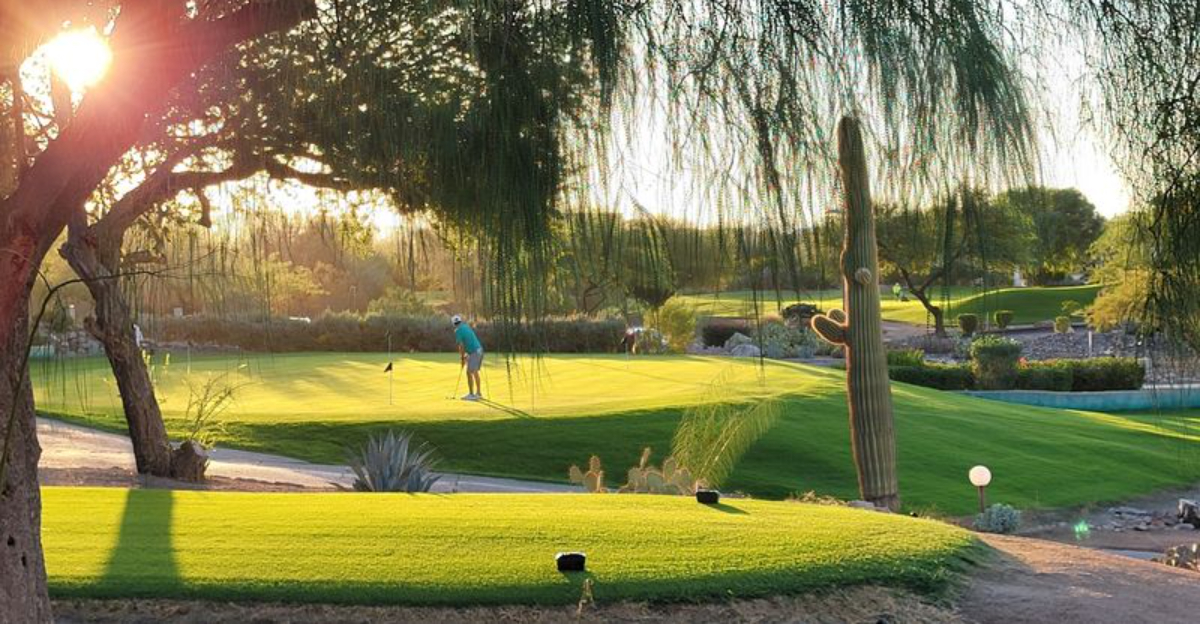
Listen, we all know Scottsdale thinks it’s the undisputed king of the green, but I’m about to drop a major truth bomb that might ruffle a few feathers. If you think you’ve seen the absolute best views Arizona has to offer while chasing a little white ball around, you need to prepare yourself for a reality check.
I recently found a spot so staggeringly beautiful that I actually forgot to be mad about my latest triple bogey for a full minute. We’re talking about dramatic slopes and scenery so epic it feels like you’ve stepped directly onto a movie set.
Honestly, it’s arguably the most stunning course in the entire country, and it’s hiding in plain sight. Pack an extra camera along with your clubs, because this Arizona gem is an absolute showstopper.
Playing here feels less like a typical round of golf and more like an adventure through some of the most spectacular terrain Arizona has to offer, where every hole presents a new vista that makes you stop and stare before taking your shot.
A Desert Masterpiece That Defies Expectations

Standing on the first tee, I realized this course would be unlike anything I had played before. The layout weaves through rugged desert terrain with elevation changes that challenge even experienced golfers.
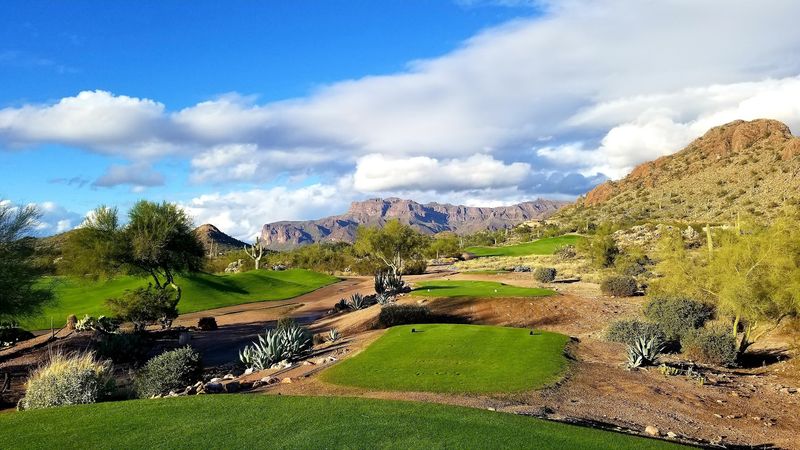
What makes this course truly special is how it uses the natural landscape. Rather than fighting against the Superstition Mountains, the designers embraced every cliff, wash, and canyon.
Each hole feels like it was carved specifically for that spot. The course isn’t overly long, which surprised me at first. But length means nothing when you’re hitting uphill shots or navigating fairways that drop hundreds of feet.
Strategy matters more than power here.
I watched golfers of all skill levels enjoy themselves, which speaks volumes. A 20-handicapper can navigate the fairways successfully, while scratch golfers face real tests on approach shots.
The balance is perfect.
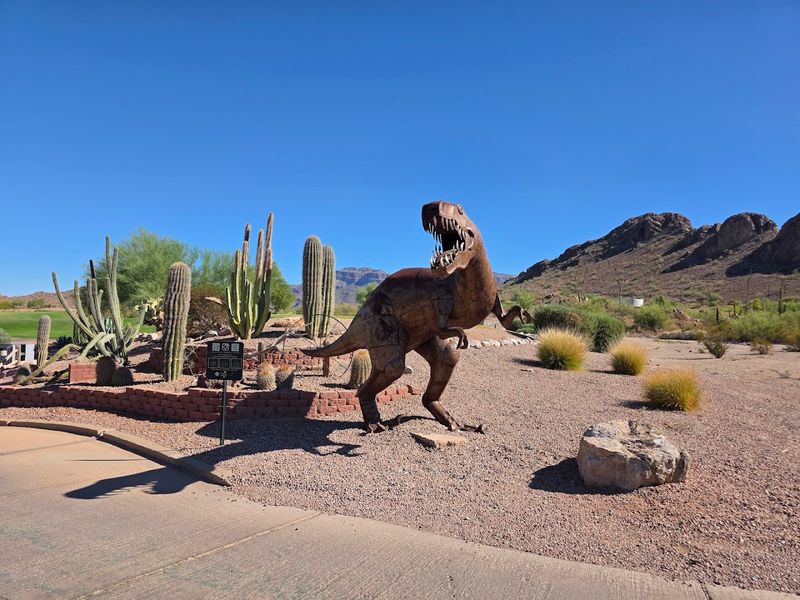
Every turn at Dinosaur Mountain reveals another postcard-worthy view that makes you forget about your score for a moment and just appreciate where you are standing.
Elevation Changes That Take Your Breath Away
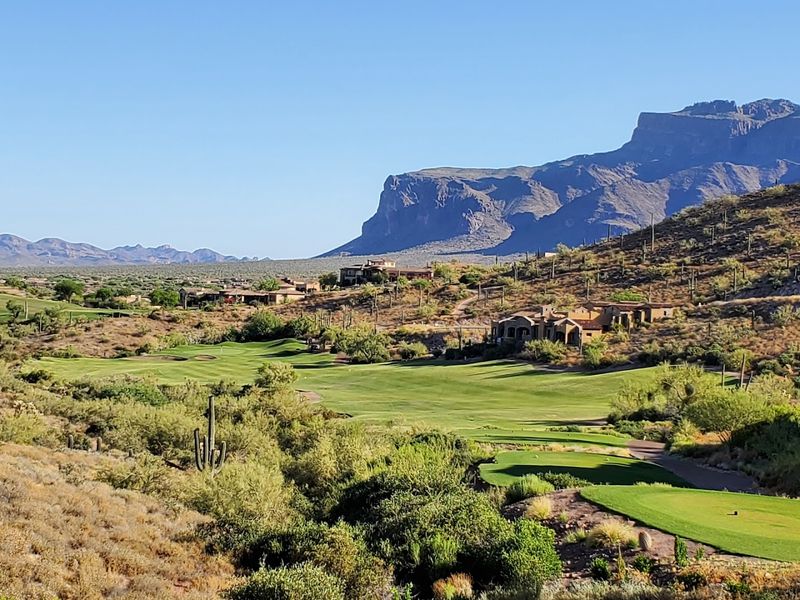
My legs got a serious workout during my round, but the stunning vistas made every uphill walk worthwhile. The starter wasn’t kidding when he told me the tee boxes are the only flat spots on the entire property.
Some holes drop so dramatically that club selection becomes a guessing game. I found myself using two or three clubs less than normal on downhill shots.
The opposite proved true going uphill, where I sometimes needed an extra wood just to reach the green. The most memorable hole features a tee shot that seems to launch into thin air. You watch your ball sail against a backdrop of jagged peaks and endless sky.
It’s the kind of shot that makes you feel like a professional, even if you’re not. These elevation changes aren’t just for show. They fundamentally alter how you play each hole, forcing you to think creatively about angles and landing zones.
Cookie-cutter golf this is not.
Greens That Roll True And Fast
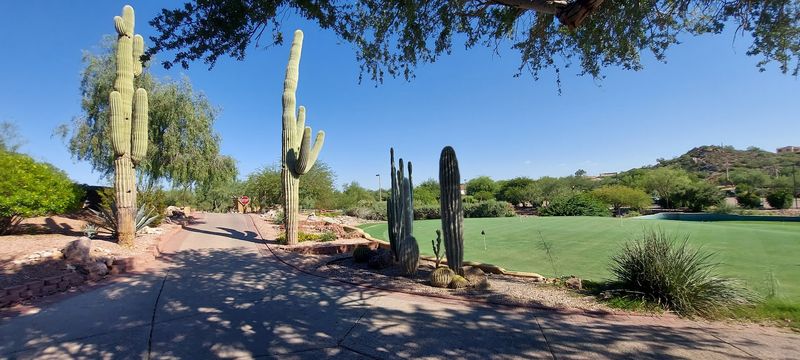
After experiencing the course’s elevation drama, I expected the greens to be somewhat inconsistent. Instead, I discovered some of the finest putting surfaces I’ve encountered anywhere in the Southwest.
The greens roll incredibly true and maintain excellent speed throughout the day. Even after hundreds of golfers had crossed them, they held their quality.
That level of maintenance doesn’t happen by accident. Size matters here, and these greens are generous.
The GPS system shows front, middle, and back distances, though some people wished for pin placement information. I learned to use the terrain and my eyes to judge where the flag sat.
Reading breaks becomes crucial because these surfaces have subtle undulations that can turn a makeable putt into a three-putt nightmare. I spent extra time studying each green from multiple angles, which slowed my play but saved strokes.
The condition remained consistent from the first hole to the eighteenth, which tells you everything about the grounds crew’s dedication to excellence.
Views That Rival Any Course In America
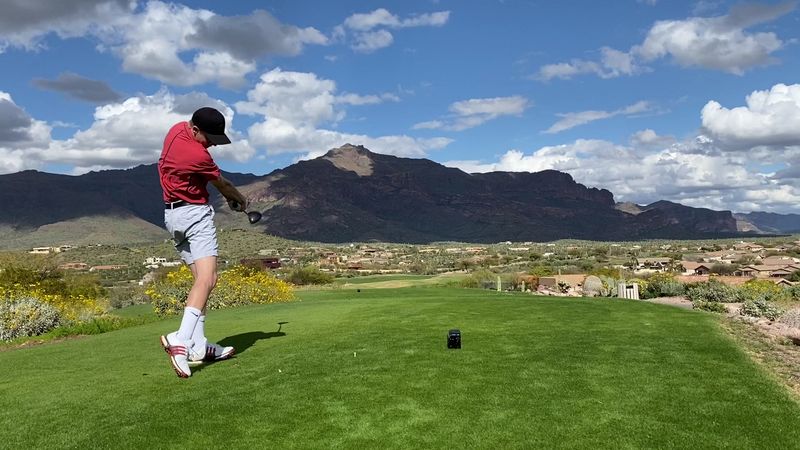
Photography doesn’t do justice to the scenery surrounding every hole at Dinosaur Mountain. The Superstition Mountains create a jagged skyline that changes color throughout the day, from purple shadows at dawn to golden brilliance at sunset.
I played on a clear morning when visibility stretched for miles. Looking back toward Phoenix from the higher holes, I could see the entire valley spread out like a map. Looking forward, untamed desert stretched to distant peaks.
The course designers positioned tee boxes and greens to maximize these vistas. You’re never just hitting a shot; you’re creating a moment against an incredible backdrop. Even my worst drives looked beautiful in flight.
Desert vegetation adds texture and color to every view. Saguaro cacti stand like sentinels, ocotillo branches reach skyward, and flowering plants dot the landscape with unexpected bursts of color depending on the season.
Multiple people mentioned these views specifically, and I understand why. They’re not just background scenery but an integral part of what makes this course unforgettable.
A Layout That Demands Strategic Thinking
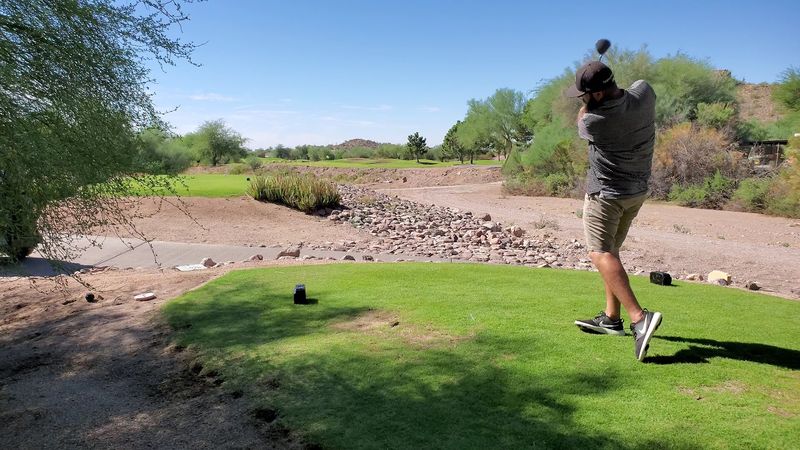
Bombing drivers down every fairway won’t guarantee success at Dinosaur Mountain. I learned this lesson quickly when my aggressive strategy on the third hole found desert instead of short grass.
The fairways look tighter from the tee than they actually are, which messes with your mind. I found myself aiming conservatively only to realize I had more room than I thought.
Trust your yardage and commit to your line. Desert patches and cliff edges create natural hazards that punish wayward shots severely. There’s no rough to save you here.
You’re either on the fairway, on the green, or searching through rocks and cacti for your ball. Course management becomes essential. Some holes reward aggressive play while others demand patience and precision.
The fifteenth hole features the funkiest routing I’ve seen, requiring careful navigation and smart decision-making. I watched skilled players struggle because they didn’t adjust their strategy to match the course’s demands. Power means nothing without placement on these fairways.
Staff That Makes You Feel Welcome

From the moment I arrived at the bag drop, the staff treated me like a valued guest rather than just another tee time. Their enthusiasm for the course was genuine and infectious.
Katie at the pro shop helped several guests during my visit, offering local knowledge and recommendations with a smile. The starter who drove us to the first tee lives on the property and shared insider tips that proved invaluable during my round.
Even small touches impressed me. The staff remembered my name, asked about my round when I returned, and genuinely seemed to care about my experience. That personal attention elevates a good course to a great one.
Several friends mentioned specific staff members by name, which rarely happens unless people are truly impressed. The consistency of positive comments about the team suggests this isn’t luck but culture.
Not everyone praised the staff equally, and some mentioned grumpy encounters. But my experience aligned with the majority who found the team friendly, helpful, and dedicated to ensuring guests enjoy their day.
Pace Of Play That Varies By Season
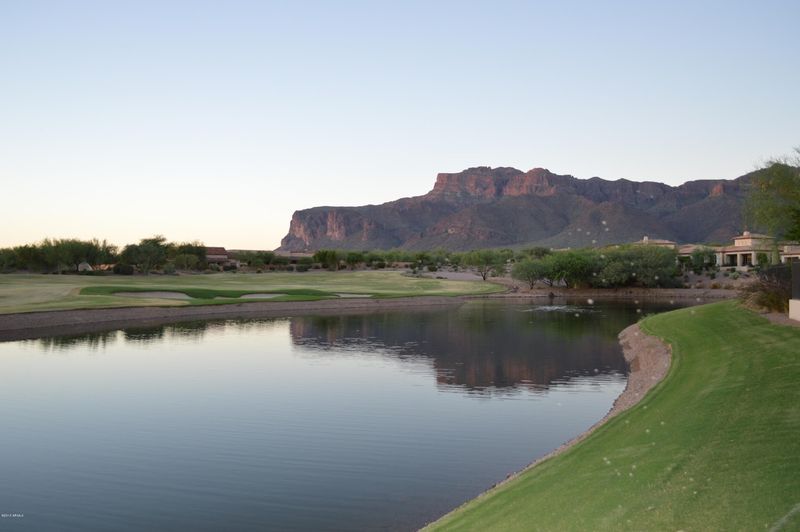
My round took just under four hours on a weekday morning in late winter, which felt perfect. We kept moving without feeling rushed, and the course never backed up significantly.
Several golfers reported rounds exceeding five hours, which tests anyone’s patience regardless of how beautiful the scenery might be.
The course employs rangers to monitor pace and address slow groups, though their effectiveness seems inconsistent based on feedback. When the system works, play flows smoothly.
When it doesn’t, frustration builds quickly. I recommend booking early morning tee times or playing on weekdays if possible. The course opens at 7 AM, and those early slots offer better pace plus cooler temperatures during summer months.
Understanding that you’re playing a destination course helps set expectations. People travel from across the country to play here, so they naturally want to savor the experience. Building in extra time prevents disappointment if the round runs long.
Premium Pricing That Sparks Debate

Let me address the elephant in the cart: Dinosaur Mountain isn’t cheap. Peak season rates can reach $300 per person, which puts it in the upper tier of Arizona golf pricing.
Whether that cost represents good value depends entirely on your expectations and priorities. If pristine greens, incredible views, and a memorable experience matter most, many golfers find the price justified.
If you’re budget-conscious or primarily focused on course length and difficulty, sticker shock may occur. I compared my experience here to other high-end courses I’ve played in Scottsdale, Hawaii, and California. The views at Dinosaur Mountain exceeded most of them.
The greens matched the best I’ve encountered. The overall condition was excellent. Booking during shoulder seasons or twilight hours can reduce costs significantly while still delivering the same spectacular scenery and course quality.
Bunkers That Present Challenges
Several people mentioned bunker conditions, and my experience confirmed this as an area needing attention. The sand traps contained a mixture of sand and small rocks that affected both ball lies and club contact.
I hit into three bunkers during my round, and each presented a different challenge. One had fairly clean sand, another was quite firm, and the third had noticeable rock content that I worried might damage my clubs.
Weather plays a role here. Arizona’s occasional heavy rains can wash debris into bunkers and create the muddy conditions some people described.
The maintenance crew faces unique challenges maintaining bunkers in desert environments.
That said, bunker conditions didn’t ruin my round or dramatically affect my score. I adjusted my technique to pick the ball cleanly rather than taking deep divots, which worked reasonably well. Hopefully, future visitors will find these hazards in better condition than some past guests experienced.
The Sidewinder Alternative Option
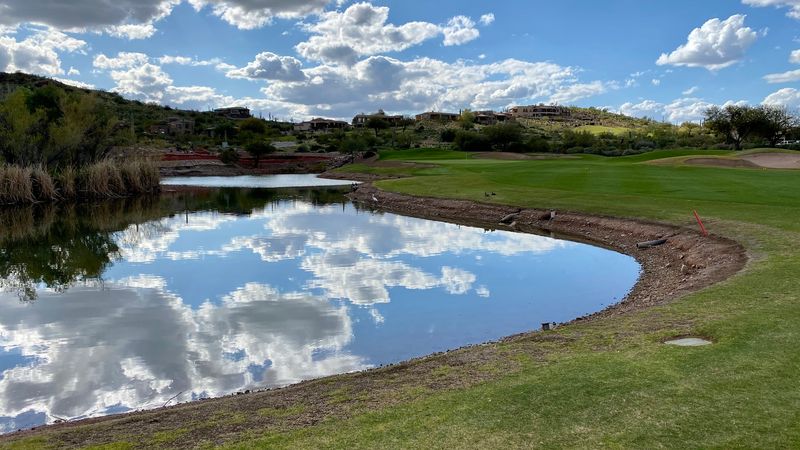
Gold Canyon Golf Resort offers a second course called Sidewinder that provides a completely different experience from Dinosaur Mountain. I played both in one day and highly recommend this combination if your schedule and budget allow.
Sidewinder plays through desert washes rather than climbing mountain terrain. The elevation changes are less dramatic, but the course presents its own strategic challenges and maintains excellent conditions.
The price difference is significant, with Sidewinder costing roughly $100 less than Dinosaur Mountain during peak season. This makes it an attractive option for golfers who want the Gold Canyon experience without the premium price tag.
Recent flooding affected portions of Sidewinder, and some areas were still under repair during certain periods. Check current conditions before booking if you’re considering this course.
Playing both courses in one day, with lunch between rounds, creates a full golf experience that showcases everything Gold Canyon offers. The staff accommodates this schedule smoothly, and the contrast between the two courses keeps things interesting throughout a long day.
Planning Your Visit For The Best Experience
Timing your visit properly makes a huge difference in your Dinosaur Mountain experience. I played in February, which is peak season but offers perfect weather and optimal course conditions.
Summer months bring intense heat but significantly lower prices. Early morning tee times during summer are essential. I met golfers who played in 110-degree temperatures and still enjoyed themselves, though I prefer milder conditions.
The course is located about 40 minutes from downtown Scottsdale, which is closer than I expected. The drive through the desert is scenic and easy, though you’ll want to allow extra time during morning rush hour.
Book tee times well in advance during peak season, especially for weekend mornings. The course’s reputation has grown, and popular times fill quickly.
Weekday afternoons offer better availability and often better pricing.
Plan to arrive at least 30 minutes before your tee time. This allows for check-in, practice, and that essential cart ride to the first tee where the starter shares valuable course knowledge that helps your round immensely.