
These Pennsylvania Stone Ruins Are Hidden In A 59-Acre Park And Look Absolutely Stunning
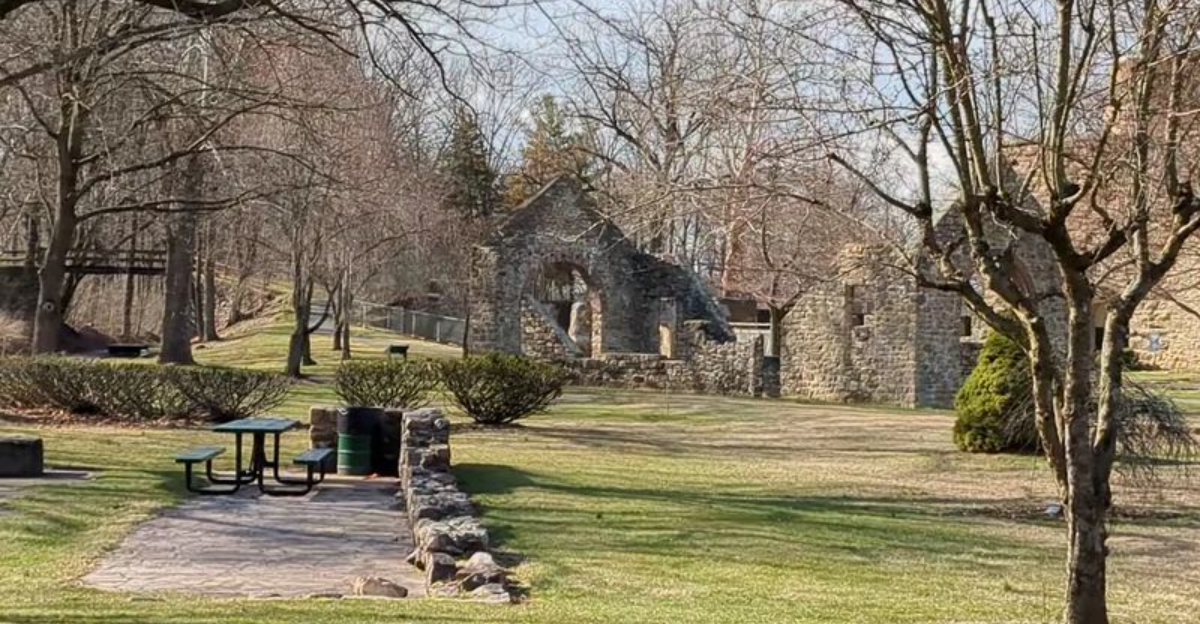
Some places do not need flashing signs or big crowds to leave an impression. All they need is weathered stone, a little silence, and that unmistakable feeling that history is still lingering in the air.
Ruins have a special kind of pull. They feel part daydream, part time capsule, and part secret worth stepping off the main road to see.
Add a scenic park around them, and the whole experience starts to feel like a quiet little adventure with serious storybook energy.
That kind of surprise is waiting in Pennsylvania, where old stone remains can look even more dramatic when framed by trees, open space, and changing light.
It is the kind of setting that makes you slow down, take a second look, and start imagining the lives, labor, and history once tied to those walls.
Beautiful, haunting, and unexpectedly photogenic, a place like this turns a simple walk into something that feels a little more magical than planned.
A while ago, I stumbled across ruins on a walk and ended up standing there much longer than expected. I kept circling back for one more look, convinced each angle made them even more striking.
A 59-Acre Park With Surprisingly Deep Industrial Roots
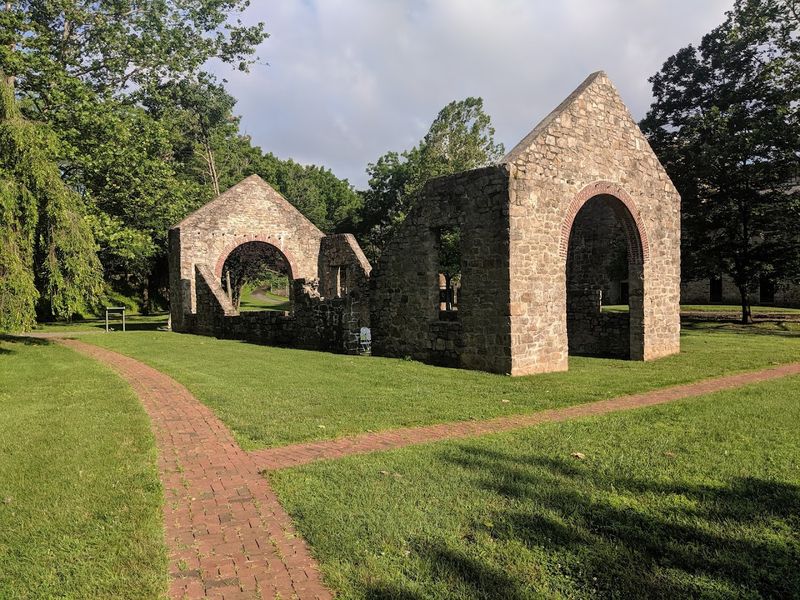
Most people picture a park as a place with a swing set and a few benches. Lock Ridge Furnace Park flips that idea completely on its head.
Spanning 59 acres in Lehigh County, Pennsylvania, this park was once the beating heart of a major iron-making operation.
The Lock Ridge Iron Furnace was built in 1868 and remained active for decades, producing iron that fed the industrial demands of a rapidly growing nation.
Today, those 59 acres preserve not just open green space but the actual stone infrastructure of that industrial past.
Walking the paved trails, you pass massive furnace stacks, loading platforms, and support buildings that have stood for over 150 years.
It is the kind of place that makes history feel physical and real, not just something you read about in a textbook. Few parks in Pennsylvania pack this much story into a single visit.
The Iron Furnace That Started It All
Back in 1868, building a coal-burning iron furnace in a small Pennsylvania borough was a serious business decision, and the Lock Ridge furnace delivered results.
The furnace used local iron ore and anthracite fuel to produce pig iron through a hot-blast smelting process.
Air was forced through the furnace to melt the ore, and the molten iron was then poured into molds called pigs, which gave pig iron its quirky name.
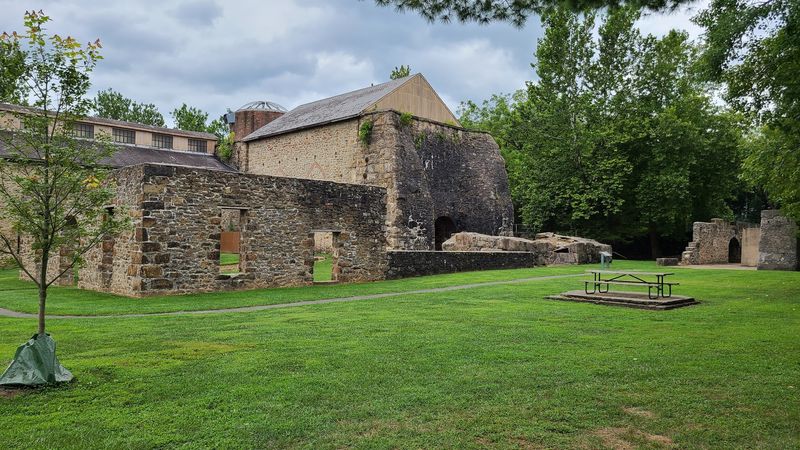
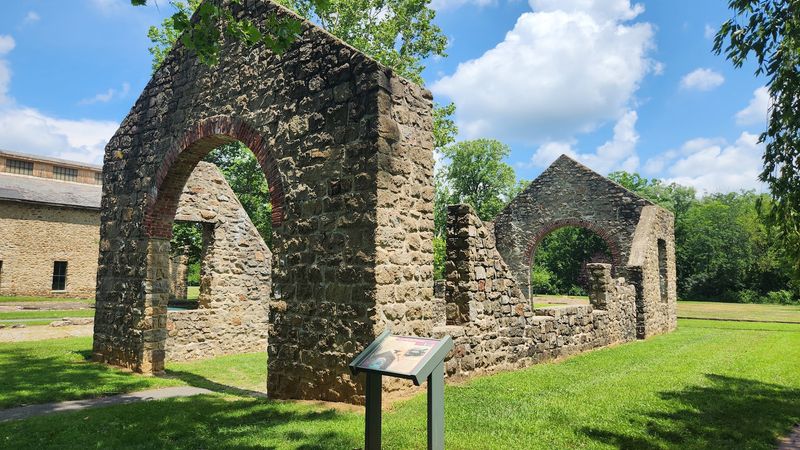
Lock Ridge Furnace Park preserves two of the original stone furnace stacks, and standing next to them today, their sheer size is genuinely impressive.
Each stack rises dramatically above the surrounding landscape, built from carefully cut stone that has held its shape for well over a century.
The furnaces kept operating until 1921, but their stone bodies refused to disappear, and that stubbornness is exactly why the park exists today for curious visitors still today.
Stone Architecture That Stops Photographers In Their Tracks
There is a reason photographers keep coming back to Lock Ridge Furnace Park, and it has everything to do with the stone.
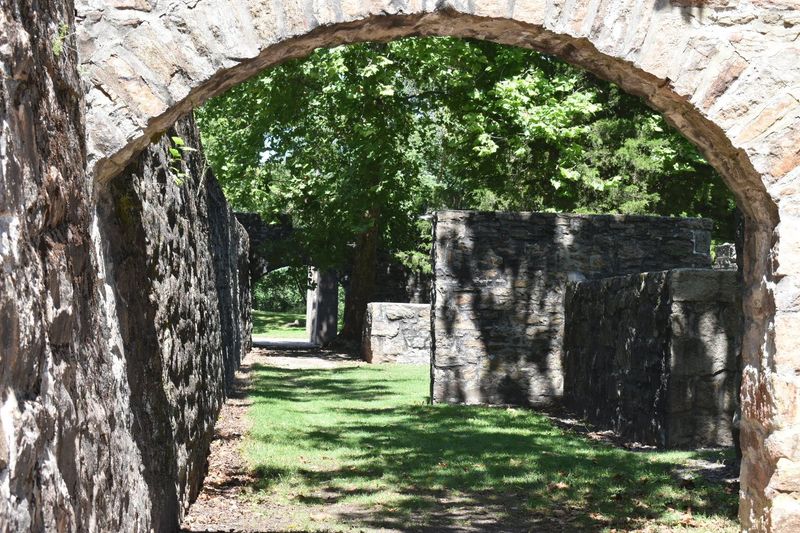
The furnace ruins feature sweeping arches, thick limestone walls, and deeply textured surfaces that catch light in a completely different way depending on the time of day.
During golden hour in late summer and early fall, the warm light filters through the trees and plays across the stonework, creating a combination of brightness and shadow that photographers dream about.
Senior portrait photographers in the Lehigh Valley have practically made this park a regular stop on their circuit.
The arches create natural frames, the open grassy areas soften the industrial mood, and the rolling railroad platform adds a bold structural backdrop.
Even casual visitors who show up with just a phone camera tend to leave with shots that look far more dramatic than they expected. The ruins simply have great bones.
Bluebell Season Transforms The Entire Park
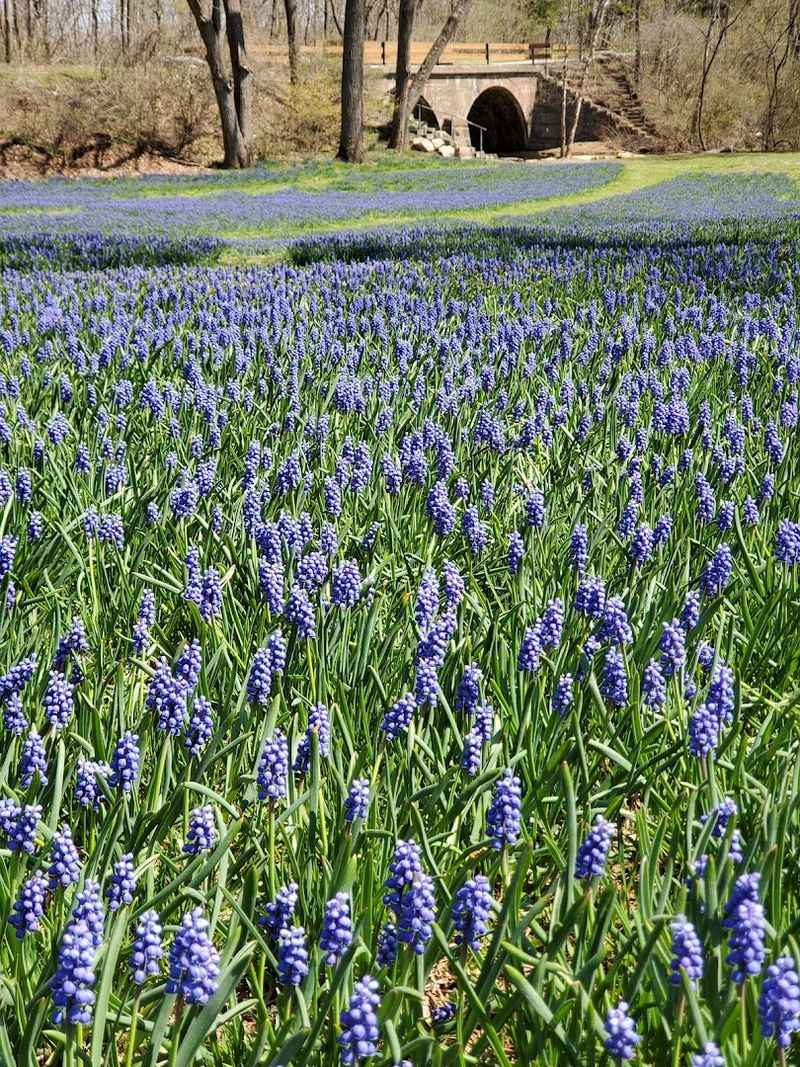
April at Lock Ridge Furnace Park brings something that feels almost theatrical.
The open fields and trail edges burst into waves of blue and purple as the park’s famous muscari, often called bluebells locally, reach peak bloom.
Visitors who arrive expecting only industrial ruins are often caught off guard by how soft and colorful the park becomes each spring.
The contrast between the rough, centuries-old stone walls and the delicate flower carpets is genuinely striking and makes for some of the most memorable photos the park offers all year.
Those blooms are actually grape hyacinths rather than true bluebells, which explains the deeper purple tones across the seasonal display.
Benches placed at points along the paved trail let you sit and take in the full scene without rushing past it.
If spring is on your calendar, timing your trip for Lock Ridge’s bloom is absolutely worth it for photographers and anyone chasing that storybook spring atmosphere.
Trout Fishing And Open Fields For Active Visitors
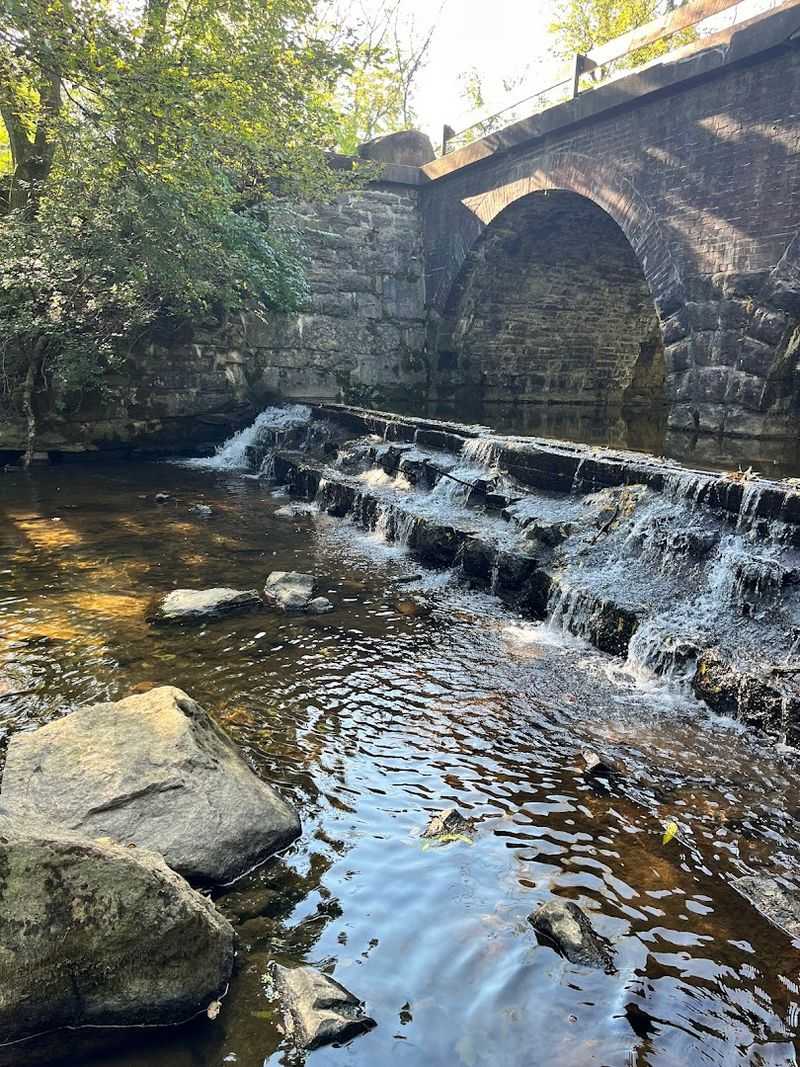
Not every visitor shows up for the history lesson, and Lock Ridge Furnace Park is perfectly fine with that for everyone.
The park includes limited fishing in Swabia Creek, making it a legitimate outdoor destination for anglers looking for a relaxed outing close to the Lehigh Valley.
The stream that runs through the property also features moving water along the trail that adds a calming, peaceful layer to the whole experience.
For families with kids who need room to run, a large open field gives them plenty of space without any complicated setup.
The paved trail loops through the park in a way that keeps walkers moving through different scenery rather than just going back and forth on the same path.
Visitors consistently describe the park as a place where you can slow down and actually enjoy being outside. It earns praise for being clean, scenic, and easy to explore, which is hard to argue with for families.
A Wedding Venue Hidden Inside A County Park
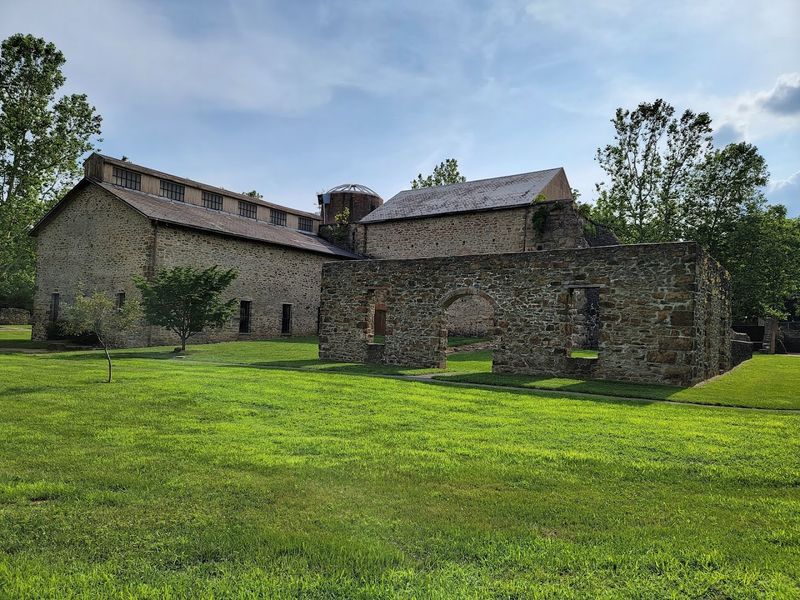
It turns out that old iron furnace ruins make a surprisingly popular wedding backdrop, and Lock Ridge Furnace Park has been hosting ceremonies for years.
The stone arches and open grassy areas create a setting that feels both dramatic and intimate, which is a combination that is genuinely hard to find at a standard event venue.
Couples who want something that does not look like every other wedding location have been drawn to the park for its raw, architectural character.
There are a few practical considerations worth knowing. Wedding permits are for the outdoor grounds area, and couples are encouraged to have a weather backup plan.
Booking is handled through Lehigh County, which visitors have generally found to be a straightforward process.
Restrooms are not in the grounds area itself, though pavilion restrooms may be available with a separate rental.
For anyone wanting a ceremony that feels genuinely one-of-a-kind, this park delivers a setting that is hard to replicate anywhere else in the region.
The Museum And Its Informative Signage
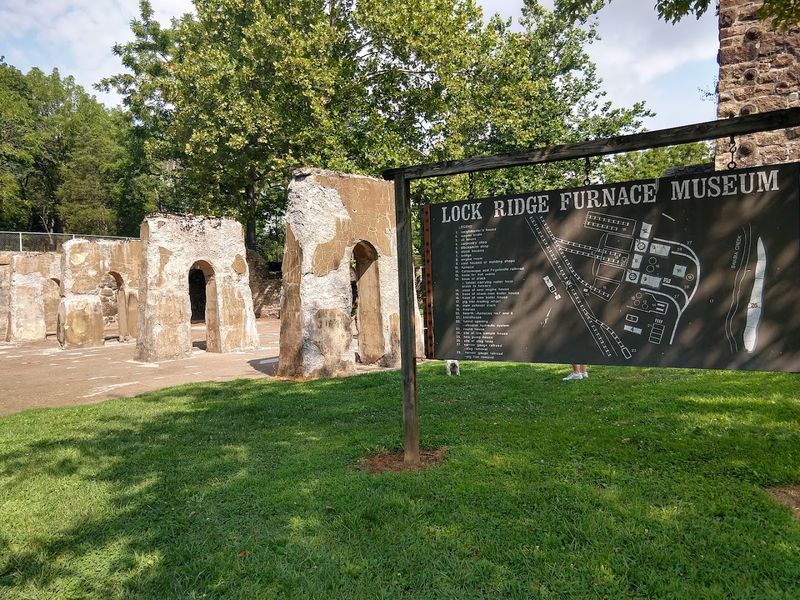
History nerds, this section is for you. Lock Ridge Furnace Park includes a small brick office where guided grounds tours begin and where the story of the furnace site is introduced.
Guided grounds tours are offered on weekends from May through September, so timing your visit accordingly will give you the fullest experience the park has to offer.
Outside of those hours, informative outdoor signs placed along the trail fill in the key details about how the furnace worked, what the workers experienced, and why the operation eventually shut down.
Some visitors have noted that the signage, while genuinely helpful, leaves them wanting even more depth on the history.
That is actually a compliment to how interesting the subject matter is rather than a criticism of the park itself.
The small brick building sits near the main parking area and serves as the starting point for tours. It is easy to miss if you are not looking for it, so keep an eye out when you arrive at Lock Ridge Furnace Park.
Park Hours, Access, And Practical Visitor Tips
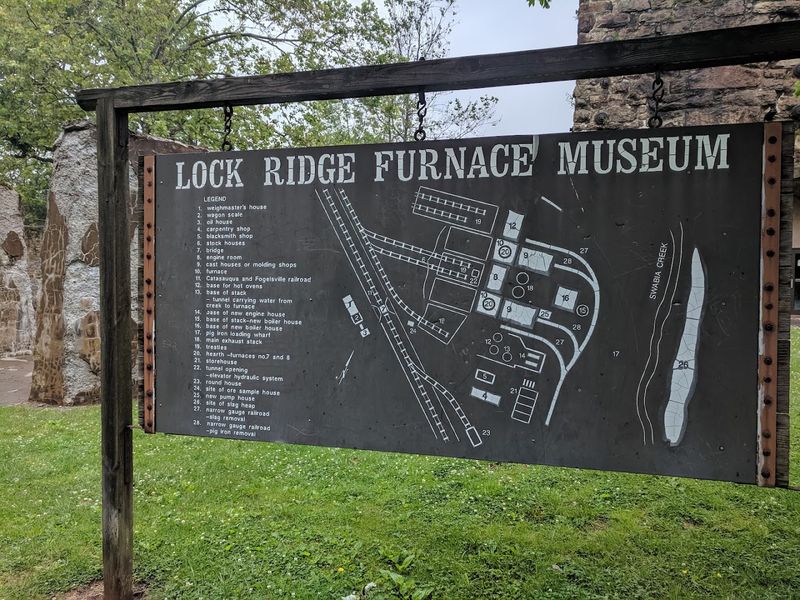
Planning a visit to Lock Ridge Furnace Park is refreshingly simple, and the practical setup makes it easy for almost any visitor to enjoy.
The park is open daily from dawn to dusk, giving visitors a generous window that works for early morning walks, midday family outings, and golden hour photography sessions alike. The address is 525 Franklin St, Alburtis, PA 18011.
Two separate parking lots serve the park, which helps during busy fall weekends when visitor numbers climb noticeably.
Restrooms are available at the pavilion area, which is a detail that matters more than people admit when planning a longer visit there.
The paved path system through the park makes the ruins relatively easy to reach for many visitors.
Admission is free, parking is free, and the whole loop can be completed comfortably in about an hour, though many visitors find themselves lingering much longer than originally planned there outdoors often.
How Lock Ridge Compares To Other Pennsylvania Industrial Heritage Sites
Pennsylvania has a deep industrial heritage, and the state is home to several preserved furnace and forge sites that tell the story of American iron production.
Lock Ridge Furnace Park stands out in that group for a specific reason.
While some industrial heritage sites prioritize museum buildings over the actual physical remains, Lock Ridge keeps the original stone structures front and center.
The furnace stacks, the arched openings, and the loading infrastructure are all still standing in a way that lets you read the site like a three-dimensional document of how 19th-century iron production actually worked.
States like Ohio also have preserved industrial history, but Ohio tends to focus more on canal-era infrastructure than iron furnace technology.
The specific combination of stone craftsmanship and furnace engineering on display at Lock Ridge Furnace Park gives it a visual character that feels distinct from what Ohio or other neighboring states typically offer in this category.
Why This Park Keeps Drawing People Back Season After Season
A park with a 4.6-star rating from hundreds of visitors is clearly doing something right, and Lock Ridge Furnace Park earns that score across multiple seasons, not just one.
Spring brings the bluebell bloom and fresh green growth around the ruins. Summer offers long daylight hours for photography and casual walks through the open fields.
Fall turns the surrounding trees into a warm canvas of red and orange that frames the gray stone ruins in a way that feels almost theatrical.
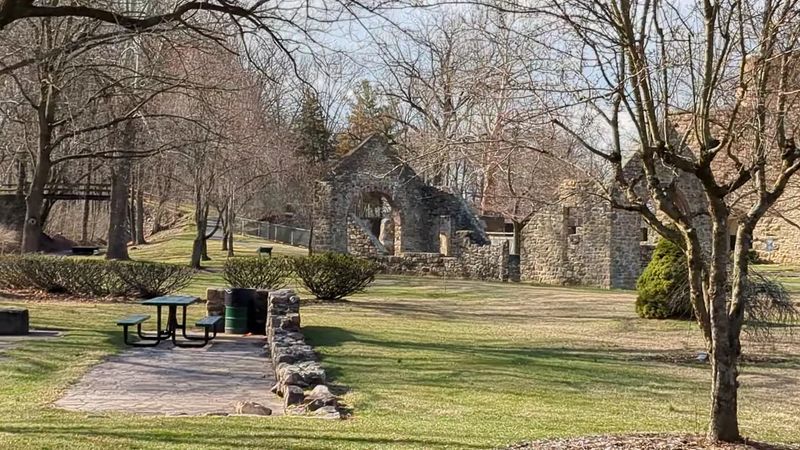
Even winter visits, while quieter and colder, strip away the foliage and reveal the full architectural scale of the furnace structures in a way that leafy seasons partially hide.
The consistent thread through every season is that Lock Ridge Furnace Park rewards attention.
The more slowly you move through it, the more details you notice in the stonework, the landscape, and the layered history that this remarkable 59-acre site in Alburtis has quietly preserved for everyone to enjoy.