
This Haunted Arkansas Trail Winds Through Ancient Burial Mounds
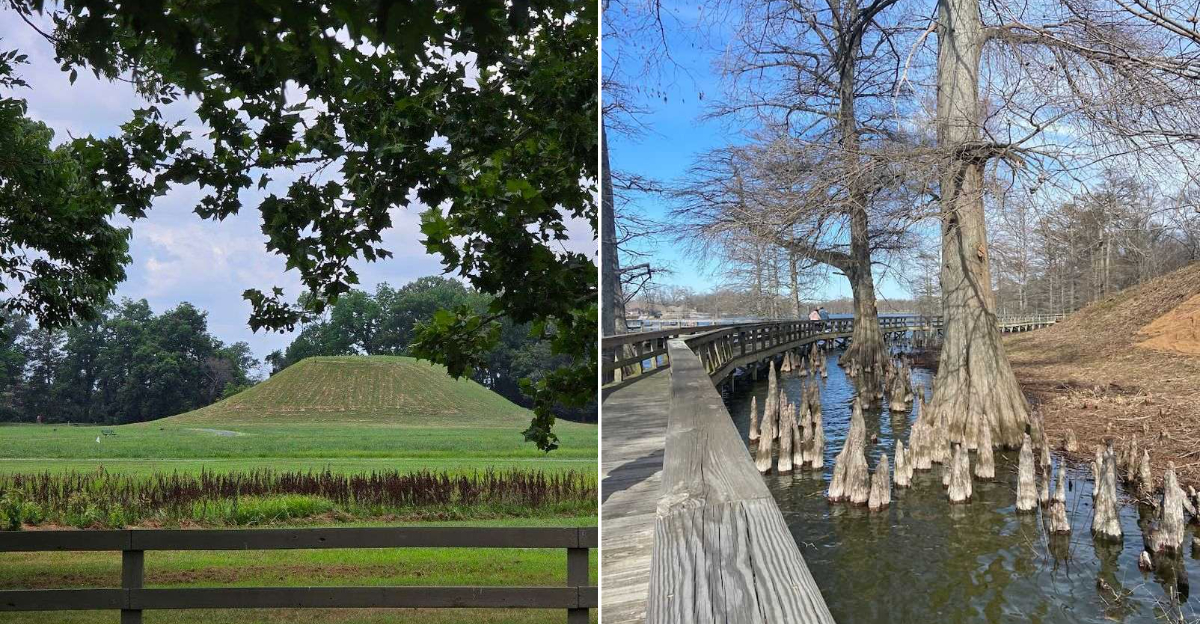
Some trails make me watch my step. This one makes me glance behind me.
As I walked through this eerie stretch in Arkansas, I kept feeling like the place was holding onto something older than I could understand. The land was shaped by people who were gone long before I arrived, yet their presence did not feel distant.
It felt close. Ancient earthen mounds rose out of the flat landscape in a way that felt quiet but unsettling.
Even with the wind moving through, the air seemed strangely paused. I went on a gray afternoon, which only added to the mood.
By the time I finished the loop, I was not thinking about scenery anymore. I was thinking about how small I felt out there.
The whole walk stayed with me in a way I did not expect. I left with more questions than answers, and I still caught myself looking over my shoulder one last time.
A Path Shaped By Whispers And Shadow
There is a particular kind of quiet that settles over certain places, the kind that feels less like silence and more like something holding its breath.
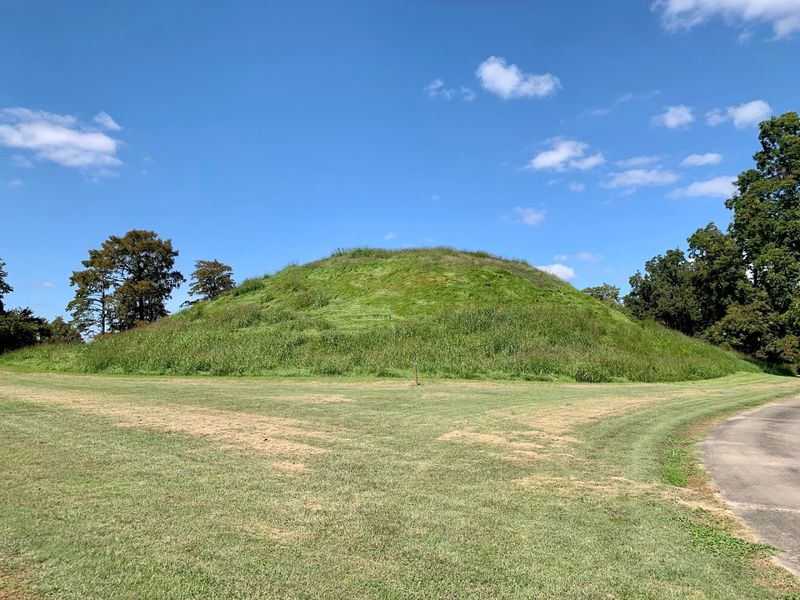
I felt that the moment I stepped onto the trail, gravel crunching softly underfoot while the landscape stretched out in every direction with an unsettling flatness.
The path curves gently but deliberately, as if it was designed to slow you down and make you notice things you might otherwise walk right past.
Tall grasses press close on either side, and the tree line in the distance sits low and dark against whatever sky the day decides to offer.
Interpretive signs appear at intervals, but between them the trail feels remarkably alone, the kind of alone that has texture and weight.
Birds call from somewhere you cannot quite locate, and the ground beneath your feet carries a slight softness that reminds you this soil has been shaped by human hands many times before.
That winding path belongs to the Plum Bayou Trail at 490 Toltec Mounds Rd, Scott, AR 72142, and it earns every whisper attached to its name.
Earthen Ridges Raised By A Vanished Civilization
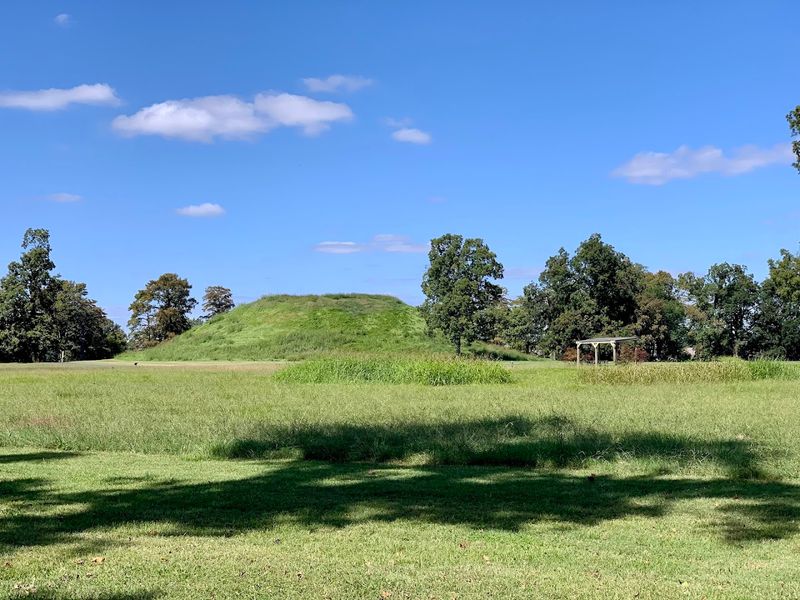
Standing at the base of Mound A and tilting your head back to take in its full 49 feet of height, you realize that a number on a sign does not prepare you for the actual experience of the thing.
This is the tallest prehistoric mound in all of Arkansas, and it was built entirely by people carrying basket-loads of earth one trip at a time, a feat that staggers the imagination when you sit with it long enough.
The Plum Bayou culture, a Pre-Columbian group, raised 18 mounds across this site during the Late Woodland Period, roughly between 650 and 1050 A.D.
Some mounds were arranged around open plazas, and their alignment with astronomical events suggests these builders were also careful sky-watchers, using the earth itself as a kind of calendar.
Walking the perimeter of one mound, I kept thinking about the coordination required, the planning, the shared purpose that must have bound this community together across generations.
Nothing about these ridges feels accidental, and that intentionality radiates outward even now, centuries after the last hand shaped the last load of soil into place by hand.
What Lingers Beneath The Grass And Still Water
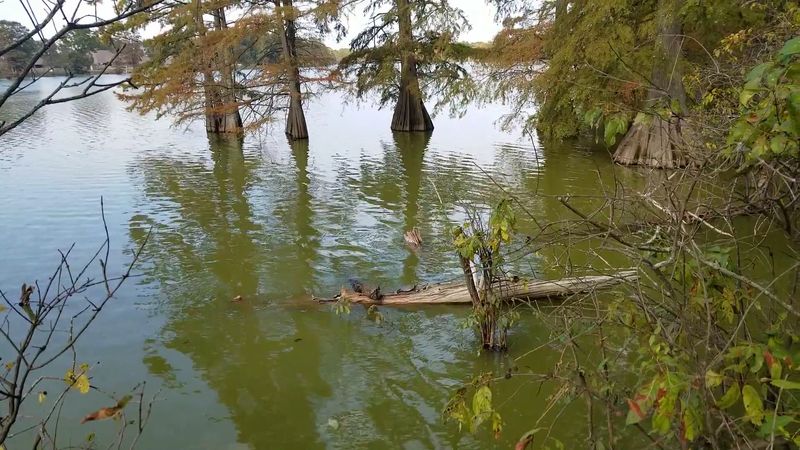
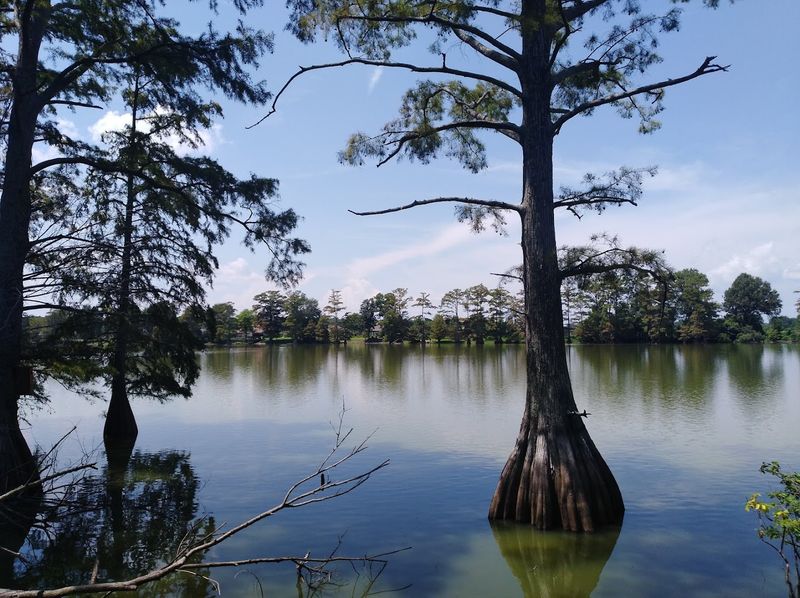
Plum Bayou itself runs along the edge of the park, and on a calm day its surface mirrors the sky so perfectly that the boundary between water and air dissolves into something quietly strange.
The bayou was central to the lives of the people who built these mounds, providing food, transportation, and a setting that shaped daily life in ways we can only partly reconstruct now.
Beneath the grass covering the mounds, archaeologists have recovered tools, pottery, and other evidence that points to a community with rich cultural practices and a deep relationship with this specific piece of land.
I crouched near the water’s edge at one point and watched a heron stand absolutely motionless for nearly two minutes, which felt less like bird behavior and more like a demonstration of how this place operates.
The Arkansas Archeological Survey continues to research the site, and each new finding adds another layer to a story that refuses to stay fully buried.
Knowing that so much history sits just inches below the surface where you are walking adds a physical weight to every step, as if the ground is quietly asking you to pay attention.
Twilight Turns The Walkway Into Something Uncanny
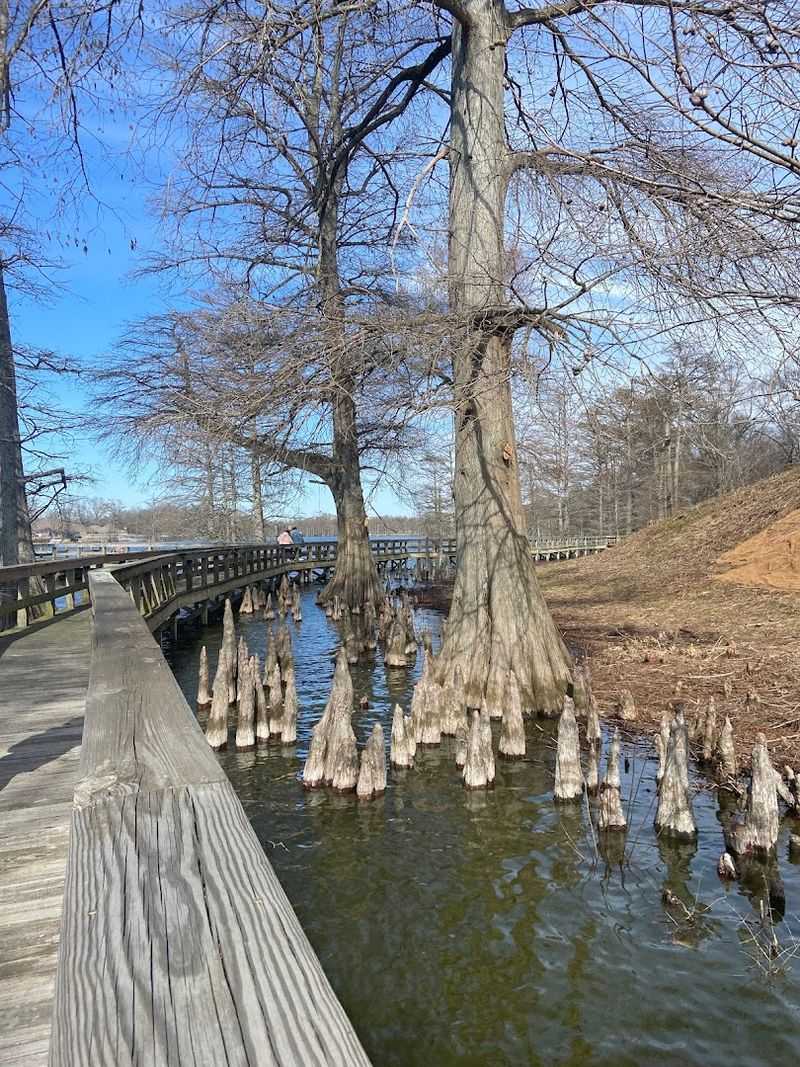
Arriving in the late afternoon was either my best decision or my worst one, and I have not fully settled the debate with myself yet.
As the sun dropped toward the tree line, the mounds began casting shadows that stretched stranger across the ground, which is probably just a trick of the terrain and not anything else.
The interpretive trail markers that looked cheerful and informative at noon took on a different character in the fading light, their text harder to read and their placement suddenly feeling more deliberate.
Colors shifted across the grass from gold to amber to a flat, colorless gray that arrived faster than expected, and with it came a noticeable drop in temperature that had nothing to do with the season.
Other visitors I had passed earlier on the trail had quietly disappeared, and I found myself alone on the walkway with only the sound of my own footsteps and something rustling in the tall grass nearby.
There is a kind of courage required to finish a loop trail at twilight through a site like this, and I am proud to report that I jogged only the last quarter mile. I did not sprint, but I did not linger, either.
Signs, Silence, And The Weight Of The Unseen
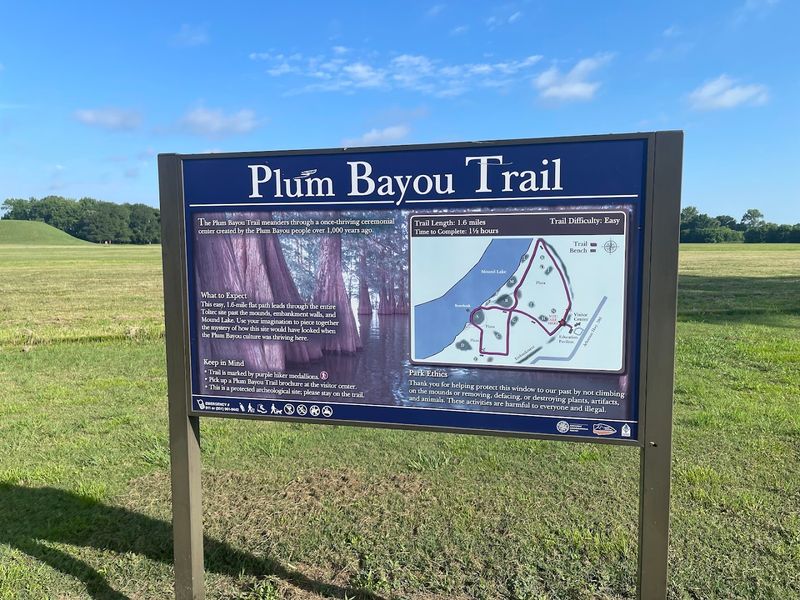
The park does an excellent job of placing informational signs along both the Knapp Trail and the longer Plum Bayou Trail, and I read every single one with the focused attention of a person who is absolutely not nervous.
Each sign pulls back another layer of the site’s history, explaining how the mounds shaped gatherings here and how the alignment of certain features reflects a sophisticated understanding of the seasons.
What the signs cannot explain, and what no amount of interpretive text can fully account for, is the silence that pools between them.
Standing at a sign, reading about a community that left these earthworks behind roughly a thousand years ago, the gap between the printed words and the actual ground beneath your feet feels enormous and alive.
I noticed that I started reading signs faster as the afternoon wore on, not because I was bored but because lingering in one spot for too long started to feel like an invitation I had not intended to extend.
The visitor center back at the trailhead helps put the history in context, and I appreciated that context on my way back to the parking lot. The longer I stayed, the more the space felt structured and older than it first suggests.
Stories Of Spirits Carried Through Generations
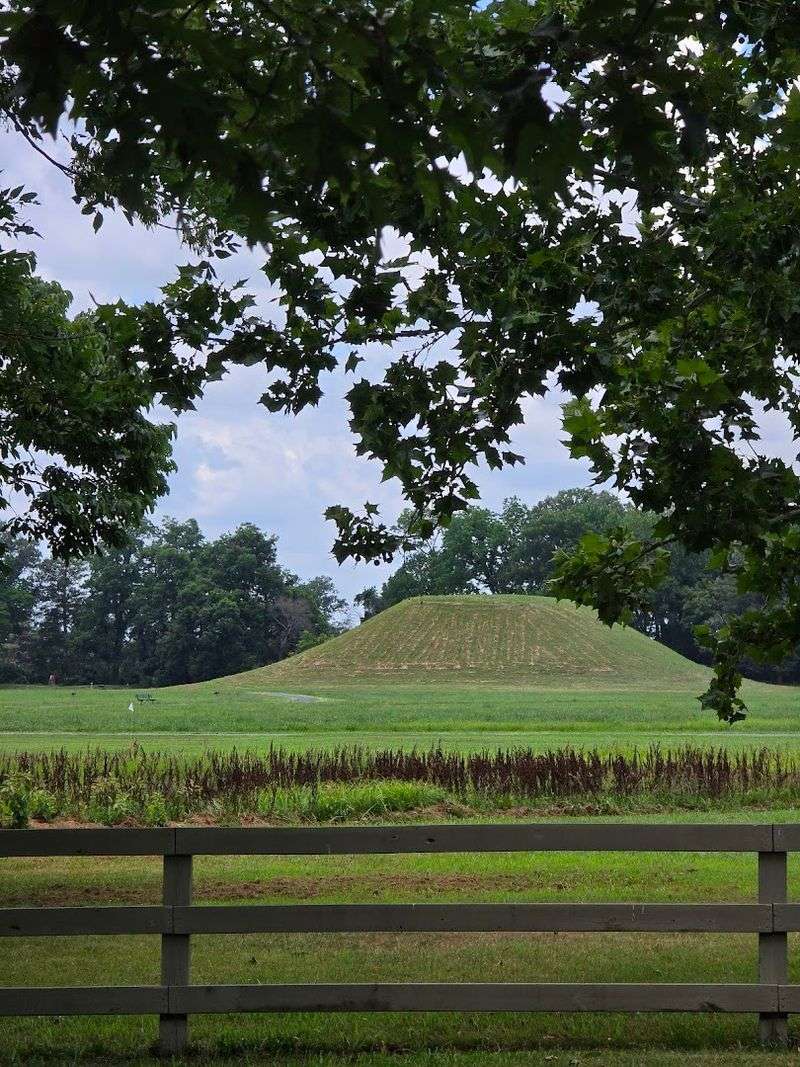
Stories have a way of gathering around places like this, especially when the landscape feels older, quieter, and heavier than most people expect.
Visitors describe the site as eerie, particularly near the larger mounds where the scale of the earthworks becomes hardest to ignore.
Some people talk about the silence here in ways that sound almost supernatural, while others chalk it up to the mood created by open ground, ancient history, and a sky that never seems to stop pressing down.
However you interpret that atmosphere, it adds a dimension to the experience of walking here without needing to turn speculation into fact.
The Plum Bayou culture used this site as a ceremonial and social hub, a gathering place for rituals that held deep meaning for the community, and places built with that kind of intention tend to leave a impression afterward.
I am not in the business of making firm claims about the supernatural, but I will say that I kept my headphones in my pocket the time I was on that trail. Local lore and visitor chatter have helped shape that reputation over time, even if history matters more here than any story layered on top of it.
By the end, the place felt less haunted than serious, and that stayed with me.
Footsteps Beside Sacred Ground And Old Memory
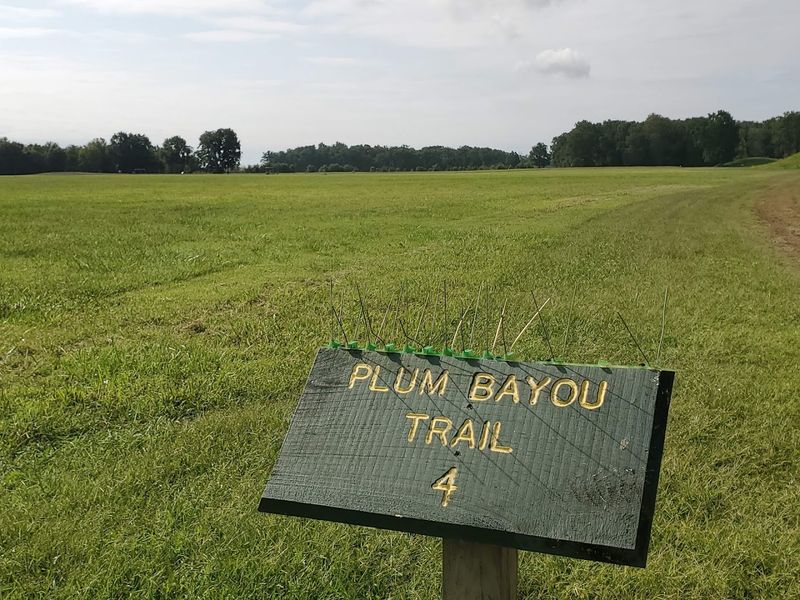
Walking beside a mound rather than on top of it changes your relationship to the space in a way that is hard to articulate but easy to feel.
The park asks visitors to stay on designated trails out of respect for the site and the ongoing archaeological research, and that boundary creates a productive kind of distance between you and the mounds that forces you to look rather than touch.
Looking turns out to be enough, because these are not subtle landforms quietly hiding in the scenery but deliberate, commanding structures that assert themselves against the flat Arkansas horizon with real authority.
I found myself slowing my pace near Mound A without consciously deciding to, the way you might slow down passing a cathedral or a memorial, responding to something the place projects without putting it into words.
The ground here holds the memory of thousands of people who gathered, worked, and marked time in ways that were meaningful enough to require moving enormous amounts of earth by hand across multiple generations.
Treading carefully beside that history felt less like a rule I was following and more like a natural response to standing next to something that carries more weight than I do.
Why This Walk Stays With You Long After Dark
There are trails you finish and immediately forget, and then there are trails that follow you home and sit quietly in the corner of your mind for days afterward.
The Plum Bayou Trail belongs firmly in the second category, not because it is particularly long or physically demanding, but because of what it asks your brain to hold while you are walking it.
The combination of genuine archaeological significance, an atmospheric landscape, the site’s long history, and the sheer age of what surrounds you creates something that does not dissolve the moment you reach your car.
I found myself thinking about the mounds later that evening, replaying specific moments on the trail, the heron by the water, the stretching shadows, the sign I read twice because the first time did not quite sink in.
A visit here does not require you to believe in anything beyond history and the remarkable capacity of human communities to shape their environment with meaning and intention.
But if you arrive open to the full atmosphere of the place and stay until the light starts to change, the Plum Bayou Trail will give you something to think about long after the sun goes down.