
This Hidden Historic Landmark In Arkansas Feels Like It’s From Another Era
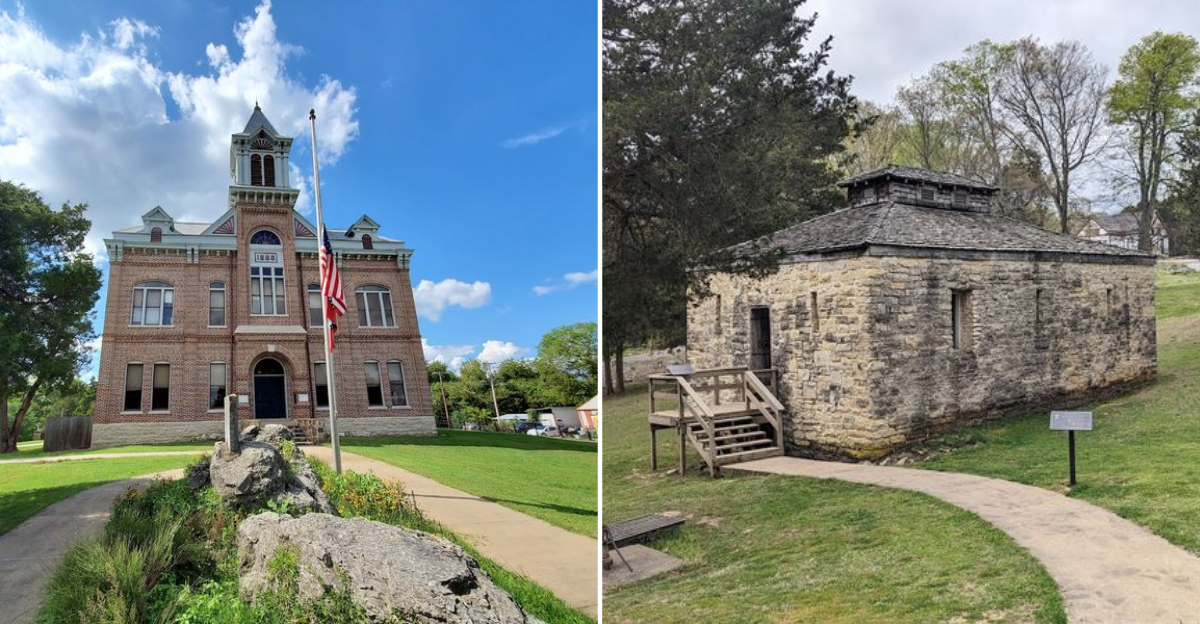
I found this Arkansas landmark on an unhurried drive, and it stopped me in my tracks. The whole place feels like a pocket of the nineteenth century that never gave in to modern noise.
Brick buildings still stand where they were first built. A limestone jail, a small schoolhouse, and an old courthouse make the grounds feel remarkably intact.
I wandered from one structure to the next and kept losing track of time. Nothing about it felt staged or overdone.
It felt lived in, remembered, and carefully held onto. I stayed much longer than I expected because every path seemed to lead to another story.
The quiet added to it. So did the open space and the worn details in the buildings.
I left feeling like I had stepped out of another rhythm entirely. For anyone craving a day trip with real character, this place delivers it without any fuss.
A Brick Facade Rising Over Open Prairie
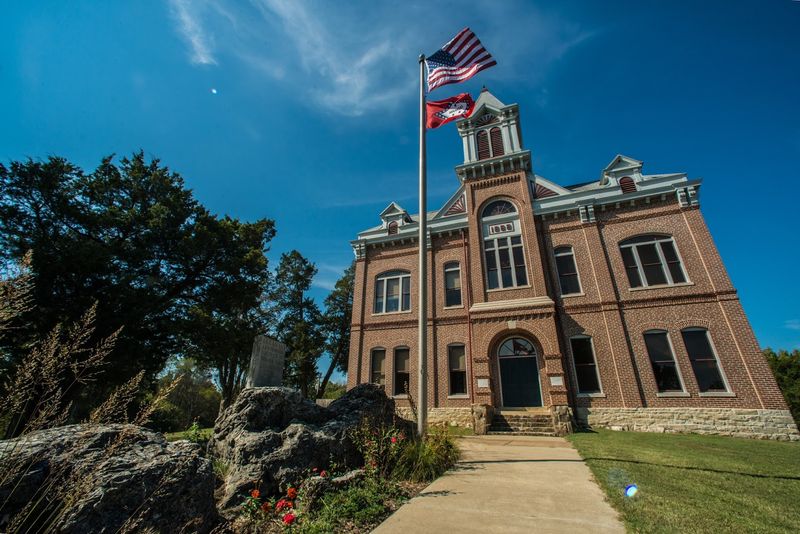
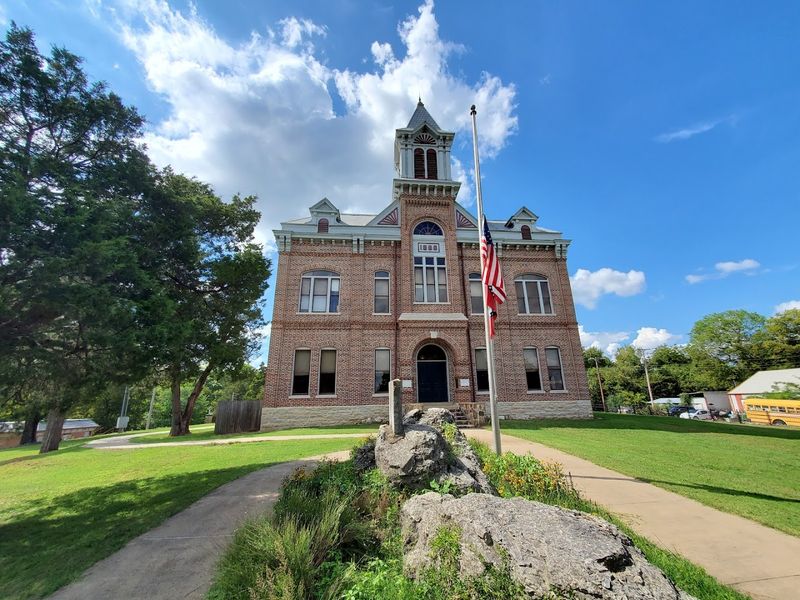
Standing in front of the 1888 courthouse at this park, I felt the kind of quiet awe that only old brick can inspire.
The two-story structure rises with a confidence that seems almost defiant for such a rural stretch of Arkansas, its red brick facade holding strong after more than a century of rain, heat, and time.
Built in 1888, the courthouse now serves as a museum with exhibits that walk visitors through the commerce, law, and culture of Lawrence County from Reconstruction through the early twentieth century.
The arched windows and symmetrical layout give the building a formal dignity that once signaled civic authority to everyone who approached by wagon or on foot.
Inside, the exhibits feel personal rather than sterile, with artifacts and displays that connect real names and real lives to the events that shaped this region.
I kept circling back to the front steps, trying to picture what it felt like to arrive here when this courthouse was the most important building for miles around.
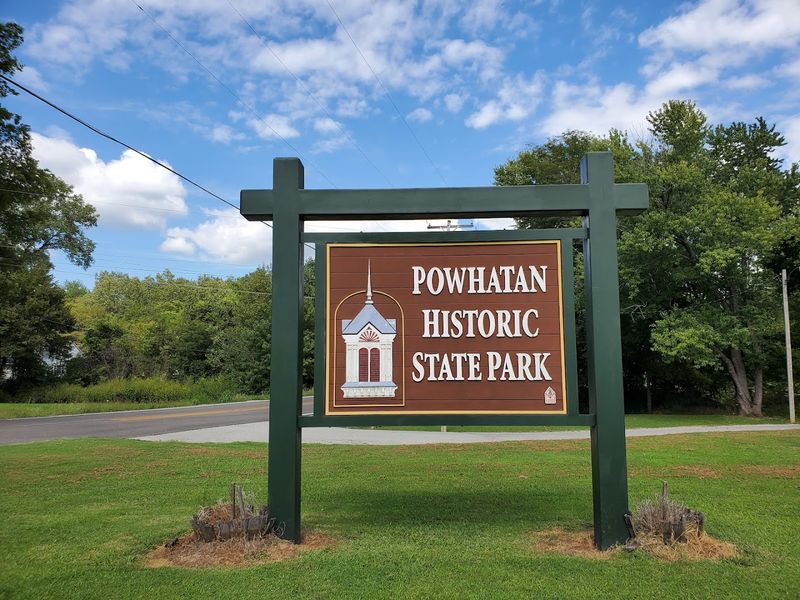
This is Powhatan Historic State Park, located at 4414 Highway 25, Powhatan, AR 72458, and that brick facade is just the beginning.
Limestone Walls That Have Outlasted Generations
There is something almost stubborn about limestone, the way it sits heavy and pale in the Arkansas sun, refusing to apologize for taking up space.
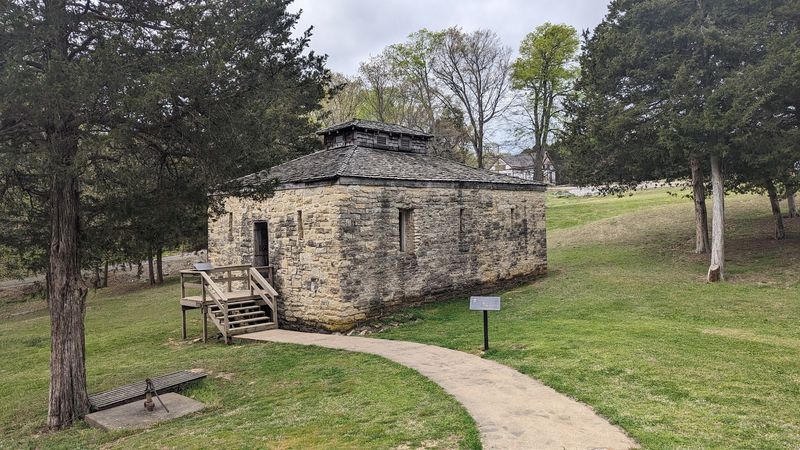
The Powhatan Jail, built in 1873, is exactly that kind of structure, compact, blunt, and entirely unapologetic about what it was built to do.
This small building of limestone and concrete is the only surviving structure from the period of the first Lawrence County courthouse, which makes it a rare physical link to a time when frontier justice was still taking shape.
Walking through its low doorway, I was struck by how small the interior feels, not just physically but historically, because the scale of confinement here says something honest about the era.
The jail remains one of the clearest reminders that this was once a functioning county seat, not a recreated village built for modern visitors.
The walls themselves have absorbed more than a century and a half of Arkansas seasons without losing their presence, which feels like its own kind of testimony.
Few buildings at any historic site carry this much quiet authority in such a small footprint.
Wagon Ruts, Courthouse Echoes, And Frontier Footsteps
Long before paved roads connected Arkansas towns, this area was a place where settlers arrived by wagon, following rough tracks through open country and river bottom land.
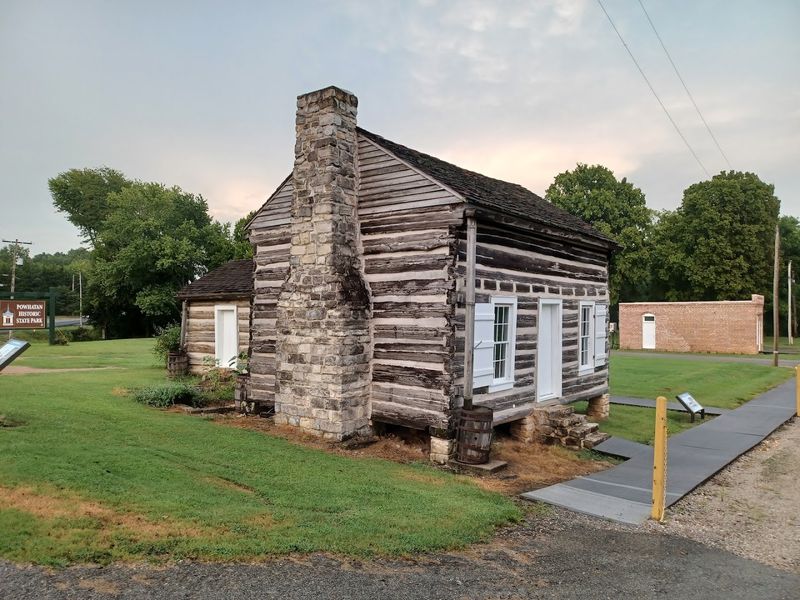
The Ficklin-Imboden Log House, dating to around 1850, is the oldest surviving example of residential architecture in Lawrence County, and standing beside it, that fact lands with real weight.
Its hand-hewn logs and modest scale say more about daily life than any sweeping history panel ever could.
I stood there trying to imagine the seasons that passed through those walls before the region looked anything like it does now.
The building gives the park a different kind of gravity than the courthouse does, less formal, more intimate, and easier to picture as part of someone’s actual routine.
Every notch and seam in the timber reflects practical choices made with simple tools and a clear plan.
Visiting this log house gives the entire park a human scale that the grander courthouse cannot quite provide on its own, and it deepens the sense that this place grew from lived experience instead of spectacle.
The River Crossing That Once Shaped Daily Life
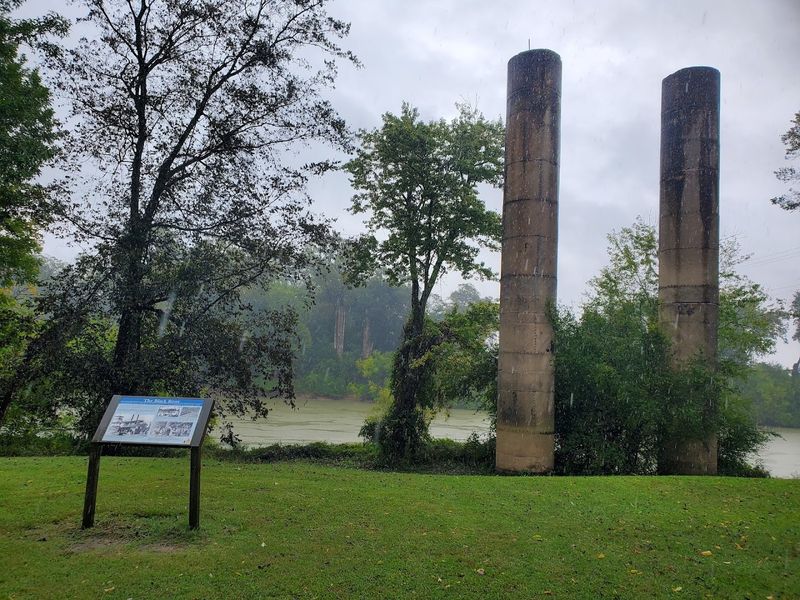
Rivers in the nineteenth century were not scenic backdrops. They were economic engines, and the Black River running by Powhatan was no exception.
This town grew into a working river-port community because of its location, drawing merchants, travelers, and settlers who needed to cross, trade, or move goods through this corridor of northeastern Arkansas.
The courthouse, the jail, the commercial building, and the schoolhouse all existed in relationship to that river traffic, each one serving a community shaped by the water nearby.
When I stood near the park grounds and looked toward the river landscape, I tried to picture how different everyday movement and commerce must have felt when crossings and transport depended so heavily on geography.
Travel here was never just about distance. It was also about the river itself, the timing, the route, and the risks that came with it.
The park’s story makes that clear, showing how the Black River supported local growth even as it complicated trade and travel for generations of Lawrence County residents.
Geography, it turns out, writes more history than most people give it credit for.
Handcrafted Details Still Holding Their Ground
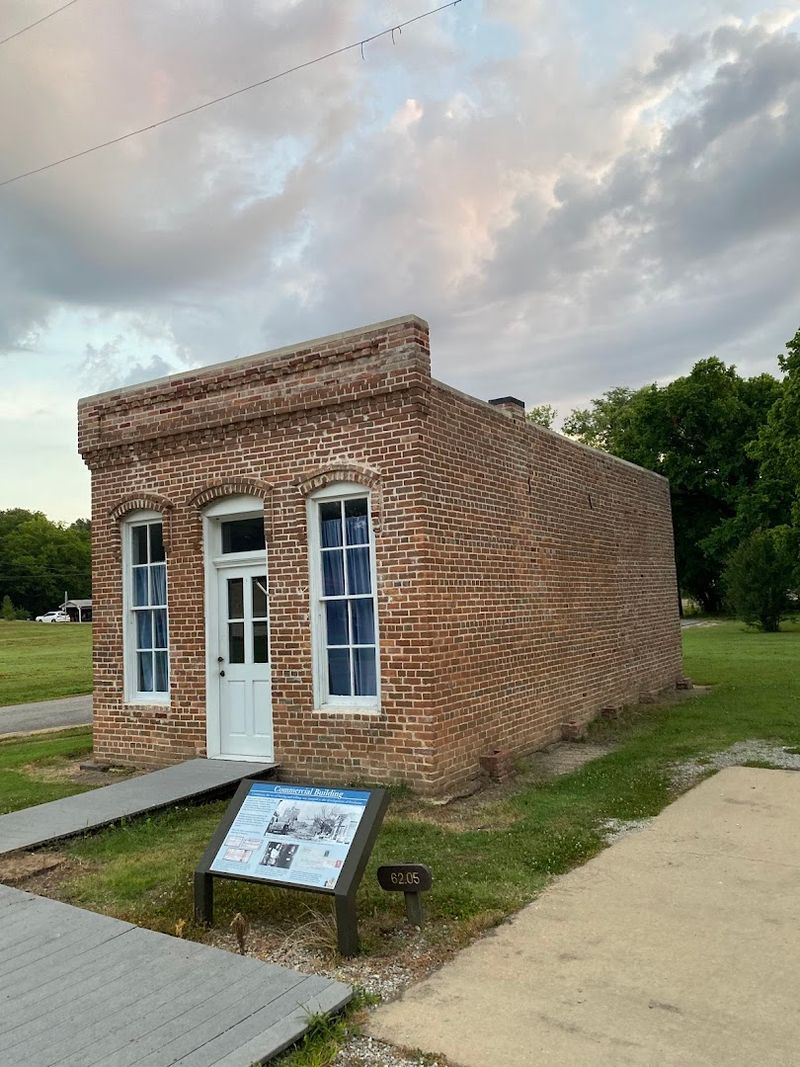
Built in the late 1880s, the Commercial Building at this park has had more careers than most people manage in a lifetime.
It first served as Powhatan’s telephone exchange, and over time it also housed other local businesses and community functions, which makes it one of the most adaptable structures on the grounds by a wide margin.
What I love about this building is how its handcrafted details have survived each shift in purpose without being smoothed away or covered up.
Original brickwork, interior woodwork, and period character give the space a texture that modern reconstructions simply cannot replicate, no matter how much effort goes into them.
The value of the building is not only in what it once housed but in how much evidence of change still seems readable in the structure itself.
Each use the building went through left some kind of mark, and reading those marks feels like flipping through a very physical kind of archive.
Craftsmanship from this era was built to last because it had to be, and this building makes that point more convincingly than any exhibit label ever could.
A Main Street Where The Nineteenth Century Lingers
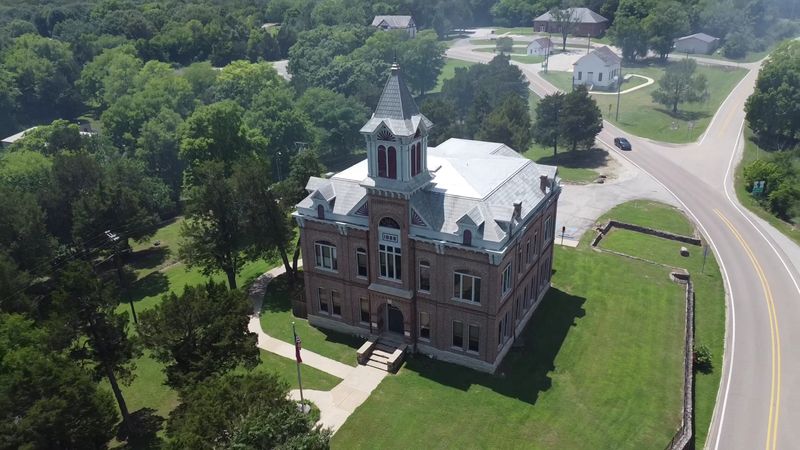
Most towns that grew up along Arkansas rivers in the 1800s have long since been swallowed by time, their buildings replaced or simply gone, but Powhatan kept its original layout intact in a way that feels almost miraculous.
Walking the grounds of this park, you move past several original nineteenth-century structures, all of them standing on their historic sites, which is the kind of detail that historians lose sleep over in the best possible way.
The former academy building, usually identified as the Powhatan Male and Female Academy and dating to about 1890, anchors one end of the experience with a restored interior and interpretation tied to education and community life.
I sat for a moment and thought about how many children once passed through rooms like that with chalk dust on their fingers and lessons waiting on the board.
The scale of the whole site is manageable enough to explore in a single afternoon without feeling rushed, which makes it ideal for families and solo visitors alike.
Nothing here feels artificially grouped for visual effect. The place reads like a real town fragment that somehow held on.
That authenticity is rarer than most people realize, and it changes the feeling of every step you take.
Quiet Grounds Framed By Weather, Grass, And Memory
There are places that earn their atmosphere honestly, and this park is one of them.
On the afternoon I visited, the sky was doing that particular Arkansas thing where clouds pile up slowly and the light shifts every few minutes, casting different shadows across the brick and limestone buildings in a way that no photographer could have planned.
The grounds themselves are open and unhurried, with grass stretching between the historic structures and giving each building room to breathe rather than crowding them together like museum pieces.
I found a spot near the old jail and just stood there for a while, listening to wind move through the trees and taking in the stillness of the place.
What stays with me most is not just the architecture. It is the sense of space around it, the way the site lets the buildings speak without too much modern clutter getting in the way.
What you get instead is room and quiet, which turns out to be exactly what this kind of history needs in order to land properly.
Memory works differently when it has room to move, and the open grounds here give visitors the rare gift of actually feeling where they are rather than just seeing it.
Why This Arkansas Treasure Still Feels Suspended In Time
Preserved historic sites are everywhere in the American South, but very few of them manage to feel genuinely frozen rather than carefully staged, and that distinction matters more than most travel guides acknowledge.
What keeps this park feeling suspended in time is not just the age of its buildings but the fact that so much of the original setting still reads clearly once you are on the grounds.
The park was established in 1970, and preservation work in the decades that followed focused on keeping the site historically legible rather than turning it into something glossy or overproduced.
Guided tours led by knowledgeable interpreters add a layer of storytelling that brings the buildings to life without overwhelming the physical experience of being there.
I left this park with the specific kind of satisfaction that comes from learning something real rather than something packaged, and that feeling stayed with me for days.
Nearby attractions like Lake Charles State Park and Davidsonville Historic State Park make it easy to build a full regional itinerary around this stop.
If you are ready to feel genuinely transported, point your car toward Powhatan Historic State Park, or call 870-878-6765, and let one of Arkansas’s most honest historic sites do the rest.