
This Michigan Home Is One Of Frank Lloyd Wright’s Most Impeccably Restored Masterpieces
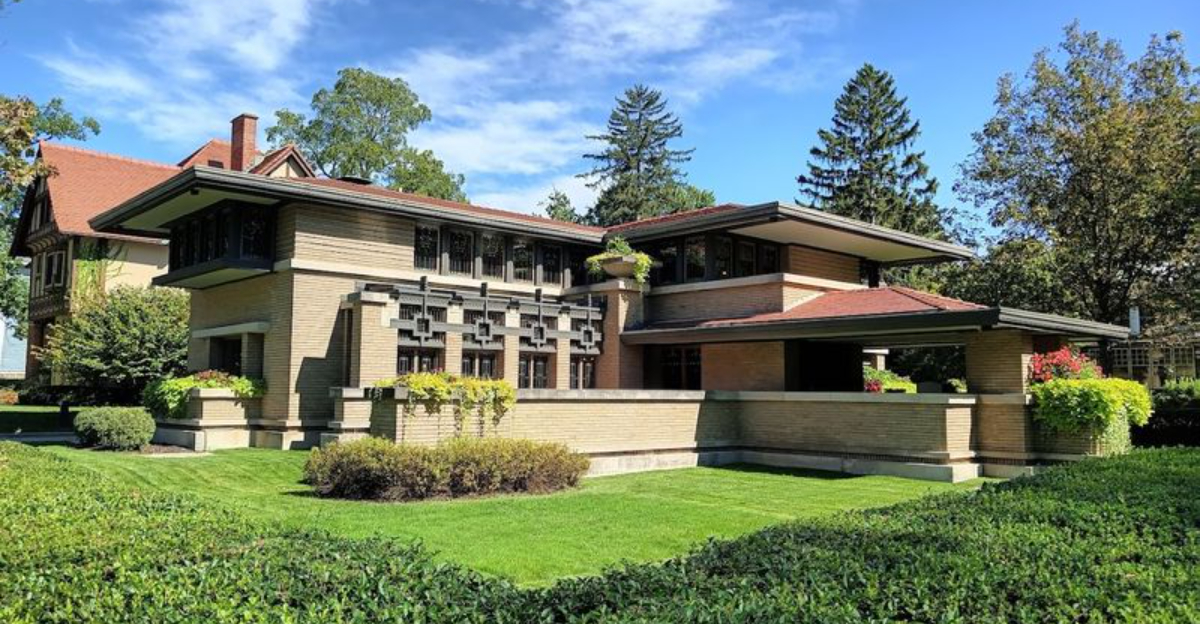
Turning onto Madison Avenue feels like watching a blueprint finally exhale, as those iconic horizontal lines and cantilevered roofs reveal themselves by degrees. This Heritage Hill landmark settles into the earth with a structural purpose that makes most modern builds look like an afterthought.
Walking through the door for a free tour always hits me with a wave of technical awe, mostly because the restoration is so meticulous that the leaded glass and Roman brick feel newly minted while retaining their 1908 soul.
Masterful Prairie School architecture and authentic Frank Lloyd Wright interiors make this meticulously restored Michigan estate a premier destination for design enthusiasts.
I find myself tracing the geometry of the built-in furniture and the way the light “breathes” through the art glass, proving that his logic is as sharp today as it was a century ago. Moving through these rooms at the right tempo is essential if you want to leave with a true understanding of his organic philosophy.
Arrive Early For The Neighborhood Reveal
Morning light slides across the long horizontal brick, softening the sharp geometry. From the sidewalk, the low rooflines frame the Heritage Hill streetscape like a measured breath. It is calm, compact, and purposeful.
The house does not shout for attention, so giving yourself that quiet approach makes the later interior moments feel more legible, almost like learning a melody before hearing it played by a full orchestra inside today.
Arriving a few minutes before opening helps you hear the place first. Bird chatter trims the eaves, and tires whisper along Madison Avenue. You can photograph the planar masses without foot traffic, then head to the Visitor Center across the courtyard to check in for the film. Early sets the tone.
Location
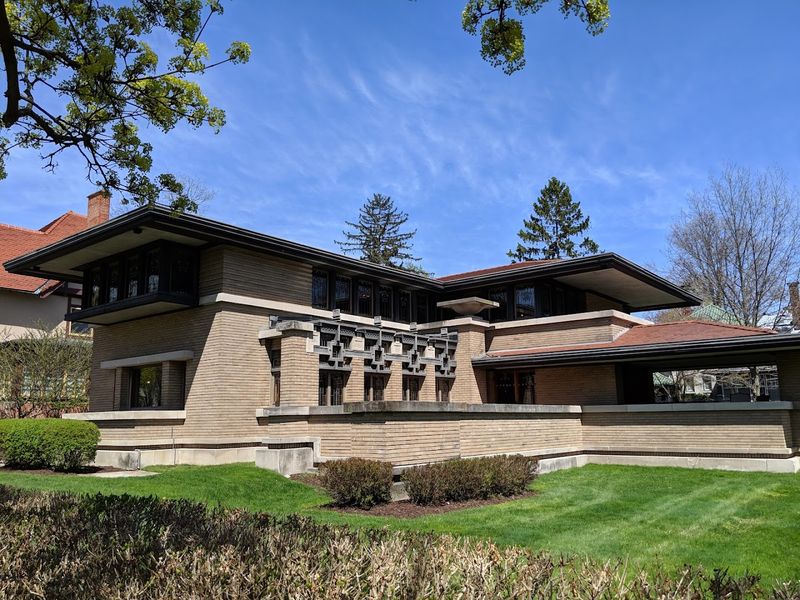
The horizontal planes of the Meyer May House stretch across the corner of 450 Madison Ave SE, Grand Rapids, Michigan 49503, anchoring a quiet, tree-lined block in the Heritage Hill district.
This specific masterpiece of the Prairie School trades the vertical reach of nearby Victorian mansions for a low-slung, grounded profile that feels like a natural extension of the Michigan soil.
Reaching the Meyer May House is a straightforward drive through the historic corridors of Grand Rapids, followed by a quick turn onto the brick-paved charm of Madison Avenue. The final approach takes you past sprawling lawns and ornate gables where the urban grid begins to feel more like a secluded residential retreat.
Follow The Horizontal Lines
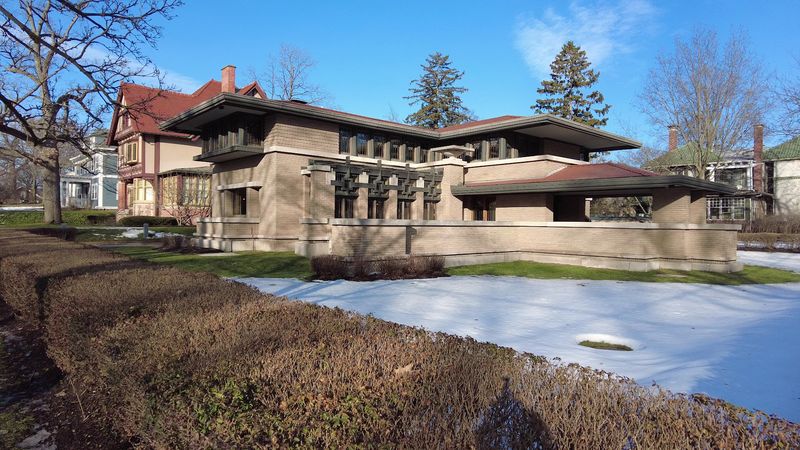
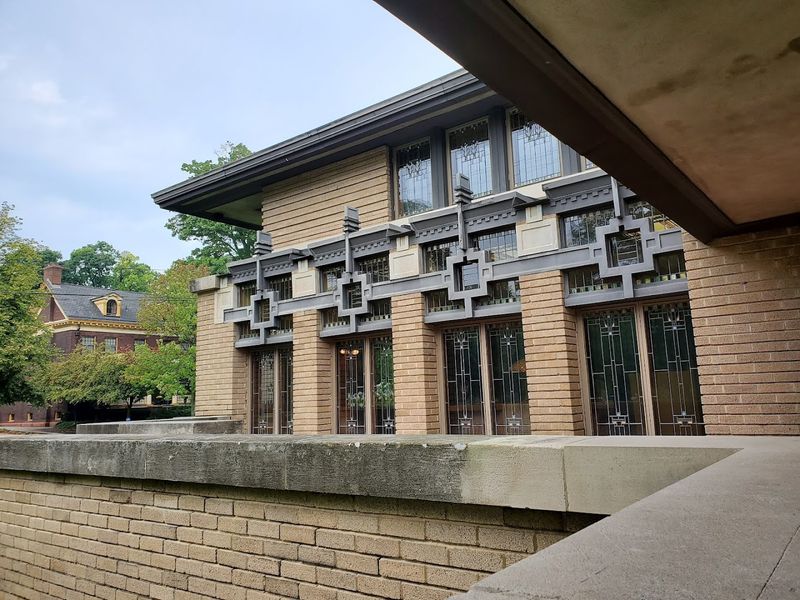
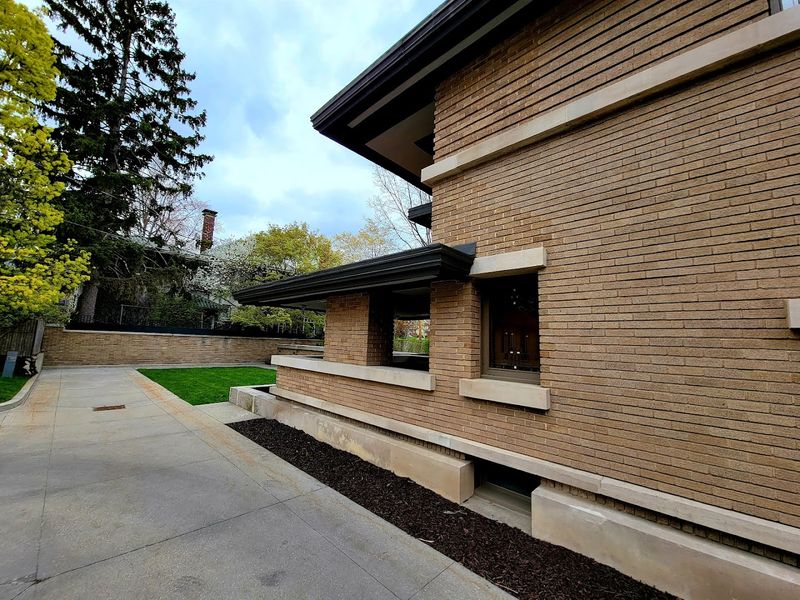
Start with the vast hip roof, then let your gaze run along the projecting bands of brick and limestone. Wright compresses verticality to accent the horizon, a Prairie signature that makes neighboring trees feel like part of the facade. Inside, ceilings step to match, guiding you from entry to hearth to garden without fuss.
Look for the limestone water table and the shallow planters that stitch house to site. Staff encourage slow walking so the lines can do their quiet work.
Step aside when groups pass, then return to your sightline and compare how daylight sharpens those edges. A patient tempo reveals the house as a sequence of measured horizontals, not a single postcard moment that rewards unhurried looking today.
Savor The Art Glass Light
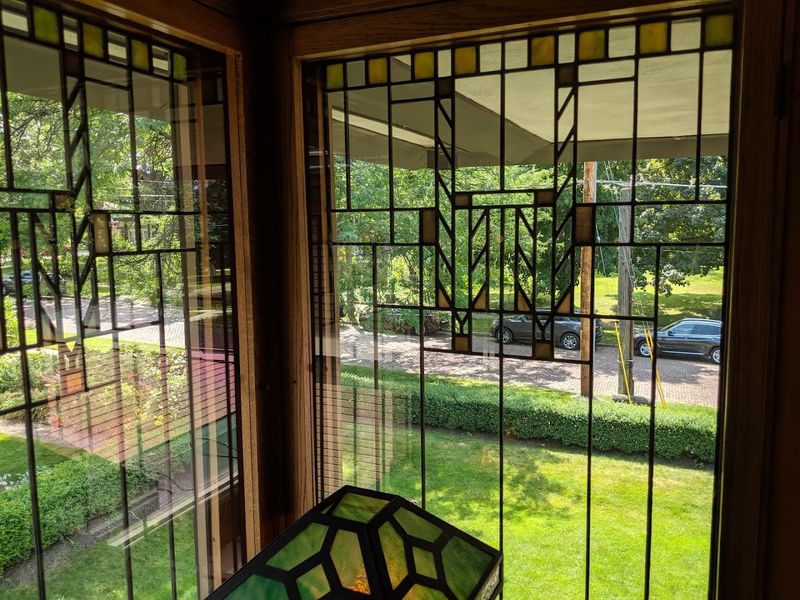
When the sun shifts, the leaded glass throws woven shadows across plaster and rug. Motifs repeat in windows, bookcases, and even light fixtures, calibrated to a pale, vegetal palette. You are meant to notice rhythm, not bling.
Stand still, and the pattern becomes a soft metronome for the room, aligning furniture, fireplace, and your breathing in a surprisingly modern sort of calm today. Docents point out original panes alongside faithful reproductions commissioned during the Steelcase restoration.
Stand at the living room corner where two windows meet and tilt slightly to catch the geometric weave. Photography is limited, so plan mental snapshots, noticing how the light softens faces and emphasizes thresholds. It is a subtle performance, beautiful because it refuses spectacle.
Meet The Docents, Learn The House
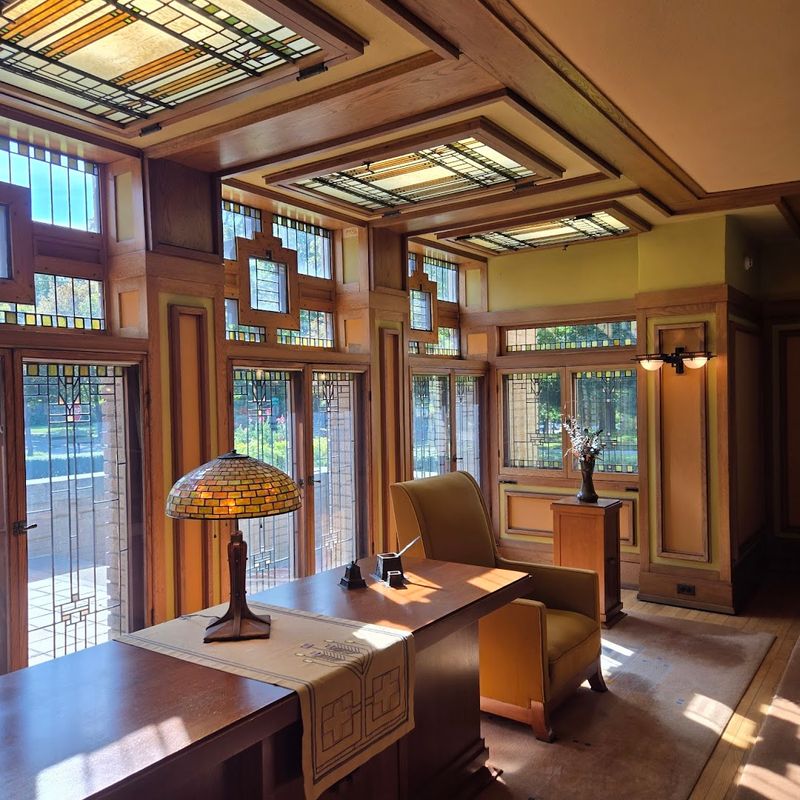
Guides here are storytellers with tool belts of dates, drawings, and patient humor. They keep groups moving while letting individuals linger where something clicks. Expect thoughtful cues rather than rigid scripts.
Listen for anecdotes about sourcing matching brick and reconstructing lost terraces, because those repairs explain why the house now reads so effortlessly coherent despite decades of alterations that once muddied Wright’s disciplined grammar of space completely.
I asked about the dining table proportions, and the answer connected glass patterns to chair backs and ceiling beams. That kind of link makes the Prairie vocabulary feel usable, not just museum pretty. Arrive with two or three questions in mind, and you will leave with smarter ones. Kind curiosity is rewarded here.
The Hearth As Compass
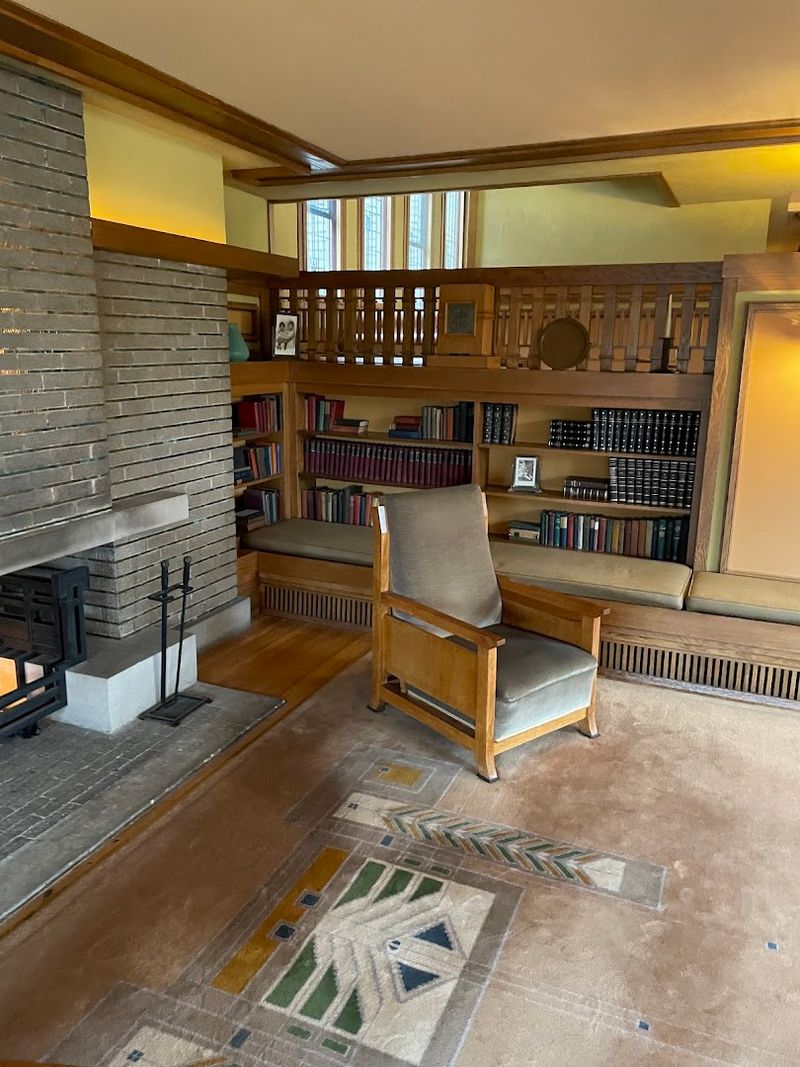
Step into the living room and the fireplace anchors everything with masonry certainty. Wright uses mass to gather people, then peels space outward to terraces and alcoves. Benches, bookcases, and that hovering balcony read as extensions of the hearth.
Smoke once marked family time here, but today the form carries the memory without needing flame, and it still organizes conversation as naturally as a round table in a small library would.
A little patience helps you catch how heat, light, and seating triangulate. Pause at different thresholds, and compare how your body squares to the brick mass. If a group crowds the view, return later and stand closer to feel the scale. It is a reliable compass for the plan.
Gardens That Pull Indoors
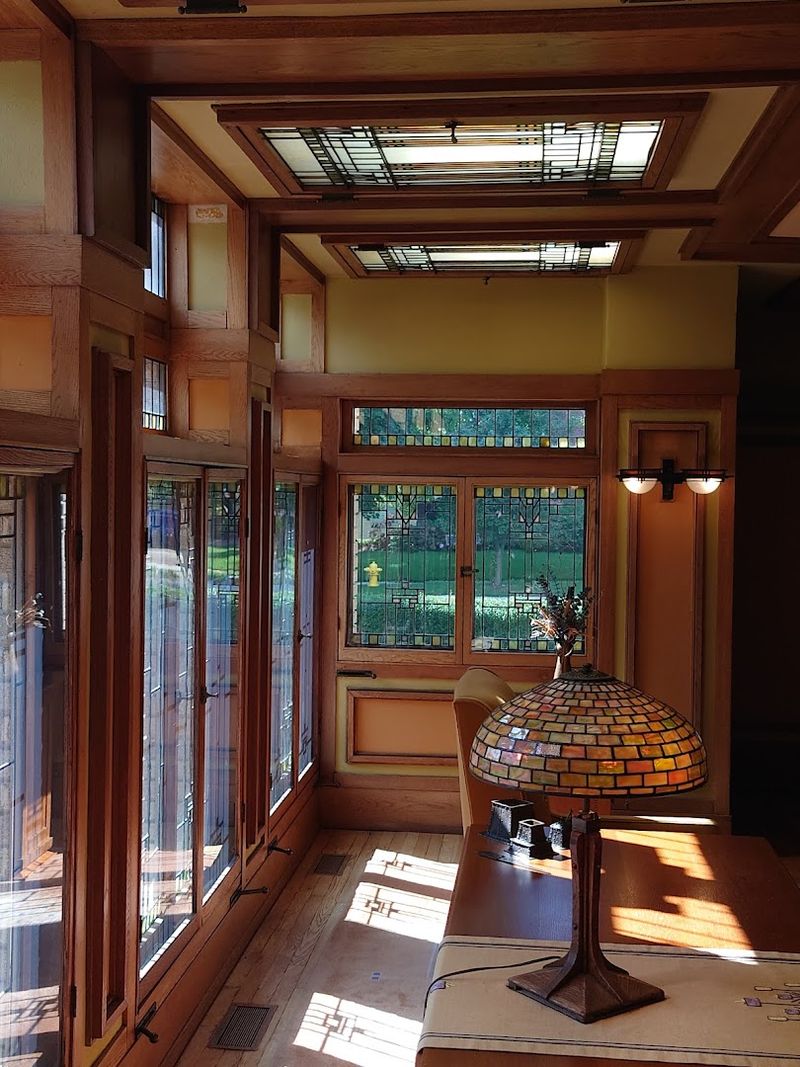
Plantings sit low and linear, echoing sill heights and guiding sightlines toward layered greenery. Even the planters feel architectural, their corners aligned with window mullions. On quiet days, you notice reflection mixing inside and out like watercolor.
The goal is coherence, a green fringe that cools brick, softens transitions, and partners with the generous overhangs, creating shade lines that travel into the rooms as gentle stripes across floors and tabletops seamlessly.
Seasonal maintenance by the caretakers keeps the palette subdued, so flowers support rather than shout. Walk the sidewalk perimeter after your tour to read the composition from multiple angles. Respect the residential context, give neighbors space, and you will see how the house relaxes into Heritage Hill.
Furniture That Teaches Proportion
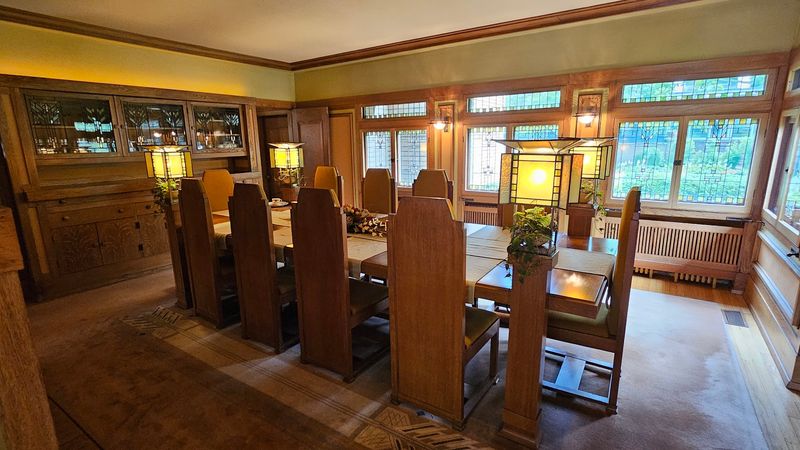
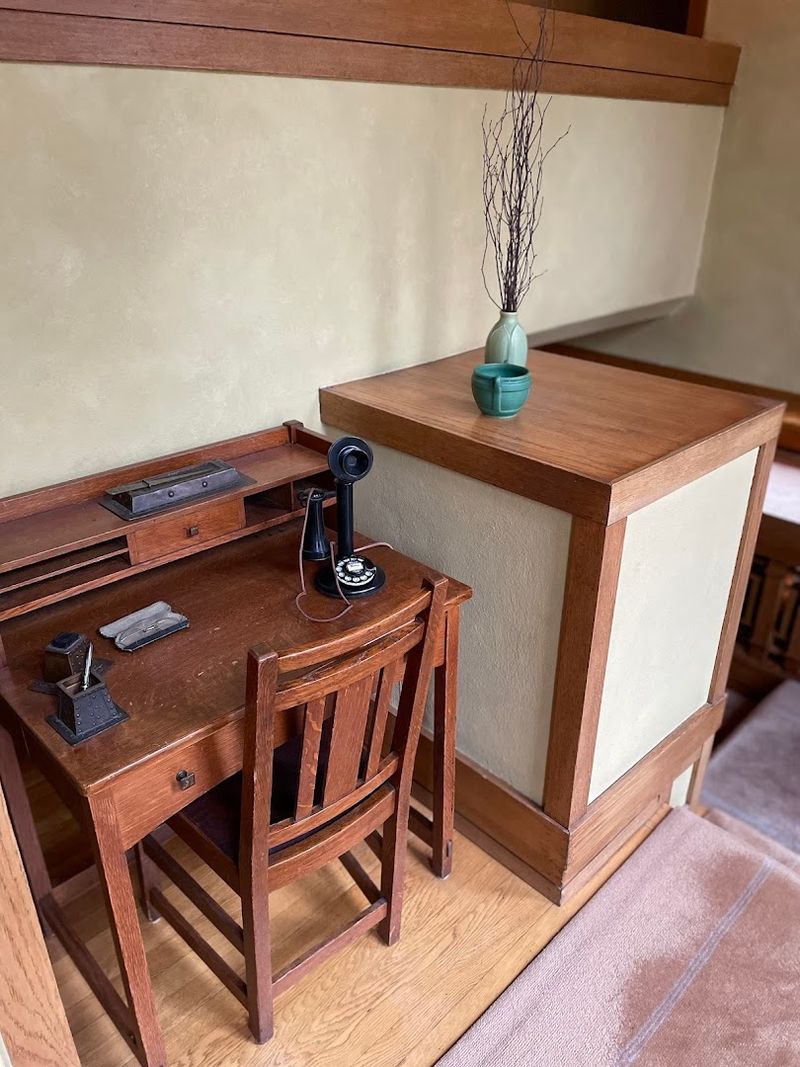
Reproduction pieces sit where originals once did, scaled to sightlines instead of showroom drama. Chairs echo window rhythms, tables locate conversation, and built ins steady the walls. Together they tutor your sense of dimension without lecturing.
Nothing feels casual, but nothing feels grand, and that balance explains why the rooms welcome bodies at many heights during group tours that otherwise compress personal space and attention spans.
I appreciated how the slender lamps and low backs preserve lateral views rather than puncture them. Ask permission before leaning close, and notice joinery decisions that keep silhouettes quiet. If a detail begs sketching, step aside after the group moves and trace proportions with your thumb against the trim. Small scale sharpens perception.
Logistics That Save Your Spot
Reservations are required for the free tours, and they book out quickly on open days. Current hours post on the official website, with Tuesday and Thursday mornings and Sunday afternoons common. Arrive ten minutes early to check in at the Visitor Center and use the restroom.
If weather turns, the overhangs offer brief shelter while groups rotate, but umbrellas should stay closed near the delicate glazing to avoid accidental drips on wood thresholds inside.
Parking is street based, so plan a short walk and watch the residential signage. Large bags and food are not allowed, and photography rules vary by room. Give yourself buffer time afterward to circle the block and appreciate the exterior again. Clarity keeps the day calm.
Heritage Hill Context Matters
The house sits within Heritage Hill, a neighborhood dense with late nineteenth and early twentieth century architecture. That civic fabric helps explain why the restoration aimed for community access rather than private seclusion. Respect the sidewalks, watch driveways, and keep voices low between tours.
It also clarifies why the landscape stays modest, allowing the building to converse with the block instead of competing for attention amid varied Victorian neighbors, which keeps the experience focused and calm today.
Take a brief stroll afterward to spot how neighboring porches and cornices rhyme with Wright’s strict horizontals. Local caretakers maintain a tidy perimeter, and your attention is part of that stewardship. Good neighbors are essential to keeping free tours viable and welcoming.
Leave With A Working Vocabulary
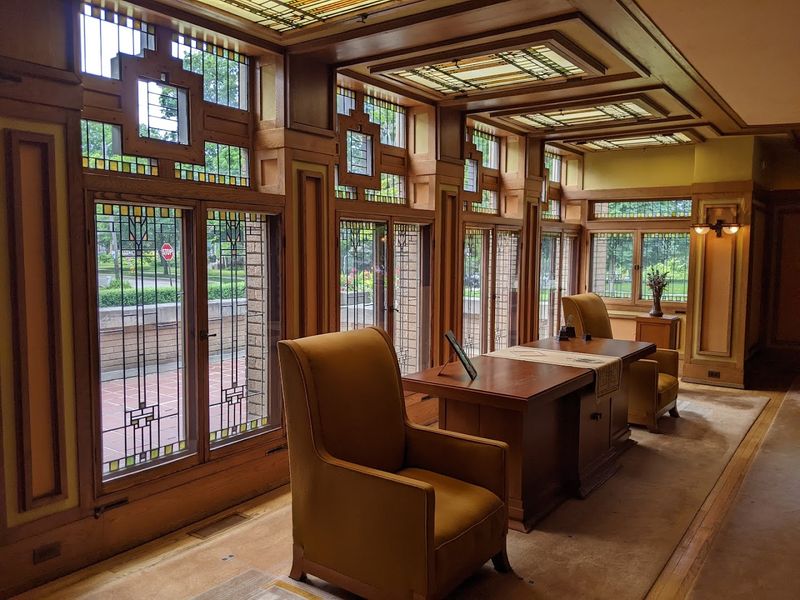
By the end, terms like overhang, datum, and clerestory stop sounding academic and start feeling physical. You recognize how a low ceiling compresses entry, how light screens modulate glare, and how brick courses pace your stride.
That fluency is the gift of careful preservation and patient teaching. Design becomes a set of small, repeatable habits you can practice at home, from aligning furniture to tempering color and balancing task light.
I left thinking less about style and more about choices that make a house hospitable. Back on the sidewalk, watch how other visitors slow down, then try moving at that same measured rate. Take the pace with you, and the city will look newly legible.