
This Remote Florida Island Has Some Of The Clearest Night Skies You’ll Ever See
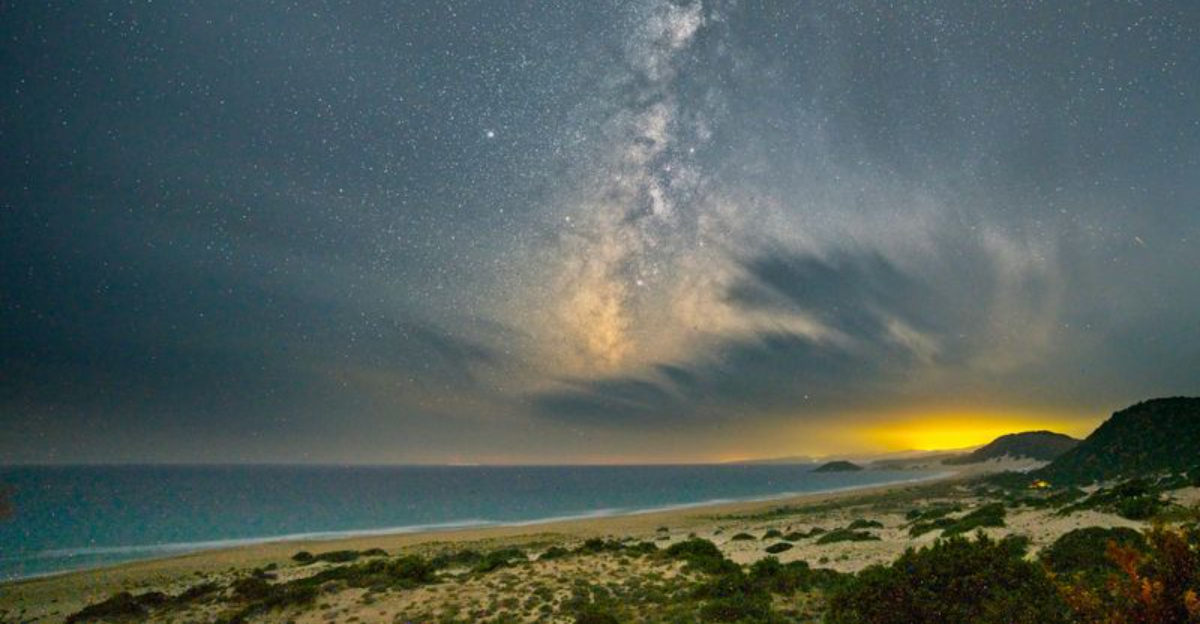
Picture yourself standing on a tiny island far out in the ocean, with nothing but open water in every direction and a sky overflowing with stars above you.
It does not feel like Florida.
It feels like something far more distant, almost unreal.
Somewhere beyond the usual beaches and crowded hotspots, there is a place so remote that just getting there feels like part of the adventure. And once you arrive, everything slows down in a way that is hard to describe.
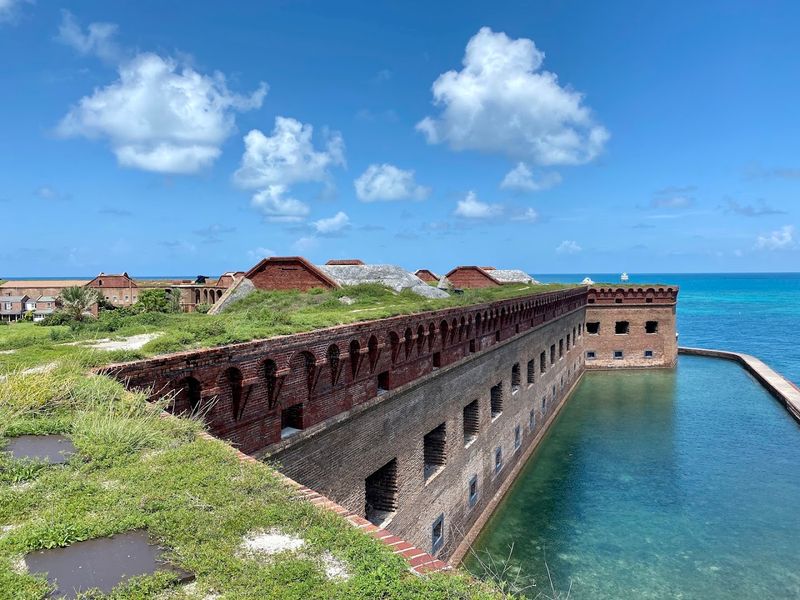
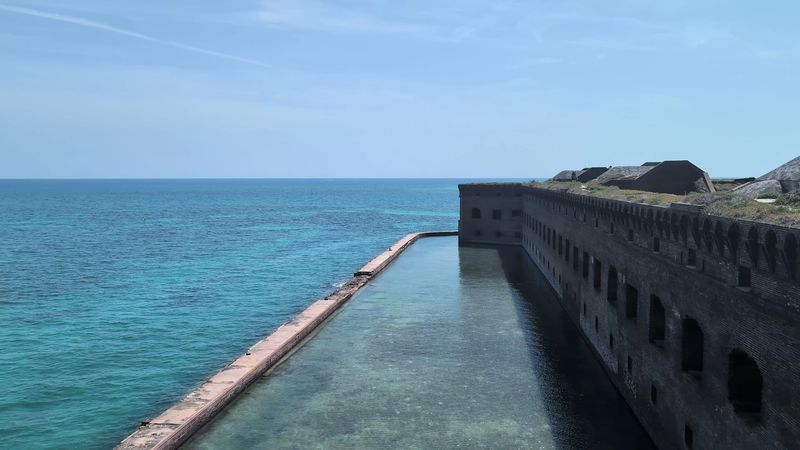
Massive historic walls rise straight out of the sea, surrounded by water so clear it barely looks real. During the day, it feels like a hidden tropical escape.
Then night falls, and everything changes.
The sky transforms into something unforgettable, filled with more stars than you ever thought possible.
It is the kind of place most people never experience.
And the ones who do rarely forget it.
One Of The Darkest Skies In The Eastern United States
Stargazers, pay attention, because what happens above Dry Tortugas National Park after sunset is genuinely hard to put into words. Sitting roughly 70 miles west of Key West with zero cities nearby, this cluster of seven coral islands produces almost no artificial light of its own, and the surrounding Gulf of Mexico makes sure that light pollution from the mainland stays far, far away.
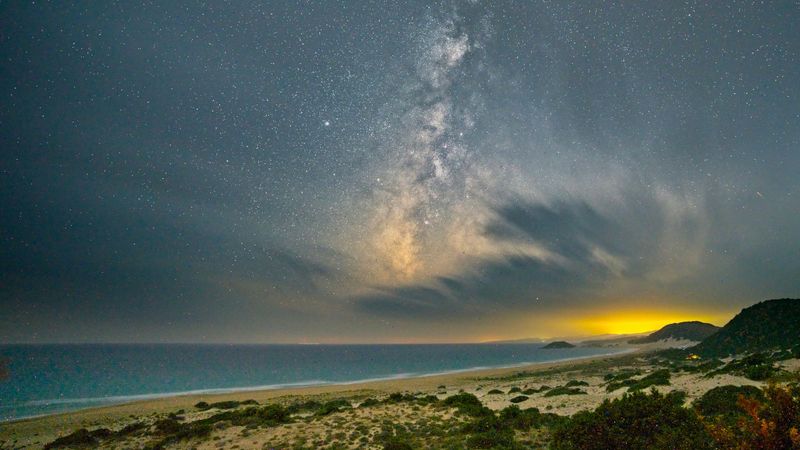
On a clear night, the Milky Way stretches across the sky like a river of light, something most people only see in photos. Campers who spend the night on Garden Key regularly describe the experience as one of the most humbling moments of their lives.
Because the park sits at a southern latitude, stargazers also get a wider view of the southern sky than most spots in the continental United States can offer. Bring a star map, set up a blanket on the beach, and prepare to spend hours just looking up at a sky that feels almost unfairly beautiful.
Why The Remoteness Makes The Stars So Brilliant
Most national parks in the United States are within an hour or two of a major city, which means even the darkest corners of those parks still pick up a soft orange glow on the horizon. Dry Tortugas sits in a completely different category.
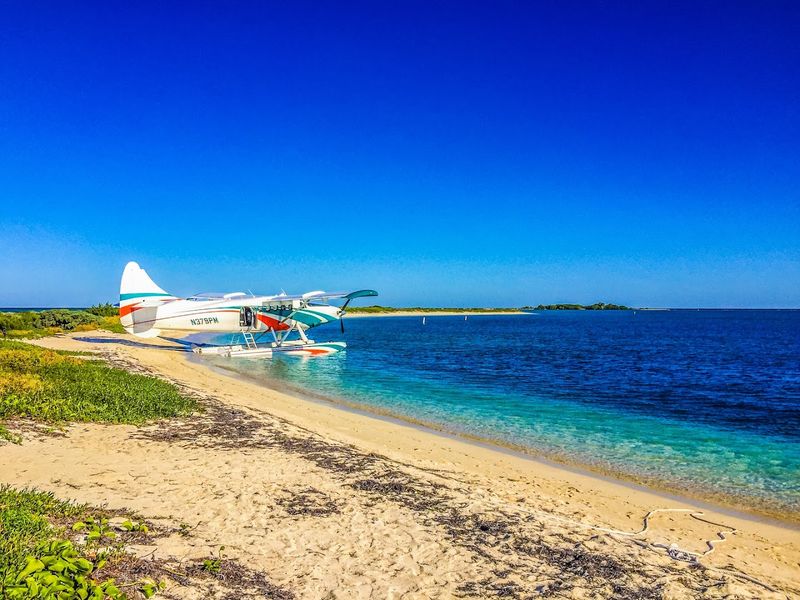
Getting here requires either a two-hour ferry ride or a seaplane flight from Key West, and that physical distance from the mainland is the exact reason the skies here are so outrageously clear. The nearest major source of light pollution is Key West itself, and even that faint glow barely reaches the islands on most nights.
Scientists who measure light pollution use a scale called the Bortle scale, and Dry Tortugas consistently ranks among the darkest sites accessible to the general public in the eastern half of the country. That ranking is not just a number on a chart; it translates directly into a sky where you can spot satellites moving overhead, trace individual star clusters with the naked eye, and watch meteor showers that simply cannot be seen from anywhere near a city.
Fort Jefferson Glows Under A Canopy Of Stars
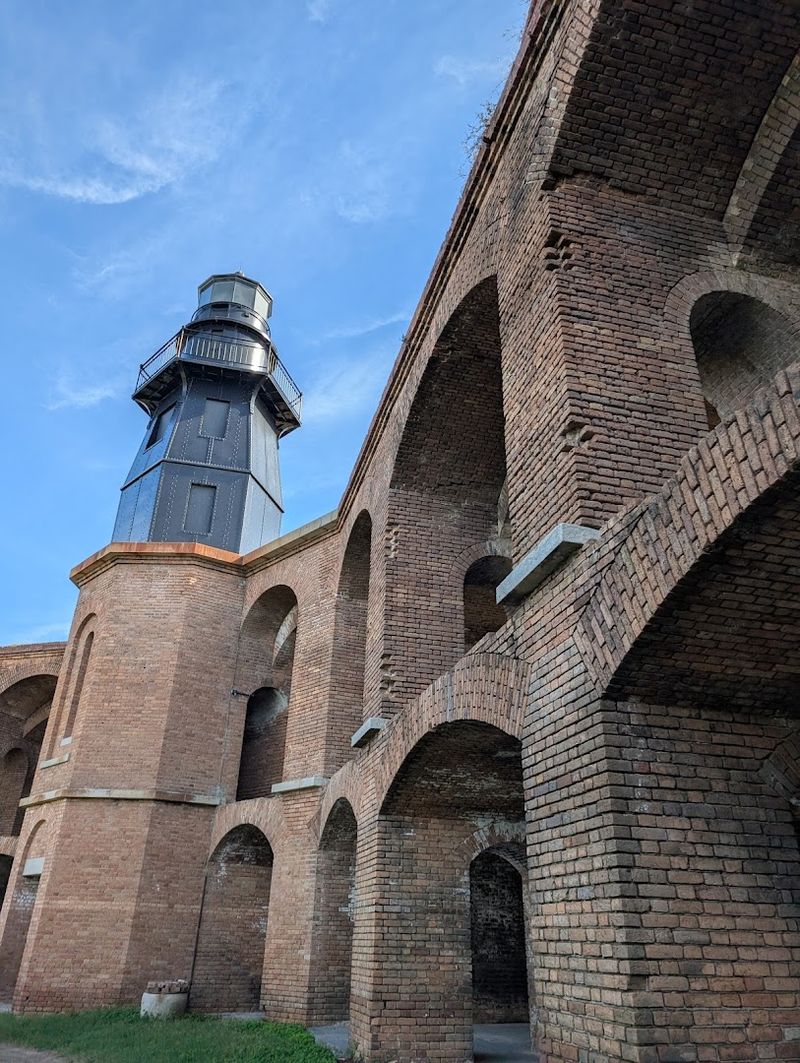
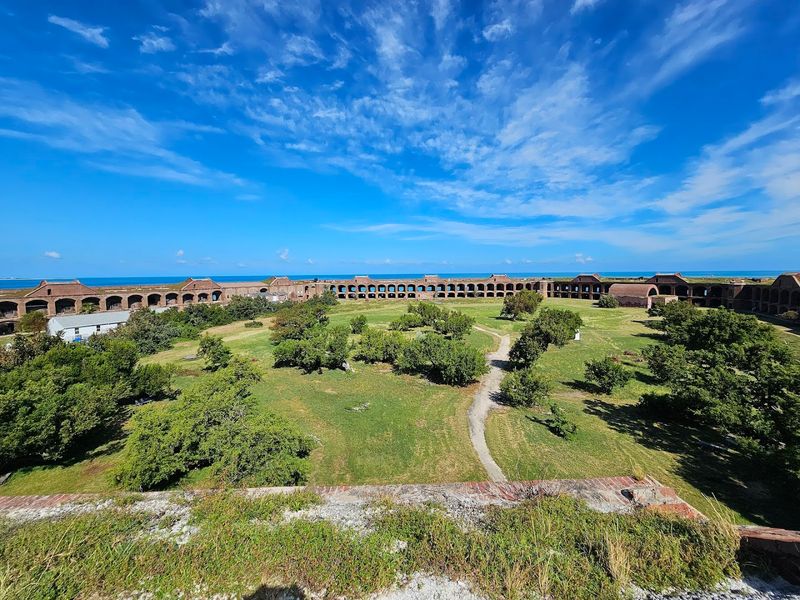
Fort Jefferson is already one of the most dramatic structures in the entire national park system, a massive hexagonal brick fort built in the 1800s that rises three stories above Garden Key and took 30 years to construct. During the day, its scale is impressive enough to make visitors stop mid-sentence.
After dark, the fort takes on an entirely different personality. The reddish-brown brickwork catches whatever moonlight is available, and the open parade ground inside becomes a natural amphitheater for looking straight up at the stars without any trees or buildings interrupting the view.
Campers who pitch their tents near the fort walls often say the combination of the ancient structure and the living sky above it creates a feeling that is hard to match anywhere else. The fort itself has no interior lighting at night, which means the darkness around it is complete and the contrast with the stars above is absolutely striking.
Few places in the country let you experience history and astronomy at the same time with this kind of intensity.
Camping Under The Stars On Garden Key
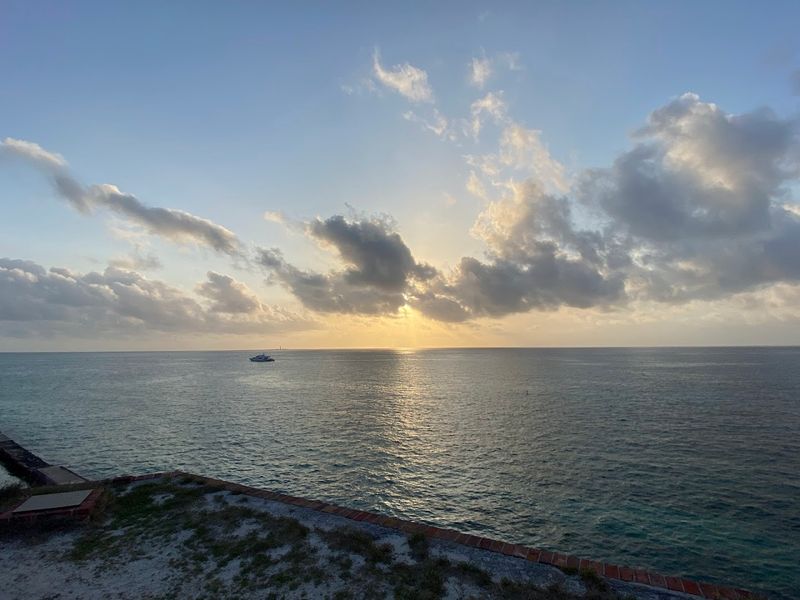
Camping at Dry Tortugas is not your average national park overnight experience, and that is exactly the point. Garden Key has a small primitive campground that holds just a handful of tents, and reservations fill up months in advance because people who know about this place understand what they are getting.
There are no electrical hookups, no showers, and no camp store, which sounds like roughing it until you realize that the trade-off is complete silence, warm ocean breezes, and a sky full of stars that starts performing the moment the sun goes down. Campers must bring everything they need, including food, fresh water, and all their gear, since the island provides none of those things.
The ferry and seaplane services that operate from Key West do allow campers to bring their supplies, and the park’s website at nps.gov/drto has all the details on permits and logistics. Waking up on Garden Key at dawn, with the ocean glowing pink and the stars just fading out, is the kind of morning that stays with a person for years after the trip is over.
The Best Time Of Year To See The Clearest Skies
Timing matters a lot when planning a trip to Dry Tortugas, especially if the night sky is high on your priority list. The dry season in South Florida runs from roughly November through April, and those months bring the lowest humidity, the fewest clouds, and the most reliably clear nights for stargazing.
Summer months can still produce spectacular skies, but the chance of afternoon thunderstorms and lingering cloud cover is noticeably higher from June through September. Hurricane season, which runs from June through November, adds another layer of unpredictability that makes spring and winter visits generally safer bets for anyone making the long trip out.
New moon weekends are the gold standard for stargazing anywhere on the planet, and Dry Tortugas is no exception. Planning your visit around a new moon phase during the dry season gives you the best possible combination of atmospheric clarity and minimal moonlight interference.
A quick check of a lunar calendar before booking your ferry or seaplane ticket can make the difference between a good night sky and an absolutely unforgettable one.
Marine Life That Thrives In Waters Below The Stars
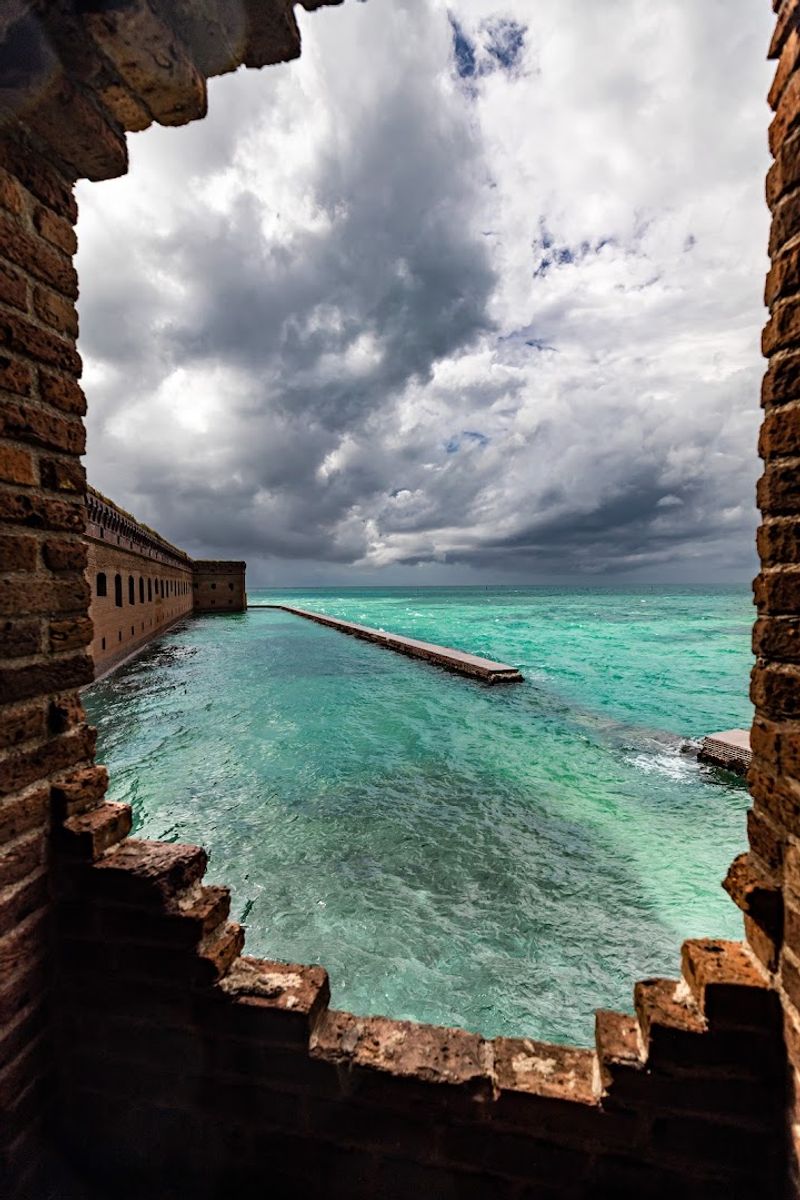
Dry Tortugas is not just a destination for people who look up; it rewards those who look down just as generously. The coral reefs surrounding the islands are among the healthiest and most vibrant in the entire Florida Keys region, and the water clarity here is the kind that makes you feel like you are floating above a living painting.
Snorkelers regularly spot barracuda, sea turtles, parrotfish, angelfish, and dozens of other species just by swimming along the walls of Fort Jefferson. The south side of the fort is a particularly popular spot, and visitors who bring their own gear or use the equipment provided by the Yankee Freedom ferry rarely come back disappointed.
There is something quietly poetic about spending the afternoon watching fish dart through sunlit coral and then spending the evening watching the same ocean turn dark and starry above your head. The park manages to deliver two completely different kinds of wonder within the same 24-hour stretch, which is a rare thing for any destination anywhere in the world to pull off.
Getting There Is Part Of The Adventure
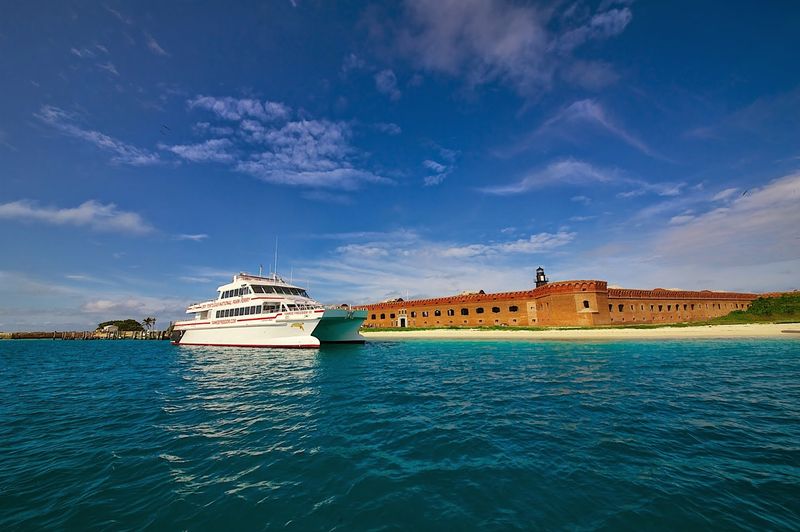
Few national parks require this level of commitment just to reach the front gate, and honestly, that effort is a big part of what makes arriving at Dry Tortugas feel so rewarding. The most popular way to get there is aboard the Yankee Freedom, a high-speed ferry that departs from Key West and covers the 70-mile journey in about two hours.
The ferry includes breakfast on the way out and a boxed lunch as part of the ticket price, and the crew is consistently praised in visitor reviews for being friendly, knowledgeable, and genuinely enthusiastic about the park. Tickets run around $250 per person and sell out months in advance, so booking early is not just a suggestion; it is a necessity.
The other option is a seaplane operated out of Key West, which cuts the travel time dramatically and gives passengers a breathtaking aerial view of the fort and surrounding reefs on approach. Both options have their fans, and both deliver you to one of the most isolated and visually striking places in the entire national park system.
The Rich History Hidden In Plain Sight
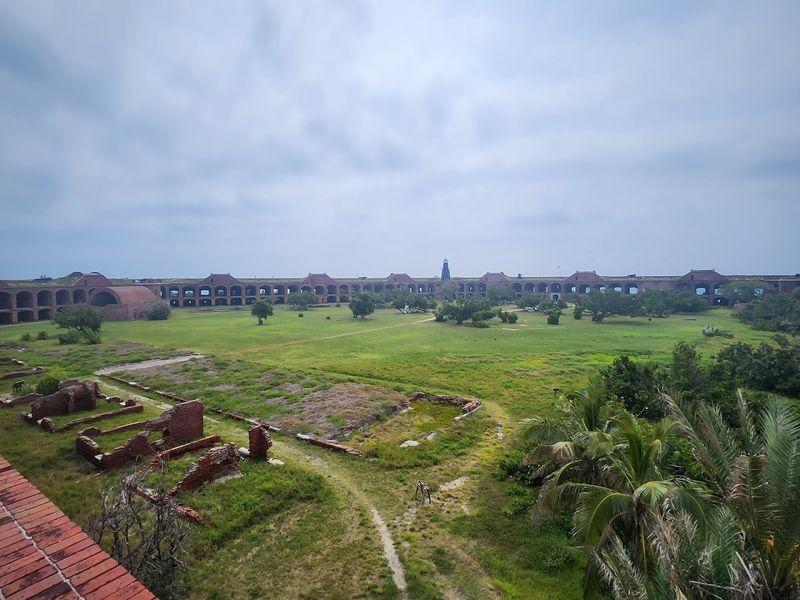
Fort Jefferson was built starting in 1846 and was intended to be the largest masonry fort in the Western Hemisphere, a military stronghold designed to control shipping lanes in the Gulf of Mexico. Workers laid over 16 million bricks over the course of three decades, and the structure still stands today in remarkable condition despite never having been completed.
During the Civil War, the fort served as a federal military prison, and its most famous prisoner was Dr. Samuel Mudd, who was convicted of conspiracy for setting the broken leg of John Wilkes Booth after the assassination of President Lincoln. Dr. Mudd’s cell is still visible on the second floor and draws curious visitors who enjoy debating whether he was truly guilty or simply unlucky.
Rangers stationed at the park lead guided tours that bring all of this history to life with storytelling that reviewers consistently describe as passionate and engaging. Walking the fort’s ramparts while a ranger explains the stories embedded in every brick is the kind of educational experience that does not feel like a history lesson at all.
Birds That Make This Island Their Home
Dry Tortugas is one of the most important seabird nesting sites in North America, and birdwatchers who make the trip are often left completely speechless by what they find. Bush Key, which sits just a short swim from Garden Key, hosts one of the largest sooty tern colonies in the United States, with tens of thousands of birds descending on the island each spring to nest and raise their young.
The noise and activity of that colony is something visitors either find overwhelming or absolutely thrilling, and most people land firmly in the thrilling category once they see it up close. Magnificent frigatebirds, brown noddies, masked boobies, and a rotating cast of migratory species also pass through the islands throughout the year, making the park a serious destination for birding enthusiasts.
Because the park sits along the Atlantic flyway, spring migration brings an almost unpredictable mix of songbirds and shorebirds that stop on the islands to rest during their long overwater journeys. Binoculars are a smart addition to any packing list, and a field guide to Florida birds will pay for itself within the first hour of exploring.
Practical Tips For Making The Most Of Your Visit
A little preparation goes a long way when visiting a park this remote, and the visitors who have the best experiences are almost always the ones who did their homework before leaving the dock. Tickets for the Yankee Freedom ferry should be purchased as far in advance as possible, ideally several months ahead, because the boat sells out consistently and standby spots are a gamble that requires arriving at the terminal well before 5 a.m.
Bringing a national parks pass is worth doing since it qualifies visitors for a discount on ferry tickets. Sun protection is non-negotiable out here, because the combination of open water, white sand, and direct Florida sun is intense even on days that feel mild, so pack sunscreen, a hat, and a lightweight long-sleeve shirt.
The park’s official website at nps.gov/drto is the best place to check current conditions, camping permit availability, and seasonal closures before your trip. Snorkel gear is provided by the ferry, but bringing your own mask ensures a better fit and a more comfortable time in the water exploring the reefs around the fort.