
This Florida Art Museum Is As Glamorous As The Great Gatsby
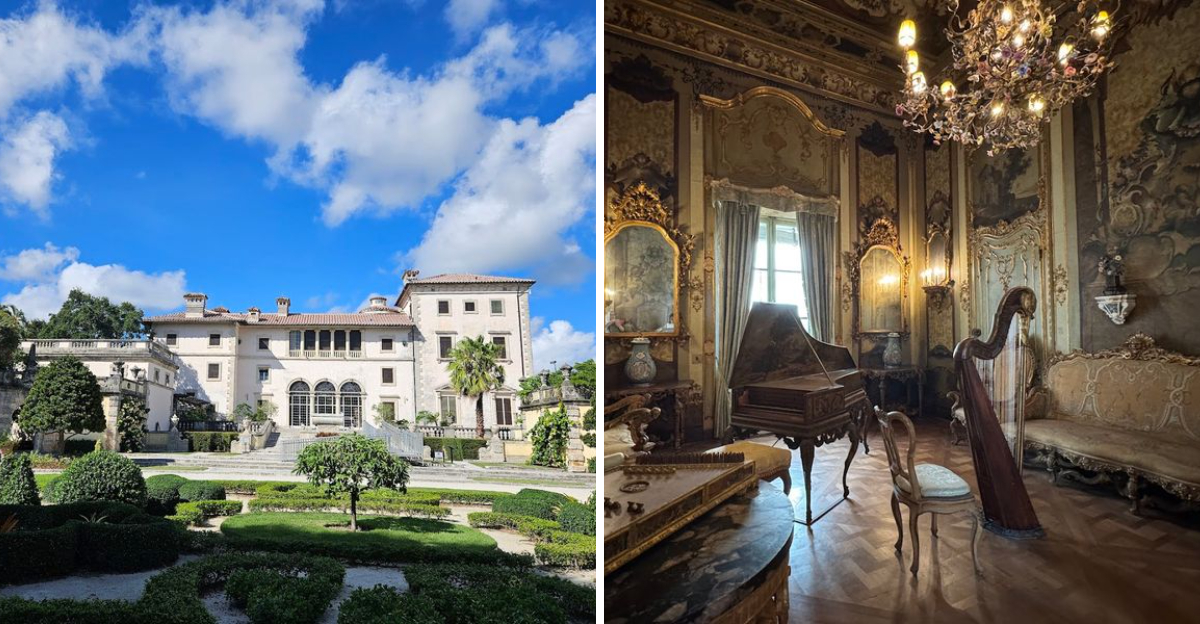
A place that feels like it belongs in The Great Gatsby is not something you expect to find in Florida, but this one delivers exactly that feeling the moment you arrive.
In Miami, there is an estate where marble staircases, antique-filled rooms, and waterfront gardens come together in a way that feels almost unreal. The moment you step through the gates, everything shifts, and it no longer feels like a typical day out.
This is not just a historic home.
It feels cinematic.
Every corner reveals something new, from detailed interiors to perfectly designed outdoor spaces that stretch toward the water.
The atmosphere carries a sense of old-world luxury that is hard to ignore.
And once you start exploring, it becomes clear why people compare it to Gatsby and why it remains one of Florida’s most unforgettable places to visit today.
A Millionaire’s Winter Dream Come True
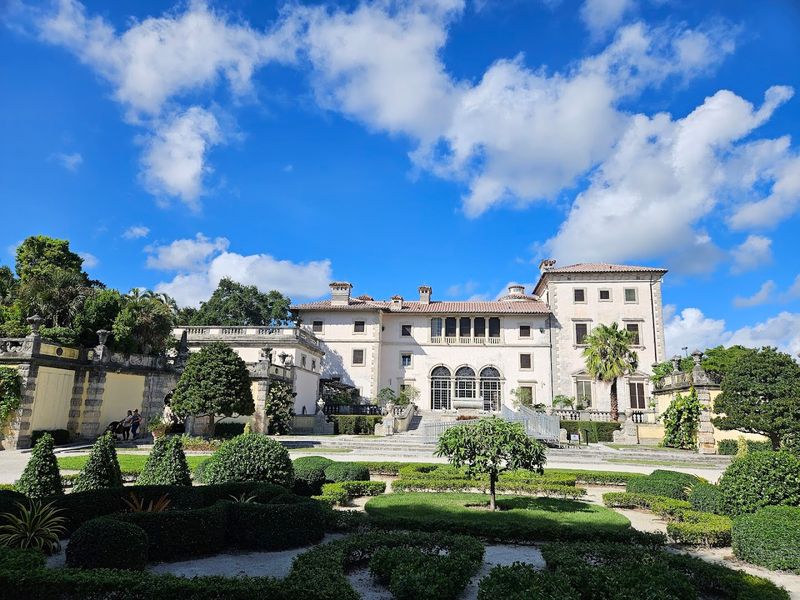
James Deering, heir to the International Harvester fortune, wanted a winter retreat that felt nothing like a typical Florida beach house, so he set out to build something that would stop visitors in their tracks.
Construction on the Vizcaya estate began in 1914 and wrapped up in 1922, meaning the project took the better part of a decade to complete from foundation to finishing touches.
Deering hired architect F. Burrall Hoffman Jr. to design the main house in the Italian Renaissance style, drawing inspiration from the grand villas of northern Italy rather than anything found in the American South.
At the height of construction, roughly 1,000 workers were employed on the site, which accounted for about ten percent of Miami’s entire population at the time.
The result was a 34-room villa packed with centuries-old European furnishings that Deering personally collected during extensive travels abroad.
Walking through those rooms today, you can almost hear the rustle of silk and the clink of fine china echoing off the stone walls.
The Staggering Scale Of The Property
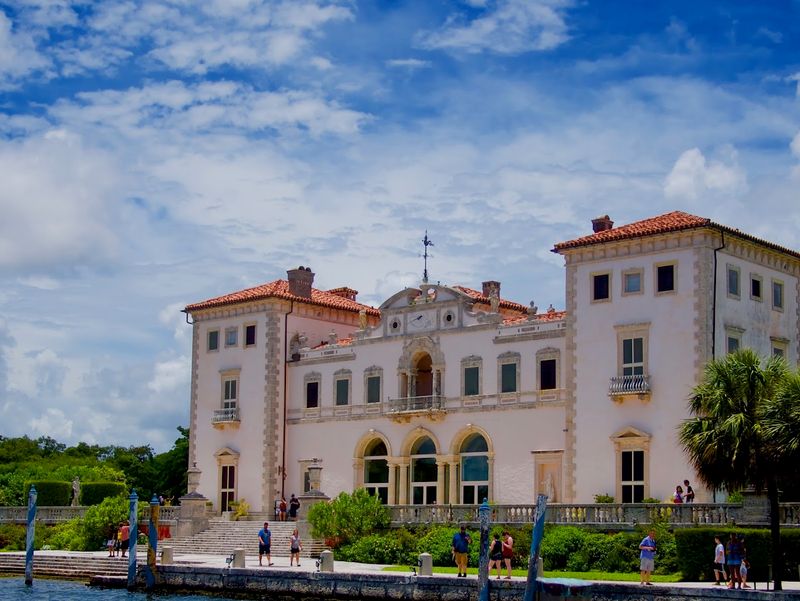
When James Deering first acquired the land, the original Vizcaya property stretched across an enormous 180 acres of Miami waterfront, which gives you a sense of just how seriously he took the concept of a “winter cottage.”
Today the preserved grounds cover about 50 acres, which still makes it one of the largest historic house museum properties in the entire southeastern United States.
The estate sits right along Biscayne Bay, giving the villa an unobstructed water view that makes the whole place feel more like a European lakeside retreat than a Florida garden.
Within those acres, visitors can explore formal Italian gardens, a native hardwood hammock forest, a historic village of support buildings, and the main house itself.
The variety of environments packed into one visit is genuinely surprising, because you can move from manicured topiary to wild subtropical jungle in just a short walk.
Few museums in Florida give you this much ground to cover, and every corner seems to hide a new detail worth pausing over.
Rooms Frozen In A Gilded Age Fantasy

Stepping inside the main house at Vizcaya feels less like entering a museum and more like interrupting a party that ended about a century ago, with every room dressed as if the host might return at any moment.
Deering filled the 34 rooms with authentic European art and antiques spanning roughly four centuries, sourcing pieces from the Renaissance period all the way through the Rococo and Neoclassical eras.
The interiors were designed by Paul Chalfin, an artist and decorator who spent years traveling Europe with Deering to hand-select furniture, textiles, paintings, and architectural fragments for the house.
Some of the ceilings, doorways, and fireplaces are not reproductions but actual historic elements that were carefully dismantled in Europe and shipped across the Atlantic for installation in Miami.
The result is a layered, deeply personal collection that reflects one man’s obsession with beauty and craftsmanship rather than a curator’s neutral hand.
Every room tells a slightly different story, and the variety of styles keeps you engaged from the entrance hall to the uppermost floor.
Gardens That Could Make Versailles Jealous
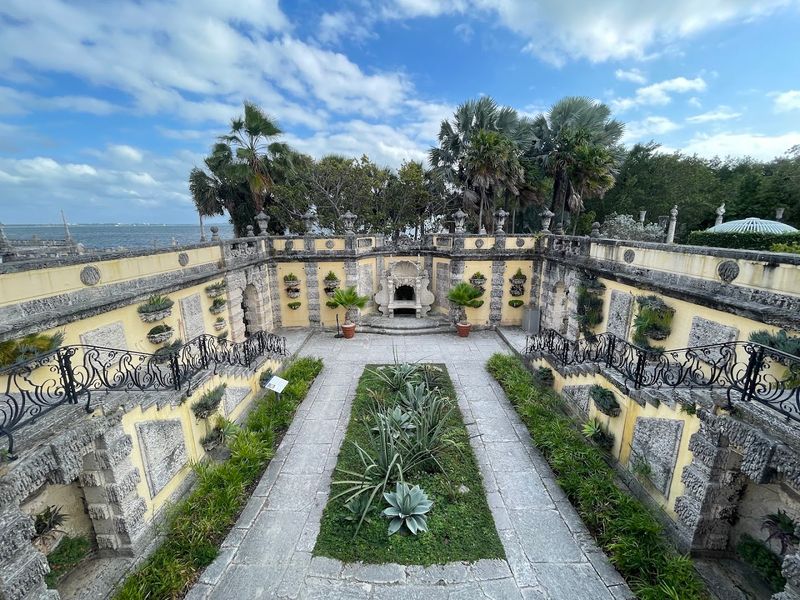
The formal gardens at Vizcaya are the kind of outdoor spaces that make you slow your pace automatically, because rushing through them would feel like skipping dessert at a five-star dinner.
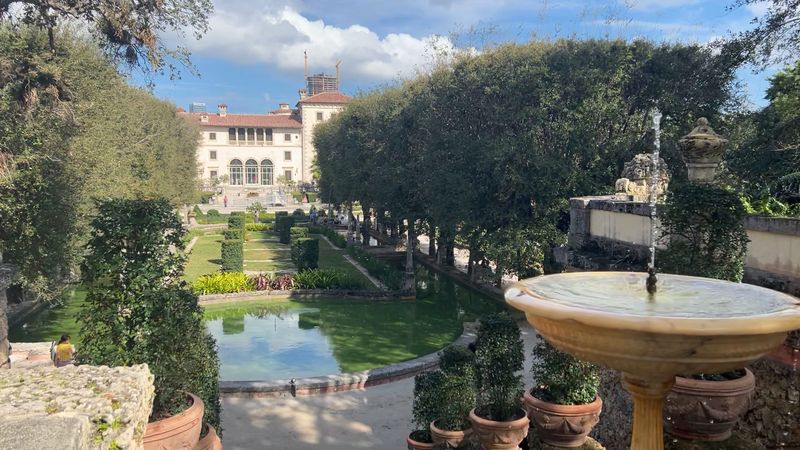
Landscape architect Diego Suarez designed the gardens in the Italian Renaissance tradition, using geometric hedgerows, symmetrical pathways, classical statues, and ornamental fountains to create a sense of order and grandeur.
Suarez was born in Colombia and trained in Florence, which gave him a unique perspective that blended European formality with an instinctive understanding of tropical plant life.
The gardens feature ten distinct sections, each with its own character, including a secret garden, a maze garden, a casino garden, and a theater garden that once served as an outdoor entertainment space.
Tropical plants native to Florida weave through the classical European framework, creating a visual conversation between two very different gardening traditions.
On a bright Florida morning, the light hits the carved stone fountains in a way that makes the whole garden look like a hand-tinted postcard from another era.
The Stone Barge That Guards The Bay
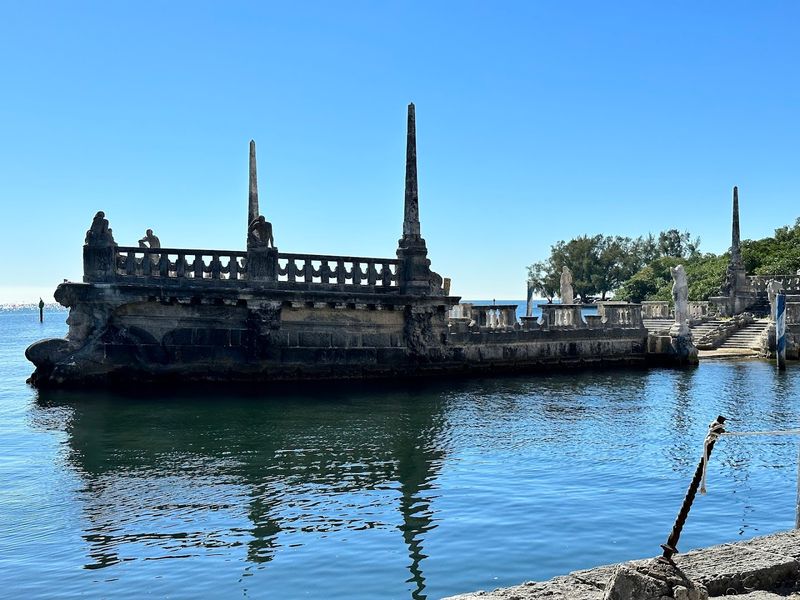
One of the most unusual features at Vizcaya is not inside the house or even in the gardens but sitting right out in the water, and once you spot it, you cannot stop staring.
A massive stone barge, designed by artist A. Stirling Calder, floats just off the villa’s waterfront terrace and serves as a decorative breakwater protecting the bay-facing facade from wave erosion.
The barge is carved with elaborate figures, swags, and classical motifs that make it look less like a functional structure and more like a floating sculpture garden.
Calder was the father of Alexander Calder, the famous mobile artist, which means Vizcaya has a quiet connection to one of the twentieth century’s most celebrated artistic families.
The barge has become one of the most photographed elements of the entire estate, and it appears in nearly every wide shot of the villa taken from the water side.
Standing on the terrace and looking out at it, you get the distinct impression that even the parking situation here was designed to be beautiful.
A National Historic Landmark Since 1994
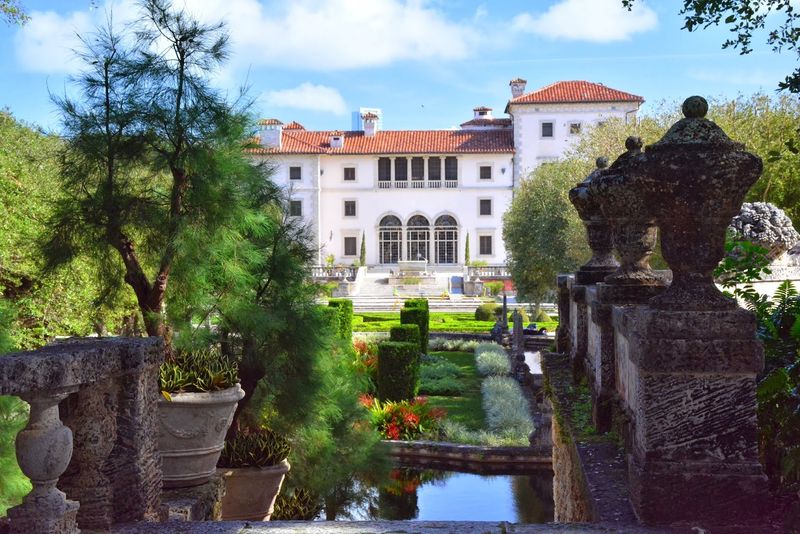
In 1994, the United States federal government officially designated Vizcaya Museum and Gardens as a National Historic Landmark, placing it in the same category as some of the most significant cultural sites in the country.
That designation recognizes not just the architectural beauty of the estate but also its importance as a surviving example of the Gilded Age lifestyle and the decorative arts movement in early twentieth-century America.
The estate was added to the National Register of Historic Places even earlier, in 1970, which means it has been recognized for its cultural value for over half a century.
Miami-Dade County took ownership of the property in 1952 after the Deering family donated it, and the county has operated it as a public museum ever since.
The transition from private estate to public institution helped preserve a collection and a property that might otherwise have been demolished or sold off piece by piece during Florida’s postwar development boom.
Today, Vizcaya stands as proof that preservation efforts, when taken seriously, can protect irreplaceable pieces of American history for everyone to enjoy.
Hollywood Has Always Had A Crush On This Place
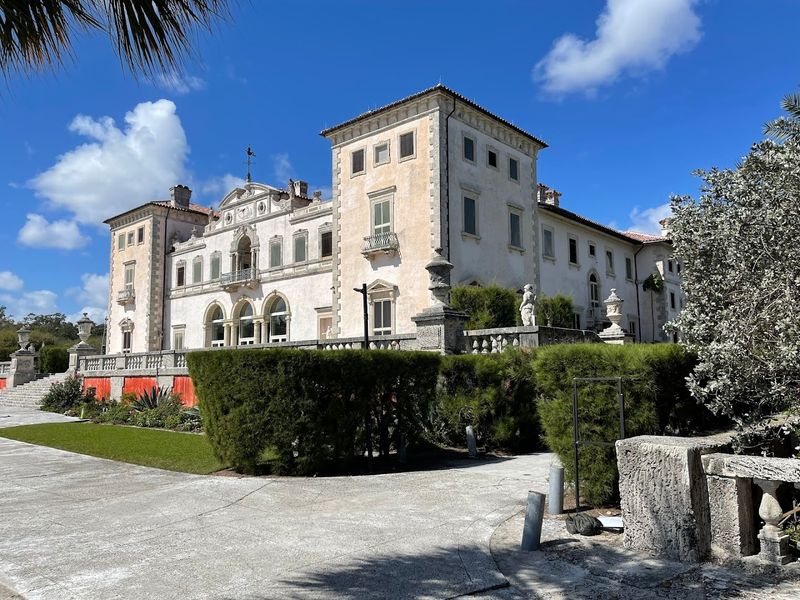
Long before Instagram made Vizcaya a go-to backdrop for engagement photos, Hollywood directors were already lining up to use the estate as a setting for scenes that needed to drip with old-world glamour.
The property has appeared in numerous films and television productions over the decades, including the James Bond film “Goldfinger” and the television series “Miami Vice,” both of which leaned on the estate’s dramatic architecture for visual impact.
More recently, Vizcaya appeared in the film “Ace Ventura: Pet Detective” and has been used as a backdrop for music videos, fashion shoots, and major public events including a papal visit in 1987 when Pope John Paul II held an outdoor Mass on the grounds.
The estate’s combination of European grandeur and tropical lushness creates a visual richness that is genuinely difficult to replicate on a studio lot.
Filmmakers consistently return because the real thing simply photographs better than any built set could.
Walking the same terraces where Bond villains once schemed adds a layer of cinematic fun that most museum visits simply cannot offer.
The Village That Kept The Estate Running
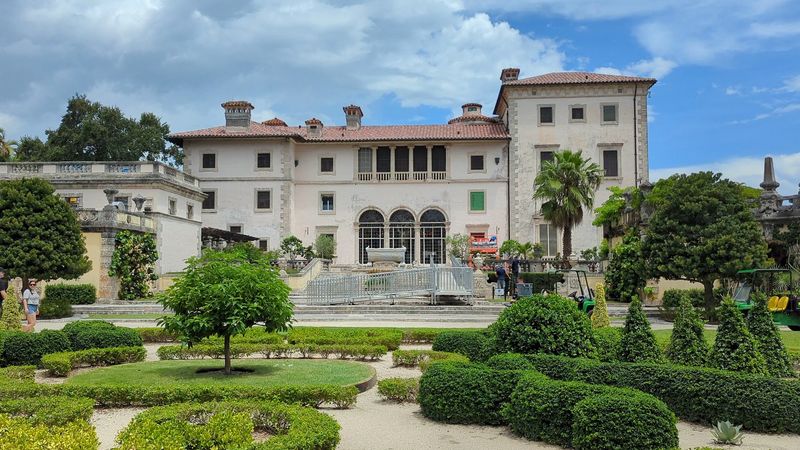
Behind every grand estate is a small army of workers, and at Vizcaya, that workforce lived and operated in a carefully designed complex of buildings known as the Village, which still stands on the property today.
The Village was designed by architect Phineas Paist in a vernacular Florida style that deliberately contrasted with the formal European character of the main house, creating a clear visual distinction between the two worlds.
The complex once housed a garage, a power plant, a dairy, a greenhouse, and living quarters for the staff who maintained the estate’s operations year-round.
Today, the Village buildings are listed separately on the National Register of Historic Places, recognizing their architectural and historical significance as a rare surviving example of a complete Gilded Age service compound.
Visitors who take the time to explore the Village gain a fuller picture of how an estate like Vizcaya actually functioned on a daily basis, beyond the polished rooms and manicured hedges.
The contrast between the ornate villa and the practical Village tells a more complete and honest story of the era than either could tell alone.
Conservation Work That Never Really Stops
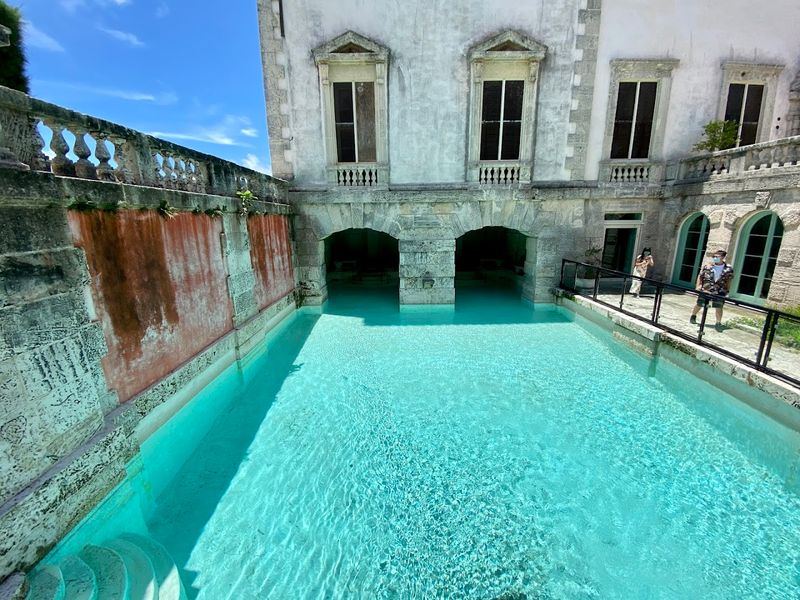
Keeping a century-old Italian Renaissance villa in shape in South Florida’s humid, storm-prone climate is not exactly a low-maintenance undertaking, and the team at Vizcaya knows that better than anyone.
The estate faces constant challenges from salt air off Biscayne Bay, tropical storms, and the slow but relentless wear that comes with having hundreds of thousands of visitors move through the property each year.
Hurricane Irma in 2017 caused significant damage to the gardens and structures, prompting a multi-year restoration effort that required both emergency repairs and long-term planning to address vulnerabilities across the entire property.
The museum employs a dedicated conservation team that works on everything from stone cleaning and mortar repair to textile preservation and furniture stabilization inside the main house.
Major restoration projects over the years have also involved international experts in historic masonry, landscape architecture, and decorative arts, reflecting the global nature of the collection.
Every dollar spent on conservation here is essentially an investment in keeping a piece of early twentieth-century American ambition accessible to future generations who never got to meet James Deering.
Planning Your Own Vizcaya Visit
If you are ready to plan a trip to Vizcaya Museum and Gardens, the address most commonly associated with the estate is 3251 S Miami Ave, Miami, FL 33129, though the property can also be referenced as part of the broader cultural corridor near Coconut Grove.
The museum is open most days of the week, with general admission tickets available for adults, children, and seniors, and timed entry reservations are recommended during peak season to avoid long waits at the gate.
Audio guides and guided tours are available for visitors who want deeper context about the collection, the architecture, and the history of the Deering family and their circle of artists and designers.
Early morning visits tend to offer the most peaceful experience in the gardens, before the midday heat settles in and the tour groups arrive in full force.
Comfortable walking shoes are genuinely essential here, because the grounds are extensive and the stone pathways, while beautiful, are not always perfectly level.
Coming here once is enough to understand why people return year after year, because Vizcaya rewards slow, curious exploration in a way that few museums anywhere in Florida can match.