
This Wonderfully Bizarre Cat-Filled Museum In Florida Is Too Weird For Words
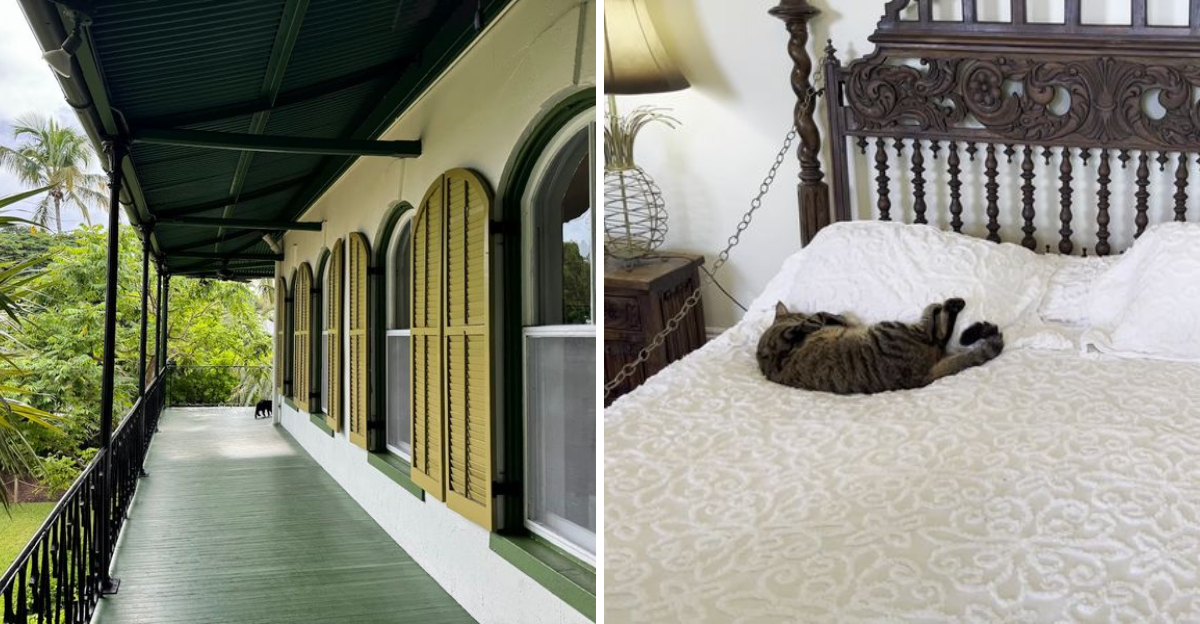
A place where famous literature and six-toed cats share the same space is not something you come across every day, but in Florida, it somehow works perfectly.
In Key West, there is a home where history feels alive in a way that is both fascinating and unexpectedly fun. The moment you walk in, it becomes clear this is not going to be a typical museum visit.
This is not just about Ernest Hemingway.
It is about the experience.
Cats wander freely, stories fill every room, and the atmosphere feels relaxed in a way that makes you want to slow down and take it all in.
You move through the space, noticing details you did not expect, from the surroundings to the small moments happening around you.
And by the time you leave, it makes sense why people keep talking about this place and why it stands out across Florida.
Over 60 Polydactyl Cats Roam The Property Freely
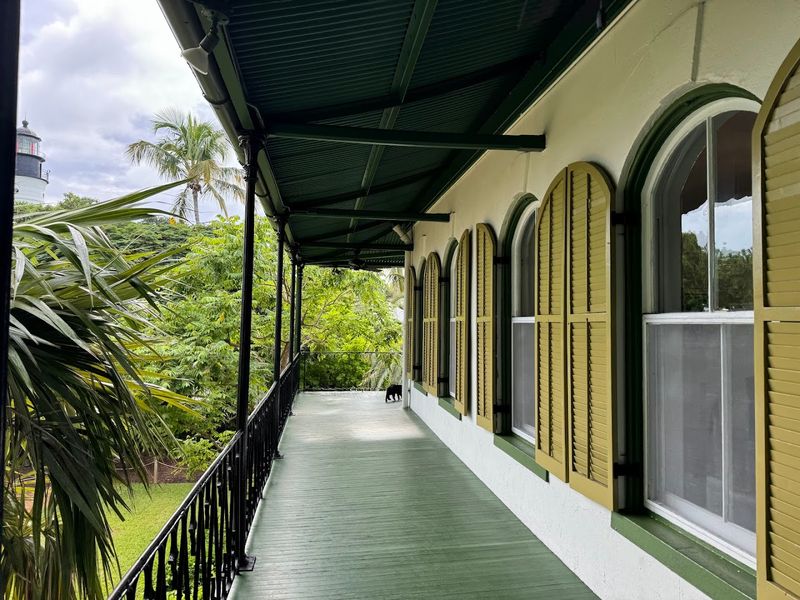
Right from the moment I stepped through the entrance gate, I noticed them everywhere, draped across stone walls, stretched out under palm trees, and padding slowly across the garden paths as if they personally owned every square inch of the property.
The Hemingway Home is famously home to more than 60 polydactyl cats, meaning cats born with extra toes on their paws, and they wander the entire estate without restriction.
These cats are direct descendants of a six-toed cat named Snow White, who was reportedly given to Ernest Hemingway by a ship captain named Stanley Dexter.
Each cat on the property is named after a famous figure, which adds an unexpectedly charming layer to the whole experience.
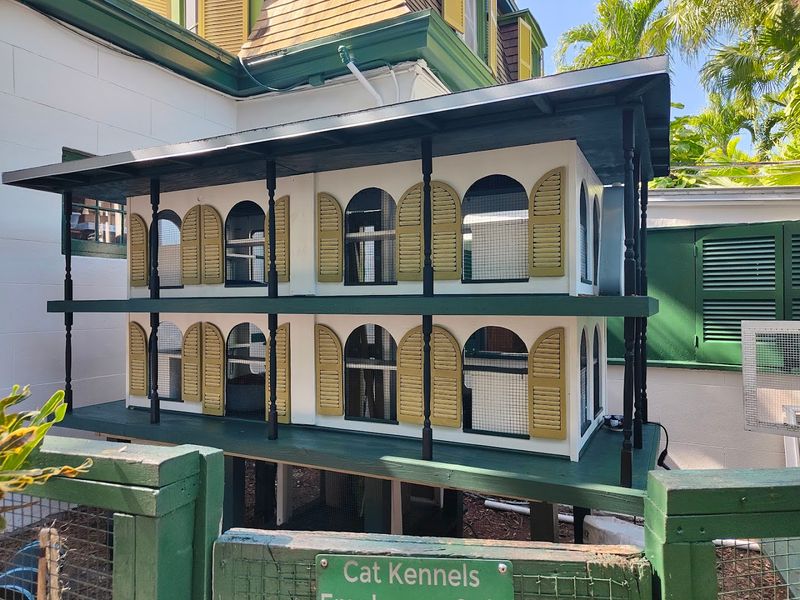
The cats have their own dedicated staff who care for their health and well-being year-round, so they are well-fed, calm, and surprisingly tolerant of visitors snapping photos just inches from their faces.
Seeing 60-plus cats living their best island lives on a historic estate is, without question, one of the most delightfully odd sights in all of Florida.
The House Was Built In 1851 And Is A National Historic Landmark
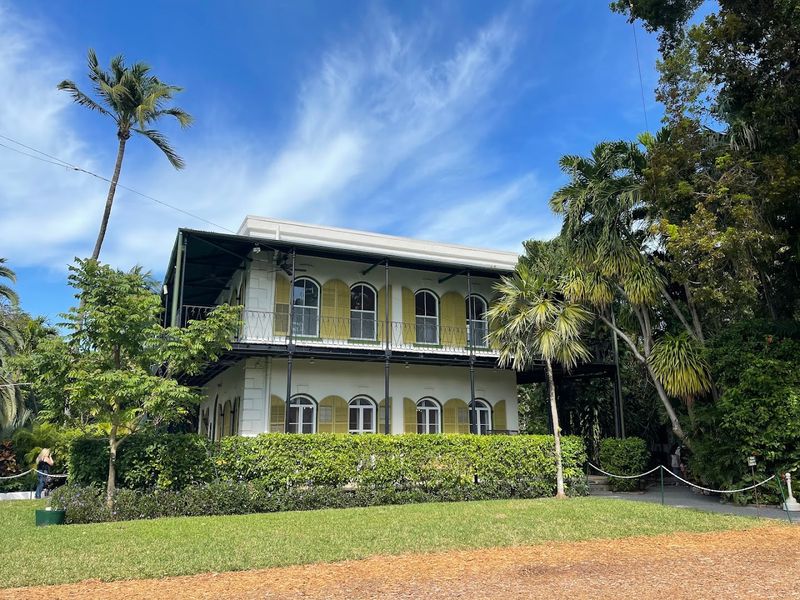
Long before Ernest Hemingway ever set foot in Key West, the house at 907 Whitehead St already had a story worth telling, having been constructed in 1851 from native coral rock in a Spanish Colonial style that still looks remarkably sharp today.
The building was designed by Asa Tift, a marine architect and salvage wrecker, which explains the unusually sturdy construction and the slightly elevated foundation that keeps it above the surrounding coral ground.
Hemingway and his second wife, Pauline, purchased the property in 1931 for $8,000, which was a considerable sum during the Great Depression.
The home was designated a National Historic Landmark in 1968, cementing its place in American cultural history well beyond its literary associations.
Walking through the rooms, I kept noticing how the original architecture and period furnishings work together to create an atmosphere that feels genuinely preserved rather than staged.
Every shutter, every stone step, and every arched doorway carries the quiet weight of nearly 175 years of Florida history.
Hemingway Wrote Some Of His Most Famous Works Here
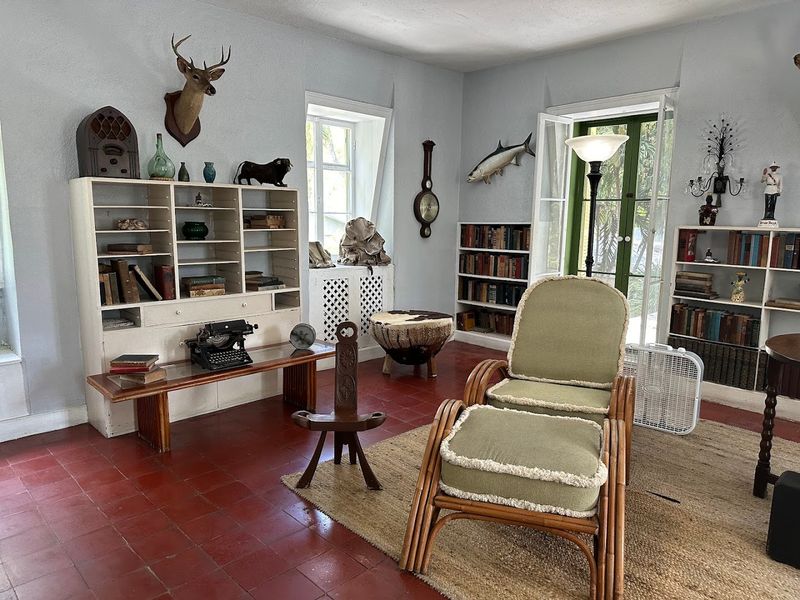
Few writing spaces in American literary history carry as much creative weight as the small studio above the carriage house at the Hemingway Home, and standing inside it for the first time genuinely gave me chills.
Hemingway lived at the Key West property from 1931 to 1939, and during those eight years he produced some of the most celebrated fiction of the 20th century, including “A Farewell to Arms,” “To Have and Have Not,” and “For Whom the Bell Tolls.”
The studio sits above what is now the gift shop, connected to the main house by a catwalk that was later removed, and it preserves the focused, no-frills atmosphere that Hemingway reportedly demanded from his mornings.
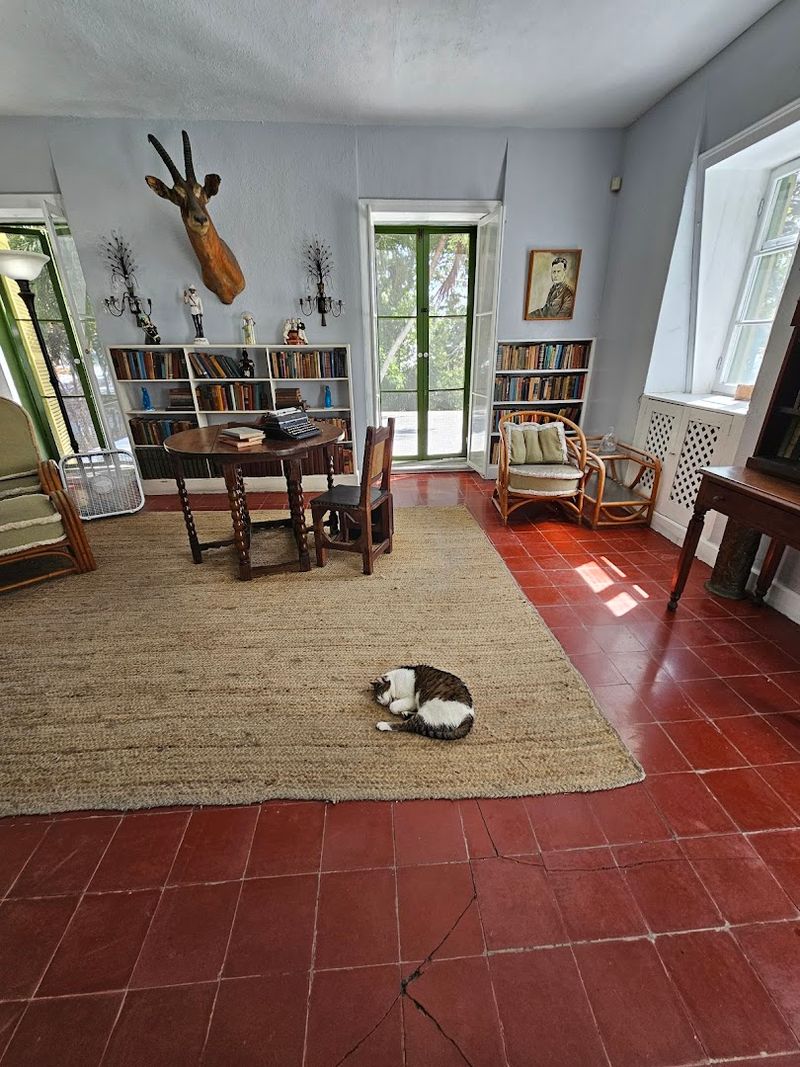
A vintage typewriter rests on the desk, books line the shelves, and a mounted animal head watches from the wall, all of it arranged to reflect how the space looked when it was actually in use.
Tour guides are quick to point out that Hemingway wrote in the early hours before the Key West heat and social life could claim the rest of his day.
The Swimming Pool Was the First In Key West And Cost A Fortune
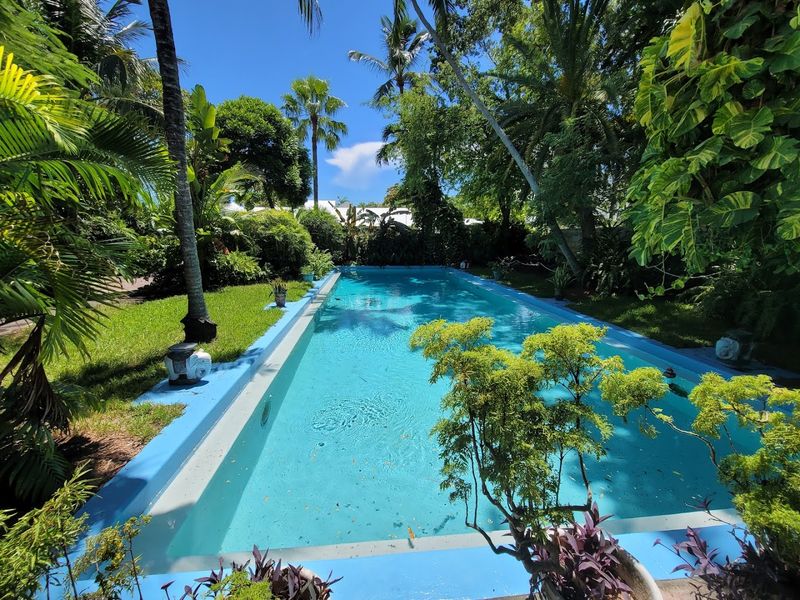
One of the most talked-about features on the entire property is a swimming pool that, at first glance, looks like a perfectly pleasant tropical amenity, but carries a backstory loaded with drama, expense, and a legendary one-cent argument.
Pauline Hemingway had the pool constructed in 1938 while Ernest was away covering the Spanish Civil War, and when he returned and discovered the bill had climbed to approximately $20,000, he reportedly pressed a penny into the wet concrete and told Pauline she might as well take his last cent.
That penny is still embedded in the pool surround today, and pointing it out to visitors has become one of the most satisfying moments on any guided tour.
The pool was the first in Key West, a fact that speaks to just how extravagant the project was for its time and place.
It is now a shaded, serene spot where cats occasionally nap beside the water and visitors linger longer than they planned, trying to locate that famous coin pressed into the stone.
Guided Tours Run Every 15 Minutes and Are Packed With Surprising Details
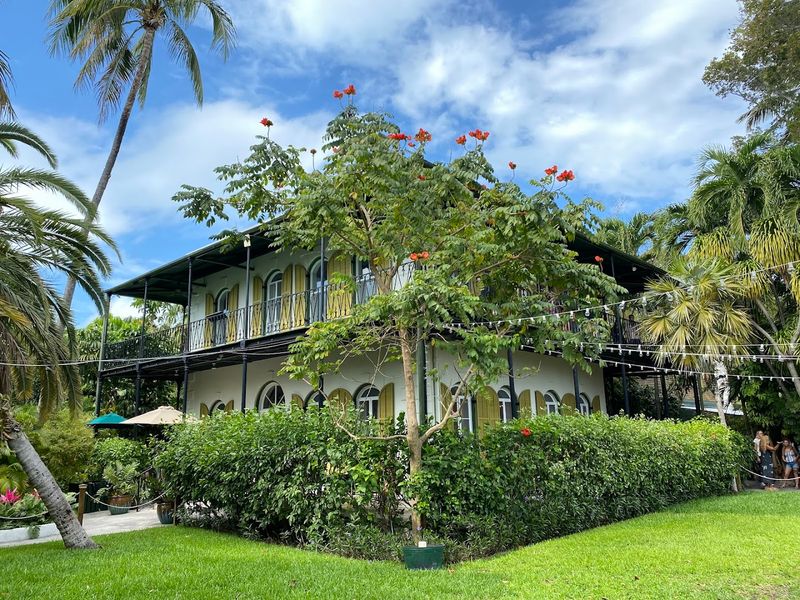
Wandering the property on your own is perfectly fine, thanks to helpful interpretive signs posted throughout the home and gardens, but joining a guided tour is where the experience genuinely shifts from interesting to unforgettable.
Tours depart every 15 minutes, last about 30 minutes, and are included with the $19 admission fee, making them one of the best-value storytelling experiences in all of Key West.
Guides bring the rooms to life with layered details about Hemingway’s daily routines, his complicated personal relationships, the origins of specific furnishings, and the history of the house itself, information that no amount of reading the wall signs will fully replicate.
One reviewer I spoke with mentioned a guide named Dan, described as a former clown and natural storyteller, whose humor and warmth made the whole tour feel like a conversation rather than a lecture.
Going early in the morning is strongly recommended, as a visible line had formed by 11 AM on the day I visited, and the midday heat makes standing outdoors considerably less enjoyable than the cool morning air.
The Cats Each Have Their Own Names Based On Famous Celebrities And Historical Figures
Spend any amount of time chatting with the staff or guides at the Hemingway Home, and you will quickly discover that the resident cats are not simply referred to as the cats, they each carry a proper name tied to a celebrity, historical figure, or cultural icon.
Past and present residents of the property have carried names like Marilyn Monroe, Pablo Picasso, and Winston Churchill, a naming tradition that adds an unexpectedly playful layer to an already quirky attraction.
The tradition reflects the spirit of the place, where serious literary history and genuine absurdity coexist without any apparent tension.
Staff members who care for the cats full-time can often identify individual animals by name on sight, which is impressive given that more than 60 of them roam the grounds at any given time.
One visitor I overheard was delighted to discover that the sleepy orange cat blocking the garden path was named after a world leader, a fact that made the cat’s total indifference to foot traffic feel somehow even more appropriate.
The naming system turns a simple cat sighting into a small game of recognition that keeps visitors smiling throughout the visit.
The Property Features A Dedicated Cat Cemetery
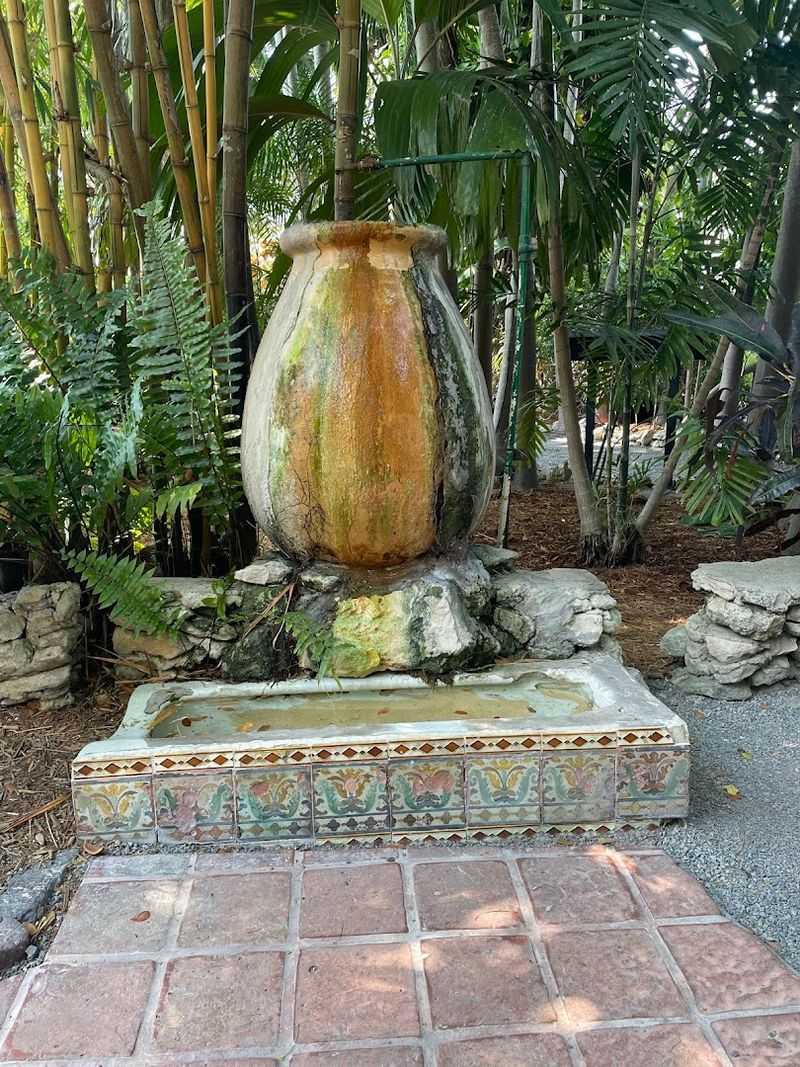
Tucked into a quiet corner of the lush grounds, there is a small cat cemetery where generations of Hemingway cats have been laid to rest, and it is one of those details about this property that somehow manages to be both touching and completely on-brand for a place this unusual.
The cemetery is modest in size, marked with small stones set among the tropical vegetation, and it serves as a quiet reminder that the cats here are not a novelty act but a genuinely protected and cared-for community with deep roots in the estate’s history.
Visitors who take their time exploring the grounds rather than rushing straight to the main house often stumble across it by accident, which makes the discovery feel like a small personal reward for curiosity.
The existence of a dedicated feline burial ground on a nationally recognized literary landmark is exactly the kind of detail that makes the Hemingway Home impossible to describe to someone who has never visited.
One reviewer mentioned spotting cats near the cemetery, which felt like a fitting tribute to the long, unbroken lineage of polydactyl cats that have called this property home for nearly a century.
The Tropical Gardens Are A Lush, Peaceful World Of Their Own
My honest expectation before arriving was that the gardens would be a pleasant backdrop to the main house, but within about five minutes of wandering the shaded paths I completely forgot to look at the building.
The grounds surrounding the Hemingway Home are filled with towering tropical trees, dense flowering plants, winding stone paths, and a koi pond that catches the filtered Key West sunlight in a way that feels almost theatrical.
The garden was designed with the same sense of privacy and intention that characterized Hemingway’s approach to his work space, creating an atmosphere that feels genuinely removed from the busy streets of Old Town just outside the walls.
Cats weave through the undergrowth, stretch across sun-warmed stones, and occasionally perch in the branches of low-hanging trees, adding a layer of living, breathing unpredictability to the whole scene.
Several visitors in reviews described the outdoor space as a hidden oasis, and after spending time there myself I found it difficult to argue with that description.
The gardens alone justify lingering well past the end of any guided tour, especially on a cooler morning when the light is soft and the cats are at their most photogenic.
The Home Is Filled With Authentic Personal Artifacts And Original Furnishings
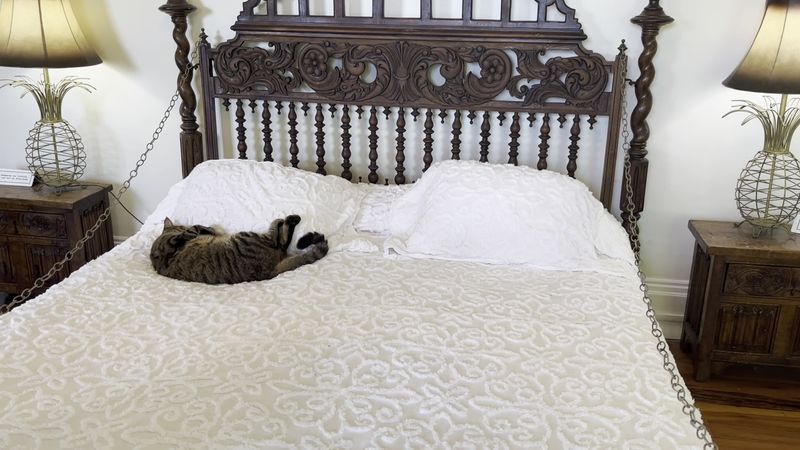
Walking through the rooms of the Hemingway Home feels different from most historic house museums because the furnishings and personal objects inside are not reproductions placed for atmosphere, they are the real things, selected and used by the people who actually lived here.
Original letters, personal photographs, hunting and fishing trophies, an extensive personal library, and period furniture all contribute to a space that feels inhabited rather than archived.
Guides point out specific details that visitors would easily overlook on their own, such as the origins of certain decorative pieces, the significance of particular books on the shelves, and the story behind the mounted animal heads that reflect Hemingway’s well-documented love of outdoor adventure.
The main bedroom, the dining room, and the living spaces are all preserved in a style consistent with the 1930s, which helps visitors build a genuine mental picture of daily life at the property during Hemingway’s most productive years.
Sunlight pouring through the wooden shutters gives every room a warm, slightly golden quality that makes the interior feel alive rather than frozen, and the overall effect is quietly powerful in a way that photographs struggle to capture.
Practical Tips That Will Make Your Visit Significantly Better
After reading dozens of visitor reviews and experiencing the property firsthand, a few practical details stand out as genuinely worth knowing before you go.
Arriving early, ideally right at the 9 AM opening time, makes an enormous difference, as crowds build steadily through the morning and the line at the entrance was already visible by 11 AM on a typical day.
Admission is $19 per person, guided tours are included and run every 15 minutes, and photography is allowed throughout the property with the exception of flash photography indoors.
Comfortable, light clothing and a bottle of water are strongly recommended because portions of the tour take place outdoors, and Key West heat is not something to underestimate even in the morning hours.
Street parking along Whitehead Street and the surrounding blocks is available and reasonably manageable if you arrive early, though the small on-site lot fills up quickly.
If you or anyone in your group has a cat allergy, it is worth knowing that the smell of ammonia near certain areas of the grounds can be noticeable, though outdoor airflow helps considerably for most visitors.