
12 Stunning Must-See Historic Churches Across Arkansas
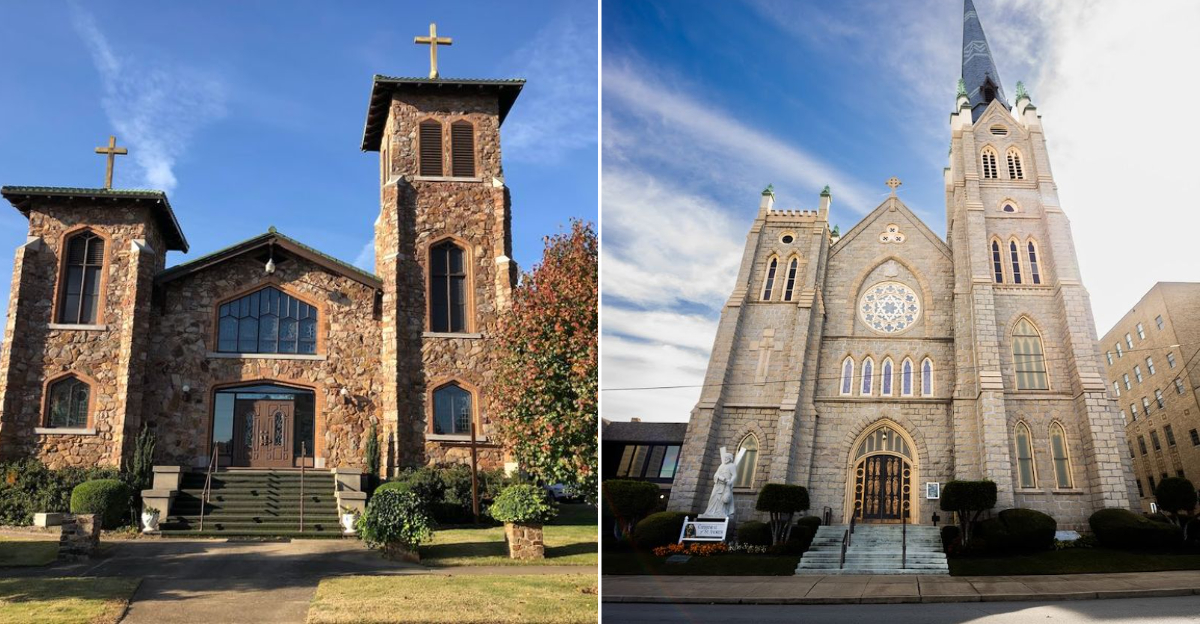
Arkansas knows how to make an impression, and its historic churches prove it the moment you walk inside. The doors open and suddenly you are surrounded by color, texture, and craftsmanship that feels almost unreal.
These spaces are not frozen in time. They are still alive with stories, memories, and moments happening every week.
Every visit reveals new details if you take your time and really look. Sunlight shifts across stained glass. Old wood carries marks from years of use. Towers rise high enough to make you pause mid-step.
It all adds up to something you cannot rush through. Take your time here. Look closer. Let yourself notice the small things.
Grab your camera and come along. These historic churches offer an experience that sticks with you long after you leave.
1. St. Mary’s Catholic Church, Altus
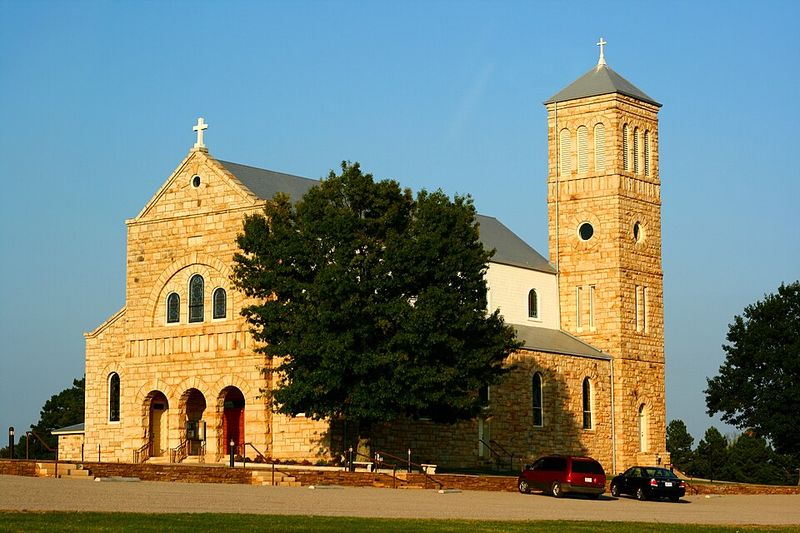
Perched on a hillside above the vineyards of the Arkansas River Valley, St. Mary’s Catholic Church in Altus offers one of the most visually striking settings of any church in the entire state.
St. Mary’s Catholic Church is located at 5118 St. Mary’s Ln., Altus, AR 72821, a small community in Franklin County where German immigrant settlers established deep roots in the mid-1800s.
The church building itself reflects the determination of those early settlers, who constructed a place of worship that would have felt right at home in the European villages they left behind.
The bell tower is a landmark visible from the surrounding farmland, and it has guided travelers toward this hilltop community for well over a century.
Inside, the church preserves beautiful original details including ornate altars and decorative elements that speak directly to the craftsmanship and devotion of its founders.
The surrounding landscape adds a dimension that purely urban churches simply cannot offer, since the rolling hills and agricultural setting make the spiritual atmosphere feel deeply connected to the natural world.
Visiting St. Mary’s on a clear day, when the valley stretches out below and the old bell tower catches the afternoon light, is the kind of travel moment that stays with you.
2. St. Edward Catholic Church, Little Rock
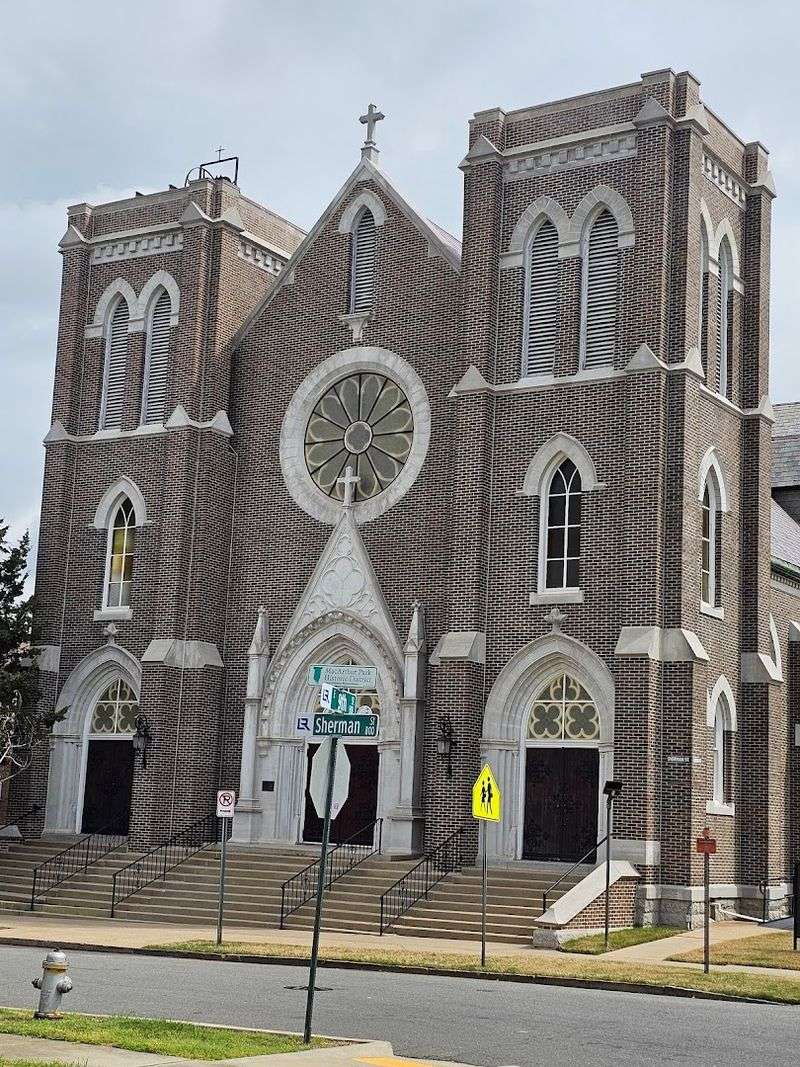
Not every great church announces itself with a towering spire or a dramatic hilltop perch, and St. Edward Catholic Church proves that quiet dignity can be just as powerful.
St. Edward Catholic Church is located at 805 Sherman Road, Little Rock, AR 72202, and it has served its surrounding neighborhood for generations as a spiritual anchor and community gathering place.
The building’s traditional brick construction gives it a warm, inviting appearance that feels genuinely rooted in its surroundings rather than imposed upon them.
Inside, the sanctuary maintains a reverent atmosphere with carefully chosen decorative elements that complement rather than overwhelm the architectural structure.
The church community here has a reputation for warmth and hospitality, which makes a visit feel less like a tourist stop and more like a genuine welcome.
The surrounding neighborhood adds context to the church’s history, since understanding the community it serves helps you appreciate why this building has remained such an important presence over the years.
If you are building a Little Rock church itinerary, St. Edward offers a meaningful counterpoint to the city’s larger, more ornate sacred spaces, reminding you that beauty often lives in simplicity.
3. Cathedral Of St. Andrew, Little Rock
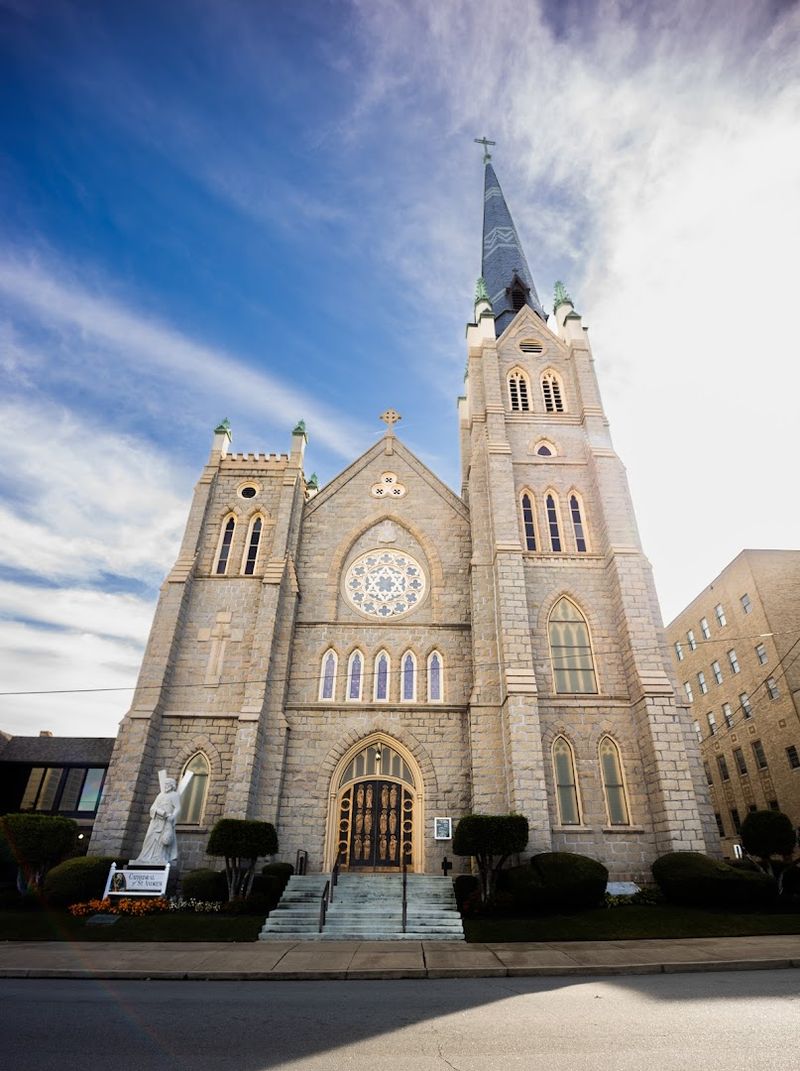
There is something almost cinematic about rounding the corner onto Louisiana Street and suddenly finding yourself face to face with the Cathedral of St. Andrew’s dramatic Gothic spire reaching into the Arkansas sky.
The Cathedral of St. Andrew is located at 617 S. Louisiana Street, Little Rock, AR 72201, and it serves as the mother church of the Diocese of Little Rock, which makes it a cornerstone of Catholic life across the entire state.
The building’s Gothic Revival design features pointed arches, intricate stonework, and stained glass windows that cast pools of colored light across the interior floor on bright afternoons.
One of the most striking details inside is the vaulted ceiling, which creates a sense of soaring height that feels almost impossible given the building’s footprint from the outside.
The cathedral has been carefully maintained over the years, and the preservation efforts show in every polished surface and carefully restored window.
Spending time inside allows you to notice the architectural details that might otherwise be missed, especially the way light interacts with the interior throughout the day.
Walking out onto Louisiana Street afterward, you will find yourself glancing back more than once.
4. First Presbyterian Church, Little Rock
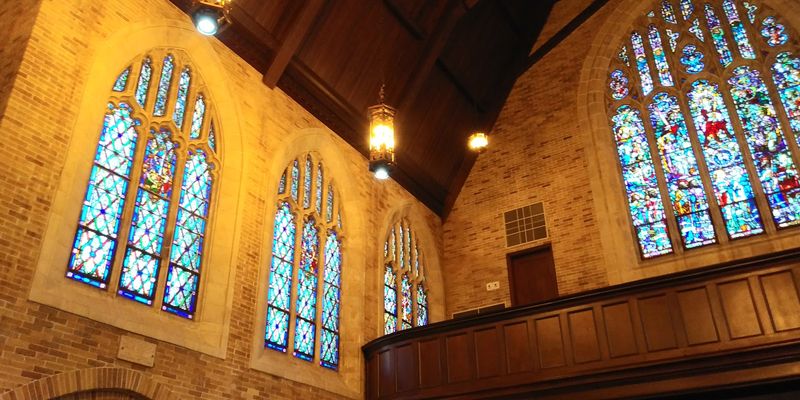
Standing at the corner of Scott Street in downtown Little Rock, this church carries the kind of quiet authority that only comes from generations of community dedication.
First Presbyterian Church is located at 800 Scott Street, Little Rock, AR 72201, and it stands as one of the oldest continuously active congregations in the entire state.
The building’s exterior presents a commanding presence with its solid masonry construction and tall, arched windows that filter light into the sanctuary in the most beautiful way.
Inside, the craftsmanship is immediately noticeable, from the carefully preserved woodwork to the soaring ceiling that draws your eyes upward without any effort at all.
The church has witnessed major moments in Little Rock’s history, which gives every visit a sense of being in a place that truly matters to the city’s identity.
Visiting on a weekday morning often means you get the sanctuary nearly to yourself, which is honestly the best way to take in the architecture without distraction.
Few places in downtown Little Rock manage to feel both monumental and welcoming at the same time, but this church pulls it off beautifully.
5. St. Agnes Catholic Church, Mena
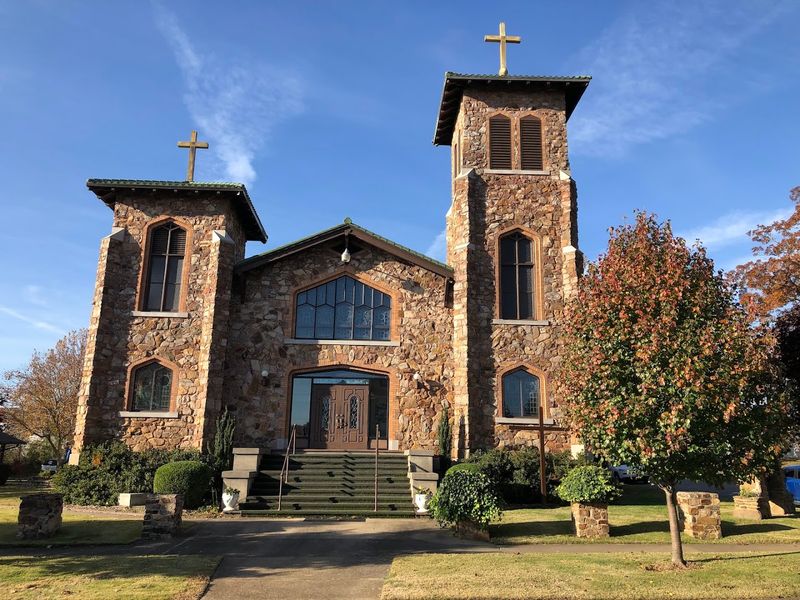
Mena is the kind of Arkansas town that rewards slow exploration, and St. Agnes Catholic Church on 8th Street is one of its most quietly impressive treasures.
St. Agnes Catholic Church is located at 203 8th St., Mena, AR 71953, in Polk County, nestled in the Ouachita Mountain region where the landscape is as dramatic as any in the state.
The church’s traditional design fits naturally into Mena’s historic downtown character, where brick storefronts and tree-lined streets give the whole area a sense of preserved small-town identity.
Inside, the sanctuary maintains the kind of careful, respectful upkeep that tells you immediately how much the congregation values its heritage.
The stained glass windows filter the mountain light in ways that shift throughout the day, making the interior feel different depending on the hour you arrive.
Mena itself is worth building a longer trip around, since the surrounding Ouachita Mountains offer hiking trails and scenic drives that pair beautifully with a visit to this historic church.
St. Agnes serves as a reminder that Arkansas’s most rewarding travel experiences are often found not in its biggest cities but in its smaller communities, where history and community pride run equally deep.
6. Trinity Episcopal Cathedral, Little Rock
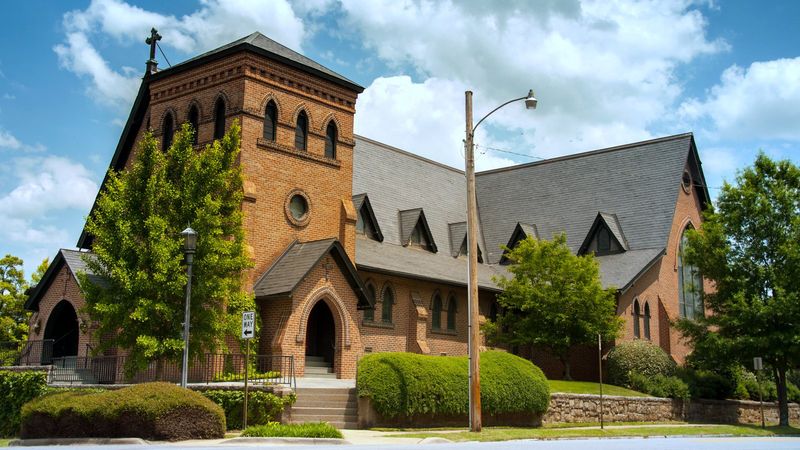
Located in a leafy stretch of West 17th Street, Trinity Episcopal Cathedral greets visitors with the kind of understated elegance that never needs to announce itself loudly.
Trinity Episcopal Cathedral is located at 310 W. 17th St., Little Rock, AR 72206, and it holds the distinction of being the oldest Episcopal church building in central Arkansas, which alone makes it worth a visit.
The architecture reflects a classic English Gothic sensibility, with warm brick tones and stone accents that give the building a grounded, timeless quality you notice immediately.
Inside, the cathedral’s stained glass collection is genuinely remarkable, with each window telling a visual story that rewards careful attention and a slow walk down the nave.
The cathedral grounds are well maintained and include mature trees that create a peaceful atmosphere even before you step through the front doors.
Regular services are held throughout the week, and attending one is a wonderful way to experience the space as it was always intended to be used.
The cathedral also hosts occasional concerts and community events, which bring the historic walls to life with sound in a way that feels entirely fitting for a building of this age and beauty.
7. St. John’s Episcopal Church, Camden
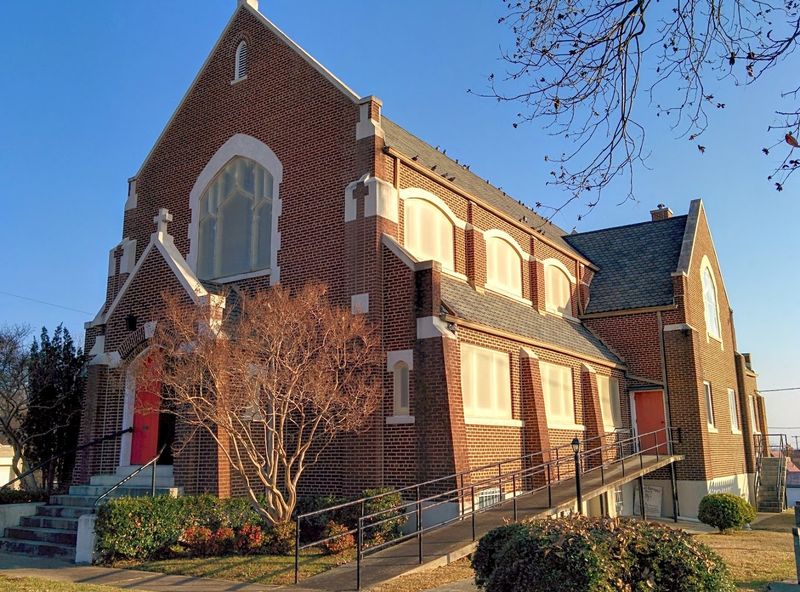
Camden is a city that wears its history with a certain Southern grace, and St. John’s Episcopal Church on Harrison Avenue NW fits that character perfectly.
St. John’s Episcopal Church is located at 117 Harrison Avenue NW, Camden, AR 71701, in Ouachita County, a region of south Arkansas where antebellum history and natural beauty exist side by side.
The church building reflects the architectural sensibilities of the era in which it was constructed, with proportions and details that feel both formal and approachable at the same time.
Camden’s historic district surrounds the church with context, since the nearby antebellum homes and tree-lined streets create an environment where stepping into St. John’s feels like a natural continuation of the neighborhood’s story.
The interior of the church has been thoughtfully maintained, preserving original elements that connect today’s visitors directly to the generations who worshipped here before them.
The Ouachita River region adds a scenic backdrop to any visit to Camden, making it easy to combine a church tour with a broader exploration of this underappreciated corner of the state.
St. John’s in Camden is the kind of place that earns a second visit once you realize how much you absorbed on the first one.
8. First Missionary Baptist Church, Little Rock
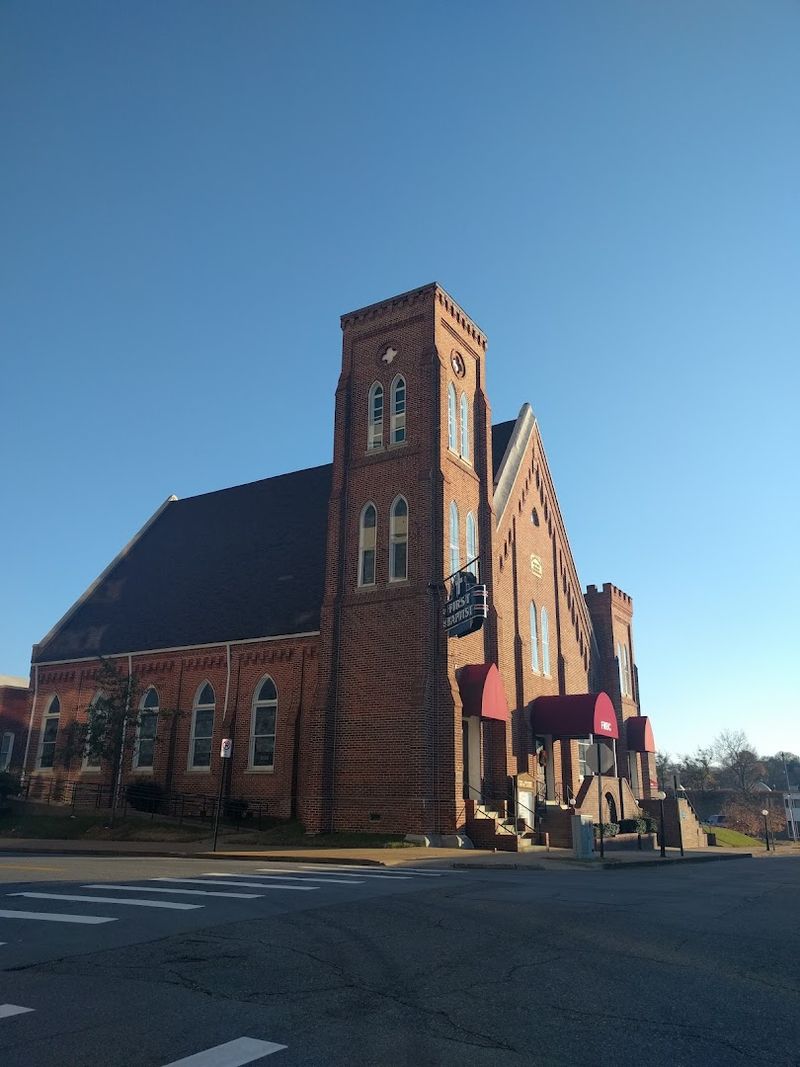
Some buildings hold history in their very foundations, and First Missionary Baptist Church on South Gaines Street is exactly that kind of place.
First Missionary Baptist Church is located at 701 South Gaines Street, Little Rock, AR 72201, and it stands as one of the most historically significant African American congregations in the state of Arkansas.
The church has been a gathering point for community leaders, civil rights conversations, and generations of families who have called this neighborhood home for well over a century.
Architecturally, the building reflects the ambition and pride of a congregation that invested deeply in creating a space worthy of its spiritual and cultural mission.
The interior spaces carry a weight of meaning that goes beyond aesthetics, since the walls here have absorbed decades of music, prayer, celebration, and perseverance.
Visiting with an awareness of the church’s role in local history transforms the experience from a simple architectural tour into something far more meaningful and moving.
The church remains an active congregation today, which means its story is still being written, and that ongoing vitality is perhaps its most impressive feature of all.
9. St. Paul’s Episcopal Church, Batesville
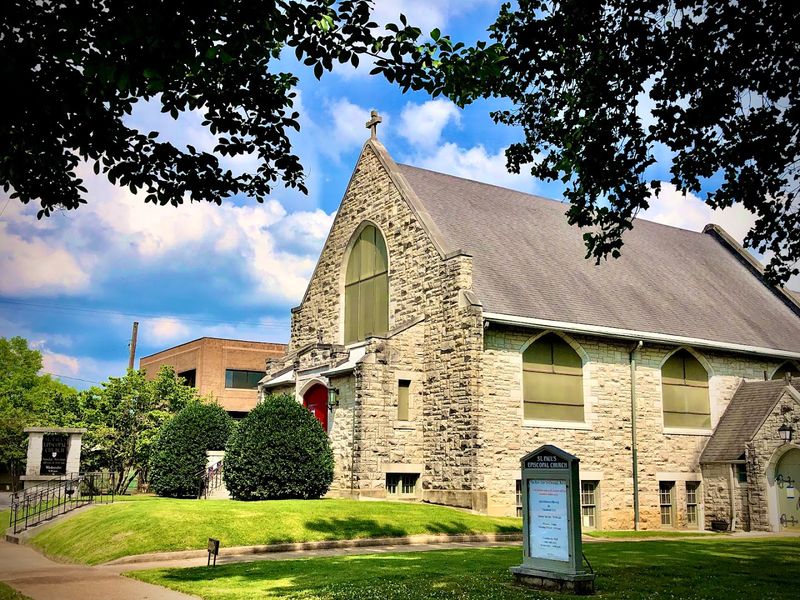
East Main Street in Batesville has a charm that sneaks up on you, and St. Paul’s Episcopal Church is a big reason why that stretch of road feels so memorable.
St. Paul’s Episcopal Church is located at 424 E. Main Street, Batesville, AR 72501, in Independence County, a region of north-central Arkansas known for its rolling hills and the scenic White River.
The church building carries the architectural hallmarks of classic Episcopal design, with an attention to proportion and material that gives it a presence far beyond its modest footprint.
Batesville is one of Arkansas’s older communities, and St. Paul’s history mirrors the town’s own story of growth, challenge, and resilience across multiple generations.
The interior rewards a careful look, since the details in the woodwork, windows, and furnishings reflect the priorities of a congregation that has always taken its architectural stewardship seriously.
The surrounding Main Street neighborhood provides a pleasant walking context for a visit, with historic buildings and a genuine small-town atmosphere that complements the church experience nicely.
Coming away from St. Paul’s, I found myself appreciating how a well-maintained historic church can anchor an entire neighborhood’s sense of identity and continuity.
10. St. John’s Episcopal Church, Fort Smith
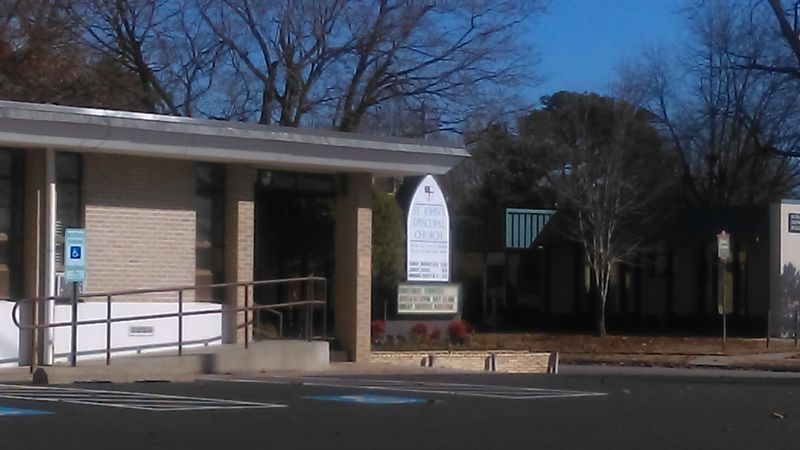
Fort Smith has always had a frontier toughness to its identity, which makes the refined elegance of St. John’s Episcopal Church on North 6th Street all the more surprising and delightful.
St. John’s Episcopal Church is located at 214 North 6th Street, Fort Smith, AR 72901, in Sebastian County, a city that sits right on the Arkansas-Oklahoma border and carries a fascinating layered history.
The church building presents a graceful contrast to the rugged history of the surrounding region, with architectural details that speak to a community determined to build something lasting and beautiful.
The stained glass work here is particularly worth noting, with rich colors and intricate designs that create a meditative atmosphere inside the sanctuary regardless of the time of day.
Fort Smith’s broader historic district makes St. John’s a natural stop on a longer walking tour that includes the nearby National Historic Site and other preserved landmarks.
The congregation at St. John’s has maintained the building with evident care, and that dedication to preservation shows in every well-kept corner of the property.
Fort Smith surprises a lot of first-time visitors, and St. John’s is one of the main reasons why the city’s architectural legacy deserves far more attention than it typically receives.
11. St. John’s Episcopal Church, Helena
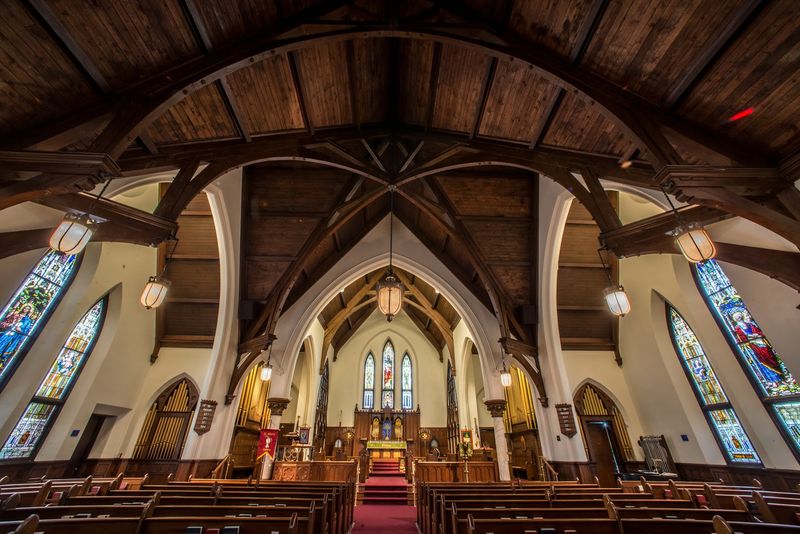
Helena sits where the Ozark hills flatten into the Mississippi Delta, and St. John’s Episcopal Church on Pecan Street carries the soul of that meeting point in its very walls.
St. John’s Episcopal Church is located at 625 Pecan St., Helena, AR 72342, in Phillips County, a city with one of the richest musical and cultural histories in the entire Mid-South region.
The church building reflects the prosperity and ambition of Helena’s earlier era, when the city was a significant river port and its citizens invested heavily in permanent, beautiful institutions.
Inside, the sanctuary preserves a dignified atmosphere that feels entirely in keeping with the church’s long history as a gathering place for the Helena community.
Helena is also known for its blues heritage, and a visit to St. John’s fits naturally into a broader cultural itinerary that includes the Delta Cultural Center and the legendary King Biscuit Blues Festival grounds.
The church’s Pecan Street neighborhood retains much of its historic character, with mature trees and period architecture that make a walk around the block feel genuinely worthwhile.
Leaving Helena with St. John’s in your memory feels like leaving with a piece of the Delta’s complicated, beautiful, irreplaceable story tucked inside your travel journal.
12. Thorncrown Chapel, Eureka Springs
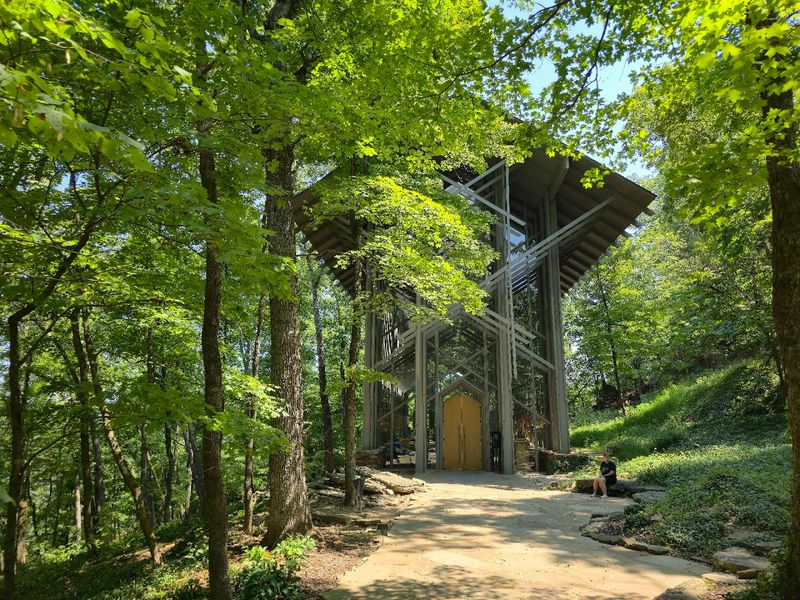
Few buildings in America manage to feel simultaneously man-made and entirely natural, but Thorncrown Chapel in the Ozark woods outside Eureka Springs achieves exactly that balance.
Thorncrown Chapel is located at 12968 Hwy 62 West, Eureka Springs, AR 72632, and it stands as a historic landmark chapel designed by Arkansas architect E. Fay Jones, whose work here earned recognition as one of the greatest American buildings of the twentieth century.
The chapel features hundreds of windows that replace solid walls with glass, allowing the surrounding forest to become part of the sanctuary’s visual experience in every season.
Walking toward it through the trees, you start to understand why visitors consistently describe the first sighting as genuinely breathtaking rather than merely impressive.
The interior holds wooden pews for a small number of visitors at a time, which creates an intimacy that larger, more famous chapels rarely manage to replicate.
Thorncrown is listed on the National Register of Historic Places, a recognition that feels entirely appropriate for a structure this thoughtful and this well-executed.
Eureka Springs itself is a wonderfully quirky destination full of Victorian architecture and artistic energy, which makes Thorncrown a perfect centerpiece for a longer Ozark road trip that you will absolutely not regret planning.