
This Surreal California Trail Leads Through Shadowy Caves And Towering Rock Formations
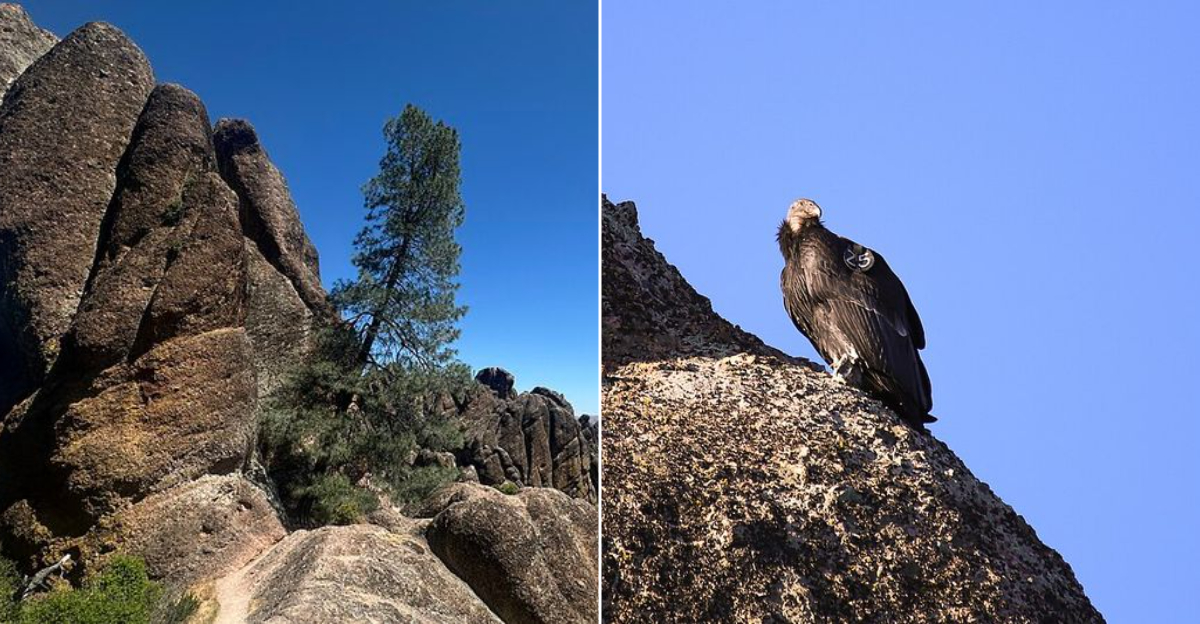
In California, I realized you really can see it all. Shadowy caves twist like secret tunnels, jagged rock towers scratch the sky, and trails weave through scenes so surreal they feel staged.
But no one called “cut.” Every step teased another surprise: hidden reservoirs glinting in sunlight, narrow corridors daring me to squeeze through, and rock formations that seem to defy gravity.
I couldn’t stop whispering, “Wow… this is unreal.” It wasn’t just a hike. It was a backstage pass to nature showing off, and I was lucky enough to be front row.
The Volcanic Rock Formations That Look Like Another Planet
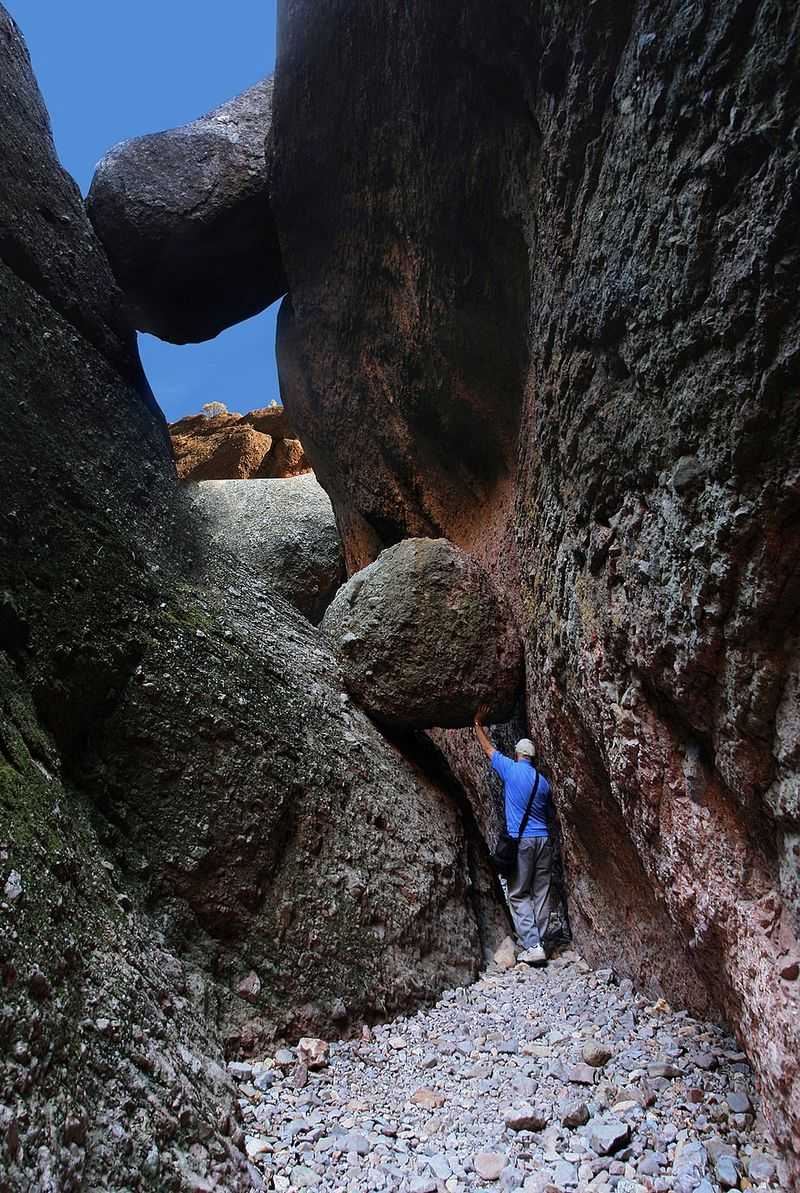
Standing at the base of the Bear Gulch trailhead and tilting my head all the way back just to see the tops of these formations felt genuinely humbling. The rocks at Pinnacles are not just big boulders scattered around by chance.
They are the eroded remnants of an ancient volcano that erupted roughly 23 million years ago, and the result is a landscape so otherworldly that your brain keeps trying to convince you it was digitally enhanced.
Jagged spires, narrow fins of stone, and stacked boulders the size of small houses create a skyline that belongs in a fantasy novel.
I kept stopping every few minutes just to take it all in, which meant my hiking pace was, let us say, leisurely. The warm ochre and rust tones of the rock glow brilliantly in the late afternoon sun, and the shadows they cast create these incredible patterns across the trail.
What really got me was learning that these formations started forming over 200 miles south of where they sit today, slowly carried north along the San Andreas Fault over millions of years.
The park essentially traveled to its current location. That detail alone made every photo I took feel like I was capturing something impossibly ancient.
If you have ever wanted to feel genuinely small in the best possible way, these formations will deliver that experience with zero hesitation.
Where Darkness Becomes An Adventure
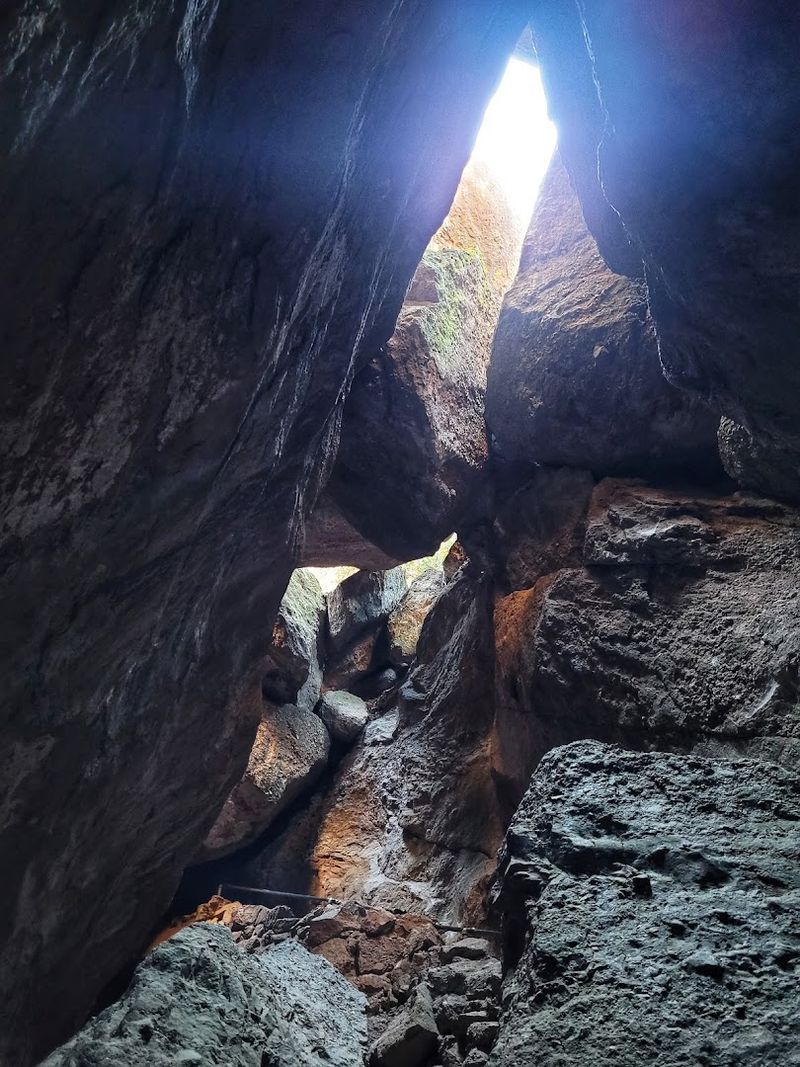
The moment I ducked my head and stepped into Bear Gulch Cave for the first time caught me completely off guard. Located within Pinnacles National Park East Entrance at 31300 Airline Hwy, Paicines, CA 95043, this cave system is not your typical carved limestone cavern.
It formed when massive boulders collapsed into a narrow canyon and essentially created a roofed passageway that you can actually walk through, which is both thrilling and slightly mind-bending.
The cave is broken into two sections, and depending on the season, portions may be closed to protect the Townsend’s big-eared bats that roost inside.
When I visited, the upper section was open, and I cannot overstate how cool it felt stepping from bright California sunshine into this dim, echoing rock corridor. My headlamp was absolutely necessary and I was very glad I had packed one.
Water trickles through parts of the cave, and the walls are slick with moss in certain spots, giving the whole experience this lush, primordial vibe.
There are sections where you really do have to crouch and shuffle sideways. I may have bumped my head once or twice, but that only added to the charm.
Stepping out of the cave onto the sunlit trail above felt like a real reveal.
Bear Gulch Cave made me feel like an explorer, not just a tourist on a path.
The High Peaks Trail Views That Will Rewire Your Brain
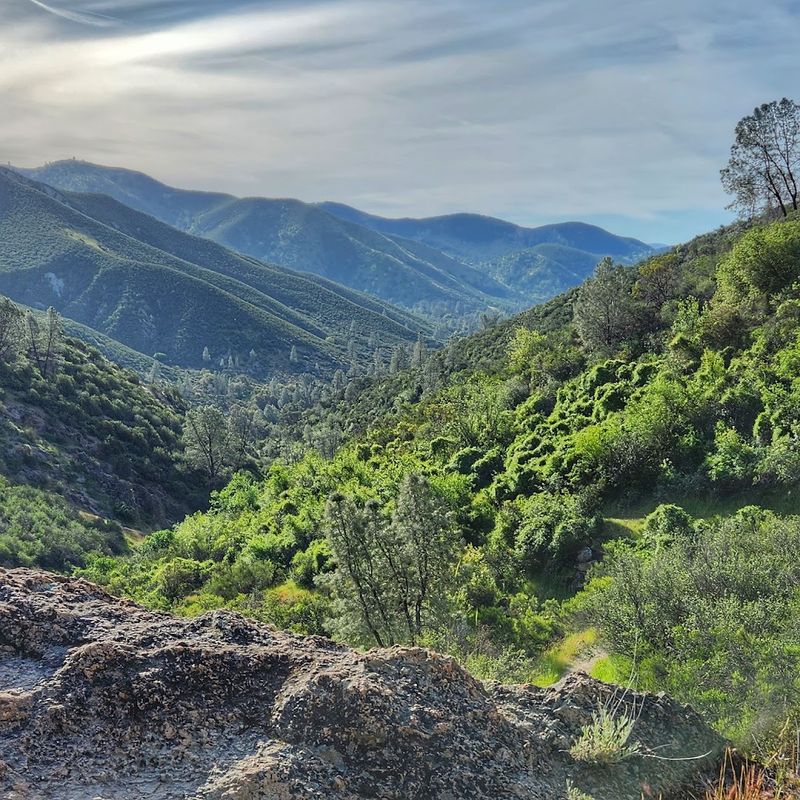
Somewhere around mile three of the High Peaks Trail, I rounded a bend and the entire world opened up in front of me. The trail climbs steadily from Bear Gulch, gaining about 1,500 feet of elevation over roughly 8.5 miles round-trip, and every foot of that climb is absolutely worth the effort.
The views from the upper ridge are the kind that make you exhale slowly and just stand there like you forgot what you were doing.
The San Andreas Fault zone stretches out below in the valley, and on a clear day you can see range after range of California hills rolling off into the distance. I had my trail mix in one hand and my phone camera in the other, and I genuinely could not decide which one to prioritize.
Spoiler alert: the photos won, and my stomach complained about it later.
The trail itself through this section was built by the Civilian Conservation Corps in the 1930s, and they carved actual staircases and handrails directly into the rock face to help hikers navigate the steepest sections.
Running my hand along those carved stone steps knowing they were shaped by workers almost a century ago added this unexpected layer of history to the whole experience. The High Peaks section is where the trail gets dramatic, and if you are going to push through the elevation gain anywhere, make it here because the payoff is extraordinary.
Spring Wildflowers That Turn The Trail Into A Painting
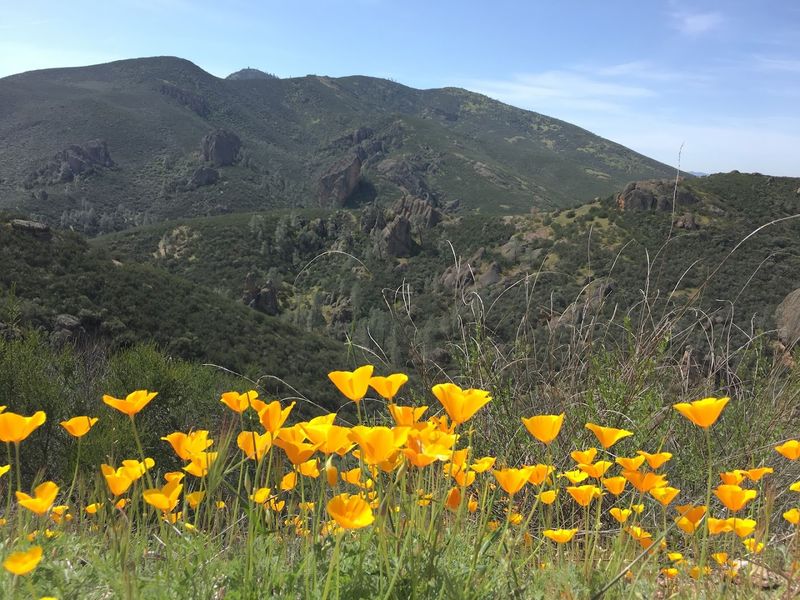
Visiting Pinnacles in spring is one of the best decisions you can make. When I hiked Bear Gulch, the hillsides were covered in California poppies, blue dicks, and shooting stars.
The bright orange and purple blooms looked incredible against the dark volcanic rock.
Pinnacles sits in a Mediterranean climate zone, so wildflower season usually peaks between February and May depending on winter rainfall. After a good rainy season, the display can be spectacular.
Near Chalone Creek, patches of goldfields spread across the grasslands like yellow carpets. I spent ages photographing one cluster of poppies because the light was too good to ignore.
What surprised me most was how the flowers changed as the trail climbed. Near Bear Gulch Reservoir, moisture-loving plants like maidenhair fern grew from rock crevices.
Higher up on the exposed ridgelines, tougher blooms like bush lupine held their ground in the breeze.
The whole trail felt like a garden no one planned, and that natural beauty made every uphill stretch worth it.
California Condors Soaring Overhead Like Living Legends
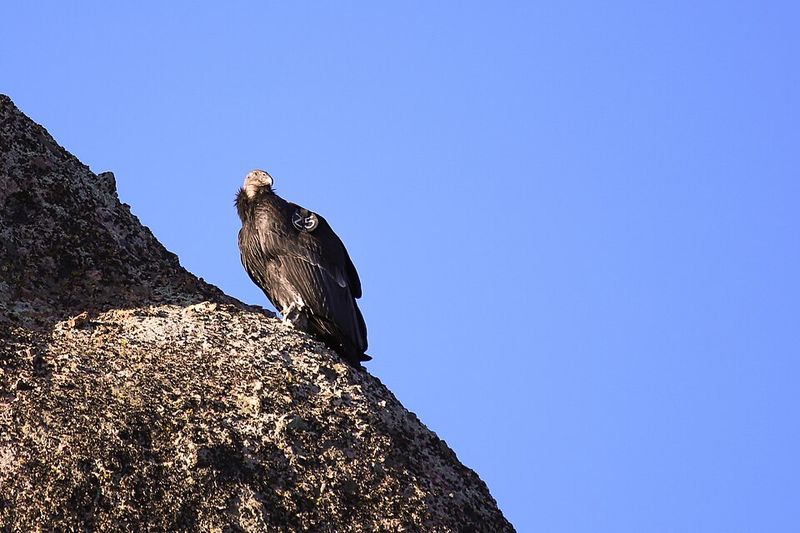
Catching a glimpse of a California condor in the wild is one of those experiences that stops you completely in your tracks. These birds have a wingspan of up to 9.5 feet, making them the largest flying land bird in North America, and this park is one of only a handful of places in the world where you can spot them in their natural habitat.
I had been warned that sightings were not guaranteed, so when a massive shadow swept across the trail and I looked up to see that unmistakable silhouette banking on a thermal, I actually gasped out loud.
The condor recovery program at Pinnacles has been running since 2003, and it is genuinely one of conservation’s great comeback stories.
These birds were down to just 27 individuals in the wild in 1987, and now the population numbers in the hundreds. Seeing one glide effortlessly over the high peaks with barely a wingbeat felt like watching history in motion.
Condors are most commonly spotted near the High Peaks section of the trail, especially in the morning hours when thermals start to build. I watched mine for a solid five minutes as it circled higher and higher until it was just a dark speck against the blue.
My neck was sore from craning upward, and I did not care even slightly. Some moments in nature just demand your full, undivided, slightly sore-necked attention, and a condor overhead is absolutely one of them.
Bear Gulch Reservoir
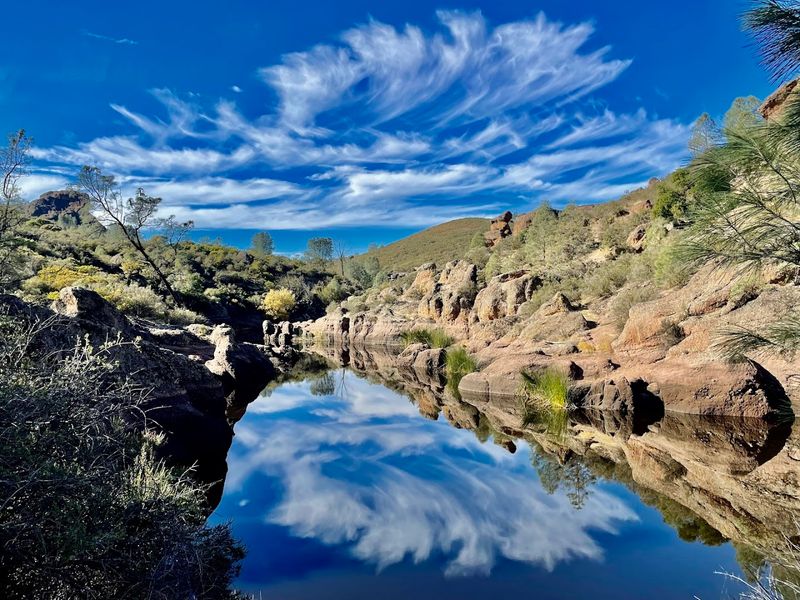
Halfway through my Bear Gulch loop, I came around a corner and found myself staring at a small reservoir cradled between canyon walls. Bear Gulch Reservoir is one of those unexpected trail rewards that nobody really tells you about, which made stumbling upon it feel like finding a secret.
The water was glassy and dark, reflecting the overhanging rock walls and a few scraggly oaks clinging to the canyon rim above.
The reservoir was actually constructed in the 1930s as part of the park’s early development, and it has since become a natural-feeling feature that blends seamlessly into the rocky canyon landscape.
Sitting on a flat boulder at the water’s edge with my boots off and my feet grateful for the break, I genuinely felt like I had found one of the more peaceful spots in all of California.
Wildlife tends to gather near the reservoir, and I spotted several acorn woodpeckers hammering away at a nearby oak while a western lizard did its best impression of a tiny statue on the rocks beside me.
The reservoir also marks the entry point to the lower Bear Gulch Cave section, so it functions as a kind of dramatic gateway before the trail plunges underground.
It is the kind of place where you plan to stop for five minutes and end up lingering for thirty, completely unbothered by the time slipping away.
The East Entrance Is The Right Way To Start This Journey
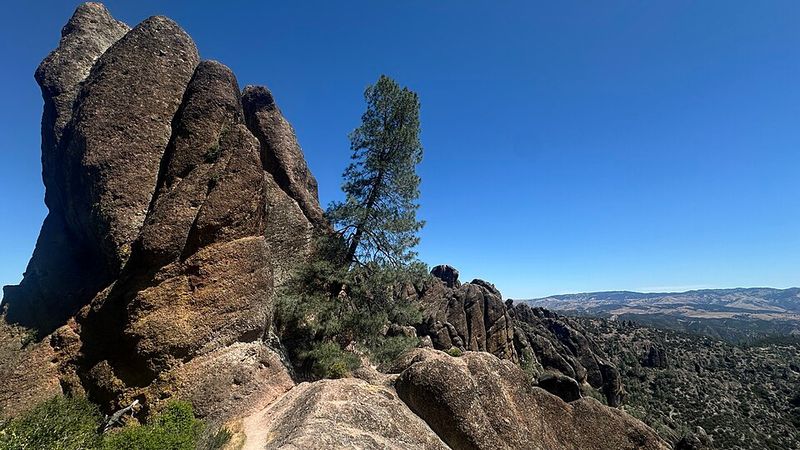
After doing this hike, I can say with confidence that coming in through the East Entrance was the right call. The drive along Airline Highway through the rolling Diablo Range foothills sets the mood right away.
Golden hills slowly give way to the first views of Pinnacles’ dramatic rock spires.
By the time I reached the Bear Gulch Day Use Area parking lot, I was already excited.
The East Entrance gives you direct access to Bear Gulch, the visitor center, and the trailheads for both the High Peaks Trail and the cave system. It is the most efficient starting point if you want the full Pinnacles experience.
Parking fills up quickly on busy weekends, so getting there before 9 AM is a smart move. I learned that the slightly stressful way on my second visit.
The visitor center near Bear Gulch is also worth a quick stop before the hike. The exhibits on the park’s volcanic geology and condor recovery program add helpful context.
Having that background made everything on the trail feel more meaningful.
Pinnacles rewards curiosity, and the East Entrance is where mine really started.