
These Are The Best Michigan Places To Find Petoskey Stones, Agates, Yooperlites, And More
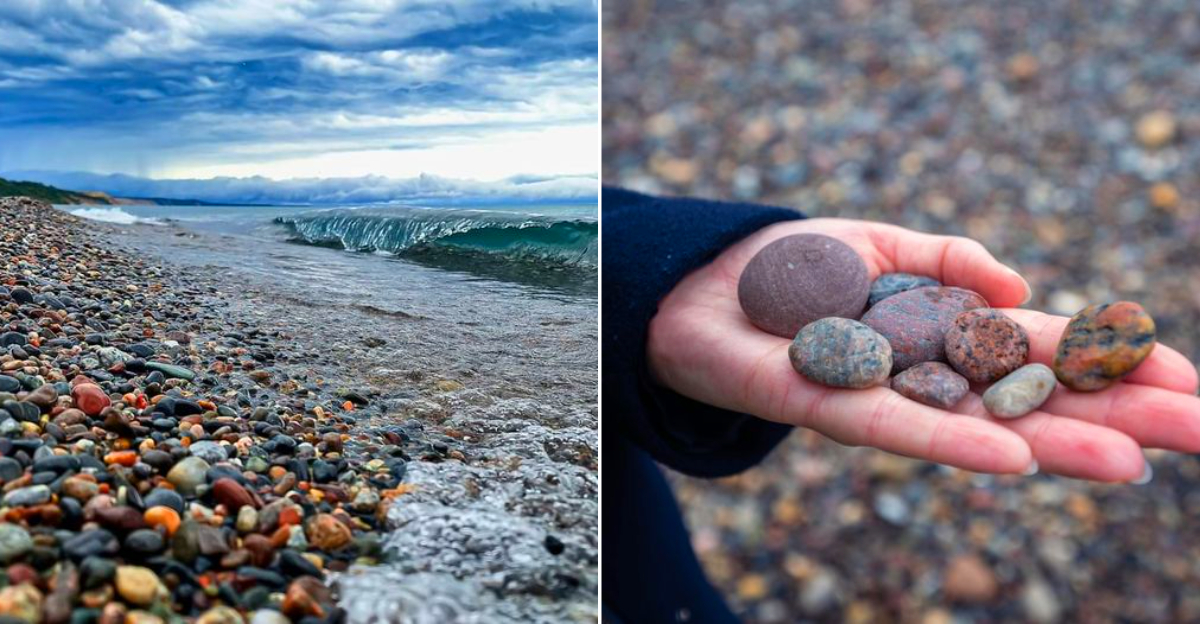
Pocket-clinking walks along a shoreline that breathes with the tide are the only true way to understand the Great Lakes. Forget the plastic magnets and overpriced postcards, the real treasures here are the ones the waves reshuffle every night under a cold moon.
Success on these beaches isn’t about luck, but learning to read the wind and knowing that a 365 nm UV light is your secret weapon for finding the glowing embers of “Yooperlites.” It’s a rhythmic, meditative sleuthing where you respect the twenty-five-pound limit and the lake’s fickle temper.
Michigan’s best rockhounding beaches are perfect for finding rare agates, Petoskey stones, and glowing Yooperlites along the Great Lakes.
Trade the souvenir shops for a pair of sturdy boots and a curious spirit. These twelve stops offer more than just scenery, they provide a masterclass in the quiet, tactile history of a coastline that never looks the same way twice.
1. Petoskey Breakwall, Petoskey
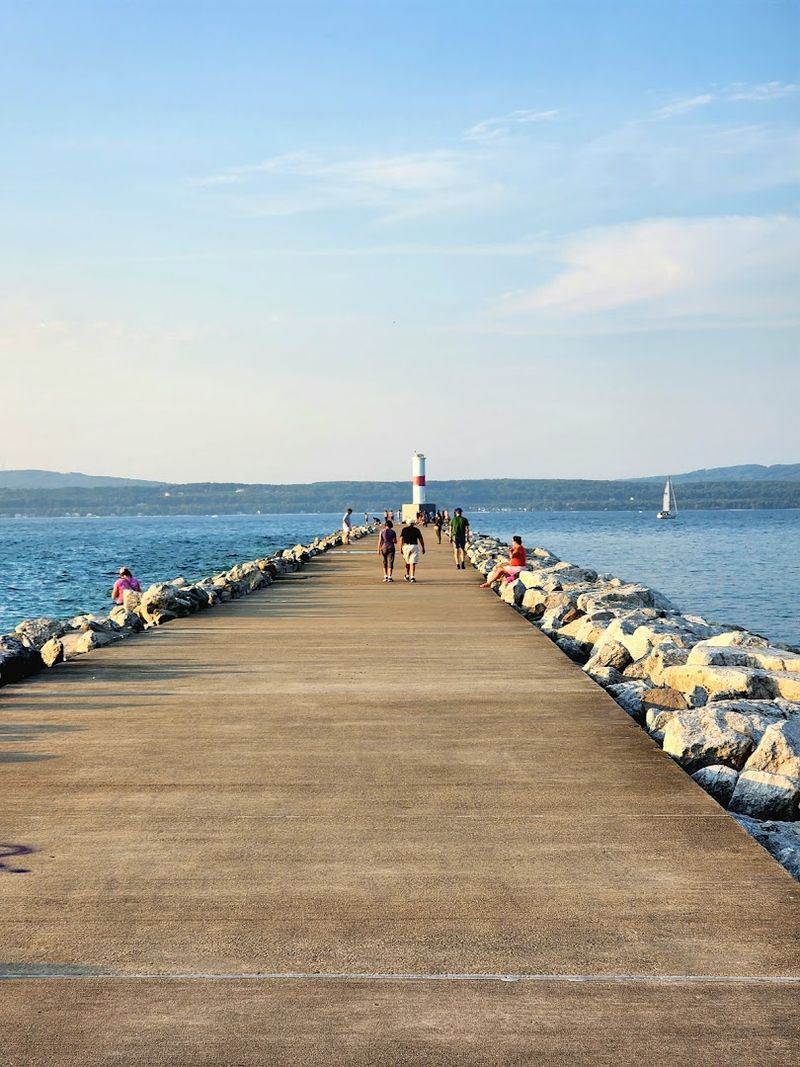
Waves thud against the concrete, and the Petoskey Breakwall funnels pebbles into tidy lines ideal for slow scanning. Fishing rods arch above, gulls ride the wind, and the harbor light gives an easy landmark while you grid the shore.
Storms reorganize the cobbles, so mornings after a blow can feel like a fresh gallery opening. I crouch where wet stones darken, because the honeycomb pattern pops hardest under a sheen of water.
Even ordinary gray stones seem to hold a little suspense here, as if the next turn of your shoe might reveal something ancient and beautifully patterned.
This is city shoreline with small-town pace, an easy add before coffee on Lake Street. Park near Bayfront, walk the wall, then check the adjacent pocket beaches. Watch waves and be cautious on slick surfaces.
Spring reveals new material. Keep finds modest and within Michigan’s 25 pound limit. A small towel helps when you want to rinse a likely candidate, and soft morning light makes the fossil texture easier to catch without squinting.
2. Petoskey State Park, Petoskey
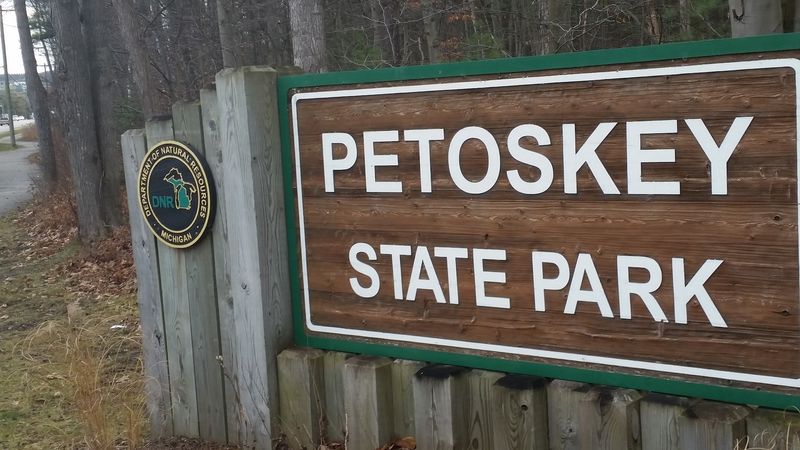
The wide crescent of Petoskey State Park sets a calm rhythm, with dune grass bowing and Lake Michigan laying a cold, blue edge. Families spread towels while a quiet parade of walkers studies cobbles at the waterline.
The beach yields classic Petoskey stones, their hexagons bright when wet or lightly polished by waves. After storms, fresh gravel bars form and reward patient, low-angle scanning.
Even when the beach is busy, there is something meditative about looking down together, each person hoping for that one unmistakable pattern among the stones.
Established between Petoskey and Harbor Springs, the park protects dune systems shaped by wind and ice. Parking is straightforward, and a short walk from the lot gets you into productive ground.
Check the high water mark too, where lighter pebbles hide patterned fossils. Early spring and late fall are generous. Respect rules and the collecting limit.
A small spray bottle or damp cloth can help reveal details, and overcast light often makes the fossil cells easier to spot than harsh midday sun.
3. Mt. McSauba, Charlevoix
Wind sculpts the ridgeline at Mt. McSauba, and the path from the parking area opens to a restless shore of pebbles and clear water. The small city park carries a local, unpolished feel, with kids on the dune stairs and kite lines humming overhead.
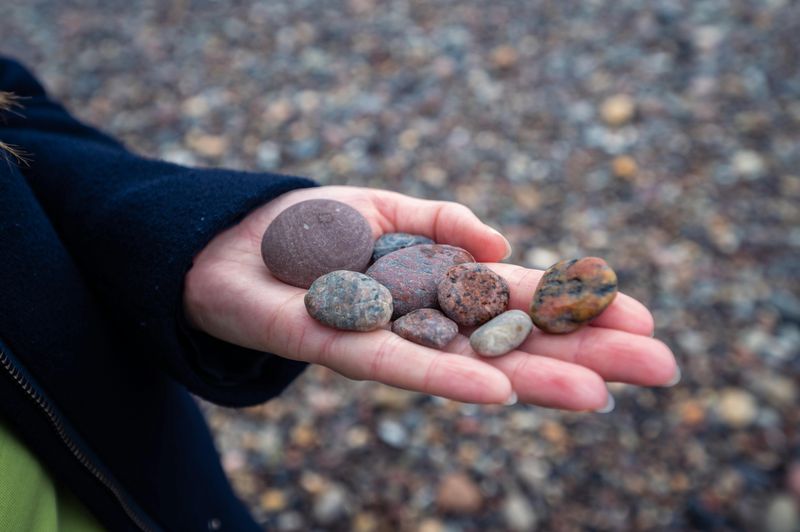
Between surf-wet stones, Petoskeys mingle with Charlevoix stones, their rosette patterns faint until rinsed. It is the kind of beach where a quick stop quietly turns into an hour, especially once the light starts catching the right stones at your feet.
Charlevoix once shipped limestone and cement, and quarries nearby tell that story, but the beach keeps its focus on patient looking. Start north of the stairs and work south, zigzagging between the splash zone and the dry berm. Storms make the difference.
Wear water shoes and bring a bucket or mesh bag to keep hands free while you scan. Evenings are quiet. A small towel helps when you want to wipe stones clean, and lower angled sunlight can make subtle fossil patterns stand out much more clearly.
4. Fisherman’s Island State Park, Charlevoix
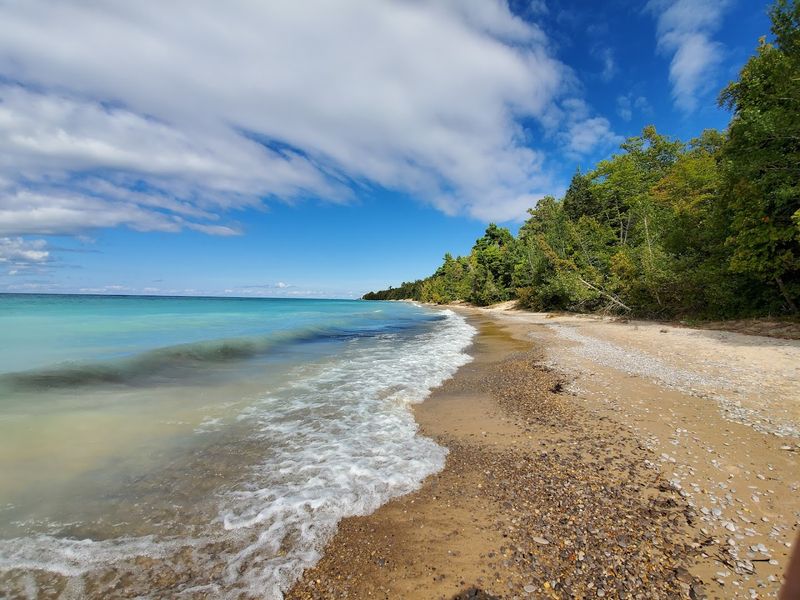
Pine scent threads through the breeze at Fisherman’s Island State Park, where long cobble strands meet undeveloped forest. Campsites peek through trees, and the shoreline feels generous, with space to spread out and settle into the search.
Petoskey stones appear among granite and limestone, and Charlevoix stones show subtle flower bursts when damp. Storm-cleared pockets develop near driftwood.
The beach never feels overly curated, which is part of its appeal, a place where each stretch seems to offer a slightly different mix of color, size, and possibility.
The name recalls a time of fish shanties, though the islands are now connected by shifting bars and memory. I like to walk a slow figure eight, crossing the wet line often to catch changing light.
Bring bug spray in summer and a headlamp for sunrise starts. Stay mindful of private parcels near the park edges and pack out everything. Leave quietly.
A spray bottle or damp cloth can help reveal fossil patterns, and overcast mornings often make the stones easier to read than harsh sun.
5. Point Betsie Lighthouse, Frankfort
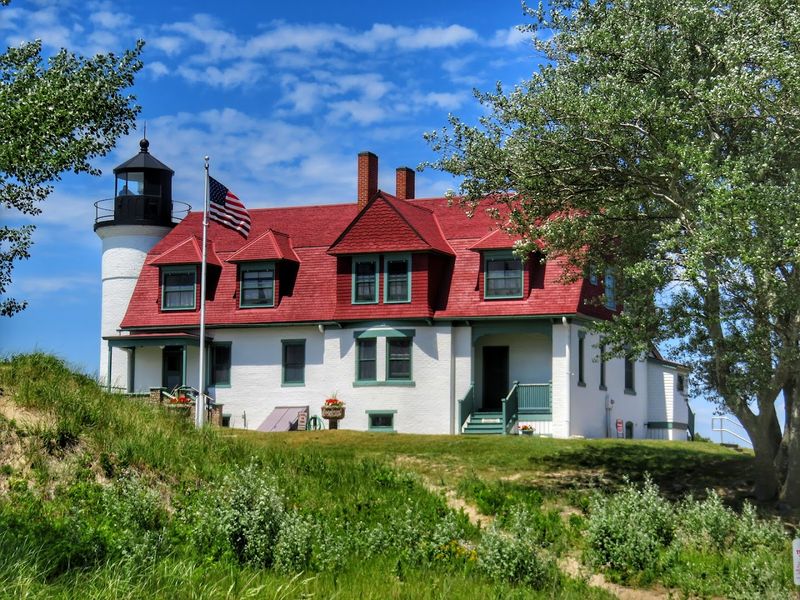
White brick, a green-capped tower, and a red roof frame the water at Point Betsie Lighthouse, where wind snaps flags and stones clatter in the surf.
The setting mixes postcard charm with purposeful edges, a working light that still watches the shoals. Pebble fans stretch north and south, and agates occasionally shine among basalt, jasper, and beach glass.
Even before you start scanning, the shoreline feels charged with small possibilities, each wave seeming to rearrange the evidence just enough to keep you looking.
Built in 1858, the lighthouse guards the Manitou Passage, a busy, storied channel for Great Lakes shipping. Parking is limited, so arrive early or be ready to walk. Work the wrack line after blows from the northwest, then splash the promising ones to check banding.
Respect the grounds and volunteers. Evenings glow, and UV lights may reveal Yooperlites on clear nights, sometimes. A small mesh bag helps keep finds separate, and lower angled light can make subtle colors and translucence stand out more clearly.
6. Empire Beach, Empire
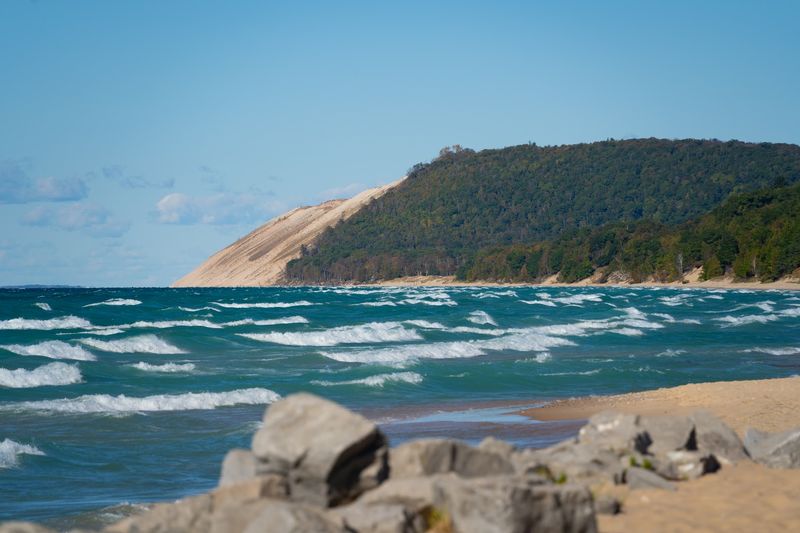
Empire Beach arrives with a wide sky and Sleeping Bear’s shoulder rising to the north, while Lake Michigan hisses over polished stones. Kids float in the shallows, and the boat launch stays busy, yet there is calm focus along the cobble seams.
Petoskeys mix with chert and quartzite, and small agates ride the gravel ribbons after storms. The whole shoreline feels active without becoming frantic, so even a casual walk can turn into a patient, rewarding search.
The village owes its name to a schooner and its growth to logging, but the modern rhythm is sand, picnic tables, and evening sunsets. Pay for village parking, walk east toward the river mouth, then sweep back along the wet line.
A small spritz bottle helps highlight patterns. Shoulder seasons feel generous. Keep your search respectful around families and kayaks. Winds change everything.
Lower morning light often helps reveal fossil texture, and a mesh bag keeps promising finds handy without weighing down your pockets.
7. Orchard Beach State Park, Manistee
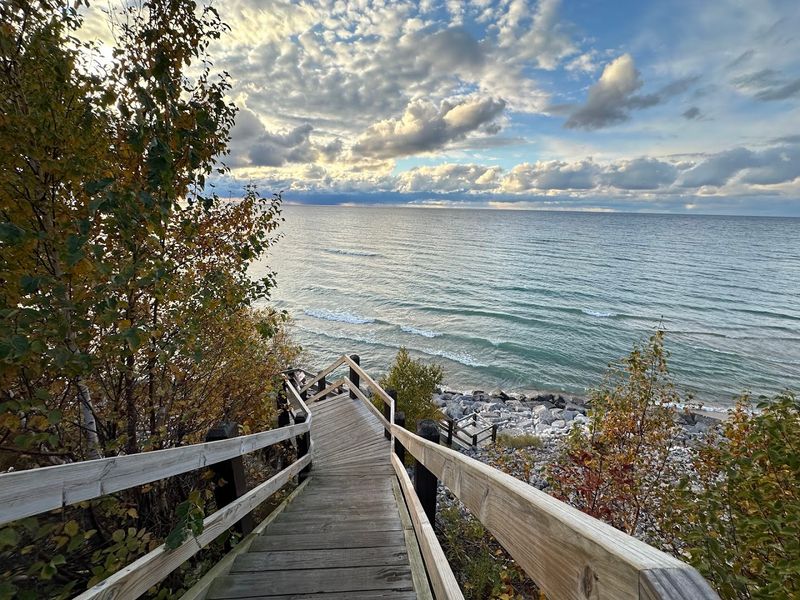
High bluffs and a tidy shelter house look over Orchard Beach State Park, with stairs dropping to a lake that chews and stacks stones constantly. The vibe is neighborly campground meets serious shoreline, and wave-polished fossils glint when clouds pass.
Petoskey stones hide among limestone and shale, and beach glass shows up near the outflow. Even before you start searching, the beach feels dynamic, with each set of waves subtly reshaping where the best stones might be waiting.
The 1940s CCC-era structures speak to careful stewardship that continues through erosion work today. I time visits with receding winds, then start north and work back toward the stairs, zigzagging the slick zone.
Bring shoes you do not mind soaking. Picnic tables make sorting pleasant. Keep dogs close, share space with anglers, and limit collecting to what you can carry comfortably.
Watch changing lake levels. A spray bottle helps reveal fossil patterns, and overcast light often makes the stones easier to read than bright, reflective midday sun.
8. Grand Marais Beach, Grand Marais
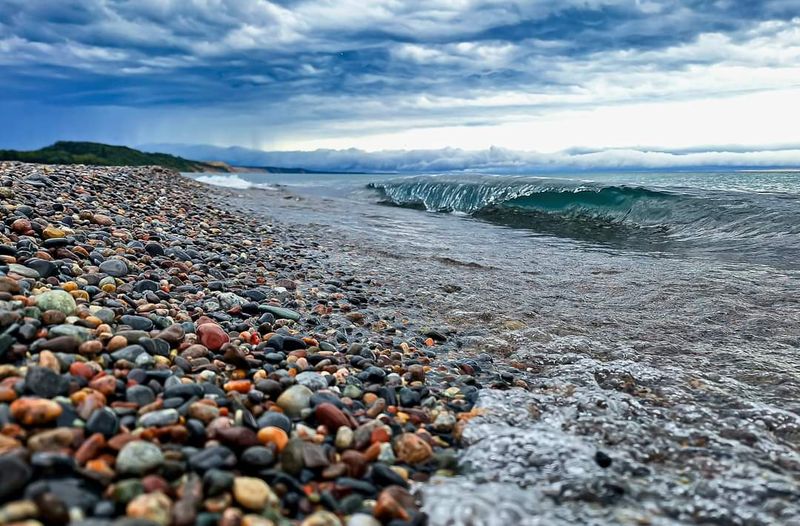
On Lake Superior’s eastern sweep, Grand Marais Beach feels expansive, with long, low waves hissing over caramel and red gravels. The light is crystalline, and bands inside agates burn brighter when wet, while basalt and jasper settle into deeper tones.
Night walks transform the scene as UV beams coax Yooperlites to glow orange. Even in daylight, the beach carries a slight electric feeling, as if every polished stone might be hiding a brighter surprise.
Grand Marais has a history of big agates and hardy mariners, a port that once sheltered schooners under stubborn skies.
Park near the marina or the bay, then walk east toward Lake Superior’s open edge where wave energy sorts material. After storms, new lines appear.
Pack a 365 nm filtered UV light, mind your footing at night, and keep waves at your side. Fog can arrive fast. A small spray bottle helps with daytime scanning, and cooler mornings often make the beach feel even clearer and more focused.
9. Whitefish Point, Paradise
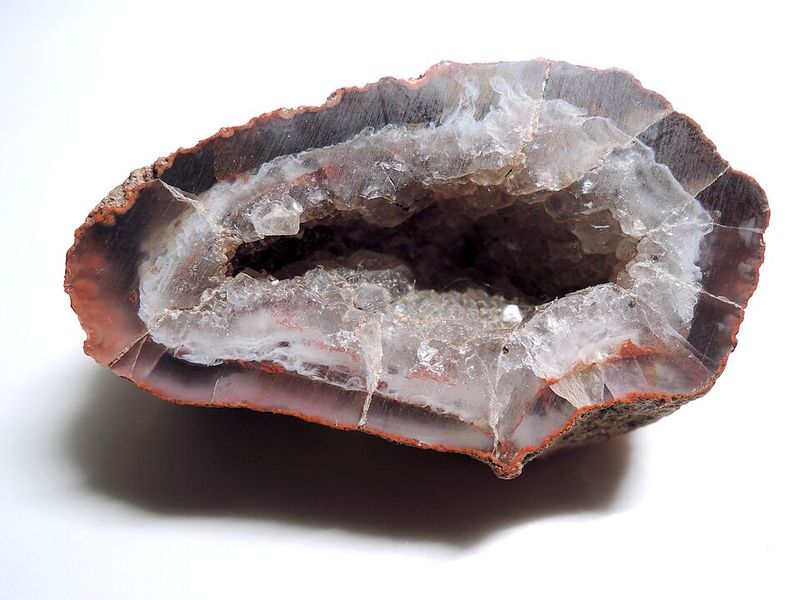
Whitefish Point narrows into Lake Superior like a finger, and the wind rarely lets go, pushing waves that rattle stones and driftwood.
The Shipwreck Museum’s presence underscores how serious this water can be, yet the beach keeps drawing careful hunters.
Agates, basalt, and tumbled slag mingle, and on moonless nights, Yooperlites reveal themselves under UV.
This point anchors the fabled Shipwreck Coast, where freighters met early winters and quick squalls. Park near the museum lot and walk north along the exposed shore, staying above fragile grasses.
After north winds, fresh bands of gravel develop. Dress warm, keep an eye on waves, and give space to nesting birds near seasonal ropes. Patience pays here, quietly and often. The horizon feels vast.
10. Muskallonge State Park, Newberry
Pines whisper between Lake Superior and inland Muskallonge Lake, and the campground sits in that breezy seam.
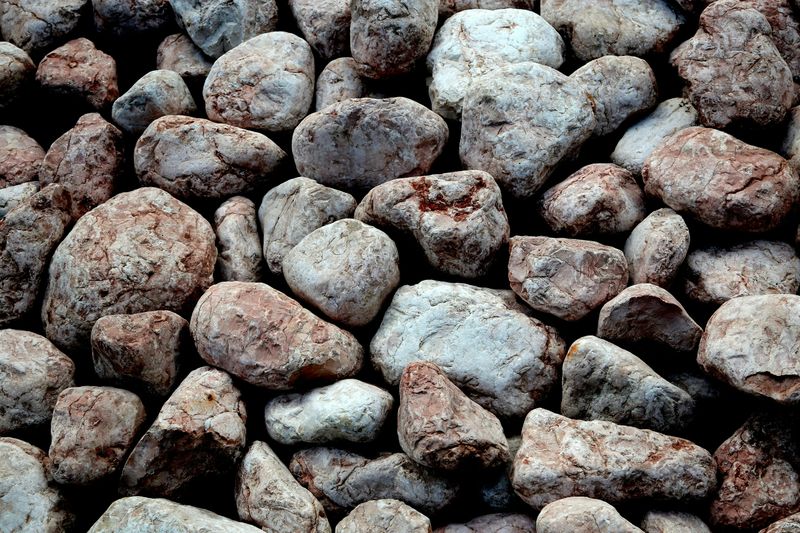
The shore carries mixed cobbles with flashes of red, orange, and yellow inside agates, plus basalt and datolite fragments from regional geology.
Nights invite UV walks for Yooperlites, their sodium-rich sodalite lighting up like ember trails. This land remembers logging camps and a once-busy road to Deer Park, now a quieter stop with well-spaced sites.
I hunt the swash line after sustained north winds, then check stream mouths where gravel collects.
Bug season is real, so bring repellent and keep sleeves handy. Tread lightly on dunes and watch the forecast. Waves decide everything, and everything moves overnight. Check regulations before serious collecting sessions.
11. Bay Furnace Beach, Munising
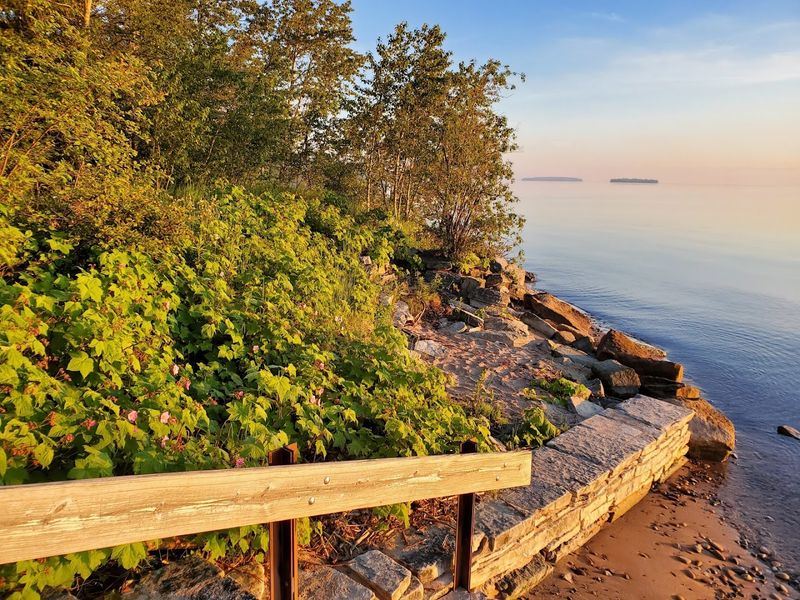
Iron red bricks and the surviving stone stack of the Bay Furnace frame a pocket of Lake Superior shoreline that hums with history. Water laps against slag, basalt, and rounded quartz, and occasional agates nestle in darker gravels.
Dusk invites UV scans for Yooperlites, their glow tracing the tideline like secret punctuation.
The blast furnace operated in the 1870s until fire ended the site, now preserved within Hiawatha National Forest. Park by the historic structure and take the short path to the beach.
Work both sides of the point, checking where currents pile mixed sizes. Watch your footing around sharp slag. Collect lightly, leave the ruins untouched, and listen for freighters sliding past Grand Island. Storms reset the search often.
12. Agate Beach Park, Toivola
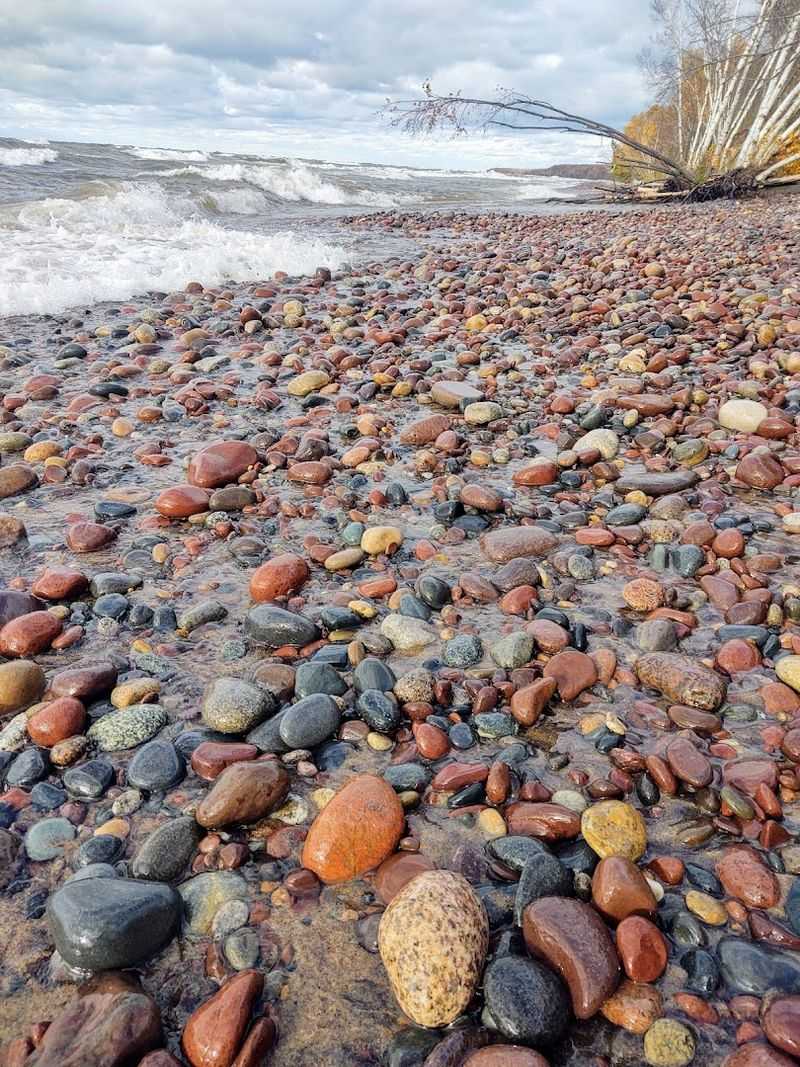
Agate Beach Park in Toivola sits on a long, gently curving stretch where surf sorts pebbles into clean, rust and cream bands. The sound is granular and steady, and colors shift as clouds move, making banded agates flash when splashed.
Basalt, rhyolite, and copper-bearing bits round out the spread, with driftwood windbreaks offering slow shade.
This south shore of the Keweenaw has a logging and mining legacy, now translated into quiet pull-offs and simple access.
Park at the end of the sandy track and walk parallel to the water, eyes tuned to translucence and fortification bands.
After gales, new windows open. Evenings are peaceful but bring a light. Pack out everything and mind cold-water safety. Waders help on windy days.