
Arizona Has A 98-Acre Desert Museum Where You Can Watch Raptors Fly Free Overhead
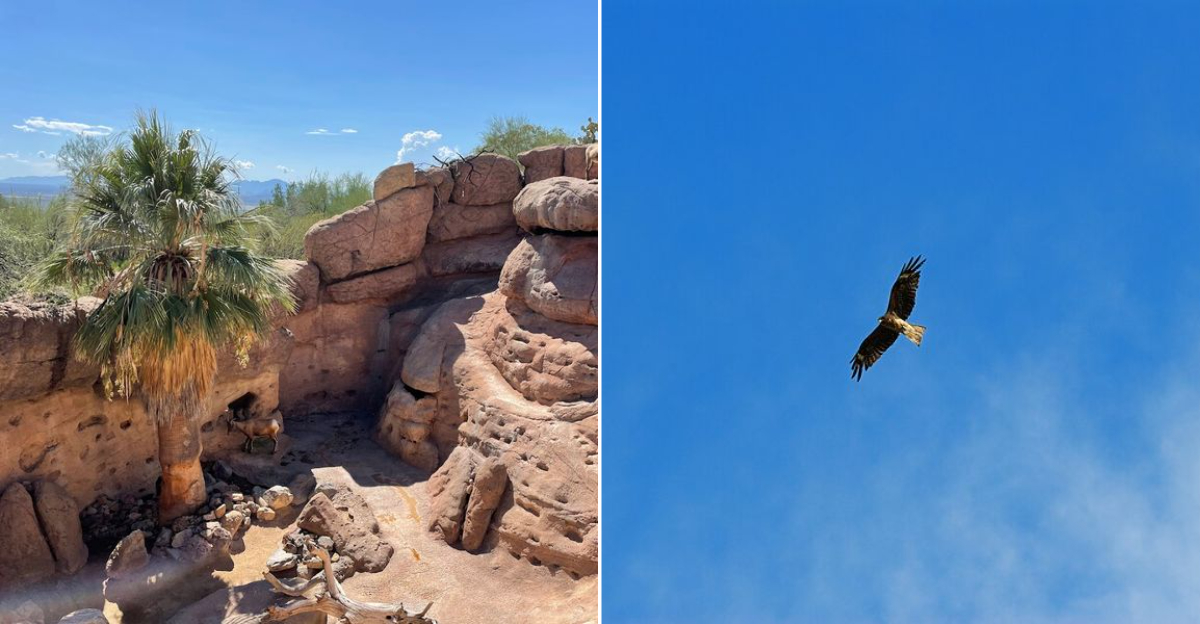
Have you ever had a bird fly so close overhead that you forgot to breathe for a second? I used to think bird watching was all about quiet trails, binoculars, and speaking in near whispers, but this Arizona experience completely shattered that idea for me.
Out in the desert, the birds feel less like distant scenery and more like the stars of the whole show, and they are not exactly subtle about it.
Watching a powerful hawk sweep through the air just above my head was the kind of moment that made my heart lurch in the best possible way. Between the cactus-lined paths, the wide-open sky, and the sheer force of these raptors in motion, the whole place feels wildly alive.
It is one of those unforgettable Arizona experiences that snaps you right out of everyday routine and reminds you how astonishing the natural world can be when you are actually standing inside it.
The Raptor Free Flight Program
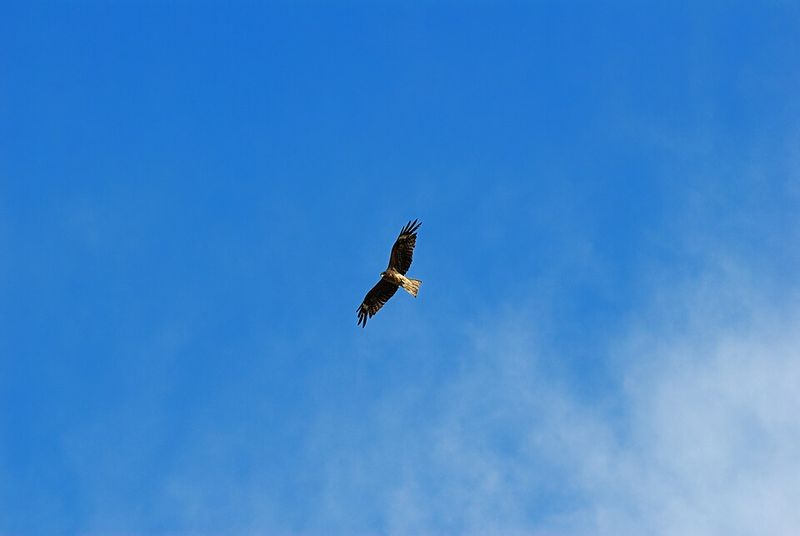
Nowhere else in the country can you stand in an open desert setting and feel the rush of air from a hawk’s wings passing just overhead. The Raptor Free Flight program at the Arizona-Sonora Desert Museum is one of the most thrilling wildlife experiences in the American Southwest, and it earns every bit of that reputation.
During each demonstration, native birds of prey fly completely untethered, without leg straps or restrictive gear, giving them the freedom to behave as they would in the wild. Visitors often describe the moment a raptor skims past their shoulder as genuinely unforgettable.
The program runs seasonally from mid-October through mid-April, with demonstrations on Fridays through Mondays at 10:30 a.m. The 2025 to 2026 season runs from November 14, 2025, through March 30, 2026. Arriving at least 20 minutes early is strongly recommended, since parking and the walk to the demonstration area take time and you will not want to miss a single moment.
Harris’s Hawks: The Team Players Of The Sky

Most birds of prey are solitary hunters, but Harris’s Hawks completely break that rule, and watching them work together is one of the highlights of any visit to the Raptor Free Flight program. These striking birds are the only raptor species in the world known to hunt cooperatively as a family group, using coordinated strategies that resemble the teamwork of wolves on a hunt.
Their chestnut-brown shoulders and bold markings make them easy to spot against the pale desert sky, and their confident flying style keeps audiences locked in from start to finish. During demonstrations, their social nature becomes obvious as they respond to trainers and interact with the environment around them.
Native to the Sonoran Desert region, Harris’s Hawks thrive in the warm, arid landscape that surrounds the museum. Getting to observe them up close in their natural habitat, rather than behind glass or a fence, gives visitors a rare window into how intelligent and socially complex these birds truly are.
98 Acres Of Living Desert To Explore

The sheer size of this place catches a lot of first-time visitors off guard. Spreading across 98 acres of authentic Sonoran Desert terrain, the Arizona-Sonora Desert Museum feels less like a curated attraction and more like a guided walk through one of the most biodiverse desert ecosystems on Earth.
More than 230 animal species and over 1,200 types of plants call this place home, all living in naturalistic habitats that blend seamlessly into the surrounding landscape. You might spot a Gila monster resting on a sun-warmed rock, watch a mountain lion pace through a rocky canyon exhibit, or linger near a hummingbird aviary where dozens of tiny birds hover just inches from your face.
The outdoor trails connect different habitat zones, each one offering something new to discover around every bend. Comfortable walking shoes and a hat are essential, since most of the experience happens outdoors under the Arizona sun, but that open-air quality is also what makes the whole visit feel so alive.
The Desert’s Most Intelligent Residents: Chihuahuan Ravens
Ravens have a reputation for being clever, but spending time watching Chihuahuan Ravens at the museum will make you rethink just how smart a bird can be. These glossy, jet-black birds are known for their exceptional problem-solving skills, playful personalities, and ability to adapt to nearly any situation they encounter.
Slightly smaller than the common raven, the Chihuahuan Raven is native to the desert grasslands of the American Southwest and northern Mexico. During Raptor Free Flight demonstrations, their behavior stands out because they often seem to be enjoying the whole experience themselves, occasionally swooping in unexpected directions or interacting curiously with the crowd.
Researchers who study corvids, the bird family that includes ravens and crows, consistently rank them among the most cognitively advanced birds on the planet. Watching one of these birds in action at the museum is a reminder that intelligence in the animal kingdom shows up in wonderfully unexpected places, and that the desert is full of surprises.
Great Horned Owls: Nighttime Hunters In Daylight

There is something quietly commanding about a Great Horned Owl that makes everyone in the crowd go a little still when one appears. These powerful nocturnal hunters are built for darkness, with eyes so sensitive to low light that they can spot prey from remarkable distances, and ears positioned asymmetrically on their skull to detect the faintest rustle in the brush.
Seeing one during a daytime Raptor Free Flight demonstration is a special treat, since these birds are not typically spotted in full activity during daylight hours in the wild. Their silent flight, made possible by specially structured feathers that muffle sound, is something visitors often describe as almost ghostly.
Great Horned Owls are apex predators in their environment, capable of taking prey as large as skunks and other raptors. The museum’s program gives visitors a rare chance to appreciate their size, composure, and raw physical ability in a setting that feels genuinely respectful of the bird’s wild nature.
Red-tailed Hawks: The Icons Of The American Sky

If you have ever heard a dramatic bird cry in a movie or television show, chances are it was actually a Red-tailed Hawk. These birds are so visually iconic that their call is often used in Hollywood productions even when other birds are shown on screen, which says a lot about the kind of impression they leave on people.
Red-tailed Hawks are among the most commonly seen raptors across North America, yet seeing one fly free and unrestrained directly overhead changes your understanding of them completely. Their broad, rounded wings and that signature rust-colored tail catch the light beautifully during the Raptor Free Flight demonstrations, making them a favorite subject for photographers in the crowd.
At the Arizona-Sonora Desert Museum, these hawks represent something larger than just a single species. They are a symbol of the wild landscape that stretches in every direction from the museum’s grounds, reminding every visitor that the Sonoran Desert is very much alive and worth protecting.
Planning Your Visit: Tips For Getting The Most Out Of The Museum

Getting the full Arizona-Sonora Desert Museum experience takes a little planning, and a few practical tips can make a real difference. The museum is located at 2021 N. Kinney Road, west of Tucson, Arizona, and is open year-round, though early morning visits during spring and fall tend to offer the most comfortable temperatures for walking the outdoor trails.
For the Raptor Free Flight program specifically, arriving at least 20 minutes before the 10:30 a.m. demonstration is important. The walk from the parking area to the demonstration zones takes time, and the best viewing spots fill up quickly with families and photography enthusiasts who know what they are in for.
Wearing comfortable, closed-toe shoes and bringing sunscreen, water, and a hat will keep you comfortable throughout the visit. The museum also has a cafe and a gift shop worth browsing before you leave.
Most visitors find that a full morning and part of the afternoon is the right amount of time to see everything without feeling rushed.