
This Historic Seven Mile Bridge In Florida Feels Like Stepping Back In Time
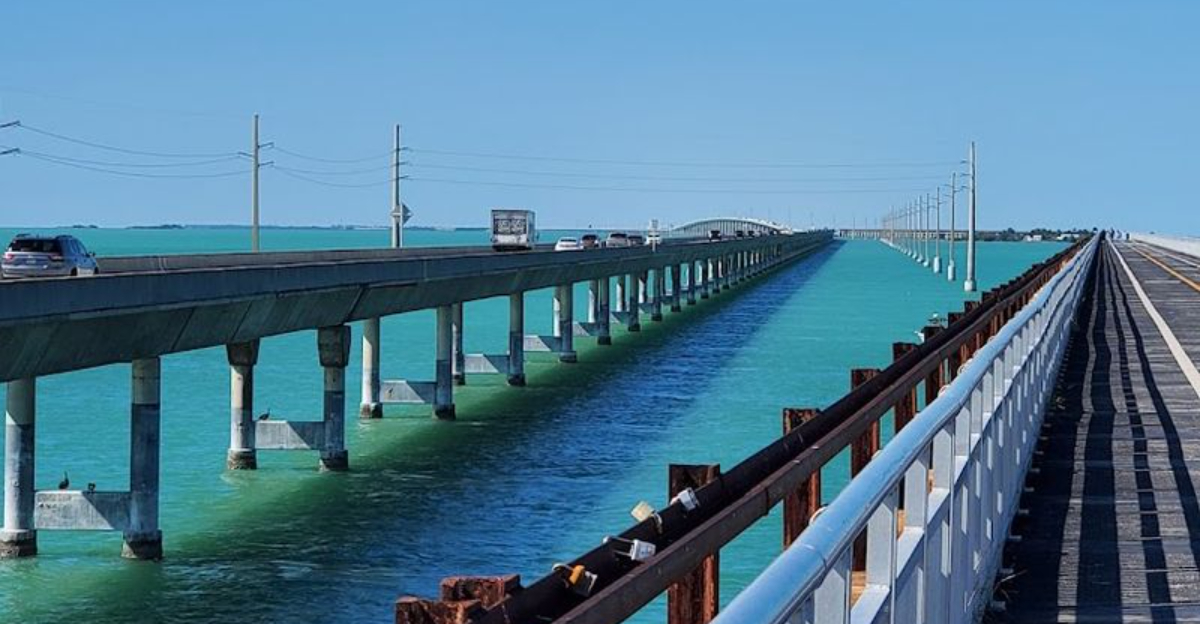
There is a stretch of old roadway just outside Marathon, Florida, where time seems to move at a different pace. The horizon feels wide open, the water sits calm on both sides, and the only rhythm comes from people walking or cycling along a path that once carried constant traffic.
What used to be an essential connection through the Florida Keys now feels far more relaxed. Today, it serves as a quiet route above the water, where the views extend in every direction and the distance becomes part of the experience.
It is not just the setting that makes an impression, though that alone would be enough.
There is a clear sense of history here, built into each span, reflecting a time when this crossing played a much larger role in connecting the islands.
It is the kind of place that encourages you to slow down, look around, and stay a little longer than you planned.
These are some of the details that make it so memorable.
Henry Flagler’s Railroad Dream Built This Bridge
Long before cars ruled the road, this bridge was born from one man’s bold vision to connect Miami to Key West by rail.
Henry Flagler, the railroad tycoon behind the Florida East Coast Railway, completed the original structure in 1912 as part of what many called the Eighth Wonder of the World.
The project stretched nearly 128 miles of track over open water, island by island, all the way to Key West.
Building across the ocean was no small feat, and the Seven Mile Bridge was the crown jewel of the entire route.
Thousands of workers battled brutal heat, hurricanes, and unpredictable tides to finish it.
When the first train rolled across in January 1912, the Florida Keys were forever changed.
Flagler himself rode that inaugural train at age 82, finally seeing his dream become reality.
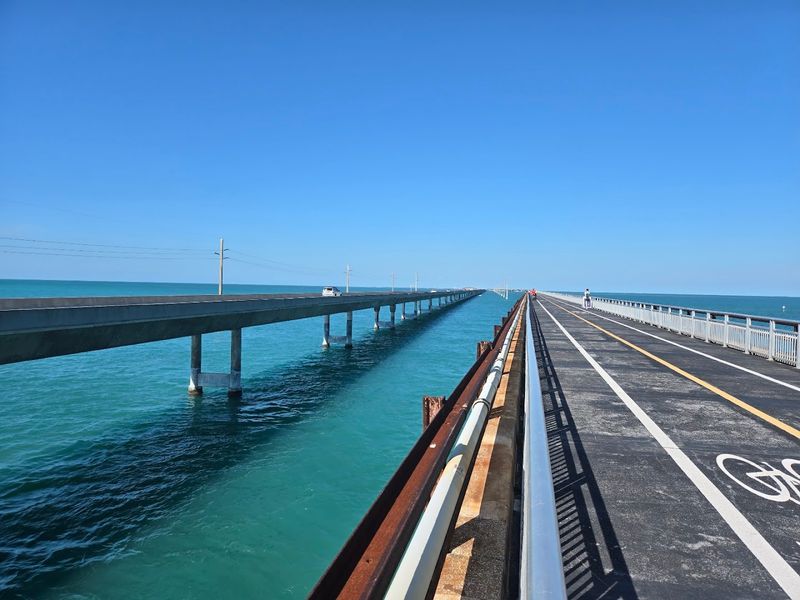
The ambition behind this bridge still feels palpable when you walk its length today, with the Gulf on one side and the Atlantic on the other, whispering stories of an era when impossible things got built anyway.
From Railroad to Road: A Second Life In The 1930s
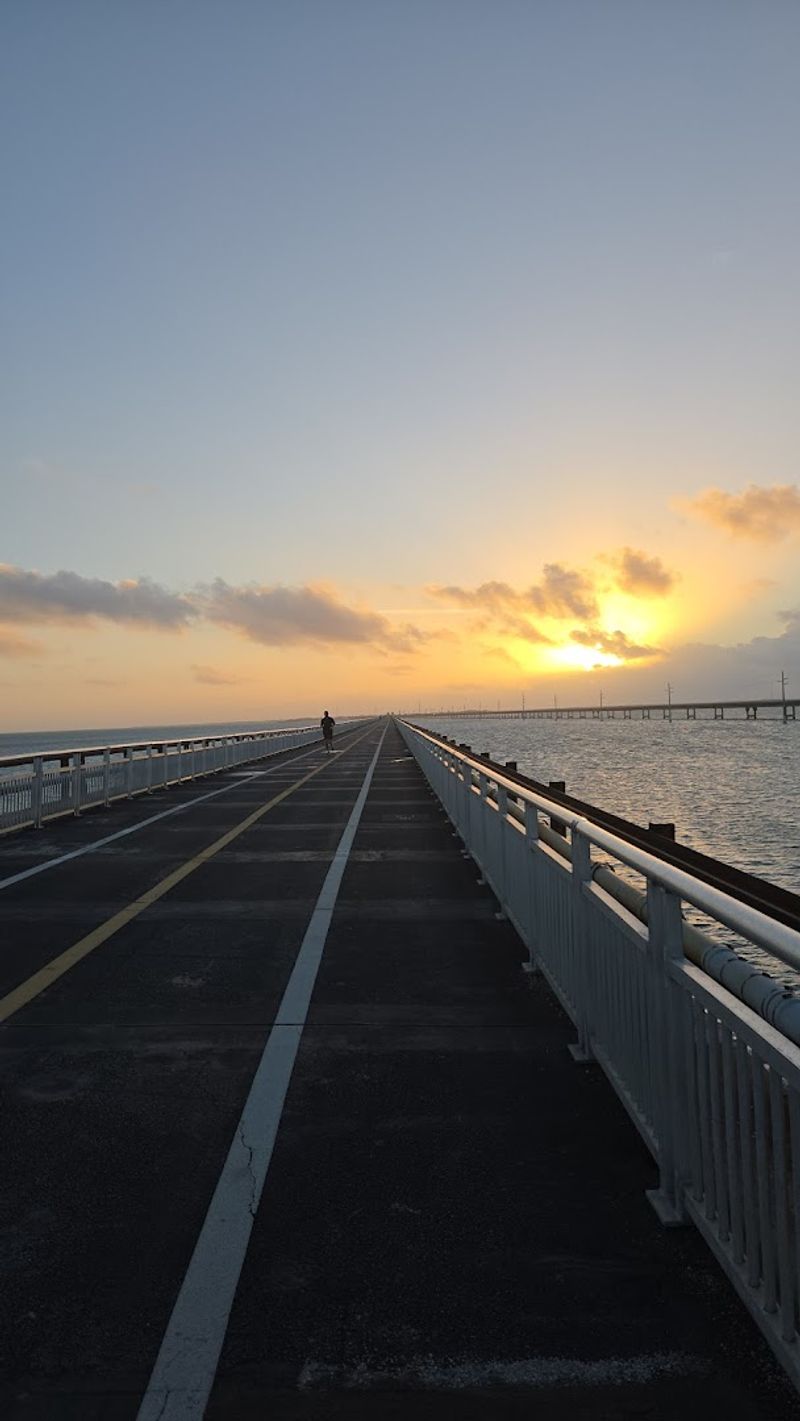
After a catastrophic hurricane tore through the Keys in 1935, the railroad was never rebuilt, and the Old Seven Mile Bridge got a second chance at life.
Workers converted the old rail line into a proper automobile road, which became part of the Overseas Highway connecting the Florida mainland to Key West.
That transformation was nothing short of remarkable, turning iron rails and wooden ties into a roadway that families, truckers, and adventurers would drive for decades.
Imagine cruising across open ocean in a 1940s Ford with nothing but water stretching to the horizon on both sides.
The bridge served drivers faithfully until 1982, when a newer, wider span was built right alongside it to handle modern traffic.
Even after being replaced, the old structure refused to disappear quietly into history.
Its concrete bones stayed standing, patiently waiting for yet another chapter.
That resilience, surviving storms, reinventions, and decades of salty air, is part of what makes this bridge feel less like a road and more like a living, breathing piece of Florida’s soul.
The Bridge Stretches About Two Miles For Pedestrians Today
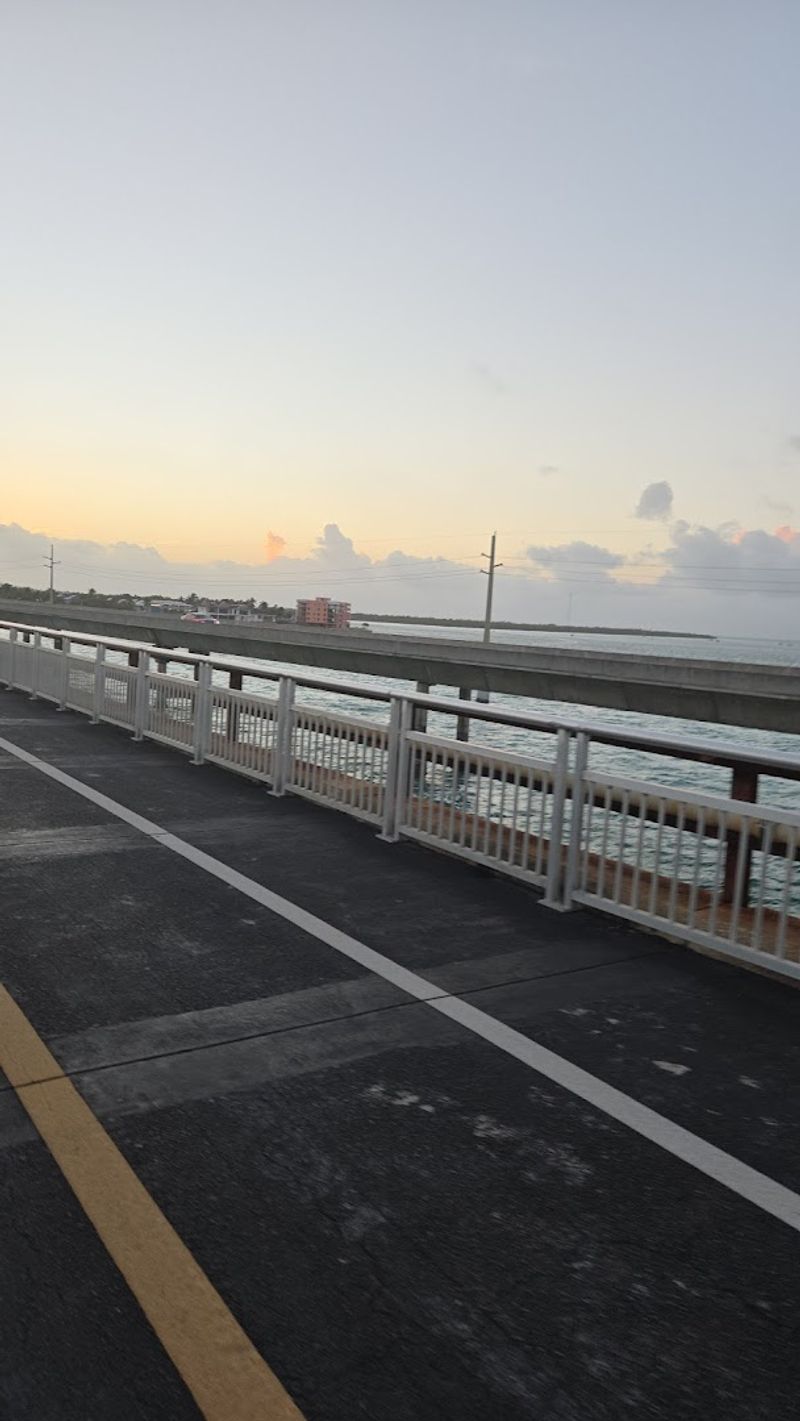
Not the full seven miles, but the two miles of the Old Seven Mile Bridge that have been restored and reopened are more than enough to leave you breathless.
The refurbished section runs from the end of Marathon Key out to Pigeon Key, sitting right alongside the newer highway bridge that carries modern traffic.
A round trip clocks in at about four miles, which is a solid morning workout with one of the most spectacular backdrops you will ever find on a fitness trail.
The surface is smooth and well-maintained, making it comfortable for walkers, joggers, and cyclists of all ages.
On a clear day, the water below shifts between shades of jade, sapphire, and pale turquoise depending on depth and sunlight.
Pelicans cruise low overhead, boats drift past below, and if the water is calm enough, you might spot spotted eagle rays or sea turtles gliding beneath the surface.
Garbage cans appear every 0.2 miles along the route, which shows just how thoughtfully the trail has been designed for visitors.
Few places on earth offer this kind of scenery for free, and that generosity feels like a gift every single time.
Pigeon Key Sits At The Far End And Deserves Your Attention
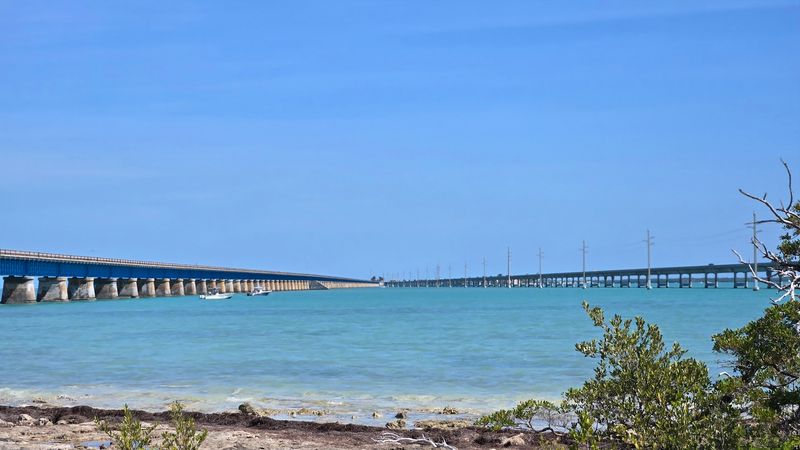
Pigeon Key is the tiny island waiting at the end of the Old Seven Mile Bridge, and it holds more history per square foot than most places three times its size.
This five-acre island served as a worker camp during the construction of Flagler’s railroad, housing the crews who built the bridge above the open Atlantic.
Several of the original wooden buildings from that era still stand on the island, giving it the quiet charm of a preserved outdoor museum.
A small ferry also runs visitors out to Pigeon Key for those who would rather not make the full walk, though hiking across the bridge to reach it feels like the proper way to arrive.
The Pigeon Key Foundation manages the site and offers guided tours that bring the railroad era vividly back to life.
Standing among those old wooden structures with the ocean surrounding you on all sides, the isolation those early workers must have felt becomes very real.
Pack enough water and give yourself time to explore, because rushing through Pigeon Key would be a genuine shame.
The island rewards slow, curious visitors who are willing to look closely at the details tucked into every corner.
Meet Fred The Tree, The Bridge’s Beloved Landmark
Halfway across the Old Seven Mile Bridge, something unexpected catches your eye: a single, scrappy little tree growing right out of the bridge itself, and locals have named him Fred.
Fred is not much to look at by traditional standards, just a stubborn plant that decided a concrete bridge over the ocean was a perfectly reasonable place to set down roots.
But visitors have turned Fred into something of a celebrity, stopping to snap photos and share the moment on social media as if greeting an old friend.
There is something genuinely charming about a tree that refuses to care about the rules of where things are supposed to grow.
Fred sits roughly at the midpoint of the trail, making him a natural rest stop and photo opportunity for anyone walking or cycling across.
His scrappy persistence mirrors the spirit of the bridge itself, which has survived hurricanes, abandonment, and the relentless Florida sun.
First-time visitors who have heard about Fred beforehand still feel a small jolt of delight when they finally spot him.
He is proof that sometimes the most memorable landmarks are the ones nobody planned.
Sunrise And Sunset Views Here Are Genuinely Unforgettable
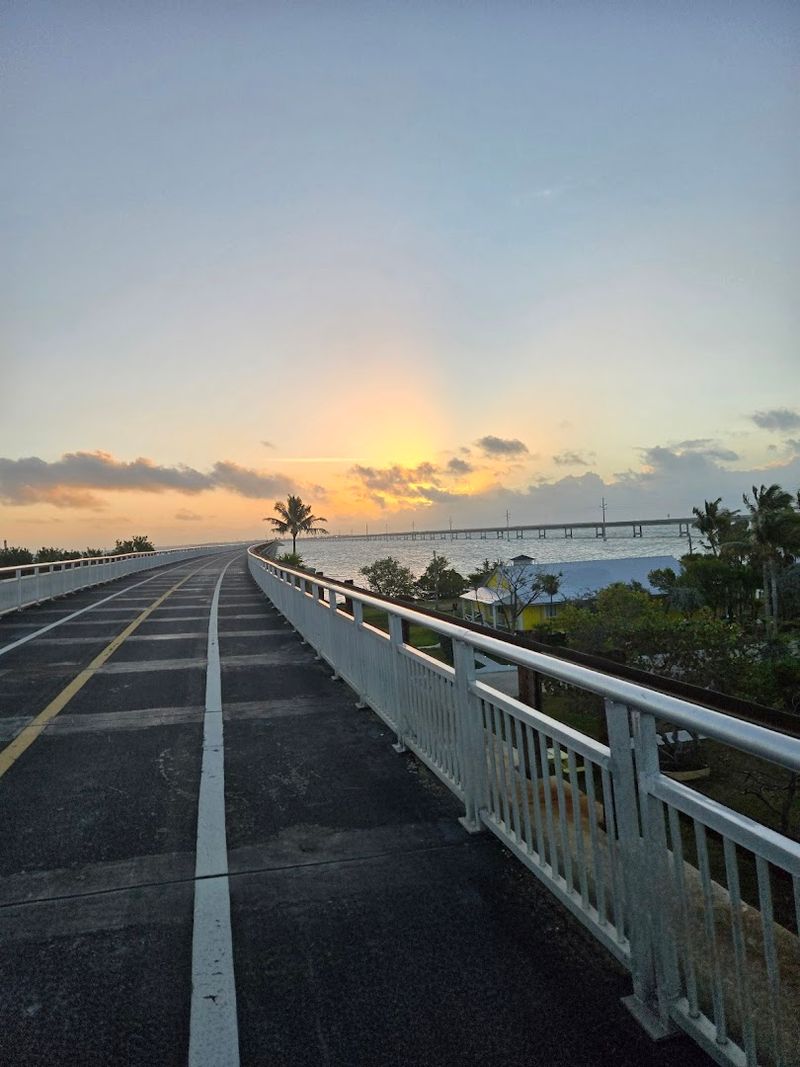
Few places in the continental United States offer a sunrise or sunset experience that rivals what you get standing on the Old Seven Mile Bridge.
During certain times of the year, the sun sets perfectly between the old bridge and the newer highway span beside it, creating a framing effect that photographers absolutely love.
Morning light turns the water into a sheet of hammered copper and gold, while the pelicans and herons begin their daily patrol above the surface.
Early risers who arrive before dawn are often rewarded with a sky that shifts through every shade of pink, orange, and lavender before settling into clear blue.
One reviewer described the sunrise here as spectacular, and that word feels completely earned.
If you plan to watch the sunset, arriving early is important because the parking area at the Marathon end of the bridge fills up quickly on busy evenings.
Bringing a light jacket is smart, since the breeze off the water can be surprisingly cool even when the day feels warm on land.
The light here has a quality that makes even amateur photographers look like professionals.
Wildlife Sightings Make Every Walk Feel Like A Discovery
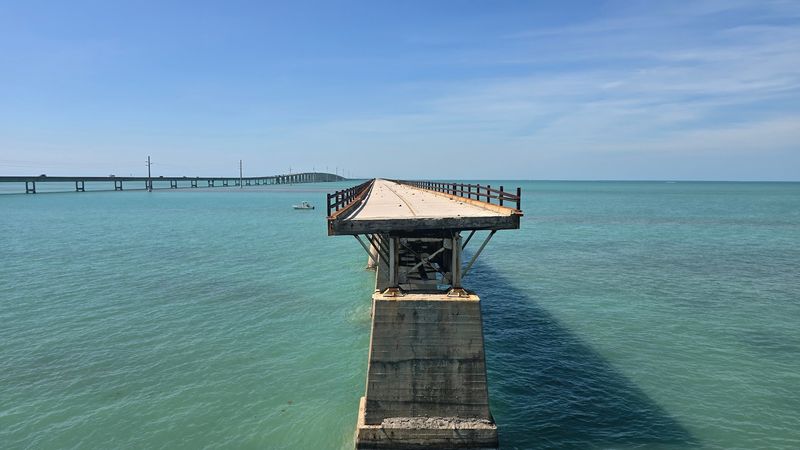
Walking the Old Seven Mile Bridge sometimes feels less like exercise and more like a slow tour through a living aquarium.
The clear, shallow waters surrounding the bridge are home to an impressive variety of marine life that is often visible right from the walkway above.
Sea turtles are one of the most popular sightings, gliding along just below the surface with an unhurried grace that makes you stop and stare.
Nurse sharks rest on the sandy bottom in the calmer sections, looking deceptively relaxed while spotted eagle rays cruise past in graceful formation.
Barracuda and grouper have also been spotted by sharp-eyed walkers peering over the railing.
Above the water, brown pelicans are practically constant companions along the route, diving and wheeling with impressive precision.
Wading birds like great blue herons and roseate spoonbills sometimes appear near the shallower areas around Pigeon Key.
One important tip: polarized sunglasses make a dramatic difference in how clearly you can see into the water below, so pack a pair before you go.
The wildlife here does not feel like a bonus attraction; it feels like the main event.
The Bridge Is Open Around the Clock, Every Day Of The Year
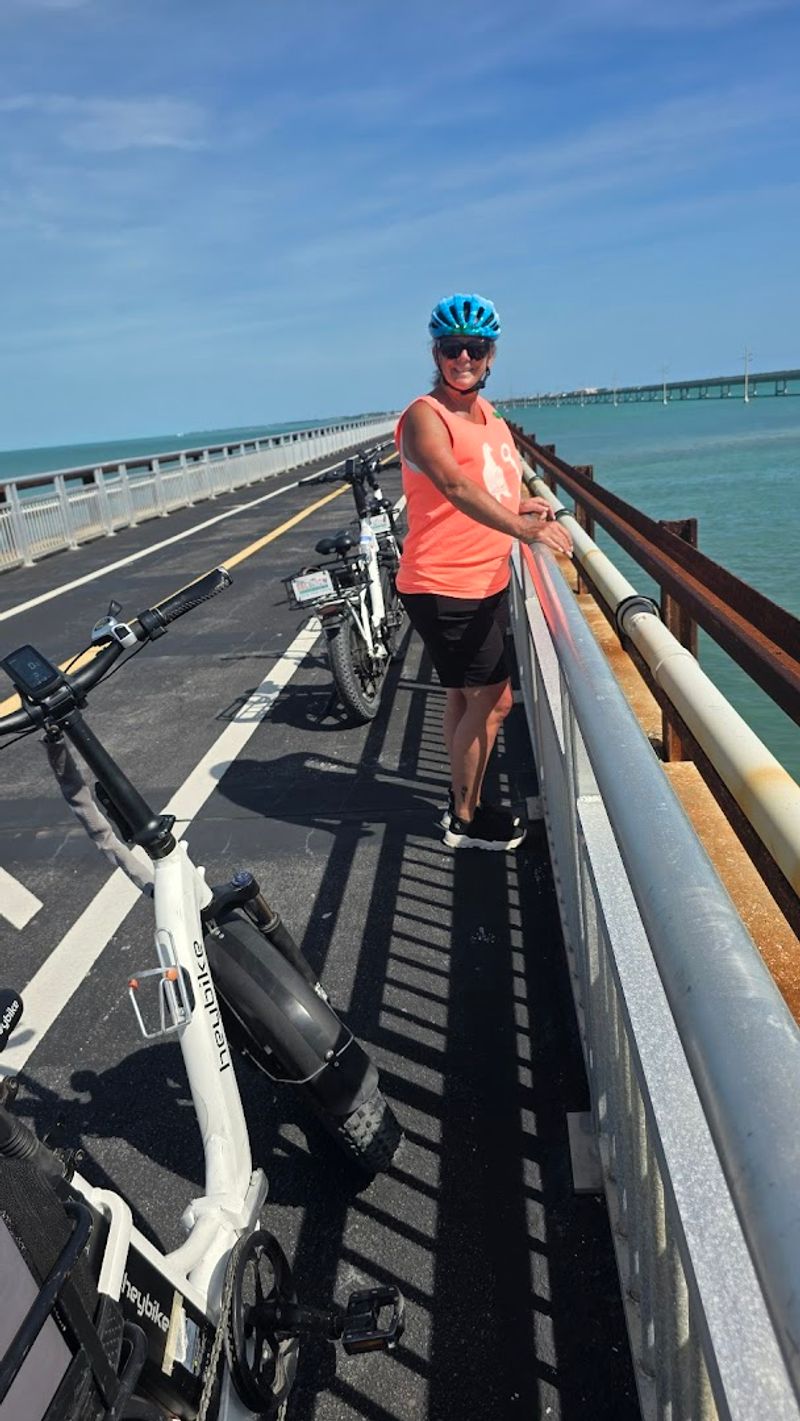
One of the most practical and appealing things about the Old Seven Mile Bridge is that it never closes.
The trail is open 24 hours a day, seven days a week, which means you can time your visit around whatever suits you best, whether that is a predawn walk, a midday bike ride, or a late afternoon stroll as the light softens over the water.
Early morning visits are especially popular with locals who use the bridge as a regular fitness route, cycling out to Pigeon Key and back before the tourist crowds arrive.
Night visits offer a completely different atmosphere, with the dark water below and the stars overhead creating a sense of peaceful solitude that is hard to find anywhere else in the Keys.
The bridge is located along the Florida Keys Overseas Heritage Trail in Marathon, FL 33050, making it easy to find right off US-1 at the southern end of Marathon Key.
Parking is free and available on both sides of the road near the bridge entrance.
No admission fee, no time limit, and no reservation needed.
That kind of open-door generosity is increasingly rare, and it makes the Old Seven Mile Bridge feel like it truly belongs to everyone.
Cycling Is The Most Popular Way To Experience The Bridge
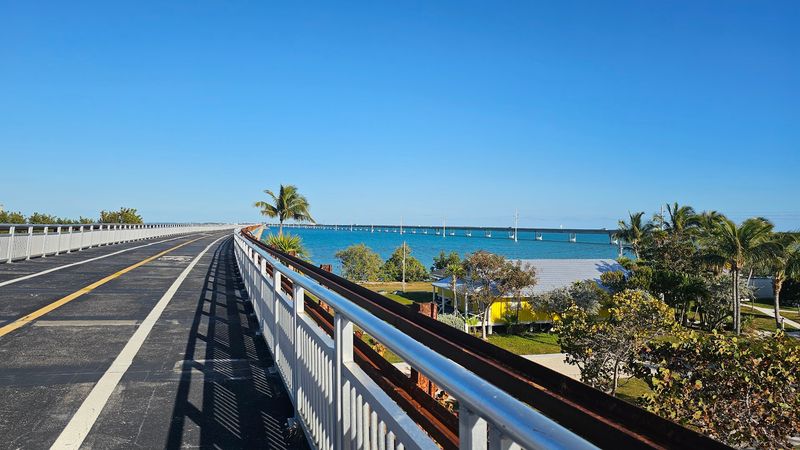
While walking the bridge is absolutely doable, most seasoned visitors will tell you that cycling is the way to go.
The four-mile round trip on foot is a solid commitment, especially under the Florida sun, but on a bike it becomes a breezy, joyful adventure that leaves you grinning the whole way.
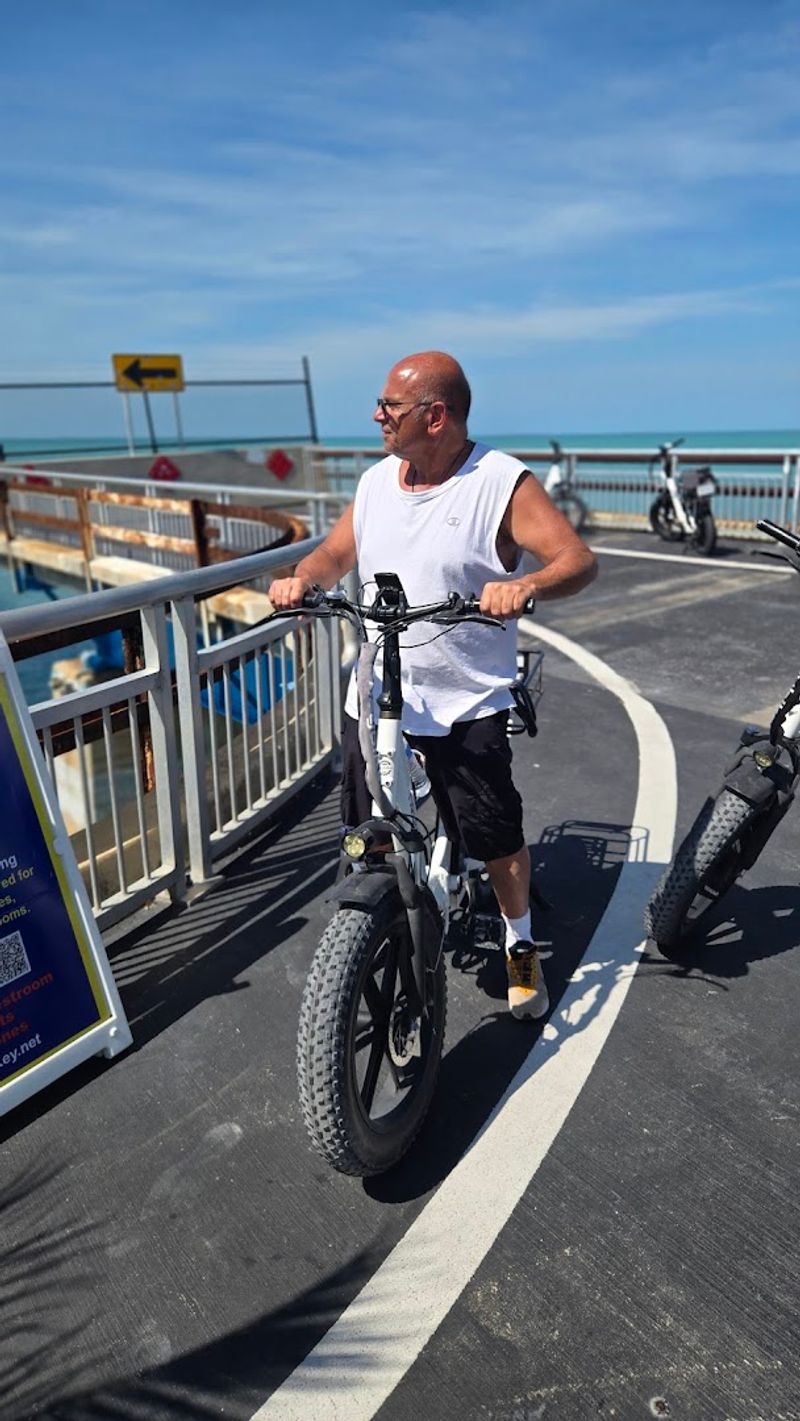
Several bike rental shops in Marathon offer both standard and electric bikes for those who want to cover the distance without working up too much of a sweat.
One reviewer who rented electric bikes offered a practical tip worth passing along: inspect the bike carefully before leaving the shop, checking that the seat stays up and the brakes work properly before you commit to the trail.
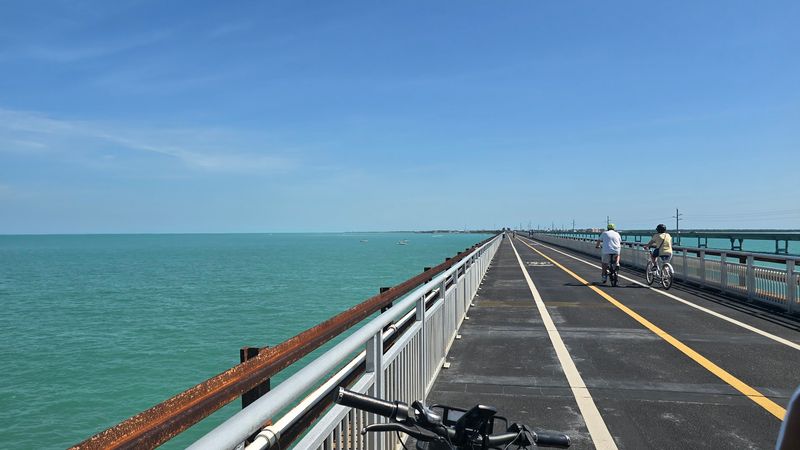
The smooth, well-paved surface makes for easy riding, and the wide path means cyclists and walkers can share the space comfortably without feeling crowded.
Riding toward Pigeon Key with the Gulf of Mexico on your left and the Atlantic on your right is one of those experiences that is genuinely difficult to describe to someone who has not done it.
Just bring water, wear sunscreen, and let the ocean breeze do the rest.
Your bike ride here will almost certainly become the highlight of your entire Florida Keys trip.
Tips For Making The Most Of Your Visit To Old Seven Mile Bridge
A little preparation goes a long way when visiting the Old Seven Mile Bridge, and a few smart choices can turn a good outing into a great one.
Sunscreen is non-negotiable here: the bridge offers almost no shade, and the sun reflects off the water below, hitting you from multiple angles at once.
Bring more water than you think you need, especially during summer months when the heat and humidity can be surprisingly intense even with the ocean breeze.
Comfortable, closed-toe shoes are a better choice than sandals if you plan to walk the full distance, since the concrete surface can get hot and uneven in spots.
Polarized sunglasses are highly recommended for spotting marine life in the water below, as they cut through the surface glare dramatically.
Arriving early in the morning or later in the afternoon helps you avoid the hottest part of the day and often rewards you with better wildlife sightings and softer light for photos.
After your walk or ride, the 7 Mile Grill nearby comes highly recommended by multiple visitors as a satisfying spot for a meal.
The whole experience costs nothing, which means your only real investment is the drive and the sunscreen.