
This Secluded Arkansas Waterfall Is One Of The Most Stunning Sights In The Entire State
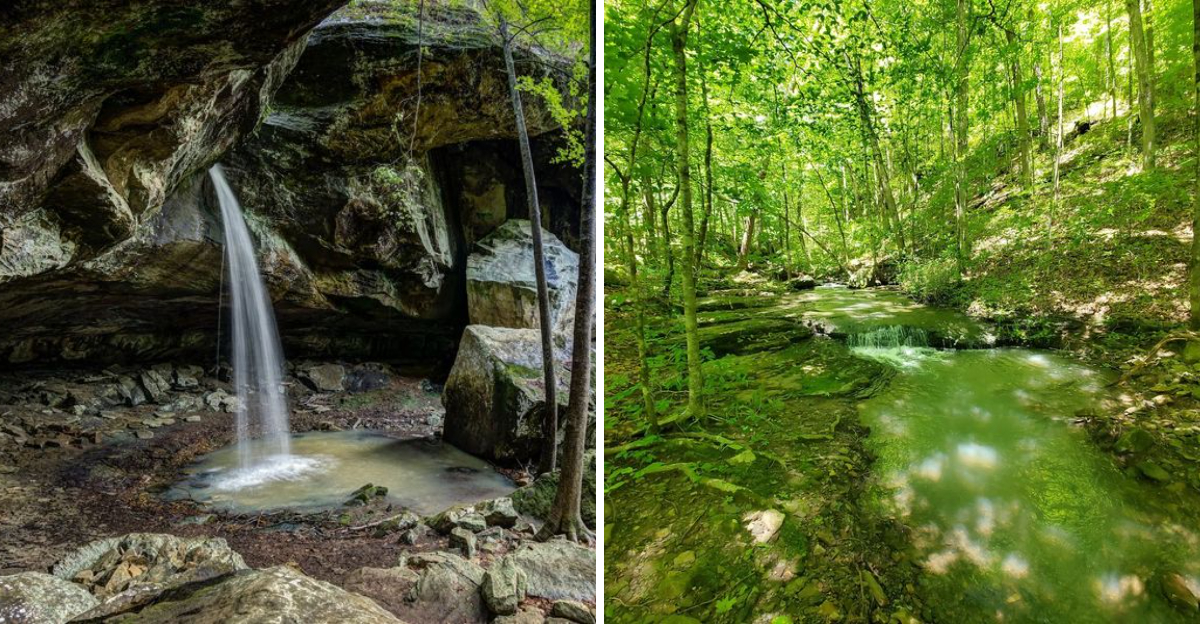
Deep in the Ozark National Forest, there’s a waterfall that somehow stays out of the spotlight, even in Arkansas. I headed out on a cool spring morning, not expecting anything too memorable at first.
Then the trail began to change. It got steeper, quieter, more focused.
The forest closed in, and everything else faded out. Each step felt slower, like the place was pulling me deeper into its rhythm.
The air cooled, the sounds softened, and it all started to feel a bit unreal. By the time I stepped into the basin, I just paused.
No talking, no moving, just listening. The water hitting the rock, the soft echo around the space, it all felt so still.
The hike isn’t long, but it gives you just enough challenge to make that moment count. And later on, it keeps coming back to you, quietly replaying in your mind.
Hidden Trailhead Along A Scenic Forest Road
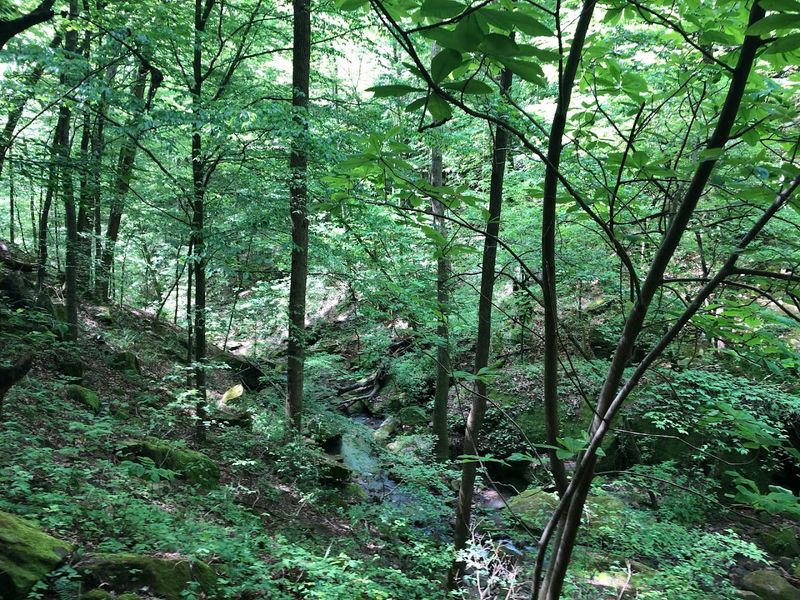
Finding the trailhead for this waterfall is half the adventure, and I mean that in the best possible way.
The starting point sits off Arkansas Highway 123, roughly 1.5 miles east of the Haw Creek Falls Campground, and there is no grand sign welcoming you with open arms.
What you get instead is a small pull-off on the road shoulder, sometimes marked by a painted arrow or a faint cut in the grass that tells you someone has been here before.
I almost drove past it twice before I trusted my instincts and pulled over, double-checking my downloaded offline map since cell service out here is basically a myth.
Parking is roadside and informal, so arrive early if you want a spot that does not require a creative three-point turn on a two-lane highway.
The forest road itself is scenic enough to slow you down before you even start hiking, with tall Ozark ridgelines framing both sides and the occasional hawk drifting overhead.
That humble little pull-off on AR-123 near Hagarville serves as the informal access point to Pam’s Grotto, rather than an official mapped address.
Short But Challenging Hike Through Rugged Terrain
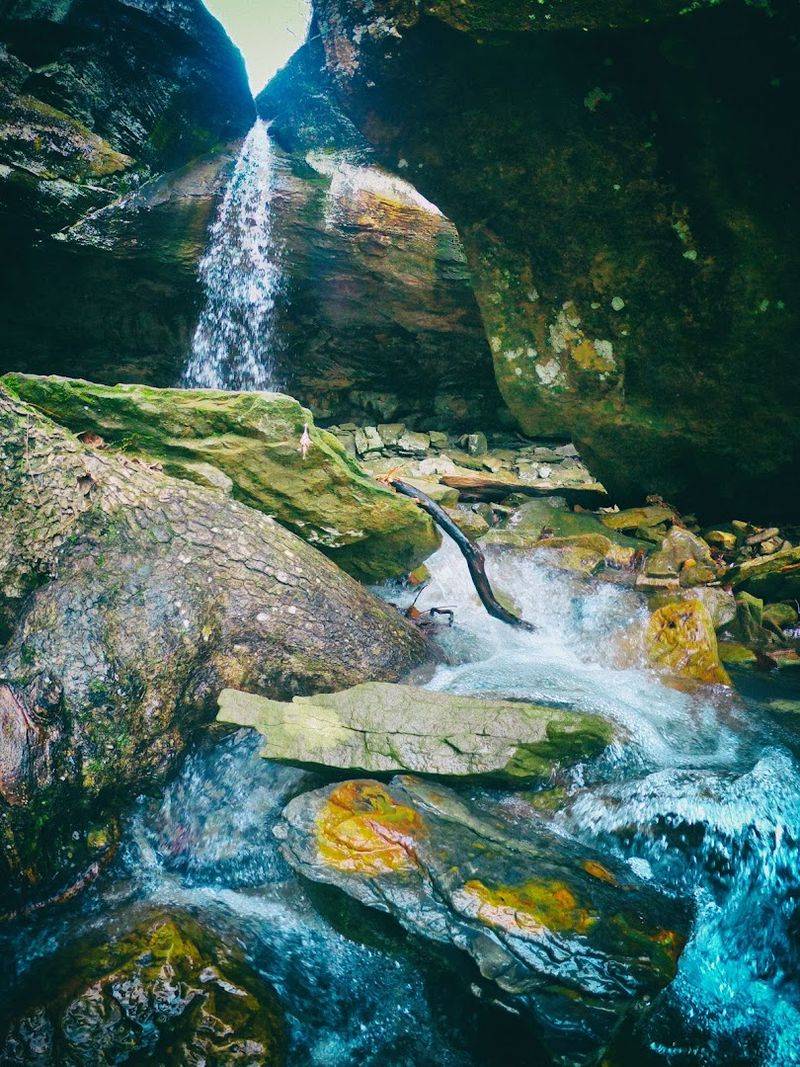
At around 2 to 2.5 miles round trip, the trail to this waterfall sounds like a manageable outing, but the terrain has other plans for you.
The path climbs and drops with an elevation change of about 206 feet, which does not sound dramatic until you are picking your way over slick rocks and gripping tree roots for balance on the descent.
I consider myself a reasonably fit hiker, and I still found myself breathing harder than expected during the steeper sections, especially after a recent rain had turned the soil into a slippery puzzle.
Rocky outcrops jut across the trail in several spots, and the path occasionally narrows enough that you need to think carefully about your footing before each step.
Trekking poles are genuinely useful here, not just a fashion accessory for the trail-ready crowd.
The ruggedness is part of what makes the destination feel earned rather than handed to you, and that earned feeling stays with you long after you have dried off and driven home.
Hikers with some previous trail experience will find this manageable and thoroughly satisfying.
Lush Green Canopy Creating A Secluded Atmosphere
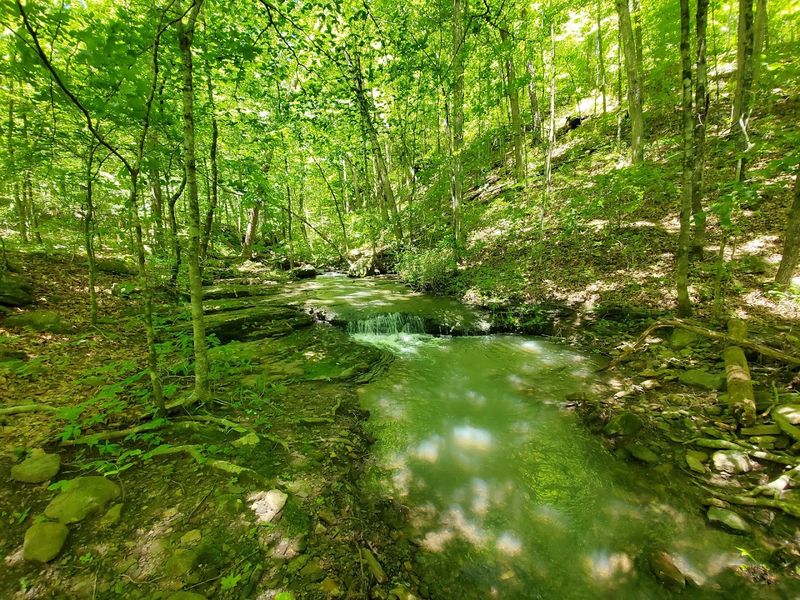
Walking beneath the forest canopy here feels like the rest of the world simply stops existing for a while.
The trees close in quickly after you leave the road, and within a few minutes the highway noise fades completely, replaced by the soft rustle of leaves and the occasional creak of a tall oak shifting in the breeze.
The Ozark National Forest is dense and layered in this section, with a mix of hardwoods and evergreens competing for light above your head while ferns and moss claim every available surface below.
I stopped three separate times just to look up and appreciate how completely the canopy sealed off the sky, leaving only small coins of light flickering through the branches.
That enclosed, almost tunnel-like quality is what gives the hike its secluded atmosphere, making you feel genuinely removed from the ordinary world rather than just a short drive from civilization.
Wildlife seems comfortable here too, with birds calling back and forth across the trail without much concern for the occasional human passing through.
The canopy alone is reason enough to slow your pace and actually absorb where you are.
Steep Descent Leading Into A Quiet Hollow
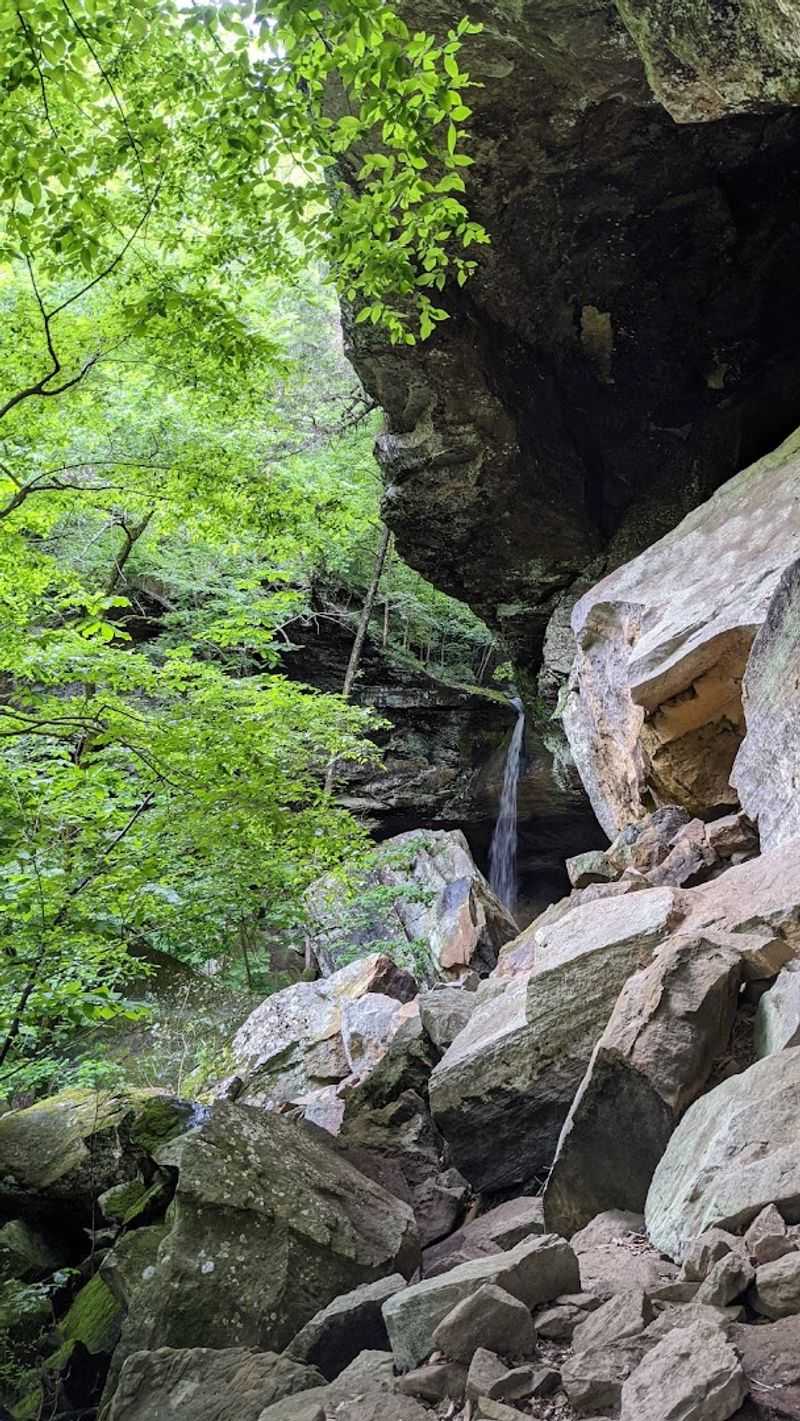
There is a specific moment on this trail where the path tilts sharply downward and the hollow opens up below you, and that moment genuinely made me catch my breath.
The descent into the hollow is the most physically demanding section of the hike, with loose rocks and uneven footing demanding your full attention rather than letting you daydream about the waterfall waiting at the bottom.
I took it slow, planting each foot deliberately and using a nearby tree trunk as an impromptu handrail on the steepest section, which I am not too proud to admit.
Once you reach the hollow floor, the temperature drops noticeably and the light shifts to something softer and greener, filtered through layers of vegetation that barely let direct sunlight touch the ground.
Sound changes down here too, with the outside world muffled further and a faint suggestion of moving water beginning to reach your ears before you can see anything.
The hollow has an enclosed, almost cathedral-like quality that makes conversation feel unnecessary and observation feel natural.
Reaching the bottom of that descent is the moment you know the reward is only steps away.
Natural Rock Shelter Forming A Cave Like Setting
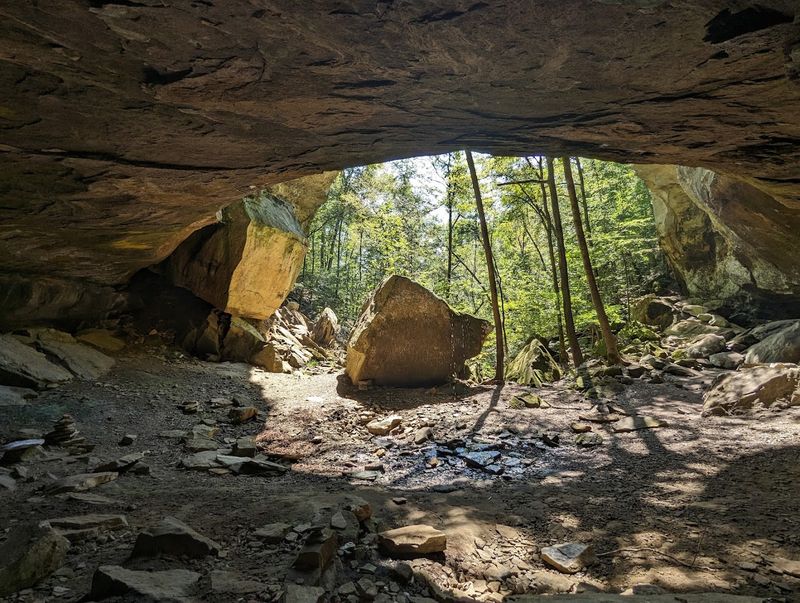
Nothing quite prepares you for the first look at the rock shelter that gives this place its grotto name.
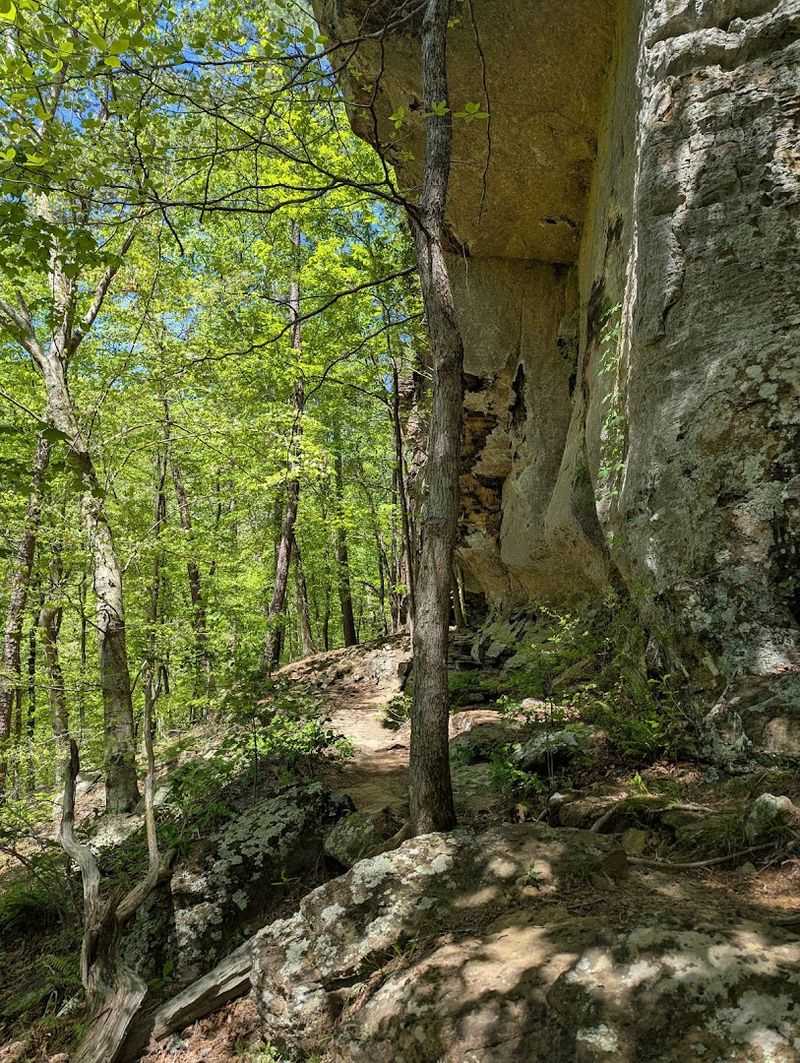
The bluff curves overhead like a massive stone ceiling, creating a sheltered alcove where the air smells of wet earth and cool mineral rock, and where ferns grow from cracks that look too small to support anything living.
Standing inside the shelter and looking back out at the forest feels genuinely theatrical, like being positioned in the wings of a stage with the whole green Ozark world performing just beyond the lip of the overhang.
The rock itself is layered and textured, streaked with dark moisture stains and patches of vivid moss that glow almost unnaturally green in the filtered light.
Large boulders are scattered at the base of the bluff, some of them the size of small cars, tumbled into positions that look carefully arranged but are entirely the work of centuries of geological patience.
I spent a good fifteen minutes just wandering slowly around the shelter, running my hands along the wet sandstone and trying to take mental photographs of every angle.
The rock shelter alone would justify the hike even without the waterfall waiting nearby.
Waterfall Flowing Gently Into A Serene Basin
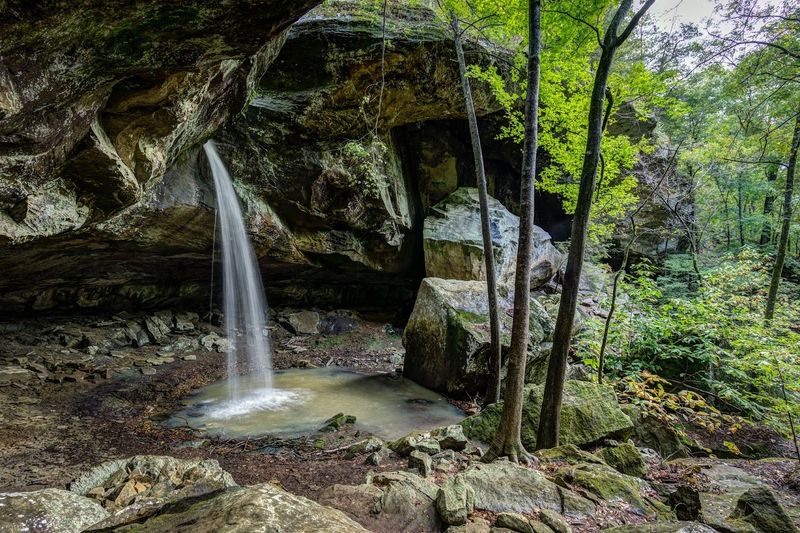
After all the scrambling and descending and rock-dodging, the waterfall finally reveals itself and it is absolutely worth every second of effort.
Standing at around 30 to 40 feet tall, the cascade drops through a narrow opening in the bluff face and fans out into a small, clear pool at the base, the water moving with a calm, unhurried energy that immediately slows your own pulse to match it.
The surrounding boulders are enormous and smoothed by years of water contact, and they frame the basin in a way that makes the whole scene look like it was composed by someone with a very good eye for natural design.
Mist drifts off the pool surface when the flow is strong, settling on your face and arms in a way that feels more refreshing than cold.
I sat on one of the larger boulders for nearly half an hour, watching the light shift across the falling water and listening to the sound that no recording ever quite captures accurately.
Photographers will find every angle here rewarding, from wide shots of the full drop to close-up details of water threading between mossy rocks.
The basin is the kind of place that makes silence feel like the most appropriate response.
Best Conditions After Seasonal Rainfall
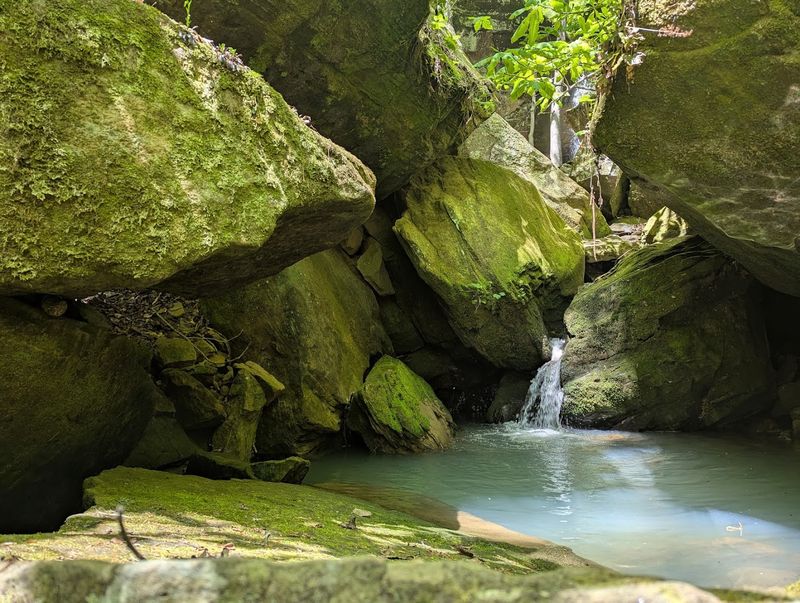
Timing your visit to this waterfall correctly makes the difference between a trickling disappointment and a full-volume spectacle that you will talk about for months.
The falls are considered a wet-weather feature, meaning they depend entirely on recent rainfall to perform at their best, and during dry summer stretches the flow can slow to barely a whisper down the rock face.
Winter and spring are the golden seasons here, when consistent precipitation keeps the water volume strong and the surrounding vegetation is at its most intensely green and saturated.
I visited in early April after a week of solid spring rain, and the cascade was running with real force, the pool churning visibly and the mist reaching several feet outward from the base of the falls.
Checking recent rainfall totals for the Hagarville area before you leave home is a practical habit worth building, and local weather apps focused on the Arkansas River Valley region tend to be more accurate than general forecasts for this specific area.
A visit after a dry spell is still scenic and worth the hike for the rock shelter alone, but a post-rain visit elevates the experience into something genuinely memorable.
Plan smart and the forest will reward you generously.
Tips For A Safe And Rewarding Visit
A little preparation goes a long way on a trail that does not hold your hand from start to finish.
Sturdy hiking boots with ankle support are strongly recommended here, since the rocky descent and potentially wet surfaces make flat-soled sneakers a recipe for a very unpleasant afternoon.
Download your trail map before you leave home, because cell service along AR-123 near Hagarville is unreliable at best, and relying on a live navigation app in this area is a gamble you do not want to take when you are deep in the hollow.
Bring more water than you think you need, especially during warmer months, since the short distance of the trail can be misleading about how much energy the terrain actually demands from your body.
Arriving early in the morning not only secures roadside parking but also gives you the best chance of having the grotto entirely to yourself, which transforms the experience from a nice hike into something genuinely personal.
Wear layers in cooler months, since the hollow holds cold air effectively and the mist from the falls can chill you faster than expected.
Respect the space, pack out everything you bring in, and leave the boulders and ferns exactly as you found them for the next person lucky enough to make the trip.