
This Spooky Stephen King-Style Road Trip Takes You To 12 Of Maine’s Creepiest Places
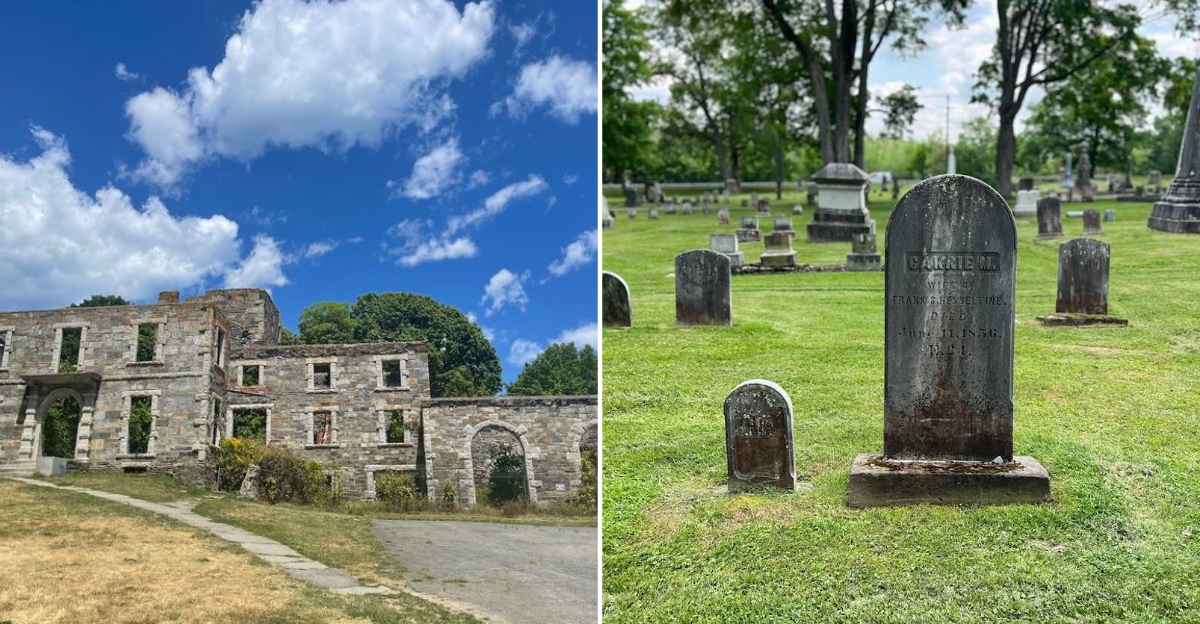
Maine has a way of making the ordinary feel just a little off, like a foggy morning that never quite clears or a road that seems to stretch longer than expected. It’s no surprise that Stephen King has called this state home for decades.
Dense forests, weathered cemeteries, and misty coastlines create a setting that feels lifted straight out of one of his stories. This road trip brings together a collection of Maine’s most atmospheric and intriguing locations, blending eerie history with striking scenery.
Each stop offers its own sense of mystery, where past and present seem to blur in subtle ways. Bring your curiosity, stay aware of your surroundings, and prepare to experience Maine through a darker, more fascinating lens that lingers long after the journey ends.
1. Maple Grove Cemetery, Bath
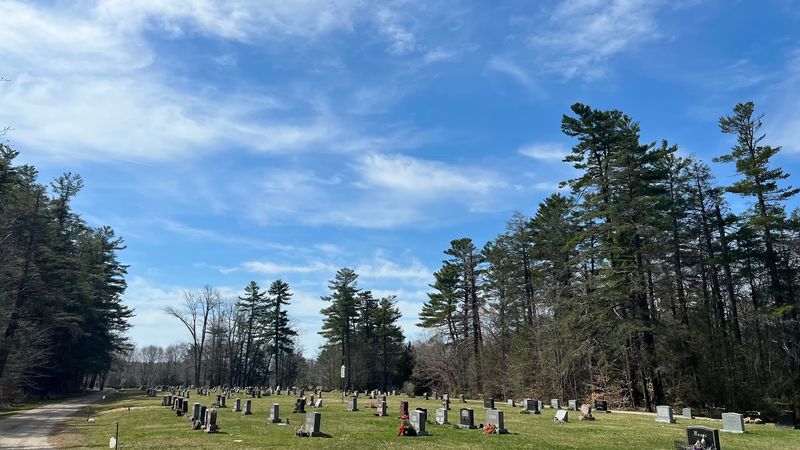
Old graveyards have a way of telling stories that history books leave out, and Maple Grove Cemetery in Bath, Maine does exactly that. Rows of weathered headstones stand at uneven angles, worn down by decades of harsh New England winters.
Many markers reflect Bath’s long maritime history, offering a tangible connection to generations who shaped this coastal city.
Bath itself is known as the City of Ships, and many of the souls resting here were sailors, shipbuilders, and sea captains who shaped the region’s identity. Walking the grounds feels like flipping through a worn family album, each stone a chapter in someone’s life story.
The moss-covered surfaces and crooked iron fences add to the atmosphere in a way that feels genuinely cinematic.
Visiting in the early morning or just before dusk gives the cemetery its most dramatic look, when low light stretches long shadows across the grounds.
It is a peaceful but undeniably haunting place that sets the perfect tone for the road trip ahead. Bring a camera, because every angle here is worth capturing.
2. Fort Knox, Prospect
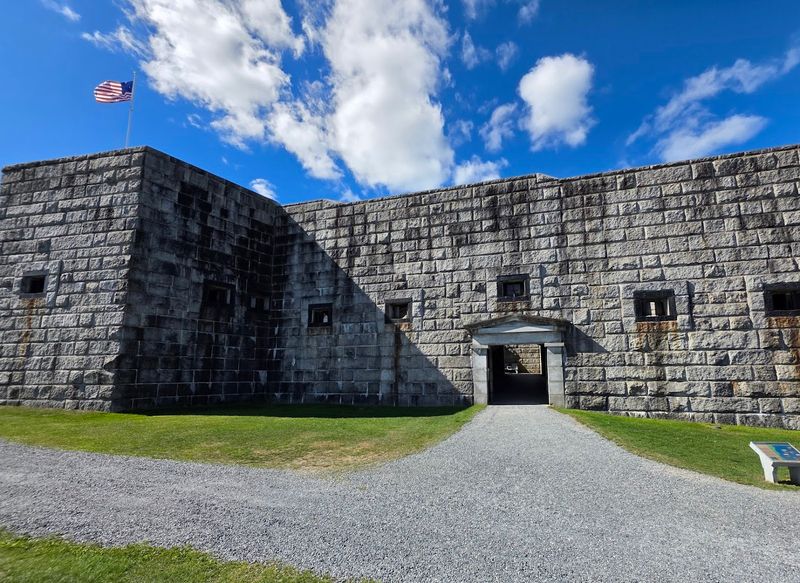
Not to be confused with the gold vault in Kentucky, this Fort Knox is a granite giant sitting along the Penobscot River in Prospect, Maine, and it carries its own kind of commanding presence.
Built in the 1840s to protect the region from potential naval attacks, the fort was never actually used in battle, which somehow makes it feel even more mysterious. All that preparation, all that stone, and the cannons never once fired in anger.
The fort’s dark spiral staircases and echoing tunnels are a thrill to explore, especially since the lighting inside is minimal and the acoustics make every footstep sound dramatic.
Flashlight tours are offered in the evenings during certain seasons, and those are absolutely worth booking if you want the full atmospheric experience.
The views of the Penobscot River from the battlements are stunning and a little dizzying.
Fort Knox State Historic Site is located at 740 Fort Knox Road in Prospect; the full site operates from May through October, while the surrounding grounds remain open year-round from morning to sunset.
Rangers on site are knowledgeable and genuinely enthusiastic about sharing the fort’s layered history. It is one of the best-preserved military forts in the entire northeastern United States.
3. Colonel Buck’s Cursed Tomb, Bucksport
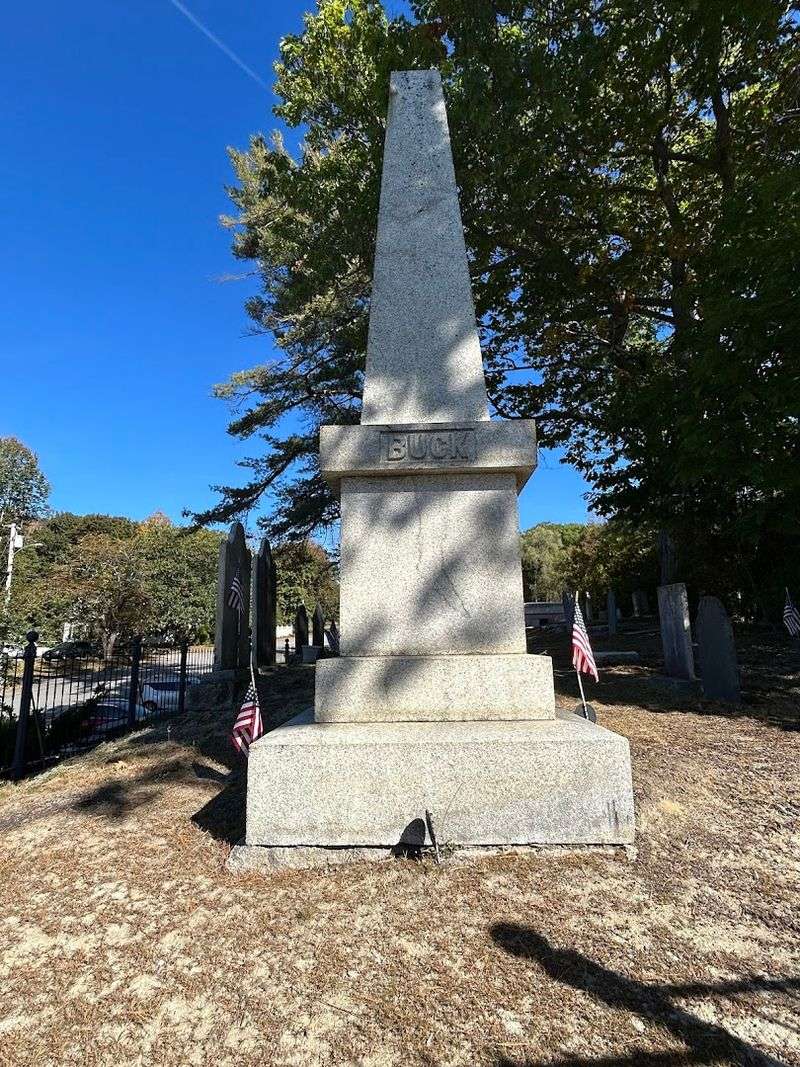
Few memorials in America come with as much legend attached as the monument of Colonel Jonathan Buck in Bucksport, Maine.
Colonel Buck founded the town in the late 1700s, and you might expect his memorial to be a straightforward tribute. Instead, his tall obelisk gravestone bears a strange, leg-shaped stain that locals have connected to a curse for generations.
The story goes that Buck presided over the execution of a woman accused of witchcraft, and her final words were a curse directed at him.
Over time, the stain resembling a human leg appeared on the stone, and no amount of cleaning or resurfacing has ever permanently removed it. Whether you believe in curses or not, the mark is genuinely visible and undeniably strange.
The tomb is located in the Bucksport Cemetery right off Route 1, making it an easy stop on any road trip through the mid-coast region.
The town of Bucksport itself is charming and worth a short walk around. Seeing the stain in person is one of those experiences that makes you pause and wonder just a little longer than you expected to.
The legend has inspired local art, merchandise, and more than a few raised eyebrows.
4. Perkins Township Ghost Town, Swan Island
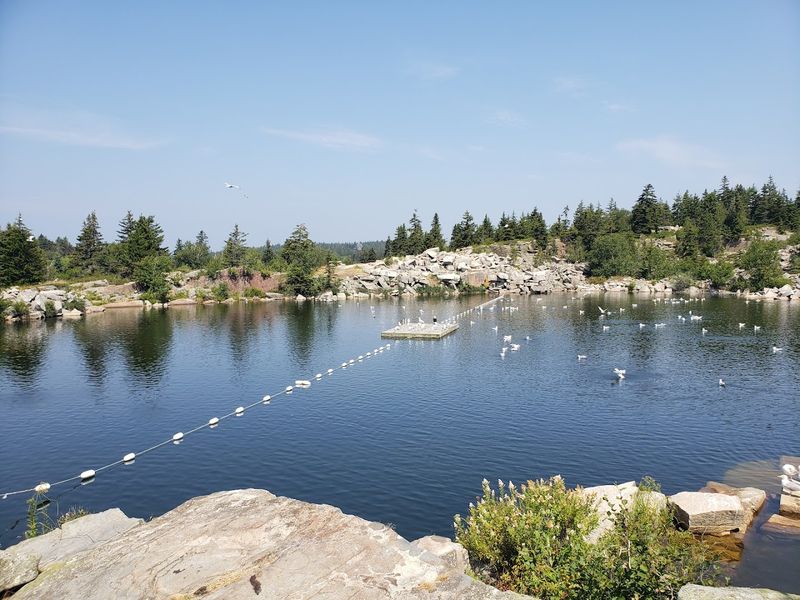
Swan Island sits quietly in the middle of the Kennebec River near Richmond, Maine, and it holds the remnants of a community that time simply walked away from.
The former settlement known as Perkins Township once housed a thriving farming community, but by the mid-twentieth century, the state had relocated all residents and turned the island into a wildlife management area.
What remains are empty farmhouses, overgrown fields, and an atmosphere that feels genuinely suspended in time.
Getting to Swan Island requires a short ferry ride, which only adds to the sense that you are crossing into a different world. The island is now home to white-tailed deer, wild turkeys, and bald eagles, so the ghost town experience comes wrapped in surprising natural beauty.
Guided tours are available through the Maine Department of Inland Fisheries and Wildlife during warmer months.
Walking past the abandoned structures while deer graze nearby creates a strangely moving experience, equal parts unsettling and peaceful.
The island is accessible via the Swan Island ferry from the town of Richmond. Reservations are required and spots fill quickly, so planning ahead is essential.
It is one of Maine’s most unique and under visited destinations, and that is exactly what makes it special.
5. Goddard Mansion, Cape Elizabeth
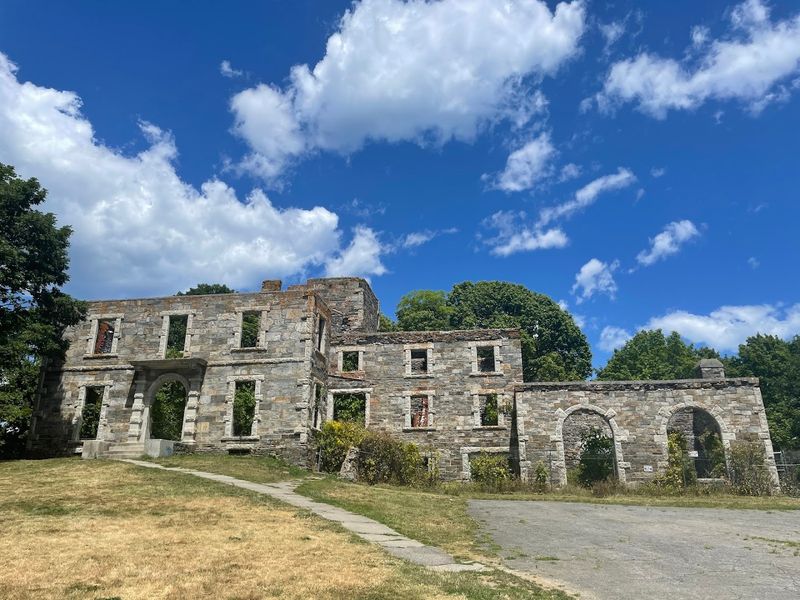
At Fort Williams Park in Cape Elizabeth, Maine, the ruins of Goddard Mansion stand as one of the most photogenic and quietly eerie sites on the entire Maine coast.
The mansion was built in the late 1800s and served as a grand summer retreat before eventually being abandoned and left to the elements. Today, only the stone shell remains, with open windows framing views of the ocean and sky in a way that feels almost theatrical.
The surrounding park is beautiful and well-maintained, which makes the contrast of the crumbling mansion all the more striking. Visitors are free to walk around and even through portions of the structure, though care is always advised near old stonework.
The mansion sits just a short walk from the famous Portland Head Light, so combining both in a single visit is highly recommended.
Fort Williams Park is located at 1000 Shore Road in Cape Elizabeth, and admission to the park is free, though parking fees may apply during peak season.
The mansion looks especially dramatic on overcast days when the fog rolls in off Casco Bay. It is the kind of place that makes you want to sit quietly for a moment and just take it all in before moving on.
6. Pemaquid Point Lighthouse, Bristol

Dramatic does not begin to cover what you see when you first arrive at Pemaquid Point Lighthouse in Bristol, Maine. The lighthouse rises above a stretch of coastline so jagged and wave-battered that it looks like something out of a dramatic painting.
Built in 1827 and rebuilt in 1835, the lighthouse has guided sailors through some of the Atlantic’s most unpredictable waters for nearly two centuries.
The rocky ledges here are unlike anything else on the Maine coast, with sweeping formations that seem to angle and fold in every direction.
Visitors can climb the lighthouse tower during the seasonal operating months, typically from mid-May through mid-October, for a view that stretches far out over the Gulf of Maine. The Fishermen’s Museum, located in the former lighthouse keeper’s house, adds a rich layer of maritime history to the visit.
Pemaquid Point Light is located at 3115 Bristol Road in New Harbor, within Pemaquid Point Lighthouse Park. Parking and a small admission fee apply during the summer months.
The best time to visit for dramatic atmosphere is either early morning or just before a storm rolls in from the Atlantic, when the waves really put on a show. This lighthouse even appears on the back of the Maine state quarter, which tells you everything about its iconic status.
7. Colonial Pemaquid, New Harbor

History at Colonial Pemaquid in New Harbor, Maine goes back further than most people expect, all the way to one of the earliest European settlements in North America.
Archaeological excavations at this site have uncovered foundations, artifacts, and evidence of life dating back to the early 1600s, making it a genuinely remarkable window into the continent’s colonial past.
The site also features a reconstructed stone bastion representing part of Fort William Henry, the original of which was built in 1692.
Walking the grounds here feels different from visiting a museum because the physical remnants of old foundations are right there beneath your feet and around you.
The on-site museum does an excellent job of contextualizing the artifacts and helping visitors understand just how complex and layered early colonial life in Maine really was. Conflicts, trade, and survival all played out on this very ground.
Colonial Pemaquid State Historic Site is located at 2 Colonial Pemaquid Drive in New Harbor, Maine. It operates seasonally, typically from late spring through early fall, with guided interpretation available during peak months.
The combination of the archaeological site, the fort replica, and the nearby Pemaquid Beach makes this an ideal half-day stop. It pairs naturally with a visit to the Pemaquid Point Lighthouse just a few miles down the road, turning both into one compelling coastal experience.
8. Mount Hope Cemetery, Bangor

Mount Hope Cemetery in Bangor, Maine is not your average burial ground. Established in 1834, it is one of the oldest garden-style cemeteries in the United States.
It is designed with winding paths, ponds, and carefully planted trees that make it feel more like a park than a graveyard. The design was intentional, meant to offer a place of quiet reflection and beauty rather than solemnity alone.
Stephen King, who lives just a short distance away, has reportedly drawn inspiration from Mount Hope for his fiction, and it is not hard to see why.
The Victorian-era mausoleums, the towering old trees, and the occasional fog rolling through the grounds create an atmosphere that is equal parts peaceful and unsettling. Some of the headstones feature remarkably detailed carvings that tell you a great deal about the people buried there.
Mount Hope Cemetery is located at 1048 State Street in Bangor and is open to visitors year-round during daylight hours. Guided tours are occasionally offered and are worth checking into before your visit.
The cemetery is also home to wildlife, including foxes and songbirds, which adds an unexpected layer of life to the grounds. It is a genuinely beautiful place that earns its reputation as one of Maine’s most atmospheric destinations.
9. Stephen King’s House, Bangor
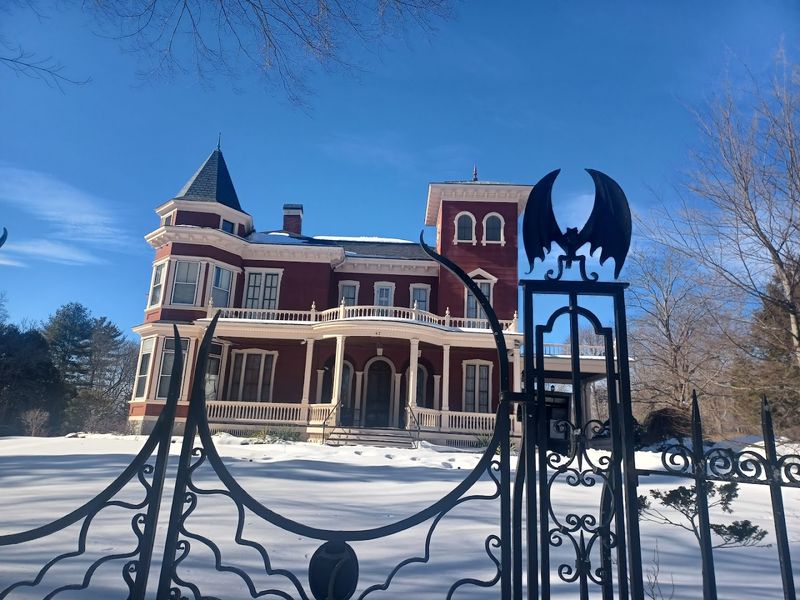
On West Broadway in Bangor, Maine, there is a Victorian house with a wrought iron fence decorated with bats and spiders, and you do not need to be a horror fan to feel a little thrill when you see it.
This is the home of Stephen King, arguably the most famous author alive, and the house looks exactly as dramatic as you would hope. King and his wife Tabitha owned the home for decades, and it has become one of the most visited literary landmarks in New England.
The fence alone is worth the detour. Custom-made and featuring intricate gothic ironwork including cobwebs, a winged creature, and a serpent, it has become an iconic image associated with King’s work and public persona.
Visitors come from all over the world to photograph it and to stand on the sidewalk outside, feeling the peculiar energy of being near where so many famous stories were written.
The house is a private residence, so respectful distance is essential. Do not approach the door or disturb the property in any way.
The address is 47 West Broadway in Bangor.
The neighborhood itself is lovely and historic, and a walk along West Broadway gives you a feel for the gracious older homes that line the street. It is a must-stop on any King-themed Maine journey.
10. Thomas Hill Standpipe, Bangor
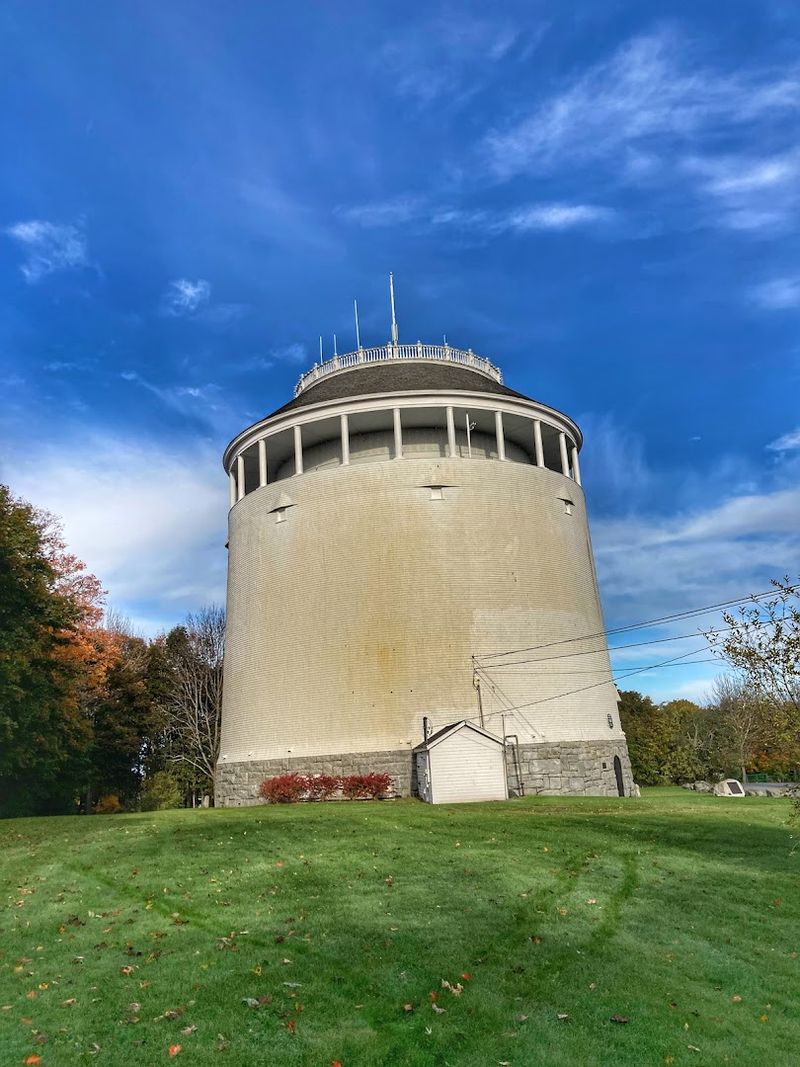
Rising above the tree line on Thomas Hill in Bangor, Maine, the Thomas Hill Standpipe is one of those structures that feels both ordinary and oddly compelling at the same time.
Built in 1897, the standpipe is a functional water storage tower that holds approximately 1.5 million gallons of water, but it is the Victorian design and the observation deck wrapped around its upper section that really catch your attention.
It looks like something a gothic architect might have designed while thinking about water storage and drama simultaneously.
Stephen King fans will recognize the standpipe as the inspiration for the Standpipe in his novel “It,” which gives the structure an extra layer of cultural weight for visitors arriving with that context in mind.
Even without the literary connection, the views from the surrounding area are impressive, with the city of Bangor spreading out below and the Penobscot River visible in the distance. The standpipe is occasionally open for public tours.
Thomas Hill Standpipe is located near the top of Thomas Hill, off Summit Street in Bangor. Tours are typically offered on specific dates during the summer, so checking the Bangor Water District schedule in advance is a good idea.
The structure is lit at night and makes for a striking photograph from a distance. It is one of Bangor’s most underappreciated landmarks.
11. Bangor City Hall, Bangor

Bangor City Hall is one of those buildings that commands your attention the moment you come around the corner and see it.
Located at 73 Harlow Street in downtown Bangor, Maine, The current City Hall occupies a historic civic site in downtown Bangor, reflecting the city’s long municipal history even though the original 19th-century building no longer stands.
The architecture is bold, detailed, and somehow both welcoming and slightly imposing at the same time. The building sits at the heart of Bangor’s civic life and has witnessed the city’s transformation from a booming lumber town to the modern urban center it is today.
The interior is worth exploring if you have the opportunity, as the historic woodwork, grand staircases, and period details give a strong sense of how seriously the city took its own ambitions in the late 1800s. Public events and civic gatherings still take place here regularly.
Bangor’s downtown area has seen significant revitalization in recent years, and City Hall anchors the historic core of the city beautifully. Pairing a visit here with a stop at the nearby Paul Bunyan Statue and Stephen King’s house makes for a highly satisfying afternoon in Bangor.
The clock tower is particularly photogenic at golden hour, when the warm light catches the brick facade and makes everything look slightly cinematic.
12. Paul Bunyan Statue, Bangor

Standing 31 feet tall on Main Street in Bangor, Maine, the Paul Bunyan Statue is one of those roadside attractions that earns its reputation simply by being so gloriously oversized.
Built in 1959 to celebrate the centennial of Bangor’s incorporation, the statue depicts the legendary giant lumberjack in full stride, axe in hand, looking like he owns the entire state of Maine, which, according to folklore, he basically did.
Bangor has long claimed to be the birthplace of Paul Bunyan, though several other towns across the country make similar claims.
The statue stands outside the Cross Insurance Center at 515 Main Street and is free to visit any time of day or night. It is one of the most photographed spots in all of Maine, and the scale of it genuinely surprises people who have only seen photos.
Standing next to it gives you a fun sense of just how small a regular human being really is. Paul Bunyan fits perfectly into the Stephen King road trip because King himself has referenced the statue in his writing, and it appears in the novel “It” as a terrifying vision.
That literary connection turns a cheerful piece of Americana into something slightly more layered and interesting.
Arriving in Bangor and ending your road trip here, with one last look up at that enormous lumberjack, feels like the perfect way to close out a journey through Maine’s most memorable and unsettling places.